Custom Walk in Istanbul, Turkey by juliansmith476 created on 2025-08-07
Guide Location: Turkey » Istanbul
Guide Type: Custom Walk
# of Sights: 14
Tour Duration: 3 Hour(s)
Travel Distance: 4.2 Km or 2.6 Miles
Share Key: 69LU7
Guide Type: Custom Walk
# of Sights: 14
Tour Duration: 3 Hour(s)
Travel Distance: 4.2 Km or 2.6 Miles
Share Key: 69LU7
How It Works
Please retrieve this walk in the GPSmyCity app. Once done, the app will guide you from one tour stop to the next as if you had a personal tour guide. If you created the walk on this website or come to the page via a link, please follow the instructions below to retrieve the walk in the app.
Retrieve This Walk in App
Step 1. Download the app "GPSmyCity: Walks in 1K+ Cities" on Apple App Store or Google Play Store.



Step 2. In the GPSmyCity app, download(or launch) the guide "Istanbul Map and Walking Tours".
Step 3. Tap the menu button located at upper right corner of the "Walks" screen and select "Retrieve custom walk". Enter the share key: 69LU7
1) Dolmabahce Clock Tower
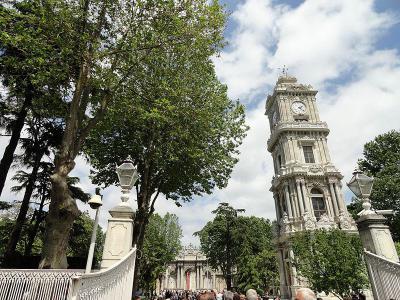
Right across the Treasury Gate of the Dolmabahçe Palace stands a beautiful four-sided clocktower built by Sultan Abdul Hamid II shortly after the palace was completed. The Sultan built clocktowers in many cities for his citizens but as the bells chimed every hour and reminded people of churches, they initially resented them. Their perception changed only upon realizing how helpful these clocks were in organizing their lives.
The tower itself is four floors high. Each story has a different size, embellishment and design, resulting in an interestingly Ottoman Neo-Baroque. Looking closely, you will notice eastern numerals on the faces of the clock and the tughra (calligraphic monogram) of the Sultan on two sides. The Ottomans had a fascination with clocks and here, too, the Sultan got a top-quality French clock installed by the court clock master, Johann Mayer.
Tip:
There is a café in the Clock Tower, and toilets near both entrances. Access inside is only granted if you pay the Palace ticket.
The tower itself is four floors high. Each story has a different size, embellishment and design, resulting in an interestingly Ottoman Neo-Baroque. Looking closely, you will notice eastern numerals on the faces of the clock and the tughra (calligraphic monogram) of the Sultan on two sides. The Ottomans had a fascination with clocks and here, too, the Sultan got a top-quality French clock installed by the court clock master, Johann Mayer.
Tip:
There is a café in the Clock Tower, and toilets near both entrances. Access inside is only granted if you pay the Palace ticket.
2) Dolmabahce Palace (must see)
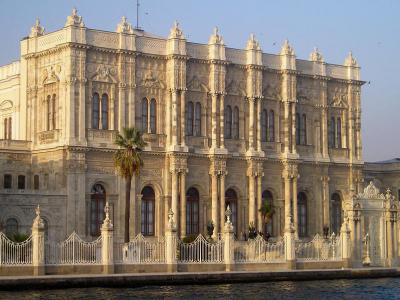
The Ottoman sultans shifted from Topkapi Palace to the newly built Dolmabahce in the 1850s. Designed by the renowned Armenian architect Garabet Balyan, it is the largest and most extravagant of all the palaces on the Bosphorus – especially the Ceremonial Hall with its famous Bohemian crystal chandelier glowing with 750 lamps, gifted by Queen Victoria.
Sultan Abdülmecid and his family clearly wanted a residence comparable to those of his contemporary European monarchs. On this note, it is quite evident that not only were European luxury goods desirable from an aesthetic viewpoint, but also from a symbolic one. The palace not only makes use of European goods but also of European technology to indicate that the Ottoman Empire has not been outdistanced by Europe.
Guided tours are broadly divided into two sections: the public and the private (known as the Selamlik and the Harem, respectively), access to which is given by separate tickets. Interiors are fairly well-preserved and many of the personal belongings of the Sultans and their families on display. Unfortunately, photography is not allowed inside.
Outside, there is a small, but attractive garden around the buildings, with magnificent magnolias, little water-lily ponds, and excellent views over the Bosphorus.
Tip:
Going early is highly encouraged – you'll have entire rooms all to yourself!
The audio guide is a must if you want to get into the cultural benefit of the visit.
Consider taking a rest at the small outdoor cafe in-between visiting the Selamlik and the Harem.
Several good restaurants are nearby on a popular street nearby (Şair Nedim Cd.) that you can walk to in five minutes.
Sultan Abdülmecid and his family clearly wanted a residence comparable to those of his contemporary European monarchs. On this note, it is quite evident that not only were European luxury goods desirable from an aesthetic viewpoint, but also from a symbolic one. The palace not only makes use of European goods but also of European technology to indicate that the Ottoman Empire has not been outdistanced by Europe.
Guided tours are broadly divided into two sections: the public and the private (known as the Selamlik and the Harem, respectively), access to which is given by separate tickets. Interiors are fairly well-preserved and many of the personal belongings of the Sultans and their families on display. Unfortunately, photography is not allowed inside.
Outside, there is a small, but attractive garden around the buildings, with magnificent magnolias, little water-lily ponds, and excellent views over the Bosphorus.
Tip:
Going early is highly encouraged – you'll have entire rooms all to yourself!
The audio guide is a must if you want to get into the cultural benefit of the visit.
Consider taking a rest at the small outdoor cafe in-between visiting the Selamlik and the Harem.
Several good restaurants are nearby on a popular street nearby (Şair Nedim Cd.) that you can walk to in five minutes.
3) Dolmabahce Mosque
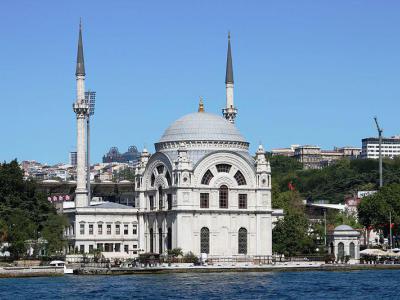
The Dolmabahçe Mosque in Istanbul's Beyoğlu area is a prime example of Ottoman design, complementing the nearby historical Dolmabahçe Palace. It was started in 1853 at the request of Queen Mother Bezmialem Valide Sultan, aiming to showcase the impressive architectural skills of the Ottoman era and to provide a place for worship. The design was the work of Garabet Balyan, who used a mix of Baroque, Rococo, and Empire styles to create something truly special. Unfortunately, the project faced a setback when Queen Bezmi passed away, leading her son, Sultan Abdülmecid, to finish the mosque in 1855.
Its prime location by the Bosphorus makes the Dolmabahçe Mosque a great spot for views, adding to the experience of those who visit. It's easily recognized by its large dome and two tall minarets that stand symmetrically, making it a notable feature against the city's skyline. The outside of the mosque is covered with many glass windows, which let in plenty of light and show off the size and design of the building.
The mosque's exterior clearly exhibits Baroque style. But it's the inside that really draws people in. The walls are decorated with beautiful Arabic calligraphy that includes important Islamic phrases, set against a colorful backdrop. The mosque's interior, adorned with intricate gold designs, floral patterns on the ceiling, and a captivating chandelier, is simply breathtaking. The floor is marble and covered with carpets for prayer, adding to the mosque's serene atmosphere.
In a twist of history, the mosque was used as the Naval Museum from 1956 to 1960, which was a departure from its original religious function, before it went back to being a mosque in 1967. Recent changes, like the expansion of nearby roads, have led to the loss of its original courtyard and sebil, altering its historical look slightly. Despite these changes, the Dolmabahçe Mosque continues to be a standout piece of Ottoman architecture and a place of spiritual importance, attracting visitors and worshippers with its history and beauty.
Tip:
The entrance is not charged for, but make sure not to step on the carpet with shoes on!
Its prime location by the Bosphorus makes the Dolmabahçe Mosque a great spot for views, adding to the experience of those who visit. It's easily recognized by its large dome and two tall minarets that stand symmetrically, making it a notable feature against the city's skyline. The outside of the mosque is covered with many glass windows, which let in plenty of light and show off the size and design of the building.
The mosque's exterior clearly exhibits Baroque style. But it's the inside that really draws people in. The walls are decorated with beautiful Arabic calligraphy that includes important Islamic phrases, set against a colorful backdrop. The mosque's interior, adorned with intricate gold designs, floral patterns on the ceiling, and a captivating chandelier, is simply breathtaking. The floor is marble and covered with carpets for prayer, adding to the mosque's serene atmosphere.
In a twist of history, the mosque was used as the Naval Museum from 1956 to 1960, which was a departure from its original religious function, before it went back to being a mosque in 1967. Recent changes, like the expansion of nearby roads, have led to the loss of its original courtyard and sebil, altering its historical look slightly. Despite these changes, the Dolmabahçe Mosque continues to be a standout piece of Ottoman architecture and a place of spiritual importance, attracting visitors and worshippers with its history and beauty.
Tip:
The entrance is not charged for, but make sure not to step on the carpet with shoes on!
4) Taksim Square
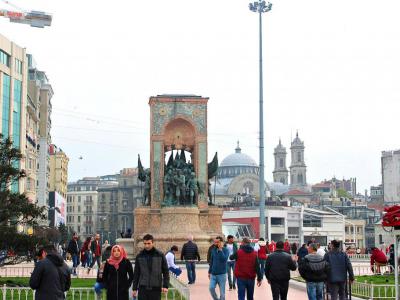
Every major city loves to show off its main square, and Istanbul’s Taksim doesn’t just show off — it practically shimmies. Its name means “division” or “distribution,” a nod to the days when the city’s vital water supply lines gathered here right beneath everyone’s feet. Today, it’s more about the distribution of selfies, street snacks, and general human chaos — the good kind...
This place is also the grand starting point for Istiklal Avenue, a pedestrian shopping street that could drain anyone’s wallet and patience in equal measure. Yes, you’ll spot the usual international fast-food chains, but don’t worry — kebabs, baklava, roasted corn, warm chestnuts, and stretchy Turkish ice-cream are all here to remind you which country you’re in. With hundreds of shops crammed along the route, Taksim is also a transportation jackpot: metro, tram, buses, and taxis swirling around like pieces in a very caffeinated board game.
At the heart of the square stands the Monument to the Republic, surrounded by proud locals snapping photos of Mustafa Kemal Atatürk — father of the nation, reformer, and champion of stern yet photogenic poses. One side shows him as a soldier, the other as a statesman; both sides insist he knew what he was doing...
When the sun dips, expect the soundtrack to shift. Groups gather to sing, dance, and fill the air with more energy than a double-shot Turkish coffee. The transformation is instant and addictive.
Quick tip: the side streets hide great cafés and quirky shops worth a detour. And if you hail a taxi, glance at the meter first — consider it your pre-ride cardio. Beware of scammers and pickpockets — keep your belongings close, your eyes open, and enjoy the spectacle that is Taksim Square.
This place is also the grand starting point for Istiklal Avenue, a pedestrian shopping street that could drain anyone’s wallet and patience in equal measure. Yes, you’ll spot the usual international fast-food chains, but don’t worry — kebabs, baklava, roasted corn, warm chestnuts, and stretchy Turkish ice-cream are all here to remind you which country you’re in. With hundreds of shops crammed along the route, Taksim is also a transportation jackpot: metro, tram, buses, and taxis swirling around like pieces in a very caffeinated board game.
At the heart of the square stands the Monument to the Republic, surrounded by proud locals snapping photos of Mustafa Kemal Atatürk — father of the nation, reformer, and champion of stern yet photogenic poses. One side shows him as a soldier, the other as a statesman; both sides insist he knew what he was doing...
When the sun dips, expect the soundtrack to shift. Groups gather to sing, dance, and fill the air with more energy than a double-shot Turkish coffee. The transformation is instant and addictive.
Quick tip: the side streets hide great cafés and quirky shops worth a detour. And if you hail a taxi, glance at the meter first — consider it your pre-ride cardio. Beware of scammers and pickpockets — keep your belongings close, your eyes open, and enjoy the spectacle that is Taksim Square.
5) Istiklal Caddesi (Independence Avenue) (must see)
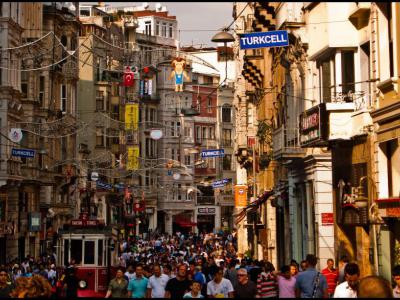
Welcome to the most organic facet of modern Istanbul — Istiklal Avenue — a mosaic of cultures and ideas that feels both Turkish and unmistakably European. Indeed, here East meets West, sharing a drink, grabbing a bite, and staying up past midnight. In this collision of life, languages, and late-night pastry shops, embassies stand shoulder to shoulder with indie bookstores, street musicians jam beside polished art galleries, and the air hums with both espresso machines and the murmur of ten thousand footsteps.
Moving through Istiklal, you can't miss the sight capturing everyone’s attention — the nostalgic red tram. The only vehicle allowed here, it quietly glides down the middle, linking Taksim and Tünel squares. Its slow pace contrasts with the endless flow of people from every corner of the world. Riding it isn’t about distance; it’s about presence — sharing a moment with Istanbul’s glorious chaos.
Look left, right, and a little skyward. All along this avenue, history and art live side by side. Historic cinemas such as Atlas and Beyoğlu still light their marquees, and elegant passages like Çiçek and Hazzopulo recall the Belle Époque charm of old Istanbul. The Church of Saint Antoine, with its Venetian Gothic façade, stands as a reminder of the city’s layered faiths and communities. Nearby, galleries such as SALT Beyoğlu, ARTER, and the Mısır Apartments bring contemporary energy to the street’s historic architecture.
Take a turn down any alley, and Istanbul will reward your curiosity. Here, the tempo softens with small smoky taverns, cafés, and rooftop terraces inviting visitors to pause — to taste, to listen, to observe. The hum of conversation, the scent of coffee, the echo of live music: all merge into one continuous story of Istanbul — vibrant, diverse, and always in motion. Indeed, this street doesn’t walk — it dances.
Just remember — keep your wallet close, your eyes anywhere but in front of you (a neat trick that clears your path), and avoid walking the minor alleys after midnight.
Moving through Istiklal, you can't miss the sight capturing everyone’s attention — the nostalgic red tram. The only vehicle allowed here, it quietly glides down the middle, linking Taksim and Tünel squares. Its slow pace contrasts with the endless flow of people from every corner of the world. Riding it isn’t about distance; it’s about presence — sharing a moment with Istanbul’s glorious chaos.
Look left, right, and a little skyward. All along this avenue, history and art live side by side. Historic cinemas such as Atlas and Beyoğlu still light their marquees, and elegant passages like Çiçek and Hazzopulo recall the Belle Époque charm of old Istanbul. The Church of Saint Antoine, with its Venetian Gothic façade, stands as a reminder of the city’s layered faiths and communities. Nearby, galleries such as SALT Beyoğlu, ARTER, and the Mısır Apartments bring contemporary energy to the street’s historic architecture.
Take a turn down any alley, and Istanbul will reward your curiosity. Here, the tempo softens with small smoky taverns, cafés, and rooftop terraces inviting visitors to pause — to taste, to listen, to observe. The hum of conversation, the scent of coffee, the echo of live music: all merge into one continuous story of Istanbul — vibrant, diverse, and always in motion. Indeed, this street doesn’t walk — it dances.
Just remember — keep your wallet close, your eyes anywhere but in front of you (a neat trick that clears your path), and avoid walking the minor alleys after midnight.
6) Cicek Pasaji (Flower Passage)
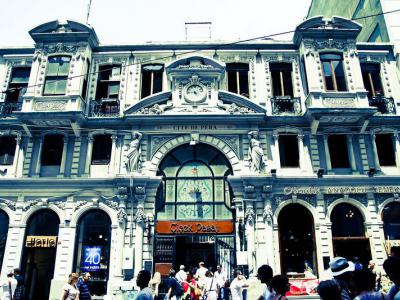
Roughly halfway down the ever-buzzing Istiklal Avenue lies a string of elegant arcades, half bathed in sunlight, half tucked under glass. The most iconic of them all is the Çiçek (or “Flower”) Passage. Opened in 1876, this glamorous arcade was Istanbul’s answer to Parisian chic, complete with fancy shops and polished apartments for those who fancied themselves the crème de la crème of Ottoman society.
Then came 1917, and history took a dramatic turn. As the Russian Revolution scattered its nobility across Europe, some of those exiled and impoverished aristocrats — baronesses included — landed here, selling flowers to make ends meet. By the 1940s, the building had been completely taken over by flower shops, giving the passage its new name and its delicate perfume of nostalgia.
These days, the Flower Passage has had a facelift or two, but it still oozes atmosphere. Wander beneath its glass canopy, spot the faded signs of past decades, or pull up a chair at one of the bustling taverns (known locally as "meyhanes") serving up seafood, chatter, and raki — the local anise spirit that can either charm or floor you, depending on your water-to-raki ratio...
By evening, the lights glow warm, musicians weave through the tables, and laughter spills out onto the street. It may no longer be the haunt of baronesses, but it remains one of Istanbul’s most intoxicating blooms.
Then came 1917, and history took a dramatic turn. As the Russian Revolution scattered its nobility across Europe, some of those exiled and impoverished aristocrats — baronesses included — landed here, selling flowers to make ends meet. By the 1940s, the building had been completely taken over by flower shops, giving the passage its new name and its delicate perfume of nostalgia.
These days, the Flower Passage has had a facelift or two, but it still oozes atmosphere. Wander beneath its glass canopy, spot the faded signs of past decades, or pull up a chair at one of the bustling taverns (known locally as "meyhanes") serving up seafood, chatter, and raki — the local anise spirit that can either charm or floor you, depending on your water-to-raki ratio...
By evening, the lights glow warm, musicians weave through the tables, and laughter spills out onto the street. It may no longer be the haunt of baronesses, but it remains one of Istanbul’s most intoxicating blooms.
7) Grand Hotel de Londres Bar
Imagine flapper-era glamour meeting Istanbul skyline... This 1920s-style rooftop bar still reigns as one of the city’s most authentic hideouts—no pretension, no influencer armies—just locals, expats, and the occasional stray breeze carrying the scent of the Bosphorus. Whether it’s a frosty beer or a glass of Turkish tea, everything tastes better when paired with that glittering view of the Golden Horn and the Old City.
The lounge bar serves drinks and meals from 4 pm to late at night for those who missed dinner time. Come around sunset—say, between 7 and 9 pm—and the city puts on a free show. Minarets glow, ferries drift like lazy fireflies, and Istanbul’s skyline slips from gold to indigo. The menu is friendly to your wallet, and the relaxed crowd (largely devoid of tourists) makes it easy to linger longer than you planned.
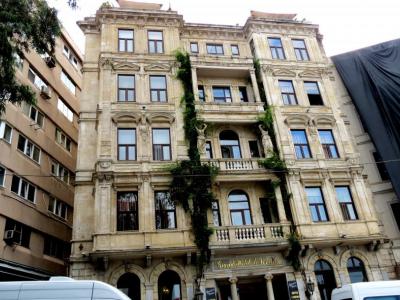
Downstairs, the building tells another story. Once a refined city hotel for 19th-century European travelers (particularly the Brits, who had a soft spot for it), it still wears its age gracefully. The walls whisper history in oil paint and faded frames—worth a pause as you wander the stairway.
And if the weather turns brisk, retreat indoors. The main hall and lobby bar still hum with that quiet, timeworn charm that makes you want to order coffee slowly, as if you’re sharing it with the ghosts of Istanbul’s grand past...
The lounge bar serves drinks and meals from 4 pm to late at night for those who missed dinner time. Come around sunset—say, between 7 and 9 pm—and the city puts on a free show. Minarets glow, ferries drift like lazy fireflies, and Istanbul’s skyline slips from gold to indigo. The menu is friendly to your wallet, and the relaxed crowd (largely devoid of tourists) makes it easy to linger longer than you planned.
Downstairs, the building tells another story. Once a refined city hotel for 19th-century European travelers (particularly the Brits, who had a soft spot for it), it still wears its age gracefully. The walls whisper history in oil paint and faded frames—worth a pause as you wander the stairway.
And if the weather turns brisk, retreat indoors. The main hall and lobby bar still hum with that quiet, timeworn charm that makes you want to order coffee slowly, as if you’re sharing it with the ghosts of Istanbul’s grand past...
8) Pera Museum
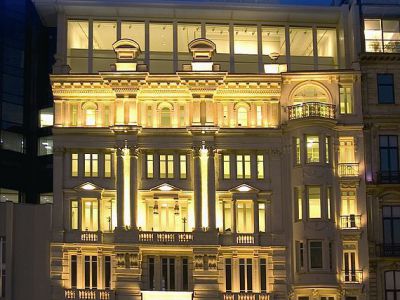
Step off the Orient Express and back into time (well, metaphorically speaking). A century ago, three grand hotels ruled Istanbul’s hospitality scene: the Pera Palace, the Grand Hotel de Londres, and the Bristol. While the first two still survive as hotels, the third one—the Bristol—since 2005, has been reincarnated as the Pera Museum—a cultural blend of Ottoman opulence, international flair, and, quite literally, ancient weights and measures.
Inside, the museum unfolds five floors with a sense of quiet precision. Two levels are devoted to permanent collections—featuring antiquities, Anatolian treasures, and Oriental art. On the second floor, the star of the show is a $3.5-million "The Tortoise Trainer" painting by Osman Hamdi Bey. Meditation on patience, this painting somehow feels right at home in a city famous for its slow traffic. The upper galleries rotate exhibitions by global icons—Joan Miró, Andy Warhol, and their artistic kin—so it’s always worth checking what’s hanging here before you go.
The museum's layout is straightforward, the staff is friendly and refreshingly not hovering about while you are viewing, plus the ground-floor café delivers a caffeine fix with a side of people-watching. The gift shop tempts with design-forward trinkets that your wallet might object to, but your suitcase will thank you for.
Beyond exhibitions, the museum nurtures creativity through workshops for kids and Pera Film, a program screening everything from avant-garde shorts to documentaries. In short, this is one former hotel that’s still checking in guests—just on a more imaginative wavelength.
Inside, the museum unfolds five floors with a sense of quiet precision. Two levels are devoted to permanent collections—featuring antiquities, Anatolian treasures, and Oriental art. On the second floor, the star of the show is a $3.5-million "The Tortoise Trainer" painting by Osman Hamdi Bey. Meditation on patience, this painting somehow feels right at home in a city famous for its slow traffic. The upper galleries rotate exhibitions by global icons—Joan Miró, Andy Warhol, and their artistic kin—so it’s always worth checking what’s hanging here before you go.
The museum's layout is straightforward, the staff is friendly and refreshingly not hovering about while you are viewing, plus the ground-floor café delivers a caffeine fix with a side of people-watching. The gift shop tempts with design-forward trinkets that your wallet might object to, but your suitcase will thank you for.
Beyond exhibitions, the museum nurtures creativity through workshops for kids and Pera Film, a program screening everything from avant-garde shorts to documentaries. In short, this is one former hotel that’s still checking in guests—just on a more imaginative wavelength.
9) Eller Sanat Galerisi
What to buy here:
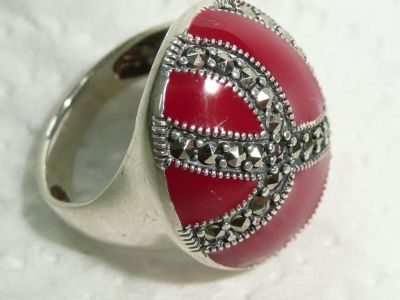
Ottoman Jewelry – Locally produced jewelry inspired from authentic Ottoman pieces make unique gifts. A current Turkish TV program, Muhtesem Yuzyil, has reinforced the locals’ desire for Ottoman inspired jewelry. Turkish jewelry is available at the Grand Bazaar and Spice Market, but the best place for Ottoman jewelry is Eller Sanat Galerisi on Postacilar Sokak just off Istiklal Caddesi next to the Dutch Consulate. They are experts on all eras of Anatolian jewelry and their premises is like a museum. They also run workshops on traditional jewelry making. All pieces are made on the premises and prices start at 50TL for simpler pieces and go up according to the metals and stones used. Working hours can be flexible and start times delayed.
Ottoman Jewelry – Locally produced jewelry inspired from authentic Ottoman pieces make unique gifts. A current Turkish TV program, Muhtesem Yuzyil, has reinforced the locals’ desire for Ottoman inspired jewelry. Turkish jewelry is available at the Grand Bazaar and Spice Market, but the best place for Ottoman jewelry is Eller Sanat Galerisi on Postacilar Sokak just off Istiklal Caddesi next to the Dutch Consulate. They are experts on all eras of Anatolian jewelry and their premises is like a museum. They also run workshops on traditional jewelry making. All pieces are made on the premises and prices start at 50TL for simpler pieces and go up according to the metals and stones used. Working hours can be flexible and start times delayed.
10) Galip Dede Caddesi (Street)
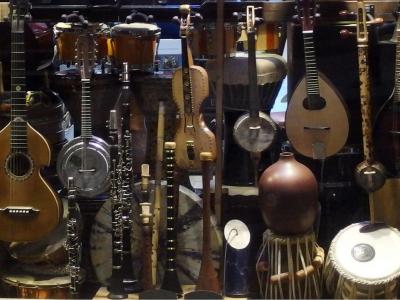
It won't be an exaggeration to call this narrow, cobblestoned slope in Istanbul’s Tünel district the city’s unofficial temple to sound. Musicians and music-lovers of all stripes have come here for years to worship the art of noise. On this street, every other doorway seems to hum, strum, or jingle, and the shops spill over with instruments of every kind, from pocket-sized percussion to showpiece ouds gleaming in the window.
A Mey pipe here goes for around $200 apiece, while an entry-level, budget model of baglama (a plucked string instrument) might set you back $400, which is not bad, come to think of it, for something you can serenade the sunset with...
Weekdays in the early afternoon, when it's not very crowded, are the best time to visit. Between the music stores, you’ll find quirky craft boutiques and artsy hideouts selling everything from handmade jewelry to one-of-a-kind keepsakes. The air buzzes with color, chatter, and just enough chaos to make it feel alive.
And when the scent of fresh soap hits you, that’s the Home Spa store — stocked with organic oils, cheerful bathrobes, and enough aromatic temptation to make you reconsider your suitcase space.
A final word of wisdom: stop at one of the juice stands along the way. A splash of fresh orange or pomegranate will keep you cool, hydrated, and ready to keep jamming down the street.
A Mey pipe here goes for around $200 apiece, while an entry-level, budget model of baglama (a plucked string instrument) might set you back $400, which is not bad, come to think of it, for something you can serenade the sunset with...
Weekdays in the early afternoon, when it's not very crowded, are the best time to visit. Between the music stores, you’ll find quirky craft boutiques and artsy hideouts selling everything from handmade jewelry to one-of-a-kind keepsakes. The air buzzes with color, chatter, and just enough chaos to make it feel alive.
And when the scent of fresh soap hits you, that’s the Home Spa store — stocked with organic oils, cheerful bathrobes, and enough aromatic temptation to make you reconsider your suitcase space.
A final word of wisdom: stop at one of the juice stands along the way. A splash of fresh orange or pomegranate will keep you cool, hydrated, and ready to keep jamming down the street.
11) Galata Mevlevi Museum
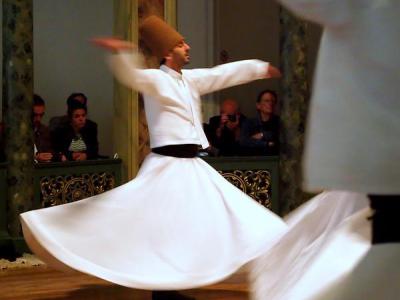
In Istanbul, where history hums under every stone, this former tekke (or a Whirling Dervish lodge) turned museum offers both a quiet lesson in mysticism and a front-row seat to transcendence in motion. This is one of the few places in town where visitors can still witness an authentic Whirling Dervish performance, every Sunday at 5 p.m.
To get the most out of the experience, explore the museum first. It helps decode what you’ll later see spinning before your eyes. Alternatively, you can freely walk around the grounds, including a small cemetery where the former tekke members are interred.
The first thing to say about the Sema ceremony is that it isn’t some staged tourist gimmick with a soundtrack and sparkles. It’s a religious ritual, slow-blooming and precise, moving from stillness to a hypnotic rhythm. Each bow, step, and swirl holds meaning—symbolizing humanity’s inner journey toward understanding of our existence. What begins in silence ends in motion, tracing the soul’s own circular pilgrimage through life and devotion.
Handout brochures explain the basics, and the 50-minute performance is an abbreviated version of the three-hour ritual. Come early if you’d like a seat with a clear view—or simply stand, which feels just as fitting for something this sacred.
A practical note from the realm of logistics: museum tickets are sold at a kiosk inside the grounds, just beyond the information office. As for the ceremony itself, its tickets appear Sunday noon at a modest table outside the main gate—proof that even profound spiritual experiences in Istanbul come with a side of sidewalk charm...
To get the most out of the experience, explore the museum first. It helps decode what you’ll later see spinning before your eyes. Alternatively, you can freely walk around the grounds, including a small cemetery where the former tekke members are interred.
The first thing to say about the Sema ceremony is that it isn’t some staged tourist gimmick with a soundtrack and sparkles. It’s a religious ritual, slow-blooming and precise, moving from stillness to a hypnotic rhythm. Each bow, step, and swirl holds meaning—symbolizing humanity’s inner journey toward understanding of our existence. What begins in silence ends in motion, tracing the soul’s own circular pilgrimage through life and devotion.
Handout brochures explain the basics, and the 50-minute performance is an abbreviated version of the three-hour ritual. Come early if you’d like a seat with a clear view—or simply stand, which feels just as fitting for something this sacred.
A practical note from the realm of logistics: museum tickets are sold at a kiosk inside the grounds, just beyond the information office. As for the ceremony itself, its tickets appear Sunday noon at a modest table outside the main gate—proof that even profound spiritual experiences in Istanbul come with a side of sidewalk charm...
12) Artrium
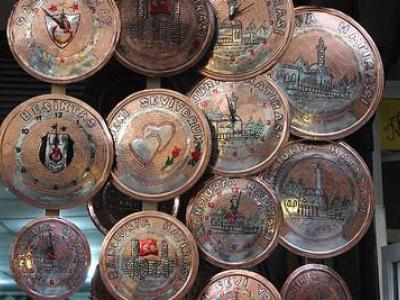
Artrium Istanbul is a unique antique shop that offers an eclectic mix of items, ranging from miniatures, ceramics, maps, and cards to prints, paintings, Turkish calligraphy, jewelry, curios, and old Turkish movie posters. Its inventory includes both ancient and contemporary pieces, catering to a diverse clientele with varying tastes and interests.
Artrium Istanbul represents a cultural nexus that connects the past with the present. The shop features an impressive selection of naif ceramic ware, a distinctive style that is highly sought after by collectors for its uniqueness to the region. These pieces are not only aesthetically pleasing but also embody the rich cultural heritage of Kütahya ceramics.
Prominent local artisans such as Ömer Cesur and İsmail Yiğit are at the heart of Artrium's collection. These individuals have played a crucial role in rejuvenating the centuries-old tradition of Kütahya ceramics, ensuring the craft's survival and continued evolution. Their work, alongside others, adds a personal touch to the shop's offerings, making each piece a testament to the artisan's skill and dedication.
Artrium Istanbul also pays homage to the historical significance of Iznik tiles, renowned for their application in iconic structures like the Blue Mosque and Topkapı Palace. This tradition, revitalized by the late Eşref Eroğlu, finds its representation within the shop's walls, offering enthusiasts a chance to own a piece of Turkish architectural history.
Artrium Istanbul represents a cultural nexus that connects the past with the present. The shop features an impressive selection of naif ceramic ware, a distinctive style that is highly sought after by collectors for its uniqueness to the region. These pieces are not only aesthetically pleasing but also embody the rich cultural heritage of Kütahya ceramics.
Prominent local artisans such as Ömer Cesur and İsmail Yiğit are at the heart of Artrium's collection. These individuals have played a crucial role in rejuvenating the centuries-old tradition of Kütahya ceramics, ensuring the craft's survival and continued evolution. Their work, alongside others, adds a personal touch to the shop's offerings, making each piece a testament to the artisan's skill and dedication.
Artrium Istanbul also pays homage to the historical significance of Iznik tiles, renowned for their application in iconic structures like the Blue Mosque and Topkapı Palace. This tradition, revitalized by the late Eşref Eroğlu, finds its representation within the shop's walls, offering enthusiasts a chance to own a piece of Turkish architectural history.
13) Neve Shalom Synagogue
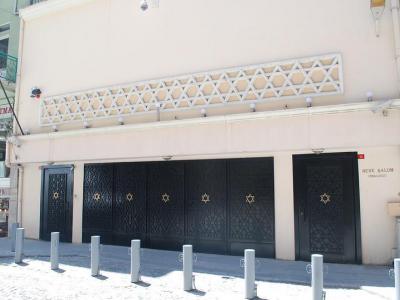
Blink and you might miss it—yet, this modest building carries more stories than many of Istanbul’s grand palaces. Just off Istiklal Street, amid cafés and boutiques, stands the only Jewish museum in Turkey, quietly guarding centuries of memory. Behind its discreet façade lie traces of survival—bullet holes and bomb scars from attacks in 1986, 1992, and 2003—now covered in steel and reminding of resilience rather than ruin.
Inside, the museum paints a vivid picture of Jewish life woven through Ottoman and Turkish history. Exhibits trace how the Jewish community found a home here after exile, contributing to art, trade, and science, while navigating the city’s shifting empires. It’s a space that celebrates coexistence as much as endurance.
The synagogue itself might not charm you at first glance, but step in and look up—the stained-glass windows shimmer with color, crafted in the UK’s Academy of Art, and above you hangs an eight-ton chandelier, a gift from Buenos Aires’ Jewish community, which has itself sustained brutal attacks over the years. Together, they cast a light that feels both sacred and unbreakable.
One practical note before you visit: you won’t need an appointment, but you will need your passport. Expect a brief security screening—proof that even in a house of peace, vigilance is part of the architecture...
Inside, the museum paints a vivid picture of Jewish life woven through Ottoman and Turkish history. Exhibits trace how the Jewish community found a home here after exile, contributing to art, trade, and science, while navigating the city’s shifting empires. It’s a space that celebrates coexistence as much as endurance.
The synagogue itself might not charm you at first glance, but step in and look up—the stained-glass windows shimmer with color, crafted in the UK’s Academy of Art, and above you hangs an eight-ton chandelier, a gift from Buenos Aires’ Jewish community, which has itself sustained brutal attacks over the years. Together, they cast a light that feels both sacred and unbreakable.
One practical note before you visit: you won’t need an appointment, but you will need your passport. Expect a brief security screening—proof that even in a house of peace, vigilance is part of the architecture...
14) Galata Tower (must see)
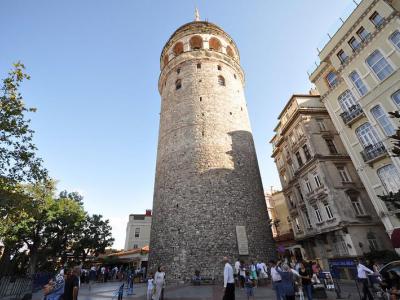
The Galata Tower, one of Istanbul’s most recognizable landmarks, rises above the city as a lasting emblem of power, endurance, and transformation. Erected in 1348 by Genoese merchants, it originally bore the name the “Tower of Christ” and served both as a watchtower and defensive stronghold for the independent Genoese colony of Galata, located across the Golden Horn from Byzantine Constantinople. Standing nine stories tall and approximately 67 meters high, the stone tower was the tallest structure of its time and offered an unmatched panoramic view of the city and sea. Even today, its circular viewing platform provides visitors with a 360-degree perspective of Istanbul’s skyline, encompassing the Bosphorus, Golden Horn, and the city’s historic landmarks.
When the Ottomans conquered Constantinople in 1453, the tower’s purpose evolved to meet new needs. Sultan Mehmed II converted it into a fire watchtower, capitalizing on its strategic vantage point to spot fires that frequently broke out in the city’s wooden neighborhoods. Over the centuries, it also served as a prison for sailors, a warehouse, and briefly as an observatory. These changing uses reflected the Ottoman practice of adapting existing structures to fit new civic or administrative functions, integrating the Genoese-built monument into the life of the empire.
Perhaps the most famous tale linked to the Galata Tower is that of Hezarfen Ahmed Çelebi, a 17th-century Ottoman aviator who reportedly leapt from its summit wearing artificial wings and glided across the Bosphorus. Though likely embellished, the story captures the inventive spirit and imagination long associated with Istanbul’s cultural identity.
Throughout its history, the tower suffered multiple fires, notably in 1794 and 1831, prompting major restorations that eventually gave it its distinctive conical roof. It continued to function as a fire lookout post until the 1960s before being restored once more and opened to the public as a museum and viewpoint.
Today, the Galata Tower remains a highlight for visitors who can ascend by elevator to its observation deck, enjoy a drink at the café, or dine at the restaurant offering evening cabaret shows. Surrounded by lively streets, music shops, and historic charm, the tower encapsulates nearly seven centuries of Istanbul’s layered heritage—where Genoese ambition, Ottoman resilience, and modern vitality meet in a single, soaring monument.
When the Ottomans conquered Constantinople in 1453, the tower’s purpose evolved to meet new needs. Sultan Mehmed II converted it into a fire watchtower, capitalizing on its strategic vantage point to spot fires that frequently broke out in the city’s wooden neighborhoods. Over the centuries, it also served as a prison for sailors, a warehouse, and briefly as an observatory. These changing uses reflected the Ottoman practice of adapting existing structures to fit new civic or administrative functions, integrating the Genoese-built monument into the life of the empire.
Perhaps the most famous tale linked to the Galata Tower is that of Hezarfen Ahmed Çelebi, a 17th-century Ottoman aviator who reportedly leapt from its summit wearing artificial wings and glided across the Bosphorus. Though likely embellished, the story captures the inventive spirit and imagination long associated with Istanbul’s cultural identity.
Throughout its history, the tower suffered multiple fires, notably in 1794 and 1831, prompting major restorations that eventually gave it its distinctive conical roof. It continued to function as a fire lookout post until the 1960s before being restored once more and opened to the public as a museum and viewpoint.
Today, the Galata Tower remains a highlight for visitors who can ascend by elevator to its observation deck, enjoy a drink at the café, or dine at the restaurant offering evening cabaret shows. Surrounded by lively streets, music shops, and historic charm, the tower encapsulates nearly seven centuries of Istanbul’s layered heritage—where Genoese ambition, Ottoman resilience, and modern vitality meet in a single, soaring monument.
