Custom Walk in Berlin, Germany by marea_miller_37d52 created on 2025-08-20
Guide Location: Germany » Berlin
Guide Type: Custom Walk
# of Sights: 10
Tour Duration: 3 Hour(s)
Travel Distance: 7.9 Km or 4.9 Miles
Share Key: X5L9B
Guide Type: Custom Walk
# of Sights: 10
Tour Duration: 3 Hour(s)
Travel Distance: 7.9 Km or 4.9 Miles
Share Key: X5L9B
How It Works
Please retrieve this walk in the GPSmyCity app. Once done, the app will guide you from one tour stop to the next as if you had a personal tour guide. If you created the walk on this website or come to the page via a link, please follow the instructions below to retrieve the walk in the app.
Retrieve This Walk in App
Step 1. Download the app "GPSmyCity: Walks in 1K+ Cities" on Apple App Store or Google Play Store.



Step 2. In the GPSmyCity app, download(or launch) the guide "Berlin Map and Walking Tours".
Step 3. Tap the menu button located at upper right corner of the "Walks" screen and select "Retrieve custom walk". Enter the share key: X5L9B
1) Berlin Hauptbahnhof (Central Station)
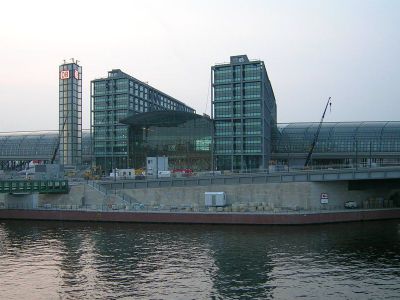
Berlin's primary railway station officially commenced full operations just two days after a grand ceremonial inauguration on May 26, 2006. The event was attended by former Chancellor Angela Merkel and marked the replacement of an older 19th-century railway building.
This station plays a pivotal role in Berlin's transportation landscape, embodying the "mushroom concept," where it serves as a central nexus for various modes of public transport, facilitating seamless connections and intersections of different lines. The name "mushroom" is derived from the unique shape created by the integration of the new railway line with existing ones, resembling, albeit loosely, the form of a mushroom.
The station's impressive hall is constructed with steel and glass, stretching from east to west. At its heart lies a station building with a sprawling 70,000 square meters of floor space, housing a diverse array of retail stores and cafes. From pharmacies to florists, you can find all sorts of shops within this multifaceted complex, leading to its description as a shopping center with the added bonus of being connected to the railway network.
This station plays a pivotal role in Berlin's transportation landscape, embodying the "mushroom concept," where it serves as a central nexus for various modes of public transport, facilitating seamless connections and intersections of different lines. The name "mushroom" is derived from the unique shape created by the integration of the new railway line with existing ones, resembling, albeit loosely, the form of a mushroom.
The station's impressive hall is constructed with steel and glass, stretching from east to west. At its heart lies a station building with a sprawling 70,000 square meters of floor space, housing a diverse array of retail stores and cafes. From pharmacies to florists, you can find all sorts of shops within this multifaceted complex, leading to its description as a shopping center with the added bonus of being connected to the railway network.
2) Reichstag (Parliament Building) (must see)
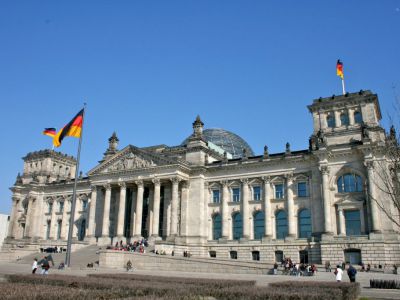
Reichstag is one of Berlin’s most enduring symbols. Its stone walls have borne witness to the tides of history, mirroring Germany’s tumultuous political evolution: from imperial unification, through dictatorship and division, to a modern democratic republic.
Once referring to the legislative body of the German Empire, today, the word “Reichstag” more commonly denotes the iconic building housing the country's parliament, Bundestag.
Following the unification of Germany in 1871, plans were laid to construct a grand hall for the newly formed state (“Second Reich”). Completed in 1894, the Neo-Baroque structure was intended to reflect the strength and unity of the empire. In 1916, amidst a world at war and against the wishes of Emperor Wilhelm II, the inscription-"To the German People"-was carved into the frieze above the entrance. Just two years later, with the empire dissolved, it was within these very walls that the German Republic was proclaimed.
In 1933, a fire engulfed the Reichstag-a blaze which the Nazi regime would exploit to issue the infamous decree, suspending civil liberties and consolidating authoritarian power. Thereafter, the building was no longer used for parliamentary functions during the Nazi era and instead served various other roles throughout the war.
The Second World War left the Reichstag in ruins. During the Cold War, the fractured remains of the building stood on the western side of a divided Berlin. Though no longer a seat of government, it occasionally hosted exhibitions, ceremonies, and even concerts during the 1980s.
Then, on the historic night of October 3rd, 1990, the Reichstag reclaimed its national significance. Within its restored chamber, the ceremony marking the official reunification of Germany was held-attended by Chancellor Helmut Kohl and numerous statesmen.
In the mid-1990s, the British architect Sir Norman Foster was commissioned to redesign the building. His intervention preserved historical scars-including Soviet graffiti etched in 1945-while introducing a strikingly modern glass dome. Completed in 1999, the dome serves as a powerful architectural metaphor for democratic transparency. Open to the public, it allows visitors to peer down into the debating chamber below, while its 360-degree panorama reveals the vast expanse of the capital. A sun-tracking shield ensures natural light floods the space without overwhelming glare.
Tip:
Plan your visit in advance, as security measures require booking and a valid ID for entry.
For those wishing to skip the queue, reserving a table at the Käfer DACHGARTEN restaurant provides expedited access.
Dress warmly-while the dome offers breathtaking views, its open windows invite Berlin’s brisk winds.
Once referring to the legislative body of the German Empire, today, the word “Reichstag” more commonly denotes the iconic building housing the country's parliament, Bundestag.
Following the unification of Germany in 1871, plans were laid to construct a grand hall for the newly formed state (“Second Reich”). Completed in 1894, the Neo-Baroque structure was intended to reflect the strength and unity of the empire. In 1916, amidst a world at war and against the wishes of Emperor Wilhelm II, the inscription-"To the German People"-was carved into the frieze above the entrance. Just two years later, with the empire dissolved, it was within these very walls that the German Republic was proclaimed.
In 1933, a fire engulfed the Reichstag-a blaze which the Nazi regime would exploit to issue the infamous decree, suspending civil liberties and consolidating authoritarian power. Thereafter, the building was no longer used for parliamentary functions during the Nazi era and instead served various other roles throughout the war.
The Second World War left the Reichstag in ruins. During the Cold War, the fractured remains of the building stood on the western side of a divided Berlin. Though no longer a seat of government, it occasionally hosted exhibitions, ceremonies, and even concerts during the 1980s.
Then, on the historic night of October 3rd, 1990, the Reichstag reclaimed its national significance. Within its restored chamber, the ceremony marking the official reunification of Germany was held-attended by Chancellor Helmut Kohl and numerous statesmen.
In the mid-1990s, the British architect Sir Norman Foster was commissioned to redesign the building. His intervention preserved historical scars-including Soviet graffiti etched in 1945-while introducing a strikingly modern glass dome. Completed in 1999, the dome serves as a powerful architectural metaphor for democratic transparency. Open to the public, it allows visitors to peer down into the debating chamber below, while its 360-degree panorama reveals the vast expanse of the capital. A sun-tracking shield ensures natural light floods the space without overwhelming glare.
Tip:
Plan your visit in advance, as security measures require booking and a valid ID for entry.
For those wishing to skip the queue, reserving a table at the Käfer DACHGARTEN restaurant provides expedited access.
Dress warmly-while the dome offers breathtaking views, its open windows invite Berlin’s brisk winds.
3) Brandenburger Tor (Brandenburg Gate) (must see)
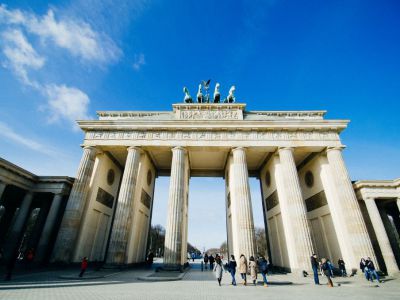
The Brandenburg Gate is the last standing part of the western side of the Customs Wall that surrounded Berlin in the 18th century. It marks a monumental entry to Unter den Linden, the famed boulevard lined with lime trees that once led to the palace of the Prussian monarchs.
This neoclassical landmark was built between 1788 and 1791 during the reign of King Frederick William II of Prussia. Inspired by Roman triumphal arches and the classical Greek gateway to the Acropolis of Athens, the gate has twelve fluted Doric columns flanked by two pavilions originally occupied by guards, as well as five passageways, and reliefs depicting the Labors of Hercules. Its crowning glory is the bronze Quadriga sculpture – the goddess of victory atop a four-horsed chariot, originally regarded as a symbol of peace.
Throughout its history, the gate has played a crucial role in Germany's political narrative. In 1806, during the French occupation, Napoleon ordered its dismantling and transportation to Paris. However, upon its return in 1814, after Napolean's defeat, the gate was declared a symbol of victory, and the goddess was adorned with the Prussian eagle and iron cross, symbolizing triumph. The structure has stood witness to many pivotal events in Berlin's history, from military parades to the rise of the Third Reich and Hitler's ascent to power, upon which it was used as a Nazi propaganda symbol.
The Brandenburg Gate also holds memories of the Fall of Berlin and the Russian flag's raising in May 1945. After World War II, it stood damaged but intact and became part of the Soviet occupation zone. During the Cold War era, the gate – blocked by the Berlin Wall from 1961 until the fall of the Berlin Wall in 1989 – remained in no-man's land between East and West Germany. Back then, it served as a defining symbol of Berlin's and Germany’s division and their eventual reunification.
Today, the Brandenburg Gate is a venue for commemorations and public events. Apart from being a photo-op, its historical importance is just as good a reason to visit.
Tip:
Consider visiting at night when the gate is beautifully illuminated and less crowded, allowing for contemplation of its storied past and symbolic value.
This neoclassical landmark was built between 1788 and 1791 during the reign of King Frederick William II of Prussia. Inspired by Roman triumphal arches and the classical Greek gateway to the Acropolis of Athens, the gate has twelve fluted Doric columns flanked by two pavilions originally occupied by guards, as well as five passageways, and reliefs depicting the Labors of Hercules. Its crowning glory is the bronze Quadriga sculpture – the goddess of victory atop a four-horsed chariot, originally regarded as a symbol of peace.
Throughout its history, the gate has played a crucial role in Germany's political narrative. In 1806, during the French occupation, Napoleon ordered its dismantling and transportation to Paris. However, upon its return in 1814, after Napolean's defeat, the gate was declared a symbol of victory, and the goddess was adorned with the Prussian eagle and iron cross, symbolizing triumph. The structure has stood witness to many pivotal events in Berlin's history, from military parades to the rise of the Third Reich and Hitler's ascent to power, upon which it was used as a Nazi propaganda symbol.
The Brandenburg Gate also holds memories of the Fall of Berlin and the Russian flag's raising in May 1945. After World War II, it stood damaged but intact and became part of the Soviet occupation zone. During the Cold War era, the gate – blocked by the Berlin Wall from 1961 until the fall of the Berlin Wall in 1989 – remained in no-man's land between East and West Germany. Back then, it served as a defining symbol of Berlin's and Germany’s division and their eventual reunification.
Today, the Brandenburg Gate is a venue for commemorations and public events. Apart from being a photo-op, its historical importance is just as good a reason to visit.
Tip:
Consider visiting at night when the gate is beautifully illuminated and less crowded, allowing for contemplation of its storied past and symbolic value.
4) Checkpoint Charlie (must see)
Immortalized by American movies and spy novels, Checkpoint Charlie is one of the most famous and historically significant spots in Berlin. A symbol of the Cold War, originally it was one of the three designated crossing points – A (Alpha), B (Bravo), and C (Charlie) – for foreigners and members of the Allied forces, established after the construction of the Berlin Wall. Here the documents of visitors and diplomats were checked by East Germans prior to issuing visas.
Checkpoint Charlie became a sole crossing point in 1962. A year earlier, it made history as the venue of a famous stand-off between US and Soviet tanks facing each other across the border, when an American diplomat was refused a visa. The stand-off nearly led to a war but fortunately ended peacefully.
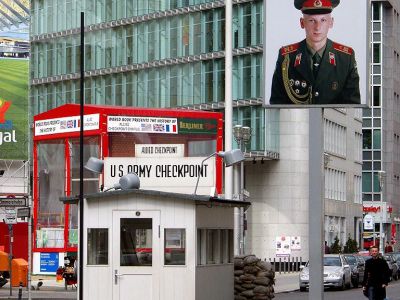
Today, a replica of the original Checkpoint Charlie booth with a "You are now leaving the American Sector" sign serves largely as a photo opportunity in the middle of the street that once marked the border between East and West Berlin. Nearby is the Wall Museum-House dedicated to freedom, featuring, among other exhibits, a piece of the Berlin Wall and historical information relating to the many escape attempts made over the Wall throughout decades. There are also a number of panels and photos that give a useful summary and timeline. Not far away is the Topography of Terror exhibition which also deserves attention.
Lately, to keep the site from turning into a commercial circus, the German authorities have put the kibosh on actors donning military uniforms and cashing in on clueless tourists. Undoubtedly an interesting location, albeit the guard house and other elements are only replicas, Checkpoint Charlie is about an appreciation of how things once were in this great city.
Why You Should Visit:
Bit of a tourist trap, but a good part of the city's history. The surrounding area is also steeped in history and you can walk around the streets to see the Berlin Wall and try the great local cafes.
Tip:
Get here early to avoid crowds, as taking a photo can be quite tricky due to the hustle and bustle of traffic, etc.
Checkpoint Charlie became a sole crossing point in 1962. A year earlier, it made history as the venue of a famous stand-off between US and Soviet tanks facing each other across the border, when an American diplomat was refused a visa. The stand-off nearly led to a war but fortunately ended peacefully.
Today, a replica of the original Checkpoint Charlie booth with a "You are now leaving the American Sector" sign serves largely as a photo opportunity in the middle of the street that once marked the border between East and West Berlin. Nearby is the Wall Museum-House dedicated to freedom, featuring, among other exhibits, a piece of the Berlin Wall and historical information relating to the many escape attempts made over the Wall throughout decades. There are also a number of panels and photos that give a useful summary and timeline. Not far away is the Topography of Terror exhibition which also deserves attention.
Lately, to keep the site from turning into a commercial circus, the German authorities have put the kibosh on actors donning military uniforms and cashing in on clueless tourists. Undoubtedly an interesting location, albeit the guard house and other elements are only replicas, Checkpoint Charlie is about an appreciation of how things once were in this great city.
Why You Should Visit:
Bit of a tourist trap, but a good part of the city's history. The surrounding area is also steeped in history and you can walk around the streets to see the Berlin Wall and try the great local cafes.
Tip:
Get here early to avoid crowds, as taking a photo can be quite tricky due to the hustle and bustle of traffic, etc.
5) Rausch Schokoladenhaus
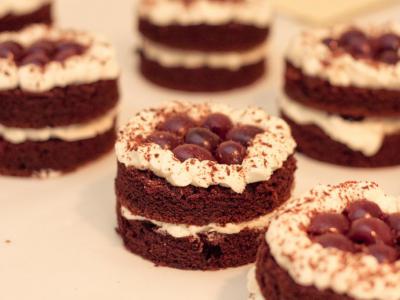
If you're a chocolate enthusiast and happen to be in Berlin, you won't find a better place to satisfy your cravings. Simply pay a visit to this establishment and indulge in the delightful offerings! This store has been a fixture since the 19th century, but the chocolate they offer, in a vast array of flavors, is likely to disappear from your bag within a matter of hours.
The shop itself resembles something out of a fairy tale, featuring a grand chocolate volcano and chocolate-sculpted replicas of iconic city landmarks, including the Reichstag. Treat yourself to a chocolate-covered gingerbread Lebkuchen or a marzipan truffle. Prices for these treats range from approximately 5 to 30 euros. You can also personally select truffles from their extensive display case; once again, the variety is truly impressive. While the prices may be on the higher side, the taste will undoubtedly justify the cost!
Pro Tip:
After indulging your sweet tooth, take a leisurely stroll through the Gendarmenmarkt to admire the Französischer Dom and the Deutscher Dom-both stunning cathedrals that are equally impressive from both the exterior and interior perspectives.
The shop itself resembles something out of a fairy tale, featuring a grand chocolate volcano and chocolate-sculpted replicas of iconic city landmarks, including the Reichstag. Treat yourself to a chocolate-covered gingerbread Lebkuchen or a marzipan truffle. Prices for these treats range from approximately 5 to 30 euros. You can also personally select truffles from their extensive display case; once again, the variety is truly impressive. While the prices may be on the higher side, the taste will undoubtedly justify the cost!
Pro Tip:
After indulging your sweet tooth, take a leisurely stroll through the Gendarmenmarkt to admire the Französischer Dom and the Deutscher Dom-both stunning cathedrals that are equally impressive from both the exterior and interior perspectives.
6) Alexanderplatz and World Clock
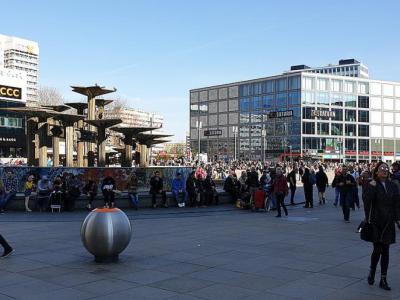
Often referred to as 'Alex' by Berliners, the epicenter of the old East is inevitable to run across while exploring the city. Originally a cattle market in the Middle Ages, the square was named in honor of a visit by the Russian Emperor Alexander I in 1805. It evolved into a significant commercial hub in the 19th century and, alongside Potsdam Square, became the heart of Berlin's nightlife in the roaring 1920s.
Today, Alexanderplatz has a distinct atmosphere reminiscent of the 1960s and the heyday of East Germany (GDR), offering a unique opportunity to glimpse what high-rise flats looked like before the fall of the Berlin Wall. Notably, the largest demonstration against the GDR regime took place here in the autumn of 1989, with half a million citizens demanding freedom of speech and press freedom.
The large area around the iconic TV Tower is often teeming with tourists but also serves as a venue for interesting events; for instance, during the Christmas season, a significant portion is transformed into a Christmas village. The bustling train station is surrounded by shops, bars, and restaurants, providing plenty of options for visitors.
Don't miss the Fountain of Friendship between Peoples and the Neptune Fountain located past the TV tower; both offer great opportunities for photos. Another intriguing sight is the Weltzeituhr, a massive 16-ton clock built in 1969 that displays the times in 148 cities worldwide. This attraction perfectly complements Alexanderplatz's role as a central meeting point: no need for discussing the correct time when a friend arrives late.
Tip:
Before your visit, it's worthwhile to view pictures of how the square appeared in the early 20th century and during the Cold War era.
Today, Alexanderplatz has a distinct atmosphere reminiscent of the 1960s and the heyday of East Germany (GDR), offering a unique opportunity to glimpse what high-rise flats looked like before the fall of the Berlin Wall. Notably, the largest demonstration against the GDR regime took place here in the autumn of 1989, with half a million citizens demanding freedom of speech and press freedom.
The large area around the iconic TV Tower is often teeming with tourists but also serves as a venue for interesting events; for instance, during the Christmas season, a significant portion is transformed into a Christmas village. The bustling train station is surrounded by shops, bars, and restaurants, providing plenty of options for visitors.
Don't miss the Fountain of Friendship between Peoples and the Neptune Fountain located past the TV tower; both offer great opportunities for photos. Another intriguing sight is the Weltzeituhr, a massive 16-ton clock built in 1969 that displays the times in 148 cities worldwide. This attraction perfectly complements Alexanderplatz's role as a central meeting point: no need for discussing the correct time when a friend arrives late.
Tip:
Before your visit, it's worthwhile to view pictures of how the square appeared in the early 20th century and during the Cold War era.
7) Fernsehturm (TV Tower) (must see)
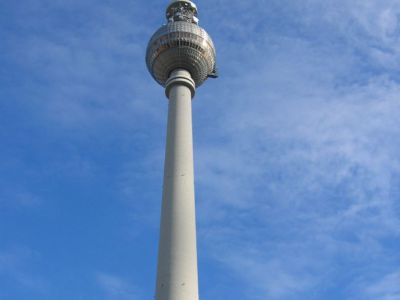
The Berlin Television Tower was built by East Germany in the late 1960s. Inaugurated on October 3, 1969, it is the tallest structure in Germany and the third-tallest in the European Union.
Designated as a monument in 1979, the tower attracts around 1.2 million visitors annually and is one of Germany’s top tourist attractions. It has an observation deck at 203 meters and the rotating restaurant “Sphere” at 207 meters, offering panoramic views of the city, extending up to 40 kilometers (or 25 miles) on a clear day.
The tower’s height increased from 365 to 368 meters in 1997 after a new antenna was added, making it the fourth tallest free-standing structure in Europe, surpassed only by Moscow's Ostankino Tower and TV towers in Kiev and Riga. If you have a mild fear of heights, fear not-the elevator whisks you to the top in a mere 40 seconds. You can also opt for a more adventurous ascent via 985 steps.
Inside, enjoy the authentic Sputnik-era ambiance complete with period-appropriate decor and finishes. If you have specific dietary preferences, particularly as a vegetarian, it's advisable to peruse the restaurant menu on their website before making a reservation. The dining experience itself is quite lovely otherwise, comprising a starter, main course, and dessert, plus a glass of sparkling wine and two glasses of red or white wine, along with unlimited water. Moreover, the restaurant rotates slowly, affording you a comprehensive view of Berlin, making it an ideal setting for photography. A full rotation takes about half an hour, offering ample opportunity to capture the city from a bird's-eye perspective while sipping a coffee.
Presently dubbed "the toothpick" by locals, the tower previously earned the nickname “Pope’s Revenge” because sunlight reflecting off its dome forms a Greek cross, which some saw as a rebuke to East Germany’s anti-religious stance, and was mentioned by the former US president Ronald Reagan in his 1987 “Tear down this wall” speech. For the same reasons, it was also jokingly called "Saint Walter" after Walter Ulbricht, leader of the Socialist Unity Party which governed East Germany.
Originally a symbol of Communist power, the TV tower is now a unified Berlin landmark and a cultural and tourist icon, hosting events like the Festival of Lights.
Designated as a monument in 1979, the tower attracts around 1.2 million visitors annually and is one of Germany’s top tourist attractions. It has an observation deck at 203 meters and the rotating restaurant “Sphere” at 207 meters, offering panoramic views of the city, extending up to 40 kilometers (or 25 miles) on a clear day.
The tower’s height increased from 365 to 368 meters in 1997 after a new antenna was added, making it the fourth tallest free-standing structure in Europe, surpassed only by Moscow's Ostankino Tower and TV towers in Kiev and Riga. If you have a mild fear of heights, fear not-the elevator whisks you to the top in a mere 40 seconds. You can also opt for a more adventurous ascent via 985 steps.
Inside, enjoy the authentic Sputnik-era ambiance complete with period-appropriate decor and finishes. If you have specific dietary preferences, particularly as a vegetarian, it's advisable to peruse the restaurant menu on their website before making a reservation. The dining experience itself is quite lovely otherwise, comprising a starter, main course, and dessert, plus a glass of sparkling wine and two glasses of red or white wine, along with unlimited water. Moreover, the restaurant rotates slowly, affording you a comprehensive view of Berlin, making it an ideal setting for photography. A full rotation takes about half an hour, offering ample opportunity to capture the city from a bird's-eye perspective while sipping a coffee.
Presently dubbed "the toothpick" by locals, the tower previously earned the nickname “Pope’s Revenge” because sunlight reflecting off its dome forms a Greek cross, which some saw as a rebuke to East Germany’s anti-religious stance, and was mentioned by the former US president Ronald Reagan in his 1987 “Tear down this wall” speech. For the same reasons, it was also jokingly called "Saint Walter" after Walter Ulbricht, leader of the Socialist Unity Party which governed East Germany.
Originally a symbol of Communist power, the TV tower is now a unified Berlin landmark and a cultural and tourist icon, hosting events like the Festival of Lights.
8) Waffel oder Becher
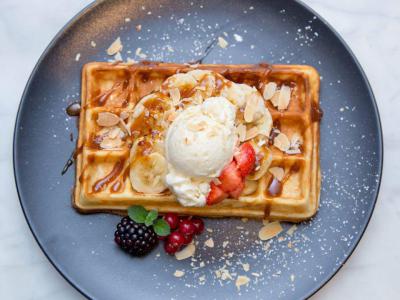
Perfect for those days when the weather isn't scorching hot, Waffel oder Becher serves a very nice warm waffle with a whole host of choice for toppings, including various homemade sauces or an ice cream scoop. Crispy on the outside and soft on the inside, these freshly-made waffles are pretty much perfect, as well as an eye-treat – a bonus for Instagram enthusiasts. If you lean more towards cakes, don't miss out on trying the cheesecake. There's also a great selection of coffees, teas, hot chocolates, and fruity shakes.
On warmer days, their artisan ice cream – creamy and bursting with flavor – is worth a trip from any part of the city! Standouts among the more quirky flavors are the "Maracuja Mascarpone" and the vegan "Mandarine with Thai Basil and Ginger".
A great place to stop off, unwind, and recharge in a cozy environment, away from the tourist noise.
On warmer days, their artisan ice cream – creamy and bursting with flavor – is worth a trip from any part of the city! Standouts among the more quirky flavors are the "Maracuja Mascarpone" and the vegan "Mandarine with Thai Basil and Ginger".
A great place to stop off, unwind, and recharge in a cozy environment, away from the tourist noise.
9) Berliner Dom (Berlin Cathedral) (must see)
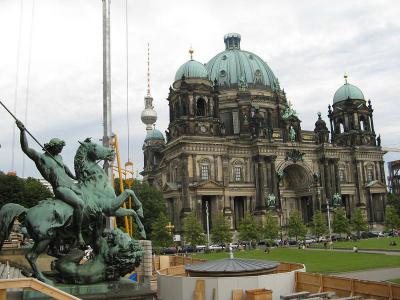
Despite what its lofty name suggests, the Berlin Cathedral is... not a cathedral. Yep, never was. Because Berlin never had a Catholic bishop in the house.
Now, rewind to 1451, when Prince-Elector Frederick II-nicknamed "Iron-tooth" because, well, medieval PR was wild-built a castle chapel right here. It started out Catholic, then switched to Lutheran in 1539, and just to keep things spicy, went Calvinist by 1608.
The version we see today is a Neo-Renaissance stunner, built between 1894 and 1905 by order of Emperor Wilhelm II, who basically wanted his very own Protestant answer to the Vatican’s Saint Peter’s Basilica. And what a power move it was: 114 meters long, 73 wide, and 116 tall-this place made everything else in Berlin look like dollhouse furniture.
And it wasn’t just for show, either. The Hohenzollerns-Germany’s royal family-worshipped here and even used the crypt as their final resting place. That lasted until 1918, when Wilhelm II peaced out to the Netherlands after abdicating the throne.
Then came World War II, and let’s just say the cathedral did not come out looking its best. East Germany did some repairs-thanks, GDR-but also tore down the Memorial Church in 1975, which wasn’t their finest hour.
Fast forward to 1993, and voilà: the place got a full glow-up. It now has the majestic pipe organ, pristine acoustics, priceless art, and vibes so divine they practically echo. Today, it’s home to choirs galore, including the English Choir Berlin, which hosts monthly Choral Evensong in true Anglican style.
If you're feeling brave, you can climb the dome! There’s a roomy stairwell, plenty of landings to catch your breath-and yes, actual chairs if you need a moment. At the bottom, history buffs rejoice: the crypt holds 94 royal sarcophagi. It's like Prussian Netflix, but... quieter.
Tip:
Snag the audio guide-it’s a small fee for a big info boost. Or grab a printed guide if you're old school. And in the summer, feel free to stretch out on the lawn across the street, near the fountain. It's the perfect picnic spot, and the cathedral makes a dramatic lunch backdrop.
Now, rewind to 1451, when Prince-Elector Frederick II-nicknamed "Iron-tooth" because, well, medieval PR was wild-built a castle chapel right here. It started out Catholic, then switched to Lutheran in 1539, and just to keep things spicy, went Calvinist by 1608.
The version we see today is a Neo-Renaissance stunner, built between 1894 and 1905 by order of Emperor Wilhelm II, who basically wanted his very own Protestant answer to the Vatican’s Saint Peter’s Basilica. And what a power move it was: 114 meters long, 73 wide, and 116 tall-this place made everything else in Berlin look like dollhouse furniture.
And it wasn’t just for show, either. The Hohenzollerns-Germany’s royal family-worshipped here and even used the crypt as their final resting place. That lasted until 1918, when Wilhelm II peaced out to the Netherlands after abdicating the throne.
Then came World War II, and let’s just say the cathedral did not come out looking its best. East Germany did some repairs-thanks, GDR-but also tore down the Memorial Church in 1975, which wasn’t their finest hour.
Fast forward to 1993, and voilà: the place got a full glow-up. It now has the majestic pipe organ, pristine acoustics, priceless art, and vibes so divine they practically echo. Today, it’s home to choirs galore, including the English Choir Berlin, which hosts monthly Choral Evensong in true Anglican style.
If you're feeling brave, you can climb the dome! There’s a roomy stairwell, plenty of landings to catch your breath-and yes, actual chairs if you need a moment. At the bottom, history buffs rejoice: the crypt holds 94 royal sarcophagi. It's like Prussian Netflix, but... quieter.
Tip:
Snag the audio guide-it’s a small fee for a big info boost. Or grab a printed guide if you're old school. And in the summer, feel free to stretch out on the lawn across the street, near the fountain. It's the perfect picnic spot, and the cathedral makes a dramatic lunch backdrop.
10) Pergamon Museum (must see)
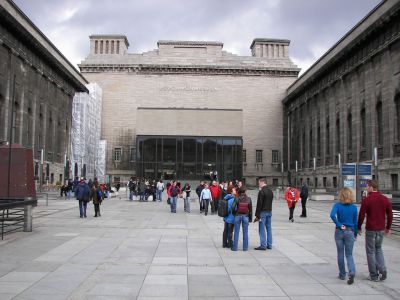
Now, this museum doesn’t just collect history-it reconstructs it, brick by ancient brick... With its crown jewel none other than the mighty Pergamon Zeus Altar (dating back to the 2nd century BC), this place is basically Europe’s VIP lounge for antiquities. Yes, it’s as jaw-dropping as it sounds, with life-sized architectural stunners casually sitting around like it’s no big deal.
Even if partially open, as during the scheduled makeover set to finish by 2026, this museum still has plenty to offer. Seeing everything it has in one go is a full-on epic quest, so bringing snacks is highly recommended.
The museum splits its magic into three power-packed sections. First, the star attraction: the Classical Antiquities Collection. Now, this isn’t just broken pottery and dusty statues. We’re talking the full Gate of Miletus, the legendary Pergamon Altar, and enough Greco-Roman artifacts to make an emperor jealous.
Then there’s the Islamic Art Museum and the Ancient Near East Museum. Picture the 8th-century castle facade from Jordan, the radiant blue Ishtar Gate, and the Babylonian Processional Way-basically ancient urban planning with flair. Add to it some of humanity’s earliest scribbles, delicate ceramics, ancient carpets, and even decorative windows, and you've got yourself a museum buffet.
And just when you think you’ve seen it all-surprise!-there’s the Pergamon Panorama, a separate bonus round just five minutes away on foot. Multi-level, immersive, and totally wild, it’s included in your ticket and might just make your inner history nerd do a happy dance.
Pro tip before you go: Skip the ticket line drama and book online with a time slot. You'll waltz right in like a VIP. And don’t forget the free audio guide-because decoding ancient marvels is way more fun when you’ve got an expert in your ear.
Even if partially open, as during the scheduled makeover set to finish by 2026, this museum still has plenty to offer. Seeing everything it has in one go is a full-on epic quest, so bringing snacks is highly recommended.
The museum splits its magic into three power-packed sections. First, the star attraction: the Classical Antiquities Collection. Now, this isn’t just broken pottery and dusty statues. We’re talking the full Gate of Miletus, the legendary Pergamon Altar, and enough Greco-Roman artifacts to make an emperor jealous.
Then there’s the Islamic Art Museum and the Ancient Near East Museum. Picture the 8th-century castle facade from Jordan, the radiant blue Ishtar Gate, and the Babylonian Processional Way-basically ancient urban planning with flair. Add to it some of humanity’s earliest scribbles, delicate ceramics, ancient carpets, and even decorative windows, and you've got yourself a museum buffet.
And just when you think you’ve seen it all-surprise!-there’s the Pergamon Panorama, a separate bonus round just five minutes away on foot. Multi-level, immersive, and totally wild, it’s included in your ticket and might just make your inner history nerd do a happy dance.
Pro tip before you go: Skip the ticket line drama and book online with a time slot. You'll waltz right in like a VIP. And don’t forget the free audio guide-because decoding ancient marvels is way more fun when you’ve got an expert in your ear.
