Custom Walk in Birmingham, England by asanchezjacob_5f547 created on 2025-10-16
Guide Location: England » Birmingham
Guide Type: Custom Walk
# of Sights: 13
Tour Duration: 3 Hour(s)
Travel Distance: 4.1 Km or 2.5 Miles
Share Key: EVYU5
Guide Type: Custom Walk
# of Sights: 13
Tour Duration: 3 Hour(s)
Travel Distance: 4.1 Km or 2.5 Miles
Share Key: EVYU5
How It Works
Please retrieve this walk in the GPSmyCity app. Once done, the app will guide you from one tour stop to the next as if you had a personal tour guide. If you created the walk on this website or come to the page via a link, please follow the instructions below to retrieve the walk in the app.
Retrieve This Walk in App
Step 1. Download the app "GPSmyCity: Walks in 1K+ Cities" on Apple App Store or Google Play Store.



Step 2. In the GPSmyCity app, download(or launch) the guide "Birmingham Map and Walking Tours".
Step 3. Tap the menu button located at upper right corner of the "Walks" screen and select "Retrieve custom walk". Enter the share key: EVYU5
1) Bullring & Grand Central
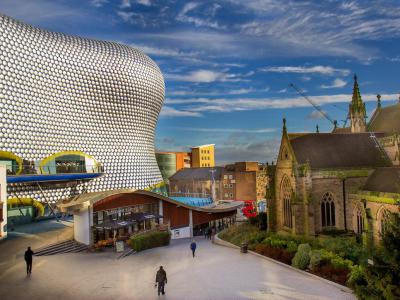
Two major shopping malls in Birmingham are connected by a link bridge. They combine to form the United Kingdom's largest city shopping area, the Bull Ring (currently Bullring) and Grand Central.
Big things start modestly. The area originally was called Corn Cheaping. The was a corn market here and there was the bull ring. In the ring bulls were tied to await baiting by dogs and slaughter. This was a savage but popular spectator sport for everyone except for bulls or dogs.
The market became a legal market in 1154 when Peter de Bermingham was granted marketing rights by King Henry II. By the 18th century food, cattle and corn markets were located there.
The market areas had their ups and downs, but world War II was devastating. Revival efforts began in 1955. In 1964 The Birmingham Bull Ring Centre was complete. The Centre extended to some 23 acres with 350.000 square feet devoted to retail trade, and the complex was visited by the Queen.
After more major development Bull Ring and Grand Central opened in 2003 and 2015 respectively. The malls are connected by a link street. Shoppers can move from one to the other without stepping outside.
The Bullring Bull is a bronze sculpture of an aggressive looking bull, as yet unbaited. The sculpture is the work of Laurence Broderick.
The malls are the site of an annual Christmas Market in the streets. The best time to visit is around four pm, when the malls light up in color.
Big things start modestly. The area originally was called Corn Cheaping. The was a corn market here and there was the bull ring. In the ring bulls were tied to await baiting by dogs and slaughter. This was a savage but popular spectator sport for everyone except for bulls or dogs.
The market became a legal market in 1154 when Peter de Bermingham was granted marketing rights by King Henry II. By the 18th century food, cattle and corn markets were located there.
The market areas had their ups and downs, but world War II was devastating. Revival efforts began in 1955. In 1964 The Birmingham Bull Ring Centre was complete. The Centre extended to some 23 acres with 350.000 square feet devoted to retail trade, and the complex was visited by the Queen.
After more major development Bull Ring and Grand Central opened in 2003 and 2015 respectively. The malls are connected by a link street. Shoppers can move from one to the other without stepping outside.
The Bullring Bull is a bronze sculpture of an aggressive looking bull, as yet unbaited. The sculpture is the work of Laurence Broderick.
The malls are the site of an annual Christmas Market in the streets. The best time to visit is around four pm, when the malls light up in color.
2) Council House
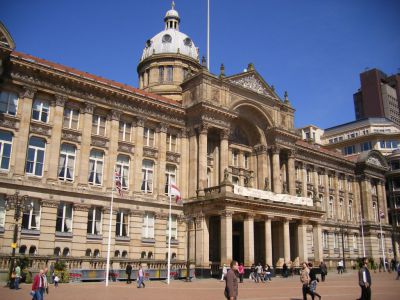
The Council House in Birmingham serves as the headquarters of Birmingham City Council and functions as the central hub for local government in the city. This Grade II* listed building not only houses the offices for council officers, including the Chief Executive, and elected members, but also features significant spaces like the council chamber, Lord Mayor's Suite, and an elaborate banqueting suite with a minstrel's gallery. The building is notable for its use of a first-floor exterior balcony by dignitaries and sports teams to address the public gathered below.
Constructed between 1874 and 1879, the building reflects the designs of architect Yeoville Thomason. It features a prominent hexastyle Corinthian porte-cochere leading to a balcony, arch, and tympanum, supported by a meticulously carved pediment. This construction was initiated to address the inadequacies of the earlier Public Office, dating from 1807, which was insufficient for the growing administrative needs of Birmingham, particularly after its status elevation to a city in 1889.
The main façade facing Victoria Square is adorned with a mosaic in the tympanum by Salviati Burke and Company of Venice, above which sits a pediment depicting Britannia receiving Birmingham's manufacturers. The square itself holds historical significance, having been the site of Christ Church before its demolition in 1899.
After its initial construction, the Council House was extended from 1881 to 1885 to add the city's art gallery, museum, and Gas Department offices, funded innovatively by the Gas Department to bypass taxpayer funding limits for the arts. Additional expansions from 1911 to 1919 included a new northern block linked by a corridor similar to Venice's Bridge of Sighs, which now contains the Feeney Art Galleries.
The Council House has also been a focal point for significant civic celebrations, such as the illumination event for the coronation of King Edward VII and Queen Alexandra in 1902, underscoring its role not just as a functional space for governance but as a symbol of local pride and heritage.
Constructed between 1874 and 1879, the building reflects the designs of architect Yeoville Thomason. It features a prominent hexastyle Corinthian porte-cochere leading to a balcony, arch, and tympanum, supported by a meticulously carved pediment. This construction was initiated to address the inadequacies of the earlier Public Office, dating from 1807, which was insufficient for the growing administrative needs of Birmingham, particularly after its status elevation to a city in 1889.
The main façade facing Victoria Square is adorned with a mosaic in the tympanum by Salviati Burke and Company of Venice, above which sits a pediment depicting Britannia receiving Birmingham's manufacturers. The square itself holds historical significance, having been the site of Christ Church before its demolition in 1899.
After its initial construction, the Council House was extended from 1881 to 1885 to add the city's art gallery, museum, and Gas Department offices, funded innovatively by the Gas Department to bypass taxpayer funding limits for the arts. Additional expansions from 1911 to 1919 included a new northern block linked by a corridor similar to Venice's Bridge of Sighs, which now contains the Feeney Art Galleries.
The Council House has also been a focal point for significant civic celebrations, such as the illumination event for the coronation of King Edward VII and Queen Alexandra in 1902, underscoring its role not just as a functional space for governance but as a symbol of local pride and heritage.
3) Birmingham Town Hall
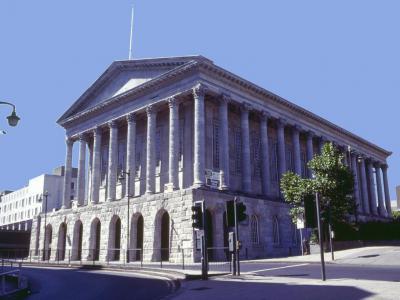
The Birmingham Town Hall, opened in 1834, looks very like the Temple of Castor and Pollux. The Temple once stood in the center of the ancient Forum. The look-alike Town Hall also stands in the center of things, on Paradise Street at Victoria Square.
It rests on a podium of rusticated stone. The columns are finished on top with carved Acanthus leaves below a simple architrave and dentil cornices. The Great Hall has high windows with eared architraves. At the south end of the podium there is an arcade as the main entrance.
The Town Hall was built as a venue for concerts and popular assemblies. It offers more events of jazz, folk, rock, pop and classical music, recitals, dance and educational performances. Not content with that, it goes on to general meetings, product launches, dinners, fashion shows and graduations.
Two construction workers, John Heap and William Badger were killed on the site by a falling crane in January 1833. They were buried in Saint Philip's churchyard. Their memorial was a pillar base originally made for the Town Hall.
In 1853 Charles Dickens gave his first reading in the Hall. The visit of David Lloyd George triggered a riot. Mendelssohn's Elija received its premiere. It was the home of the City of Birmingham Symphony Orchestra until it moved in 1991.
Popular headline acts made their appearance. There has been Buddy Holly, The Beatles, Led Zeppelin, Queen (!), Pink Floyd, Black Sabbath, The rolling Stones and naturally, Bob Dylan (perpetually touring).
It rests on a podium of rusticated stone. The columns are finished on top with carved Acanthus leaves below a simple architrave and dentil cornices. The Great Hall has high windows with eared architraves. At the south end of the podium there is an arcade as the main entrance.
The Town Hall was built as a venue for concerts and popular assemblies. It offers more events of jazz, folk, rock, pop and classical music, recitals, dance and educational performances. Not content with that, it goes on to general meetings, product launches, dinners, fashion shows and graduations.
Two construction workers, John Heap and William Badger were killed on the site by a falling crane in January 1833. They were buried in Saint Philip's churchyard. Their memorial was a pillar base originally made for the Town Hall.
In 1853 Charles Dickens gave his first reading in the Hall. The visit of David Lloyd George triggered a riot. Mendelssohn's Elija received its premiere. It was the home of the City of Birmingham Symphony Orchestra until it moved in 1991.
Popular headline acts made their appearance. There has been Buddy Holly, The Beatles, Led Zeppelin, Queen (!), Pink Floyd, Black Sabbath, The rolling Stones and naturally, Bob Dylan (perpetually touring).
4) Chamberlain Square
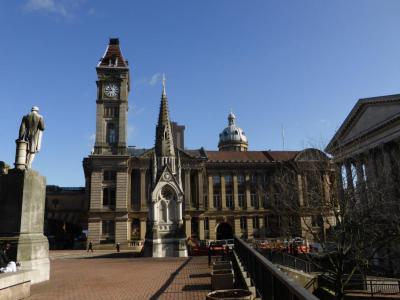
The Chamberlain Memorial, a Victorian neo-gothic spire 66 feet high, was unveiled in Birmingham, England on October, 1880. Joseph Chamberlain was there, watching the proceedings. The Square and the Memorial were named in honor of his services as statesman and Mayor. The memorial was designed by John Henry Chamberlain (no relation).
The crocketted spire and the carvings of capitals were done by Samuel Barfield of Leicester. There was a portrait of Joseph Chamberlain by Thomas Woolner on one side. The finished product was criticized by some as an "architectural scarecrow" and as a "hash of ornamental details." As late as 1966 it was called an "ungainly combination of shapes."
The Square was drastically remade in the 1970s. Most of the neo-gothic Victorian buildings were demolished and replaced by brutalist architecture. The Square was closed from 2015 until March, 2021 for more remodeling and re-landscaping. During this time surrounding buildings were demolished, including the brutalist Central Library.
After five years the Square has reopened. It is completely reformed with more open space, new paving, stairs and lighting. Statues have been moved. The statue of James Watt moved from Paradise Street to the Town Hall. Thomas Atwood is off his plinth and now reclines on steps of the Square among his scattered papers. Joseph Priestly is steadfast.
The crocketted spire and the carvings of capitals were done by Samuel Barfield of Leicester. There was a portrait of Joseph Chamberlain by Thomas Woolner on one side. The finished product was criticized by some as an "architectural scarecrow" and as a "hash of ornamental details." As late as 1966 it was called an "ungainly combination of shapes."
The Square was drastically remade in the 1970s. Most of the neo-gothic Victorian buildings were demolished and replaced by brutalist architecture. The Square was closed from 2015 until March, 2021 for more remodeling and re-landscaping. During this time surrounding buildings were demolished, including the brutalist Central Library.
After five years the Square has reopened. It is completely reformed with more open space, new paving, stairs and lighting. Statues have been moved. The statue of James Watt moved from Paradise Street to the Town Hall. Thomas Atwood is off his plinth and now reclines on steps of the Square among his scattered papers. Joseph Priestly is steadfast.
5) Central Library (must see)
The Brutalist Central Library of Birmingham is no more. The building was brought down and replaced by the new Library of Birmingham. The inverted Ziggurat of the Central Library ended its 41-year career as it began. Some cheered, some were horrified by its looks. The Central was never truly accepted by the city.
The Central was designed by architect John Madin in the Brutalist style. It was part of an ambitious project of the City Council to build a civic center on the new Inner Ring Road. The Library replaced by the Central of John Madin was designed by John Henry Chamberlain. Chamberlain's building opened in 1883. It was demolished in 1974.
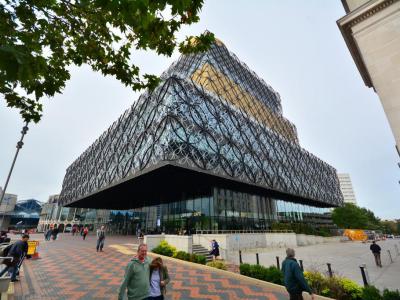
All hail the Library of Birmingham. Architectural design is by Francine Houben. Structural Engineering is by Buro Happold. The new Library has been described as the largest regional library in Europe. The library nestles between and connects to the Birmingham Rep and Baskerville House at Centenary Square.
The Shakespeare Memorial Room, designed by John Chamberlain in 1882 has been reincarnated with each demolition. It has been carefully dismantled and reassembled three times. It is constructed in a Lombardic Renaissance style with a clerestoried reading area. The collection houses 43,000 books, including the First Folio of 1623.
The library was opened in September, 2013 by Malala Youafzai, who was savagely attacked by the Taliban for attending school. She said, "Let us not forget that even one book, one pen, one teacher can change the world."
The Central was designed by architect John Madin in the Brutalist style. It was part of an ambitious project of the City Council to build a civic center on the new Inner Ring Road. The Library replaced by the Central of John Madin was designed by John Henry Chamberlain. Chamberlain's building opened in 1883. It was demolished in 1974.
All hail the Library of Birmingham. Architectural design is by Francine Houben. Structural Engineering is by Buro Happold. The new Library has been described as the largest regional library in Europe. The library nestles between and connects to the Birmingham Rep and Baskerville House at Centenary Square.
The Shakespeare Memorial Room, designed by John Chamberlain in 1882 has been reincarnated with each demolition. It has been carefully dismantled and reassembled three times. It is constructed in a Lombardic Renaissance style with a clerestoried reading area. The collection houses 43,000 books, including the First Folio of 1623.
The library was opened in September, 2013 by Malala Youafzai, who was savagely attacked by the Taliban for attending school. She said, "Let us not forget that even one book, one pen, one teacher can change the world."
6) Newman Brothers Coffin Furniture Factory
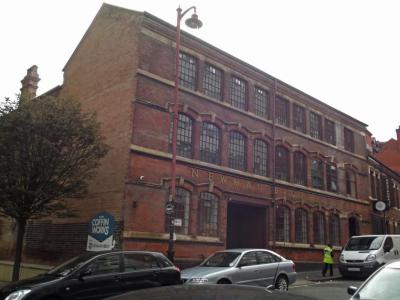
Newman Brothers at The Coffin Works is a museum located in the historical Newman Brothers Coffin Furniture Factory building in Birmingham's Jewellery Quarter. This unique museum serves as a gateway to the past, offering insights into the social and industrial history of a site that functioned as a coffin furniture factory from 1894 until its closure in 1998.
The factory was initially established in 1882 as a brass foundry by Alfred and Edwin Newman. By 1894, the business relocated to a new factory on Fleet Street, designed by Roger Harley in 1892, situated in the bustling Jewellery Quarter. This move marked a significant pivot in the company’s focus, as Newman Brothers transitioned to exclusively manufacturing coffin furniture. This niche market encompassed a variety of products essential for coffins, such as handles, crucifixes, nameplates, ornaments, and soft goods like shrouds and coffin linings, leveraging similar manufacturing techniques used in brass foundry.
After ceasing operations in 1998, the factory building faced the risk of oblivion. However, thanks to a determined fifteen-year campaign by the Birmingham Conservation Trust, substantial funds were raised to preserve and transform this piece of industrial heritage into a museum. The museum officially opened its doors in October 2014, dedicated to educating the public about the factory's pivotal role in the funerary industry.
Today, Newman Brothers at The Coffin Works not only offers guided tours around the meticulously restored factory, revealing rich personal narratives of its former workers, but it also supports the local economy by providing office spaces for small businesses. This museum stands as a testament to the enduring legacy of the Newman Brothers and their contribution to the historical and cultural fabric of Birmingham.
The factory was initially established in 1882 as a brass foundry by Alfred and Edwin Newman. By 1894, the business relocated to a new factory on Fleet Street, designed by Roger Harley in 1892, situated in the bustling Jewellery Quarter. This move marked a significant pivot in the company’s focus, as Newman Brothers transitioned to exclusively manufacturing coffin furniture. This niche market encompassed a variety of products essential for coffins, such as handles, crucifixes, nameplates, ornaments, and soft goods like shrouds and coffin linings, leveraging similar manufacturing techniques used in brass foundry.
After ceasing operations in 1998, the factory building faced the risk of oblivion. However, thanks to a determined fifteen-year campaign by the Birmingham Conservation Trust, substantial funds were raised to preserve and transform this piece of industrial heritage into a museum. The museum officially opened its doors in October 2014, dedicated to educating the public about the factory's pivotal role in the funerary industry.
Today, Newman Brothers at The Coffin Works not only offers guided tours around the meticulously restored factory, revealing rich personal narratives of its former workers, but it also supports the local economy by providing office spaces for small businesses. This museum stands as a testament to the enduring legacy of the Newman Brothers and their contribution to the historical and cultural fabric of Birmingham.
7) Brindleyplace
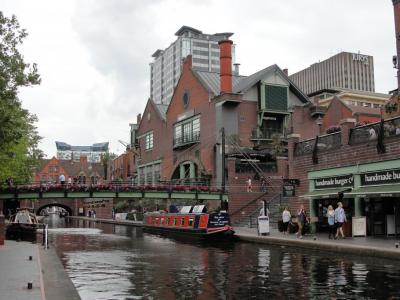
18th century canal engineer James Brindley is remembered in the mixed-use canal side development named Brindleyplace. It is the UK's largest such development. It occupies 17 acres and it is home to National Sea Life Centre, Royal Bank of Scotland, Orion Media, Ikon Gallery of Art and the Crescent Theatre.
The Birmingham Main Line Canal comes between Brindleyplace and the International Convention Centre, but there are connecting bridges. The site of Brindleyplace was formerly the site of Birmingham's factories. After the decline of industry in Birmingham the city council came up with a development scheme.
Different architects were employed to create designs covering a range of architectural types. Twelve buildings are numbered. All the buildings are low rise. The tallest is Eleven Brindleyplace at 194 feet.
Water's Edge was the first building in the Brindleyplace scheme. I has retail space at the canlside location. Two million people visit Water's Edge each year. Symphony Court is on a triangular shaped site across the Brindsley Loop Canal.
Brindsleyplace takes up three public squares: Central Square, Oozells Square and Brunswick Square.
The Birmingham Main Line Canal comes between Brindleyplace and the International Convention Centre, but there are connecting bridges. The site of Brindleyplace was formerly the site of Birmingham's factories. After the decline of industry in Birmingham the city council came up with a development scheme.
Different architects were employed to create designs covering a range of architectural types. Twelve buildings are numbered. All the buildings are low rise. The tallest is Eleven Brindleyplace at 194 feet.
Water's Edge was the first building in the Brindleyplace scheme. I has retail space at the canlside location. Two million people visit Water's Edge each year. Symphony Court is on a triangular shaped site across the Brindsley Loop Canal.
Brindsleyplace takes up three public squares: Central Square, Oozells Square and Brunswick Square.
8) National Sea Life Centre
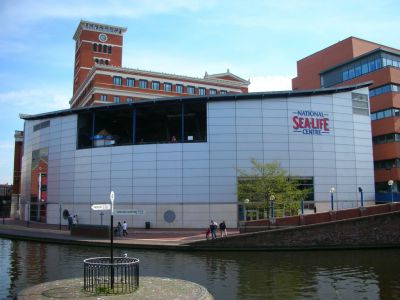
The National Sea Life Centre in Birmingham is a premier aquarium nestled in the vibrant area of Brindleyplace, by the Birmingham Canal Navigations Main Line Canal and opposite Arena Birmingham. Since its inauguration on July 5, 1996, the center has distinguished itself as the only inland sea life center in the UK at that time, offering a unique glimpse into the aquatic world.
Designed by the renowned Sir Norman Foster, the center features over 60 different displays of both freshwater and marine life, showcasing more than 2,000 creatures from various global habitats. A standout feature of the National Sea Life Centre is its impressive ocean tank, which holds 1,000,000 liters of water and includes species such as giant green sea turtles, blacktip reef sharks, and an array of tropical reef fish. This tank is notably encircled by the UK's only fully transparent 360-degree underwater tunnel, providing an immersive viewing experience.
The site itself holds historical significance, located at what was once the Oozells Street Wharf during the Victorian era. Over the years, the Sea Life Centre has expanded its attractions, including the introduction of the "Sensorama 4-D Cinema" in 2009, which enhances 3-D films with physical effects like wind and salt spray, and the "Penguin Ice Adventure" in 2014, a habitat for a colony of gentoo penguins.
Conservation is a key focus of the center with initiatives such as the 'Breed, Rescue, and Protect' program. The aquarium has undertaken significant efforts in species conservation, including a comprehensive seahorse breeding program that allows visitors to view several newly reared species in specialized tanks.
The National Sea Life Centre has earned recognition for its educational and conservation efforts, featured in several documentaries, and was visited by Sir David Attenborough in 2010. It has been named Aquarium of the Year and Warwickshire Family Attraction of the Year by the Good Britain Guide 2004, making it a celebrated destination in the West Midlands that attracts hundreds of thousands of visitors annually.
Designed by the renowned Sir Norman Foster, the center features over 60 different displays of both freshwater and marine life, showcasing more than 2,000 creatures from various global habitats. A standout feature of the National Sea Life Centre is its impressive ocean tank, which holds 1,000,000 liters of water and includes species such as giant green sea turtles, blacktip reef sharks, and an array of tropical reef fish. This tank is notably encircled by the UK's only fully transparent 360-degree underwater tunnel, providing an immersive viewing experience.
The site itself holds historical significance, located at what was once the Oozells Street Wharf during the Victorian era. Over the years, the Sea Life Centre has expanded its attractions, including the introduction of the "Sensorama 4-D Cinema" in 2009, which enhances 3-D films with physical effects like wind and salt spray, and the "Penguin Ice Adventure" in 2014, a habitat for a colony of gentoo penguins.
Conservation is a key focus of the center with initiatives such as the 'Breed, Rescue, and Protect' program. The aquarium has undertaken significant efforts in species conservation, including a comprehensive seahorse breeding program that allows visitors to view several newly reared species in specialized tanks.
The National Sea Life Centre has earned recognition for its educational and conservation efforts, featured in several documentaries, and was visited by Sir David Attenborough in 2010. It has been named Aquarium of the Year and Warwickshire Family Attraction of the Year by the Good Britain Guide 2004, making it a celebrated destination in the West Midlands that attracts hundreds of thousands of visitors annually.
9) Gas Street Basin (must see)
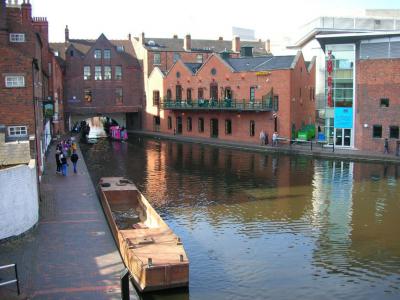
The squares, the shops, the crowds, the traffic and all the rest of it burns you out. What to do? Don't want to toss it in just yet. Take a tranquil stroll along the canal towpath into Gas Street Basin. When the Basin is reached there are shops and restaurants to visit, away from the hassle and the mobs.
Want to give the canal a try? There are water taxis. Cruise through the heart of the city hidden behind a screen of trees and shrubs. Factoid: Birmingham has more canal boats than Venice. They're less expensive too.
Gas Street Basin is the place where the Main Line meets the Worcester and Birmingham Canal. They meet at Worcester Bar, A barrier seven feet high installed in 1795 to keep the Worcester and Birmingham Canal company from "stealing" water from the Main Line.
The walk follows a circular pattern: Soho Loop, Smethwick Locks, Engine Arm and Spin Lane Locks and then returning to Bromford Junction to those old friends, Main Line and Worcester and Birmingham.
Want to give the canal a try? There are water taxis. Cruise through the heart of the city hidden behind a screen of trees and shrubs. Factoid: Birmingham has more canal boats than Venice. They're less expensive too.
Gas Street Basin is the place where the Main Line meets the Worcester and Birmingham Canal. They meet at Worcester Bar, A barrier seven feet high installed in 1795 to keep the Worcester and Birmingham Canal company from "stealing" water from the Main Line.
The walk follows a circular pattern: Soho Loop, Smethwick Locks, Engine Arm and Spin Lane Locks and then returning to Bromford Junction to those old friends, Main Line and Worcester and Birmingham.
10) Baskerville House Birmingham
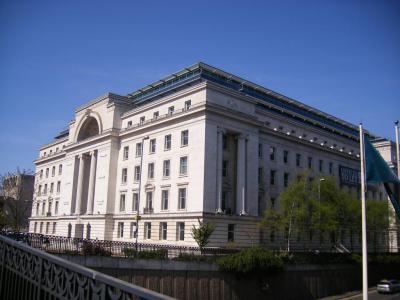
Baskerville House, situated in Centenary Square, Birmingham, has a storied history deeply intertwined with the city's civic and architectural development. Originally known as the Civic Centre, Baskerville House stands on the site that was once the residence of John Baskerville, a prominent local figure. His home was demolished to make way for civic developments after his remains were relocated due to canal constructions in the area.
Before Baskerville House was built, the site held Baskerville and Gibson's Basins, used by the Birmingham Aluminium Company and a nearby rolling mill. With industrial decline in the early 20th century, these were filled in to make room for the proposed Civic Centre, initiated by the Birmingham City Council in 1919. After a failed design competition in 1926, the council worked with S.N. Cooke and later commissioned T. Cecil Howitt to design the building. Construction of Baskerville House started in 1938, was halted by World War II, and included temporary features like a rear brick wall.
Baskerville House emerged as the sole structure completed from the grander Civic Centre plan, which would have spanned the entire Centenary Square and included various other civic buildings. Post-war, shifts in architectural tastes and the economic impact of the war altered the original expansive plans, leaving Baskerville House as a standalone symbol of the era’s civic ambitions.
The building, completed with the Birmingham coat of arms, later served as offices for the Birmingham City Council and was notably extended in 2007. Today, it stands as a testament to the city’s historical and architectural heritage, capturing the evolution of civic planning in Birmingham from industrial uses through to modern civic administration.
Before Baskerville House was built, the site held Baskerville and Gibson's Basins, used by the Birmingham Aluminium Company and a nearby rolling mill. With industrial decline in the early 20th century, these were filled in to make room for the proposed Civic Centre, initiated by the Birmingham City Council in 1919. After a failed design competition in 1926, the council worked with S.N. Cooke and later commissioned T. Cecil Howitt to design the building. Construction of Baskerville House started in 1938, was halted by World War II, and included temporary features like a rear brick wall.
Baskerville House emerged as the sole structure completed from the grander Civic Centre plan, which would have spanned the entire Centenary Square and included various other civic buildings. Post-war, shifts in architectural tastes and the economic impact of the war altered the original expansive plans, leaving Baskerville House as a standalone symbol of the era’s civic ambitions.
The building, completed with the Birmingham coat of arms, later served as offices for the Birmingham City Council and was notably extended in 2007. Today, it stands as a testament to the city’s historical and architectural heritage, capturing the evolution of civic planning in Birmingham from industrial uses through to modern civic administration.
11) Victoria Square
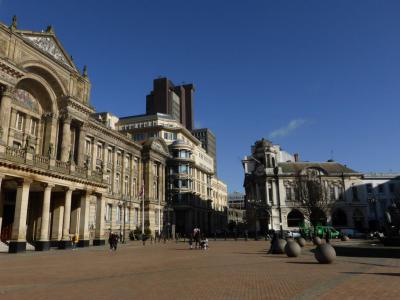
Often considered to be the center of the City, Victoria Square is a pedestrianized square. It is the location of Town Hall and the Council House and neighboring Chamberlain Square. Saint Philip's Cathedral is nearby on Colnore Row. And it is within walking distance of the Bull Ring and Brindleyplace.
Once known as the Council House Square, it was renamed Victoria Square in 1901. Unfortunately the Queen died about a week later.
During the last century the Square became an ongoing traffic jam. It was determined to redevelop the square, making it a pedestrianized area. It was opened by Diana, Princess of Wales in 1994. A fountain in the Square designed by Dhruva Mistry was called, "The River." It was a nude in a fountain. Locals called it "The Floozy in the Jacuzzi."
Other statues were in the square before redevelopment. Queen Victoria is the only one that remains. It was created by Thomas Brock in 1901 and recast in bronze in 1951 by William Blove.
During the Christmas season the square becomes the venue for the Frankfort Christmas Market and craft Fair. The craft fair connects to another similar fair in Chamberlain Square. The Frankfort fair features wooden huts as stalls selling Jewelry, artwork, ornaments, and German food.
In July 2012 the Square was visited by Queen Elizabeth and Prince Philip while on the West Midland Diamond Jubilee Tour. They had a royal walkabout and accepted gifts from the City.
Once known as the Council House Square, it was renamed Victoria Square in 1901. Unfortunately the Queen died about a week later.
During the last century the Square became an ongoing traffic jam. It was determined to redevelop the square, making it a pedestrianized area. It was opened by Diana, Princess of Wales in 1994. A fountain in the Square designed by Dhruva Mistry was called, "The River." It was a nude in a fountain. Locals called it "The Floozy in the Jacuzzi."
Other statues were in the square before redevelopment. Queen Victoria is the only one that remains. It was created by Thomas Brock in 1901 and recast in bronze in 1951 by William Blove.
During the Christmas season the square becomes the venue for the Frankfort Christmas Market and craft Fair. The craft fair connects to another similar fair in Chamberlain Square. The Frankfort fair features wooden huts as stalls selling Jewelry, artwork, ornaments, and German food.
In July 2012 the Square was visited by Queen Elizabeth and Prince Philip while on the West Midland Diamond Jubilee Tour. They had a royal walkabout and accepted gifts from the City.
12) New Street
Known as Novus Vicus in the Borough rental records of 1296, and later in 1345 as le Newstret, New Street probably began earlier in 1166. It was established as a way from the Bull Ring, the center of the new town, to Dudley Castle, the home of the de Bermingham family. Every castle must have a road. Every road must have a town.
The street experienced massive growth through the 18th and 19th centuries. It was described as "the Bond Street of Birmingham". It was noted for its shops, schools, theatre and Arts.
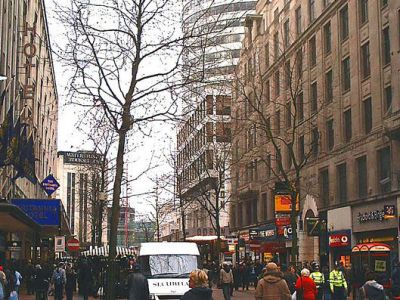
New Street is now mainly pedestrianized. It is more than ever a popular shopping street, connecting the Bullring Shopping Centre to Corporation Street and High Street. A farmers' market is held monthly on the first and third Wednesday. The Christmas Frankfurt market of Victoria Square is also held on New Street.
The street experienced massive growth through the 18th and 19th centuries. It was described as "the Bond Street of Birmingham". It was noted for its shops, schools, theatre and Arts.
New Street is now mainly pedestrianized. It is more than ever a popular shopping street, connecting the Bullring Shopping Centre to Corporation Street and High Street. A farmers' market is held monthly on the first and third Wednesday. The Christmas Frankfurt market of Victoria Square is also held on New Street.

13) Rotunda
The Rotunda in Birmingham is a prominent cylindrical high-rise building that has become a distinctive feature of the city's skyline. Initially constructed in 1965, the Rotunda stands 81 meters (266 feet) tall and is a Grade II listed building, reflecting its architectural and historical significance.
Originally conceived by architect James A. Roberts as part of the Bull Ring Shopping Centre redevelopment, the building was initially planned as a 12-story office block. However, the design was later revised to 25 stories, eliminating earlier proposals for a rooftop restaurant and a cinema. The construction began in 1961 and was completed in 1965, focusing on a unique construction method necessitated by limited space and proximity to a railway tunnel.
The Rotunda initially housed offices, and its base included retail spaces and the notable "Rotunda Relief," a circular mural by John Poole located in Lloyds banking hall. In the 1960s and 1970s, the Rotunda bore iconic advertisements for MEPC plc and Double Diamond beer, and later for Coca-Cola during the 1980s and 1990s.
Between 2004 and 2008, the Rotunda underwent a significant renovation led by Urban Splash and architect Glenn Howells, transforming it from an office block into a residential building with long-term and serviced apartments. Managed by Staying Cool on the 19th and 20th floors, the building reopened on 13 May 2008 and maintained retail spaces on the ground floor, integrating with the Bullring's central shopping area.
Today, the Rotunda remains a mixed-use development that symbolizes Birmingham's post-war architectural ambitions and its modern-day urban revitalization, continuing to be a key part of the city's architectural heritage and community life.
Originally conceived by architect James A. Roberts as part of the Bull Ring Shopping Centre redevelopment, the building was initially planned as a 12-story office block. However, the design was later revised to 25 stories, eliminating earlier proposals for a rooftop restaurant and a cinema. The construction began in 1961 and was completed in 1965, focusing on a unique construction method necessitated by limited space and proximity to a railway tunnel.
The Rotunda initially housed offices, and its base included retail spaces and the notable "Rotunda Relief," a circular mural by John Poole located in Lloyds banking hall. In the 1960s and 1970s, the Rotunda bore iconic advertisements for MEPC plc and Double Diamond beer, and later for Coca-Cola during the 1980s and 1990s.
Between 2004 and 2008, the Rotunda underwent a significant renovation led by Urban Splash and architect Glenn Howells, transforming it from an office block into a residential building with long-term and serviced apartments. Managed by Staying Cool on the 19th and 20th floors, the building reopened on 13 May 2008 and maintained retail spaces on the ground floor, integrating with the Bullring's central shopping area.
Today, the Rotunda remains a mixed-use development that symbolizes Birmingham's post-war architectural ambitions and its modern-day urban revitalization, continuing to be a key part of the city's architectural heritage and community life.
