

Chamberlain Square, Birmingham
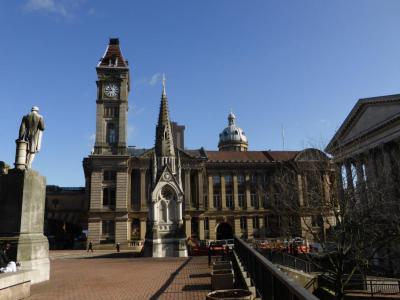
The Chamberlain Memorial, a Victorian neo-Gothic structure 66 feet high, was unveiled in Birmingham on October 10, 1880. Joseph Chamberlain himself was there, watching the proceedings. The square and memorial were named in honor of his public service, including his time as Mayor of Birmingham.
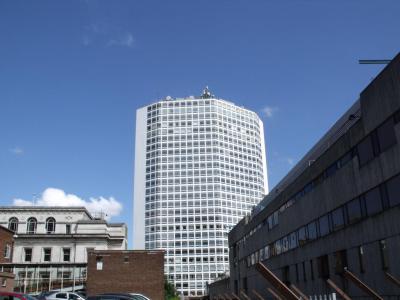
The square was drastically remade in the 1970s. Most of the neo-Gothic Victorian buildings were demolished and replaced by Brutalist architecture. During this period, surrounding buildings were demolished, including the Brutalist Central Library. After more than five years, the square reopened in March 2021. It was completely transformed, with more open space, new paving, steps, and lighting.
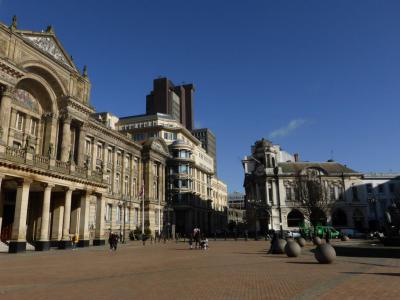
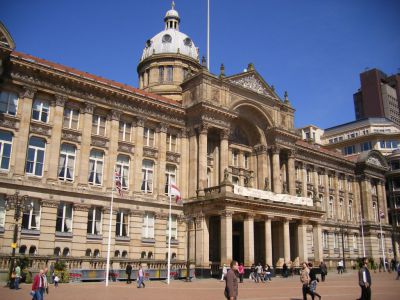
From the western side of the square, look east-northeast toward the ornate façade of Birmingham Museum & Art Gallery. To your right, on the southeast side of the square, stands the classical Birmingham Town Hall. Between them, the soaring Chamberlain Memorial remains the centerpiece of the square.
Statues were also moved during the redevelopment. Thomas Attwood now reclines on the lower steps of Chamberlain Square among his scattered bronze papers. The statues of James Watt and Joseph Priestley, which had been removed for safekeeping during the Paradise redevelopment, returned to the area in August 2026. They now stand at opposite ends of Ratcliff Passage, the pedestrian space between Three Chamberlain Square and Birmingham Town Hall.
The square was drastically remade in the 1970s. Most of the neo-Gothic Victorian buildings were demolished and replaced by Brutalist architecture. During this period, surrounding buildings were demolished, including the Brutalist Central Library. After more than five years, the square reopened in March 2021. It was completely transformed, with more open space, new paving, steps, and lighting.
From the western side of the square, look east-northeast toward the ornate façade of Birmingham Museum & Art Gallery. To your right, on the southeast side of the square, stands the classical Birmingham Town Hall. Between them, the soaring Chamberlain Memorial remains the centerpiece of the square.
Statues were also moved during the redevelopment. Thomas Attwood now reclines on the lower steps of Chamberlain Square among his scattered bronze papers. The statues of James Watt and Joseph Priestley, which had been removed for safekeeping during the Paradise redevelopment, returned to the area in August 2026. They now stand at opposite ends of Ratcliff Passage, the pedestrian space between Three Chamberlain Square and Birmingham Town Hall.
Want to visit this sight? Check out these Self-Guided Walking Tours in Birmingham. Alternatively, you can download the mobile app "GPSmyCity: Walks in 1K+ Cities" from Apple App Store or Google Play Store. The app turns your mobile device to a personal tour guide and it works offline, so no data plan is needed when traveling abroad.
Download The GPSmyCity App



Chamberlain Square on Map
Sight Name: Chamberlain Square
Sight Location: Birmingham, England (See walking tours in Birmingham)
Sight Type: Attraction/Landmark
Guide(s) Containing This Sight:
Sight Location: Birmingham, England (See walking tours in Birmingham)
Sight Type: Attraction/Landmark
Guide(s) Containing This Sight:
Nearby Sights
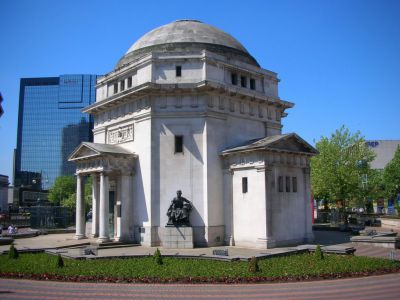
Walking Tours in Birmingham, England

Create Your Own Walk in Birmingham
Creating your own self-guided walk in Birmingham is easy and fun. Choose the city attractions that you want to see and a walk route map will be created just for you. You can even set your hotel as the start point of the walk.
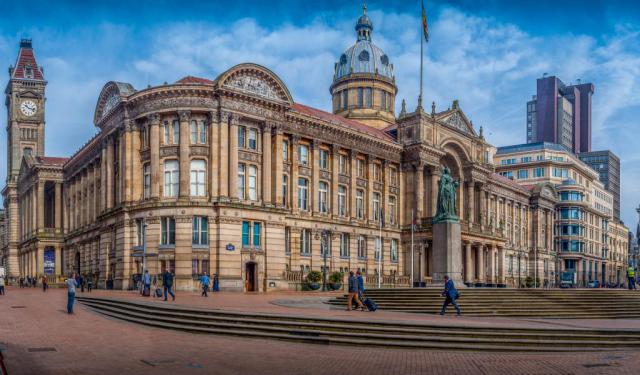
Birmingham Introduction Walking Tour
The name Birmingham derives from the Old English Beormingahām, meaning “the home or settlement of Beorma’s people.” The Beormingas were therefore the people or followers of someone called Beorma. Who exactly was Beorma? No one really knows. He may have been a local leader, an ancestor, or even a legendary figure. What is certain is that a small Anglo-Saxon settlement was established here... view more
Tour Duration: 2 Hours
Travel Distance: 3.2 Km or 2 Miles
Tour Duration: 2 Hours
Travel Distance: 3.2 Km or 2 Miles
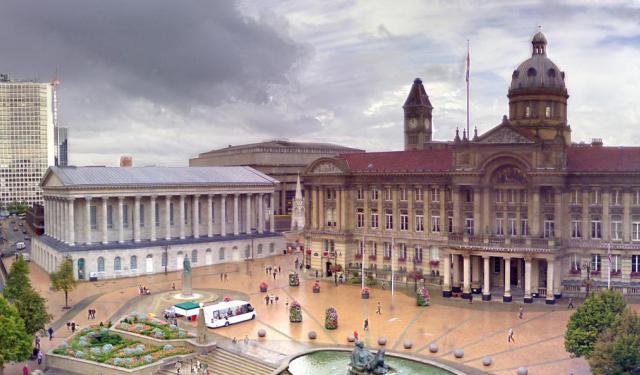
Birmingham Historical Buildings Tour
Although existent as a settlement since the early 7th century AD, Birmingham, UK is a relatively young city that has grown rapidly, as a result of the Industrial Revolution, from the 18th century onward. Thus, the local architecture is overwhelmingly a product of the 18th, 19th, and 20th centuries, with little survived from the earlier days.
Traces of the ancient settlement, dating back to... view more
Tour Duration: 2 Hours
Travel Distance: 4 Km or 2.5 Miles
Traces of the ancient settlement, dating back to... view more
Tour Duration: 2 Hours
Travel Distance: 4 Km or 2.5 Miles