Custom Walk in San Juan, Puerto Rico by cbent333_f26ef created on 2025-11-01
Guide Location: Puerto Rico » San Juan
Guide Type: Custom Walk
# of Sights: 8
Tour Duration: 3 Hour(s)
Travel Distance: 7 Km or 4.3 Miles
Share Key: KADTN
Guide Type: Custom Walk
# of Sights: 8
Tour Duration: 3 Hour(s)
Travel Distance: 7 Km or 4.3 Miles
Share Key: KADTN
How It Works
Please retrieve this walk in the GPSmyCity app. Once done, the app will guide you from one tour stop to the next as if you had a personal tour guide. If you created the walk on this website or come to the page via a link, please follow the instructions below to retrieve the walk in the app.
Retrieve This Walk in App
Step 1. Download the app "GPSmyCity: Walks in 1K+ Cities" on Apple App Store or Google Play Store.



Step 2. In the GPSmyCity app, download(or launch) the guide "San Juan Map and Walking Tours".
Step 3. Tap the menu button located at upper right corner of the "Walks" screen and select "Retrieve custom walk". Enter the share key: KADTN
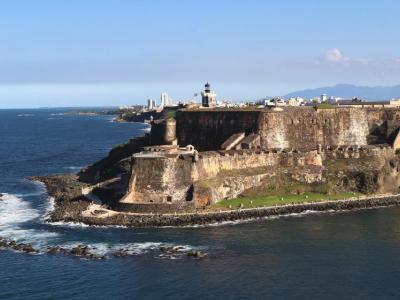
1) El Castillo San Felipe del Morro (Fort El Morro) (must see)
The Fort San Felipe del Morro, or simply El Morro, is a 16th-century citadel on the northwestern tip of the San Juan islet, named in honor of King Philip II of Spain. It was the second military installation, after La Fortaleza, built in what is now known as the Old Town.
The construction began in 1539, authorized by King Charles V, and was finished in 1790. During that period, El Morro had been transformed from a promontory mounted with a cannon to a six-level fortress designed to guard the entrance to the bay of San Juan from seaborne invaders. Many more structures were added to the complex over the next 400 years; the outer walls, built initially 6 feet (1.8 m) thick, were augmented to 18 feet (5.5 m) by the end of the 18th century.
Thanks to El Morro, the Spanish were able to defend Puerto Rico from invasions by the British and the Dutch, as well as pirates. In 1898, following the Spanish-American War, the island changed hands from Spain to the United States. El Morro was actively used as a military installation during the First and Second World Wars.
In 1961, the US Army retired El Morro, passing it on to the National Park Service to use it as a museum. In 1983, El Morro and the walled city of Old San Juan were declared UNESCO World Heritage Sites.
Tips:
A ticket to El Morro allows entry to the Castillo San Cristóbal (and vice versa) for a single fee.
The construction began in 1539, authorized by King Charles V, and was finished in 1790. During that period, El Morro had been transformed from a promontory mounted with a cannon to a six-level fortress designed to guard the entrance to the bay of San Juan from seaborne invaders. Many more structures were added to the complex over the next 400 years; the outer walls, built initially 6 feet (1.8 m) thick, were augmented to 18 feet (5.5 m) by the end of the 18th century.
Thanks to El Morro, the Spanish were able to defend Puerto Rico from invasions by the British and the Dutch, as well as pirates. In 1898, following the Spanish-American War, the island changed hands from Spain to the United States. El Morro was actively used as a military installation during the First and Second World Wars.
In 1961, the US Army retired El Morro, passing it on to the National Park Service to use it as a museum. In 1983, El Morro and the walled city of Old San Juan were declared UNESCO World Heritage Sites.
Tips:
A ticket to El Morro allows entry to the Castillo San Cristóbal (and vice versa) for a single fee.
Sight description based on Wikipedia.
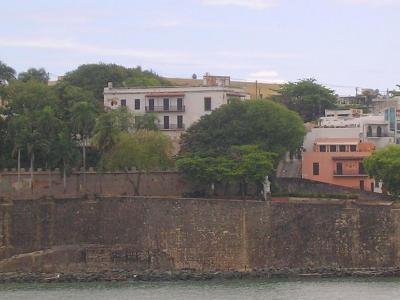
2) Casa Blanca Museum (White House Museum)
Casa Blanca is a house museum located in Old San Juan. This lovely white adobe building is one of the oldest buildings in San Juan. Built in 1521 it served as the first fortification of the San Juan islet and residence for Juan Ponce de Leon, the first governor of Puerto Rico, and his family. Juan Ponce de Leon unfortunately died in an expedition to Florida without ever lived in the house. It was later used as the residence of his descendants, until the mid-18th century. As a fortification it served mostly as a refuge in times of attack from Taino rebels.
The house was built in wood but the original structure was destroyed by fire and rebuilt in stone and masonry. It subsequently was occupied by members of the Spanish army and later by American army commanders. The surrounding gardens were planted by the first American governor of the island in the 19th century. In 1967 the complex was transferred to the government of Puerto Rico and declared a historical monument. In 1981, it was recorded in the Historic American Buildings Survey. The house is a museum of 16th and 17th century artifacts managed by the Institute of Puerto Rican Culture.
The building, walls and gardens are in excellent condition. The plaques on the walls explain the history of each room. The museum charges a small fee ($5) to enter while one can visit the gardens for free.
The house was built in wood but the original structure was destroyed by fire and rebuilt in stone and masonry. It subsequently was occupied by members of the Spanish army and later by American army commanders. The surrounding gardens were planted by the first American governor of the island in the 19th century. In 1967 the complex was transferred to the government of Puerto Rico and declared a historical monument. In 1981, it was recorded in the Historic American Buildings Survey. The house is a museum of 16th and 17th century artifacts managed by the Institute of Puerto Rican Culture.
The building, walls and gardens are in excellent condition. The plaques on the walls explain the history of each room. The museum charges a small fee ($5) to enter while one can visit the gardens for free.
Sight description based on Wikipedia.
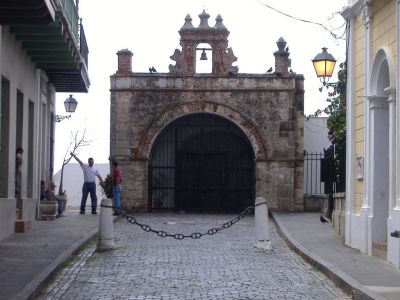
3) Capilla del Cristo (Chapel of Christ) (must see)
Capilla del Cristo (Chapel of Christ), is a small chapel located in the Old San Juan Historic District of Puerto Rico. Built in the 18th century, the structure has become a cultural icon of Puerto Rico and was saved from demolition in the 20th century. Most of the articles located at its altar are from 1753.
The chapel with its belfry is located in the Old San Juan Historic District in the western section of San Juan Islet, at the end of Cristo Street, now a pedestrian walkway. It sits on top of the old city walk. The chapel is a major tourist attraction in San Juan. Inside the chapel there is a famous painting called El Milagro ("The Miracle").
According to the legend, during a horse race that was taking place on the street where the chapel is located, a young rider and his horse took a bad fall and the rider went over the city wall but was miraculously saved. In a famous book about Puerto Rican legends, it says that the horse was killed but the rider lived. Afterwards, permission was granted to build the Catholic chapel and many festivals have been held, over the years, at the location to celebrate the miracle.
The chapel is open to publish on Saturday and Sunday from 12:00 to 18:00.
The chapel with its belfry is located in the Old San Juan Historic District in the western section of San Juan Islet, at the end of Cristo Street, now a pedestrian walkway. It sits on top of the old city walk. The chapel is a major tourist attraction in San Juan. Inside the chapel there is a famous painting called El Milagro ("The Miracle").
According to the legend, during a horse race that was taking place on the street where the chapel is located, a young rider and his horse took a bad fall and the rider went over the city wall but was miraculously saved. In a famous book about Puerto Rican legends, it says that the horse was killed but the rider lived. Afterwards, permission was granted to build the Catholic chapel and many festivals have been held, over the years, at the location to celebrate the miracle.
The chapel is open to publish on Saturday and Sunday from 12:00 to 18:00.
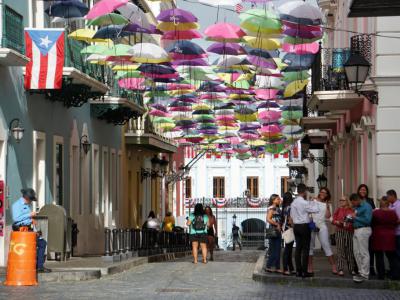
4) Calle de la Fortaleza (Fortaleza Street) (must see)
Proudly presiding over the bay of San Juan is the imposing La Fortaleza (Fortress), formally known as the Palace of Santa Catalina, the official residence of the Governor of Puerto Rico. The narrow road leading to the building, called Fortaleza Street, is the main artery of San Juan's historic quarter, cutting through most of it, and is also the oldest street in the area. It starts from Columbus Square and for the whole of its duration is lined with governmental buildings, hotels, perfumeries, craft shops, jewelry stores, and restaurants, gradually transforming into Avenue Juan Ponce de León in the east.
Just like many other colorful cobblestone streets in Old San Juan, each one more photogenic than the other, this thoroughfare is an important tourist attraction, in large part due to its historical and cultural significance. Visiting Fortaleza Street should be an integral part of every Old San Juan itinerary.
While the walled-in Old City has no shortage of vibrant photo spots, Fortaleza Street stands out above the rest due to the display of umbrellas – at the end of the street, near La Fortaleza itself – creating an overhead canopy that makes it particularly recognizable. These umbrellas tend to change colors during the year, from rainbow to all pink. Before the umbrellas, La Fortaleza Street was adorned with colorful kites.
Just like many other colorful cobblestone streets in Old San Juan, each one more photogenic than the other, this thoroughfare is an important tourist attraction, in large part due to its historical and cultural significance. Visiting Fortaleza Street should be an integral part of every Old San Juan itinerary.
While the walled-in Old City has no shortage of vibrant photo spots, Fortaleza Street stands out above the rest due to the display of umbrellas – at the end of the street, near La Fortaleza itself – creating an overhead canopy that makes it particularly recognizable. These umbrellas tend to change colors during the year, from rainbow to all pink. Before the umbrellas, La Fortaleza Street was adorned with colorful kites.
Sight description based on Wikipedia.
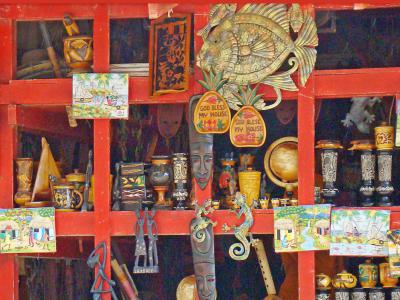
5) Haitian Gallery
The Haitian Gallery is a great place to find fine souvenirs, excellent gifts and original collectibles. This pleasant two-story shop offers vast array of items, including handmade chess sets, beautiful ceramic dolls, decorated photo albums, wooden sculptures and paintings. Price varies greatly depending on the item. If you looking to bring something home from San Juan, this place is worth a visit.
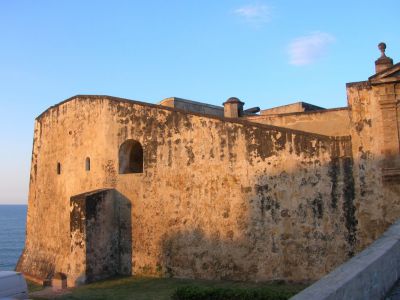
6) Castillo San Cristóbal (Fort San Cristobal) (must see)
Standing guard at the eastern gate, north of Columbus Square, is an imposing 18th-century fortress, called San Cristóbal. Contrary to her sister, El Morro, which was designed to protect from attacks by sea, the San Cristóbal Fort guarded the city against the enemy approaching by land, for which purpose it created a crossfire with El Morro over the bay. The citadel construction began in 1634 and was meant to strengthen the Spanish position in the face of imminent English and Dutch invasion.
The fort was named San Cristóbal in celebration of the Spanish victories which enabled ejecting of the English and Dutch interlopers from the island of the same name in the Lesser Antilles, which was then part of the insular territorial glacis of Puerto Rico.
When finished in 1783, the Fort San Cristóbal covered nearly 27 acres of land and practically wrapped around the whole of San Juan, with the entry to the city sealed by the San Cristóbal's double gates. After almost 100 years of relative peace, about a third of the fortification was demolished, in 1897, to help ease the flow of traffic in and out of the walled city.
The Fort San Cristóbal is now a listed National Historic Site. It is particularly worth visiting as the largest fortification ever built by the Spanish in the New World, where the first shots of the Spanish-American War were fired. If you're a keen photographer, San Cristobal is a goldmine of panoramic views of the coast, from Old San Juan to Condado and beyond.
Tip:
Guided tours by local rangers visit the extensive tunnel system connecting various sections of the fort. There is an exhibition of military clothing. Be sure to visit the overlook for the Devil's Sentry Box ("Garita del Diablo"), from which, according to legends, soldiers mysteriously disappeared. Tickets to San Cristobal or El Morro can be used to enter either of the forts.
The fort was named San Cristóbal in celebration of the Spanish victories which enabled ejecting of the English and Dutch interlopers from the island of the same name in the Lesser Antilles, which was then part of the insular territorial glacis of Puerto Rico.
When finished in 1783, the Fort San Cristóbal covered nearly 27 acres of land and practically wrapped around the whole of San Juan, with the entry to the city sealed by the San Cristóbal's double gates. After almost 100 years of relative peace, about a third of the fortification was demolished, in 1897, to help ease the flow of traffic in and out of the walled city.
The Fort San Cristóbal is now a listed National Historic Site. It is particularly worth visiting as the largest fortification ever built by the Spanish in the New World, where the first shots of the Spanish-American War were fired. If you're a keen photographer, San Cristobal is a goldmine of panoramic views of the coast, from Old San Juan to Condado and beyond.
Tip:
Guided tours by local rangers visit the extensive tunnel system connecting various sections of the fort. There is an exhibition of military clothing. Be sure to visit the overlook for the Devil's Sentry Box ("Garita del Diablo"), from which, according to legends, soldiers mysteriously disappeared. Tickets to San Cristobal or El Morro can be used to enter either of the forts.
Sight description based on Wikipedia.
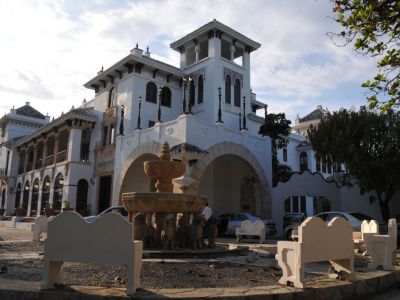
7) Casa de España (The Spain House)
Casa de España is a beautiful historic building located on Ponce de León Avenue, near El Capitolio. Built in 1932 and designed by the famous Puerto Rican architect, Pedro de Castro, it serves as a private civic and cultural association dedicated to Puerto Rico’s Spanish heritage. Although it is named "Casa", it has never been a dwelling place for a family; rather it is a "house" whose members claim common ancestry. It was listed on the National Register of Historic Places in 1983. It is not open to the public, but that should not stop anyone from appreciating its beauty from the outside.
Sight description based on Wikipedia.

8) Museo de Arte Contemporáneo (Museum of Contemporary Art of Puerto Rico)
The Museo de Arte Contemporáneo de Puerto Rico (Museum of Contemporary Art of Puerto Rico) is a renowned art museum located in the heart of San Juan, Puerto Rico. The museum is dedicated to showcasing and preserving contemporary art from Puerto Rico, the Caribbean, and beyond.
Founded in 1984, the Museo de Arte Contemporáneo is housed in a modernist building designed by Puerto Rican architect Jorge Rigau. The museum's collection includes over 1,000 works of art, including paintings, sculptures, photographs, and multimedia installations, all of which represent some of the most important artistic expressions of the past 60 years.
In addition to its extensive collection, the Museo de Arte Contemporáneo is known for its dynamic exhibitions and public programming, which feature the work of both established and emerging artists from Puerto Rico and around the world. The museum's commitment to fostering creativity and promoting cultural exchange has made it an important cultural institution not just in Puerto Rico, but throughout the Caribbean and Latin America.
Today, the Museo de Arte Contemporáneo is widely regarded as one of the premier art museums in the Caribbean. Its exhibitions and programs attract a diverse audience of artists, students, scholars, and art enthusiasts, who come to experience the museum's unique blend of contemporary art, culture, and history.
Founded in 1984, the Museo de Arte Contemporáneo is housed in a modernist building designed by Puerto Rican architect Jorge Rigau. The museum's collection includes over 1,000 works of art, including paintings, sculptures, photographs, and multimedia installations, all of which represent some of the most important artistic expressions of the past 60 years.
In addition to its extensive collection, the Museo de Arte Contemporáneo is known for its dynamic exhibitions and public programming, which feature the work of both established and emerging artists from Puerto Rico and around the world. The museum's commitment to fostering creativity and promoting cultural exchange has made it an important cultural institution not just in Puerto Rico, but throughout the Caribbean and Latin America.
Today, the Museo de Arte Contemporáneo is widely regarded as one of the premier art museums in the Caribbean. Its exhibitions and programs attract a diverse audience of artists, students, scholars, and art enthusiasts, who come to experience the museum's unique blend of contemporary art, culture, and history.
