Custom Walk in Santa Cruz de Tenerife, Spain by leegillam10_f4628 created on 2025-11-13
Guide Location: Spain » Santa Cruz de Tenerife
Guide Type: Custom Walk
# of Sights: 9
Tour Duration: 2 Hour(s)
Travel Distance: 3.2 Km or 2 Miles
Share Key: XJLZ5
Guide Type: Custom Walk
# of Sights: 9
Tour Duration: 2 Hour(s)
Travel Distance: 3.2 Km or 2 Miles
Share Key: XJLZ5
How It Works
Please retrieve this walk in the GPSmyCity app. Once done, the app will guide you from one tour stop to the next as if you had a personal tour guide. If you created the walk on this website or come to the page via a link, please follow the instructions below to retrieve the walk in the app.
Retrieve This Walk in App
Step 1. Download the app "GPSmyCity: Walks in 1K+ Cities" on Apple App Store or Google Play Store.



Step 2. In the GPSmyCity app, download(or launch) the guide "Santa Cruz de Tenerife Map and Walking Tours".
Step 3. Tap the menu button located at upper right corner of the "Walks" screen and select "Retrieve custom walk". Enter the share key: XJLZ5
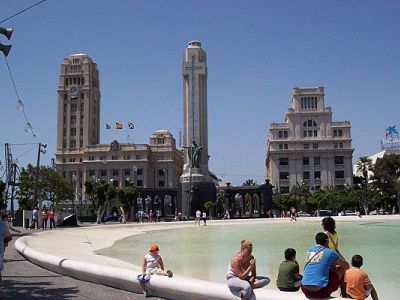
1) Plaza de España (Spain Square) (must see)
On July 25, 1797, British Rear Admiral Horatio Nelson lost his right arm to a musket ball fired from the Tiger Cannon of the Castle of San Cristobal in the Battle of Santa Cruz de Tenerife. The Admiral had attempted an amphibious landing to take the town. He lost the battle and his arm.
The Spain Square was laid down over the Castle of San Cristobal in 1929. Remains of the castle walls are on display in a tunnel under the square. The notorious Tiger Cannon is also there, looking fine after all these years. The square is located in the center of town. It is one of the main squares of the island of Tenerife.
The square is the work of architects Jacques Herzog and Pierre de Meuron of Herzog & Meuron of Switzerland. The Plaza has a lake and a fountain. Around the square is the Insular Palace of Tenerife, the Palace of the Charter and the Candelaria Square. The Monument to the Fallen of the Spanish Civil War is in the center of the square.
A sign, reading "Santa Cruz" (short for the slogan "Sant Cruz, the heart of Tenerife") is at one end of the square. The last letter of the word "Santa" is in the form of two hearts, one green, one blue. A sculpture "I AM Fine (Lo Llevo bien)" by Basque artist Julio Nieto is next to the lake. It is a man in the shape of a tree, a symbol of optimism.
The Spain Square was laid down over the Castle of San Cristobal in 1929. Remains of the castle walls are on display in a tunnel under the square. The notorious Tiger Cannon is also there, looking fine after all these years. The square is located in the center of town. It is one of the main squares of the island of Tenerife.
The square is the work of architects Jacques Herzog and Pierre de Meuron of Herzog & Meuron of Switzerland. The Plaza has a lake and a fountain. Around the square is the Insular Palace of Tenerife, the Palace of the Charter and the Candelaria Square. The Monument to the Fallen of the Spanish Civil War is in the center of the square.
A sign, reading "Santa Cruz" (short for the slogan "Sant Cruz, the heart of Tenerife") is at one end of the square. The last letter of the word "Santa" is in the form of two hearts, one green, one blue. A sculpture "I AM Fine (Lo Llevo bien)" by Basque artist Julio Nieto is next to the lake. It is a man in the shape of a tree, a symbol of optimism.
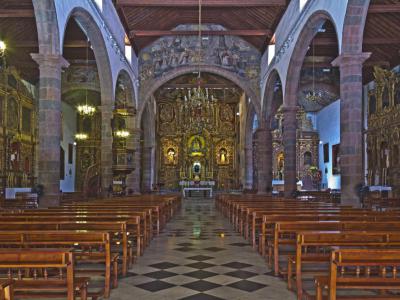
2) Iglesia de San Francisco de Asís (Church of St. Francis of Assisi)
Church of Saint Francis of Assisi stands as a magnificent example of Canary Islands Baroque. Built originally as part of a Franciscan convent-founded in the late 17th century-the current structure was completed in 1680, showcasing a colonial facade, a Neo-Corinthian portico, and three robust toscano stone columns. Visitors are greeted by a spacious three-nave interior, vaulted arches, Mudejar wooden ceilings, and richly detailed altarpieces in Andalusian style, including the grand main retablo and several exquisitely carved side altars.
One of the most treasured elements of the church is the revered image of the Lord of Tribulations, a small 17th-century bust of Christ. This sacred figure holds deep significance in the spiritual life: during the 1893 cholera outbreak, it was carried through the city’s streets in a solemn procession, after which the epidemic mysteriously subsided. In gratitude, the people honored it with the title “Lord of Santa Cruz.”
Inside, look for the beautifully restored 18th-century retablos-particularly the impressive main altar with its ornate Salomonic columns from the old Dominican convent-and the finely painted frescoes in grisaille that frame the choir and presbytery, depicting notable figures. A historic pipe organ, dating between 1778 and 1781, adds to the sacred atmosphere, often used during Mass and special concerts in the parish.
One of the most treasured elements of the church is the revered image of the Lord of Tribulations, a small 17th-century bust of Christ. This sacred figure holds deep significance in the spiritual life: during the 1893 cholera outbreak, it was carried through the city’s streets in a solemn procession, after which the epidemic mysteriously subsided. In gratitude, the people honored it with the title “Lord of Santa Cruz.”
Inside, look for the beautifully restored 18th-century retablos-particularly the impressive main altar with its ornate Salomonic columns from the old Dominican convent-and the finely painted frescoes in grisaille that frame the choir and presbytery, depicting notable figures. A historic pipe organ, dating between 1778 and 1781, adds to the sacred atmosphere, often used during Mass and special concerts in the parish.
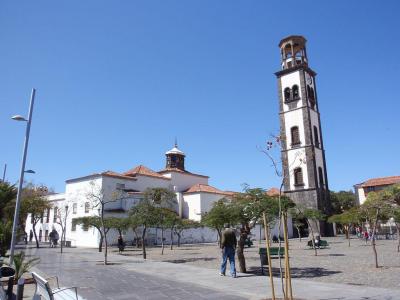
3) Parroquia de la Concepcion (Church of Immaculate Conception)
The Church of the Immaculate Conception is not the Cathedral of Tenerife. That honor goes to the Cathedral of La Laguna. However, the Church of the Immaculate Conception does have five naves. No other church in the Canaries has five naves. The church is built over a chapel erected by the conquistadors when they landed on the island.
Inside the church is an image of Saint James the Apostle, patron saint of Santa Cruz de Tenerife. The church holds a relic of martyred Pope Saint Clement I, donated by the Patriarch of Antioch. There is also a 15th century Gothic image of Our Lady of Consolation, patron saint of Santa Cruz de Tenerife.
The style of the church is both baroque and Tuscan. The bell tower, the stand out identifying marker of the church, closely resembles a minaret.
Inside the church is an image of Saint James the Apostle, patron saint of Santa Cruz de Tenerife. The church holds a relic of martyred Pope Saint Clement I, donated by the Patriarch of Antioch. There is also a 15th century Gothic image of Our Lady of Consolation, patron saint of Santa Cruz de Tenerife.
The style of the church is both baroque and Tuscan. The bell tower, the stand out identifying marker of the church, closely resembles a minaret.
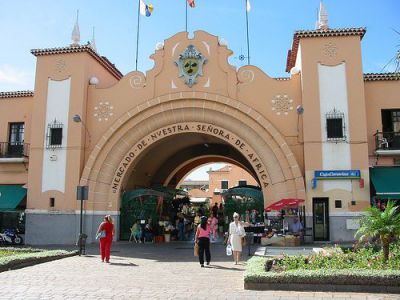
4) Mercado Nuestra Señora de Africa (Market of Our Lady of Africa) (must see)
By the ornate entrance arch of the Market of Our Lady of Africa are two sculptures. First, La Lechera ("Milkmaid"), is a shoeless woman hurrying along, a jug in one hand while supporting with the other hand a basket of dairy products on her head. It is in honor of the generations of hard-working milkmaids of Tenerife.
The second sculpture, Homenaje Al Chicharrero ("People of Santa Cruz"), is of two fishermen launching a boat in the surf. The main catch in the old days was horse mackerel, locally known as "chicharos." At one time Santa Cruz was a fishing village. It produced poverty and fish, and was generally looked down on by folks in the city.
The Market of our Lady of Africa is dedicated to food and the people who produce it. Founded in 1944, it is housed in an exotic building of arches and patios with Latin American and Moorish touches. A minaret-like clock tower announces the location of the market. For drivers, there is underground parking with stairs to the market.
Stalls and shops are housed on two busy floors offering fresh produce, flowers, fruit, fish, bread, cheeses, wines and yes, cold cuts. There are also lots of deli offerings, including salsa, cactus marmalade, honey, and spices. For hungry shoppers who can't wait, there are restaurants and tasting stalls.
The second sculpture, Homenaje Al Chicharrero ("People of Santa Cruz"), is of two fishermen launching a boat in the surf. The main catch in the old days was horse mackerel, locally known as "chicharos." At one time Santa Cruz was a fishing village. It produced poverty and fish, and was generally looked down on by folks in the city.
The Market of our Lady of Africa is dedicated to food and the people who produce it. Founded in 1944, it is housed in an exotic building of arches and patios with Latin American and Moorish touches. A minaret-like clock tower announces the location of the market. For drivers, there is underground parking with stairs to the market.
Stalls and shops are housed on two busy floors offering fresh produce, flowers, fruit, fish, bread, cheeses, wines and yes, cold cuts. There are also lots of deli offerings, including salsa, cactus marmalade, honey, and spices. For hungry shoppers who can't wait, there are restaurants and tasting stalls.
5) Ermita de Nuestra Señora de Regla (Hermitage of Our Lady of Regla)
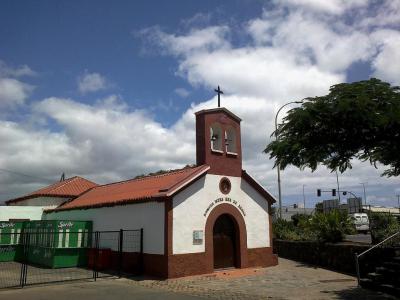
The Hermitage of Our Lady of Regla is a charming and historically rich chapel. Built in the 17th century-initially as a dedication to Our Lady of Guadalupe in the 1640s, and later rededicated to the Virgin of Regla-it was constructed to serve the local garrison stationed at the nearby Castle of San Juan.
Though its plain white-and-red exterior and bell tower radiate rustic charm, the hermitage has endured the passage of time and experienced restorations. Fortunately, the cherished statue of the “The Little Dark-Skinned Virgin of Santa Cruz”, was carefully moved to the nearby Ermita de San Telmo church during the renovation and was later returned.
Step inside this intimate sanctuary and you’ll discover more than just one Marian devotion. Alongside the Virgin of Regla, the interior hosts statues of Saint Lazarus, Saint Roch, and Saint Francis of Assisi. Every 8th of the month, the chapel holds special Masses in honor of the Virgin, and on September 8th-her feast day-a procession spills into the surrounding streets and heads to the Our Lady of Africa Market.
Though its plain white-and-red exterior and bell tower radiate rustic charm, the hermitage has endured the passage of time and experienced restorations. Fortunately, the cherished statue of the “The Little Dark-Skinned Virgin of Santa Cruz”, was carefully moved to the nearby Ermita de San Telmo church during the renovation and was later returned.
Step inside this intimate sanctuary and you’ll discover more than just one Marian devotion. Alongside the Virgin of Regla, the interior hosts statues of Saint Lazarus, Saint Roch, and Saint Francis of Assisi. Every 8th of the month, the chapel holds special Masses in honor of the Virgin, and on September 8th-her feast day-a procession spills into the surrounding streets and heads to the Our Lady of Africa Market.
6) The Tenerife Auditorium (must see)
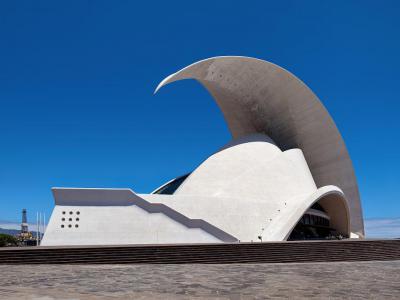
The Tenerife Auditorium “Adán Martín” rises dramatically as a stunning sculptural landmark. Designed by famed Spanish architect Santiago Calatrava and inaugurated in 2003, its sweeping concrete arch-rising 58 m from a two-point base-has become an representation of modern architecture in the Canary Islands.
Inside, the auditorium serves as a cultural center. Its principal concert hall seats around 1,616 attendees, while the more intimate chamber hall accommodates about 422. It hosts a rich calendar of cultural offerings-including performances by the Tenerife Symphony Orchestra, opera, ballet, jazz, world music, and events like the Tenerife Opera Festival and International Music Festival. Beyond music, the venue frequently opens its doors to film festivals, conferences, and even served as a backdrop for productions like Doctor Who and the film Rambo: Last Blood.
The Tenerife Auditorium features cafés and terraces where visitors can enjoy expansive views of the harbor. For the best experience, take time to admire the landmark's remarkable silhouette from different angles-especially during golden hour or when the building is beautifully lit at night for special events.
Inside, the auditorium serves as a cultural center. Its principal concert hall seats around 1,616 attendees, while the more intimate chamber hall accommodates about 422. It hosts a rich calendar of cultural offerings-including performances by the Tenerife Symphony Orchestra, opera, ballet, jazz, world music, and events like the Tenerife Opera Festival and International Music Festival. Beyond music, the venue frequently opens its doors to film festivals, conferences, and even served as a backdrop for productions like Doctor Who and the film Rambo: Last Blood.
The Tenerife Auditorium features cafés and terraces where visitors can enjoy expansive views of the harbor. For the best experience, take time to admire the landmark's remarkable silhouette from different angles-especially during golden hour or when the building is beautifully lit at night for special events.
7) Castillo de San Juan Bautista (Castle of John Baptist)
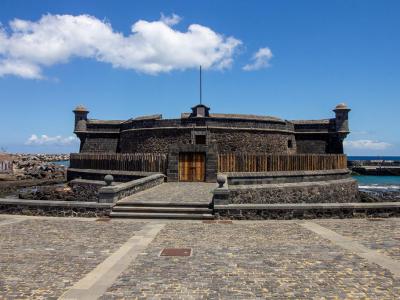
The Castle of John Baptist, also known as the Black Castle, is a 17th-century coastal fortress. Built between 1641 and 1644 from locally sourced black volcanic stone, this round bastion was designed to safeguard the port from pirates and foreign navies. In 1765, its defensive strength was enhanced with the addition of a cylindrical tower overlooking the sea.
Today, the fortress stands as one of the best-preserved military monuments on the island. Most notably, every July 25, the castle comes to life with a theatrical reenactment of Admiral Horatio Nelson’s failed 1797 invasion-offering a captivating glimpse into Tenerife’s storied past. Even though it is currently closed for interior visits, its historical significance and unique architecture make it a noteworthy landmark in the city.
Today, the fortress stands as one of the best-preserved military monuments on the island. Most notably, every July 25, the castle comes to life with a theatrical reenactment of Admiral Horatio Nelson’s failed 1797 invasion-offering a captivating glimpse into Tenerife’s storied past. Even though it is currently closed for interior visits, its historical significance and unique architecture make it a noteworthy landmark in the city.
8) Casa de la Pólvora (Gunpowder House)
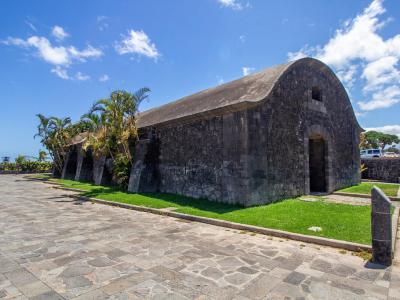
The Gunpowder House is a hidden gem of 18th-century military architecture. Constructed between 1756 and 1758 under the direction of engineer Francisco La Pierre, this robust structure was originally built to store artillery powder for the city’s coastal defences. Its rectangular basalt stone construction, rounded end walls, and barrel-vaulted roof provided a fire-resistant chamber capable of holding up to 150 000 kg of gunpowder while withstanding potential bombardment.
In 1779, additional earthworks were added to mask the building from naval view and absorb enemy cannon fire, ensuring the safety of its volatile contents. For roughly 150 years, the Gunpowder House served as the island’s primary powder magazine. In 1926, by royal decree, control transferred from the military to the city council, marking the end of its direct military use.
Today, the Gunpowder House remains one of the few surviving fortification buildings. While the interior is not currently open to visitors, the exterior and its scenic riverside gardens offer a glimpse into Tenerife’s defensive past.
In 1779, additional earthworks were added to mask the building from naval view and absorb enemy cannon fire, ensuring the safety of its volatile contents. For roughly 150 years, the Gunpowder House served as the island’s primary powder magazine. In 1926, by royal decree, control transferred from the military to the city council, marking the end of its direct military use.
Today, the Gunpowder House remains one of the few surviving fortification buildings. While the interior is not currently open to visitors, the exterior and its scenic riverside gardens offer a glimpse into Tenerife’s defensive past.
9) Palmetum (Botanical Garden) (must see)
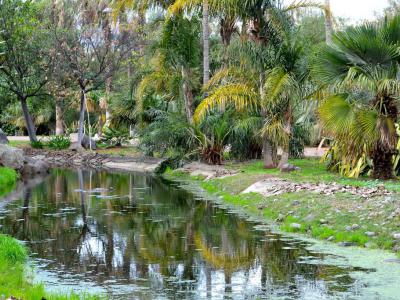
Located on an artificial hill of the city, the Palmetum is an botanical garden dedicated to palm trees-from classic Canarian date palms to rare island species from Madagascar, the Caribbean, Oceania, Asia, Africa and beyond. What once served as the city's landfill, closed in 1983, has been transformed through a remarkable ecological restoration project initiated in 1995-now flourishing with over 500 palm species.
Visitors can wander through lush, biogeographically themed sections that mimic their native habitats, complete with streams, ponds, waterfalls, and scenic lookouts overlooking the Atlantic Ocean and city skyline. The centrepiece is the “Octagon” a subterranean shade house, designed to nurture the most moisture-dependent species with a maze of jungle-like trails, bridges, and cascades.
Alongside its visual splendor, the Palmetum serves as a vital conservation and educational location. It operates a museum focused on palm ethnobotany, engages in ex situ propagation of endangered species, and functions as a research centre. Irrigation relies solely on recycled water, chemical use is prohibited, and native birds such as herons and hoopoes have flourished within its verdant grounds.
Visitors can wander through lush, biogeographically themed sections that mimic their native habitats, complete with streams, ponds, waterfalls, and scenic lookouts overlooking the Atlantic Ocean and city skyline. The centrepiece is the “Octagon” a subterranean shade house, designed to nurture the most moisture-dependent species with a maze of jungle-like trails, bridges, and cascades.
Alongside its visual splendor, the Palmetum serves as a vital conservation and educational location. It operates a museum focused on palm ethnobotany, engages in ex situ propagation of endangered species, and functions as a research centre. Irrigation relies solely on recycled water, chemical use is prohibited, and native birds such as herons and hoopoes have flourished within its verdant grounds.
