Custom Walk in Ann Arbor, Michigan by mitzir92_89e75 created on 2025-12-04
Guide Location: USA » Ann Arbor
Guide Type: Custom Walk
# of Sights: 12
Tour Duration: 4 Hour(s)
Travel Distance: 9.4 Km or 5.8 Miles
Share Key: 7UAMY
Guide Type: Custom Walk
# of Sights: 12
Tour Duration: 4 Hour(s)
Travel Distance: 9.4 Km or 5.8 Miles
Share Key: 7UAMY
How It Works
Please retrieve this walk in the GPSmyCity app. Once done, the app will guide you from one tour stop to the next as if you had a personal tour guide. If you created the walk on this website or come to the page via a link, please follow the instructions below to retrieve the walk in the app.
Retrieve This Walk in App
Step 1. Download the app "GPSmyCity: Walks in 1K+ Cities" on Apple App Store or Google Play Store.



Step 2. In the GPSmyCity app, download(or launch) the guide "Ann Arbor Map and Walking Tours".
Step 3. Tap the menu button located at upper right corner of the "Walks" screen and select "Retrieve custom walk". Enter the share key: 7UAMY
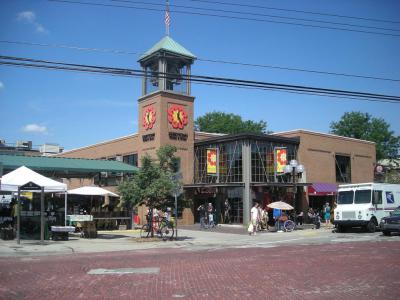
1) Kerrytown’s Market & Shops (must see)
Kerrytown is a vibrant community near the center of downtown Ann Arbor. Kerrytown’s Market & Shops offer a unique shopping experience that should not be missed. It is the ideal place to find a souvenir from your trip to Ann Arbor or simply enjoy the atmosphere. It is a great place to find something to eat as well.
The history of Kerrytown dates to the 19th century. The old-world charm is still evident in the buildings of the market district that line 5th street. Visitors to the city may find as much joy in admiring the traditional brickwork that is married to modern glass to create a look that is old and new at the same time.
There are numerous shops and restaurants with plenty to offer. Shoppers will find handcrafted merchandise, teas, spices, wines, oils, crafting materials, toys and much more. Those wishing to dine can choose from seafood, organic meats and cuisines from around the world.
The history of Kerrytown dates to the 19th century. The old-world charm is still evident in the buildings of the market district that line 5th street. Visitors to the city may find as much joy in admiring the traditional brickwork that is married to modern glass to create a look that is old and new at the same time.
There are numerous shops and restaurants with plenty to offer. Shoppers will find handcrafted merchandise, teas, spices, wines, oils, crafting materials, toys and much more. Those wishing to dine can choose from seafood, organic meats and cuisines from around the world.
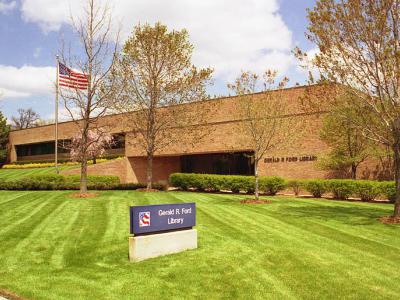
2) Gerald R. Ford Presidential Library
The Gerald R. Ford Presidential Library in Ann Arbor offers a thoughtful, immersive introduction to the life and legacy of America’s 38th president, Gerald R. Ford. Opened in 1981, the library is located on the University of Michigan’s North Campus, nestled amid modern academic buildings and verdant green spaces. As a repository of presidential papers, photographs, and oral histories, the Ford Library provides visitors with a comprehensive overview of an administration defined by integrity, domestic challenges, and significant foreign policy shifts during the 1970s.
In the well-designed exhibits, you’ll encounter key documents and artifacts tracing Ford’s political journey-from his early career in Grand Rapids to his tenure as vice president and his historic assumption of the presidency after Nixon’s resignation. Notable highlights include an original copy of the Nixon pardon, personal correspondence, and multimedia stations exploring the Watergate crisis, the Helsinki Accords, and the Space Shuttle program’s early days. These displays offer both historical depth and personal insight into President Ford’s character and leadership style.
Beyond the gallery spaces, the library hosts rotating exhibitions on political themes and contemporaneous issues-past installations have focused on presidential pardons, global diplomacy, and civic engagement. Visitors may also attend regular public programs, such as afternoon lectures, panel discussions, and educational workshops tailored to adults, students, and families. These events bring history to life, connecting Ford’s era with today’s civic conversations.
For tourists exploring Ann Arbor, the Ford Library is more than a museum-it’s a living archive that encourages reflection on public service, government transparency, and the resilience of democracy. A visit pairs seamlessly with walking through the University of Michigan’s scenic campus, grabbing lunch at a nearby café, or browsing the eclectic bookstores and art galleries of downtown Ann Arbor.
In the well-designed exhibits, you’ll encounter key documents and artifacts tracing Ford’s political journey-from his early career in Grand Rapids to his tenure as vice president and his historic assumption of the presidency after Nixon’s resignation. Notable highlights include an original copy of the Nixon pardon, personal correspondence, and multimedia stations exploring the Watergate crisis, the Helsinki Accords, and the Space Shuttle program’s early days. These displays offer both historical depth and personal insight into President Ford’s character and leadership style.
Beyond the gallery spaces, the library hosts rotating exhibitions on political themes and contemporaneous issues-past installations have focused on presidential pardons, global diplomacy, and civic engagement. Visitors may also attend regular public programs, such as afternoon lectures, panel discussions, and educational workshops tailored to adults, students, and families. These events bring history to life, connecting Ford’s era with today’s civic conversations.
For tourists exploring Ann Arbor, the Ford Library is more than a museum-it’s a living archive that encourages reflection on public service, government transparency, and the resilience of democracy. A visit pairs seamlessly with walking through the University of Michigan’s scenic campus, grabbing lunch at a nearby café, or browsing the eclectic bookstores and art galleries of downtown Ann Arbor.
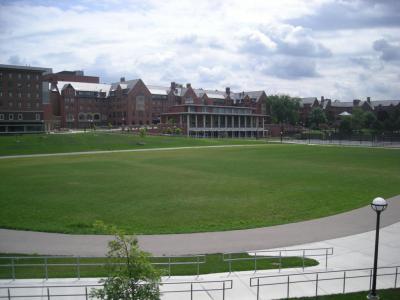
3) Palmer Field
Palmer Field is an outdoor exercise and recreation area at the University of Michigan. Unlike some of the indoor facilities at the university, Palmer Field is open to non-students who make the appropriate reservations.
Many visitors to the campus simply enjoy observing Palmer Field's massive green space. The field has eight illuminated tennis courts, a soccer and frisbee area, a basketball court and a 1/4 mile track.
This area is much more than a sports and recreation spot. Palmer Field is historically significant because it was the field acquired to provide access to athletics for female students. The field was originally purchased by the Women's League in 1908. They named it after Senator Thomas Palmer to thank him for his financial contribution for the purchase.
Palmer Field is open throughout the year from dawn until dusk. Those wishing to view Palmer Field should be sure not to confuse the field with Palmer Commons, which is located across Washtenaw Avenue from the field.
Many visitors to the campus simply enjoy observing Palmer Field's massive green space. The field has eight illuminated tennis courts, a soccer and frisbee area, a basketball court and a 1/4 mile track.
This area is much more than a sports and recreation spot. Palmer Field is historically significant because it was the field acquired to provide access to athletics for female students. The field was originally purchased by the Women's League in 1908. They named it after Senator Thomas Palmer to thank him for his financial contribution for the purchase.
Palmer Field is open throughout the year from dawn until dusk. Those wishing to view Palmer Field should be sure not to confuse the field with Palmer Commons, which is located across Washtenaw Avenue from the field.
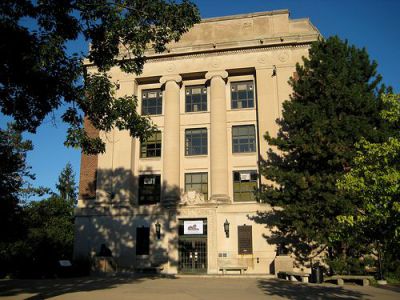
4) University of Michigan Museum of Natural History
The University of Michigan Museum of Natural History offers visitors a wide-ranging look at prehistoric life, Michigan’s biodiversity, and global cultures through its scientifically grounded exhibits. Operated by the College of Literature, Science, and the Arts, the museum reopened in 2019 in the Biological Sciences Building after relocating from the historic Ruthven Museums Building. Although its public museum was officially established in 1956, the university’s natural history collections date back to 1837, with the first exhibits opening to the public in 1881.
Spanning over 45,000 square feet, the museum provides free admission and houses several permanent galleries. The Hall of Evolution contains one of Michigan’s largest displays of fossils and models, featuring dinosaurs, ancient whales, and mastodons. The Michigan Wildlife Gallery showcases native birds, mammals, reptiles, and fungi from the Great Lakes region, including the world’s largest mastodon trackway on display. Other floors explore geology and anthropology, with mineral specimens and cultural artifacts from various parts of the world.
The museum's early home, the University Museums Building, was completed in 1928 and included collections from anthropology, paleontology, zoology, and botany. In 1940, two terrazzo puma sculptures were added to the building's entrance, designed by Carleton W. Angell and cast by the Works Progress Administration. The building was later renamed in honor of Alexander G. Ruthven, a former museum director and university president.
Today, visitors can also view rotating exhibits such as "The Invisible World of Mites," as well as displays on evolution, health, and archaeological research, all integrated into the museum’s updated facilities.
Spanning over 45,000 square feet, the museum provides free admission and houses several permanent galleries. The Hall of Evolution contains one of Michigan’s largest displays of fossils and models, featuring dinosaurs, ancient whales, and mastodons. The Michigan Wildlife Gallery showcases native birds, mammals, reptiles, and fungi from the Great Lakes region, including the world’s largest mastodon trackway on display. Other floors explore geology and anthropology, with mineral specimens and cultural artifacts from various parts of the world.
The museum's early home, the University Museums Building, was completed in 1928 and included collections from anthropology, paleontology, zoology, and botany. In 1940, two terrazzo puma sculptures were added to the building's entrance, designed by Carleton W. Angell and cast by the Works Progress Administration. The building was later renamed in honor of Alexander G. Ruthven, a former museum director and university president.
Today, visitors can also view rotating exhibits such as "The Invisible World of Mites," as well as displays on evolution, health, and archaeological research, all integrated into the museum’s updated facilities.
5) The Diag
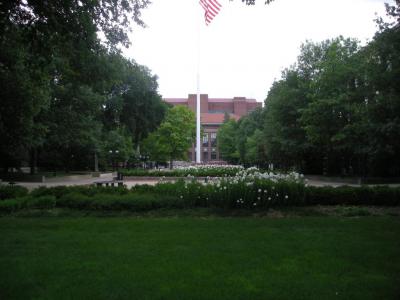
The Diag is an open green space in the center of the University of Michigan campus. The name comes from the diagonal sidewalks that run through the green. These sidewalks are used by students to get to buildings on campus like the Shapiro Undergraduate Library, the Hatcher Graduate Library, West Hall, Tisch Hall and Randall Lab.
The Diag is one of the busiest places on the campus. Along with the numerous students who use the Diag to get from building to building, it is also often used for special events. On any given day, one can find a concert, demonstration or fundraiser taking place on the green. It is also a popular place for picnicking.
One of the most distinctive features of the green is a brass M, called the Michigan M, that is in the very center. Students take great pains to avoid stepping on the M as it is said that any student who steps on it will fail their first bluebook exam.
The Diag is one of the busiest places on the campus. Along with the numerous students who use the Diag to get from building to building, it is also often used for special events. On any given day, one can find a concert, demonstration or fundraiser taking place on the green. It is also a popular place for picnicking.
One of the most distinctive features of the green is a brass M, called the Michigan M, that is in the very center. Students take great pains to avoid stepping on the M as it is said that any student who steps on it will fail their first bluebook exam.
6) The Law Quadrangle (must see)
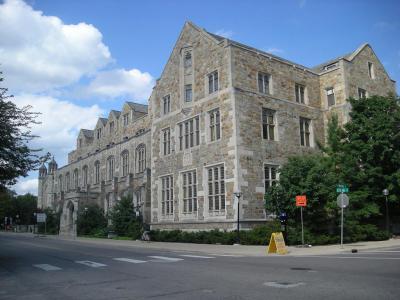
The Law Quadrangle was built for the University of Michigan by William W. Cook. Though he died before the project was completed, his plan for an area specifically built for law students lived on. With its official name being the Cook Law Quadrangle, the quad includes Hutchins Hall, a research building and two dormitories.
The buildings were completed in 1933. They were inspired by Oxford and Cambridge, which is reflected in their Tudor Gothic architectural style. The buildings were constructed using Weymouth granite and Indiana limestone.
The Law Quadrangle offers a lovely walk for any visitor to the University. The buildings remind tourists of old-world colleges, while the large trees provide ample shade. Visitors may wish to peek inside the buildings, but most are happy to walk throughout the quad in admiration.
William Cook received his law degree from the University of Michigan in 1882. He was an attorney and a prolific writer. At the time of his death, Cook was estimated to be worth about $20 million.
The Law Quadrangle and all of its buildings are located between Tappan Avenue and Monroe Street. It is within a quick walk of the South Quadrangle, the Kelsey Museum of Archaeology and the University of Michigan Museum of Art. A stroll up Tappan Avenue to University gives visitors a perfect view of the president's home as well. From there, tourists are only steps away from Michigan Union.
Why You Should Visit:
- To enjoy the Tudor Gothic architecture
- To see a meaningful part of University of Michigan history
Tips:
Plan your walking tour with the Law Quadrangle as one of your first or last stops. It is a good place to take it easy at the beginning of a walk or rest after a fun day of exploration.
The buildings were completed in 1933. They were inspired by Oxford and Cambridge, which is reflected in their Tudor Gothic architectural style. The buildings were constructed using Weymouth granite and Indiana limestone.
The Law Quadrangle offers a lovely walk for any visitor to the University. The buildings remind tourists of old-world colleges, while the large trees provide ample shade. Visitors may wish to peek inside the buildings, but most are happy to walk throughout the quad in admiration.
William Cook received his law degree from the University of Michigan in 1882. He was an attorney and a prolific writer. At the time of his death, Cook was estimated to be worth about $20 million.
The Law Quadrangle and all of its buildings are located between Tappan Avenue and Monroe Street. It is within a quick walk of the South Quadrangle, the Kelsey Museum of Archaeology and the University of Michigan Museum of Art. A stroll up Tappan Avenue to University gives visitors a perfect view of the president's home as well. From there, tourists are only steps away from Michigan Union.
Why You Should Visit:
- To enjoy the Tudor Gothic architecture
- To see a meaningful part of University of Michigan history
Tips:
Plan your walking tour with the Law Quadrangle as one of your first or last stops. It is a good place to take it easy at the beginning of a walk or rest after a fun day of exploration.
7) Kelsey Museum of Archaeology
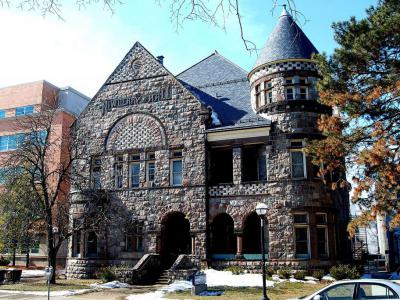
The Kelsey Museum of Archaeology is located on the University of Michigan campus. The museum holds more than 100,000 ancient and medieval artifacts as part of its permanent collection. It also has special exhibits throughout the year and sponsors fieldwork and research.
The original Kelsey Museum of Archaeology building was constructed in 1888 and finished in 1891. It was designed in the Richardsonian Romanesque architectural style by architects Spier and Rohns. It was named after Francis Kelsey, a professor of Latin at the university. Kelsey collected artifacts throughout his life and even secured funding for excavations. He gifted these collections to the museum and continued doing so until his death in the early 20th century.
An addition was built in 2003, which added a much-needed wing to the museum. The William E. Upjohn Exhibit Wing added over 20,000 feet of space. This wing allowed the museum to display artifacts that had previously been hidden due to lack of room.
The original Kelsey Museum of Archaeology building was constructed in 1888 and finished in 1891. It was designed in the Richardsonian Romanesque architectural style by architects Spier and Rohns. It was named after Francis Kelsey, a professor of Latin at the university. Kelsey collected artifacts throughout his life and even secured funding for excavations. He gifted these collections to the museum and continued doing so until his death in the early 20th century.
An addition was built in 2003, which added a much-needed wing to the museum. The William E. Upjohn Exhibit Wing added over 20,000 feet of space. This wing allowed the museum to display artifacts that had previously been hidden due to lack of room.
8) Nickels Arcade
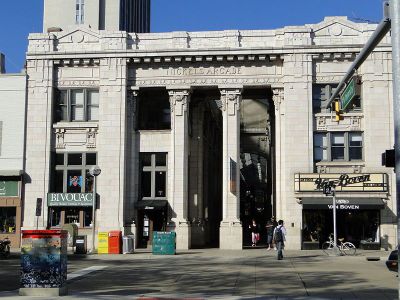
Nickels Arcade is a historical commercial building on South State Street in Ann Arbor. It was listed on the National Register of Historic Places in 1987. The building is notable as perhaps the only remaining example in Michigan of a free-standing commercial arcade building of a type that was popularized by the Cleveland Arcade.
John Nickels owned and operated a meat market at this location on State Street. His grandson Tom Nickels inherited a portion of the property, and bought other portions of the property from his brothers and sister. Nickels hired local architect Hermann Pipp to design this building. Construction began in 1915. The first tenant, the Farmers and Mechanics bank, moved in that year. The entire building, however, was not completed until 1918, due in part to delays caused by the onset of World War I. Nickels owned the Arcade until his death in 1932, when he passed it on to his children, James and Nora.
Nickels Arcade is a 261-foot-long gallery linking State Street on one side to Maynard Street on the other. The principal facade faces onto State Street, and consists of a three-story, three-bay open portico flanked with store and office blocks. The facade is clad with a buff-colored decorative architectural terra cotta. The Maynard Street facade is similar to the State Street facade in design, but is clad primarily with yellow brick, with additional ornamental detailing of terra cotta. The gallery running between the facades is covered with a gable skylight of metal-framed wire-glass panels.
On each side of the gallery are ground-level shops which face onto the roofed passage. These shops are essentially two stories in height, some with a mezzanine level. Upper-story office windows above the commercial spaces also face onto the gallery. The arcade is floored with blocks of square red tile in black borders. The arcade is divided into three sections: the section nearest State Street continues the terra cotta cladding and detailing of the State Street facade. This section is separated from the next by a segmental archway; a similar archway near the other end separates the center section from an entrance vestibule.
John Nickels owned and operated a meat market at this location on State Street. His grandson Tom Nickels inherited a portion of the property, and bought other portions of the property from his brothers and sister. Nickels hired local architect Hermann Pipp to design this building. Construction began in 1915. The first tenant, the Farmers and Mechanics bank, moved in that year. The entire building, however, was not completed until 1918, due in part to delays caused by the onset of World War I. Nickels owned the Arcade until his death in 1932, when he passed it on to his children, James and Nora.
Nickels Arcade is a 261-foot-long gallery linking State Street on one side to Maynard Street on the other. The principal facade faces onto State Street, and consists of a three-story, three-bay open portico flanked with store and office blocks. The facade is clad with a buff-colored decorative architectural terra cotta. The Maynard Street facade is similar to the State Street facade in design, but is clad primarily with yellow brick, with additional ornamental detailing of terra cotta. The gallery running between the facades is covered with a gable skylight of metal-framed wire-glass panels.
On each side of the gallery are ground-level shops which face onto the roofed passage. These shops are essentially two stories in height, some with a mezzanine level. Upper-story office windows above the commercial spaces also face onto the gallery. The arcade is floored with blocks of square red tile in black borders. The arcade is divided into three sections: the section nearest State Street continues the terra cotta cladding and detailing of the State Street facade. This section is separated from the next by a segmental archway; a similar archway near the other end separates the center section from an entrance vestibule.
9) State Theater
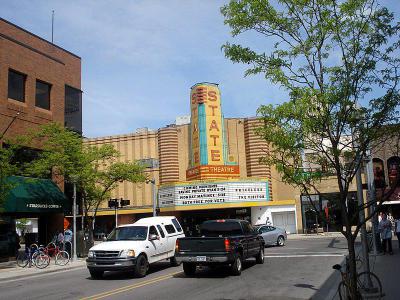
The State Theatre stands as a striking example of Streamline Moderne Art Deco architecture. Designed by C. Howard Crane and opened on March 18, 1942, the single-screen movie palace originally seated over 1,700 patrons and featured Ann Arbor’s first air-conditioning system. Its signature green, yellow, and red neon marquee-meticulously restored in 1976-remains a vivid reminder of its mid-century grandeur.
Through the decades, the theater adapted to shifting cinematic landscapes. In 1979, Butterfield divided the auditorium into a four-screen complex, a change aligned with multiplex trends. By 1989, the ground floor had been converted into retail space-most recently housing a small-format Target-while the balcony-level cinemas remained active. In 1999, Marquee Arts (formerly the Michigan Theater Foundation) took over operations, linking its programming closely with the nearby Michigan Theater and restoring the State’s cultural role.
A major renovation completed in 2017 refreshed the interior, revived original Art Deco motifs, installed contemporary projection and sound systems, and reconfigured four fully accessible auditoria. Today, the State offers an eclectic mix of independent films, classic revivals, and cult favorites, often combined with late-night showings-an ideal complement to the nearby Michigan Theater’s slate of live concerts and festivals.
Located in the heart of downtown, the State Theatre remains a beloved local landmark. Whether attracted by its historic charm, its engaging film programmes, or its neon-lit marquee on a summer evening, tourists will find it a memorable stop. Pair a visit with a stroll along State Street or time your trip with the annual Art Fair or Summer Festival nearby-embracing the unique blend of cinematic history and contemporary culture that defines Ann Arbor.
Through the decades, the theater adapted to shifting cinematic landscapes. In 1979, Butterfield divided the auditorium into a four-screen complex, a change aligned with multiplex trends. By 1989, the ground floor had been converted into retail space-most recently housing a small-format Target-while the balcony-level cinemas remained active. In 1999, Marquee Arts (formerly the Michigan Theater Foundation) took over operations, linking its programming closely with the nearby Michigan Theater and restoring the State’s cultural role.
A major renovation completed in 2017 refreshed the interior, revived original Art Deco motifs, installed contemporary projection and sound systems, and reconfigured four fully accessible auditoria. Today, the State offers an eclectic mix of independent films, classic revivals, and cult favorites, often combined with late-night showings-an ideal complement to the nearby Michigan Theater’s slate of live concerts and festivals.
Located in the heart of downtown, the State Theatre remains a beloved local landmark. Whether attracted by its historic charm, its engaging film programmes, or its neon-lit marquee on a summer evening, tourists will find it a memorable stop. Pair a visit with a stroll along State Street or time your trip with the annual Art Fair or Summer Festival nearby-embracing the unique blend of cinematic history and contemporary culture that defines Ann Arbor.
10) Michigan Theater (must see)
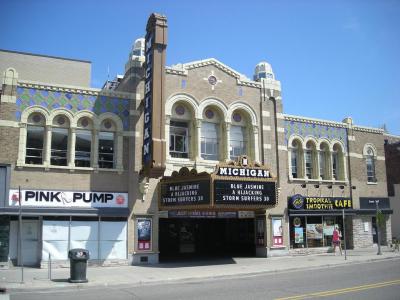
The Michigan Theater is a movie palace in Ann Arbor. It shows independent films and stage productions, and hosts musical concerts.
Designed by Detroit-based architect Maurice Finkel and built in 1927, the historic auditorium seats 1610 and features the theater's original 1927 Barton Theatre Pipe Organ, orchestra pit, stage, and elaborate architectural details.
The Michigan Theater opened on January 5, 1928, and was at the time the finest theater in Ann Arbor. The theater not only showed movies, but also hosted vaudeville acts, live concerts, and touring stage plays. Over the years, Jack Benny, Bing Crosby, Paul Robeson, and Ethel Barrymore all appeared at the theater.
During a renovation in 1956, many of the original ornate designs were destroyed. After a period of low attendance, the theater was threatened with demolition when its 50-year lease to Butterfield Theatres ran out in 1978, but members of the community and local organists helped raise funds to save and renovate the theater, returning it to its original design. A second screen, the Screening Room, with a state-of-the-art sound system, seating for 200, and the ability to project films digitally, was added in 1999.
The Michigan Theater is the current home of the annual Ann Arbor Film Festival, the Ann Arbor Symphony, and the Ann Arbor Concert Band. The theater has been named Outstanding Historic Theatre by the League of Historic American Theaters in 2006.
Designed by Detroit-based architect Maurice Finkel and built in 1927, the historic auditorium seats 1610 and features the theater's original 1927 Barton Theatre Pipe Organ, orchestra pit, stage, and elaborate architectural details.
The Michigan Theater opened on January 5, 1928, and was at the time the finest theater in Ann Arbor. The theater not only showed movies, but also hosted vaudeville acts, live concerts, and touring stage plays. Over the years, Jack Benny, Bing Crosby, Paul Robeson, and Ethel Barrymore all appeared at the theater.
During a renovation in 1956, many of the original ornate designs were destroyed. After a period of low attendance, the theater was threatened with demolition when its 50-year lease to Butterfield Theatres ran out in 1978, but members of the community and local organists helped raise funds to save and renovate the theater, returning it to its original design. A second screen, the Screening Room, with a state-of-the-art sound system, seating for 200, and the ability to project films digitally, was added in 1999.
The Michigan Theater is the current home of the annual Ann Arbor Film Festival, the Ann Arbor Symphony, and the Ann Arbor Concert Band. The theater has been named Outstanding Historic Theatre by the League of Historic American Theaters in 2006.
11) Graffiti Alley
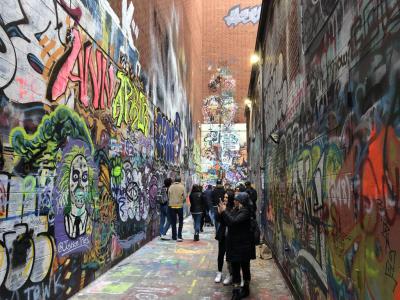
Tucked away just off East Liberty Street in Ann Arbor, right next to Michigan Theatre, is a narrow alley densely covered in graffiti. This colorful alley, a unique place for artists and lovers of this media, emerged on the scene in 1999, when the artist named Katherine Cost first painted here a piece, called Infinite Possibilities. Sadly, that original work was defaced by other graffiti artists only a few weeks later. Still, the mark made by Ms. Cost lingers on, as the new artists continue to leave theirs, seeing this place constantly evolve.
The result is a pretty cool, if not say crazy, mixture of colors, messages and images perpetually changing, as time goes by. A hotbed for artists, Graffiti Alley is open for everyone to leave their statement for the world... literally, if only for a week or so, till it gets painted over by something else. This, in turn, makes it ever more interesting to explore.
The spot may well not be too much publicized, but it is popular nonetheless. People simply cannot help stepping in to check it out whilst passing by. If you wish to tag the wall, or snap a few selfies, or are just curious to see what's inside, don't be shy and pop in. Although open all year round, the alley is particularly packed during summer with those anxious to take selfies and photos for Instagram.
Indeed, Graffiti Alley is a new kind of art in the city that you don't want to miss.... Even if graffiti is not your thing, you may still have some ideas that may change your perspective. Plus it's free! So, it's a win-win all the same...
The result is a pretty cool, if not say crazy, mixture of colors, messages and images perpetually changing, as time goes by. A hotbed for artists, Graffiti Alley is open for everyone to leave their statement for the world... literally, if only for a week or so, till it gets painted over by something else. This, in turn, makes it ever more interesting to explore.
The spot may well not be too much publicized, but it is popular nonetheless. People simply cannot help stepping in to check it out whilst passing by. If you wish to tag the wall, or snap a few selfies, or are just curious to see what's inside, don't be shy and pop in. Although open all year round, the alley is particularly packed during summer with those anxious to take selfies and photos for Instagram.
Indeed, Graffiti Alley is a new kind of art in the city that you don't want to miss.... Even if graffiti is not your thing, you may still have some ideas that may change your perspective. Plus it's free! So, it's a win-win all the same...
12) Main Street (must see)
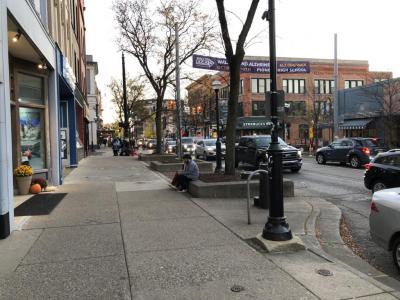
Ann Arbor's Main Street technically starts near the Huron River, between Bandemer Park and Bluffs Nature Area, and then snakes through the downtown area, past the University of Michigan Golf Course, culminating at Eisenhower Parkway. Still, for most locals Main Street is the lively portion of it that bustles day and night, dominated by numerous shopping, dining, entertainment and nightlife venues, collectively exuding a strong sense of place and local culture.
As a center of activity and community gathering place, Main Street offers so much to see and do that many visitors plan their time around this eclectic area. The vibrant thoroughfare literally bursts at the seams with progressive restaurants, creative cocktail bars, unique meeting spaces, popular music joints and boundary-breaking art galleries.
Some of the spots a tourist will find on and around Main Street include the Ann Arbor Art Center, the Blue Llama Jazz Club, and Downtown Home and Garden. Those who want to spend their time outdoors will find Liberty Plaza to be a true treat. This park area has benches for seating, shade trees and regular musical performances in the summer.
However, dynamic dining is what most defines Main Street. Classical steaks, Asian cuisine, or other internationally-inspired casual fare (like Cuban or Greek), as well as healthful comfort food, crepes and waffles, or farm-to-table stuff – are all offered here in great supply. The bar scene on Main Street is just as exciting.
Shopping-wise, the area is second to none either and hosts several annual events to celebrate their unique retailers. Bookstores may be the most famous of them. Known for decades as a book-lover’s destination, Ann Arbor is home to a plethora of niche, unique, independent booksellers, many of which are based on Main Street or nearby side streets.
The continuous rhythm of historic 19th and early 20th-century building storefronts (featuring a variety of styles like Commercial, Italianate, Beaux Arts, Moderne and Art Deco) contribute to an exciting pedestrian environment.
There are also more than a dozen events organized on Main Street throughout the year (such as Festifools, Taste of Ann Arbor, Ann Arbor Restaurant Week, or Rolling Sculpture Car Show) which attract residents and visitors of all ages.
As a center of activity and community gathering place, Main Street offers so much to see and do that many visitors plan their time around this eclectic area. The vibrant thoroughfare literally bursts at the seams with progressive restaurants, creative cocktail bars, unique meeting spaces, popular music joints and boundary-breaking art galleries.
Some of the spots a tourist will find on and around Main Street include the Ann Arbor Art Center, the Blue Llama Jazz Club, and Downtown Home and Garden. Those who want to spend their time outdoors will find Liberty Plaza to be a true treat. This park area has benches for seating, shade trees and regular musical performances in the summer.
However, dynamic dining is what most defines Main Street. Classical steaks, Asian cuisine, or other internationally-inspired casual fare (like Cuban or Greek), as well as healthful comfort food, crepes and waffles, or farm-to-table stuff – are all offered here in great supply. The bar scene on Main Street is just as exciting.
Shopping-wise, the area is second to none either and hosts several annual events to celebrate their unique retailers. Bookstores may be the most famous of them. Known for decades as a book-lover’s destination, Ann Arbor is home to a plethora of niche, unique, independent booksellers, many of which are based on Main Street or nearby side streets.
The continuous rhythm of historic 19th and early 20th-century building storefronts (featuring a variety of styles like Commercial, Italianate, Beaux Arts, Moderne and Art Deco) contribute to an exciting pedestrian environment.
There are also more than a dozen events organized on Main Street throughout the year (such as Festifools, Taste of Ann Arbor, Ann Arbor Restaurant Week, or Rolling Sculpture Car Show) which attract residents and visitors of all ages.
