Custom Walk in Vienna, Austria by thomasebrownde3743 created on 2025-12-09
Guide Location: Austria » Vienna
Guide Type: Custom Walk
# of Sights: 7
Tour Duration: 1 Hour(s)
Travel Distance: 1.8 Km or 1.1 Miles
Share Key: VZ9XN
Guide Type: Custom Walk
# of Sights: 7
Tour Duration: 1 Hour(s)
Travel Distance: 1.8 Km or 1.1 Miles
Share Key: VZ9XN
How It Works
Please retrieve this walk in the GPSmyCity app. Once done, the app will guide you from one tour stop to the next as if you had a personal tour guide. If you created the walk on this website or come to the page via a link, please follow the instructions below to retrieve the walk in the app.
Retrieve This Walk in App
Step 1. Download the app "GPSmyCity: Walks in 1K+ Cities" on Apple App Store or Google Play Store.



Step 2. In the GPSmyCity app, download(or launch) the guide "Vienna Map and Walking Tours".
Step 3. Tap the menu button located at upper right corner of the "Walks" screen and select "Retrieve custom walk". Enter the share key: VZ9XN
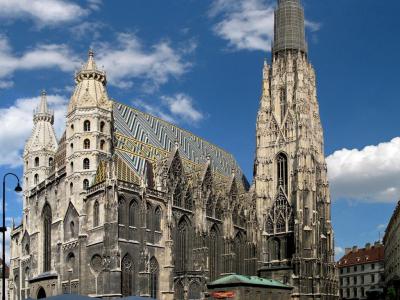
1) Stephansdom (St. Stephen's Cathedral) (must see)
In a city where “stunning architecture” is practically the dress code, Saint Stephen’s Cathedral still manages to steal the spotlight-and possibly your neck muscles too, as you crane to admire that towering spire. Known locally as Stephansdom, this Gothic-Romanesque powerhouse has stood at the heart of Vienna’s skyline and soul since 1147, rising on the bones of two earlier churches like the overachiever it is.
In the 14th century, Duke Rudolf IV decided the cathedral needed a serious makeover. The idea worked. As a result, today we have the building stretching 107 meters long, 40 meters wide, and topped by the South Tower-or “Steffl,” if you're on nickname terms-a 136-meter-high feat of medieval determination that took 65 years to complete. It even moonlighted as a lookout post during Vienna’s sieges, complete with a live-in watchman until 1955. One heck of a long shift...
Meanwhile, the North Tower never quite hit its growth spurt. It stalled at 68 meters and got a Renaissance hat in 1578-basically the architectural equivalent of saying “this is fine” and walking away.
But the real showstopper here is the roof. A kaleidoscope of 230,000 glazed tiles arranged into imperial emblems like the double-headed eagle of the Habsburgs and the crests of Vienna and Austria. After being torched in World War II, it was rebuilt with steel instead of wood-600 metric tons of it-making the new roof not just durable, but also self-cleaning. Because even cathedrals love low-maintenance routines...
Inside, things get just as grand. There’s Pummerin, Europe’s second-largest swinging bell, forged from Turkish cannons in 1711 and recast in 1951-because nothing says peace like a bell made from wartime leftovers. Oh, and she lives in the North Tower, ringing out for special moments and daily rituals.
Musical legends haunt these hallowed halls too: Beethoven figured out he was deaf here (tragic), Haydn sang here as a kid (sweet), Strauss got married here-twice (bold), and Mozart? He got married and buried here. Yes, Saint Stephen's is basically the VIP lounge of Viennese music history.
Inside, you’ll find 18 altars, miraculous icons, bone relics-including those of Saint Valentine-and a maze of crypts holding 11,000 souls, including Habsburg royalty.
Tip:
Do a lap around the outside. Gargoyles, engravings, medieval graffiti-you never know what stories the stones will whisper...
In the 14th century, Duke Rudolf IV decided the cathedral needed a serious makeover. The idea worked. As a result, today we have the building stretching 107 meters long, 40 meters wide, and topped by the South Tower-or “Steffl,” if you're on nickname terms-a 136-meter-high feat of medieval determination that took 65 years to complete. It even moonlighted as a lookout post during Vienna’s sieges, complete with a live-in watchman until 1955. One heck of a long shift...
Meanwhile, the North Tower never quite hit its growth spurt. It stalled at 68 meters and got a Renaissance hat in 1578-basically the architectural equivalent of saying “this is fine” and walking away.
But the real showstopper here is the roof. A kaleidoscope of 230,000 glazed tiles arranged into imperial emblems like the double-headed eagle of the Habsburgs and the crests of Vienna and Austria. After being torched in World War II, it was rebuilt with steel instead of wood-600 metric tons of it-making the new roof not just durable, but also self-cleaning. Because even cathedrals love low-maintenance routines...
Inside, things get just as grand. There’s Pummerin, Europe’s second-largest swinging bell, forged from Turkish cannons in 1711 and recast in 1951-because nothing says peace like a bell made from wartime leftovers. Oh, and she lives in the North Tower, ringing out for special moments and daily rituals.
Musical legends haunt these hallowed halls too: Beethoven figured out he was deaf here (tragic), Haydn sang here as a kid (sweet), Strauss got married here-twice (bold), and Mozart? He got married and buried here. Yes, Saint Stephen's is basically the VIP lounge of Viennese music history.
Inside, you’ll find 18 altars, miraculous icons, bone relics-including those of Saint Valentine-and a maze of crypts holding 11,000 souls, including Habsburg royalty.
Tip:
Do a lap around the outside. Gargoyles, engravings, medieval graffiti-you never know what stories the stones will whisper...
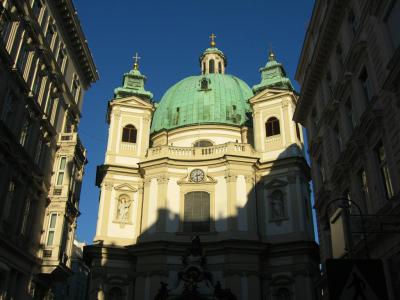
2) Peterskirche (St. Peter's Church) (must see)
Tucked snugly among Vienna’s Baroque showpieces like a pearl in a pastry, Saint Peter’s Church has a front-row seat to history, and not much else, thanks to the buildings crowding around it. You’ll mostly catch it head-on, which, honestly, is its best angle.
This spot has seen churches come and go like emperors with changing tastes. Some say the very first church here dates back to the early 4th century AD, making it one of the oldest in Vienna-yes, back when sandals were in and Rome was still a big deal. In 792, none other than King Charlemagne is said to have popped by and said, “Let’s build.” There’s even a plaque on the façade bragging about it. Historical records, ever the skeptics, first mention the church in 1137, but who’s counting?
By the late 1100s, the church cozied up to the newly founded Schottenstift monastery. Then came fire, plague, and drama. After the 1661 fire, it got a bit of a patch job… until the plague of 1679 cleared the streets and cleared the way for Emperor Leopold I, who swore a divine vow to rebuild. And he did...
Construction began around 1701, drawing heavy inspiration from Saint Peter’s Basilica in Rome-because if you’re going to imitate, imitate the best. By 1733, Vienna had its first domed Baroque beauty, cleverly built with a compact, oval layout to fit the tight space.
Outside, it sports a neat combo of white and barely-there yellow, flanked by two towers that curve ever so slightly inward-apparently a cheeky nod to Turkish tent poles from the 1683 siege.
Step inside, and there you have it: gold stucco, opulent frescoes, and Johann Michael Rottmayr’s artistic fireworks overhead, including the Coronation of Our Lady. The high altar gets dramatic with a healing scene, starring Saint Peter and Saint John, and around the edges, you'll spot relics of Roman martyrs, reclining in crystal coffins like glittering saints on display.
The church was polished up in a major 1998–2004 renovation, and today it’s still a Baroque gem in Vienna’s crown.
Hot tip:
Drop in any day from 3 to 3:30 pm for a free organ concert-divine music, no ticket required (but donations are saintly). And if you're lucky, catch a choir in the crypts. Now that’s a holy experience...
This spot has seen churches come and go like emperors with changing tastes. Some say the very first church here dates back to the early 4th century AD, making it one of the oldest in Vienna-yes, back when sandals were in and Rome was still a big deal. In 792, none other than King Charlemagne is said to have popped by and said, “Let’s build.” There’s even a plaque on the façade bragging about it. Historical records, ever the skeptics, first mention the church in 1137, but who’s counting?
By the late 1100s, the church cozied up to the newly founded Schottenstift monastery. Then came fire, plague, and drama. After the 1661 fire, it got a bit of a patch job… until the plague of 1679 cleared the streets and cleared the way for Emperor Leopold I, who swore a divine vow to rebuild. And he did...
Construction began around 1701, drawing heavy inspiration from Saint Peter’s Basilica in Rome-because if you’re going to imitate, imitate the best. By 1733, Vienna had its first domed Baroque beauty, cleverly built with a compact, oval layout to fit the tight space.
Outside, it sports a neat combo of white and barely-there yellow, flanked by two towers that curve ever so slightly inward-apparently a cheeky nod to Turkish tent poles from the 1683 siege.
Step inside, and there you have it: gold stucco, opulent frescoes, and Johann Michael Rottmayr’s artistic fireworks overhead, including the Coronation of Our Lady. The high altar gets dramatic with a healing scene, starring Saint Peter and Saint John, and around the edges, you'll spot relics of Roman martyrs, reclining in crystal coffins like glittering saints on display.
The church was polished up in a major 1998–2004 renovation, and today it’s still a Baroque gem in Vienna’s crown.
Hot tip:
Drop in any day from 3 to 3:30 pm for a free organ concert-divine music, no ticket required (but donations are saintly). And if you're lucky, catch a choir in the crypts. Now that’s a holy experience...
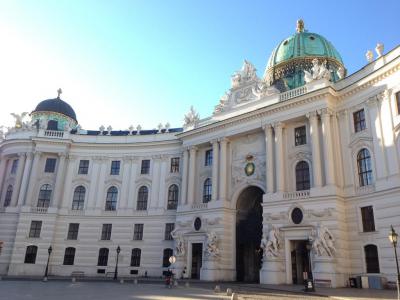
3) Michaelerplatz (Saint Michael's Square)
Saint Michael’s Square-or Michaelerplatz if you're feeling extra Austrian-is by far more than just a pretty roundabout. This baroque, star-shaped showstopper is the northeastern gateway to the Hofburg Palace-the kind of place where Roman legions, imperial drama, and architectural snobbery all collide in delightful chaos...
Let’s rewind a couple millennia: underneath your feet once stood Vindobona, a Roman military camp. You can still peek at the excavated remains in the center of the square-because Vienna doesn’t just bury its history, it displays it like a badge of honor.
Marching into view is the grand Michael’s Gate, a triumph of Neo-Baroque drama. It’s flanked by two dramatic 19th-century fountains sculpted by Rudolf Weyer-imagine “Roman gods doing acrobatics in water.” This is your official entrance into the imperial Hofburg, via Saint Michael’s Wing, which sounds like a fancy dessert but is actually just as rich in stone.
Across from all this pageantry stands the Church of Saint Michael, namesake of the square. Parts of it go back to 1221, though what you see now mostly dates from a sprucing-up in 1792. The church’s porch features a wild Baroque sculpture of the Fall of the Angels-very metal. Step inside and you’ll find 14th-century frescoes, Vienna’s largest gilded organ (once played by Haydn, no less), and a crypt that’s equal parts eerie and fascinating. Yes, they still have open coffins with mummified parishioners in full funeral chic. Welcome to Vienna...
Now turn your gaze to the Looshaus, a stark modernist rebel built in 1912 by architect Adolf Loos. At the time, it scandalized polite society-and Emperor Franz Joseph so hated its minimalist vibe, he refused to walk through Michael’s Gate ever again. Today, it's a working bank with a lavish interior clad in marble and mirrors. Moral of the story? Never judge a building by its cover.
Other star attractions ring the square like jewels, including the Spanish Riding School, the Sisi Museum, the Herberstein Palace, and a pair of 18th-century homes-one of which once belonged to Haydn himself.
Insider tip: spring for a horse-drawn carriage tour from here. This ride is a true slow-motion glide through centuries of imperial flair...
Let’s rewind a couple millennia: underneath your feet once stood Vindobona, a Roman military camp. You can still peek at the excavated remains in the center of the square-because Vienna doesn’t just bury its history, it displays it like a badge of honor.
Marching into view is the grand Michael’s Gate, a triumph of Neo-Baroque drama. It’s flanked by two dramatic 19th-century fountains sculpted by Rudolf Weyer-imagine “Roman gods doing acrobatics in water.” This is your official entrance into the imperial Hofburg, via Saint Michael’s Wing, which sounds like a fancy dessert but is actually just as rich in stone.
Across from all this pageantry stands the Church of Saint Michael, namesake of the square. Parts of it go back to 1221, though what you see now mostly dates from a sprucing-up in 1792. The church’s porch features a wild Baroque sculpture of the Fall of the Angels-very metal. Step inside and you’ll find 14th-century frescoes, Vienna’s largest gilded organ (once played by Haydn, no less), and a crypt that’s equal parts eerie and fascinating. Yes, they still have open coffins with mummified parishioners in full funeral chic. Welcome to Vienna...
Now turn your gaze to the Looshaus, a stark modernist rebel built in 1912 by architect Adolf Loos. At the time, it scandalized polite society-and Emperor Franz Joseph so hated its minimalist vibe, he refused to walk through Michael’s Gate ever again. Today, it's a working bank with a lavish interior clad in marble and mirrors. Moral of the story? Never judge a building by its cover.
Other star attractions ring the square like jewels, including the Spanish Riding School, the Sisi Museum, the Herberstein Palace, and a pair of 18th-century homes-one of which once belonged to Haydn himself.
Insider tip: spring for a horse-drawn carriage tour from here. This ride is a true slow-motion glide through centuries of imperial flair...
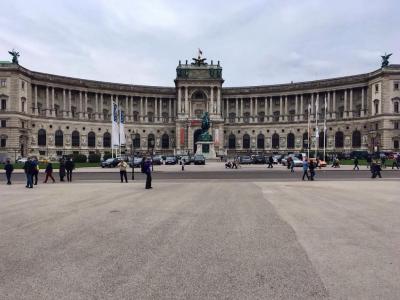
4) Hofburg Imperial Palace (must see)
The Hofburg-or as it’s known in more regal circles, the “Castle of the Court”-is a sprawling architectural beast of a palace, a centuries-old flex of Habsburg power, pageantry, and perfectly symmetrical courtyards.
It all began back in 1279, when the Dukes of Austria needed a nice little place to call home. Fast forward a few empires and renovations later, and you've got the winter playground of the Holy Roman Emperors (until 1806) and the Emperors of Austria (until 1918). Today, the palace has swapped imperial intrigue for political paperwork-it’s now the official residence of the Austrian President and hosts the headquarters of the OSCE. Less crown, more conference...
Now, brace yourself: the Hofburg covers more than 240,000 square meters of space, comprising 18 wings, 19 courtyards, and a whopping 2,600 rooms. That’s not really a palace-it’s a small city. It houses everything from the elegant Amalienburg and Albertina museum, to the Imperial Chapel, the Court Library, the Treasure Chamber, and even the Spanish Riding School, where horses have more training than most people’s resumes.
The Swiss Wing is one of the oldest parts of the palace, dating back to the 13th century-yes, it’s older than your great-great-anything. Emperor Ferdinand I added the Swiss Gate in the 1550s, with his personal insignia on full display, just in case anyone forgot who was in charge.
The 17th-century Leopoldine Wing, built and later re-styled in Late Renaissance flair, adds even more imperial swagger, while the Court Library is basically a Baroque fever dream-with its majestic Prunksaal hall, frescoed ceilings, and emperors carved in stone, looking as dramatic as ever.
And it doesn’t stop there: the Winter Riding School, the Imperial Chancellery Wing (once home to Napoleon himself), and the elegant Redoute Wing-a former opera house-round out the complex. Even the Imperial Mews got a glow-up and now host those classy Lipizzaner horses.
Tip:
On Sundays, pop into the Imperial Chapel for Mass and catch the Vienna Boys Choir-angelic voices echoing through centuries of history. Because when in Vienna, you don’t just visit a palace… you enter a whole imperial universe.
It all began back in 1279, when the Dukes of Austria needed a nice little place to call home. Fast forward a few empires and renovations later, and you've got the winter playground of the Holy Roman Emperors (until 1806) and the Emperors of Austria (until 1918). Today, the palace has swapped imperial intrigue for political paperwork-it’s now the official residence of the Austrian President and hosts the headquarters of the OSCE. Less crown, more conference...
Now, brace yourself: the Hofburg covers more than 240,000 square meters of space, comprising 18 wings, 19 courtyards, and a whopping 2,600 rooms. That’s not really a palace-it’s a small city. It houses everything from the elegant Amalienburg and Albertina museum, to the Imperial Chapel, the Court Library, the Treasure Chamber, and even the Spanish Riding School, where horses have more training than most people’s resumes.
The Swiss Wing is one of the oldest parts of the palace, dating back to the 13th century-yes, it’s older than your great-great-anything. Emperor Ferdinand I added the Swiss Gate in the 1550s, with his personal insignia on full display, just in case anyone forgot who was in charge.
The 17th-century Leopoldine Wing, built and later re-styled in Late Renaissance flair, adds even more imperial swagger, while the Court Library is basically a Baroque fever dream-with its majestic Prunksaal hall, frescoed ceilings, and emperors carved in stone, looking as dramatic as ever.
And it doesn’t stop there: the Winter Riding School, the Imperial Chancellery Wing (once home to Napoleon himself), and the elegant Redoute Wing-a former opera house-round out the complex. Even the Imperial Mews got a glow-up and now host those classy Lipizzaner horses.
Tip:
On Sundays, pop into the Imperial Chapel for Mass and catch the Vienna Boys Choir-angelic voices echoing through centuries of history. Because when in Vienna, you don’t just visit a palace… you enter a whole imperial universe.
5) Spanische Reitschule (Spanish Riding School)
A place where grace trots, tradition gallops, and stallions pirouette like it’s the 18th century-welcome to Vienna's Spanish Riding School!
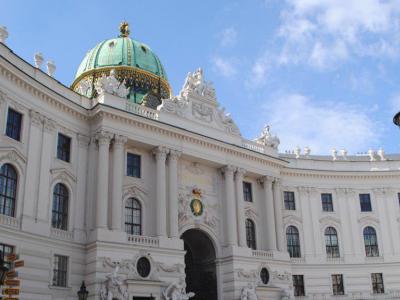
Founded back in 1565-yes, that’s way before Mozart-this is the world’s oldest school for classical dressage. In essence, it'd be fair to describe it as a choreography of hooves, history, and imperial flair. The current hall, a baroque beauty with 46 columns and a royal box fit for an emperor’s ego, was commissioned in 1729 by Emperor Karl VI-who still gets a tip of the hat from every rider, thanks to his portrait hanging proudly above the arena. The school courtyard is adorned with an equestrian statue of another emperor, Josef II.
Now, why "Spanish"? No, it's not because the horses love tapas. The name comes from the noble Spanish breeds that helped create the Lipizzaner-those elegant, snow-white stallions you’ve seen leaping like ballerinas (with better muscle tone). The breed was born by mixing Arab, Berber, and Spanish horses at the Lipizza stud farm near Trieste, Slovenia. Training starts when they're three, and from there, it’s years of disciplined dance moves-no shortcuts, no TikTok trends...
For centuries, only men could join this elite club, but as of 2008, the glass stirrup finally broke-women can ride too, and brilliantly so.
So what can you expect? Public performances run 70 to 90 minutes of precision, music, and magic that hasn't changed in decades-because when perfection works, you don’t fix it. Anyone who's a horse fanatic or just likes chandeliers and symmetry, will find the Spanish Riding School a uniquely Viennese blend of pomp, polish, and prancing. But even if you are not fond of horse shows, a guided tour (in English or German) through the stabling and the riding arena is worth a visit anytime.
Pro tips:
Morning training sessions are cheaper and give you a behind-the-scenes glimpse of the stallions at work.
Want the full airborne extravaganza? Book the official show. Just book early unless you enjoy queuing like it's 1765.
And here's the real scoop: grab a coffee at the on-site café. It's reasonably priced, and the terrace gives you free views of the horses warming up next door. That’s right-free of charge! Elegance on a budget? Yes, Vienna delivers...
Founded back in 1565-yes, that’s way before Mozart-this is the world’s oldest school for classical dressage. In essence, it'd be fair to describe it as a choreography of hooves, history, and imperial flair. The current hall, a baroque beauty with 46 columns and a royal box fit for an emperor’s ego, was commissioned in 1729 by Emperor Karl VI-who still gets a tip of the hat from every rider, thanks to his portrait hanging proudly above the arena. The school courtyard is adorned with an equestrian statue of another emperor, Josef II.
Now, why "Spanish"? No, it's not because the horses love tapas. The name comes from the noble Spanish breeds that helped create the Lipizzaner-those elegant, snow-white stallions you’ve seen leaping like ballerinas (with better muscle tone). The breed was born by mixing Arab, Berber, and Spanish horses at the Lipizza stud farm near Trieste, Slovenia. Training starts when they're three, and from there, it’s years of disciplined dance moves-no shortcuts, no TikTok trends...
For centuries, only men could join this elite club, but as of 2008, the glass stirrup finally broke-women can ride too, and brilliantly so.
So what can you expect? Public performances run 70 to 90 minutes of precision, music, and magic that hasn't changed in decades-because when perfection works, you don’t fix it. Anyone who's a horse fanatic or just likes chandeliers and symmetry, will find the Spanish Riding School a uniquely Viennese blend of pomp, polish, and prancing. But even if you are not fond of horse shows, a guided tour (in English or German) through the stabling and the riding arena is worth a visit anytime.
Pro tips:
Morning training sessions are cheaper and give you a behind-the-scenes glimpse of the stallions at work.
Want the full airborne extravaganza? Book the official show. Just book early unless you enjoy queuing like it's 1765.
And here's the real scoop: grab a coffee at the on-site café. It's reasonably priced, and the terrace gives you free views of the horses warming up next door. That’s right-free of charge! Elegance on a budget? Yes, Vienna delivers...
6) Neue Burg (New Palace)
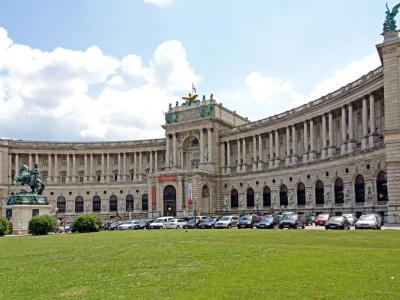
The New Palace-a name that’s a bit misleading, considering its grand Neo-Renaissance face has been looming over Vienna since 1913. The final and flashiest addition to the Hofburg complex, this architectural swan song took a leisurely 32 years to complete, just in time for the Habsburg Empire to politely implode five years later. Talk about bad timing...
Still, it did briefly serve as home to Archduke Franz Ferdinand, whose assassination would famously kickstart World War I. Cozy little prelude to global chaos, really...
During the 1930s, the palace got a political makeover. Under Austro-fascist rule, it became a stage for glorifying Austria’s medieval muscles and authoritarian dreams. The Nazis then upped the ante, transforming it into both an exhibition hotspot and a logistical center for art theft on an imperial scale. The first floor was used as a depot for looted masterpieces. A little less “gallery,” a little more “grand theft culture.”
And then came 1938, when the building gained infamy as Adolf Hitler addressed the crowd from its terrace-the now-infamous “Hitler balcony.” That speech sealed Austria’s annexation into Nazi Germany, making the New Palace ground zero for one of the 20th century’s darkest turns. Today, that same balcony stands not as a triumphal remnant but as a stark reminder of how power, history, and architecture can collide.
But history marches on, and post-1945, the palace pivoted from a symbol of dominance to a site of reckoning. Now it’s packed with museums-and thankfully, none of them involve looting.
Inside, you’ll find the Austrian National Library, with more than 12 million objects, including rare books, papyri older than some civilizations, and a Globe Museum featuring nearly 700 globes. Who knew round things could be so fascinating?
You’ll also stumble into the Ephesos Museum with ancient finds from modern-day Turkey and Greece, and the House of Austrian History, opened in 2018, which helps Austria keep track of its rather complicated past.
And don’t forget the façade, adorned with 20 statues of historic Austrian personas: Roman soldiers, merchants, knights, even the Marcomanni (the ancient Germanic tribe who set up a powerful kingdom north of the Danube). Each figure carved by a different artist, proving that even imperial posturing can be a team effort...
Tips for Visitors:
If you're under 19, the entry is free.
Wheelchair rental? Yes, but call a day in advance and give the front desk a heads-up 15 minutes before arrival.
Arms & Armor and Ancient Instruments are accessed by elevator only. For Ephesos Museum- prepare to climb 60 steps.
Still, it did briefly serve as home to Archduke Franz Ferdinand, whose assassination would famously kickstart World War I. Cozy little prelude to global chaos, really...
During the 1930s, the palace got a political makeover. Under Austro-fascist rule, it became a stage for glorifying Austria’s medieval muscles and authoritarian dreams. The Nazis then upped the ante, transforming it into both an exhibition hotspot and a logistical center for art theft on an imperial scale. The first floor was used as a depot for looted masterpieces. A little less “gallery,” a little more “grand theft culture.”
And then came 1938, when the building gained infamy as Adolf Hitler addressed the crowd from its terrace-the now-infamous “Hitler balcony.” That speech sealed Austria’s annexation into Nazi Germany, making the New Palace ground zero for one of the 20th century’s darkest turns. Today, that same balcony stands not as a triumphal remnant but as a stark reminder of how power, history, and architecture can collide.
But history marches on, and post-1945, the palace pivoted from a symbol of dominance to a site of reckoning. Now it’s packed with museums-and thankfully, none of them involve looting.
Inside, you’ll find the Austrian National Library, with more than 12 million objects, including rare books, papyri older than some civilizations, and a Globe Museum featuring nearly 700 globes. Who knew round things could be so fascinating?
You’ll also stumble into the Ephesos Museum with ancient finds from modern-day Turkey and Greece, and the House of Austrian History, opened in 2018, which helps Austria keep track of its rather complicated past.
And don’t forget the façade, adorned with 20 statues of historic Austrian personas: Roman soldiers, merchants, knights, even the Marcomanni (the ancient Germanic tribe who set up a powerful kingdom north of the Danube). Each figure carved by a different artist, proving that even imperial posturing can be a team effort...
Tips for Visitors:
If you're under 19, the entry is free.
Wheelchair rental? Yes, but call a day in advance and give the front desk a heads-up 15 minutes before arrival.
Arms & Armor and Ancient Instruments are accessed by elevator only. For Ephesos Museum- prepare to climb 60 steps.
7) Rathaus (City Hall) (must see)
Vienna City Hall-a place where both the municipal government and the legislative assembly get down to business. By no means a dull office block, this neo-Gothic showstopper was built between 1872 and 1883 by architect Friedrich von Schmidt, who, rather humbly, now stands in a statue form just behind the building, keeping an eye on things from his very own square.
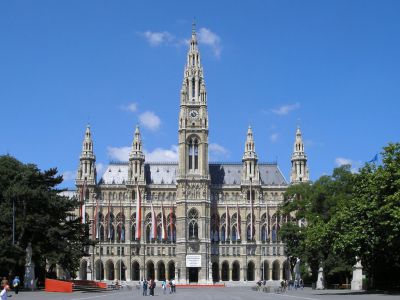
Drawing inspiration from the medieval architecture of Flanders and Brabant, the City Hall flaunts five towers like a crown. The tallest of them pierces the skyline at 98 meters, topped with the "City Hall Man"-not a superhero, but close... Clad in armor inspired by Emperor Maximilian I, this statue has been watching over Vienna since 1882 and has become something of a local mascot.
Inside, the building doesn’t just rest on its aesthetic laurels. There's the "City Hall Cellar"-a grand baroque dining hall where you can dig into proper Viennese culinary classics without a hint of modern guilt. “Schnitzel under chandeliers? Yes, please...”
The façade is a sculptural buffet in its own right, brimming with emperors, virtues like Power and Justice, and even good ol’ Vindobona, the Roman forebear of Vienna, lounging surrounded by heraldic flair. Think of it as Vienna’s resume carved in stone.
And on the flanks is a lineup of statues dedicated to trades and professions-because in this city, bakers, builders, and bookbinders all get a standing ovation in stone!
Now, if you're feeling adventurous (and are in good shape), brave the 331 steps up to the central tower that’s worth every groan from your knees. Your reward will be the sweeping views of Vienna in all its baroque-meets-modern glory-plus bragging rights for conquering the city one stair at a time. Trust us-Vienna looks even better from above.
Tip:
For the inside scoop, join the free German-language guided tour on Mondays, Wednesdays, and Fridays at 1 pm. Not fluent in German? No problem-audio guides are available in multiple languages. Just be ready to temporarily part ways with your passport. The view-and the tales-are absolutely worth it.
Drawing inspiration from the medieval architecture of Flanders and Brabant, the City Hall flaunts five towers like a crown. The tallest of them pierces the skyline at 98 meters, topped with the "City Hall Man"-not a superhero, but close... Clad in armor inspired by Emperor Maximilian I, this statue has been watching over Vienna since 1882 and has become something of a local mascot.
Inside, the building doesn’t just rest on its aesthetic laurels. There's the "City Hall Cellar"-a grand baroque dining hall where you can dig into proper Viennese culinary classics without a hint of modern guilt. “Schnitzel under chandeliers? Yes, please...”
The façade is a sculptural buffet in its own right, brimming with emperors, virtues like Power and Justice, and even good ol’ Vindobona, the Roman forebear of Vienna, lounging surrounded by heraldic flair. Think of it as Vienna’s resume carved in stone.
And on the flanks is a lineup of statues dedicated to trades and professions-because in this city, bakers, builders, and bookbinders all get a standing ovation in stone!
Now, if you're feeling adventurous (and are in good shape), brave the 331 steps up to the central tower that’s worth every groan from your knees. Your reward will be the sweeping views of Vienna in all its baroque-meets-modern glory-plus bragging rights for conquering the city one stair at a time. Trust us-Vienna looks even better from above.
Tip:
For the inside scoop, join the free German-language guided tour on Mondays, Wednesdays, and Fridays at 1 pm. Not fluent in German? No problem-audio guides are available in multiple languages. Just be ready to temporarily part ways with your passport. The view-and the tales-are absolutely worth it.
