Custom Walk in Budapest, Hungary by manbak2005_56d39 created on 2025-12-15
Guide Location: Hungary » Budapest
Guide Type: Custom Walk
# of Sights: 8
Tour Duration: 2 Hour(s)
Travel Distance: 4.6 Km or 2.9 Miles
Share Key: PVZ8W
Guide Type: Custom Walk
# of Sights: 8
Tour Duration: 2 Hour(s)
Travel Distance: 4.6 Km or 2.9 Miles
Share Key: PVZ8W
How It Works
Please retrieve this walk in the GPSmyCity app. Once done, the app will guide you from one tour stop to the next as if you had a personal tour guide. If you created the walk on this website or come to the page via a link, please follow the instructions below to retrieve the walk in the app.
Retrieve This Walk in App
Step 1. Download the app "GPSmyCity: Walks in 1K+ Cities" on Apple App Store or Google Play Store.



Step 2. In the GPSmyCity app, download(or launch) the guide "Budapest Map and Walking Tours".
Step 3. Tap the menu button located at upper right corner of the "Walks" screen and select "Retrieve custom walk". Enter the share key: PVZ8W
1) Orthodox Synagogue
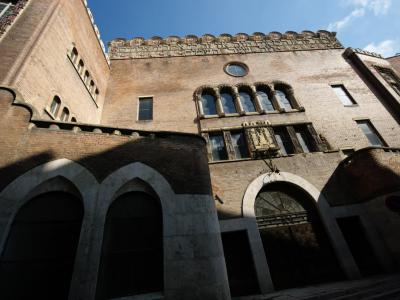
Nestled in a quiet corner of Budapest’s 8th District, the Orthodox Synagogue is both a physical and spiritual heart of the local Jewish community. Around it, you’ll find a cozy network that includes a kosher restaurant, a school, and a prayer room. Not far away, there’s also a mikvah - a ritual Jewish bath dating back to 1913, and the only one of its kind in the entire city.
The congregation here belongs to a distinctive branch of Hungarian Orthodox Judaism, an offshoot of Conservative Judaism. They’ve preserved many traditions brought over by Jewish immigrants from Germany and Moravia, blended with a deep Hassidic influence that traces its roots to Poland and Galatia.
From the outside, the synagogue’s Art Nouveau façade shows its age. But step inside, and you’re greeted by a beautifully restored interior, alive with bright colors and traditional Hungarian motifs. An unusually designed Bimah - something like an altar - stands at the center, surrounded by original stained glass windows placed high under the roof. There’s a small fee to enter, and from the main door to the right, you can also access the side and rear courtyards. It’s well worth a look: the side walls are lined with historic photos that tell the story of the building, and in the rear courtyard, you’ll come across a striking metal wedding canopy.
The congregation here belongs to a distinctive branch of Hungarian Orthodox Judaism, an offshoot of Conservative Judaism. They’ve preserved many traditions brought over by Jewish immigrants from Germany and Moravia, blended with a deep Hassidic influence that traces its roots to Poland and Galatia.
From the outside, the synagogue’s Art Nouveau façade shows its age. But step inside, and you’re greeted by a beautifully restored interior, alive with bright colors and traditional Hungarian motifs. An unusually designed Bimah - something like an altar - stands at the center, surrounded by original stained glass windows placed high under the roof. There’s a small fee to enter, and from the main door to the right, you can also access the side and rear courtyards. It’s well worth a look: the side walls are lined with historic photos that tell the story of the building, and in the rear courtyard, you’ll come across a striking metal wedding canopy.
2) Hungarian State Opera House
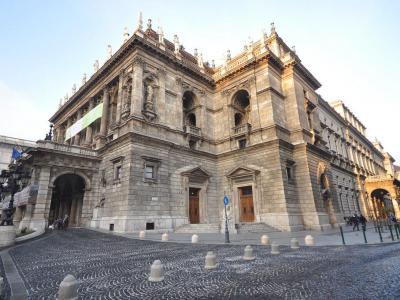
Set at the heart of Pest, on Andrassy Avenue, the Hungarian State Opera was officially opened to the public in 1884. Designed by Miklós Ybl, a key figure of 19th-century Hungarian architecture, this grand and elegant edifice represents a blend of Baroque, Renaissance and Revival styles and took nearly a decade to build, skillfully planted into the ensemble of affluent mansions nearby.
Although nowhere near the world's major concert halls in terms of size, the Hungarian Opera House is definitely one of the most beautiful. Flanking the building's main entrance, inside the niches, are the statues of Ferenc Erkel, author of the Hungarian National Anthem, and Ferenc Liszt, the most acclaimed Hungarian composer and reputedly one of the best pianists of his time. On the balustrade, surrounding the roof, are the 16 statues of Europe's greatest composers, such as Beethoven, Mozart, Verdi, Bizet, Puccini and Tchaikovsky. On the inside, the building is just as grand as it is on the outside, replete with marble columns and staircases, vaulted ceilings and lavish gold plating, complete with a rich chandelier weighing several tons(!), and ornate frescoes depicting scenes from the Greek mythology, not to mention the wealth of finest oil paintings and sculptures to be found in Budapest added to the decoration.
The acoustics here are said to be among the best in the world, ranked #3 in Europe after La Scala in Milan and Palais Garnier in Paris.
If you can't get a ticket or if opera isn't one of your things yet, consider taking a guided tour, run three times a day, to get a sense of what the high-society life in Budapest was like back in its heyday in the late 19th century. The tour will take you to the private balconies, smoking room, royal private staircase, and the bar area lavishly clad in crystal and Croatian marble.
Otherwise, if you're an opera fan, try to book yourself a ticket – if lucky, you just might succeed. The tickets are surprisingly not as pricey as you may think, but still, be prepared to dress up to the nines as it is a rather glamorous affair, after all.
Tip:
Combine with the nearby Mai Manó House of Photography, if only to have a look at the building from the outside.
Editor's note:
The building is being renovated until 2020, therefore Opera House performances temporarily take place at the Erkel Theatre. However, the Opera Shop and certain parts of the building can be visited even during renovation.
Although nowhere near the world's major concert halls in terms of size, the Hungarian Opera House is definitely one of the most beautiful. Flanking the building's main entrance, inside the niches, are the statues of Ferenc Erkel, author of the Hungarian National Anthem, and Ferenc Liszt, the most acclaimed Hungarian composer and reputedly one of the best pianists of his time. On the balustrade, surrounding the roof, are the 16 statues of Europe's greatest composers, such as Beethoven, Mozart, Verdi, Bizet, Puccini and Tchaikovsky. On the inside, the building is just as grand as it is on the outside, replete with marble columns and staircases, vaulted ceilings and lavish gold plating, complete with a rich chandelier weighing several tons(!), and ornate frescoes depicting scenes from the Greek mythology, not to mention the wealth of finest oil paintings and sculptures to be found in Budapest added to the decoration.
The acoustics here are said to be among the best in the world, ranked #3 in Europe after La Scala in Milan and Palais Garnier in Paris.
If you can't get a ticket or if opera isn't one of your things yet, consider taking a guided tour, run three times a day, to get a sense of what the high-society life in Budapest was like back in its heyday in the late 19th century. The tour will take you to the private balconies, smoking room, royal private staircase, and the bar area lavishly clad in crystal and Croatian marble.
Otherwise, if you're an opera fan, try to book yourself a ticket – if lucky, you just might succeed. The tickets are surprisingly not as pricey as you may think, but still, be prepared to dress up to the nines as it is a rather glamorous affair, after all.
Tip:
Combine with the nearby Mai Manó House of Photography, if only to have a look at the building from the outside.
Editor's note:
The building is being renovated until 2020, therefore Opera House performances temporarily take place at the Erkel Theatre. However, the Opera Shop and certain parts of the building can be visited even during renovation.
3) Hungarian Parliament Building (must see)
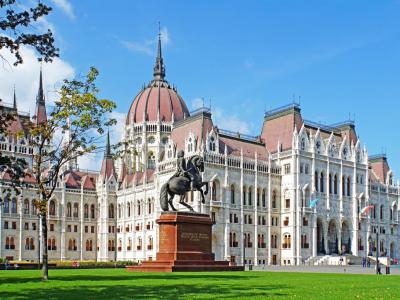
The seat of the Hungarian Parliament is a massive Neo-Gothic edifice along the eastern bank of the Danube. Towering over the city, it’s not only the most recognizable landmark in Budapest but also the largest building in Hungary-and one of the oldest parliamentary structures in Europe.
Built in 1896 to mark Hungary’s millennial anniversary, the Parliament was intended to symbolize the country’s newfound political unity. The scale of the project was staggering: around 100,000 workers contributed to its construction, using 40 million bricks, 40 kilos of gold, and half a million precious stones and decorative elements. Inside and out, the structure dazzles with 242 sculptures, 27 grand entrance gates, 700 roms and an incredible 19 kilometers of stairways and corridors.
At the heart of it all lies the magnificent central hall, home to the Hungarian Coronation Regalia. These priceless treasures-the Holy Crown of Hungary, the orb, the scepter, and a Renaissance-style sword-are displayed under the soaring dome, offering visitors a rare glimpse into the nation’s royal past.
Beyond its grand interiors, the Parliament is also known for its daily Changing of the Guard ceremony, a popular spectacle each afternoon that adds even more life to its regal atmosphere. And once evening falls and the building lights up, it transforms into a glowing centerpiece of the Budapest skyline-resembling, from a distance, an enormous, glittering Christmas tree.
Make sure to carve out some time to experience it up close-you’ll be walking through history under one of the most beautiful roofs in Europe!
Built in 1896 to mark Hungary’s millennial anniversary, the Parliament was intended to symbolize the country’s newfound political unity. The scale of the project was staggering: around 100,000 workers contributed to its construction, using 40 million bricks, 40 kilos of gold, and half a million precious stones and decorative elements. Inside and out, the structure dazzles with 242 sculptures, 27 grand entrance gates, 700 roms and an incredible 19 kilometers of stairways and corridors.
At the heart of it all lies the magnificent central hall, home to the Hungarian Coronation Regalia. These priceless treasures-the Holy Crown of Hungary, the orb, the scepter, and a Renaissance-style sword-are displayed under the soaring dome, offering visitors a rare glimpse into the nation’s royal past.
Beyond its grand interiors, the Parliament is also known for its daily Changing of the Guard ceremony, a popular spectacle each afternoon that adds even more life to its regal atmosphere. And once evening falls and the building lights up, it transforms into a glowing centerpiece of the Budapest skyline-resembling, from a distance, an enormous, glittering Christmas tree.
Make sure to carve out some time to experience it up close-you’ll be walking through history under one of the most beautiful roofs in Europe!
4) Shoes on the Danube Bank (must see)
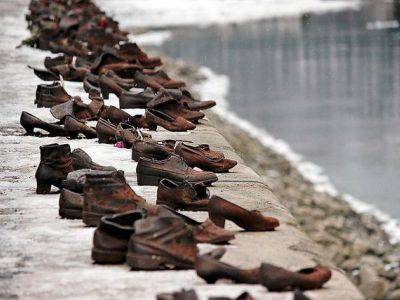
The Shoes on the Danube Bank is a haunting memorial created in 2005 to honor the Jewish victims brutally murdered by the Arrow Cross militia during the Second World War in Budapest. In those grim days, victims were forced to remove their shoes before being shot at the river’s edge. Their bodies fell into the Danube, carried silently away by the current.
Set along the Pest side of the Danube Promenade and just south of the Hungarian Parliament, the memorial captures the heartbreak of those moments with stark simplicity. Sixty pairs of iron shoes, modeled in styles true to the 1940s, line the stone embankment. Each pair tells its own silent story-of lives interrupted, families destroyed, hopes abandoned.
Behind the shoes runs a 40-meter-long stone bench, standing 70 centimeters high. Three cast-iron plaques are placed at intervals, bearing an inscription in Hungarian, English, and Hebrew: “To the memory of the victims shot into the Danube by Arrow Cross militiamen in 1944–45.”
The flowing river beside the memorial deepens the emotional weight of the place, offering a quiet, constant reminder of how easily lives can be swept away. Some memorials speak loudly; this one whispers-and stays with you long after you've moved on.
Set along the Pest side of the Danube Promenade and just south of the Hungarian Parliament, the memorial captures the heartbreak of those moments with stark simplicity. Sixty pairs of iron shoes, modeled in styles true to the 1940s, line the stone embankment. Each pair tells its own silent story-of lives interrupted, families destroyed, hopes abandoned.
Behind the shoes runs a 40-meter-long stone bench, standing 70 centimeters high. Three cast-iron plaques are placed at intervals, bearing an inscription in Hungarian, English, and Hebrew: “To the memory of the victims shot into the Danube by Arrow Cross militiamen in 1944–45.”
The flowing river beside the memorial deepens the emotional weight of the place, offering a quiet, constant reminder of how easily lives can be swept away. Some memorials speak loudly; this one whispers-and stays with you long after you've moved on.
5) Hungarian Academy of Sciences
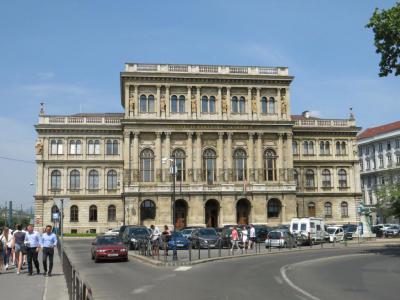
While not necessarily one of the top tourist sights in Budapest, the imposing, grand edifice of the Hungarian Academy of Sciences deserves attention, from an architectural standpoint, as the one replete with intricate details and set amid the area of outstanding beauty.
Inaugurated in 1865, the building features neo-Renaissance design, defiant to the Gothic style dominant in the European capitals of that period, which sparkled heated debate and asserted Hungary in the position of a rogue state reluctant to observe urban trends prevalent in the likes of Paris and Saint Petersburg at that time.
Perhaps the most peculiar visual detail in this building is the carving on the side farthest from the Danube, lining Akadémia Street and depicting first members of the academy. The depiction itself doesn't look as scholarly as one might expect since all the first academy members there appear donning full military uniform with swords, including the forefather of the academy himself, Count István Széchenyi, who stood at its origins in 1825. Initially, the count subsidized the academy with proceeds from his own estate, and was later followed in that by other wealthy patrons seeking to promote arts and sciences in Hungary. The count's bronze statue now stands opposite the building on the stone base featuring four figures depicting the count's four main areas of interest, namely: Commerce (represented by Minerva, the deity of wisdom, civilization and war); Navigation (represented by Neptune, the god of sea and water); Industry (symbolized by Vulcan, the god of fire and volcanoes); and Agriculture (appearing in the form of Ceres, the goddess of fertility, crops and motherhood).
Over the course of nearly two centuries since, Hungary has benefited greatly from that effort producing a pleiad of inventors whose creations now are firmly imprinted in the engineering legacy of mankind, from ballpoint pen to holography to hydrogen bomb to the first automatic exposure camera to the noiseless match to the Rubik's cube.
Inaugurated in 1865, the building features neo-Renaissance design, defiant to the Gothic style dominant in the European capitals of that period, which sparkled heated debate and asserted Hungary in the position of a rogue state reluctant to observe urban trends prevalent in the likes of Paris and Saint Petersburg at that time.
Perhaps the most peculiar visual detail in this building is the carving on the side farthest from the Danube, lining Akadémia Street and depicting first members of the academy. The depiction itself doesn't look as scholarly as one might expect since all the first academy members there appear donning full military uniform with swords, including the forefather of the academy himself, Count István Széchenyi, who stood at its origins in 1825. Initially, the count subsidized the academy with proceeds from his own estate, and was later followed in that by other wealthy patrons seeking to promote arts and sciences in Hungary. The count's bronze statue now stands opposite the building on the stone base featuring four figures depicting the count's four main areas of interest, namely: Commerce (represented by Minerva, the deity of wisdom, civilization and war); Navigation (represented by Neptune, the god of sea and water); Industry (symbolized by Vulcan, the god of fire and volcanoes); and Agriculture (appearing in the form of Ceres, the goddess of fertility, crops and motherhood).
Over the course of nearly two centuries since, Hungary has benefited greatly from that effort producing a pleiad of inventors whose creations now are firmly imprinted in the engineering legacy of mankind, from ballpoint pen to holography to hydrogen bomb to the first automatic exposure camera to the noiseless match to the Rubik's cube.
6) Chain Bridge (must see)
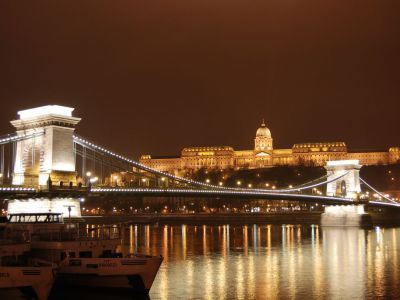
The Chain Bridge isn’t just a way across the Danube-it’s Budapest’s ultimate “glow-up” moment. Opened in 1849, it was the first permanent link between Buda and Pest, finally sparing locals the hassle of ferries, boats, or heroic swims to cross the river. Credit goes to Count István Széchenyi, who, after being famously stranded for a week by bad weather, decided enough was enough. He brought in English engineer William Clark to design the bridge, and Scottish engineer Adam Clark to actually build it.
At the time, the Chain Bridge was considered a marvel of modern engineering, with giant iron chains strung between massive stone towers. It wasn’t just practical, but also stylish enough to stir a bit of envy among Europe’s grandest cities. Its opening marked a major step toward the modernization of Hungary, both economically and socially.
History, however, wasn’t kind. During World War II, retreating German troops blew it apart. But in true Budapest spirit, the city painstakingly rebuilt the bridge, reopening it in 1949, exactly a century after its original debut.
Walk across today and you’ll be rewarded with some of the best views in town. On the Buda side, you’re at the foot of Castle Hill, a short stroll from the Fisherman’s Bastion and Matthias Church. Cross over to Pest, and you’ll land near the stunning Gresham Palace and Széchenyi Square.
And then there are the lions-those fierce stone guardians stading at both ends. Local legend says they don’t have tongues, but spoiler alert: they do, just cleverly hidden from view.
Especially at night, when it’s lit up, the Chain Bridge feels like the heartstring tying Budapest together. Don't miss the chance to walk it, and feel the heartbeat of Budapest under your feet.
At the time, the Chain Bridge was considered a marvel of modern engineering, with giant iron chains strung between massive stone towers. It wasn’t just practical, but also stylish enough to stir a bit of envy among Europe’s grandest cities. Its opening marked a major step toward the modernization of Hungary, both economically and socially.
History, however, wasn’t kind. During World War II, retreating German troops blew it apart. But in true Budapest spirit, the city painstakingly rebuilt the bridge, reopening it in 1949, exactly a century after its original debut.
Walk across today and you’ll be rewarded with some of the best views in town. On the Buda side, you’re at the foot of Castle Hill, a short stroll from the Fisherman’s Bastion and Matthias Church. Cross over to Pest, and you’ll land near the stunning Gresham Palace and Széchenyi Square.
And then there are the lions-those fierce stone guardians stading at both ends. Local legend says they don’t have tongues, but spoiler alert: they do, just cleverly hidden from view.
Especially at night, when it’s lit up, the Chain Bridge feels like the heartstring tying Budapest together. Don't miss the chance to walk it, and feel the heartbeat of Budapest under your feet.
7) Gresham Palace
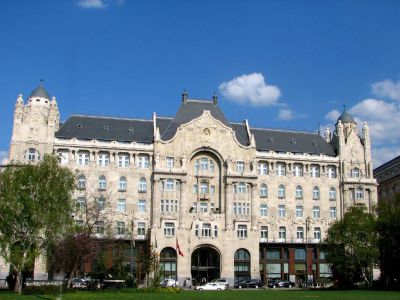
If you seek modern architecture in Budapest, Gresham Palace – reputedly the best piece of Art Nouveau architecture in the Hungarian capital, if not the whole of Central Europe – is definitely the one not to be missed. Set in a privileged location, this palatial building, steeped in history, is now tastefully renovated and accommodates one of the top luxury hotels in the city.
Back in 1906, it served as foreign headquarters for the Gresham Insurance company and, for many years, remained a “home away from home” for the wealthy Brits visiting Hungary. After World War II, for several years under the Soviet occupation, the palace was used as barracks for soldiers and later on fell into disrepair. In 2001, after the fall of communism, the property was acquired by the Four Seasons Hotel group which undertook its thorough restoration and brought it back to the original splendor.
A real treat for seasoned travelers, this newly-emerged hotel boasts service and amenities befitting world-class luxury status and complemented by lavishly decorated interior, gourmet dining facilities and meticulous attention to detail. The hotel rooms are a perfect blend of comfort and elegance, some of which also indulge their inhabitants with a view of the magnificent river Danube down below and the presiding over it Buda Castle – enough to forego an excursion in the city and just stay in the room sitting by the window, comfortably wrapped up in a plush robe.
And if you can't yet afford to live like the rich and famous, you may simply resort to some drinks in the lobby bar for a taste of glamour, Budapest-style... or just snoop around the place and admire its decorations, gorgeous glass and metal designs. They won’t mind your even taking a few photos...
Back in 1906, it served as foreign headquarters for the Gresham Insurance company and, for many years, remained a “home away from home” for the wealthy Brits visiting Hungary. After World War II, for several years under the Soviet occupation, the palace was used as barracks for soldiers and later on fell into disrepair. In 2001, after the fall of communism, the property was acquired by the Four Seasons Hotel group which undertook its thorough restoration and brought it back to the original splendor.
A real treat for seasoned travelers, this newly-emerged hotel boasts service and amenities befitting world-class luxury status and complemented by lavishly decorated interior, gourmet dining facilities and meticulous attention to detail. The hotel rooms are a perfect blend of comfort and elegance, some of which also indulge their inhabitants with a view of the magnificent river Danube down below and the presiding over it Buda Castle – enough to forego an excursion in the city and just stay in the room sitting by the window, comfortably wrapped up in a plush robe.
And if you can't yet afford to live like the rich and famous, you may simply resort to some drinks in the lobby bar for a taste of glamour, Budapest-style... or just snoop around the place and admire its decorations, gorgeous glass and metal designs. They won’t mind your even taking a few photos...
8) St. Stephen's Basilica (must see)
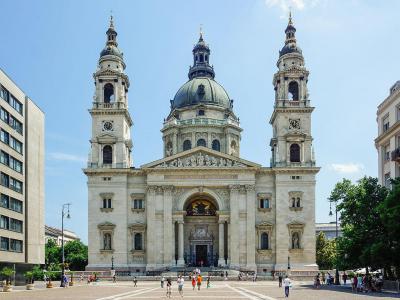
Overlooking its namesake square, Saint Stephen’s Basilica is one of Budapest’s crown jewels-both spiritually and architecturally. Dedicated to King István, Hungary’s first monarch who brought Christianity to the country, the church holds an unusual and revered relic: the king’s mummified right fist, encased in a glass box. Pilgrims from all across Hungary come to see it, although casual visitors might easily walk right past. Also laid to rest here is Ferenc Puskás, the legendary soccer player hailed as one of the greatest in history.
For many Hungarians, Saint Stephen’s is the most important religious site, much as it is a key local attraction for tourists. The building can hold up to 8,500 people at a time and rises 96 meters into the air, matching the height of the Parliament Building-a record legally reserved for Budapest’s most iconic structures.
To create this Neoclassical marvel took the work of three architects, including the renowned Miklós Ybl. Adorned with a bust of Saint István right above the doorway, the facade features a huge arched portal with Ionian columns, flanked on both sides with huge bell towers. Topping the right tower is the heaviest and largest bell in the country, tipping the scales at nine tonnes!
Entry to Saint Stephen's Basilica requires a paid ticket, which grants access to all parts of the building, including the treasury and the dome. Visitors can reach the top by stairs or elevator, where they are rewarded with one of the city's best panoramic views. Inside, the basilica features richly decorated interiors with marble surfaces, gilded details, stained glass windows, and detailed mosaics and frescoes. At the main altar stands a statue of Saint Stephen, surrounded by works from some of Hungary’s most renowned artists.
Another unforgettable highlight here is the grand pipe organ. Music lovers should keep an ear out for concerts-hearing it in action is nothing short of an awe-inspiring experience.
Tip: After visiting, take some time to relax in the square-a great place to enjoy coffee at open-air cafes while soaking up the view.
For many Hungarians, Saint Stephen’s is the most important religious site, much as it is a key local attraction for tourists. The building can hold up to 8,500 people at a time and rises 96 meters into the air, matching the height of the Parliament Building-a record legally reserved for Budapest’s most iconic structures.
To create this Neoclassical marvel took the work of three architects, including the renowned Miklós Ybl. Adorned with a bust of Saint István right above the doorway, the facade features a huge arched portal with Ionian columns, flanked on both sides with huge bell towers. Topping the right tower is the heaviest and largest bell in the country, tipping the scales at nine tonnes!
Entry to Saint Stephen's Basilica requires a paid ticket, which grants access to all parts of the building, including the treasury and the dome. Visitors can reach the top by stairs or elevator, where they are rewarded with one of the city's best panoramic views. Inside, the basilica features richly decorated interiors with marble surfaces, gilded details, stained glass windows, and detailed mosaics and frescoes. At the main altar stands a statue of Saint Stephen, surrounded by works from some of Hungary’s most renowned artists.
Another unforgettable highlight here is the grand pipe organ. Music lovers should keep an ear out for concerts-hearing it in action is nothing short of an awe-inspiring experience.
Tip: After visiting, take some time to relax in the square-a great place to enjoy coffee at open-air cafes while soaking up the view.
