Custom Walk in Tallinn, Estonia by neco_z_df969d created on 2025-12-28
Guide Location: Estonia » Tallinn
Guide Type: Custom Walk
# of Sights: 11
Tour Duration: 2 Hour(s)
Travel Distance: 2.6 Km or 1.6 Miles
Share Key: TR2RE
Guide Type: Custom Walk
# of Sights: 11
Tour Duration: 2 Hour(s)
Travel Distance: 2.6 Km or 1.6 Miles
Share Key: TR2RE
How It Works
Please retrieve this walk in the GPSmyCity app. Once done, the app will guide you from one tour stop to the next as if you had a personal tour guide. If you created the walk on this website or come to the page via a link, please follow the instructions below to retrieve the walk in the app.
Retrieve This Walk in App
Step 1. Download the app "GPSmyCity: Walks in 1K+ Cities" on Apple App Store or Google Play Store.



Step 2. In the GPSmyCity app, download(or launch) the guide "Tallinn Map and Walking Tours".
Step 3. Tap the menu button located at upper right corner of the "Walks" screen and select "Retrieve custom walk". Enter the share key: TR2RE
1) Tallinn Old Town
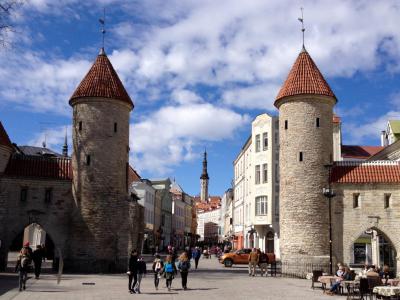
Tallinn Old Town, known as "Tallinna vanalinn" in Estonian, is the historical heart of Tallinn. Renowned for its well-preserved medieval and Hanseatic architecture, this area is a living testimony to the city's rich history. Spanning 113 hectares with a buffer zone of 2,253 hectares, the Old Town is characterized by its 13th-century city plan, which remains remarkably intact.
The Old Town has a history of prosperity and turmoil. Most buildings date back to the 13th-16th centuries, reflecting its medieval importance. However, WWII caused significant damage. Between 1941-1944, Soviet air raids, during the German occupation of Estonia, destroyed about 10% of Old Town buildings, leaving 20,000 homeless and many casualties.
Despite this turbulent history, Tallinn Old Town stands today as Northern Europe's best-preserved medieval city. Its Gothic spires, winding cobblestone streets, and enchanting architecture attract visitors worldwide. The area was once a hub for wealthy merchants from Germany, Denmark, and other regions. Now, it is a vibrant center with restaurants, bars, museums, and galleries, offering a blend of historical ambiance and modern vitality.
The Old Town's unique charm lies in its ability to maintain its medieval and Hanseatic structure completely. Recognized for its historical value and well-preserved state, it was inscribed as a UNESCO World Heritage Site in 1997. The city's layout includes original cobblestone streets lined with medieval churches, grand merchant houses, barns, and warehouses, many dating back to the Middle Ages.
Visitors to Tallinn Old Town often describe it as mystical, mesmerizing, and addictive. Spending a day wandering through its streets offers an immersive experience in an authentic medieval milieu, revealing why it holds such a special place in the annals of world heritage sites.
The Old Town has a history of prosperity and turmoil. Most buildings date back to the 13th-16th centuries, reflecting its medieval importance. However, WWII caused significant damage. Between 1941-1944, Soviet air raids, during the German occupation of Estonia, destroyed about 10% of Old Town buildings, leaving 20,000 homeless and many casualties.
Despite this turbulent history, Tallinn Old Town stands today as Northern Europe's best-preserved medieval city. Its Gothic spires, winding cobblestone streets, and enchanting architecture attract visitors worldwide. The area was once a hub for wealthy merchants from Germany, Denmark, and other regions. Now, it is a vibrant center with restaurants, bars, museums, and galleries, offering a blend of historical ambiance and modern vitality.
The Old Town's unique charm lies in its ability to maintain its medieval and Hanseatic structure completely. Recognized for its historical value and well-preserved state, it was inscribed as a UNESCO World Heritage Site in 1997. The city's layout includes original cobblestone streets lined with medieval churches, grand merchant houses, barns, and warehouses, many dating back to the Middle Ages.
Visitors to Tallinn Old Town often describe it as mystical, mesmerizing, and addictive. Spending a day wandering through its streets offers an immersive experience in an authentic medieval milieu, revealing why it holds such a special place in the annals of world heritage sites.
2) Ukrainian Greek-Catholic Church
The Ukrainian Greek Catholic Church is part of the so-called Eastern Rite Catholic Church Union. It also happens to be the largest such institution still affiliated with the Roman Catholic Church. It is a very old worshipping community, dating all the way back to 988, when it was one of the successor churches during the time of Grand Prince Vladimir the Great.
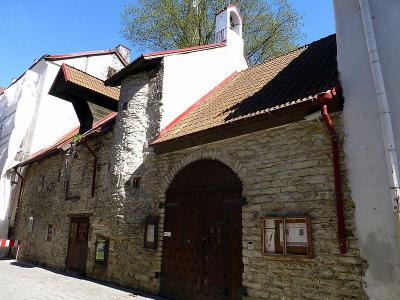
This local group is housed in an old medieval house that dates back to the 1300s. The local church has been an active part of Tallinn since the 17th Century. The iconic art of the walls of the sanctuary are the real draw here though. They are some of the finest examples of such art to be found anywhere. The MaDonna and child are quite striking indeed, as well as the figures of Saints Matthew, Mark, Luke and John. The iconostasis is the handy work of the famous artist Pyotr Gumenyuk.
Besides being a church, the building also acts as a cultural gathering place for the Ukrainian community of the area. Periodically, there are celebrations held here that the local public can visit. The congregation worships on Sundays at 10:00 a.m. Otherwise, you must call ahead to be able to visit the inside of the church, but it is worth the call.
This local group is housed in an old medieval house that dates back to the 1300s. The local church has been an active part of Tallinn since the 17th Century. The iconic art of the walls of the sanctuary are the real draw here though. They are some of the finest examples of such art to be found anywhere. The MaDonna and child are quite striking indeed, as well as the figures of Saints Matthew, Mark, Luke and John. The iconostasis is the handy work of the famous artist Pyotr Gumenyuk.
Besides being a church, the building also acts as a cultural gathering place for the Ukrainian community of the area. Periodically, there are celebrations held here that the local public can visit. The congregation worships on Sundays at 10:00 a.m. Otherwise, you must call ahead to be able to visit the inside of the church, but it is worth the call.
3) House of the Brotherhood of Black Heads
If you want to get a chance to see a piece of beautifully preserved Renaissance architecture in Tallinn, then you will want to visit the House of the Brotherhood of Black Heads. In fact, it is the only such surviving structure in downtown Tallinn.
From a historical perspective, the House was owned by an organization of young merchants from other countries, who worked throughout Estonia and Livonia during the late 14th Century. A house of some sort was on the property here for many years before the group purchased the land in the 16th Century. Major reconstruction took place in 1597.
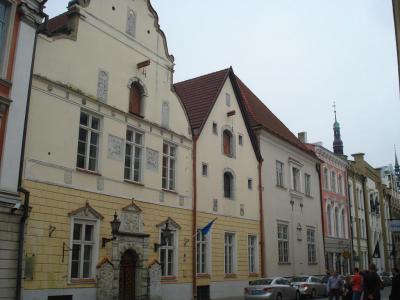
From an architectural standpoint, the building reflects a Dutch interpretation of Renaissance artwork and styling. For instance, it is a two nave arched hall. The stunning painted doors are also quite Dutch in style, and are common among similar buildings located throughout the Low Countries. There is lots of ornamentation in the trim and doors of the building also.
From a historical perspective, the House was owned by an organization of young merchants from other countries, who worked throughout Estonia and Livonia during the late 14th Century. A house of some sort was on the property here for many years before the group purchased the land in the 16th Century. Major reconstruction took place in 1597.
From an architectural standpoint, the building reflects a Dutch interpretation of Renaissance artwork and styling. For instance, it is a two nave arched hall. The stunning painted doors are also quite Dutch in style, and are common among similar buildings located throughout the Low Countries. There is lots of ornamentation in the trim and doors of the building also.
4) Pikk Tanav (Long Street)
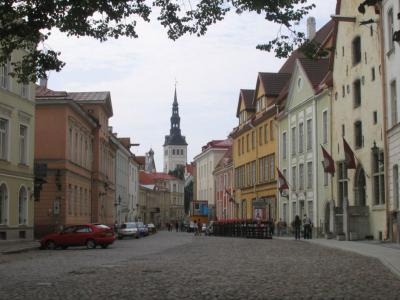
Running through the core of Tallinn’s Old Town, Long Street is one of the city’s principal historic streets, stretching from Town Hall Square toward the harbor. Its name reflects both its length and its role as a key route linking commercial and administrative areas.
The street is lined with tall, narrow buildings dating mainly from the 15th to 17th centuries, many of which have been carefully preserved. Among the most prominent is the Great Guild Hall at number 17, once the center of merchant power. Further along stands the House of the Blackheads at number 26, known for its richly decorated façade and Renaissance details.
As you walk along the cobblestones, architectural details begin to reveal themselves: carved stone portals, ornate doorways, and stepped gables reflect the status of former residents. Along the way, you will also encounter long-standing establishments such as the Maiasmokk Café, located near the Guild Hall and operating since 1864, and the Hell Hunt at number 39, near the intersection with Olevimägi Street, often noted as one of the city’s earliest modern pubs.
Today, Long Street balances its historic character with everyday life. Shops, galleries, cafés, and small museums occupy the ground floors, maintaining the street’s lively rhythm. Moving along its length, you experience not only a sequence of landmarks but a continuous thread of Tallinn’s history.
The street is lined with tall, narrow buildings dating mainly from the 15th to 17th centuries, many of which have been carefully preserved. Among the most prominent is the Great Guild Hall at number 17, once the center of merchant power. Further along stands the House of the Blackheads at number 26, known for its richly decorated façade and Renaissance details.
As you walk along the cobblestones, architectural details begin to reveal themselves: carved stone portals, ornate doorways, and stepped gables reflect the status of former residents. Along the way, you will also encounter long-standing establishments such as the Maiasmokk Café, located near the Guild Hall and operating since 1864, and the Hell Hunt at number 39, near the intersection with Olevimägi Street, often noted as one of the city’s earliest modern pubs.
Today, Long Street balances its historic character with everyday life. Shops, galleries, cafés, and small museums occupy the ground floors, maintaining the street’s lively rhythm. Moving along its length, you experience not only a sequence of landmarks but a continuous thread of Tallinn’s history.
5) Puhavaimu Kirik (Holy Spirit Church)
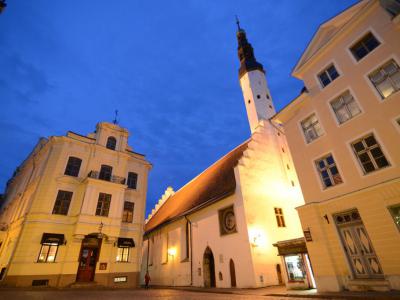
The Holy Spirit Church dates back to the 13th century and it originally served an almshouse and hospital run by the city magistrate. During the Reformation, the church gained particular importance in 1531 when it became the first in Tallinn to hold regular services in Estonian. Its pastor, Johann Koell, also helped produce one of the earliest known printed texts in Estonian, a catechism published in the 1530s together with Simon Wanradt.
From the outside, the church is modest in scale, with a white façade and a slender tower facing the street. One of its most recognizable features is the public clock mounted on the exterior, dating from the late 17th century. Inside, however, the church presents a richer visual experience, often described as a “museum of styles”, where medieval, Renaissance, and Baroque elements appear side by side.
The interior is defined by its wooden character and detailed craftsmanship. The carved altar, created in the late 15th century by master Bernt Notke, remains the focal point, depicting scenes from the life of Christ. Painted ceilings, carved galleries, and decorative pews add to the layered atmosphere, while the church bell, dating to 1433, is the oldest surviving in Estonia.
Today, the Holy Spirit Church remains an active place of worship and a welcoming stop for visitors. Its central location and smaller scale make it easy to explore, while its history offers insight into the linguistic, cultural, and religious shifts that shaped Tallinn.
From the outside, the church is modest in scale, with a white façade and a slender tower facing the street. One of its most recognizable features is the public clock mounted on the exterior, dating from the late 17th century. Inside, however, the church presents a richer visual experience, often described as a “museum of styles”, where medieval, Renaissance, and Baroque elements appear side by side.
The interior is defined by its wooden character and detailed craftsmanship. The carved altar, created in the late 15th century by master Bernt Notke, remains the focal point, depicting scenes from the life of Christ. Painted ceilings, carved galleries, and decorative pews add to the layered atmosphere, while the church bell, dating to 1433, is the oldest surviving in Estonia.
Today, the Holy Spirit Church remains an active place of worship and a welcoming stop for visitors. Its central location and smaller scale make it easy to explore, while its history offers insight into the linguistic, cultural, and religious shifts that shaped Tallinn.
6) Raekoja Plats (Town Hall Square) (must see)
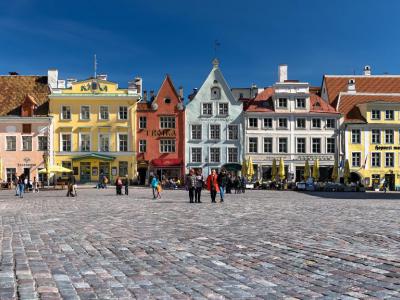
At the center of Tallinn’s Old Town, Town Hall Square has functioned as the city’s main gathering place since at least the medieval period, with market activity recorded here as early as the 11th century. The square is framed by pastel-toned merchant houses and dominated by the Gothic Town Hall, completed in 1404, widely regarded as the oldest surviving town hall in Northern Europe. Look toward the southern side of the square to take in its full façade and tower.
The surrounding buildings, dating mainly from the 15th to 17th centuries, illustrate the prosperity of the city during its time within the Hanseatic network. Among them is the historic Raeapteek, located on the northeastern edge of the square. Established in the early 15th century, it is often cited as one of Europe’s oldest continuously operating pharmacies. Inside, a small exhibition presents early medical tools and remedies, offering a glimpse into centuries-old practices.
As you cross the cobbled square, smaller details begin to stand out. Near the center lies a circular stone marked with a compass rose. Stand directly on this stone and look around. You can align your view to spot five of Tallinn’s historic church spires rising above the rooftops, including those of Saint Olaf’s Church, Saint Nicholas’ Church, Saint Mary’s Cathedral, Church of the Holy Spirit, and Saint Michael’s Church. A short distance from this marker, slightly off-center toward the Town Hall side, lies an L-shaped stone linked to a local legend: it is said to mark the spot where a priest was executed after a violent dispute. In summer, cafés extend their seating into the square, and depending on their layout, the temporary flooring may partially or completely cover this subtle piece.
In warmer months, café terraces fill the edges of the square, while markets and open-air events bring a steady flow of activity. The annual Tallinn Old Town Days festival transforms the area into a stage for performances and exhibitions. In winter, the square is centered around a large decorated Christmas tree, linked to a tradition often associated with the Brotherhood of the Blackheads, who are said to have erected one of the earliest public Christmas trees here in the 15th century.
The surrounding buildings, dating mainly from the 15th to 17th centuries, illustrate the prosperity of the city during its time within the Hanseatic network. Among them is the historic Raeapteek, located on the northeastern edge of the square. Established in the early 15th century, it is often cited as one of Europe’s oldest continuously operating pharmacies. Inside, a small exhibition presents early medical tools and remedies, offering a glimpse into centuries-old practices.
As you cross the cobbled square, smaller details begin to stand out. Near the center lies a circular stone marked with a compass rose. Stand directly on this stone and look around. You can align your view to spot five of Tallinn’s historic church spires rising above the rooftops, including those of Saint Olaf’s Church, Saint Nicholas’ Church, Saint Mary’s Cathedral, Church of the Holy Spirit, and Saint Michael’s Church. A short distance from this marker, slightly off-center toward the Town Hall side, lies an L-shaped stone linked to a local legend: it is said to mark the spot where a priest was executed after a violent dispute. In summer, cafés extend their seating into the square, and depending on their layout, the temporary flooring may partially or completely cover this subtle piece.
In warmer months, café terraces fill the edges of the square, while markets and open-air events bring a steady flow of activity. The annual Tallinn Old Town Days festival transforms the area into a stage for performances and exhibitions. In winter, the square is centered around a large decorated Christmas tree, linked to a tradition often associated with the Brotherhood of the Blackheads, who are said to have erected one of the earliest public Christmas trees here in the 15th century.
7) Katariina Käik (St. Catherine’s Passage) (must see)
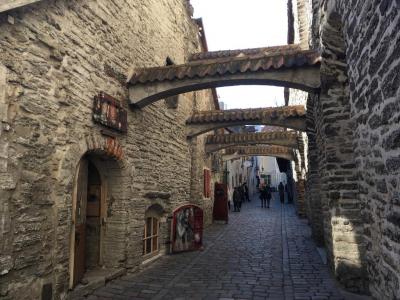
Saint Catherine’s Passage is a narrow medieval lane connecting Vene Street with Müürivahe Street, following the outer wall of the former Dominican monastery. Dating back to the 13th century, the passage developed alongside the monastery complex and preserves sections of its original stonework. Overhead arches linking the buildings were added later to reinforce the structures and remain one of the passage’s defining features.
The passage takes its name from Saint Catherine and the adjacent Dominican monastery, founded in 1246. Along the northern section, you can see the remains of the monastery church, one of the oldest surviving ecclesiastical structures in Tallinn. Several tombstones are set directly into the walls. These belonged to burials associated with the monastery and date mainly from the 14th to 16th centuries.
Toward the southern end, the passage becomes a center for traditional crafts. A group of working studios, often referred to as Saint Catherine’s Guild, continues long-established artisanal practices. Here, visitors can observe glass-blowing, ceramics, leatherwork, and textile production, with many workshops maintaining techniques rooted in historical craftsmanship rather than modern mass production.
The passage is short and can be walked in minutes, but it is best explored slowly. Entry points are easy to miss, and the northern section near the monastery remains the most historically intact, while the southern end is more active with workshops. Unlike larger streets in the Old Town, this lane functions more as a preserved corridor than a thoroughfare.
The passage takes its name from Saint Catherine and the adjacent Dominican monastery, founded in 1246. Along the northern section, you can see the remains of the monastery church, one of the oldest surviving ecclesiastical structures in Tallinn. Several tombstones are set directly into the walls. These belonged to burials associated with the monastery and date mainly from the 14th to 16th centuries.
Toward the southern end, the passage becomes a center for traditional crafts. A group of working studios, often referred to as Saint Catherine’s Guild, continues long-established artisanal practices. Here, visitors can observe glass-blowing, ceramics, leatherwork, and textile production, with many workshops maintaining techniques rooted in historical craftsmanship rather than modern mass production.
The passage is short and can be walked in minutes, but it is best explored slowly. Entry points are easy to miss, and the northern section near the monastery remains the most historically intact, while the southern end is more active with workshops. Unlike larger streets in the Old Town, this lane functions more as a preserved corridor than a thoroughfare.
8) Tallinna Raekoda (Tallinn Town Hall) (must see)
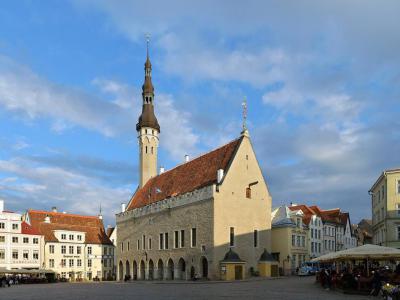
The Tallinn Town Hall stands as one of the best-preserved Gothic town halls in Northern Europe, and the only one of its kind still standing in the region. First mentioned in 1322 and completed in its current form in 1404, it reflects the wealth and independence of a medieval trading city at the height of its Hanseatic influence. Until 1970, it served as the center of civic life, where the town council governed, trade was regulated, and public ceremonies were held.
From the outside, the building is defined by its limestone construction, clay-tiled roof, and a slender spire rising about 64 meters above Town Hall Square. The tower is crowned by “Old Thomas”, a weather vane figure first installed in 1530, symbolizing the city’s watchful guardian. Along the façade, a series of arches supported by pillars form a sheltered arcade, where merchants once gathered during poor weather. In earlier times, this space also served as a place of public display, where offenders could be chained to a pillar as a form of punishment.
Inside, the Town Hall reveals a series of spaces designed for both governance and representation. The main room, known as the Citizens’ Hall, could accommodate around 100 people and continues to host concerts and events today. Elsewhere, the Council Chamber features carved wooden details dating back to the 14th century, while benches, arches, and decorative elements reflect the craftsmanship of the period. Copies of historic tapestries line the walls, with the originals preserved in the Tallinn City Museum.
Today, the Town Hall remains an active cultural venue, open to visitors during the warmer months. You can explore its interior, attend an event, or climb the tower for views across the red rooftops of the Old Town.
From the outside, the building is defined by its limestone construction, clay-tiled roof, and a slender spire rising about 64 meters above Town Hall Square. The tower is crowned by “Old Thomas”, a weather vane figure first installed in 1530, symbolizing the city’s watchful guardian. Along the façade, a series of arches supported by pillars form a sheltered arcade, where merchants once gathered during poor weather. In earlier times, this space also served as a place of public display, where offenders could be chained to a pillar as a form of punishment.
Inside, the Town Hall reveals a series of spaces designed for both governance and representation. The main room, known as the Citizens’ Hall, could accommodate around 100 people and continues to host concerts and events today. Elsewhere, the Council Chamber features carved wooden details dating back to the 14th century, while benches, arches, and decorative elements reflect the craftsmanship of the period. Copies of historic tapestries line the walls, with the originals preserved in the Tallinn City Museum.
Today, the Town Hall remains an active cultural venue, open to visitors during the warmer months. You can explore its interior, attend an event, or climb the tower for views across the red rooftops of the Old Town.
9) Taani Kuninga ( Danish King's Garden)
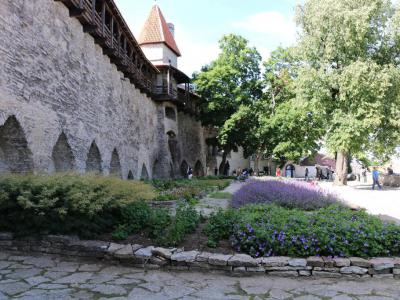
The Danish King's Garden, known as Taani Kuninga in Estonian, is a historically significant park located in the Old Town of Tallinn. This garden holds a special place in Estonian and Danish history, particularly for being the site where the Danish flag, Dannebrog, is traditionally believed to have originated.
Situated adjacent to Toompea and overlooking the Saint Nicholas Church, the garden is steeped in medieval history. It is famously associated with an old legend that dates back to the Danish invasion. According to this legend, during a critical battle, a flag mysteriously descended from the sky right at this location, leading to a pivotal victory for King Valdemar II of Denmark. This flag, which emerged under miraculous circumstances, later became the national flag of Denmark. The garden features a sculpture titled 'Tuli lipp' ('The Flag Descended') that commemorates this legendary event.
The Danish King's Garden's name is a nod to the Danish reign in Tallinn and northern Estonia, which lasted for over a hundred years, primarily during the 13th century. This period left a lasting impact on the region's history and culture, and the garden serves as a reminder of this significant era.
Another notable feature of the garden is the sculpture of three monks, accompanied by a light installation and an information board mounted on the city wall. These elements together create an intriguing and educational experience for visitors, offering insights into the garden's rich past and the broader historical context of Tallinn.
Moreover, the Danish King's Garden is the focal point of annual celebrations on the 15th of June, known as Dannebrog or the Day of the Danish Flag. This event commemorates the historical significance of the Dannebrog and its association with the garden, drawing visitors and locals alike to celebrate and remember the shared history between Denmark and Estonia.
Situated adjacent to Toompea and overlooking the Saint Nicholas Church, the garden is steeped in medieval history. It is famously associated with an old legend that dates back to the Danish invasion. According to this legend, during a critical battle, a flag mysteriously descended from the sky right at this location, leading to a pivotal victory for King Valdemar II of Denmark. This flag, which emerged under miraculous circumstances, later became the national flag of Denmark. The garden features a sculpture titled 'Tuli lipp' ('The Flag Descended') that commemorates this legendary event.
The Danish King's Garden's name is a nod to the Danish reign in Tallinn and northern Estonia, which lasted for over a hundred years, primarily during the 13th century. This period left a lasting impact on the region's history and culture, and the garden serves as a reminder of this significant era.
Another notable feature of the garden is the sculpture of three monks, accompanied by a light installation and an information board mounted on the city wall. These elements together create an intriguing and educational experience for visitors, offering insights into the garden's rich past and the broader historical context of Tallinn.
Moreover, the Danish King's Garden is the focal point of annual celebrations on the 15th of June, known as Dannebrog or the Day of the Danish Flag. This event commemorates the historical significance of the Dannebrog and its association with the garden, drawing visitors and locals alike to celebrate and remember the shared history between Denmark and Estonia.
10) Kiek in de Kök Museum and Bastion Tunnels
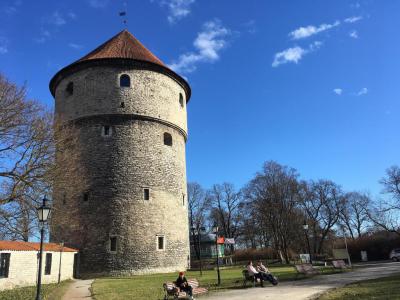
The Kiek in de Kök Museum and Bastion Tunnels provides insight into how the city was defended over centuries. At its center stands the Kiek in de Kök tower, built in 1475 as part of the medieval city walls. Its name, derived from Low German and meaning “peek into the kitchen,” refers to the view soldiers reportedly had into nearby homes from its elevated position.
The tower was designed for artillery defense, rising about 38 meters high with walls up to four meters thick, built to withstand cannon fire. Evidence of this military past can still be seen today, including cannonballs embedded in the stone from 16th-century attacks. In the 17th century, the tower was modified with additional gun ports as warfare evolved, before gradually falling out of active military use by the 18th century.
As Tallinn’s defenses expanded, bastions were added in the 17th century to strengthen the city against new military technologies. Beneath these earthwork structures, a network of tunnels was constructed, dating mainly from the 17th to 18th centuries. Originally used for troop movement, storage, and strategic positioning, these tunnels later took on additional roles, including use during the 20th century.
Today, the tower functions as a museum dedicated to Tallinn’s fortification system, with exhibitions covering the development of the city’s walls, towers, and daily life in earlier periods. From here, visitors can descend into the bastion tunnels, where dimly lit corridors and stone passageways create a distinct underground atmosphere.
The tower was designed for artillery defense, rising about 38 meters high with walls up to four meters thick, built to withstand cannon fire. Evidence of this military past can still be seen today, including cannonballs embedded in the stone from 16th-century attacks. In the 17th century, the tower was modified with additional gun ports as warfare evolved, before gradually falling out of active military use by the 18th century.
As Tallinn’s defenses expanded, bastions were added in the 17th century to strengthen the city against new military technologies. Beneath these earthwork structures, a network of tunnels was constructed, dating mainly from the 17th to 18th centuries. Originally used for troop movement, storage, and strategic positioning, these tunnels later took on additional roles, including use during the 20th century.
Today, the tower functions as a museum dedicated to Tallinn’s fortification system, with exhibitions covering the development of the city’s walls, towers, and daily life in earlier periods. From here, visitors can descend into the bastion tunnels, where dimly lit corridors and stone passageways create a distinct underground atmosphere.
11) Freedom Square
At the southern edge of Tallinn’s Old Town, Freedom Square forms a broad, open space that contrasts with the enclosed medieval streets nearby. Today, it serves as a central gathering place, but its current form also reflects Estonia’s modern identity and its connection to national independence. The square has been reshaped over time, particularly after Estonia regained independence in 1991.
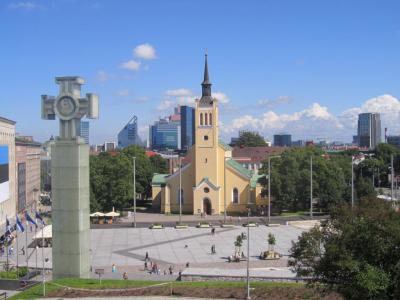
At its core stands the War of Independence Victory Column, completed in 2009 as a tribute to those who fought in the Estonian War of Independence from 1918 to 1920. Facing the square's west side, the monument, made of glass panels and illuminated from within, is topped with the Cross of Liberty, an important national symbol. It commemorates a conflict in which thousands were killed and many more wounded, securing Estonia’s independence in the aftermath of World War I and the Russian Civil War.
The square is framed by a mix of historic and later architecture. On the eastern side stands Saint John’s Church, a 19th-century Lutheran church with a distinctive red-brick façade. As you walk down from the Victory Column, you will find the remains of Harju Gate on your left, once one of the main medieval entrances to the Old Town. Although the gate structures were demolished in the late 19th century during urban redevelopment, the foundations and lower sections of the gate towers were later uncovered and are now preserved beneath glass covers for public viewing.
During the Soviet era, the space was known as Victory Square. Today, it has been redefined to emphasize national independence. The open layout allows for concerts, ceremonies, and public events throughout the year, while also offering a place to pause and take in the surroundings.
At its core stands the War of Independence Victory Column, completed in 2009 as a tribute to those who fought in the Estonian War of Independence from 1918 to 1920. Facing the square's west side, the monument, made of glass panels and illuminated from within, is topped with the Cross of Liberty, an important national symbol. It commemorates a conflict in which thousands were killed and many more wounded, securing Estonia’s independence in the aftermath of World War I and the Russian Civil War.
The square is framed by a mix of historic and later architecture. On the eastern side stands Saint John’s Church, a 19th-century Lutheran church with a distinctive red-brick façade. As you walk down from the Victory Column, you will find the remains of Harju Gate on your left, once one of the main medieval entrances to the Old Town. Although the gate structures were demolished in the late 19th century during urban redevelopment, the foundations and lower sections of the gate towers were later uncovered and are now preserved beneath glass covers for public viewing.
During the Soviet era, the space was known as Victory Square. Today, it has been redefined to emphasize national independence. The open layout allows for concerts, ceremonies, and public events throughout the year, while also offering a place to pause and take in the surroundings.
