Custom Walk in Belfast, Ireland by glovepau_88a558 created on 2026-01-05
Guide Location: Ireland » Belfast
Guide Type: Custom Walk
# of Sights: 13
Tour Duration: 12 Hour(s)
Travel Distance: 31.2 Km or 19.4 Miles
Share Key: BYSS6
Guide Type: Custom Walk
# of Sights: 13
Tour Duration: 12 Hour(s)
Travel Distance: 31.2 Km or 19.4 Miles
Share Key: BYSS6
How It Works
Please retrieve this walk in the GPSmyCity app. Once done, the app will guide you from one tour stop to the next as if you had a personal tour guide. If you created the walk on this website or come to the page via a link, please follow the instructions below to retrieve the walk in the app.
Retrieve This Walk in App
Step 1. Download the app "GPSmyCity: Walks in 1K+ Cities" on Apple App Store or Google Play Store.



Step 2. In the GPSmyCity app, download(or launch) the guide "Belfast Map and Walking Tours".
Step 3. Tap the menu button located at upper right corner of the "Walks" screen and select "Retrieve custom walk". Enter the share key: BYSS6

1) The Big Fish
The Big Fish-also known locally and lovingly as the Big Blue Fish-is one of Belfast’s most eye-catching and cherished public art pieces. Created by artist John Kindness in 1999, this 10-meter-long ceramic mosaic sculpture was installed at Donegall Quay, near the Lagan Lookout and Customs House, to mark the regeneration of the River Lagan. Officially a salmon (yes, the signs confirm it!), it stands right where the River Farset, from which Belfast gets its name (Béal Feirste meaning "mouth of the Farset"), meets the Lagan. The sculpture is hard to miss-not just because of its size, but because it sits at the very heart of the city’s history.
What makes The Big Fish truly special is its skin. Each shimmering blue ceramic tile is printed with texts, illustrations, and images that collectively tell the story of Belfast. From Tudor-era maps to 20th-century headlines, it’s like a visual time capsule. There are even drawings by schoolchildren and community members, adding a personal and playful layer to the piece-including an Ulster Fry and a cheerful soldier. Contributions came from local schools and day centres, while historic imagery was provided by the Ulster Museum. Inside the fish, there’s a literal time capsule too, containing images, poetry, and documents about the city.
More than just a quirky photo spot, the Big Fish is a symbol of Belfast’s cultural rebirth and deep connection to the water that shaped it. Locals might chuckle at its playful nicknames, but there’s no denying that this gleaming salmon has swum its way into the city’s heart-and become one of its most iconic landmarks.
What makes The Big Fish truly special is its skin. Each shimmering blue ceramic tile is printed with texts, illustrations, and images that collectively tell the story of Belfast. From Tudor-era maps to 20th-century headlines, it’s like a visual time capsule. There are even drawings by schoolchildren and community members, adding a personal and playful layer to the piece-including an Ulster Fry and a cheerful soldier. Contributions came from local schools and day centres, while historic imagery was provided by the Ulster Museum. Inside the fish, there’s a literal time capsule too, containing images, poetry, and documents about the city.
More than just a quirky photo spot, the Big Fish is a symbol of Belfast’s cultural rebirth and deep connection to the water that shaped it. Locals might chuckle at its playful nicknames, but there’s no denying that this gleaming salmon has swum its way into the city’s heart-and become one of its most iconic landmarks.
2) Titanic Belfast (must see)
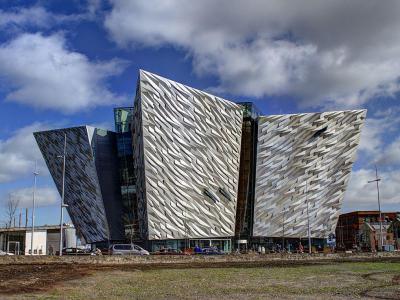
Nestled in the heart of Belfast’s revitalized Titanic Quarter, Titanic Belfast stands as a striking modern monument to one of history’s most famous ocean liners. Opened in 2012 on the very site where RMS Titanic was designed, built, and launched, the building’s jagged silvery exterior-crafted from over 3,000 aluminum shards-evokes the image of ship bows cutting through water and shimmering ice crystals.
Inside, the visitor experience unfolds across nine immersive galleries that chronicle Titanic’s entire journey-from conception and engineering marvels in Belfast’s bustling shipyards, through its tragic maiden voyage in 1912, to the discovery of its wreck and the evolution of modern maritime safety. Interactive displays, atmospheric dark-rides, full-scale cabin recreations and a rotating 7.6 meters scale model bring the narrative to life. A returning visitor on Reddit noted the focus is more on Titanic’s birthplace and industrial heritage, rather than the tragedy itself, which might influence your expectations.
Your ticket also includes access to SS Nomadic, the last surviving White Star Line vessel and Titanic’s original tender, moored nearby in Hamilton Dock. For a deeper dive, the optional Discovery Walking Tour guides you through the original Harland & Wolff drawing offices, historic slipways, and the launch site, with compelling architectural metaphors embedded in the building’s exterior.
Titanic Belfast is more than a museum-it’s the cultural heart of the Titanic Quarter, a regeneration success story and a gateway to Belfast’s evolving maritime narrative. Pair your visit with a stop at the Galley Café or Bistro 401 for locally sourced fare, and don’t miss the gift shop filled with artisan goods.
Inside, the visitor experience unfolds across nine immersive galleries that chronicle Titanic’s entire journey-from conception and engineering marvels in Belfast’s bustling shipyards, through its tragic maiden voyage in 1912, to the discovery of its wreck and the evolution of modern maritime safety. Interactive displays, atmospheric dark-rides, full-scale cabin recreations and a rotating 7.6 meters scale model bring the narrative to life. A returning visitor on Reddit noted the focus is more on Titanic’s birthplace and industrial heritage, rather than the tragedy itself, which might influence your expectations.
Your ticket also includes access to SS Nomadic, the last surviving White Star Line vessel and Titanic’s original tender, moored nearby in Hamilton Dock. For a deeper dive, the optional Discovery Walking Tour guides you through the original Harland & Wolff drawing offices, historic slipways, and the launch site, with compelling architectural metaphors embedded in the building’s exterior.
Titanic Belfast is more than a museum-it’s the cultural heart of the Titanic Quarter, a regeneration success story and a gateway to Belfast’s evolving maritime narrative. Pair your visit with a stop at the Galley Café or Bistro 401 for locally sourced fare, and don’t miss the gift shop filled with artisan goods.
3) HMS Caroline
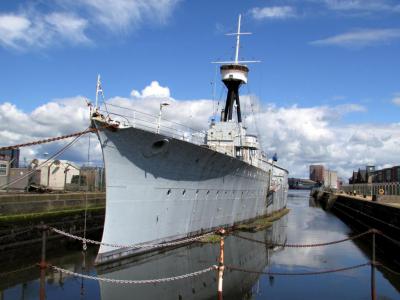
Nestled in Belfast’s vibrant Titanic Quarter, HMS Caroline is a remarkable window into maritime history and one of Northern Ireland’s most compelling attractions. Launched in 1914 and built by Cammell Laird, she is the last surviving light cruiser from the First World War and the sole vessel still afloat that took part in the epic 1916 Battle of Jutland. For over a century based in Alexandra Dock, she has evolved from a warship into a floating HQ and training centre, and, since 2017, a fully restored museum that offers an immersive journey through time.
Visitors begin their experience in the atmospheric Drill Hall, where a cinematic portrayal of Jutland brings the thunderous clash of steel and water to life. From there, you can wander through the authentic Captain’s quarters, explore the engine room with its roaring turbines and faint scent of oil, and explore the cramped living spaces of the seamen, sailors, and marines. Interactive exhibits-like the Signal School, Torpedo School, and Virtual Access Suite-allow children and adults alike to try semaphore, crack codes, and even virtually steer the ship.
HMS Caroline is more than a museum; it’s a living testament to Belfast’s maritime heritage. Having served through both world wars and remained in commission until 2011, she was the second-longest-serving Royal Navy ship after HMS Victory. Today, her decks offer sweeping views over Belfast Lough, framed by the iconic Harland & Wolff cranes. With engaging stories, hands-on experiences, and historic authenticity, HMS Caroline invites every visitor to step aboard, explore her decks, and become part of her extraordinary story.
Visitors begin their experience in the atmospheric Drill Hall, where a cinematic portrayal of Jutland brings the thunderous clash of steel and water to life. From there, you can wander through the authentic Captain’s quarters, explore the engine room with its roaring turbines and faint scent of oil, and explore the cramped living spaces of the seamen, sailors, and marines. Interactive exhibits-like the Signal School, Torpedo School, and Virtual Access Suite-allow children and adults alike to try semaphore, crack codes, and even virtually steer the ship.
HMS Caroline is more than a museum; it’s a living testament to Belfast’s maritime heritage. Having served through both world wars and remained in commission until 2011, she was the second-longest-serving Royal Navy ship after HMS Victory. Today, her decks offer sweeping views over Belfast Lough, framed by the iconic Harland & Wolff cranes. With engaging stories, hands-on experiences, and historic authenticity, HMS Caroline invites every visitor to step aboard, explore her decks, and become part of her extraordinary story.
4) SS Nomadic (must see)
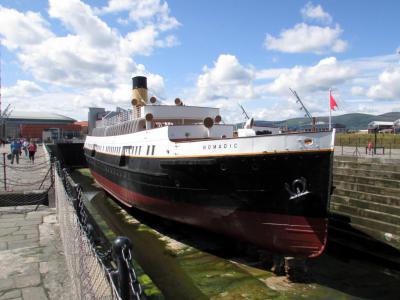
The SS Nomadic is a beautifully restored steamship berthed in Hamilton Dock, a must-see attraction for anyone exploring the Titanic Quarter. Launched in April 1911 by Harland & Wolff, the same legendary shipyard responsible for RMS Titanic and RMS Olympic, this 67‑metre tender served as a crucial shuttle, ferrying first‑ and second‑class passengers, luggage, mail, and provisions from Cherbourg to the mighty liners anchored offshore. Admiring her from the dock, you’ll appreciate her graceful, scaled‑down elegance – she’s often affectionately dubbed Titanic’s “little sister”.
Since returning to her birthplace in 2006, Nomadic has undergone an extensive restoration, finishing in 2013, to revive her Edwardian-era splendour. Today, she is the only surviving vessel of the White Star Line and the sole remaining ship crafted by Thomas Andrews – the man behind Titanic’s design. Abundant period charm awaits visitors: richly decorated first‑class lounges, original brass portholes, and a clear demarcation of third‑class quarters illustrate a fascinating slice of social history onboard.
A visit to Nomadic is included with the Titanic Belfast ticket, offering a complementary and hands‑on experience to the museum’s exhibits. Named “The Nomadic Experience”, tours are immersive and family-friendly, featuring interactive storytelling, character performances like a first‑class barman, audio guides in multiple languages, and plenty of deck space to explore. This makes it ideal for both history buffs and families.
Paired with the neighbouring Titanic Belfast attraction, a stroll past the iconic Samson and Goliath cranes, or a café stop in Titanic Quarter, this visit becomes more than satisfying-it becomes essential to understanding Belfast’s rich maritime heritage.
Since returning to her birthplace in 2006, Nomadic has undergone an extensive restoration, finishing in 2013, to revive her Edwardian-era splendour. Today, she is the only surviving vessel of the White Star Line and the sole remaining ship crafted by Thomas Andrews – the man behind Titanic’s design. Abundant period charm awaits visitors: richly decorated first‑class lounges, original brass portholes, and a clear demarcation of third‑class quarters illustrate a fascinating slice of social history onboard.
A visit to Nomadic is included with the Titanic Belfast ticket, offering a complementary and hands‑on experience to the museum’s exhibits. Named “The Nomadic Experience”, tours are immersive and family-friendly, featuring interactive storytelling, character performances like a first‑class barman, audio guides in multiple languages, and plenty of deck space to explore. This makes it ideal for both history buffs and families.
Paired with the neighbouring Titanic Belfast attraction, a stroll past the iconic Samson and Goliath cranes, or a café stop in Titanic Quarter, this visit becomes more than satisfying-it becomes essential to understanding Belfast’s rich maritime heritage.
5) Parliament Buildings (must see)
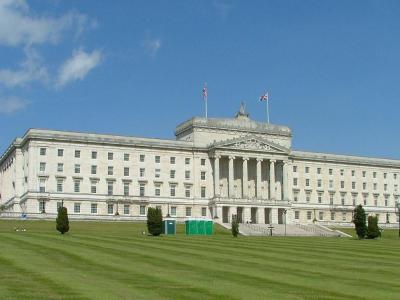
Located atop the Stormont Estate in east Belfast, the Parliament Buildings serve as the official seat of the Northern Ireland Assembly. Completed in 1932, this neoclassical structure was designed by Sir Arnold Thornely and built from Portland stone, giving it a distinctive pale appearance that contrasts with its green parkland surroundings. Originally constructed to house the now-defunct Parliament of Northern Ireland, the building has witnessed decades of political change, including periods of suspension, direct rule from London, and the re-establishment of devolved governance under the 1998 Good Friday Agreement.
The building is easily recognizable thanks to its symmetrical façade, central portico with Corinthian columns, and the mile-long Prince of Wales Avenue leading up to its steps. Though its architectural details echo grandeur, the building’s history reflects a complex political past. It was once temporarily home to British military forces during World War II and, more recently, has been central to power-sharing efforts between unionist and nationalist communities in Northern Ireland.
Visitors can explore the manicured grounds surrounding Stormont and admire the imposing statue of Sir Edward Carson at the foot of the hill. While interior access may depend on Assembly sessions or guided tours, the building’s grand central hall and debating chamber offer insight into modern Northern Irish politics. Informational panels, memorials, and sculptures throughout the estate add layers of context, helping visitors understand both the aspirations and challenges that have shaped Northern Ireland’s governance.
Stormont’s Parliament Buildings remain a symbol of political transition, national identity, and democratic process in Belfast’s evolving civic landscape.
The building is easily recognizable thanks to its symmetrical façade, central portico with Corinthian columns, and the mile-long Prince of Wales Avenue leading up to its steps. Though its architectural details echo grandeur, the building’s history reflects a complex political past. It was once temporarily home to British military forces during World War II and, more recently, has been central to power-sharing efforts between unionist and nationalist communities in Northern Ireland.
Visitors can explore the manicured grounds surrounding Stormont and admire the imposing statue of Sir Edward Carson at the foot of the hill. While interior access may depend on Assembly sessions or guided tours, the building’s grand central hall and debating chamber offer insight into modern Northern Irish politics. Informational panels, memorials, and sculptures throughout the estate add layers of context, helping visitors understand both the aspirations and challenges that have shaped Northern Ireland’s governance.
Stormont’s Parliament Buildings remain a symbol of political transition, national identity, and democratic process in Belfast’s evolving civic landscape.

6) Beacon of Hope
The Beacon of Hope is a public art sculpture located in Thanksgiving Square, created by Scottish artist Andy Scott. Standing 19.5 meters tall, it was completed in 2007 after six years of planning and construction. The sculpture portrays a graceful female figure made of stainless steel and bronze, spiraling upwards with an outstretched arm holding a symbolic "ring of thanksgiving." At her feet rests a bronze globe that represents peace, harmony, and the global connections of Belfast-marking cities to which its people and industries have migrated or contributed. Over time, the sculpture has earned affectionate local nicknames such as "Nuala with the Hula," "The Bell on the Ball," and "The Thing with the Ring."
More than just a beautiful addition to Belfast’s skyline, the Beacon of Hope carries a deep message of reconciliation and gratitude. The idea for the sculpture was originally inspired by Myrtle Smyth, who was moved by her visit to Thanks-Giving Square in Dallas, Texas. Andy Scott brought that vision to life, with the piece becoming a symbol of the city's renewal and its ongoing journey towards peace. Fabrication was carried out by P.F. Copeland in Newtownabbey, and the bronze globe was cast by Beltane Studios in Peebles. The sculpture quickly gained popularity and has since been embraced by the Belfast City Council, local businesses, tourism boards, and even television companies as a symbol of civic pride.
Today, the Beacon of Hope stands not only as one of the tallest sculptures in Belfast but also as one of its most iconic. With its soaring figure, powerful symbolism, and universal message, it has become a beloved landmark-celebrated for both its artistic merit and its representation of Belfast’s resilient and outward-looking spirit.
More than just a beautiful addition to Belfast’s skyline, the Beacon of Hope carries a deep message of reconciliation and gratitude. The idea for the sculpture was originally inspired by Myrtle Smyth, who was moved by her visit to Thanks-Giving Square in Dallas, Texas. Andy Scott brought that vision to life, with the piece becoming a symbol of the city's renewal and its ongoing journey towards peace. Fabrication was carried out by P.F. Copeland in Newtownabbey, and the bronze globe was cast by Beltane Studios in Peebles. The sculpture quickly gained popularity and has since been embraced by the Belfast City Council, local businesses, tourism boards, and even television companies as a symbol of civic pride.
Today, the Beacon of Hope stands not only as one of the tallest sculptures in Belfast but also as one of its most iconic. With its soaring figure, powerful symbolism, and universal message, it has become a beloved landmark-celebrated for both its artistic merit and its representation of Belfast’s resilient and outward-looking spirit.
7) Belfast City Hall (must see)
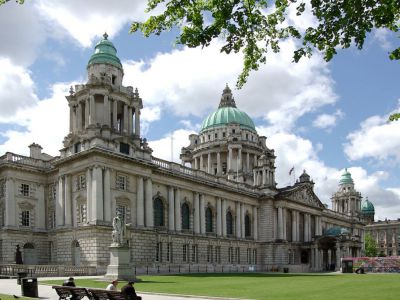
Belfast City Hall is a grand Edwardian Baroque masterpiece that dominates Donegall Square in the heart of Belfast’s city centre. Designed by Sir Alfred Brumwell Thomas and completed in 1906, this iconic building features gleaming Portland stone, a striking copper-domed roof rising 173 ft, and ornate detailing that reflects Belfast’s civic pride. It was built on the former site of the White Linen Hall to mark the city’s growing importance-thanks to its booming linen, shipbuilding, and engineering industries-and to cement its new city status granted in 1888.
Step inside and you’ll be greeted by splendid interiors such as the grand marble staircase, mosaic floors, and exquisitely carved oak and marble-clad spaces like the Council Chamber and Banquet Hall-noting the latter was rebuilt after damage during the Belfast Blitz in 1941. The stained-glass windows are spectacular, showcasing the Belfast coat of arms, portraits of British monarchs, and emblems of the city’s historical provinces. Guided tours last about 45 minutes and offer access to areas normally closed to the public, alongside a 16-room Visitor Exhibition that brings Belfast’s past to life via multilingual audio guides.
Outside, the beautifully landscaped grounds are home to significant memorials and statues, including the impressive Titanic Memorial Garden, the Cenotaph and Garden of Remembrance for war victims, and notable figures such as Queen Victoria, Edward Harland, Mary Ann McCracken, Winifred Carney, and James Magennis VC. These serene lawns offer a peaceful counterpoint to the bustling city around them.
For visitors, City Hall is much more than a civic landmark-it’s a hub of culture and community. Drop into the Bobbin Coffee Shop inside, peruse the gift shop for local keepsakes, or join a free tour (first-come, first-served) at scheduled times. Evening illuminations beautifully accent the exterior, making it a particularly atmospheric spot after dark. Whether you're fascinated by architecture, history, or simply looking for a picturesque gathering place, Belfast City Hall is an essential stop on your journey through Belfast.
Step inside and you’ll be greeted by splendid interiors such as the grand marble staircase, mosaic floors, and exquisitely carved oak and marble-clad spaces like the Council Chamber and Banquet Hall-noting the latter was rebuilt after damage during the Belfast Blitz in 1941. The stained-glass windows are spectacular, showcasing the Belfast coat of arms, portraits of British monarchs, and emblems of the city’s historical provinces. Guided tours last about 45 minutes and offer access to areas normally closed to the public, alongside a 16-room Visitor Exhibition that brings Belfast’s past to life via multilingual audio guides.
Outside, the beautifully landscaped grounds are home to significant memorials and statues, including the impressive Titanic Memorial Garden, the Cenotaph and Garden of Remembrance for war victims, and notable figures such as Queen Victoria, Edward Harland, Mary Ann McCracken, Winifred Carney, and James Magennis VC. These serene lawns offer a peaceful counterpoint to the bustling city around them.
For visitors, City Hall is much more than a civic landmark-it’s a hub of culture and community. Drop into the Bobbin Coffee Shop inside, peruse the gift shop for local keepsakes, or join a free tour (first-come, first-served) at scheduled times. Evening illuminations beautifully accent the exterior, making it a particularly atmospheric spot after dark. Whether you're fascinated by architecture, history, or simply looking for a picturesque gathering place, Belfast City Hall is an essential stop on your journey through Belfast.
8) Bobby Sands Mural
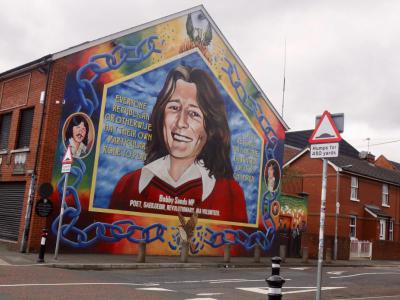
The Bobby Sands Mural is a world-famous portrait of the IRA leader. It is painted on the walls of the Sinn Fein Political Party Press Office at the corner of Sevastopol Street and Falls Road. It is based on a photograph taken of Sands while he was imprisoned.
In 1977, Bobby Sands was imprisoned in Long Kesh Maze Prison for 14 years for gun possession along with a number of other IRA members and leaders. While in prison, Sands and his cohorts demanded that they not be forced to wear prison uniforms or do prison work. They also wanted to be able to associate with other prisoners and receive visitors and/or packages. Denied these demands, Sands and the others went on a hunger strike.
Sands was elected to the UK parliament during his time in prison. However, he died from the hunger strike before he was able to take his seat. This mural of his smiling face was created as a memorial in 1998. It is one of many murals in Belfast, but is arguably the most well known.
In 1977, Bobby Sands was imprisoned in Long Kesh Maze Prison for 14 years for gun possession along with a number of other IRA members and leaders. While in prison, Sands and his cohorts demanded that they not be forced to wear prison uniforms or do prison work. They also wanted to be able to associate with other prisoners and receive visitors and/or packages. Denied these demands, Sands and the others went on a hunger strike.
Sands was elected to the UK parliament during his time in prison. However, he died from the hunger strike before he was able to take his seat. This mural of his smiling face was created as a memorial in 1998. It is one of many murals in Belfast, but is arguably the most well known.
9) Garden of Remembrance
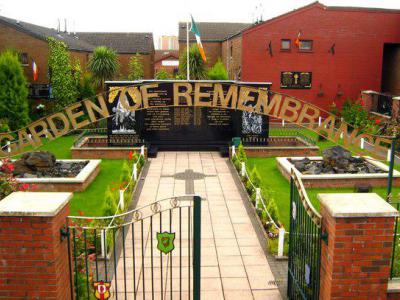
The Garden of Remembrance is a solemn yet serene tribute that speaks volumes to Ireland’s recent history. Officially opened on 24 June 2001 and commissioned by the Falls Cultural Society, it stands today as one of the most poignant Republican memorial gardens in the city. Small yet thoughtfully designed, this space brings together horticulture and heritage: an iron gate ushers you toward a paved patio flanked by neat planting beds, leading to a prominent plaque under a proud Irish Tricolour.
At its heart, the Garden honours the members of “D” Company, 2nd Battalion of the Provisional Irish Republican Army, alongside civilians from the Falls Road community who tragically lost their lives during The Troubles. It also commemorates former prisoners who died on hunger strike in 1981 at Long Kesh’s H‑Blocks. The central plaque bears bilingual inscriptions-Irish and English-proclaiming the residents’ dedication: “to those brave and gallant vols … who made the supreme sacrifice in their quest for Irish Freedom”.
For tourists, this Garden of Remembrance offers more than historical context; it invites quiet reflection amidst Belfast’s vibrant atmosphere. It provides insight into local identity, the power of community memory, and the lingering impact of a city striving towards peace. Placed along the mural-lined Falls Road-home to an array of political artworks-this memorial deserves inclusion in any thoughtful walking tour. Visitors are encouraged to approach with respect, allowing time to read the inscriptions, absorb the atmosphere, and contemplate the stories embedded in this living homage to resilience and remembrance.
At its heart, the Garden honours the members of “D” Company, 2nd Battalion of the Provisional Irish Republican Army, alongside civilians from the Falls Road community who tragically lost their lives during The Troubles. It also commemorates former prisoners who died on hunger strike in 1981 at Long Kesh’s H‑Blocks. The central plaque bears bilingual inscriptions-Irish and English-proclaiming the residents’ dedication: “to those brave and gallant vols … who made the supreme sacrifice in their quest for Irish Freedom”.
For tourists, this Garden of Remembrance offers more than historical context; it invites quiet reflection amidst Belfast’s vibrant atmosphere. It provides insight into local identity, the power of community memory, and the lingering impact of a city striving towards peace. Placed along the mural-lined Falls Road-home to an array of political artworks-this memorial deserves inclusion in any thoughtful walking tour. Visitors are encouraged to approach with respect, allowing time to read the inscriptions, absorb the atmosphere, and contemplate the stories embedded in this living homage to resilience and remembrance.
10) Peace Wall (must see)
The Belfast Peace Walls are barriers that separate Protestant and Catholic neighborhoods through the city. They were originally built in 1969 to establish peace by separating sectarian groups. Today, they are popular tourist attractions.
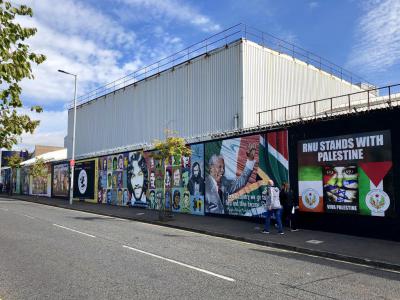
Arguably, the most famous Peace Wall is located between Shankill Road and Falls Road. There is also a large Peace Wall along Cupar Way, which has become a canvas for local artists. Graffiti and street art intermingle on the Peace Walls to provide color to the city while also reminding citizens and tourists of the strife of the country.
The walls were originally meant to be temporary structures. Ironically, the structures have not only stayed in place, but have increased in number. The most recent Peace Wall was constructed in 2017. There are now 59 in the city.
The Belfast City Council began a plan to remove the Peace Walls, but the vast majority of residents believe they continue to help quell violence. Still, the plan is for all Peace Walls to be removed in the future.
Arguably, the most famous Peace Wall is located between Shankill Road and Falls Road. There is also a large Peace Wall along Cupar Way, which has become a canvas for local artists. Graffiti and street art intermingle on the Peace Walls to provide color to the city while also reminding citizens and tourists of the strife of the country.
The walls were originally meant to be temporary structures. Ironically, the structures have not only stayed in place, but have increased in number. The most recent Peace Wall was constructed in 2017. There are now 59 in the city.
The Belfast City Council began a plan to remove the Peace Walls, but the vast majority of residents believe they continue to help quell violence. Still, the plan is for all Peace Walls to be removed in the future.
11) Belfast Castle (must see)
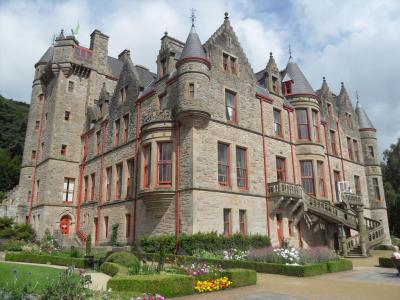
Belfast Castle is a striking 19th-century estate located on the slopes of Cave Hill, offering sweeping views over the city and Belfast Lough. Completed in 1870, the current structure was commissioned by the 3rd Marquess of Donegall after the original city-centre castle was destroyed by fire. Designed in the Scottish Baronial style, the castle features turrets, gables, and ornate stonework, reflecting the Victorian taste for romantic architecture and countryside retreats.
The castle grounds are part of the larger Cave Hill Country Park, a scenic expanse popular with hikers and nature lovers. Several walking trails lead through wooded areas and past dramatic cliffs, eventually reaching the summit of Cave Hill itself, famously believed to have inspired Jonathan Swift’s Gulliver’s Travels. The castle’s elevated position provides one of the best panoramic views of Belfast, making it a popular stop for photographers and visitors seeking a peaceful break from the urban centre.
Inside the castle, visitors can explore a small exhibition on its history and enjoy refreshments at the cellar café. The estate is also known for its manicured gardens and whimsical cat-themed sculptures, which pay homage to a local legend claiming good fortune for any home that houses a white cat. Outdoor picnic areas and a playground make the site family-friendly, while the formal rooms and banquet facilities continue to serve as a venue for weddings and events.
Belfast Castle is open daily and free to enter, offering a blend of local legend, architecture, and natural beauty within easy reach of the city.
The castle grounds are part of the larger Cave Hill Country Park, a scenic expanse popular with hikers and nature lovers. Several walking trails lead through wooded areas and past dramatic cliffs, eventually reaching the summit of Cave Hill itself, famously believed to have inspired Jonathan Swift’s Gulliver’s Travels. The castle’s elevated position provides one of the best panoramic views of Belfast, making it a popular stop for photographers and visitors seeking a peaceful break from the urban centre.
Inside the castle, visitors can explore a small exhibition on its history and enjoy refreshments at the cellar café. The estate is also known for its manicured gardens and whimsical cat-themed sculptures, which pay homage to a local legend claiming good fortune for any home that houses a white cat. Outdoor picnic areas and a playground make the site family-friendly, while the formal rooms and banquet facilities continue to serve as a venue for weddings and events.
Belfast Castle is open daily and free to enter, offering a blend of local legend, architecture, and natural beauty within easy reach of the city.
12) Belfast Cathedral (must see)
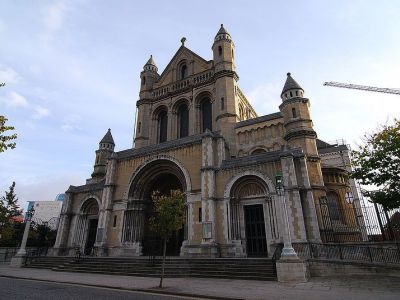
Belfast Cathedral, also known as Saint Anne’s Cathedral, stands as one of the city’s most striking landmarks, blending spiritual significance with architectural beauty. Located in the Cathedral Quarter-the historic heart of Belfast-this Anglican cathedral was founded in 1899 and has since become both a place of worship and a cultural hub. With its grand Romanesque Revival design, intricate mosaics, and commanding presence, the cathedral offers visitors a serene yet awe-inspiring atmosphere that reflects the city’s rich history and enduring spirit.
The building itself tells a story of resilience and ambition. Constructed over many decades, it combines late Victorian foundations with additions made throughout the 20th century, including the striking Spire of Hope, a modern stainless-steel spire added in 2007 that soars 40 meters into the sky. This striking feature, visible from across the city, symbolizes both faith and renewal. Inside, light streams through a kaleidoscope of stained glass, illuminating exquisite stonework and creating a setting that feels at once majestic and contemplative.
Visitors can explore remarkable artistic treasures, such as the elaborate mosaics designed by Sir Charles Nicholson and the stunning Chapel of the Holy Spirit, dedicated to those who lost their lives in the First World War. Another highlight is the “Spire of Hope” piercing through the cathedral roof, representing the city’s resilience and looking toward a brighter future. The cathedral also hosts concerts, exhibitions, and community events, extending its role beyond a sacred space to a vibrant gathering point for locals and visitors.
For travelers exploring Belfast, a stop at Saint Anne’s Cathedral provides not just a glimpse into the city’s religious heritage but also a chance to admire centuries of craftsmanship. Whether you’re drawn by its artistry, its peaceful atmosphere, or its role as a beacon of Belfast’s cultural life, the cathedral offers a moment of reflection and connection in the heart of Northern Ireland’s capital.
The building itself tells a story of resilience and ambition. Constructed over many decades, it combines late Victorian foundations with additions made throughout the 20th century, including the striking Spire of Hope, a modern stainless-steel spire added in 2007 that soars 40 meters into the sky. This striking feature, visible from across the city, symbolizes both faith and renewal. Inside, light streams through a kaleidoscope of stained glass, illuminating exquisite stonework and creating a setting that feels at once majestic and contemplative.
Visitors can explore remarkable artistic treasures, such as the elaborate mosaics designed by Sir Charles Nicholson and the stunning Chapel of the Holy Spirit, dedicated to those who lost their lives in the First World War. Another highlight is the “Spire of Hope” piercing through the cathedral roof, representing the city’s resilience and looking toward a brighter future. The cathedral also hosts concerts, exhibitions, and community events, extending its role beyond a sacred space to a vibrant gathering point for locals and visitors.
For travelers exploring Belfast, a stop at Saint Anne’s Cathedral provides not just a glimpse into the city’s religious heritage but also a chance to admire centuries of craftsmanship. Whether you’re drawn by its artistry, its peaceful atmosphere, or its role as a beacon of Belfast’s cultural life, the cathedral offers a moment of reflection and connection in the heart of Northern Ireland’s capital.
13) Albert Memorial Clock
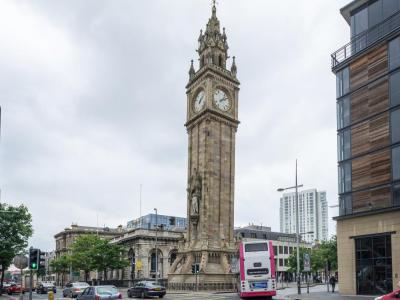
The Albert Memorial Clock, often simply called the Albert Clock, is one of Belfast’s most recognisable landmarks. Perched in Queen’s Square at the east end of High Street, this Gothic Revival clock tower was built between 1865 and 1869 as a memorial to Prince Albert, consort to Queen Victoria. Designed by the accomplished architect W. J. Barre, also famed for Belfast's Ulster Hall, it stands approximately 113 feet (34 meters) tall.
Constructed of pinkish Scrabo sandstone, the tower blends French and Italian Gothic styles, adorned with flying buttresses, heraldic lions, angels, gargoyles, floral motifs, and crowned by an ornate octagonal belfry. A striking life-size statue of Prince Albert in the robes of a Knight of the Garter, sculpted by S. F. Lynn, stands on the west face. Inside, a two-tonne bell cast by Francis Moore could once be heard up to 8 miles away.
One of the tower’s most intriguing quirks is its lean-an eastward tilt of about four feet-earning it the affectionate nickname “Belfast’s Leaning Tower of Pisa.” The tilt resulted from the tower being built on reclaimed, marshy ground near the River Farset, supported on timber piles. Ornamental pinnacles and the statue canopy were removed in 1924 to ease stress, and a substantial restoration between 2000 and 2002 reinforced the foundations and reinstated lost carvings.
Today, the Albert Clock stands as a poetic fusion of Victorian craftsmanship, civic pride, and idiosyncratic charm. It survived damage from an IRA bomb in 1992, and its tilted stance and intricate stonework make it a delightful must-see for architecture buffs, history lovers, and photographers alike. Whether admired by day or illuminated at night, it richly rewards a stroll through Belfast’s Cathedral Quarter.
Constructed of pinkish Scrabo sandstone, the tower blends French and Italian Gothic styles, adorned with flying buttresses, heraldic lions, angels, gargoyles, floral motifs, and crowned by an ornate octagonal belfry. A striking life-size statue of Prince Albert in the robes of a Knight of the Garter, sculpted by S. F. Lynn, stands on the west face. Inside, a two-tonne bell cast by Francis Moore could once be heard up to 8 miles away.
One of the tower’s most intriguing quirks is its lean-an eastward tilt of about four feet-earning it the affectionate nickname “Belfast’s Leaning Tower of Pisa.” The tilt resulted from the tower being built on reclaimed, marshy ground near the River Farset, supported on timber piles. Ornamental pinnacles and the statue canopy were removed in 1924 to ease stress, and a substantial restoration between 2000 and 2002 reinforced the foundations and reinstated lost carvings.
Today, the Albert Clock stands as a poetic fusion of Victorian craftsmanship, civic pride, and idiosyncratic charm. It survived damage from an IRA bomb in 1992, and its tilted stance and intricate stonework make it a delightful must-see for architecture buffs, history lovers, and photographers alike. Whether admired by day or illuminated at night, it richly rewards a stroll through Belfast’s Cathedral Quarter.
