Custom Walk in Mdina, Malta by kaymcclement_d882e9 created on 2026-01-22
Guide Location: Malta » Mdina
Guide Type: Custom Walk
# of Sights: 13
Tour Duration: 2 Hour(s)
Travel Distance: 1.1 Km or 0.7 Miles
Share Key: V4R2S
Guide Type: Custom Walk
# of Sights: 13
Tour Duration: 2 Hour(s)
Travel Distance: 1.1 Km or 0.7 Miles
Share Key: V4R2S
How It Works
Please retrieve this walk in the GPSmyCity app. Once done, the app will guide you from one tour stop to the next as if you had a personal tour guide. If you created the walk on this website or come to the page via a link, please follow the instructions below to retrieve the walk in the app.
Retrieve This Walk in App
Step 1. Download the app "GPSmyCity: Walks in 1K+ Cities" on Apple App Store or Google Play Store.



Step 2. In the GPSmyCity app, download(or launch) the guide "Mdina Map and Walking Tours".
Step 3. Tap the menu button located at upper right corner of the "Walks" screen and select "Retrieve custom walk". Enter the share key: V4R2S

1) St. Paul's Cathedral (must see)
Saint Paul's Cathedral is a remarkable Roman Catholic cathedral. It is dedicated to Saint Paul the Apostle.
Originally founded in the 12th century, the cathedral's history is intertwined with a legend. According to tradition, the cathedral stands on the very spot where the Roman governor Publius met Saint Paul after the Apostle's shipwreck on the island of Malta. This historical connection has made the cathedral a place of pilgrimage and reverence for Christians around the world.
However, the original cathedral suffered severe damage in the devastating 1693 Sicily earthquake. As a result, it had to be dismantled and subsequently rebuilt in the Baroque style. The reconstruction project was carried out between 1696 and 1705, under the skillful design of the renowned Maltese architect, Lorenzo Gafà. His work on Saint Paul's Cathedral is considered his masterpiece and showcases the elegance and grandeur typical of Baroque architecture.
Saint Paul's Cathedral serves as the seat of the Roman Catholic Archdiocese of Malta. Nevertheless, since the 19th century, its responsibilities have been shared with Saint John's Co-Cathedral in Valletta, which is also of great significance to the island's religious heritage.
Adjacent to the cathedral is the Cathedral Museum, which was established in 1897. The museum's collection is a treasure trove of secular and ecclesiastical artifacts. Spanning from the 14th to the early 20th century, the exhibits encompass an array of religious and secular artworks.
Among them are medieval panels, which were formerly located within the cathedral, providing insight into the island's historical religious art. The museum also houses a money gallery featuring numerous ancient coins (although closed for refurbishment in early 2020), religious vestments, historical furniture, and a remarkable permanent exhibition of 76 original woodcuts by the renowned German artist Albrecht Dürer.
Originally founded in the 12th century, the cathedral's history is intertwined with a legend. According to tradition, the cathedral stands on the very spot where the Roman governor Publius met Saint Paul after the Apostle's shipwreck on the island of Malta. This historical connection has made the cathedral a place of pilgrimage and reverence for Christians around the world.
However, the original cathedral suffered severe damage in the devastating 1693 Sicily earthquake. As a result, it had to be dismantled and subsequently rebuilt in the Baroque style. The reconstruction project was carried out between 1696 and 1705, under the skillful design of the renowned Maltese architect, Lorenzo Gafà. His work on Saint Paul's Cathedral is considered his masterpiece and showcases the elegance and grandeur typical of Baroque architecture.
Saint Paul's Cathedral serves as the seat of the Roman Catholic Archdiocese of Malta. Nevertheless, since the 19th century, its responsibilities have been shared with Saint John's Co-Cathedral in Valletta, which is also of great significance to the island's religious heritage.
Adjacent to the cathedral is the Cathedral Museum, which was established in 1897. The museum's collection is a treasure trove of secular and ecclesiastical artifacts. Spanning from the 14th to the early 20th century, the exhibits encompass an array of religious and secular artworks.
Among them are medieval panels, which were formerly located within the cathedral, providing insight into the island's historical religious art. The museum also houses a money gallery featuring numerous ancient coins (although closed for refurbishment in early 2020), religious vestments, historical furniture, and a remarkable permanent exhibition of 76 original woodcuts by the renowned German artist Albrecht Dürer.

2) Gourgion House
Gourgion House is a captivating architectural gem located in the heart of the main square. Unlike the surrounding buildings, which typically boast Baroque designs, Gourgion House stands out with its unique neo-Gothic architecture, making it a rarity in the country.
Designed by the talented and eclectic Maltese architect, Andrea Vassallo, the house reflects the distinct Gothic Revival architectural roots. When it was first revealed in the early 20th century, the building faced some criticism for its unconventional style, as it deviated from the prevailing Baroque aesthetics seen throughout Malta.
One cannot help but marvel at the ornate facade, adorned with intricate details that pay homage to the Gothic era. The rooftop, an exceptional feature of the building, boasts elaborate embellishments that add to the overall allure of Gourgion House. The notable arches, another hallmark of Gothic architecture, lend an air of grandeur to the structure, making it a captivating sight to all who pass by.
Andrea Vassallo's architectural brilliance extends beyond neo-Gothic creations. Throughout his career, he explored various styles, leaving an indelible mark on Malta's architectural landscape. From neo-Classical to Rococo Revival, Art Nouveau to neo-Romanesque, Vassallo's versatility is evident in his works. One of his most acclaimed masterpieces is the basilica of Ta’ Pinu on Gozo, the second largest island in the Maltese archipelago. This basilica, too, faced criticism for its unique appearance, standing out amidst its more traditional counterparts.
Gourgion House, along with the basilica of Ta’ Pinu, represents Andrea Vassallo's unwavering dedication to pushing the boundaries of architectural design and adding diversity to Malta's architectural heritage.
Designed by the talented and eclectic Maltese architect, Andrea Vassallo, the house reflects the distinct Gothic Revival architectural roots. When it was first revealed in the early 20th century, the building faced some criticism for its unconventional style, as it deviated from the prevailing Baroque aesthetics seen throughout Malta.
One cannot help but marvel at the ornate facade, adorned with intricate details that pay homage to the Gothic era. The rooftop, an exceptional feature of the building, boasts elaborate embellishments that add to the overall allure of Gourgion House. The notable arches, another hallmark of Gothic architecture, lend an air of grandeur to the structure, making it a captivating sight to all who pass by.
Andrea Vassallo's architectural brilliance extends beyond neo-Gothic creations. Throughout his career, he explored various styles, leaving an indelible mark on Malta's architectural landscape. From neo-Classical to Rococo Revival, Art Nouveau to neo-Romanesque, Vassallo's versatility is evident in his works. One of his most acclaimed masterpieces is the basilica of Ta’ Pinu on Gozo, the second largest island in the Maltese archipelago. This basilica, too, faced criticism for its unique appearance, standing out amidst its more traditional counterparts.
Gourgion House, along with the basilica of Ta’ Pinu, represents Andrea Vassallo's unwavering dedication to pushing the boundaries of architectural design and adding diversity to Malta's architectural heritage.
3) Xara Palace
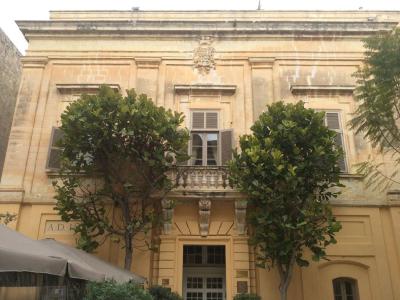
The Xara Palace was built in the late 17th century during the reign of Grand Master Gregorio Carafa, a prominent figure in the history of the Knights of St. John. It was constructed as a private residence for the Moscati family, who were of noble descent. The family's wealth and influence were reflected in the palatial design and opulence of the building.
Over the following centuries, the ownership of the palace changed hands multiple times as it passed from one noble family to another. Each new owner brought their unique style and taste, resulting in various renovations and expansions. Despite these changes, the original architecture and historical significance of the building were preserved.
In the 19th century, during British rule over Malta, the palace underwent a transformation and was briefly used as a hotel known as the "Hotel de la Ville." However, it wasn't until the late 20th century that the building was extensively restored and converted into the luxurious boutique hotel we know today as the Xara Palace.
Throughout its existence as a hotel, the Xara Palace has welcomed numerous dignitaries, celebrities, and discerning travelers from around the world, further solidifying its reputation as a premier destination in Malta. Its gourmet restaurant, De Mondion, has received critical acclaim and earned prestigious awards for its exceptional cuisine and enchanting ambiance.
By repurposing the Palazzo Moscati and transforming it into the Xara Palace, the hotel's owners and management have not only preserved a historically significant building but also contributed to the cultural heritage of Malta. The Xara Palace stands as a living testament to the island's past, providing a luxurious retreat where guests can immerse themselves in the rich history and timeless beauty of Mdina.
Over the following centuries, the ownership of the palace changed hands multiple times as it passed from one noble family to another. Each new owner brought their unique style and taste, resulting in various renovations and expansions. Despite these changes, the original architecture and historical significance of the building were preserved.
In the 19th century, during British rule over Malta, the palace underwent a transformation and was briefly used as a hotel known as the "Hotel de la Ville." However, it wasn't until the late 20th century that the building was extensively restored and converted into the luxurious boutique hotel we know today as the Xara Palace.
Throughout its existence as a hotel, the Xara Palace has welcomed numerous dignitaries, celebrities, and discerning travelers from around the world, further solidifying its reputation as a premier destination in Malta. Its gourmet restaurant, De Mondion, has received critical acclaim and earned prestigious awards for its exceptional cuisine and enchanting ambiance.
By repurposing the Palazzo Moscati and transforming it into the Xara Palace, the hotel's owners and management have not only preserved a historically significant building but also contributed to the cultural heritage of Malta. The Xara Palace stands as a living testament to the island's past, providing a luxurious retreat where guests can immerse themselves in the rich history and timeless beauty of Mdina.
4) Mdina Dungeons Museum (must see)
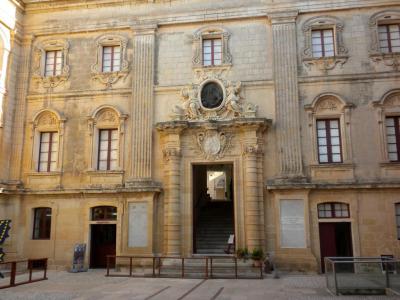
Nestled just a stone's throw away from the main gate of Mdina, the ancient walled city of Malta, lies a unique and intriguing tourist attraction known as the Mdina Dungeons. Located beneath the historic Vilhena Palace, this museum offers visitors a glimpse into the forgotten and often grim aspects of medieval Malta's past.
As visitors venture into the dimly lit passageways, they are transported back in time to an era when the dungeons served as a place of confinement and punishment. The labyrinthine underground passages and chambers exude an authentic atmosphere, immersing guests in the eerie ambiance of a bygone era. Sound effects heighten the experience, allowing visitors to feel the chilling presence of the past.
The museum meticulously recreates scenes from the past, shedding light on the harsh realities of prison life during the medieval period in Malta. Here, guests can witness and understand the brutality that prisoners endured in these cells. The Mdina Dungeons don't shy away from displaying the grim instruments of torture that were all too commonly employed during those times.
Stepping into the recreated cells, visitors can almost feel the weight of history bearing down on them. Scenes of despair, suffering, and survival come to life, leaving a lasting impression of the struggles faced by those held captive in these dungeons centuries ago.
The significance of the Mdina Dungeons lies not only in its haunting presentation but also in its educational value. While showcasing the darker side of Malta's history, the museum offers contextual explanations of the medieval era and the role prisons played during that time. It provides insights into the justice system of the past and how prisoners were treated in comparison to modern times.
As visitors venture into the dimly lit passageways, they are transported back in time to an era when the dungeons served as a place of confinement and punishment. The labyrinthine underground passages and chambers exude an authentic atmosphere, immersing guests in the eerie ambiance of a bygone era. Sound effects heighten the experience, allowing visitors to feel the chilling presence of the past.
The museum meticulously recreates scenes from the past, shedding light on the harsh realities of prison life during the medieval period in Malta. Here, guests can witness and understand the brutality that prisoners endured in these cells. The Mdina Dungeons don't shy away from displaying the grim instruments of torture that were all too commonly employed during those times.
Stepping into the recreated cells, visitors can almost feel the weight of history bearing down on them. Scenes of despair, suffering, and survival come to life, leaving a lasting impression of the struggles faced by those held captive in these dungeons centuries ago.
The significance of the Mdina Dungeons lies not only in its haunting presentation but also in its educational value. While showcasing the darker side of Malta's history, the museum offers contextual explanations of the medieval era and the role prisons played during that time. It provides insights into the justice system of the past and how prisoners were treated in comparison to modern times.

5) Saint Agatha's Chapel
Saint Agatha's Chapel is a cherished Roman Catholic church that holds a rich history and a testament to the enduring faith of its people. The present structure was rebuilt after the devastation caused by the 1693 Sicily earthquake, which also brought down much of the medieval cathedral.
The origins of the chapel date back even further, tracing its roots to 1417 when it was originally erected by Francesco Gatto, a nobleman, and his wife Paola de' Castelli.
In 1575, the chapel welcomed the esteemed inquisitor Pietro Dusina during his apostolic visit to Malta, an event that undoubtedly left a lasting mark on the local religious community. The chapel remained in the possession of the Gatto Murina family until 1661 when it was generously gifted to the broader church in Malta.
After the earthquake, the indomitable Maltese spirit led to the construction of a new chapel designed by renowned architect Lorenzo Gafà, leaving a lasting artistic imprint.
It was on the auspicious day of 26th June 1696 when the chapel was blessed by Archdeacon Antonio Cauchi, in the esteemed presence of Bishop Davide Cocco Palmieri and the Grand Master Adrien de Wignacourt.
At the heart of the chapel's sanctity lies the titular painting, an exquisite depiction of Saint Agatha, the beloved patroness of Malta, accompanied by Saint Adrian. The masterpiece was crafted by the skilled hands of Giuseppe D'Arena, adding to the chapel's cultural and artistic significance.
The origins of the chapel date back even further, tracing its roots to 1417 when it was originally erected by Francesco Gatto, a nobleman, and his wife Paola de' Castelli.
In 1575, the chapel welcomed the esteemed inquisitor Pietro Dusina during his apostolic visit to Malta, an event that undoubtedly left a lasting mark on the local religious community. The chapel remained in the possession of the Gatto Murina family until 1661 when it was generously gifted to the broader church in Malta.
After the earthquake, the indomitable Maltese spirit led to the construction of a new chapel designed by renowned architect Lorenzo Gafà, leaving a lasting artistic imprint.
It was on the auspicious day of 26th June 1696 when the chapel was blessed by Archdeacon Antonio Cauchi, in the esteemed presence of Bishop Davide Cocco Palmieri and the Grand Master Adrien de Wignacourt.
At the heart of the chapel's sanctity lies the titular painting, an exquisite depiction of Saint Agatha, the beloved patroness of Malta, accompanied by Saint Adrian. The masterpiece was crafted by the skilled hands of Giuseppe D'Arena, adding to the chapel's cultural and artistic significance.
6) Church and Monastery of St. Peter
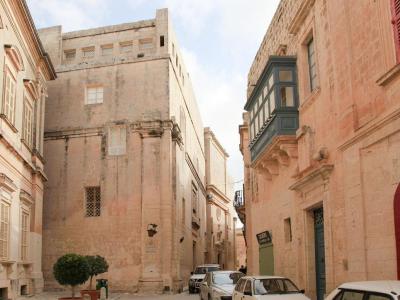
The Church and Monastery of Saint Peter hold a profound place in the history and spirituality of Mdina. As a Catholic Benedictine monastery catering to cloistered nuns, it represents a timeless dedication to a life of prayer, reflection, and service to the divine.
Historical records suggest that the first nuns arrived in Malta in the early 15th century, indicating the Monastery of Saint Peter's establishment around 1418. Throughout the centuries, it has evolved into a spiritual oasis, where devoted nuns live a secluded life, nurturing their relationship with God through solitude.
In 1555, Bishop Cubelles of Malta mentioned the chapel within the monastery, noting that it was adorned with precious metals and all the necessary objects for worship. The present-day church underwent renovations in 1625, largely thanks to the efforts of Bishop Baldassare Cagliares.
One of the most treasured possessions of the church is the altarpiece, dating back to 1682, and the masterpiece of the renowned artist Mattia Preti. This artwork portrays the Madonna and Child accompanied by the revered figures of Saint Peter, Saint Benedict, and Saint Scholastica. Additional notable works of art housed within the chapel include depictions of the Resurrection of Jesus and Our Lady of the Pillar, masterfully crafted by the talented artist Francesco Zahra.
The Church and Monastery of Saint Peter house the revered remains of Blessed Maria Adeodata Pisani, a cloistered nun who devoted her life to prayer and selfless service in the mid-19th century. Recognized for her pious devotion and virtuous life, she was beatified by Pope John Paul II in 2001. Her presence within the church serves as a reminder of her sanctity and continues to inspire nuns and visitors to lead lives of holiness and devotion.
Historical records suggest that the first nuns arrived in Malta in the early 15th century, indicating the Monastery of Saint Peter's establishment around 1418. Throughout the centuries, it has evolved into a spiritual oasis, where devoted nuns live a secluded life, nurturing their relationship with God through solitude.
In 1555, Bishop Cubelles of Malta mentioned the chapel within the monastery, noting that it was adorned with precious metals and all the necessary objects for worship. The present-day church underwent renovations in 1625, largely thanks to the efforts of Bishop Baldassare Cagliares.
One of the most treasured possessions of the church is the altarpiece, dating back to 1682, and the masterpiece of the renowned artist Mattia Preti. This artwork portrays the Madonna and Child accompanied by the revered figures of Saint Peter, Saint Benedict, and Saint Scholastica. Additional notable works of art housed within the chapel include depictions of the Resurrection of Jesus and Our Lady of the Pillar, masterfully crafted by the talented artist Francesco Zahra.
The Church and Monastery of Saint Peter house the revered remains of Blessed Maria Adeodata Pisani, a cloistered nun who devoted her life to prayer and selfless service in the mid-19th century. Recognized for her pious devotion and virtuous life, she was beatified by Pope John Paul II in 2001. Her presence within the church serves as a reminder of her sanctity and continues to inspire nuns and visitors to lead lives of holiness and devotion.

7) Mesquita Square
Mesquita Square holds a distinct charm that sets it apart as a truly special place. Serving as a central hub, this square acts as a connecting point between different parts of the city, making it an essential thoroughfare for both locals and tourists alike. Visitors from all corners of the globe find themselves traversing through this historical landmark as they explore the wonders of the city.
One of the square's most remarkable features is the small, ancient well that stands as a testament to its rich history. This historic well, shrouded in tales of the past, serves as a symbol of the city's enduring heritage and traditions. It acts as a source of fascination for both history enthusiasts and casual wanderers who happen upon its unique presence.
Surrounding the well are an array of striking stone buildings, each steeped in history and dating back to the captivating era of the Middle Ages. The architectural beauty of these edifices mesmerizes visitors, transporting them back in time as they imagine the lives and stories of those who once inhabited these grand structures.
Adding to its allure, Mesquita Square boasts an intriguing connection to the world of entertainment. Fans of the renowned series "Game of Thrones" may recognize the square as the backdrop for some of the show's captivating scenes.
For lovers of history and ancient architecture, Mesquita Square is nothing short of a treasure trove. Stepping foot in this enchanting location evokes a sense of awe and wonder, as it offers a glimpse into the past, bridging the gap between ancient times and the modern world. Every corner of the square echoes with the whispers of history, leaving visitors captivated by the richness of its heritage.
One of the square's most remarkable features is the small, ancient well that stands as a testament to its rich history. This historic well, shrouded in tales of the past, serves as a symbol of the city's enduring heritage and traditions. It acts as a source of fascination for both history enthusiasts and casual wanderers who happen upon its unique presence.
Surrounding the well are an array of striking stone buildings, each steeped in history and dating back to the captivating era of the Middle Ages. The architectural beauty of these edifices mesmerizes visitors, transporting them back in time as they imagine the lives and stories of those who once inhabited these grand structures.
Adding to its allure, Mesquita Square boasts an intriguing connection to the world of entertainment. Fans of the renowned series "Game of Thrones" may recognize the square as the backdrop for some of the show's captivating scenes.
For lovers of history and ancient architecture, Mesquita Square is nothing short of a treasure trove. Stepping foot in this enchanting location evokes a sense of awe and wonder, as it offers a glimpse into the past, bridging the gap between ancient times and the modern world. Every corner of the square echoes with the whispers of history, leaving visitors captivated by the richness of its heritage.

8) Knights of Malta
The Knights of Malta is a stunning visual and sensory spectacle, housed in the historical gunpowder vaults of the city's battlements. These vaults, dating back to the era of the Knights of St John, provide a perfect backdrop to this majestic recreation of the past.
This immersive experience showcases a series of meticulously detailed tableaux that bring to life the time of the Knights of St John in all its grandeur and pageantry. The exhibit has been five years in the making, encompassing three levels and displaying an array of 120 life-sized figures that embody the spirit of the knights. Each character is clothed in period attire, lending authenticity and a tangible sense of time to the scene.
The tableaux are housed within some of the most historic chambers of Mdina, each one an architectural marvel in its own right. The chambers are adorned with a lavish array of period décor that provides a glimpse into the past, allowing visitors to traverse time and place as they walk through the exhibit.
But the Knights of Malta is more than just a visual experience. It is a sensory journey that utilises dramatic lighting and evocative sound effects to create a vivid, palpable atmosphere. Visitors will feel as though they have been transported back to the time of the knights, experiencing their world as if they were there.
Moreover, the Knights of Malta is designed to appeal to a global audience, offering a simultaneous digital commentary in five languages. This ensures that visitors from all over the world can fully engage with and appreciate the history being shared.
This immersive experience showcases a series of meticulously detailed tableaux that bring to life the time of the Knights of St John in all its grandeur and pageantry. The exhibit has been five years in the making, encompassing three levels and displaying an array of 120 life-sized figures that embody the spirit of the knights. Each character is clothed in period attire, lending authenticity and a tangible sense of time to the scene.
The tableaux are housed within some of the most historic chambers of Mdina, each one an architectural marvel in its own right. The chambers are adorned with a lavish array of period décor that provides a glimpse into the past, allowing visitors to traverse time and place as they walk through the exhibit.
But the Knights of Malta is more than just a visual experience. It is a sensory journey that utilises dramatic lighting and evocative sound effects to create a vivid, palpable atmosphere. Visitors will feel as though they have been transported back to the time of the knights, experiencing their world as if they were there.
Moreover, the Knights of Malta is designed to appeal to a global audience, offering a simultaneous digital commentary in five languages. This ensures that visitors from all over the world can fully engage with and appreciate the history being shared.

9) Bastion Square
Amidst the enchanting alleys of Mdina lies Bastion Square, a treasure trove of history where various civilizations have left their mark. The square's unique atmosphere, bustling with tourists and locals, invites you to savor the present moment. From charming cafes, you can admire the surrounding city of Rabat and the majestic Mosta dome in the distance. Bastion Square serves as a bridge between Mdina's rich past and modern life, leaving visitors captivated by its timeless allure.

10) Falson Palace
Falson Palace is a remarkable medieval townhouse. Originally constructed around 1495, it stands as the second oldest building in Mdina, after the ground floor of Saint Sofia Palace. The palace was purposefully built as a residence for the Maltese nobility and was named after the Falson family, who have historical ties to the property.
Over the centuries, the palace underwent several alterations and expansions. During the rule of the Order of St. John, it might have hosted important figures, such as Philippe Villiers de L'Isle-Adam, the first Grand Master in Malta. The architect responsible for the distinctive upper floor windows remains unknown, although it is speculated that Jacobo Dimeg might have been involved in their creation.
Since 2007, the palace has been open to the public as the Palazzo Falson Historic House Museum, managed by the Fondazzjoni Patrimonju Malti, a Maltese heritage foundation. The museum provides a unique glimpse into the past, recreating the atmosphere of a historic home. With seventeen rooms to explore, visitors can step back in time and witness the domestic belongings and antique collections that once adorned the residence.
Each room serves a specific purpose, capturing different aspects of daily life. Among them are the Kitchen, Armoury, and Carpet Gallery. Additionally, visitors have the opportunity to explore Capt. Gollcher's Library, Studio, and Study, offering insights into his personal interests and passions.
One of the most prized possessions in the museum is the rare 10-hour French Revolution-era timepiece. This extraordinary watch is one of only three known to exist, crafted by the renowned maker Robert Robin (1742-1799). Robin, who had been the favored watchmaker of King Louis XVI, created this watch during the time of the Revolution's Decimal time. The timepiece holds immense historical significance and is a testament to both craftsmanship and historical events.
Over the centuries, the palace underwent several alterations and expansions. During the rule of the Order of St. John, it might have hosted important figures, such as Philippe Villiers de L'Isle-Adam, the first Grand Master in Malta. The architect responsible for the distinctive upper floor windows remains unknown, although it is speculated that Jacobo Dimeg might have been involved in their creation.
Since 2007, the palace has been open to the public as the Palazzo Falson Historic House Museum, managed by the Fondazzjoni Patrimonju Malti, a Maltese heritage foundation. The museum provides a unique glimpse into the past, recreating the atmosphere of a historic home. With seventeen rooms to explore, visitors can step back in time and witness the domestic belongings and antique collections that once adorned the residence.
Each room serves a specific purpose, capturing different aspects of daily life. Among them are the Kitchen, Armoury, and Carpet Gallery. Additionally, visitors have the opportunity to explore Capt. Gollcher's Library, Studio, and Study, offering insights into his personal interests and passions.
One of the most prized possessions in the museum is the rare 10-hour French Revolution-era timepiece. This extraordinary watch is one of only three known to exist, crafted by the renowned maker Robert Robin (1742-1799). Robin, who had been the favored watchmaker of King Louis XVI, created this watch during the time of the Revolution's Decimal time. The timepiece holds immense historical significance and is a testament to both craftsmanship and historical events.

11) Carmelite Church and Priory (must see)
The Carmelite Church and Priory, nestled in the heart of Mdina, offers a unique opportunity to immerse oneself in the spiritual way of life embraced by the friars who reside within its walls. Stepping into this captivating 17th-century building allows visitors to explore not only the impressive church but also the rooms of the priory and a museum that holds treasures from the past.
The Church, erected between 1660 and 1675, holds significant importance in the realm of Baroque architecture, making it a must-see for history and art enthusiasts alike. Notably, it stands out as the first church to be constructed in Malta with an elliptical plan, adding to its architectural distinction. As visitors enter the church, their attention is immediately drawn to the focal point of the main altar, where a spectacular painting of The Annunciation by Stefano Erardi (1677) commands reverence. The artistic splendor doesn't end there, as other notable works by the renowned local artist Giuseppe Cali adorn the church, further enriching the visual experience for all who visit.
Venturing into the Priory, guests are met with even more impressive artistic treasures. The Refectory, where the friars gather for communal meals, serves as a true testament to the grandeur of Baroque art. Here, paintings, sculptures, and architecture seamlessly intertwine, creating an atmosphere of awe and wonder. The attention to detail and the blend of artistic elements in the Refectory make it a place of deep contemplation and reflection.
Wandering through the Priory's cloisters, visitors will find themselves bathed in natural light, courtesy of a courtyard that connects the Priory to the Church. These serene cloisters serve as a tranquil space for the friars to meditate and find solace amidst their spiritual practices.
The Church, erected between 1660 and 1675, holds significant importance in the realm of Baroque architecture, making it a must-see for history and art enthusiasts alike. Notably, it stands out as the first church to be constructed in Malta with an elliptical plan, adding to its architectural distinction. As visitors enter the church, their attention is immediately drawn to the focal point of the main altar, where a spectacular painting of The Annunciation by Stefano Erardi (1677) commands reverence. The artistic splendor doesn't end there, as other notable works by the renowned local artist Giuseppe Cali adorn the church, further enriching the visual experience for all who visit.
Venturing into the Priory, guests are met with even more impressive artistic treasures. The Refectory, where the friars gather for communal meals, serves as a true testament to the grandeur of Baroque art. Here, paintings, sculptures, and architecture seamlessly intertwine, creating an atmosphere of awe and wonder. The attention to detail and the blend of artistic elements in the Refectory make it a place of deep contemplation and reflection.
Wandering through the Priory's cloisters, visitors will find themselves bathed in natural light, courtesy of a courtyard that connects the Priory to the Church. These serene cloisters serve as a tranquil space for the friars to meditate and find solace amidst their spiritual practices.

12) Saint Sofia Palace
Saint Sofia Palace is a historic and architecturally significant palace. The palace's ground floor was constructed in 1233, a date that is proudly inscribed on one of the window moldings. The upper floor, in contrast, is a more recent addition and was built in the 20th century, sometime after 1938. Throughout its existence, the palace has played various roles, being periodically rented and used as a school by Roman Catholic nuns.
In recent times, Saint Sofia Palace has been privately owned and is managed by the Fondazzjoni Patrimonju Malti, a local heritage foundation. Although it is not open to the general public, the palace can be hired for special events such as dinner or cocktail parties, lectures, and other gatherings. The palace has been designated as a Grade 1 national monument and is listed in the National Inventory of the Cultural Property of the Maltese Islands.
The original design of Palazzo Santa Sofia featured a single-story structure built around a central courtyard. The main entrance to the palace was through an arched passageway called a siqifah, which led to the courtyard. Over time, this passageway was transformed into the narrow street known as Saint Sofia Street. The ground floor's facade is relatively simple, adorned with two doors flanking the passageway. A two-tiered palline losanghe cornice serves as a distinctive feature, separating the ground floor from the first floor.
The upper floor, added in more recent times, boasts four ornate mullioned windows, adding a touch of elegance and sophistication to the palace's exterior. At the roof level, a one-tiered palline losanghe cornice further enhances its visual appeal. Both floors of the facade proudly display several coats of arms, adding a sense of heraldic charm and historical significance to the building.
In recent times, Saint Sofia Palace has been privately owned and is managed by the Fondazzjoni Patrimonju Malti, a local heritage foundation. Although it is not open to the general public, the palace can be hired for special events such as dinner or cocktail parties, lectures, and other gatherings. The palace has been designated as a Grade 1 national monument and is listed in the National Inventory of the Cultural Property of the Maltese Islands.
The original design of Palazzo Santa Sofia featured a single-story structure built around a central courtyard. The main entrance to the palace was through an arched passageway called a siqifah, which led to the courtyard. Over time, this passageway was transformed into the narrow street known as Saint Sofia Street. The ground floor's facade is relatively simple, adorned with two doors flanking the passageway. A two-tiered palline losanghe cornice serves as a distinctive feature, separating the ground floor from the first floor.
The upper floor, added in more recent times, boasts four ornate mullioned windows, adding a touch of elegance and sophistication to the palace's exterior. At the roof level, a one-tiered palline losanghe cornice further enhances its visual appeal. Both floors of the facade proudly display several coats of arms, adding a sense of heraldic charm and historical significance to the building.

13) Tools, Trades & Traditions Museum
Tools, Trades & Traditions at Palazzo de Piro is a unique and captivating museum operated by Infinitely Xara. It houses an extraordinary private collection of objects and tools representing a diverse array of trades. The museum's design is centered around five main sections: Precision and Ornament, The Art of Building, From The Field To The Table, Measuring our World, and Traditions.
Each section highlights the craftsmanship, ingenuity, and historical significance of the tools showcased. The museum's philosophy, inspired by Alberti's words, emphasizes the resourcefulness of skilled craftsmen throughout history.
Beyond being a display of artifacts, Tools, Trades & Traditions offers visitors an immersive experience, allowing them to connect with the past, learn about the evolution of trades, and appreciate the enduring impact of human creativity and innovation on Malta's cultural heritage.
Each section highlights the craftsmanship, ingenuity, and historical significance of the tools showcased. The museum's philosophy, inspired by Alberti's words, emphasizes the resourcefulness of skilled craftsmen throughout history.
Beyond being a display of artifacts, Tools, Trades & Traditions offers visitors an immersive experience, allowing them to connect with the past, learn about the evolution of trades, and appreciate the enduring impact of human creativity and innovation on Malta's cultural heritage.
