Custom Walk in Manila, Philippines by piret245_f59b66 created on 2026-02-03
Guide Location: Philippines » Manila
Guide Type: Custom Walk
# of Sights: 11
Tour Duration: 12 Hour(s)
Travel Distance: 32 Km or 19.9 Miles
Share Key: R6FAT
Guide Type: Custom Walk
# of Sights: 11
Tour Duration: 12 Hour(s)
Travel Distance: 32 Km or 19.9 Miles
Share Key: R6FAT
How It Works
Please retrieve this walk in the GPSmyCity app. Once done, the app will guide you from one tour stop to the next as if you had a personal tour guide. If you created the walk on this website or come to the page via a link, please follow the instructions below to retrieve the walk in the app.
Retrieve This Walk in App
Step 1. Download the app "GPSmyCity: Walks in 1K+ Cities" on Apple App Store or Google Play Store.



Step 2. In the GPSmyCity app, download(or launch) the guide "Manila Map and Walking Tours".
Step 3. Tap the menu button located at upper right corner of the "Walks" screen and select "Retrieve custom walk". Enter the share key: R6FAT
1) City Hall
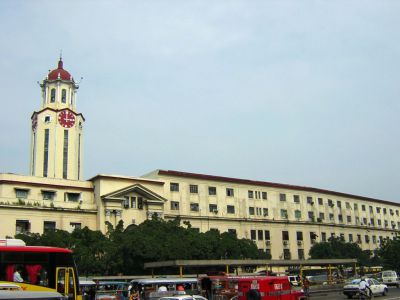
The Manila City Hall, situated in Ermita, Manila, serves as the central hub of the city's government. It houses the Mayor's offices and the chambers of the Manila City Council. Originally envisioned in the early 1900s as part of a larger government complex by Daniel Burnham, the City Hall is one of the structures built within this plan, alongside the Old Legislative Building (now the National Museum of Fine Arts), and the former buildings for the Departments of Agriculture and Finance (now the National Museum of Anthropology and National Museum of Natural History).
Designed by architect Antonio Toledo, the Manila City Hall showcases Neoclassical architecture. Initially proposed in Art Deco style by Juan Arellano, the design evolved under Toledo's guidance. Upon completion, the City Hall boasted a significant size and accommodated various governmental functions within its approximately 200 rooms.
The building is located on a trapezoidal lot, flanked by the Legislative and Post Office buildings. Its main entrance, marked by a balcony with three arches supported by Corinthian columns, faces south. The north, east and west sides share a similar aesthetic, featuring pediments and an octagonal clock tower topped by a dome. This clock tower, completed in the 1930s, is the largest in the Philippines and serves as a prominent landmark, especially at night when it lights up and chimes hourly.
In 2019, the National Museum of the Philippines recognized the cultural significance of Manila City Hall by designating it as an Important Cultural Property. This recognition was further highlighted in 2023 when the National Historical Commission of the Philippines unveiled a marker on the City Hall grounds, emphasizing its historical and architectural importance to the nation and its capital.
Designed by architect Antonio Toledo, the Manila City Hall showcases Neoclassical architecture. Initially proposed in Art Deco style by Juan Arellano, the design evolved under Toledo's guidance. Upon completion, the City Hall boasted a significant size and accommodated various governmental functions within its approximately 200 rooms.
The building is located on a trapezoidal lot, flanked by the Legislative and Post Office buildings. Its main entrance, marked by a balcony with three arches supported by Corinthian columns, faces south. The north, east and west sides share a similar aesthetic, featuring pediments and an octagonal clock tower topped by a dome. This clock tower, completed in the 1930s, is the largest in the Philippines and serves as a prominent landmark, especially at night when it lights up and chimes hourly.
In 2019, the National Museum of the Philippines recognized the cultural significance of Manila City Hall by designating it as an Important Cultural Property. This recognition was further highlighted in 2023 when the National Historical Commission of the Philippines unveiled a marker on the City Hall grounds, emphasizing its historical and architectural importance to the nation and its capital.
2) Binondo (Chinatown) (must see)
Binondo, established in 1594, is the oldest Chinatown in the world. It was established for Chinese residents during Spanish rule. The goal was both to have a space for the Spanish to confine Chinese immigrants and also to facilitate converting Chinese to Catholicism.
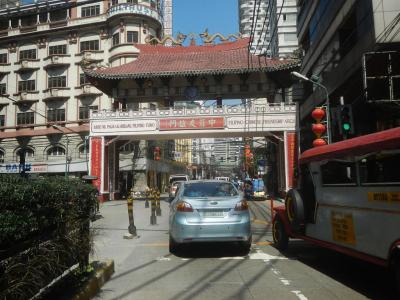
Binondo offers a number of unique and fascinating sites for visitors to the Philippines. Among these sites are the Plaza San Lorenzo Ruiz, Binondo Church, the Chinatown Arch and Jones Bridge.
Visitors hoping to find unique souvenirs while in the Philippines should visit Ongpin Street. There are numerous drugstores and shopping malls. Cafes that are largely geared toward tourists also line the street.
Escolta Street, just beyond the New Binondo Chinatown Arch (not to be confused with the Filipino-Chinese Friendship Arch), is an excellent spot to find authentic food. Escolta is also one of the oldest streets in Manila. Visitors can look for the First United Building, which is one of the few art deco style buildings in Manila. Other buildings to look for are the beaux arts-style Calvo and Natividad Buildings as well as the 1930's Capitol Theatre.
Binondo offers a number of unique and fascinating sites for visitors to the Philippines. Among these sites are the Plaza San Lorenzo Ruiz, Binondo Church, the Chinatown Arch and Jones Bridge.
Visitors hoping to find unique souvenirs while in the Philippines should visit Ongpin Street. There are numerous drugstores and shopping malls. Cafes that are largely geared toward tourists also line the street.
Escolta Street, just beyond the New Binondo Chinatown Arch (not to be confused with the Filipino-Chinese Friendship Arch), is an excellent spot to find authentic food. Escolta is also one of the oldest streets in Manila. Visitors can look for the First United Building, which is one of the few art deco style buildings in Manila. Other buildings to look for are the beaux arts-style Calvo and Natividad Buildings as well as the 1930's Capitol Theatre.
3) Fort Santiago (must see)
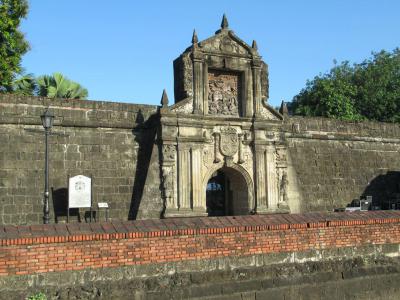
Fort Santiago is an important, historic structure in the walled city of Manila, Intramuros. Five flags have flown over the fort since its construction in 1593.
Fort Santiago was named for the patron saint of Spain, Saint James. Its purpose was to defend the Spanish government while it ruled the Philippines. In particular, Fort Santiago served as defense for the spice trading ships that traveled between Manila and Acapulco, Mexico.
Briefly, during the Battle of Manila, British occupying forces took over Fort Santiago. The fort served as the base of operations for the British Royal Navy from 1762 through 1764. When a ceasefire was declared, the fort reverted into Spanish control.
The Philippine-American War took place from February 1899 through July 1902. The United States overtook the fort, which then served as the headquarters of the U.S. Army in the Philippines.
The fort was captured by Japanese forces during World War II. It was used to house prisoners of war, hundreds of whom died in the dungeons as they succumbed to suffocation and hunger.
Fort Santiago has been under Philippine control since the country gained its independence in 1946. It was declared a shrine of freedom in 1950 and was restored shortly thereafter. It is now part of a historic park that recognizes the rich and sometimes tragic history of the country.
Visitors are welcome to explore the interior and exterior of the fort. The dungeon is a particularly somber experience where visitors can honor those who perished. A marble cross in the dungeon signifies the mass grave where 600 prisoners of war were buried.
Fort Santiago is located near many other important landmarks in Manila. Visitors can easily add this must-see spot to their walking tour of the city.
Why You Should Visit:
- To witness one of the most important sites in the Philippines
- To pay honor to those who died in the dungeons of the fort
Tips:
Fort Santiago is open daily from 8 AM through 6 PM. The dungeon is open from 2 PM through 10 PM.
Fort Santiago was named for the patron saint of Spain, Saint James. Its purpose was to defend the Spanish government while it ruled the Philippines. In particular, Fort Santiago served as defense for the spice trading ships that traveled between Manila and Acapulco, Mexico.
Briefly, during the Battle of Manila, British occupying forces took over Fort Santiago. The fort served as the base of operations for the British Royal Navy from 1762 through 1764. When a ceasefire was declared, the fort reverted into Spanish control.
The Philippine-American War took place from February 1899 through July 1902. The United States overtook the fort, which then served as the headquarters of the U.S. Army in the Philippines.
The fort was captured by Japanese forces during World War II. It was used to house prisoners of war, hundreds of whom died in the dungeons as they succumbed to suffocation and hunger.
Fort Santiago has been under Philippine control since the country gained its independence in 1946. It was declared a shrine of freedom in 1950 and was restored shortly thereafter. It is now part of a historic park that recognizes the rich and sometimes tragic history of the country.
Visitors are welcome to explore the interior and exterior of the fort. The dungeon is a particularly somber experience where visitors can honor those who perished. A marble cross in the dungeon signifies the mass grave where 600 prisoners of war were buried.
Fort Santiago is located near many other important landmarks in Manila. Visitors can easily add this must-see spot to their walking tour of the city.
Why You Should Visit:
- To witness one of the most important sites in the Philippines
- To pay honor to those who died in the dungeons of the fort
Tips:
Fort Santiago is open daily from 8 AM through 6 PM. The dungeon is open from 2 PM through 10 PM.
4) Intramuros
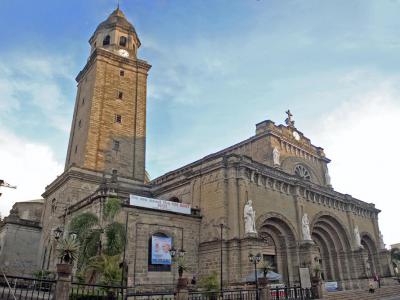
Once a fortified city in the European medieval style, Intramuros is now a distinctive landmark in Asia. Covering an area of 64 hectares, its imposing walls enclose a heritage site that is open to public visits, with unguided tours permitted.
Today, Intramuros consists of a historic district dating back centuries, entirely encompassed by fortifications. During the Spanish Empire, this area was considered the entirety of the City of Manila. Surrounding towns and suburbs beyond the walls, now districts of Manila, were known as extramuros, meaning "outside the walls" in Latin. These were independent towns that became part of Manila only in the early 20th century.
Intramuros served as the administrative center of the Captaincy General of the Philippines, a constituent realm of the Spanish Empire, hosting the governor-general from its establishment in 1571 until 1865, and the Real Audiencia of Manila until the end of Spanish rule during the Philippine Revolution of 1898.
The walled city was also the religious and educational hub of the Spanish East Indies. The original campuses of the University of Santo Tomas, Asia's oldest university, and the Ateneo de Manila were located within Intramuros before relocating in 1927 and 1932 respectively. Today, the area still houses the main campuses of the University of the City of Manila, Colegio de San Juan de Letran, Mapúa University, Philippine Nautical Training Colleges, Colegio de Santa Rosa, and Manila High School. Intramuros was also an economic hub; its port, now Plaza Mexico, was the Asian center of the Manila galleon trade, facilitating the exchange of goods between Manila and Acapulco in present-day Mexico.
Construction of the Spanish walled city began in the late 16th century under orders from the Spanish imperial government. Its purpose was to safeguard the city from foreign invasions, replacing the pre-Hispanic settlement of Maynila along the shores of Manila Bay, near the entrance to the Pasig River.
Today, Intramuros consists of a historic district dating back centuries, entirely encompassed by fortifications. During the Spanish Empire, this area was considered the entirety of the City of Manila. Surrounding towns and suburbs beyond the walls, now districts of Manila, were known as extramuros, meaning "outside the walls" in Latin. These were independent towns that became part of Manila only in the early 20th century.
Intramuros served as the administrative center of the Captaincy General of the Philippines, a constituent realm of the Spanish Empire, hosting the governor-general from its establishment in 1571 until 1865, and the Real Audiencia of Manila until the end of Spanish rule during the Philippine Revolution of 1898.
The walled city was also the religious and educational hub of the Spanish East Indies. The original campuses of the University of Santo Tomas, Asia's oldest university, and the Ateneo de Manila were located within Intramuros before relocating in 1927 and 1932 respectively. Today, the area still houses the main campuses of the University of the City of Manila, Colegio de San Juan de Letran, Mapúa University, Philippine Nautical Training Colleges, Colegio de Santa Rosa, and Manila High School. Intramuros was also an economic hub; its port, now Plaza Mexico, was the Asian center of the Manila galleon trade, facilitating the exchange of goods between Manila and Acapulco in present-day Mexico.
Construction of the Spanish walled city began in the late 16th century under orders from the Spanish imperial government. Its purpose was to safeguard the city from foreign invasions, replacing the pre-Hispanic settlement of Maynila along the shores of Manila Bay, near the entrance to the Pasig River.
5) Baluarte de San Diego
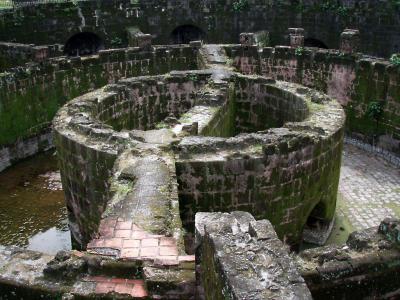
Baluarte de San Diego is a bastion that was built on the southwestern corner of Intramuros, the walled city of the Philippines. The structure dates to the 16th century.
The bastion was meant to be part of a much larger fort, which was not completed. The bastion itself includes an outward projecting face and flanks that would have connected the bastion's face to the curtain wall.
Though it was built in 1587, the structure was altered many times over the years. These changes were documented in writings by Antonio de Morga. They were also evidenced by the archaeological excavation that uncovered the Baluarte de San Diego. That excavation began in 1979 and was completed in 1982.
The small park containing the Baluarte de San Diego includes gardens, landmarks, monuments and fountains.
The bastion was meant to be part of a much larger fort, which was not completed. The bastion itself includes an outward projecting face and flanks that would have connected the bastion's face to the curtain wall.
Though it was built in 1587, the structure was altered many times over the years. These changes were documented in writings by Antonio de Morga. They were also evidenced by the archaeological excavation that uncovered the Baluarte de San Diego. That excavation began in 1979 and was completed in 1982.
The small park containing the Baluarte de San Diego includes gardens, landmarks, monuments and fountains.
6) Rizal Park (must see)
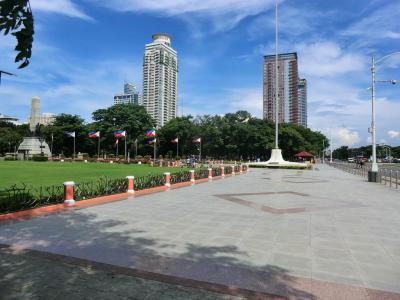
Rizal Park is one of the largest urban parks in Asia. At 140 acres, the park is home to the National Museum Complex, the Rizal Monument, a series of gardens, public art and event venues.
The National Museum Complex consists of the National Museums of Fine Arts, Anthropology and Natural History. This complex is held in a series of buildings that were once part of the Filipino government.
The gardens in Rizal Park are in a variety of styles. Including among these gardens are the Orchidarium and Butterfly Pavilion, Japanese Garden and Chinese Garden. The Children's Playground offer multi-color slides, swings and climbing structures.
The Rizal Monument is a memorial and the final resting place of Filipino nationalist, Jose Rizal. The monument is an obelisk that holds Rizal's cremated remains, his two novels and a statue in his honor. The monument is arguably the most famous sculptural landmark in the Philippines.
The National Museum Complex consists of the National Museums of Fine Arts, Anthropology and Natural History. This complex is held in a series of buildings that were once part of the Filipino government.
The gardens in Rizal Park are in a variety of styles. Including among these gardens are the Orchidarium and Butterfly Pavilion, Japanese Garden and Chinese Garden. The Children's Playground offer multi-color slides, swings and climbing structures.
The Rizal Monument is a memorial and the final resting place of Filipino nationalist, Jose Rizal. The monument is an obelisk that holds Rizal's cremated remains, his two novels and a statue in his honor. The monument is arguably the most famous sculptural landmark in the Philippines.
7) Coconut Palace
The Tahanang Pilipino (Filipino home), otherwise known as the Coconut Palace, is located at the heart of the Cultural Center of the Philippines complex in Manila. The Palace was built in 1978 by Francisco Mariosa for Pope John Paul II’s visit in 1981. Ironically, the Pope did not step into the Palace since he considered it to be flamboyant for the poverty-stricken country. The Palace initially served as the Presidential Guest House of Ferdinand Marcos, the former Philippine dictator, and was commissioned by his wife Imelda Marcos in 1981. Today, this Palace serves not only as an official residence of Vice President but also as a venue for romantic wedding receptions.
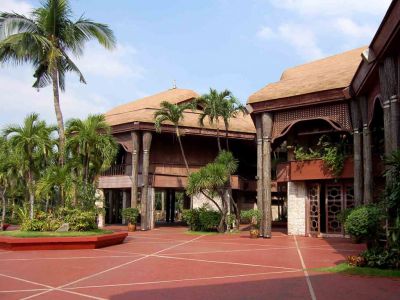
The Palace is famous for its design and extraordinary features. 70% of this octagon shaped structure is made of coconut lumber along with coconut shells and a variety of Philippine hardwood. The roof is shaped like a hat, or the traditional salakot. The 101-coconut chandelier and the dinning table with 40,000 inlaid coconut shell pieces are the highlights of this palace. Named after various provinces of the country are the 7 palatial rooms, namely: the Zamboanga, the Pampanga, (made of Jusi fibers and displays statues of Kampampangan style of art), the Marawi (purple and green colored room representing Muslim Mindanao), the Bicol, the Mountain Province room (a room full of artifacts traditional to Ifugao or Cordillera tribe), the Iloilo, and the Pangasinan (made of Pina fibers) rooms. The Palace also has a colossal swimming pool, a beautiful butterfly garden and an orchidarium. During its history, the Palace has accommodated a number of honorable guests including George Hamilton, Brooke Shields and Muammar al-Gaddafi.
The Palace is famous for its design and extraordinary features. 70% of this octagon shaped structure is made of coconut lumber along with coconut shells and a variety of Philippine hardwood. The roof is shaped like a hat, or the traditional salakot. The 101-coconut chandelier and the dinning table with 40,000 inlaid coconut shell pieces are the highlights of this palace. Named after various provinces of the country are the 7 palatial rooms, namely: the Zamboanga, the Pampanga, (made of Jusi fibers and displays statues of Kampampangan style of art), the Marawi (purple and green colored room representing Muslim Mindanao), the Bicol, the Mountain Province room (a room full of artifacts traditional to Ifugao or Cordillera tribe), the Iloilo, and the Pangasinan (made of Pina fibers) rooms. The Palace also has a colossal swimming pool, a beautiful butterfly garden and an orchidarium. During its history, the Palace has accommodated a number of honorable guests including George Hamilton, Brooke Shields and Muammar al-Gaddafi.
8) Manila Zoo
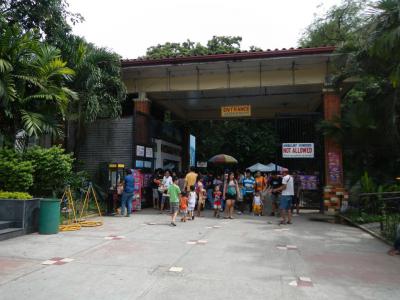
The Manila Zoological and Botanical Garden, known as the Manila Zoo, is an important landmark in Malate, Manila, covering an area of 51,000 square meters (550,000 square feet). It was established on July 25, 1959, and after significant renovations, it reopened to the public on November 21, 2022. Managed by the Manila City Government's Public Recreation Bureau, the zoo focuses on wildlife preservation, education, and recreation within Manila's busy cityscape.
The Manila Zoo is home to more than 549 specimens, including 12 species of mammals, 38 species of birds, and 21 species of reptiles. Notable residents have included a White Siberian Tiger named Kois, symbolizing the zoo's commitment to caring for rare animals. Despite the loss of iconic animals like Queen Bertha, the world's oldest captive hippopotamus until her passing in 2017, and Ma'ali, an Asian female elephant who died in November 2023, their presence contributed to the zoo's conservation efforts and educational programs.
The zoo categorizes its animals into mammals, birds, reptiles, and aquatic life, facilitating educational experiences for visitors. Many animals were born in captivity, indicating successful breeding programs focused on conservation and species preservation.
Besides its animal residents, the Manila Zoo emphasizes botanical conservation through its Botanical Garden, housing over 10,000 plants. This collection serves as both a habitat for zoo animals and an educational tool, raising awareness about the importance of plant life in ecosystems.
The Manila Zoo is home to more than 549 specimens, including 12 species of mammals, 38 species of birds, and 21 species of reptiles. Notable residents have included a White Siberian Tiger named Kois, symbolizing the zoo's commitment to caring for rare animals. Despite the loss of iconic animals like Queen Bertha, the world's oldest captive hippopotamus until her passing in 2017, and Ma'ali, an Asian female elephant who died in November 2023, their presence contributed to the zoo's conservation efforts and educational programs.
The zoo categorizes its animals into mammals, birds, reptiles, and aquatic life, facilitating educational experiences for visitors. Many animals were born in captivity, indicating successful breeding programs focused on conservation and species preservation.
Besides its animal residents, the Manila Zoo emphasizes botanical conservation through its Botanical Garden, housing over 10,000 plants. This collection serves as both a habitat for zoo animals and an educational tool, raising awareness about the importance of plant life in ecosystems.
9) The Araneta Mansion
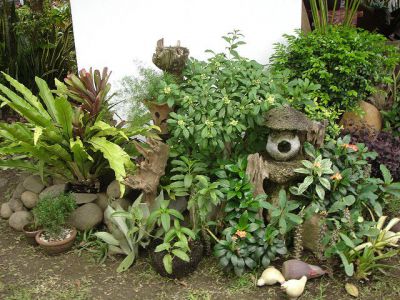
The Araneta Mansion, also known as the White House, stands as a symbol of the Araneta family's heritage in Araneta City. Positioned strategically at the southwest corner where P. Tuazon Boulevard and Epifanio de los Santos Avenue intersect, the mansion is not only a private residence but also a significant landmark attracting both locals and tourists.
Its remarkable white marble and stone exterior give the mansion an aura of sophistication and grandeur, reminiscent of a French palace. The architectural style seamlessly combines classical and Baroque elements, featuring intricately designed columns with ornate capitals supporting a unique green, domed roof. The mansion's beauty is further enhanced by a splendid garden, providing a peaceful retreat amidst the city's hustle and bustle.
The Araneta Mansion has become a cherished attraction in Manila, drawing visitors eager to explore its historical significance and beauty. Its façade and architectural elements portray it as a majestic monument, offering insights into the luxurious lifestyle of the Araneta family while serving as a cultural and architectural icon in Manila's city center.
Its remarkable white marble and stone exterior give the mansion an aura of sophistication and grandeur, reminiscent of a French palace. The architectural style seamlessly combines classical and Baroque elements, featuring intricately designed columns with ornate capitals supporting a unique green, domed roof. The mansion's beauty is further enhanced by a splendid garden, providing a peaceful retreat amidst the city's hustle and bustle.
The Araneta Mansion has become a cherished attraction in Manila, drawing visitors eager to explore its historical significance and beauty. Its façade and architectural elements portray it as a majestic monument, offering insights into the luxurious lifestyle of the Araneta family while serving as a cultural and architectural icon in Manila's city center.
10) Araneta Coliseum
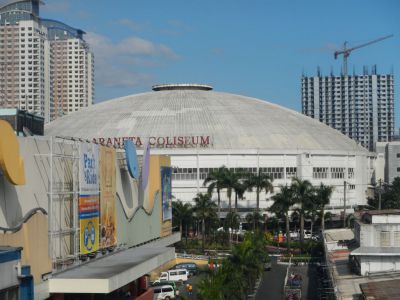
Constructed between 1957 and 1959, the Araneta Coliseum is one of the largest clear span domes in the world. Built by J.Amado Araneta, the Coliseum is located in the Araneta Center in the Cubao region of Quezon City. With a floor area of 23,000 square meters and a dome with a diameter of 108 meters, it is arguably the largest indoor facility in Asia.
The Araneta Coliseum can easily be called as ‘Home of Philippine Basketball’. In addition to hosting the leagues of the Philippine Basketball Association (PBA) and the University Athletic Association of the Philippines (UAAP), the Coliseum also holds many basketball Championships every year. It has a seating capacity of 15,000 for its basketball matches and 16,500 for other events. The Coliseum underwent renovation in 1999 at a cost of ₱200 million replaced seats in some sections and added a giant scoreboard. The scoreboard was replaced by a giant LED screen in 2010. Commonly known as the Big Cube, the LED screen has an area of 22 square meters and can display game statistics and can also operate in live- video mode.
The Araneta Coliseum regularly hosts plays, concerts and movie award functions. The Coliseum is equipped with excellent facilities and well connected by transportation. So, either to watch a game of basketball or catch a glimpse of your favorite star, visit the Araneta Coliseum.
The Araneta Coliseum can easily be called as ‘Home of Philippine Basketball’. In addition to hosting the leagues of the Philippine Basketball Association (PBA) and the University Athletic Association of the Philippines (UAAP), the Coliseum also holds many basketball Championships every year. It has a seating capacity of 15,000 for its basketball matches and 16,500 for other events. The Coliseum underwent renovation in 1999 at a cost of ₱200 million replaced seats in some sections and added a giant scoreboard. The scoreboard was replaced by a giant LED screen in 2010. Commonly known as the Big Cube, the LED screen has an area of 22 square meters and can display game statistics and can also operate in live- video mode.
The Araneta Coliseum regularly hosts plays, concerts and movie award functions. The Coliseum is equipped with excellent facilities and well connected by transportation. So, either to watch a game of basketball or catch a glimpse of your favorite star, visit the Araneta Coliseum.
11) Malacañang Palace
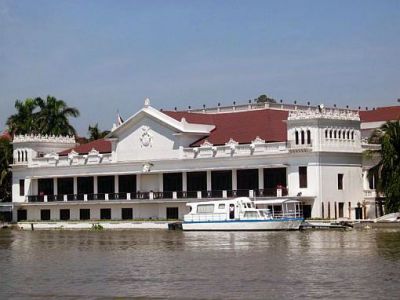
Malacañang Palace holds significant political importance in the Philippines, serving as both the official residence and main workplace of the country's president. Located in Manila's San Miguel district, it stands along Jose P. Laurel Street, although it's often associated with Mendiola Street. The term "Malacañang" is commonly used to symbolize the presidency, the president's advisers, and the Office of the President of the Philippines.
Architecturally, the palace complex is an impressive blend of bahay na bato and Neoclassical styles, showcasing its historical significance and diverse functions. Among the presidents of the Fifth Republic, Gloria Macapagal Arroyo notably used the main palace as her office and residence, unlike her counterparts who preferred other residences within the complex. Over the years, the palace has witnessed significant political events, underlining its pivotal role in the nation's history.
Originally built in 1750 as a summer house by Don Luis José Rocha Camiña, a Spanish physician involved in the galleon trade, Malacañang Palace featured a stone main house, a bathhouse by the Pasig River, and lush gardens surrounded by a stone fence. The property was later acquired by the state in 1825 to serve as the Spanish governor-general's summer residence.
The palace gained prominence as the official seat of power after a destructive earthquake in 1863 destroyed the Governor's Palace in Intramuros. Since then, it has served as the seat of power for Spanish governors-general, American military and civil governors, and Philippine presidents. Through numerous expansions and renovations, including significant remodeling efforts led by First Lady Imelda Marcos during Ferdinand Marcos's presidency in 1978-1979, Malacañang Palace has evolved to meet the needs and preferences of its occupants.
Architecturally, the palace complex is an impressive blend of bahay na bato and Neoclassical styles, showcasing its historical significance and diverse functions. Among the presidents of the Fifth Republic, Gloria Macapagal Arroyo notably used the main palace as her office and residence, unlike her counterparts who preferred other residences within the complex. Over the years, the palace has witnessed significant political events, underlining its pivotal role in the nation's history.
Originally built in 1750 as a summer house by Don Luis José Rocha Camiña, a Spanish physician involved in the galleon trade, Malacañang Palace featured a stone main house, a bathhouse by the Pasig River, and lush gardens surrounded by a stone fence. The property was later acquired by the state in 1825 to serve as the Spanish governor-general's summer residence.
The palace gained prominence as the official seat of power after a destructive earthquake in 1863 destroyed the Governor's Palace in Intramuros. Since then, it has served as the seat of power for Spanish governors-general, American military and civil governors, and Philippine presidents. Through numerous expansions and renovations, including significant remodeling efforts led by First Lady Imelda Marcos during Ferdinand Marcos's presidency in 1978-1979, Malacañang Palace has evolved to meet the needs and preferences of its occupants.
