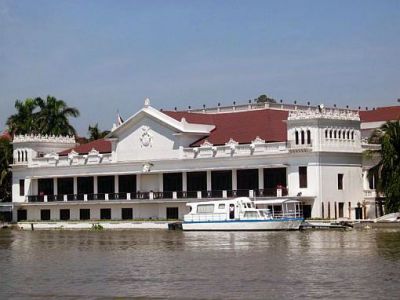


Malacañang Palace, Manila
Malacañang Palace holds significant political importance in the Philippines, serving as both the official residence and main workplace of the country's president. Located in Manila's San Miguel district, it stands along Jose P. Laurel Street, although it's often associated with Mendiola Street. The term "Malacañang" is commonly used to symbolize the presidency, the president's advisers, and the Office of the President of the Philippines.
Architecturally, the palace complex is an impressive blend of bahay na bato and Neoclassical styles, showcasing its historical significance and diverse functions. Among the presidents of the Fifth Republic, Gloria Macapagal Arroyo notably used the main palace as her office and residence, unlike her counterparts who preferred other residences within the complex. Over the years, the palace has witnessed significant political events, underlining its pivotal role in the nation's history.
Originally built in 1750 as a summer house by Don Luis José Rocha Camiña, a Spanish physician involved in the galleon trade, Malacañang Palace featured a stone main house, a bathhouse by the Pasig River, and lush gardens surrounded by a stone fence. The property was later acquired by the state in 1825 to serve as the Spanish governor-general's summer residence.
The palace gained prominence as the official seat of power after a destructive earthquake in 1863 destroyed the Governor's Palace in Intramuros. Since then, it has served as the seat of power for Spanish governors-general, American military and civil governors, and Philippine presidents. Through numerous expansions and renovations, including significant remodeling efforts led by First Lady Imelda Marcos during Ferdinand Marcos's presidency in 1978-1979, Malacañang Palace has evolved to meet the needs and preferences of its occupants.
Architecturally, the palace complex is an impressive blend of bahay na bato and Neoclassical styles, showcasing its historical significance and diverse functions. Among the presidents of the Fifth Republic, Gloria Macapagal Arroyo notably used the main palace as her office and residence, unlike her counterparts who preferred other residences within the complex. Over the years, the palace has witnessed significant political events, underlining its pivotal role in the nation's history.
Originally built in 1750 as a summer house by Don Luis José Rocha Camiña, a Spanish physician involved in the galleon trade, Malacañang Palace featured a stone main house, a bathhouse by the Pasig River, and lush gardens surrounded by a stone fence. The property was later acquired by the state in 1825 to serve as the Spanish governor-general's summer residence.
The palace gained prominence as the official seat of power after a destructive earthquake in 1863 destroyed the Governor's Palace in Intramuros. Since then, it has served as the seat of power for Spanish governors-general, American military and civil governors, and Philippine presidents. Through numerous expansions and renovations, including significant remodeling efforts led by First Lady Imelda Marcos during Ferdinand Marcos's presidency in 1978-1979, Malacañang Palace has evolved to meet the needs and preferences of its occupants.
Want to visit this sight? Check out these Self-Guided Walking Tours in Manila. Alternatively, you can download the mobile app "GPSmyCity: Walks in 1K+ Cities" from Apple App Store or Google Play Store. The app turns your mobile device to a personal tour guide and it works offline, so no data plan is needed when traveling abroad.
Download The GPSmyCity App



Malacañang Palace on Map
Sight Name: Malacañang Palace
Sight Location: Manila, Philippines (See walking tours in Manila)
Sight Type: Attraction/Landmark
Sight Location: Manila, Philippines (See walking tours in Manila)
Sight Type: Attraction/Landmark
Nearby Sights

Walking Tours in Manila, Philippines

Create Your Own Walk in Manila
Creating your own self-guided walk in Manila is easy and fun. Choose the city attractions that you want to see and a walk route map will be created just for you. You can even set your hotel as the start point of the walk.
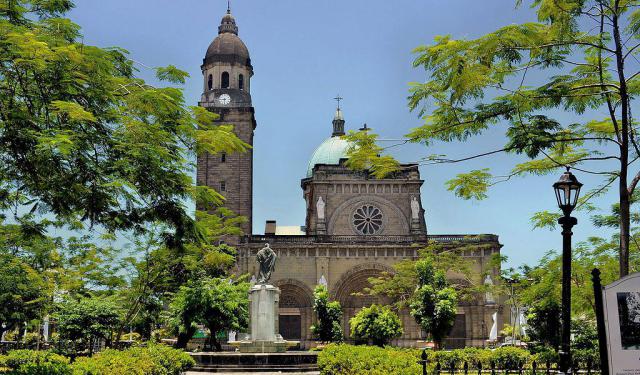
Manila Introduction Walking Tour
For centuries, travelers arrived here searching for the 'Pearl of the Orient.' Behind these walls lies a city where Asian kingdoms, Spanish conquistadors, American planners, and Filipino revolutionaries all left their mark.
Manila, the capital of the Philippines, is one of Southeast Asia's oldest continuously inhabited cities and has served for centuries as the country's... view more
Tour Duration: 2 Hour(s)
Travel Distance: 2.3 Km or 1.4 Miles
Manila, the capital of the Philippines, is one of Southeast Asia's oldest continuously inhabited cities and has served for centuries as the country's... view more
Tour Duration: 2 Hour(s)
Travel Distance: 2.3 Km or 1.4 Miles
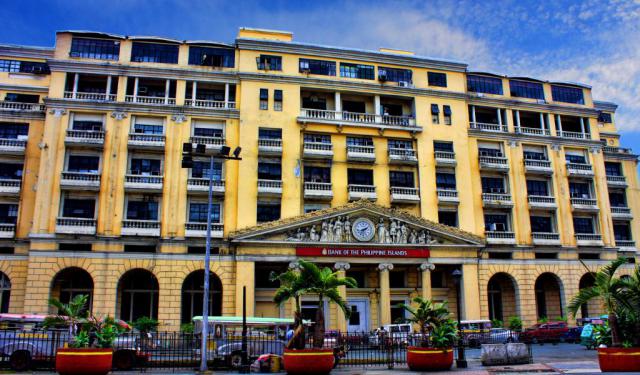
Historical Buildings Walking Tour
Every city tells a story, but few have witnessed as many triumphs and tragedies as Manila. Behind these façades lie the chapters of empire, revolution, war, and rebirth. As José Rizal wisely observed, 'To foretell the destiny of a nation, it is necessary to open the book that tells of her past.'
The historic buildings of Manila tell the story of more than four centuries of... view more
Tour Duration: 2 Hour(s)
Travel Distance: 3.3 Km or 2.1 Miles
The historic buildings of Manila tell the story of more than four centuries of... view more
Tour Duration: 2 Hour(s)
Travel Distance: 3.3 Km or 2.1 Miles
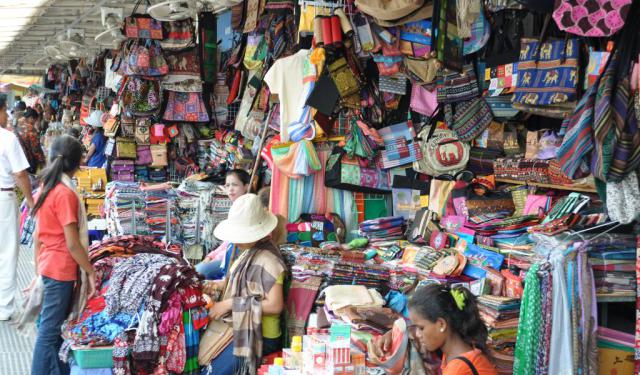
Traditional Markets
Traditional markets showcase a unique aspect of life in any city. The ones featured in this walk offer a glance into the authentic life and habits of Manila’s people and play a vital role in the Philippines' capital's economic and cultural landscape. Traditionally, local markets sell a broader range of products than regular shops can provide: from veggies and fruits to dried fish and... view more
Tour Duration: 1 Hour(s)
Travel Distance: 3.0 Km or 1.9 Miles
Tour Duration: 1 Hour(s)
Travel Distance: 3.0 Km or 1.9 Miles
Useful Travel Guides for Planning Your Trip
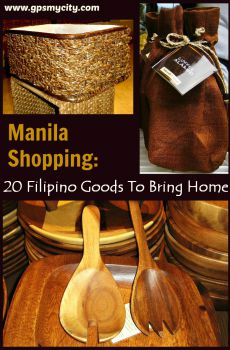
Manila Shopping: 20 Filipino Goods To Bring Home
An archipelago of 7,000+ islands, The Philippines is a diverse nation populated by different tribes, each having their own culture and traditions. In Manila, one can find a whole lot of things worth keeping as a Filipino memento; it just might take one a little while to figure out what's best...