Custom Walk in Melbourne, Australia by briensports362 created on 2026-02-06
Guide Location: Australia » Melbourne
Guide Type: Custom Walk
# of Sights: 10
Tour Duration: 3 Hour(s)
Travel Distance: 7.3 Km or 4.5 Miles
Share Key: Y8XU6
Guide Type: Custom Walk
# of Sights: 10
Tour Duration: 3 Hour(s)
Travel Distance: 7.3 Km or 4.5 Miles
Share Key: Y8XU6
How It Works
Please retrieve this walk in the GPSmyCity app. Once done, the app will guide you from one tour stop to the next as if you had a personal tour guide. If you created the walk on this website or come to the page via a link, please follow the instructions below to retrieve the walk in the app.
Retrieve This Walk in App
Step 1. Download the app "GPSmyCity: Walks in 1K+ Cities" on Apple App Store or Google Play Store.



Step 2. In the GPSmyCity app, download(or launch) the guide "Melbourne Map and Walking Tours".
Step 3. Tap the menu button located at upper right corner of the "Walks" screen and select "Retrieve custom walk". Enter the share key: Y8XU6
1) Flinders Street Station
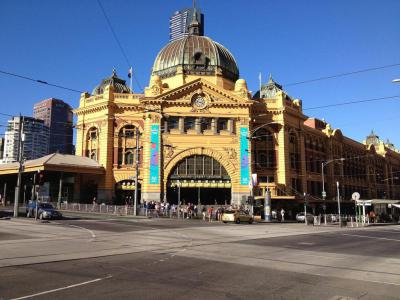
If you’re standing at the corner of Flinders and Swanston Streets and wondering why everyone else is looking up—congrats, you’ve found Flinders Street Station! It opened in 1854 as the terminus of Australia’s very first railway, back when “catching a train” meant something closer to “braving an experiment.” Today, it’s still one of Melbourne’s busiest transport hubs, funneling commuters across the suburbs and deep into the city’s daily rhythm.
The building you see now arrived later, finished in 1909. It’s an Edwardian creation that doesn’t believe in subtlety—domes, arches, towers, and enough ornamentation to fuel a century of urban legends. The curious fact associated with this building is that its design was mistakenly swapped with plans for Victoria Terminus in Bombay. No proof, however, but the rumour is almost as iconic as the station itself. Heritage-listed and instantly recognisable, it remains one of Melbourne’s most photographed faces.
And then there are the clocks. If someone in Melbourne tells you to meet them “under the clocks,” they’re not being poetic—that’s the row of indicator clocks above the main entrance. Another classic rendezvous point here is “On the steps.” Basically, this station doubles as both a transit hub and the city’s unofficial meeting app...
Its location doesn’t hurt either. Step outside and you’re right beside Federation Square, the Yarra River, and the maze of laneways, cafés, and arcades that make up the Central Business District. A truly perfect launchpad for whatever you’re doing next...
Indeed, whenever you're in Melbourne, even if you’re not catching a train, this building is always a delight to look at. The food inside is tempting, and—bonus—the station turns into a glowing postcard at night. So, make sure to have a camera handy; it likes the attention...
The building you see now arrived later, finished in 1909. It’s an Edwardian creation that doesn’t believe in subtlety—domes, arches, towers, and enough ornamentation to fuel a century of urban legends. The curious fact associated with this building is that its design was mistakenly swapped with plans for Victoria Terminus in Bombay. No proof, however, but the rumour is almost as iconic as the station itself. Heritage-listed and instantly recognisable, it remains one of Melbourne’s most photographed faces.
And then there are the clocks. If someone in Melbourne tells you to meet them “under the clocks,” they’re not being poetic—that’s the row of indicator clocks above the main entrance. Another classic rendezvous point here is “On the steps.” Basically, this station doubles as both a transit hub and the city’s unofficial meeting app...
Its location doesn’t hurt either. Step outside and you’re right beside Federation Square, the Yarra River, and the maze of laneways, cafés, and arcades that make up the Central Business District. A truly perfect launchpad for whatever you’re doing next...
Indeed, whenever you're in Melbourne, even if you’re not catching a train, this building is always a delight to look at. The food inside is tempting, and—bonus—the station turns into a glowing postcard at night. So, make sure to have a camera handy; it likes the attention...
2) Australian Center for the Moving Image (ACMI)
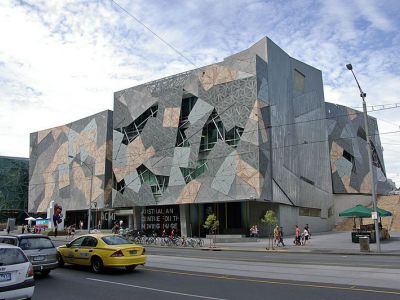
The Australian Centre for the Moving Image (ACMI) is located in Federation Square in Melbourne’s CBD. The centre, which is set out on four floors, is dedicated to promoting and preserving both Victorian and Australian moving image in all forms. There are two large cinemas within the centre that run exciting and innovative monthly programs that feature the very best of local and international films for all ages. Throughout the year ACMI also takes part in several film festivals including: the Melbourne International Film Festival, the Melbourne International Animation Festival and many others. The ongoing “Focus On” series focuses on a specific actor, genre or director.
As well as a constant stream of fascinating installations and exhibitions, there are many talks and workshops that are provided. Some workshops are directed at children and others at students or adults looking to perfect their movie making skills. The permanent exhibition, Screen Worlds invites visitors to consider the role that moving image plays in our lives and how this role has changed over more than 100 years, especially today in the Digital Age. ACMI is open every day from 10am to 6pm except for Christmas Day and Good Friday. Some installations charge an entry fee.
As well as a constant stream of fascinating installations and exhibitions, there are many talks and workshops that are provided. Some workshops are directed at children and others at students or adults looking to perfect their movie making skills. The permanent exhibition, Screen Worlds invites visitors to consider the role that moving image plays in our lives and how this role has changed over more than 100 years, especially today in the Digital Age. ACMI is open every day from 10am to 6pm except for Christmas Day and Good Friday. Some installations charge an entry fee.
3) Forum Theatre
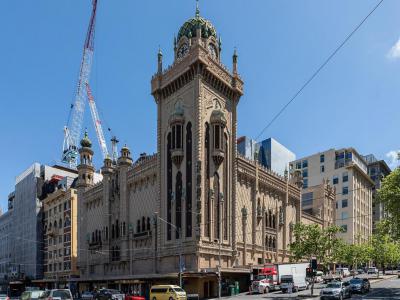
Melbourne has long been considered the cultural capital of Australia, and the Forum Theatre is one of the city’s best known cultural landmarks. Formerly known as the “State Theatre”, it was originally built as a movie palace. When the theatre opened in 1929, it had the largest seating capacity in the country with space for 3371 people. The building was designed by John Eberson, an American architect, who was well known around the world for his theatres. The exterior was in the Moorish revival style, with decadent minarets, cupola and an attention grabbing clock tower. The interior was done in an ornate Greco-Roman style and the ceiling was peppered with stars to emulate the twinkling night sky.
Today the theatre is no longer a cinema, but has for many years been used for a wide variety of theatrical, musical and cultural performances. Entertainers such as Oasis, Katy Perry and Ozzy Osborne have performed there and it is a regular venue for the Melbourne International Film Festival and Melbourne International Comedy Festival. The Forum Theatre has been on the Victorian Heritage Register since 1981.
Today the theatre is no longer a cinema, but has for many years been used for a wide variety of theatrical, musical and cultural performances. Entertainers such as Oasis, Katy Perry and Ozzy Osborne have performed there and it is a regular venue for the Melbourne International Film Festival and Melbourne International Comedy Festival. The Forum Theatre has been on the Victorian Heritage Register since 1981.
4) Old Melbourne Gaol (must see)
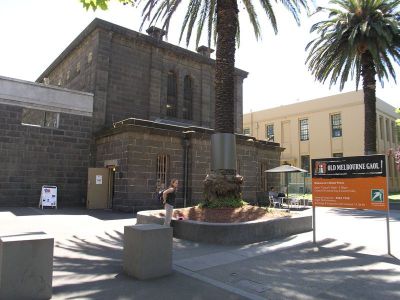
The Old Melbourne Gaol, situated on Russell Street in Melbourne, is a historical site that serves as both a museum and a former prison. It comprises a sturdy bluestone building, an adjoining courtyard, and is situated in close proximity to the old City Police Watch House and City Courts buildings. The construction of this facility commenced in 1839, and it operated as a prison from 1842 to 1929. During this period, it housed and carried out executions for some of Australia's most infamous criminals, such as Ned Kelly, a notorious bushranger, and Frederick Bailey Deeming, a serial killer.
A total of 133 individuals met their fate on the gallows here. Although it had a brief role during World War II, the gaol officially ceased to function as a prison in 1924. Some parts of the facility were incorporated into RMIT University, while the remainder was transformed into a museum.
This three-story museum is dedicated to preserving and showcasing the history of the gaol, including information and artifacts related to both the prisoners and the staff who worked there. Among the exhibits are death masks of the executed criminals. At one point, the museum also featured Ned Kelly's skull, which was unfortunately stolen in 1978, as well as the pencil used by Colin Campbell Ross, who was wrongfully convicted, to assert his innocence in writing before his execution.
Additionally, there are claims by paranormal enthusiasts that the museum is haunted, with reports of ghostly apparitions and unexplained voices in the vicinity of the former prison cells.
A total of 133 individuals met their fate on the gallows here. Although it had a brief role during World War II, the gaol officially ceased to function as a prison in 1924. Some parts of the facility were incorporated into RMIT University, while the remainder was transformed into a museum.
This three-story museum is dedicated to preserving and showcasing the history of the gaol, including information and artifacts related to both the prisoners and the staff who worked there. Among the exhibits are death masks of the executed criminals. At one point, the museum also featured Ned Kelly's skull, which was unfortunately stolen in 1978, as well as the pencil used by Colin Campbell Ross, who was wrongfully convicted, to assert his innocence in writing before his execution.
Additionally, there are claims by paranormal enthusiasts that the museum is haunted, with reports of ghostly apparitions and unexplained voices in the vicinity of the former prison cells.
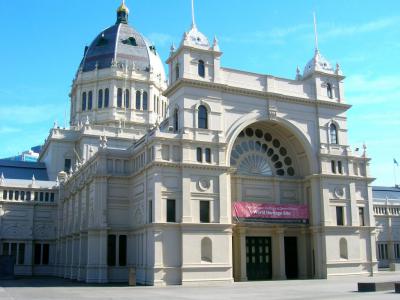
5) Royal Exhibition Building
The Royal Exhibition Building in Melbourne is Australia’s first UNESCO World Heritage Site building. Built in 1880 for Melbourne to host its first international exhibition, it is today one of the oldest surviving exhibition buildings. With eyes from around the globe focused on the young colony, Victoria splashed a lot of its gold wealth around to produce this stunning building. Located in Carlton Gardens at the north-eastern fringe of the CBD, visiting the site is a must while in Melbourne. The building is next to the Melbourne Museum, and is in fact, the largest of the museum’s acquisitions.
Following its wild success hosting the Melbourne International Exhibition and the Melbourne Centennial Exhibition in 1888, the building was also selected as the site to open the first Parliament of Australia on May 9th, 1901 following federation. It was also at the Royal Exhibition Building on September 3rd, 1901 that the Governor-General’s wife, the Countess of Hopetoun announced the winner of the competition to design the Australian flag and it was unrolled for the first time and flown above the building’s dome. Today the building is still extensively used as an exhibition hall and there are regular tours that can be arranged through the Melbourne Museum.
Following its wild success hosting the Melbourne International Exhibition and the Melbourne Centennial Exhibition in 1888, the building was also selected as the site to open the first Parliament of Australia on May 9th, 1901 following federation. It was also at the Royal Exhibition Building on September 3rd, 1901 that the Governor-General’s wife, the Countess of Hopetoun announced the winner of the competition to design the Australian flag and it was unrolled for the first time and flown above the building’s dome. Today the building is still extensively used as an exhibition hall and there are regular tours that can be arranged through the Melbourne Museum.
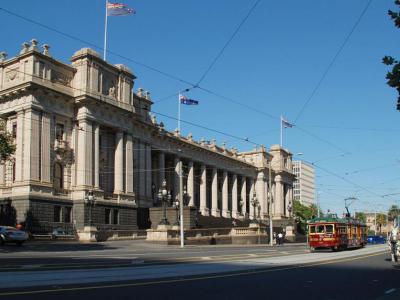
6) Parliament House of Victoria
If you're wandering up Bourke Street and wonder why a massive Greek temple seems to be moonlighting as a government office, that would be Parliament House—Victoria’s political headquarters and one of Melbourne’s proudest 19th-century flexes. This is where the state’s two chambers meet: 88 seats downstairs in the Legislative Assembly and 40 upstairs in the Legislative Council. In essence, it is the place where democracy happens… in carefully structured debates and occasionally dramatic headlines.
It all started back in 1851, when Victoria broke away from New South Wales and suddenly needed a building that would declare, “Yes, we are absolutely capable of running our own affairs.” Architects Charles Pasley and Peter Kerr took that mission very seriously, borrowing heavily from ancient Greece and Rome (which is what you do when setting up a new democracy), then positioning their creation on one of the most commanding sites in the young city.
Construction kicked off in 1856, although “construction” may be too generous a word for a project that unfolded in slow, theatrical acts over 70 years. The two parliamentary chambers were finished first, so lawmakers could start legislating, while the rest of the building politely caught up. Additions like the library, Queen’s Hall, and the eastern wing appeared over time. Although the original plans also envisioned an elaborate dome above the building’s central vestibule, cost concerns meant this feature never materialized. Still, the colonnade and Grand Vestibule delivered enough grandeur to make the dome’s absence feel almost intentional.
Then came 1901, when Australia became a federation, and Melbourne was tapped to host the brand-new Federal Parliament. For 26 years, national politics unfolded inside this very building while Victoria’s Parliament temporarily moved out (proving that Parliament House could multitask long before it became a résumé requirement).
Today, after rounds of restoration and modern upgrades, the building continues its original job: housing Victoria’s Parliament, while looking impressive enough to remind everyone where the big decisions are made...
It all started back in 1851, when Victoria broke away from New South Wales and suddenly needed a building that would declare, “Yes, we are absolutely capable of running our own affairs.” Architects Charles Pasley and Peter Kerr took that mission very seriously, borrowing heavily from ancient Greece and Rome (which is what you do when setting up a new democracy), then positioning their creation on one of the most commanding sites in the young city.
Construction kicked off in 1856, although “construction” may be too generous a word for a project that unfolded in slow, theatrical acts over 70 years. The two parliamentary chambers were finished first, so lawmakers could start legislating, while the rest of the building politely caught up. Additions like the library, Queen’s Hall, and the eastern wing appeared over time. Although the original plans also envisioned an elaborate dome above the building’s central vestibule, cost concerns meant this feature never materialized. Still, the colonnade and Grand Vestibule delivered enough grandeur to make the dome’s absence feel almost intentional.
Then came 1901, when Australia became a federation, and Melbourne was tapped to host the brand-new Federal Parliament. For 26 years, national politics unfolded inside this very building while Victoria’s Parliament temporarily moved out (proving that Parliament House could multitask long before it became a résumé requirement).
Today, after rounds of restoration and modern upgrades, the building continues its original job: housing Victoria’s Parliament, while looking impressive enough to remind everyone where the big decisions are made...
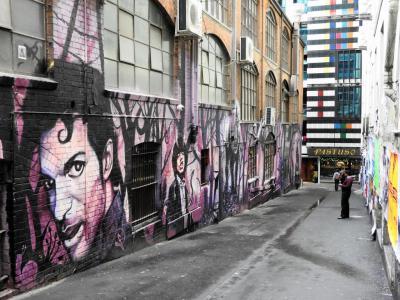
7) ACDC Lane
ACDC Lane is a brief, narrow alleyway situated to the south of Flinders Lane, running between Exhibition Street and Russell Street.
Originally, this street bore the name Corporation Lane, but on October 1, 2004, it underwent a name change to honor the iconic Australian rock band AC/DC. The decision to rename the street received unanimous approval from the Melbourne City Council. The adjustment was necessitated by the trademark lightning bolt or slash ("/") used to separate the AC and DC in the band's name, which violated the naming guidelines of the Office of the Registrar of Geographic Names. Consequently, the street sign omitted this punctuation.
The inauguration of ACDC Lane was led by Melbourne's Lord Mayor, John So, who expressed, "As the song suggests, there may be a highway to hell, but this alleyway is a pathway to heaven. Let us embrace the rock." Following his remarks, bagpipers performed "It's a Long Way to the Top (If You Wanna Rock 'n' Roll)." Approximately one month after the renaming, a lightning bolt was installed above and below the street sign.
The choice of renaming Corporation Lane was influenced by several factors, including the fact that AC/DC had filmed the music video for "It's a Long Way to the Top (If You Wanna Rock 'n' Roll)" on Swanston Street in Melbourne, which is close to ACDC Lane. Other considerations included AC/DC's role as cultural ambassadors for Australia, their strong ties to Melbourne, and the lane's location in the city's bustling bar district.
Originally, this street bore the name Corporation Lane, but on October 1, 2004, it underwent a name change to honor the iconic Australian rock band AC/DC. The decision to rename the street received unanimous approval from the Melbourne City Council. The adjustment was necessitated by the trademark lightning bolt or slash ("/") used to separate the AC and DC in the band's name, which violated the naming guidelines of the Office of the Registrar of Geographic Names. Consequently, the street sign omitted this punctuation.
The inauguration of ACDC Lane was led by Melbourne's Lord Mayor, John So, who expressed, "As the song suggests, there may be a highway to hell, but this alleyway is a pathway to heaven. Let us embrace the rock." Following his remarks, bagpipers performed "It's a Long Way to the Top (If You Wanna Rock 'n' Roll)." Approximately one month after the renaming, a lightning bolt was installed above and below the street sign.
The choice of renaming Corporation Lane was influenced by several factors, including the fact that AC/DC had filmed the music video for "It's a Long Way to the Top (If You Wanna Rock 'n' Roll)" on Swanston Street in Melbourne, which is close to ACDC Lane. Other considerations included AC/DC's role as cultural ambassadors for Australia, their strong ties to Melbourne, and the lane's location in the city's bustling bar district.
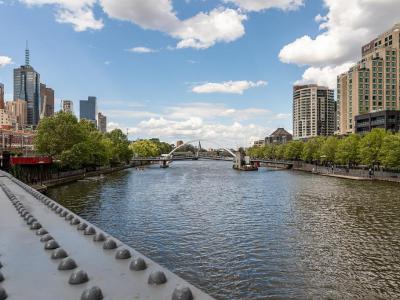
8) Yarra River
The Yarra River, historically known as the Yarra Yarra River, has its origins in east-central Victoria, Australia. It stretches for 242 kilometers (150 miles) from the Yarra Ranges in the east to its endpoint in Hobsons Bay, northernmost Port Phillip. The river played a vital role for indigenous Australians in terms of food and gathering, but with the arrival of European settlers, land clearing pushed the Wurundjeri people away from the river.
Originally known as Birrarung to the Wurundjeri people, the Yarra River got its current name, Yarra, from a mistranslation of the Boonwurrung term Yarro-yarro, which means "ever-flowing." Early European settlers used the river mainly for agriculture, resulting in changes to its course and widening of certain sections. Infrastructure like Princes Bridge and mining during the Victorian gold rush, which led to tunnels like Pound Bend Tunnel and the Big and Little Peninsula Tunnels, have had a significant impact on the river.
To protect Melbourne from flooding, widening and dam construction, such as the Upper Yarra Reservoir, were undertaken. However, logging in the catchment's upper reaches and industrialization resulted in the destruction of marshlands at the confluence of the Yarra and Maribyrnong Rivers near Coode Island in West Melbourne.
Today, the Yarra River mouth, including Swanson and Appleton Docks, serves as a busy container shipping hub for the Port of Melbourne, the continent's busiest port. The city reach is now popular for transportation and recreational activities like kayaking, canoeing, rowing, and swimming. However, pollution in the lower river sections poses a threat to recreational use, while the upper reaches remain relatively unpolluted.
The annual Moomba festival is held to celebrate the growing cultural significance of the Yarra River to Melbourne.
Originally known as Birrarung to the Wurundjeri people, the Yarra River got its current name, Yarra, from a mistranslation of the Boonwurrung term Yarro-yarro, which means "ever-flowing." Early European settlers used the river mainly for agriculture, resulting in changes to its course and widening of certain sections. Infrastructure like Princes Bridge and mining during the Victorian gold rush, which led to tunnels like Pound Bend Tunnel and the Big and Little Peninsula Tunnels, have had a significant impact on the river.
To protect Melbourne from flooding, widening and dam construction, such as the Upper Yarra Reservoir, were undertaken. However, logging in the catchment's upper reaches and industrialization resulted in the destruction of marshlands at the confluence of the Yarra and Maribyrnong Rivers near Coode Island in West Melbourne.
Today, the Yarra River mouth, including Swanson and Appleton Docks, serves as a busy container shipping hub for the Port of Melbourne, the continent's busiest port. The city reach is now popular for transportation and recreational activities like kayaking, canoeing, rowing, and swimming. However, pollution in the lower river sections poses a threat to recreational use, while the upper reaches remain relatively unpolluted.
The annual Moomba festival is held to celebrate the growing cultural significance of the Yarra River to Melbourne.
9) Government House
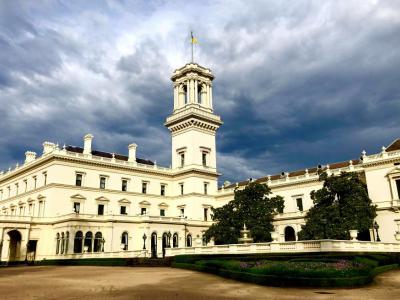
Government House is one of Melbourne’s most stunning buildings and the official residence of Victoria’s Governor. It was also home to Australia’s Governor-General, following federation, from 1901 to 1930. The house is located next to the Royal Botanic Gardens on land that was set aside by the first Governor of Victoria Charles La Trobe in 1841.
In 1870 the decision was made to finally construct a purpose built Victorian Government House there. It is the largest government house anywhere in the former British Empire. The flamboyant style of the building reflects the immense wealth of the state at that time as a direct result of the gold rush.
Government House is generally closed to the public as it is in use for state events and as the Governor’s private residence. However, tours may be available on Mondays and Wednesdays if you make an advance booking. The ballroom is said to be the largest in the southern hemisphere and within the British Empire. Every Australia Day it is opened up to visitors. Paying a visit to the Royal Botanic Gardens and wandering up to Government House to see its lovely Italianate exterior at close range is definitely worth the time on any trip to Melbourne.
In 1870 the decision was made to finally construct a purpose built Victorian Government House there. It is the largest government house anywhere in the former British Empire. The flamboyant style of the building reflects the immense wealth of the state at that time as a direct result of the gold rush.
Government House is generally closed to the public as it is in use for state events and as the Governor’s private residence. However, tours may be available on Mondays and Wednesdays if you make an advance booking. The ballroom is said to be the largest in the southern hemisphere and within the British Empire. Every Australia Day it is opened up to visitors. Paying a visit to the Royal Botanic Gardens and wandering up to Government House to see its lovely Italianate exterior at close range is definitely worth the time on any trip to Melbourne.
10) Victoria Barracks
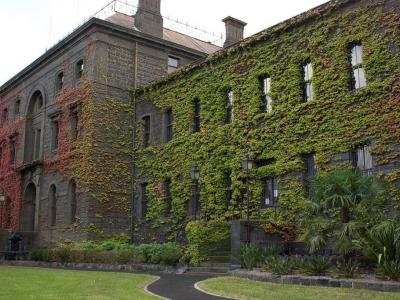
Located on Saint Kilda Road, the Victoria Barracks are an important part of both Victoria and Australia’s history. The barracks were originally built as accommodation for the soldiers who were involved in quashing the Eureka Stockade rebellion during the Victorian gold rush. Today you can still see the original bluestone buildings dating from the 1850s.
Upon federation, the Victoria Barracks were made the administrative center for the Australian army, then during World War I to assist with communication between the army, the navy and air force moved onto the site. During this time the barracks provided accommodation for the soldiers as well as travelling War Cabinet ministers and the prime minister. Space was limited and so extensions were added in 1917, followed by an art deco style building added in 1939 upon the outbreak of World War II.
During World War II, the barracks were again put to use as a meeting space for Australia’s War Cabinet, which was made up of senior politicians in both the ruling and opposition parties. There are rumors of a tunnel leading from the barracks down to the Yarra River, to whisk away cabinet members to safety in the event of an air raid.
Upon federation, the Victoria Barracks were made the administrative center for the Australian army, then during World War I to assist with communication between the army, the navy and air force moved onto the site. During this time the barracks provided accommodation for the soldiers as well as travelling War Cabinet ministers and the prime minister. Space was limited and so extensions were added in 1917, followed by an art deco style building added in 1939 upon the outbreak of World War II.
During World War II, the barracks were again put to use as a meeting space for Australia’s War Cabinet, which was made up of senior politicians in both the ruling and opposition parties. There are rumors of a tunnel leading from the barracks down to the Yarra River, to whisk away cabinet members to safety in the event of an air raid.
