Custom Walk in Melbourne, Australia by mail2drshak_d78c78 created on 2026-02-13
Guide Location: Australia » Melbourne
Guide Type: Custom Walk
# of Sights: 12
Tour Duration: 3 Hour(s)
Travel Distance: 4.8 Km or 3 Miles
Share Key: 7D2UU
Guide Type: Custom Walk
# of Sights: 12
Tour Duration: 3 Hour(s)
Travel Distance: 4.8 Km or 3 Miles
Share Key: 7D2UU
How It Works
Please retrieve this walk in the GPSmyCity app. Once done, the app will guide you from one tour stop to the next as if you had a personal tour guide. If you created the walk on this website or come to the page via a link, please follow the instructions below to retrieve the walk in the app.
Retrieve This Walk in App
Step 1. Download the app "GPSmyCity: Walks in 1K+ Cities" on Apple App Store or Google Play Store.



Step 2. In the GPSmyCity app, download(or launch) the guide "Melbourne Map and Walking Tours".
Step 3. Tap the menu button located at upper right corner of the "Walks" screen and select "Retrieve custom walk". Enter the share key: 7D2UU
1) Old Melbourne Gaol (must see)
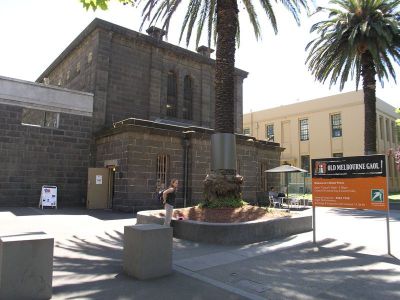
The Old Melbourne Gaol, situated on Russell Street in Melbourne, is a historical site that serves as both a museum and a former prison. It comprises a sturdy bluestone building, an adjoining courtyard, and is situated in close proximity to the old City Police Watch House and City Courts buildings. The construction of this facility commenced in 1839, and it operated as a prison from 1842 to 1929. During this period, it housed and carried out executions for some of Australia's most infamous criminals, such as Ned Kelly, a notorious bushranger, and Frederick Bailey Deeming, a serial killer.
A total of 133 individuals met their fate on the gallows here. Although it had a brief role during World War II, the gaol officially ceased to function as a prison in 1924. Some parts of the facility were incorporated into RMIT University, while the remainder was transformed into a museum.
This three-story museum is dedicated to preserving and showcasing the history of the gaol, including information and artifacts related to both the prisoners and the staff who worked there. Among the exhibits are death masks of the executed criminals. At one point, the museum also featured Ned Kelly's skull, which was unfortunately stolen in 1978, as well as the pencil used by Colin Campbell Ross, who was wrongfully convicted, to assert his innocence in writing before his execution.
Additionally, there are claims by paranormal enthusiasts that the museum is haunted, with reports of ghostly apparitions and unexplained voices in the vicinity of the former prison cells.
A total of 133 individuals met their fate on the gallows here. Although it had a brief role during World War II, the gaol officially ceased to function as a prison in 1924. Some parts of the facility were incorporated into RMIT University, while the remainder was transformed into a museum.
This three-story museum is dedicated to preserving and showcasing the history of the gaol, including information and artifacts related to both the prisoners and the staff who worked there. Among the exhibits are death masks of the executed criminals. At one point, the museum also featured Ned Kelly's skull, which was unfortunately stolen in 1978, as well as the pencil used by Colin Campbell Ross, who was wrongfully convicted, to assert his innocence in writing before his execution.
Additionally, there are claims by paranormal enthusiasts that the museum is haunted, with reports of ghostly apparitions and unexplained voices in the vicinity of the former prison cells.
2) Chinatown
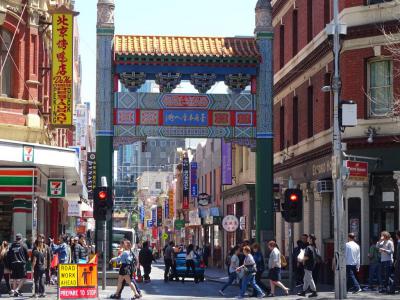
Chinatown is a distinct neighborhood located in the central business district (CBD) of Melbourne, Victoria. Situated primarily at the eastern end of Little Bourke Street, it stretches between the intersections of Swanston and Spring streets and encompasses a network of narrow streets, alleys, and covered walkways. This neighborhood was established in the 1850s during the Victorian gold rush and holds the distinction of being the longest-standing continuous Chinese community in the Western World, as well as the oldest Chinatown in the Southern Hemisphere.
Melbourne's Chinatown has played a significant role in shaping the Chinese immigrant culture in Australia. It continues to be home to a multitude of Chinese restaurants, cultural venues, businesses, and places of worship. In the present day, Melbourne's Chinatown is a prominent tourist destination, renowned for its historical architecture, annual festivals, diverse Asian cuisine, and entertainment options such as karaoke venues, bars, and fashion boutiques.
In addition to the area within Chinatown and the CBD, Melbourne's Chinese community is also well-represented in other parts of the city, with Box Hill being a notable example. In fact, there is currently a major development project called "New Chinatown" underway in Box Hill, with an investment of $450 million. Furthermore, Chinatown is also home to the Chinese Museum, serving as a cultural hub for preserving and showcasing Chinese heritage.
Melbourne's Chinatown has played a significant role in shaping the Chinese immigrant culture in Australia. It continues to be home to a multitude of Chinese restaurants, cultural venues, businesses, and places of worship. In the present day, Melbourne's Chinatown is a prominent tourist destination, renowned for its historical architecture, annual festivals, diverse Asian cuisine, and entertainment options such as karaoke venues, bars, and fashion boutiques.
In addition to the area within Chinatown and the CBD, Melbourne's Chinese community is also well-represented in other parts of the city, with Box Hill being a notable example. In fact, there is currently a major development project called "New Chinatown" underway in Box Hill, with an investment of $450 million. Furthermore, Chinatown is also home to the Chinese Museum, serving as a cultural hub for preserving and showcasing Chinese heritage.
3) Parliament House of Victoria
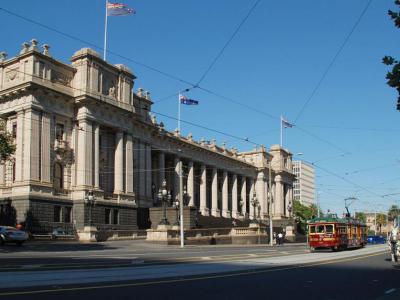
If you're wandering up Bourke Street and wonder why a massive Greek temple seems to be moonlighting as a government office, that would be Parliament House—Victoria’s political headquarters and one of Melbourne’s proudest 19th-century flexes. This is where the state’s two chambers meet: 88 seats downstairs in the Legislative Assembly and 40 upstairs in the Legislative Council. In essence, it is the place where democracy happens… in carefully structured debates and occasionally dramatic headlines.
It all started back in 1851, when Victoria broke away from New South Wales and suddenly needed a building that would declare, “Yes, we are absolutely capable of running our own affairs.” Architects Charles Pasley and Peter Kerr took that mission very seriously, borrowing heavily from ancient Greece and Rome (which is what you do when setting up a new democracy), then positioning their creation on one of the most commanding sites in the young city.
Construction kicked off in 1856, although “construction” may be too generous a word for a project that unfolded in slow, theatrical acts over 70 years. The two parliamentary chambers were finished first, so lawmakers could start legislating, while the rest of the building politely caught up. Additions like the library, Queen’s Hall, and the eastern wing appeared over time. Although the original plans also envisioned an elaborate dome above the building’s central vestibule, cost concerns meant this feature never materialized. Still, the colonnade and Grand Vestibule delivered enough grandeur to make the dome’s absence feel almost intentional.
Then came 1901, when Australia became a federation, and Melbourne was tapped to host the brand-new Federal Parliament. For 26 years, national politics unfolded inside this very building while Victoria’s Parliament temporarily moved out (proving that Parliament House could multitask long before it became a résumé requirement).
Today, after rounds of restoration and modern upgrades, the building continues its original job: housing Victoria’s Parliament, while looking impressive enough to remind everyone where the big decisions are made...
It all started back in 1851, when Victoria broke away from New South Wales and suddenly needed a building that would declare, “Yes, we are absolutely capable of running our own affairs.” Architects Charles Pasley and Peter Kerr took that mission very seriously, borrowing heavily from ancient Greece and Rome (which is what you do when setting up a new democracy), then positioning their creation on one of the most commanding sites in the young city.
Construction kicked off in 1856, although “construction” may be too generous a word for a project that unfolded in slow, theatrical acts over 70 years. The two parliamentary chambers were finished first, so lawmakers could start legislating, while the rest of the building politely caught up. Additions like the library, Queen’s Hall, and the eastern wing appeared over time. Although the original plans also envisioned an elaborate dome above the building’s central vestibule, cost concerns meant this feature never materialized. Still, the colonnade and Grand Vestibule delivered enough grandeur to make the dome’s absence feel almost intentional.
Then came 1901, when Australia became a federation, and Melbourne was tapped to host the brand-new Federal Parliament. For 26 years, national politics unfolded inside this very building while Victoria’s Parliament temporarily moved out (proving that Parliament House could multitask long before it became a résumé requirement).
Today, after rounds of restoration and modern upgrades, the building continues its original job: housing Victoria’s Parliament, while looking impressive enough to remind everyone where the big decisions are made...
4) Old Treasury Building
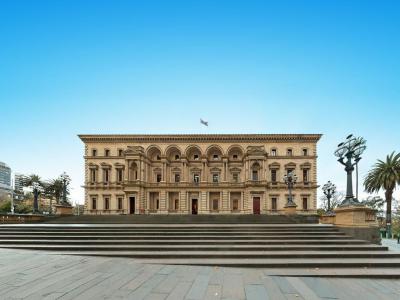
Located within one of Australia's most esteemed 19th-century Gothic Revival buildings, the City Museum of Old Treasury offers an excellent opportunity to delve into Melbourne's rich history. Constructed in 1862, this building served as a key government facility for 130 years and initially functioned as a secure repository for Melbourne's newfound wealth during the gold rush era. In 1992, following the conclusion of its governmental role, the building underwent restoration and was reborn as the City Museum of Old Treasury in 1994. Today, visitors can explore numerous permanent exhibitions along with temporary and visiting displays.
One notable permanent exhibition is "Victorian Archival Treasures," where you can gain insights into various aspects of Melbourne's history, such as Ned Kelly, gold miners from the 1850s, indigenous Victorians, renowned criminals, and the city's early settlement. "Built On Gold" delves into the gold rush period from 1852 to 1862, and this exhibition is situated within the building's former gold vaults. "Growing Up In Old Treasury" recounts the experiences of the Maynard family, who resided in the basement of the building during the 1920s when the father served as superintendent.
One notable permanent exhibition is "Victorian Archival Treasures," where you can gain insights into various aspects of Melbourne's history, such as Ned Kelly, gold miners from the 1850s, indigenous Victorians, renowned criminals, and the city's early settlement. "Built On Gold" delves into the gold rush period from 1852 to 1862, and this exhibition is situated within the building's former gold vaults. "Growing Up In Old Treasury" recounts the experiences of the Maynard family, who resided in the basement of the building during the 1920s when the father served as superintendent.
5) Hosier Lane
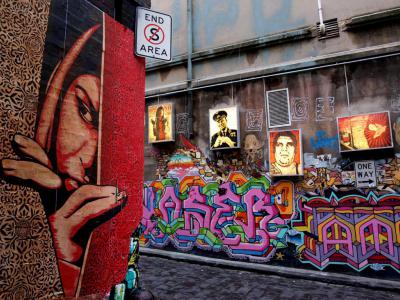
Hosier Lane is a cobblestone street situated on the southern border of the central city layout, renowned for its cultural importance and role as a hub for urban art. It was designated as a Street Art Gallery in 1998, thanks to the City Lights Initiative's endeavors. This lane is conveniently located opposite the entrance to the Atrium at Federation Square on Flinders Street, making it a prominent spot in the city.
This lane has gained recognition for the high quality and often politically-themed nature of its art. It has been featured in the state-sponsored publication, "The Melbourne Design Guide," as well as in Tourism Victoria's "Lose Yourself in Melbourne" advertising campaign. These appearances have raised questions about Victoria's contrasting approach to graffiti. The walls covered in graffiti and various art installations have become a popular backdrop for fashion and wedding photography.
Furthermore, Hosier Lane is famous for its upscale cocktail lounges, including the well-known Misty and MoVida. The lane's prominence was further highlighted when Chef Frank Camorra from MoVida conducted an open-air cooking session on Masterchef Australia season 2, showcasing it as a major attraction in Melbourne.
This lane has gained recognition for the high quality and often politically-themed nature of its art. It has been featured in the state-sponsored publication, "The Melbourne Design Guide," as well as in Tourism Victoria's "Lose Yourself in Melbourne" advertising campaign. These appearances have raised questions about Victoria's contrasting approach to graffiti. The walls covered in graffiti and various art installations have become a popular backdrop for fashion and wedding photography.
Furthermore, Hosier Lane is famous for its upscale cocktail lounges, including the well-known Misty and MoVida. The lane's prominence was further highlighted when Chef Frank Camorra from MoVida conducted an open-air cooking session on Masterchef Australia season 2, showcasing it as a major attraction in Melbourne.
6) Federation Square
Fed Square — yes, everyone calls it that — finally opened in 2001, after decades of Melbourne wondering why a major city had managed to function without an actual public square since the 1800s. The solution was delightfully bold: just build it right on top of the old railway yards. Prime location, close to the river, no extra land needed — problem solved.
Since then, the place has turned into Melbourne’s cultural magnet. With more than eight million visitors and around two thousand events each year, the square rarely has a quiet moment. One day it’s a food festival, the next it’s a film screening, and by the weekend you might stumble into a live performance you didn’t know was on.
Two anchors define the square’s artistic energy: the Australian Centre for the Moving Image, which is the country’s home for all things film and digital culture, and the Ian Potter Centre, the National Gallery of Victoria’s base for Australian art, both old and new. Together, they do a fine job of filling the square with ideas, stories, and the occasional burst of creative chaos.
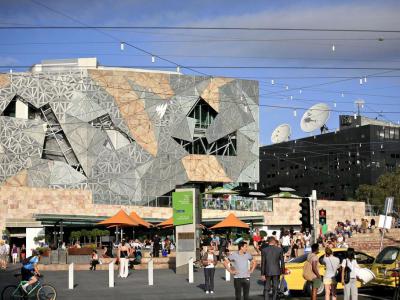
And then there’s the architecture — a patchwork of sharp angles, cranked lines, and deconstructivist drama. The buildings look like they’ve been assembled from giant geometric puzzle pieces, with glass corridors splitting them apart like modern takes on Melbourne’s historic laneways. Those tall “shards” hiding staircases and lifts are all part of the fun. And if you notice pinwheel-patterned tiles under your feet, yes, they’re meant to catch your eye.
Down toward the Yarra, the square softens into leafy paths leading to Federation Wharf, where cafés and a small marina share a calmer slice of the riverfront.
Indeed, sitting right in the middle of Melbourne’s heartbeat, Fed Square is a safe bet you'll catch something happening here all the time. Just pick up some takeaway, find a seat, and let the city’s atmosphere do the rest. The events calendar on Fed Square’s website will help you keep up — if you can...
Since then, the place has turned into Melbourne’s cultural magnet. With more than eight million visitors and around two thousand events each year, the square rarely has a quiet moment. One day it’s a food festival, the next it’s a film screening, and by the weekend you might stumble into a live performance you didn’t know was on.
Two anchors define the square’s artistic energy: the Australian Centre for the Moving Image, which is the country’s home for all things film and digital culture, and the Ian Potter Centre, the National Gallery of Victoria’s base for Australian art, both old and new. Together, they do a fine job of filling the square with ideas, stories, and the occasional burst of creative chaos.
And then there’s the architecture — a patchwork of sharp angles, cranked lines, and deconstructivist drama. The buildings look like they’ve been assembled from giant geometric puzzle pieces, with glass corridors splitting them apart like modern takes on Melbourne’s historic laneways. Those tall “shards” hiding staircases and lifts are all part of the fun. And if you notice pinwheel-patterned tiles under your feet, yes, they’re meant to catch your eye.
Down toward the Yarra, the square softens into leafy paths leading to Federation Wharf, where cafés and a small marina share a calmer slice of the riverfront.
Indeed, sitting right in the middle of Melbourne’s heartbeat, Fed Square is a safe bet you'll catch something happening here all the time. Just pick up some takeaway, find a seat, and let the city’s atmosphere do the rest. The events calendar on Fed Square’s website will help you keep up — if you can...
7) Flinders Street Station
If you’re standing at the corner of Flinders and Swanston Streets and wondering why everyone else is looking up—congrats, you’ve found Flinders Street Station! It opened in 1854 as the terminus of Australia’s very first railway, back when “catching a train” meant something closer to “braving an experiment.” Today, it’s still one of Melbourne’s busiest transport hubs, funneling commuters across the suburbs and deep into the city’s daily rhythm.
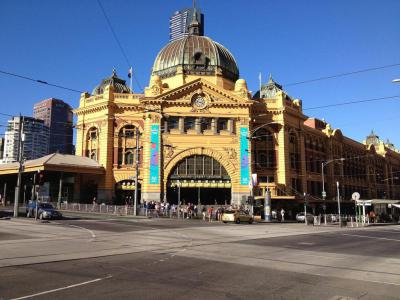
The building you see now arrived later, finished in 1909. It’s an Edwardian creation that doesn’t believe in subtlety—domes, arches, towers, and enough ornamentation to fuel a century of urban legends. The curious fact associated with this building is that its design was mistakenly swapped with plans for Victoria Terminus in Bombay. No proof, however, but the rumour is almost as iconic as the station itself. Heritage-listed and instantly recognisable, it remains one of Melbourne’s most photographed faces.
And then there are the clocks. If someone in Melbourne tells you to meet them “under the clocks,” they’re not being poetic—that’s the row of indicator clocks above the main entrance. Another classic rendezvous point here is “On the steps.” Basically, this station doubles as both a transit hub and the city’s unofficial meeting app...
Its location doesn’t hurt either. Step outside and you’re right beside Federation Square, the Yarra River, and the maze of laneways, cafés, and arcades that make up the Central Business District. A truly perfect launchpad for whatever you’re doing next...
Indeed, whenever you're in Melbourne, even if you’re not catching a train, this building is always a delight to look at. The food inside is tempting, and—bonus—the station turns into a glowing postcard at night. So, make sure to have a camera handy; it likes the attention...
The building you see now arrived later, finished in 1909. It’s an Edwardian creation that doesn’t believe in subtlety—domes, arches, towers, and enough ornamentation to fuel a century of urban legends. The curious fact associated with this building is that its design was mistakenly swapped with plans for Victoria Terminus in Bombay. No proof, however, but the rumour is almost as iconic as the station itself. Heritage-listed and instantly recognisable, it remains one of Melbourne’s most photographed faces.
And then there are the clocks. If someone in Melbourne tells you to meet them “under the clocks,” they’re not being poetic—that’s the row of indicator clocks above the main entrance. Another classic rendezvous point here is “On the steps.” Basically, this station doubles as both a transit hub and the city’s unofficial meeting app...
Its location doesn’t hurt either. Step outside and you’re right beside Federation Square, the Yarra River, and the maze of laneways, cafés, and arcades that make up the Central Business District. A truly perfect launchpad for whatever you’re doing next...
Indeed, whenever you're in Melbourne, even if you’re not catching a train, this building is always a delight to look at. The food inside is tempting, and—bonus—the station turns into a glowing postcard at night. So, make sure to have a camera handy; it likes the attention...
8) Degraves Street
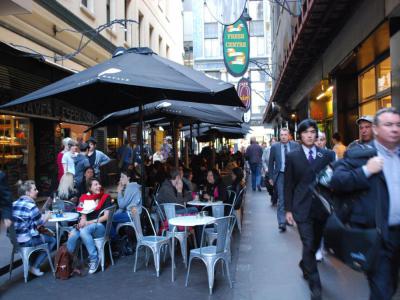
Slip off Flinders Street and onto Degraves, and suddenly Melbourne feels like it’s trying on a little Parisian flair. This narrow cobbled lane is strictly for pedestrians—no cars, just the steady hum of coffee machines, clinking glasses, and people debating which café has the best flat white. If you’re hunting for a sunny table to enjoy lunch outdoors, Degraves practically waves you over. Just don’t mix it up with Centre Place, its equally charming but often confused neighbour.
Look up, and you’ll spot the taller buildings that have been reborn as loft-style apartments, adding residents—and energy—to the laneway below. Down at street level, the soundtrack is classic Melbourne: buskers setting the mood, street art bursting from every corner, and the occasional splash of graffiti reminding you that creativity here comes in all forms.
The name “Degraves” goes back to Charles and William Degraves, merchants from Hobart who arrived here with flour-mill ambitions in 1849. William later dabbled in local politics, proving that even back then, Degraves attracted people who liked to stay busy...
Today, the lane acts as a lively connector between Flinders Street Station and the shopping streets to the north. If you need a shortcut underground, Campbell Arcade—better known to locals as the Degraves Underpass—whisks you beneath the traffic. Keep an eye out for the Platform Artists Group, who regularly turn the space into an ever-changing mini-gallery.
Step in, slow down, and enjoy the show—Degraves is Melbourne’s laneway culture at its most irresistible.
Look up, and you’ll spot the taller buildings that have been reborn as loft-style apartments, adding residents—and energy—to the laneway below. Down at street level, the soundtrack is classic Melbourne: buskers setting the mood, street art bursting from every corner, and the occasional splash of graffiti reminding you that creativity here comes in all forms.
The name “Degraves” goes back to Charles and William Degraves, merchants from Hobart who arrived here with flour-mill ambitions in 1849. William later dabbled in local politics, proving that even back then, Degraves attracted people who liked to stay busy...
Today, the lane acts as a lively connector between Flinders Street Station and the shopping streets to the north. If you need a shortcut underground, Campbell Arcade—better known to locals as the Degraves Underpass—whisks you beneath the traffic. Keep an eye out for the Platform Artists Group, who regularly turn the space into an ever-changing mini-gallery.
Step in, slow down, and enjoy the show—Degraves is Melbourne’s laneway culture at its most irresistible.
9) Block Arcade (must see)
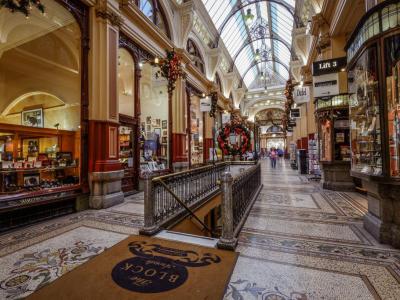
If Melbourne had a catwalk, the Block Arcade would be strutting right down the middle of it in full glamour mode. Opened in 1892, this lavish stretch of French Renaissance beauty is all towering arches, ornate cornices, and decorative tiles—basically the architectural equivalent of overdressing for every occasion, and loving it. Inside, boutiques and tea rooms line the walkways, echoing the days when this was the most fashionable shopping runway in town just off Collins Street.
Shaped like an elegant L and crowned at the bend with a domed rotunda that refuses to be ignored, the arcade links Elizabeth Street to Collins Street. And if you walk in from the Collins side, you’ll find yourself facing its slightly older sibling, the Royal Arcade, as if the two have been politely competing for attention since the Victorian era...
The name “Block Arcade” comes from the 19th-century pastime of “doing the block,” when Melbourne’s elite would dress to impress and glide along Collins Street and its arcades. This was the place to see—and be seen—long before Instagram tried to claim the job...
Nowadays, people keep stopping by because a walk through the Block Arcade feels like stepping straight into Victorian Melbourne, minus the horse-drawn traffic... Those soaring six-storey façades and meticulously restored interior are textbook Mannerist drama, and the whole place is proudly listed on the Victorian Heritage Register—because, frankly, how could it possibly not be?
And now for a tip worthy of your inner aristocrat: the Hopetoun Tea Rooms. First opened in 1894 and redecorated in 1976 in full Victorian splendour, it still delivers the kind of tea service that expects you to sit up straight and behave elegantly—well, at least until dessert arrives...
Since you're already here, glance across the street to the Royal Arcade for another dose of grandeur. Or take a quick detour into Block Court next door—its Art Deco interior no longer houses an arcade of shops, but it certainly still knows how to make an entrance.
Shaped like an elegant L and crowned at the bend with a domed rotunda that refuses to be ignored, the arcade links Elizabeth Street to Collins Street. And if you walk in from the Collins side, you’ll find yourself facing its slightly older sibling, the Royal Arcade, as if the two have been politely competing for attention since the Victorian era...
The name “Block Arcade” comes from the 19th-century pastime of “doing the block,” when Melbourne’s elite would dress to impress and glide along Collins Street and its arcades. This was the place to see—and be seen—long before Instagram tried to claim the job...
Nowadays, people keep stopping by because a walk through the Block Arcade feels like stepping straight into Victorian Melbourne, minus the horse-drawn traffic... Those soaring six-storey façades and meticulously restored interior are textbook Mannerist drama, and the whole place is proudly listed on the Victorian Heritage Register—because, frankly, how could it possibly not be?
And now for a tip worthy of your inner aristocrat: the Hopetoun Tea Rooms. First opened in 1894 and redecorated in 1976 in full Victorian splendour, it still delivers the kind of tea service that expects you to sit up straight and behave elegantly—well, at least until dessert arrives...
Since you're already here, glance across the street to the Royal Arcade for another dose of grandeur. Or take a quick detour into Block Court next door—its Art Deco interior no longer houses an arcade of shops, but it certainly still knows how to make an entrance.
10) Royal Arcade
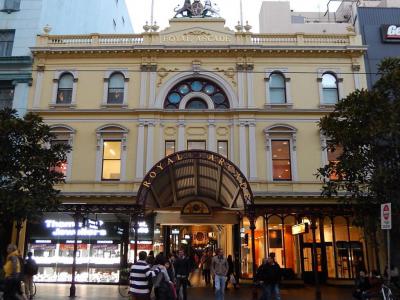
Built in 1870 and proudly sitting on the Victorian Heritage Register, the Royal Arcade radiates an easy kind of glamour, the sort that comes naturally to Melbourne’s oldest surviving arcade. You can slip inside from Bourke, Elizabeth, or Little Collins Streets, and no matter which door you choose, the place wastes no time announcing itself as a long-standing city favourite. Over the decades, shopfronts slowly drifted away from the original design, but a major early-2000s restoration coaxed everything back into its polished 1894 glory.
Inside, the Royal Arcade delivers the full package: boutiques for browsing, cafés for lingering, and vintage shops that tempt you into “just one more look.” But the true stars are waiting at the Little Collins Street entrance—Gog and Magog, the seven-foot giants who guard the Gaunt clock with the kind of enthusiasm only mythical porters can muster. They’ve been here since 1892, carved from pine and modeled after the figures in London’s Guildhall. Every hour, their arms rise to strike the chime, which is their way of reminding you that time is passing… and perhaps so is your chance to grab that pastry you’ve been eyeing.
Their backstory is delightfully dramatic. In legend, Gog and Magog represent the struggle between ancient Britons and Trojan settlers. Ultimately captured and made to serve as porters, they now hold that role for eternity—both in London and here, where clockmaker and jeweler Thomas Gaunt installed them two decades after the arcade opened. So, as you wander beneath the glass ceilings and mosaic floors, remember: even giants have day jobs, and these two have been keeping Melbourne on schedule for over a century...
Inside, the Royal Arcade delivers the full package: boutiques for browsing, cafés for lingering, and vintage shops that tempt you into “just one more look.” But the true stars are waiting at the Little Collins Street entrance—Gog and Magog, the seven-foot giants who guard the Gaunt clock with the kind of enthusiasm only mythical porters can muster. They’ve been here since 1892, carved from pine and modeled after the figures in London’s Guildhall. Every hour, their arms rise to strike the chime, which is their way of reminding you that time is passing… and perhaps so is your chance to grab that pastry you’ve been eyeing.
Their backstory is delightfully dramatic. In legend, Gog and Magog represent the struggle between ancient Britons and Trojan settlers. Ultimately captured and made to serve as porters, they now hold that role for eternity—both in London and here, where clockmaker and jeweler Thomas Gaunt installed them two decades after the arcade opened. So, as you wander beneath the glass ceilings and mosaic floors, remember: even giants have day jobs, and these two have been keeping Melbourne on schedule for over a century...
11) Bourke Street
Bourke Street holds a significant place in Melbourne's central business district and is a key part of the Hoddle Grid. It used to be the main entertainment area in inner-city Melbourne during the Marvellous Melbourne era. Today, it's a popular spot for tourists and a major route for trams.
Back in the Marvellous Melbourne era, Bourke Street was home to many theaters and cinemas in the city. Nowadays, it's primarily known as a major shopping area. The Bourke Street Mall stretches between Elizabeth and Swanston Streets, offering numerous retail stores. To the west, you'll find various offices, and to the east, there are plenty of restaurants. It's known for its vibrant atmosphere, which stands in contrast to the more formal Collins Street. People often use the phrase "Busier than Bourke Street" to describe a crowded or bustling place.
The street's name honors Sir Richard Bourke, an Irish-born British Army officer who served as the Governor of New South Wales from 1831 to 1837, a period when the Hoddle Grid was being developed.
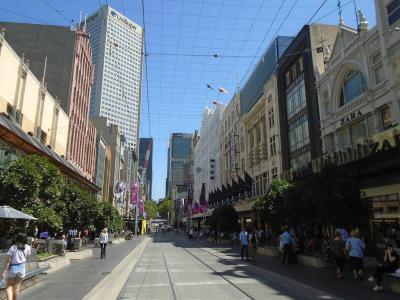
The Bourke Street Mall, located between Swanston and Elizabeth Streets, is a pedestrian and tram-only area. It's famous for its retail hubs, including Melbourne's GPO, H&M, Zara, Cotton On, and flagship stores for Myer and David Jones.
Back in the Marvellous Melbourne era, Bourke Street was home to many theaters and cinemas in the city. Nowadays, it's primarily known as a major shopping area. The Bourke Street Mall stretches between Elizabeth and Swanston Streets, offering numerous retail stores. To the west, you'll find various offices, and to the east, there are plenty of restaurants. It's known for its vibrant atmosphere, which stands in contrast to the more formal Collins Street. People often use the phrase "Busier than Bourke Street" to describe a crowded or bustling place.
The street's name honors Sir Richard Bourke, an Irish-born British Army officer who served as the Governor of New South Wales from 1831 to 1837, a period when the Hoddle Grid was being developed.
The Bourke Street Mall, located between Swanston and Elizabeth Streets, is a pedestrian and tram-only area. It's famous for its retail hubs, including Melbourne's GPO, H&M, Zara, Cotton On, and flagship stores for Myer and David Jones.
12) State Library Victoria
State Library Victoria (SLV) serves as the principal library in Victoria, Australia. Situated in Melbourne, it was founded in 1854 under the name Melbourne Public Library, making it the oldest public library in Australia and one of the earliest free libraries in the world. It also boasts the distinction of being Australia's most frequented public library and, as of 2018, ranks as the fourth-most-visited library on a global scale.
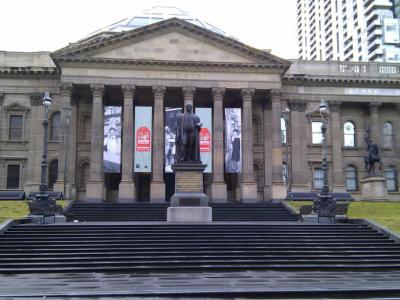
The library has retained its original location in Melbourne's central business district since its inception, facing Swanston Street. The Library complex, completed in 1992, was built in phases. Joseph Reed's 1860 plan included a domed section facing Russell Street for the Museum and Gallery, which was mostly followed for a century. The southern front wing with the Queen's Reading Room (now Queen's Hall) was finished in 1859, while the northern section (now Hansen Hall) was added in 1864 by Abraham Linacre. Temporary halls and a pagoda were erected in 1866 for an exhibition, later housing the Industrial & Technological Museum of Victoria starting in 1870.
The library's extensive collection comprises more than five million items, encompassing not only books but also manuscripts, paintings, maps, photographs, and newspapers. It maintains a particular emphasis on materials related to Victoria, including the diaries of Melbourne's founders, John Batman and John Pascoe Fawkner, the folios of Captain James Cook, and the armor of Ned Kelly.
The library has retained its original location in Melbourne's central business district since its inception, facing Swanston Street. The Library complex, completed in 1992, was built in phases. Joseph Reed's 1860 plan included a domed section facing Russell Street for the Museum and Gallery, which was mostly followed for a century. The southern front wing with the Queen's Reading Room (now Queen's Hall) was finished in 1859, while the northern section (now Hansen Hall) was added in 1864 by Abraham Linacre. Temporary halls and a pagoda were erected in 1866 for an exhibition, later housing the Industrial & Technological Museum of Victoria starting in 1870.
The library's extensive collection comprises more than five million items, encompassing not only books but also manuscripts, paintings, maps, photographs, and newspapers. It maintains a particular emphasis on materials related to Victoria, including the diaries of Melbourne's founders, John Batman and John Pascoe Fawkner, the folios of Captain James Cook, and the armor of Ned Kelly.
