Custom Walk in Manchester, England by taismarc_46d578 created on 2026-02-13
Guide Location: England » Manchester
Guide Type: Custom Walk
# of Sights: 12
Tour Duration: 3 Hour(s)
Travel Distance: 5.2 Km or 3.2 Miles
Share Key: SFMGA
Guide Type: Custom Walk
# of Sights: 12
Tour Duration: 3 Hour(s)
Travel Distance: 5.2 Km or 3.2 Miles
Share Key: SFMGA
How It Works
Please retrieve this walk in the GPSmyCity app. Once done, the app will guide you from one tour stop to the next as if you had a personal tour guide. If you created the walk on this website or come to the page via a link, please follow the instructions below to retrieve the walk in the app.
Retrieve This Walk in App
Step 1. Download the app "GPSmyCity: Walks in 1K+ Cities" on Apple App Store or Google Play Store.



Step 2. In the GPSmyCity app, download(or launch) the guide "Manchester Map and Walking Tours".
Step 3. Tap the menu button located at upper right corner of the "Walks" screen and select "Retrieve custom walk". Enter the share key: SFMGA
1) John Rylands Library (must see)
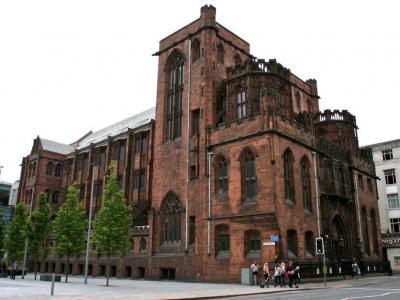
John Rylands Library was founded in the late nineteenth century by Enriqueta Rylands in memory of her husband, a prominent industrialist. Designed in a late Gothic Revival style, the building was intended to house rare books, manuscripts, and archival collections in secure and fire-resistant conditions. Its sandstone exterior, pointed arches, and carved details reflect the period’s interest in combining medieval forms with modern technology. Inside, a network of reading rooms, corridors, and staircases was arranged to protect the collections while welcoming scholars and the public.
As you enter the vestibule, look straight ahead toward the main staircase. The stone steps rise between high walls lined with carved niches and slender columns. Look up to see the lantern-like lamps and the tracery patterns set into the ceiling. Walk a few steps forward and look to your left at the carved doorframes that lead to smaller side rooms. Their stonework displays precise detailing, with leaf patterns and small figurative elements integrated into the structure.
Continue toward the historic reading room, passing through the antechamber. When you reach the centre of the long hall, pause and look to your right at the tall windows. Their stained glass filters light in soft tones, revealing the fine ribbing that supports the vaulted ceiling. Turn to your left to see the line of reading desks and the carved screens that separate the bays. If you look ahead toward the far end, a statue of John Rylands stands beneath a canopied niche, framed by stone pillars and bookcases.
The surrounding rooms and corridors hold a mixture of materials, including medieval manuscripts, early printed books, and personal papers from notable figures. Climate-controlled spaces and secure storage reflect the library’s continuing role as a research institution. The contrast between the elaborate historic architecture and the quiet working areas shows how the building has adapted over time while preserving its original purpose as a place for study, preservation, and public access to written history.
As you enter the vestibule, look straight ahead toward the main staircase. The stone steps rise between high walls lined with carved niches and slender columns. Look up to see the lantern-like lamps and the tracery patterns set into the ceiling. Walk a few steps forward and look to your left at the carved doorframes that lead to smaller side rooms. Their stonework displays precise detailing, with leaf patterns and small figurative elements integrated into the structure.
Continue toward the historic reading room, passing through the antechamber. When you reach the centre of the long hall, pause and look to your right at the tall windows. Their stained glass filters light in soft tones, revealing the fine ribbing that supports the vaulted ceiling. Turn to your left to see the line of reading desks and the carved screens that separate the bays. If you look ahead toward the far end, a statue of John Rylands stands beneath a canopied niche, framed by stone pillars and bookcases.
The surrounding rooms and corridors hold a mixture of materials, including medieval manuscripts, early printed books, and personal papers from notable figures. Climate-controlled spaces and secure storage reflect the library’s continuing role as a research institution. The contrast between the elaborate historic architecture and the quiet working areas shows how the building has adapted over time while preserving its original purpose as a place for study, preservation, and public access to written history.
2) Museum of Science and Industry (must see)
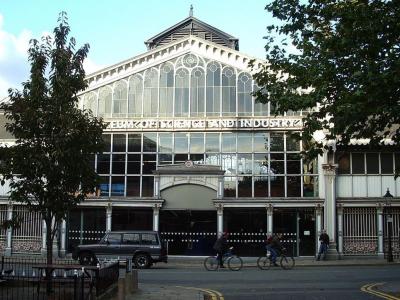
The Science and Industry Museum in Manchester is a prominent institution dedicated to showcasing the evolution of science, technology, and industry, with a special focus on the city's significant contributions to these fields. This museum is a member of the Science Museum Group, which is managed as a non-departmental public body by the Department for Digital, Culture, Media and Sport, following its amalgamation with the National Science Museum in 2012.
Housed on the historic site of the world’s first passenger railway station, Manchester Liverpool Road, which opened in 1830 as part of the Liverpool & Manchester Railway, the museum itself is a crucial part of industrial heritage. This location is further distinguished by the railway station frontage and the 1830 warehouse, both of which are Grade I listed buildings.
The museum's exhibits are extensive and diverse, covering a wide range of themes such as transport-including cars, railway locomotives, and rolling stock-along with displays on power generation methods like water, electricity, steam, and gas engines. It also explores Manchester’s advancements in sewerage and sanitation, textiles, communications, and computing.
Originally named the North Western Museum of Science and Industry, the museum opened its doors in 1969 on Grosvenor Street in Chorlton-on-Medlock, initially operating out of temporary premises. It was closely linked with the University of Manchester Institute of Science & Technology (UMIST), particularly its Department of History of Science & Technology.
In 1978, the Greater Manchester Council acquired the earliest parts of the former Liverpool Road station from British Rail, which had ceased operations in 1975. The museum then officially moved to this location in 1983, later expanding to encompass the entire former station site. As an Anchor Point of the European Route of Industrial Heritage, the museum not only preserves but also educates about the industrial advancements that have shaped modern society.
Housed on the historic site of the world’s first passenger railway station, Manchester Liverpool Road, which opened in 1830 as part of the Liverpool & Manchester Railway, the museum itself is a crucial part of industrial heritage. This location is further distinguished by the railway station frontage and the 1830 warehouse, both of which are Grade I listed buildings.
The museum's exhibits are extensive and diverse, covering a wide range of themes such as transport-including cars, railway locomotives, and rolling stock-along with displays on power generation methods like water, electricity, steam, and gas engines. It also explores Manchester’s advancements in sewerage and sanitation, textiles, communications, and computing.
Originally named the North Western Museum of Science and Industry, the museum opened its doors in 1969 on Grosvenor Street in Chorlton-on-Medlock, initially operating out of temporary premises. It was closely linked with the University of Manchester Institute of Science & Technology (UMIST), particularly its Department of History of Science & Technology.
In 1978, the Greater Manchester Council acquired the earliest parts of the former Liverpool Road station from British Rail, which had ceased operations in 1975. The museum then officially moved to this location in 1983, later expanding to encompass the entire former station site. As an Anchor Point of the European Route of Industrial Heritage, the museum not only preserves but also educates about the industrial advancements that have shaped modern society.
3) Manchester Central
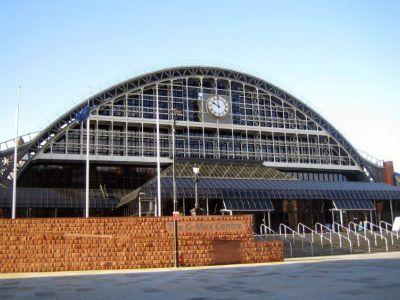
As its name suggests, Manchester Central Convention Complex is geographically and historically at the heart of the city. Situated off Deansgate in Manchester city centre, Manchester Central’s name harks back to its first incarnation, as a popular railway terminus in the city. Cross country trains ran from the station, which opened in 1880, to London Saint Pancras station. The station building has a similar design to Saint Pancras station, with a large, single span, wrought iron arched roof second only in size to its London based counterpart.
Manchester Central station closed in 1969, and was reinvented as a conference centre and concert venue. Known as the GMEX, or Greater Manchester Exhibition Centre, the building reopened in 1986, and has since played host to many members of Manchester’s rich musical history, including The Smiths, New Order and Oasis. The centre was rebranded as Manchester Central in 1997. Faced with competition from the larger Manchester Arena in a compact city centre, the venue has hosted fewer concerts in recent years.
The former station building has an extensive conference complex attached – built in 2001 and formerly known as the Manchester International Convention Centre. The building has played host to hundreds of conferences, most notably attracting political parties to hold their annual conferences there. The ruling Conservative Party held their autumn party conference at the venue in 2011.
Manchester Central station closed in 1969, and was reinvented as a conference centre and concert venue. Known as the GMEX, or Greater Manchester Exhibition Centre, the building reopened in 1986, and has since played host to many members of Manchester’s rich musical history, including The Smiths, New Order and Oasis. The centre was rebranded as Manchester Central in 1997. Faced with competition from the larger Manchester Arena in a compact city centre, the venue has hosted fewer concerts in recent years.
The former station building has an extensive conference complex attached – built in 2001 and formerly known as the Manchester International Convention Centre. The building has played host to hundreds of conferences, most notably attracting political parties to hold their annual conferences there. The ruling Conservative Party held their autumn party conference at the venue in 2011.
4) Manchester Central Library
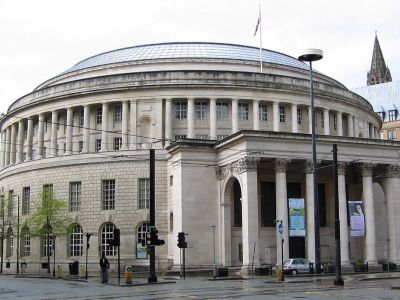
Manchester Central Library, located in Manchester, serves as the main hub for the city's library and information service. This iconic building, facing Saint Peter's Square, is a testament to the architectural vision of E. Vincent Harris. Constructed between 1930 and 1934, the design of the library draws inspiration from the Pantheon in Rome, featuring a rotunda and a domed structure. Its classical influence was well received at its opening, with one critic lauding it as a convincing argument for the "perennial applicability of the Classical canon."
The building itself is listed as grade II*, denoting it as particularly significant and more than merely of local interest. The architecture includes a two-story portico with Corinthian columns, fronting a round structure surrounded by a Tuscan colonnade. This colonnade is crowned with a band of unrelieved Portland stone, and despite the appearance of a domed roof from street level, the actual dome is concealed within, visible only from the Great Hall inside.
The interior of the library is equally majestic, with the Great Hall being a focal point on the first floor. This vast reading room is topped by the hidden dome and features original furniture designed by Harris. Inscriptions from the Book of Proverbs adorn the dome's rim, adding a literary grace to the structural elegance. The library holds the distinction of being the second-largest public lending library in Britain, following only the Library of Birmingham.
Previously, beneath the Great Hall, the library housed four floors of steel book stacks that provided 35 miles of shelving and held over one million books, accessible only to staff and controlled to preserve delicate materials. After extensive renovations from 2010 to 2014, which included the modernization and refurbishment of these spaces, many of these books have been moved to publicly accessible areas, excluding rare and fragile items.
The collections at Manchester Central Library are notable, comprising over 30 incunabula and numerous first and early editions of significant works, making it a treasure trove for both casual readers and academic researchers alike. The library reopened on March 22, 2014, after its transformative refurbishment, continuing its legacy as a cornerstone of cultural and literary life in Manchester.
The building itself is listed as grade II*, denoting it as particularly significant and more than merely of local interest. The architecture includes a two-story portico with Corinthian columns, fronting a round structure surrounded by a Tuscan colonnade. This colonnade is crowned with a band of unrelieved Portland stone, and despite the appearance of a domed roof from street level, the actual dome is concealed within, visible only from the Great Hall inside.
The interior of the library is equally majestic, with the Great Hall being a focal point on the first floor. This vast reading room is topped by the hidden dome and features original furniture designed by Harris. Inscriptions from the Book of Proverbs adorn the dome's rim, adding a literary grace to the structural elegance. The library holds the distinction of being the second-largest public lending library in Britain, following only the Library of Birmingham.
Previously, beneath the Great Hall, the library housed four floors of steel book stacks that provided 35 miles of shelving and held over one million books, accessible only to staff and controlled to preserve delicate materials. After extensive renovations from 2010 to 2014, which included the modernization and refurbishment of these spaces, many of these books have been moved to publicly accessible areas, excluding rare and fragile items.
The collections at Manchester Central Library are notable, comprising over 30 incunabula and numerous first and early editions of significant works, making it a treasure trove for both casual readers and academic researchers alike. The library reopened on March 22, 2014, after its transformative refurbishment, continuing its legacy as a cornerstone of cultural and literary life in Manchester.
5) Manchester Art Gallery
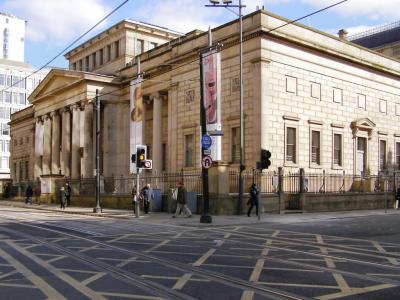
Manchester Art Gallery occupies a group of linked buildings, the oldest of which was completed in the 1820s as part of the city’s civic expansion. Its neoclassical façade, with tall columns and a broad staircase, reflects the period’s interest in presenting art and learning as public responsibilities. Later additions connect through internal corridors, creating a single complex that houses collections ranging from eighteenth-century paintings to contemporary works.
The gallery’s historic collections include British art from the Victorian and Edwardian periods, with portraits, narrative scenes, and landscapes reflecting social and industrial change. Works by the Pre-Raphaelites appear alongside examples of regional painting, allowing visitors to trace shifting ideas about craftsmanship, symbolism, and the role of artists within a rapidly growing city. Decorative arts also feature prominently, with ceramics, metalwork, and textiles displayed to show changes in design and technology.
Modern and contemporary galleries occupy the later wings. These spaces often host temporary exhibitions that explore current artistic themes or revisit earlier periods through new perspectives. The layout encourages visitors to move between different eras, highlighting connections between past and present. Clear signage and open sightlines make navigation straightforward.
Public programmes, including talks, workshops, and community projects, form a central part of the gallery’s mission. The building’s location near key transport routes helps integrate it into daily city life, drawing both regular visitors and those encountering it by chance. The mixture of historic architecture, varied collections, and active programming reflects the city’s long-standing commitment to public cultural spaces.
The gallery’s historic collections include British art from the Victorian and Edwardian periods, with portraits, narrative scenes, and landscapes reflecting social and industrial change. Works by the Pre-Raphaelites appear alongside examples of regional painting, allowing visitors to trace shifting ideas about craftsmanship, symbolism, and the role of artists within a rapidly growing city. Decorative arts also feature prominently, with ceramics, metalwork, and textiles displayed to show changes in design and technology.
Modern and contemporary galleries occupy the later wings. These spaces often host temporary exhibitions that explore current artistic themes or revisit earlier periods through new perspectives. The layout encourages visitors to move between different eras, highlighting connections between past and present. Clear signage and open sightlines make navigation straightforward.
Public programmes, including talks, workshops, and community projects, form a central part of the gallery’s mission. The building’s location near key transport routes helps integrate it into daily city life, drawing both regular visitors and those encountering it by chance. The mixture of historic architecture, varied collections, and active programming reflects the city’s long-standing commitment to public cultural spaces.
6) Gay Village
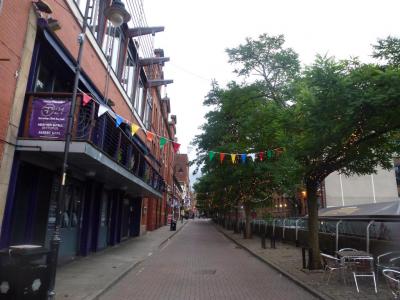
Manchester's Gay Village centered around Canal Street and nestled beside the Rochdale Canal, stands as a vibrant testament to the city's thriving LGBT community. Dubbed one of the most successful gay villages in Europe and the gay capital of the north, the area is steeped in history and modern cultural significance. The development of the village ties back to the construction of the Rochdale Canal in 1804, initially serving the bustling cotton industry and later evolving as a center for the community.
Canal Street itself, a pedestrianized hub lined with gay bars and restaurants, transforms into a lively locale for both locals and international LGBT tourists, particularly during the warmer months and at night. The street's strategic position between Minshull and Princess Streets and its view across the canal into Sackville Gardens makes it a picturesque and central spot for gatherings.
The cultural impact of Manchester's Gay Village has been magnified through the lens of media, with influential LGBT television shows such as "Bob & Rose" and "Queer as Folk," both penned by Russell T Davies, set in this locale. These shows have played a pivotal role in broadcasting the spirited community of the village to a wider audience, fostering a greater understanding and acceptance of gay culture. Davies' later works, "Cucumber" and "Banana," continued this tradition, further solidifying the village's place in popular culture.
The annual Manchester Pride festival, a highlight of the village's calendar, attracts tens of thousands of participants and spectators each August. Starting from modest beginnings in the 1980s, the festival has grown exponentially, celebrating the diversity, strength, and creativity of the community.
Additionally, the village is a crucial base for significant LGBT charities and organizations, including the LGBT Foundation and the Albert Kennedy Trust. These institutions focus on advocacy, support, and services for the community, reinforcing the village's role as a sanctuary and stronghold for LGBT individuals.
With an estimated 24,950 to 34,930 lesbian, gay, and bisexual residents, Manchester's Gay Village not only serves as a lively entertainment district but also stands as a historical and cultural beacon of acceptance and pride within the city.
Canal Street itself, a pedestrianized hub lined with gay bars and restaurants, transforms into a lively locale for both locals and international LGBT tourists, particularly during the warmer months and at night. The street's strategic position between Minshull and Princess Streets and its view across the canal into Sackville Gardens makes it a picturesque and central spot for gatherings.
The cultural impact of Manchester's Gay Village has been magnified through the lens of media, with influential LGBT television shows such as "Bob & Rose" and "Queer as Folk," both penned by Russell T Davies, set in this locale. These shows have played a pivotal role in broadcasting the spirited community of the village to a wider audience, fostering a greater understanding and acceptance of gay culture. Davies' later works, "Cucumber" and "Banana," continued this tradition, further solidifying the village's place in popular culture.
The annual Manchester Pride festival, a highlight of the village's calendar, attracts tens of thousands of participants and spectators each August. Starting from modest beginnings in the 1980s, the festival has grown exponentially, celebrating the diversity, strength, and creativity of the community.
Additionally, the village is a crucial base for significant LGBT charities and organizations, including the LGBT Foundation and the Albert Kennedy Trust. These institutions focus on advocacy, support, and services for the community, reinforcing the village's role as a sanctuary and stronghold for LGBT individuals.
With an estimated 24,950 to 34,930 lesbian, gay, and bisexual residents, Manchester's Gay Village not only serves as a lively entertainment district but also stands as a historical and cultural beacon of acceptance and pride within the city.
7) Chinatown
Manchester’s Chinatown is a compact district shaped by migration from the mid-twentieth century onward, developing into one of the largest Chinese communities in Europe. The area combines restaurants, bakeries, supermarkets, and cultural associations arranged along a network of short streets. Its character reflects layers of influence from mainland China, Hong Kong, and Southeast Asia, expressed through signage, food traditions, and community events.
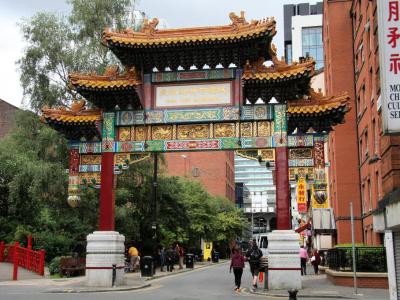
The most recognisable feature is the ornate paifang arch at the heart of the district. Built in the 1980s, it was assembled from materials crafted in China and decorated with carved dragons, guardian lions, and bright lacquered surfaces. The arch marks the symbolic entrance to the neighbourhood and serves as a focal point during celebrations. Its placement reflects the community’s effort to establish a visible cultural landmark within the wider city.
Shops and eateries cluster around the streets leading from the arch. Menus often combine Cantonese, Sichuan, regional northern dishes, and contemporary fusion options, showing the diverse backgrounds of the families who established the area. Supermarkets stock imported ingredients, herbal products, and festival goods, many arranged in narrow aisles that echo older trading patterns.
Window displays frequently change with the lunar calendar, highlighting food traditions and seasonal themes. During events such as Lunar New Year, the district becomes a gathering place for lion dances, music, and street stalls.
The most recognisable feature is the ornate paifang arch at the heart of the district. Built in the 1980s, it was assembled from materials crafted in China and decorated with carved dragons, guardian lions, and bright lacquered surfaces. The arch marks the symbolic entrance to the neighbourhood and serves as a focal point during celebrations. Its placement reflects the community’s effort to establish a visible cultural landmark within the wider city.
Shops and eateries cluster around the streets leading from the arch. Menus often combine Cantonese, Sichuan, regional northern dishes, and contemporary fusion options, showing the diverse backgrounds of the families who established the area. Supermarkets stock imported ingredients, herbal products, and festival goods, many arranged in narrow aisles that echo older trading patterns.
Window displays frequently change with the lunar calendar, highlighting food traditions and seasonal themes. During events such as Lunar New Year, the district becomes a gathering place for lion dances, music, and street stalls.
8) Northern Quarter
The Northern Quarter, located in Manchester city center, is a distinct area that emerged in the mid-1990s following a concerted effort by local stakeholders to redefine and regenerate the district. Originally conceived as part of Manchester’s broader gentrification strategy, the Northern Quarter quickly established itself as a hub of alternative and bohemian culture, and its success story has since become a model for urban revitalization.
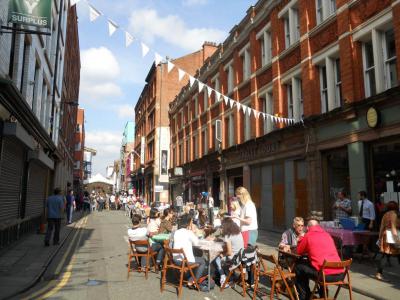
This vibrant neighborhood is known for its eclectic mix of bars, cafes, and a variety of shops, creating a lively street scene that appeals to both residents and visitors. Notable among its retail offerings is Affleck's Palace, a former department store transformed into a multi-story marketplace selling alternative clothing and various knick-knacks, encapsulating the area's quirky and unconventional spirit.
Music is a significant part of the Northern Quarter's identity. The area boasts several record shops like Piccadilly Records, Vinyl Exchange, and Eastern Bloc Records, making it a pilgrimage site for DJs and music enthusiasts. These shops contribute to a rich musical landscape that is complemented by the neighborhood's dynamic nightlife and music venues.
Fashion and creative industries also thrive in the Northern Quarter, with numerous designers, agencies, and clothing wholesalers nestled in its back streets. The presence of commercial art galleries and prominent street art adds an artistic flair, enhancing the area's reputation as a creative hub.
Additionally, the Northern Quarter's unique architectural character has made it a favored location for film and TV productions. Its streets have doubled as New York City in several notable films and series, including "Alfie," "Morbius," "Captain America: The First Avenger," and "Peaky Blinders," as well as in Guy Ritchie's "Sherlock Holmes."
This vibrant neighborhood is known for its eclectic mix of bars, cafes, and a variety of shops, creating a lively street scene that appeals to both residents and visitors. Notable among its retail offerings is Affleck's Palace, a former department store transformed into a multi-story marketplace selling alternative clothing and various knick-knacks, encapsulating the area's quirky and unconventional spirit.
Music is a significant part of the Northern Quarter's identity. The area boasts several record shops like Piccadilly Records, Vinyl Exchange, and Eastern Bloc Records, making it a pilgrimage site for DJs and music enthusiasts. These shops contribute to a rich musical landscape that is complemented by the neighborhood's dynamic nightlife and music venues.
Fashion and creative industries also thrive in the Northern Quarter, with numerous designers, agencies, and clothing wholesalers nestled in its back streets. The presence of commercial art galleries and prominent street art adds an artistic flair, enhancing the area's reputation as a creative hub.
Additionally, the Northern Quarter's unique architectural character has made it a favored location for film and TV productions. Its streets have doubled as New York City in several notable films and series, including "Alfie," "Morbius," "Captain America: The First Avenger," and "Peaky Blinders," as well as in Guy Ritchie's "Sherlock Holmes."
9) The Triangle
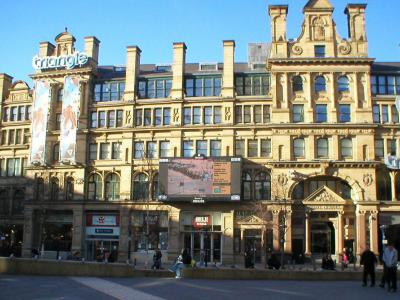
The Triangle Shopping Centre is housed in an Edwardian building on Exchange Square, in Manchester’s regenerated Millennium Quarter. There has been a commercial centre standing on this spot since 1837, when the first trading floor opened. The triangular building that contains the shopping centre was built in 1897, and opened its doors as a Corn Exchange in 1903. Like the nearby Royal Exchange, the building was a thriving centre for the trading of goods in Depression era England, and contributed to Manchester’s growth as the industrial and commercial centre of the region. After World War 2, the building fell into disuse, before becoming a bohemian flea market in the 1970s.
The building became well known for its alternative stores selling clothes and jewellery, as well as a range of cafes. Bomb damage from the IRA blast in 1996 led to extensive regeneration, and caused a great number of these shops and stalls to be relocated. Now refitted with a modern interior inside the listed Edwardian frontage, the building is home to a number of designer outlets. Famous brands like Adidas, Muji, O’Neill and Jigsaw have stores within the centre, and it is also home to local radio station Galaxy Manchester.
The building became well known for its alternative stores selling clothes and jewellery, as well as a range of cafes. Bomb damage from the IRA blast in 1996 led to extensive regeneration, and caused a great number of these shops and stalls to be relocated. Now refitted with a modern interior inside the listed Edwardian frontage, the building is home to a number of designer outlets. Famous brands like Adidas, Muji, O’Neill and Jigsaw have stores within the centre, and it is also home to local radio station Galaxy Manchester.
10) Manchester Cathedral (must see)
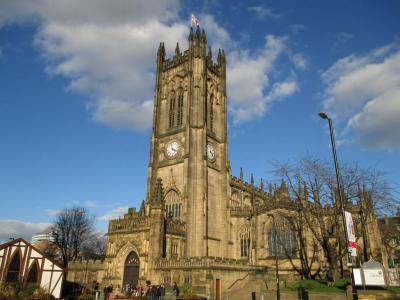
Manchester Cathedral developed gradually over many centuries, with much of its present form dating from the fifteenth century. Built largely in a late medieval English style, it first served as a collegiate church before becoming a cathedral in the nineteenth century. The building is characterised by its broad nave, extensive timber structure, and finely worked furnishings that reflect both religious ceremony and civic prestige.
Although the cathedral suffered damage during the Second World War, careful restoration preserved its historic layout while introducing thoughtfully designed modern elements that sit alongside the medieval fabric of the building.
As you enter the nave, walk straight ahead toward the choir screen and continue into the quire, where you will find the medieval quire stalls and misericords, the most celebrated artistic feature of the interior. Look to either side to see the tall wooden stall fronts and layered canopy work, whose delicate tracery and moulding reveal the craftsmanship of the fifteenth century. Now look beneath the folding seats to discover the misericords. These small but expressive carvings depict animals, foliage, moral tales, and humorous scenes drawn from everyday medieval life. Their sharp lines and lively figures offer a rare insight into the imagination, values, and storytelling traditions of the period.
Return to the nave and pause in the central aisle. When you look upward, the hammerbeam roof becomes the dominant feature of the space. The great timber beams project outward across the width of the nave, creating a bold structural rhythm while also supporting carved angels and decorative bosses. This roof is one of the most impressive surviving elements of the medieval church and gives the interior much of its warmth and character, contrasting with the pale stone of the walls and arcades below.
From here, continue along the side aisles toward the chapels to encounter the cathedral’s modern stained-glass windows, installed during the post-war reconstruction. The most striking of these is the Fire Window, whose vivid colours and abstract forms introduce a strong visual contrast to the surrounding medieval architecture.
Although the cathedral suffered damage during the Second World War, careful restoration preserved its historic layout while introducing thoughtfully designed modern elements that sit alongside the medieval fabric of the building.
As you enter the nave, walk straight ahead toward the choir screen and continue into the quire, where you will find the medieval quire stalls and misericords, the most celebrated artistic feature of the interior. Look to either side to see the tall wooden stall fronts and layered canopy work, whose delicate tracery and moulding reveal the craftsmanship of the fifteenth century. Now look beneath the folding seats to discover the misericords. These small but expressive carvings depict animals, foliage, moral tales, and humorous scenes drawn from everyday medieval life. Their sharp lines and lively figures offer a rare insight into the imagination, values, and storytelling traditions of the period.
Return to the nave and pause in the central aisle. When you look upward, the hammerbeam roof becomes the dominant feature of the space. The great timber beams project outward across the width of the nave, creating a bold structural rhythm while also supporting carved angels and decorative bosses. This roof is one of the most impressive surviving elements of the medieval church and gives the interior much of its warmth and character, contrasting with the pale stone of the walls and arcades below.
From here, continue along the side aisles toward the chapels to encounter the cathedral’s modern stained-glass windows, installed during the post-war reconstruction. The most striking of these is the Fire Window, whose vivid colours and abstract forms introduce a strong visual contrast to the surrounding medieval architecture.
11) The Old Wellington Inn
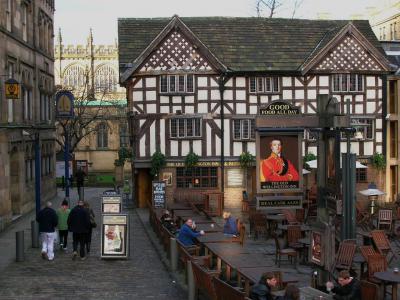
This unique half-timbered pub in Manchester city centre, steeped in history, has been around since 1552. Originally built next to the Market Square, on what is now Market Street, the building was moved 300 metres (980 feet) from its original site towards Manchester Cathedral, to form Shambles Square, as part of the redevelopment programme completed in 1999.
Nicknamed ‘The Old Welly’, this is the oldest building of its kind in Manchester and, in 1554, is was made part of the draper's shop, owned by the Byrom family. It was here that in 1692 the writer John Byrom, inventor of an early form of shorthand, was born. In 1830, the building became a licensed public house, first known as the Vintners Arms, and later the Kenyon Vaults. By 1865, the ground floor of the building was taken up by the Wellington Inn, while the upper floors were used by makers of mathematical and optical instruments. In 1897, the upper floors accommodated a fishing tackle shop, which was called very much so – "Ye Olde Fyshing Tackle Shoppe".
In the 1970s, along with the Old Shambles, the Inn was raised by 1.4 metres. In the aftermath of the 1996 Manchester bombing which left the building damaged and took nearly a year and £500,000 to repair, it was decided that it should be dismantled and rebuilt anew nearby. Today, The Old Wellington delights visitors with a rich choice of great pub food, real ales and exciting range of premium gins. If all this sounds like your kind of fun, make sure to pop in and check out this ancient monument of a pub, while in Manchester!
Nicknamed ‘The Old Welly’, this is the oldest building of its kind in Manchester and, in 1554, is was made part of the draper's shop, owned by the Byrom family. It was here that in 1692 the writer John Byrom, inventor of an early form of shorthand, was born. In 1830, the building became a licensed public house, first known as the Vintners Arms, and later the Kenyon Vaults. By 1865, the ground floor of the building was taken up by the Wellington Inn, while the upper floors were used by makers of mathematical and optical instruments. In 1897, the upper floors accommodated a fishing tackle shop, which was called very much so – "Ye Olde Fyshing Tackle Shoppe".
In the 1970s, along with the Old Shambles, the Inn was raised by 1.4 metres. In the aftermath of the 1996 Manchester bombing which left the building damaged and took nearly a year and £500,000 to repair, it was decided that it should be dismantled and rebuilt anew nearby. Today, The Old Wellington delights visitors with a rich choice of great pub food, real ales and exciting range of premium gins. If all this sounds like your kind of fun, make sure to pop in and check out this ancient monument of a pub, while in Manchester!
12) Royal Exchange Theatre
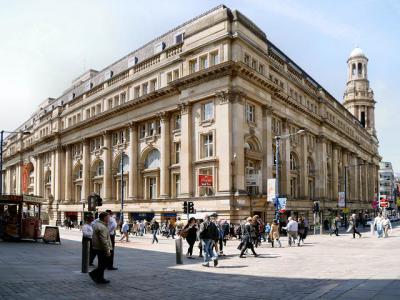
The Royal Exchange Theatre occupies a former commodities trading hall built in the nineteenth century, when the city was a major centre for the global cotton industry. The original structure is large and open, supported by cast-iron columns and covered by a high glass dome that once allowed natural light onto the bustling trading floor. Its scale reflects the economic forces that shaped the city’s development, and much of the historic architecture remains visible today.
In the late twentieth century, the building was adapted for theatrical use through the installation of a modern, self-contained performance module. This seven-sided structure sits within the old hall like a freestanding chamber, supported on legs so that the historic interior remains largely untouched. Its circular auditorium brings the audience close to the stage, creating an intimate setting that contrasts with the vast volume of the surrounding hall. The contrast between the glass-and-metal module and the older ironwork highlights the meeting of industrial heritage and contemporary design.
Public areas around the theatre retain the character of the former exchange. The high ceilings, long sightlines, and surviving decorative details show how traders once moved through the space in large numbers. Today these areas serve as foyers, exhibition spaces, and gathering points before performances, illustrating how the building’s function has shifted while its structure endures.The theatre’s programme spans classical plays, contemporary writing, and more experimental work, showing how it supports both established forms and new approaches.
In the late twentieth century, the building was adapted for theatrical use through the installation of a modern, self-contained performance module. This seven-sided structure sits within the old hall like a freestanding chamber, supported on legs so that the historic interior remains largely untouched. Its circular auditorium brings the audience close to the stage, creating an intimate setting that contrasts with the vast volume of the surrounding hall. The contrast between the glass-and-metal module and the older ironwork highlights the meeting of industrial heritage and contemporary design.
Public areas around the theatre retain the character of the former exchange. The high ceilings, long sightlines, and surviving decorative details show how traders once moved through the space in large numbers. Today these areas serve as foyers, exhibition spaces, and gathering points before performances, illustrating how the building’s function has shifted while its structure endures.The theatre’s programme spans classical plays, contemporary writing, and more experimental work, showing how it supports both established forms and new approaches.
