Custom Walk in London, England by peress_ilan_52b79 created on 2026-02-23
Guide Location: England » London
Guide Type: Custom Walk
# of Sights: 11
Tour Duration: 2 Hour(s)
Travel Distance: 4.2 Km or 2.6 Miles
Share Key: 83J2C
Guide Type: Custom Walk
# of Sights: 11
Tour Duration: 2 Hour(s)
Travel Distance: 4.2 Km or 2.6 Miles
Share Key: 83J2C
How It Works
Please retrieve this walk in the GPSmyCity app. Once done, the app will guide you from one tour stop to the next as if you had a personal tour guide. If you created the walk on this website or come to the page via a link, please follow the instructions below to retrieve the walk in the app.
Retrieve This Walk in App
Step 1. Download the app "GPSmyCity: Walks in 1K+ Cities" on Apple App Store or Google Play Store.



Step 2. In the GPSmyCity app, download(or launch) the guide "London Map and Walking Tours".
Step 3. Tap the menu button located at upper right corner of the "Walks" screen and select "Retrieve custom walk". Enter the share key: 83J2C
1) St. James's Palace
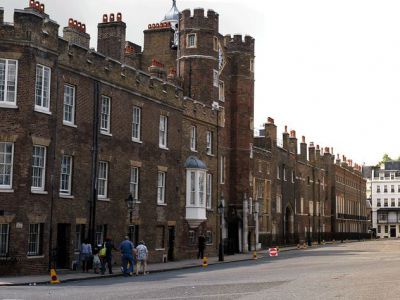
Constructed in the 1530s by Henry VIII, who also laid out the hunting grounds that eventually became Saint James's Park, Saint James's Palace marked the first royal dwelling on this particular parcel of land, located to the south of Piccadilly and to the north of The Mall. Following the devastating fire that engulfed Whitehall Palace in 1698, all of London's attention shifted to this palace, which assumed the role of the new royal residence. Throughout the 18th and 19th centuries, the surrounding area grew into a prestigious residential district, leading to the disappearance of older estates as mansions sprouted and streets were carefully planned for the aristocracy.
In 1952, Queen Elizabeth II delivered her first address as monarch from this historic location, and foreign ambassadors continue to hold official accreditation to the Court of Saint James's. While the palace houses various royal chambers and administrative offices, it remains off-limits to the general public. Nevertheless, the unassuming Tudor facade is worth a brief detour from The Mall, and the Friary Court in front provides an impressive backdrop for Trooping the Colour, a component of the Queen's official birthday festivities.
Visitors often seize the opportunity to capture a photo of the guardsman in scarlet attire standing watch outside the imposing Tudor gateway. It's worth noting that the Changing the Guard ceremony at this location occurs solely on days when there is a changing of the guard at Buckingham Palace.
In 1952, Queen Elizabeth II delivered her first address as monarch from this historic location, and foreign ambassadors continue to hold official accreditation to the Court of Saint James's. While the palace houses various royal chambers and administrative offices, it remains off-limits to the general public. Nevertheless, the unassuming Tudor facade is worth a brief detour from The Mall, and the Friary Court in front provides an impressive backdrop for Trooping the Colour, a component of the Queen's official birthday festivities.
Visitors often seize the opportunity to capture a photo of the guardsman in scarlet attire standing watch outside the imposing Tudor gateway. It's worth noting that the Changing the Guard ceremony at this location occurs solely on days when there is a changing of the guard at Buckingham Palace.
2) Clarence House
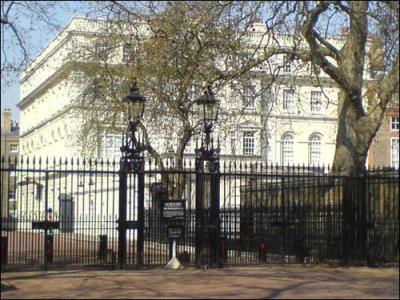
Clarence House, which served as the Queen Mother's London residence for nearly five decades until her passing in 2002, is now the home of Charles, the Prince of Wales, and his spouse, Camilla, the Duchess of Cornwall. This Regency mansion, constructed in 1828 by architect John Nash for the Duke of Clarence (who later became King William IV), was built because the Duke found the nearby Saint James's Palace too cramped for his tastes. However, post-World War II renovations have resulted in little of Nash's original design remaining.
If you wish to visit Clarence House, you must book a guided tour in advance (as they are in high demand), and be prepared for security checks and restrictions similar to those at airports. Besides getting a glimpse behind the scenes of a functioning royal residence, the primary attraction is the display of 20th-century British paintings by artists such as Augustus John and Walter Sickert.
If you wish to visit Clarence House, you must book a guided tour in advance (as they are in high demand), and be prepared for security checks and restrictions similar to those at airports. Besides getting a glimpse behind the scenes of a functioning royal residence, the primary attraction is the display of 20th-century British paintings by artists such as Augustus John and Walter Sickert.
3) St. James's Park (must see)
Once upon a royal time, a queen casually asked her courtier how much it would cost to kick the public out of St. James’s Park. The courtier, with nerves of steel and a flair for drama, replied, “Only your crown, ma’am.” And that pretty much sums up the importance of this place-mess with the people’s park, and you’re one coronation short of a monarchy.
Wedged gracefully between three heavy-hitters-Buckingham Palace, St. James’s Palace, and the political power zone of Westminster-St. James’s Park is London’s oldest and arguably most charming green retreat. Back in 1532, Henry VIII thought this marsh was in great need of deer, so he snapped it up for his very own deer nursery. Later, during the reign of James I, the land was drained, and an aviary was installed (giving rise to the name Birdcage Walk), along with a zoo that featured exotic species like crocodiles, camels, and even an elephant.
Then came Charles II, freshly returned from exile in France with some serious garden envy after ogling Versailles. He rolled up his sleeves and transformed the park into a regal playground with neat avenues, fruit trees, a canal, and a whole zoo of goats, sheep, and deer casually grazing the lawns. By the 1700s, the park had taken a turn for the scandalous, becoming a preferred hunting ground for the affluent individuals seeking... nighttime companions.
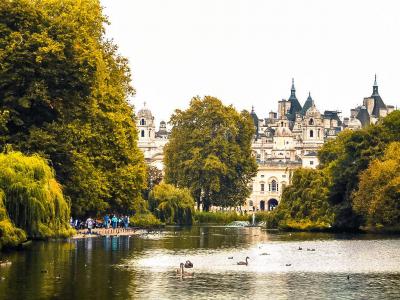
In the 19th century, the romantic stylings of John Nash (one of the foremost British architects of the Georgian and Regency eras) gave the park its current look-a picturesque escape with winding paths and dreamy views. Peer down the lake toward Buckingham Palace, and you can easily imagine having wandered onto a countryside estate-until a pelican flaps by.
Speaking of birds, Duck Island at the lake’s eastern tip is a feathery haven for pelicans, swans (King-owned, naturally), geese, and ducks. From March to October, deck chairs appear like sun-seeking mushrooms-perfect for office lunch breaks or tuning into a bandstand performance at midday.
Evenings are a delight here too, as the lake reflects the glowing silhouettes of Westminster Abbey and the Parliament buildings. It’s part fairy tale, part postcard, and entirely worth a visit. Lush lawns, birds with better titles than you, and the occasional live performance. Basically, it’s where London goes to exhale...
Wedged gracefully between three heavy-hitters-Buckingham Palace, St. James’s Palace, and the political power zone of Westminster-St. James’s Park is London’s oldest and arguably most charming green retreat. Back in 1532, Henry VIII thought this marsh was in great need of deer, so he snapped it up for his very own deer nursery. Later, during the reign of James I, the land was drained, and an aviary was installed (giving rise to the name Birdcage Walk), along with a zoo that featured exotic species like crocodiles, camels, and even an elephant.
Then came Charles II, freshly returned from exile in France with some serious garden envy after ogling Versailles. He rolled up his sleeves and transformed the park into a regal playground with neat avenues, fruit trees, a canal, and a whole zoo of goats, sheep, and deer casually grazing the lawns. By the 1700s, the park had taken a turn for the scandalous, becoming a preferred hunting ground for the affluent individuals seeking... nighttime companions.
In the 19th century, the romantic stylings of John Nash (one of the foremost British architects of the Georgian and Regency eras) gave the park its current look-a picturesque escape with winding paths and dreamy views. Peer down the lake toward Buckingham Palace, and you can easily imagine having wandered onto a countryside estate-until a pelican flaps by.
Speaking of birds, Duck Island at the lake’s eastern tip is a feathery haven for pelicans, swans (King-owned, naturally), geese, and ducks. From March to October, deck chairs appear like sun-seeking mushrooms-perfect for office lunch breaks or tuning into a bandstand performance at midday.
Evenings are a delight here too, as the lake reflects the glowing silhouettes of Westminster Abbey and the Parliament buildings. It’s part fairy tale, part postcard, and entirely worth a visit. Lush lawns, birds with better titles than you, and the occasional live performance. Basically, it’s where London goes to exhale...
4) Buckingham Palace (must see)
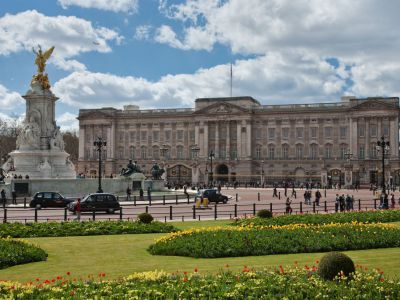
The postcard-perfect face of the British monarchy, Buckingham Palace is possibly the world’s fanciest “office.” What began in 1703 as a cozy townhouse for the Duke of Buckingham (hence the name) ended up becoming royal property in 1761 when King George III bought it for his wife, Queen Charlotte. By 1837, Queen Victoria had officially moved in, setting up camp and turning it into the headquarters of royal business and the heart of Britain's ceremonial life ever since.
Today, the palace packs a whopping 775 rooms, including 52 royal and guest bedrooms, 78 bathrooms (because clearly, you never know when you’ll need a backup loo), and countless other rooms fit for everything from crown-polishing to state banquets. While most of these royal spaces are strictly off-limits, commoners-like us, the curious public-can sneak a peek during special visiting seasons, mainly August and September, plus select days in winter and spring.
Step inside the palace’s 19 State Rooms and prepare to have your jaw royally dropped. Here, we’re talking chandeliers that could double as UFOs, lavish gold trim, and masterpieces by Rembrandt and Rubens just casually hanging around. You’ll stroll through the Throne Room (cue the imaginary fanfare), the Ballroom where knighthoods are handed out like royal gold stars, the Grand Staircase, and a variety of drawing rooms, each with its own personality-from the Blue Drawing Room’s stately charm to the Music Room’s lapis columns and the gleaming White Drawing Room. Don’t skip the State Dining Room either-this is where the portraits watch you more than you watch them.
Outside, the Changing of the Guard steals the show with its precision marching, bearskin hats, and musical flair. It’s essentially a military ballet, free of charge-but do arrive early for the best view, as everyone and their selfie stick wants in.
Right next door, the Queen’s Gallery serves up rotating exhibits from the Royal Collection, including priceless paintings, sparkling jewels, and historic treasures galore. A few steps away, the Royal Mews stables show off the royal horses and carriages, because royalty of all people needs a stylish ride.
Tip:
Snag a timed-entry ticket (they’re released in 15-minute waves), and if you’ve got time, tack on a garden tour for some fresh air and manicured perfection. Give yourself two hours-minimum-because once you step into Buckingham Palace, you’ll want to soak up every royal second.
Today, the palace packs a whopping 775 rooms, including 52 royal and guest bedrooms, 78 bathrooms (because clearly, you never know when you’ll need a backup loo), and countless other rooms fit for everything from crown-polishing to state banquets. While most of these royal spaces are strictly off-limits, commoners-like us, the curious public-can sneak a peek during special visiting seasons, mainly August and September, plus select days in winter and spring.
Step inside the palace’s 19 State Rooms and prepare to have your jaw royally dropped. Here, we’re talking chandeliers that could double as UFOs, lavish gold trim, and masterpieces by Rembrandt and Rubens just casually hanging around. You’ll stroll through the Throne Room (cue the imaginary fanfare), the Ballroom where knighthoods are handed out like royal gold stars, the Grand Staircase, and a variety of drawing rooms, each with its own personality-from the Blue Drawing Room’s stately charm to the Music Room’s lapis columns and the gleaming White Drawing Room. Don’t skip the State Dining Room either-this is where the portraits watch you more than you watch them.
Outside, the Changing of the Guard steals the show with its precision marching, bearskin hats, and musical flair. It’s essentially a military ballet, free of charge-but do arrive early for the best view, as everyone and their selfie stick wants in.
Right next door, the Queen’s Gallery serves up rotating exhibits from the Royal Collection, including priceless paintings, sparkling jewels, and historic treasures galore. A few steps away, the Royal Mews stables show off the royal horses and carriages, because royalty of all people needs a stylish ride.
Tip:
Snag a timed-entry ticket (they’re released in 15-minute waves), and if you’ve got time, tack on a garden tour for some fresh air and manicured perfection. Give yourself two hours-minimum-because once you step into Buckingham Palace, you’ll want to soak up every royal second.
5) Buckingham Palace Gift Shop
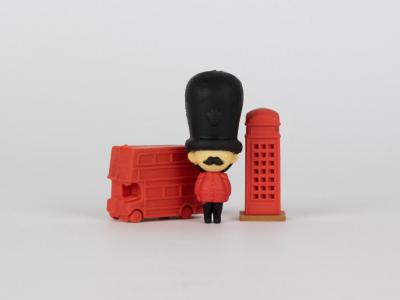
Just a short distance from the Royal residence, this gift store offers official royal merchandise, making it a must-visit for those with a penchant for all things regal during their London trip. You'll find a wide array of high-quality products, including porcelain and textiles, offering visitors a close-to-authentic experience of living like royalty.
Among the items, you'll also discover the former Queen's preferred chocolate, royal shower caps, regal hand cream, and numerous other items used by the British royal family. Notably, the shop prominently features the Queen's beloved Corgis, her favorite dog breed. The staff is exceptionally welcoming and helpful, providing clear guidance and recommendations.
Among the items, you'll also discover the former Queen's preferred chocolate, royal shower caps, regal hand cream, and numerous other items used by the British royal family. Notably, the shop prominently features the Queen's beloved Corgis, her favorite dog breed. The staff is exceptionally welcoming and helpful, providing clear guidance and recommendations.
6) Royal Mews Shop
What to buy here: Commemorative Pillbox
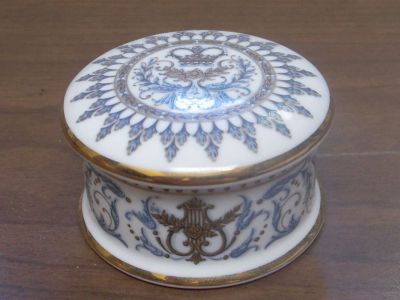
This tastefully designed and decorated pillbox is part of a series of commemorative items created by Buckingham Palace to honor the wedding of Prince William to Catherine Middleton on April 29, 2011. The official Royal Wedding china collection is exclusively available at Buckingham Palace shops and serves as a truly exceptional keepsake and collectible gift. The pillbox has a diameter of 2½ inches and stands one inch high. Its removable lid features the intertwined initials of the couple in gold and silver, crowned with the royal coronet.
Crafted in Stoke-on-Trent's Potteries region, this collection is meticulously handmade using techniques that have remained unchanged for over 250 years. Following the decoration and embellishment process, the pillbox undergoes the addition of multiple layers of burnished gold and platinum before receiving a final layer of 22-carat gold, all applied by hand. For secure storage and presentation, the pillbox is supplied in an attractive presentation box and carefully wrapped in tissue paper adorned with designs inspired by the wall hangings found in Clarence House, one of the royal residences. This exquisite piece serves as a meaningful memento that is destined to become a cherished family heirloom. Price: £25.
This tastefully designed and decorated pillbox is part of a series of commemorative items created by Buckingham Palace to honor the wedding of Prince William to Catherine Middleton on April 29, 2011. The official Royal Wedding china collection is exclusively available at Buckingham Palace shops and serves as a truly exceptional keepsake and collectible gift. The pillbox has a diameter of 2½ inches and stands one inch high. Its removable lid features the intertwined initials of the couple in gold and silver, crowned with the royal coronet.
Crafted in Stoke-on-Trent's Potteries region, this collection is meticulously handmade using techniques that have remained unchanged for over 250 years. Following the decoration and embellishment process, the pillbox undergoes the addition of multiple layers of burnished gold and platinum before receiving a final layer of 22-carat gold, all applied by hand. For secure storage and presentation, the pillbox is supplied in an attractive presentation box and carefully wrapped in tissue paper adorned with designs inspired by the wall hangings found in Clarence House, one of the royal residences. This exquisite piece serves as a meaningful memento that is destined to become a cherished family heirloom. Price: £25.
7) Royal Mews
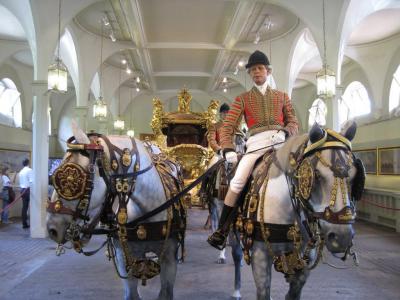
Explore an opulent display of royalty by paying a visit to the Royal Mews. Designed by John Nash in 1825, the stables and coach houses house the royal family's state carriages, along with their distinctive horses, ridden by postilions wearing red-and-gold attire and wigs. For families with children, there are activities to enjoy, and from April to October, complimentary guided tours are offered.
The Mews boasts a vast assortment of coaches, motorcars, and carriages, including Queen Victoria's Irish state coach, acquired for the State Opening of Parliament; the 1902 royal landau, an open-top carriage used to provide the public with a prime view of newlywed royal couples; and the glass coach, also employed in royal weddings. The most recent addition is the 2012 Diamond Jubilee State Coach, an elegant black-and-gold creation featuring a concealed camera for filming during processions.
The collection's crowning jewel is the Gold State Coach, a mobile masterpiece created for George III in 1762. Adorned with 22-carat gilding and embellished with panel paintings by Cipriani, this four-tonne behemoth is supported by axles featuring four life-sized Tritons blowing conches. Eight horses are required to pull it, and the experience reportedly left Queen Victoria feeling quite queasy; as a result, it has only been used for coronations and jubilees since.
The Mews boasts a vast assortment of coaches, motorcars, and carriages, including Queen Victoria's Irish state coach, acquired for the State Opening of Parliament; the 1902 royal landau, an open-top carriage used to provide the public with a prime view of newlywed royal couples; and the glass coach, also employed in royal weddings. The most recent addition is the 2012 Diamond Jubilee State Coach, an elegant black-and-gold creation featuring a concealed camera for filming during processions.
The collection's crowning jewel is the Gold State Coach, a mobile masterpiece created for George III in 1762. Adorned with 22-carat gilding and embellished with panel paintings by Cipriani, this four-tonne behemoth is supported by axles featuring four life-sized Tritons blowing conches. Eight horses are required to pull it, and the experience reportedly left Queen Victoria feeling quite queasy; as a result, it has only been used for coronations and jubilees since.
8) Wellington Arch
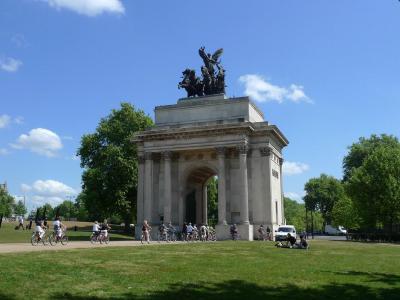
Located across from the residence of the Duke of Wellington, Apsley House, stands this impressive stone arch, overseeing the bustling traffic at Hyde Park Corner. Crafted by Decimus Burton and finalized in 1828, it was conceived as a grand gateway to the western side of London, mirroring the design of another iconic structure, Marble Arch. Both arches serve as triumphant memorials commemorating Britain's victory over France in the Napoleonic Wars.
Crowning the structure, you'll find the Angel of Peace descending upon a quadriga, a four-horse chariot representing war. Inside, three levels house both permanent and temporary exhibitions that unveil the arch's history, including its previous role as London's smallest postwar police station. Two additional floors offer a more extensive exhibition focusing on the Battle of Waterloo.
For a modest perspective of Buckingham Palace gardens, Hyde Park Corner, and the bustling traffic below, you can also take a leisurely stroll onto the external balconies near the top of the monument.
Crowning the structure, you'll find the Angel of Peace descending upon a quadriga, a four-horse chariot representing war. Inside, three levels house both permanent and temporary exhibitions that unveil the arch's history, including its previous role as London's smallest postwar police station. Two additional floors offer a more extensive exhibition focusing on the Battle of Waterloo.
For a modest perspective of Buckingham Palace gardens, Hyde Park Corner, and the bustling traffic below, you can also take a leisurely stroll onto the external balconies near the top of the monument.
9) Harvey Nichols
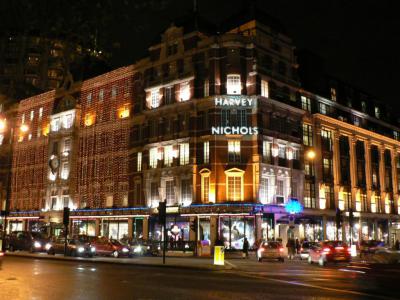
While Harrods remains a popular destination for visiting tourists, local fashion enthusiasts prefer Harvey Nichols, affectionately known as "Harvey Nicks", a store that was once a favorite of Princess Diana and later frequented by Duchess Kate. The women's clothing and accessory sections are truly exceptional, showcasing renowned designers like Tom Ford, Loewe, Roland Mouret, Valentino, Tory Burch, and an array of other esteemed fashion labels. The furniture and home decor offerings are equally exquisite, albeit on the pricier side, although they do become more affordable during the biannual sales in January and July.
The 5th floor of Harvey Nichols is a veritable haven for food enthusiasts, housing a gourmet grocery store, an upscale bar (the ideal spot for socializing and being seen), an outdoor terrace, and a vibrant café. To ensure you look as fresh as your newly acquired purchases, the Beauty Lounge offers a menu of treatments featuring renowned brands like La Prairie, Sisley, and La Mer. These treatments encompass makeovers, LED facials, cryotherapy, thermotherapy, laser procedures, as well as hair, nail, and eyebrow styling stations.
The 5th floor of Harvey Nichols is a veritable haven for food enthusiasts, housing a gourmet grocery store, an upscale bar (the ideal spot for socializing and being seen), an outdoor terrace, and a vibrant café. To ensure you look as fresh as your newly acquired purchases, the Beauty Lounge offers a menu of treatments featuring renowned brands like La Prairie, Sisley, and La Mer. These treatments encompass makeovers, LED facials, cryotherapy, thermotherapy, laser procedures, as well as hair, nail, and eyebrow styling stations.
10) Harrods (must see)
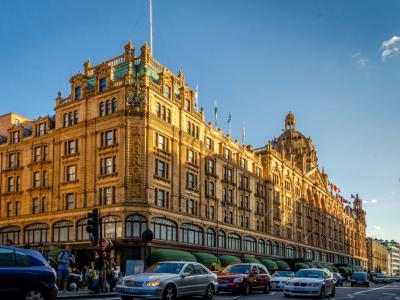
Today, Harrods is primarily frequented by window-shopping tourists and affluent international visitors, with fewer of the budget-conscious locals in sight. It's best regarded as the world's largest, most upscale, and most extravagant shopping destination, akin to a colossal mall. Spanning over four acres of retail space across seven floors, it boasts a comprehensive collection of luxury brands that could easily occupy a shopper's entire day. Grand in scale yet retaining an air of sophistication, Harrods offers a vast range of products, including clothing, electronics, jewelry, sporting gear, pet accessories, toys, food and drink, health and beauty items, packaged gifts, stationery, housewares, home appliances, furniture, and much more.
On the ground floor, you'll discover the Food Halls, featuring Edwardian tiled walls, imaginative and extravagant displays, and staff adorned in period attire-a far cry from your typical neighborhood supermarket.
Take a ride on the Egyptian Escalator, adorned with pharaoh-themed sconces, papyrus-shaped lamps, and balconies adorned with hieroglyphics, up to the 3rd floor. Here, you'll find an extraordinary toy department, complete with an impressive Harry Potter section and extravagant items like child-sized luxury pedal cars-an ideal gift for the child who seemingly has everything.
Harrods doesn't skimp on dining options either, boasting more than two dozen eateries scattered throughout the store. Choices range from a sushi bar, deli, and pizzeria to a Ladurée macaron parlor and a burger bar.
While some individuals may deem Harrods as overpriced and elitist, it remains a unique department store, distinguished by its very own gift shop and even a Dale Chihuly chandelier, situated near the exit of door 3.
On the ground floor, you'll discover the Food Halls, featuring Edwardian tiled walls, imaginative and extravagant displays, and staff adorned in period attire-a far cry from your typical neighborhood supermarket.
Take a ride on the Egyptian Escalator, adorned with pharaoh-themed sconces, papyrus-shaped lamps, and balconies adorned with hieroglyphics, up to the 3rd floor. Here, you'll find an extraordinary toy department, complete with an impressive Harry Potter section and extravagant items like child-sized luxury pedal cars-an ideal gift for the child who seemingly has everything.
Harrods doesn't skimp on dining options either, boasting more than two dozen eateries scattered throughout the store. Choices range from a sushi bar, deli, and pizzeria to a Ladurée macaron parlor and a burger bar.
While some individuals may deem Harrods as overpriced and elitist, it remains a unique department store, distinguished by its very own gift shop and even a Dale Chihuly chandelier, situated near the exit of door 3.
11) V&A - Victoria and Albert Museum (must see)
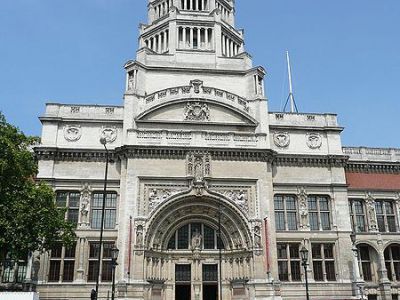
Familiarly known as the V&A, this expansive museum boasts a collection of over two million items displayed across 145 galleries, dedicated to the applied arts spanning all disciplines, historical periods, and nationalities. Originally established as the South Kensington Museum in 1857, it was later renamed in 1899 in honor of Queen Victoria's late husband. Over the years, it has evolved into one of the nation's most cherished cultural institutions, showcasing both prominent temporary exhibitions and an impressive permanent collection. Instead of organizing its collections strictly by era, many of the V&A's displays are categorized by type, including textiles, sculpture, jewelry, and more.
The advantage of this categorization system becomes particularly evident in the Fashion Gallery (Room 40), where you can view formal 18th-century court attire displayed alongside the contemporary haute couture creations of modern designers. Elsewhere, the British Galleries provide a comprehensive survey of British art and design spanning from 1500 to 1900, housing rare and exquisite artifacts such as the Tudor Great Bed of Ware (immortalized in Shakespeare's "Twelfth Night") and silks woven by Huguenot refugees in Spitalfields. Among the painstakingly reconstructed rooms are the opulent rococo Norfolk House Music Room and the gracefully refined Henrietta St. Drawing Room, originally designed in 1722.
The Asian Galleries house a treasure trove of artifacts, including a remarkable collection of intricate samurai armor in the Japanese Gallery (Room 44). Works from China, Korea, and the Islamic Middle East have dedicated displays, and there's a thematic gallery featuring Buddhist sculptures from various regions and periods. The Europe Gallery brings together over 1,100 objects created between 1600 and 1815, while the Medieval and Renaissance galleries offer an extensive collection of European art and culture spanning from 300 to 1600, rivaling those found in Italy.
An entrance off Exhibition Road provides access to Britain's first porcelain-tiled public courtyard, doubling as a venue for contemporary installations and housing a glass-fronted café. A dedicated photography center contains books, photographic equipment, and an impressive collection of over 270,000 prints formerly held by the Royal Photographic Society, complementing the museum's existing collection of over 500,000 photos. In recognition of their donation of approximately 7,000 photographs by 20th-century masters, a room within the center has been named the Elton John and David Furnish Gallery.
Tip:
To assist guests in exploring this expansive museum, there is an introductory one-hour tour offered. Given the intricate layout of the museum, it is strongly recommended that visitors, at the very least, utilize the provided complimentary map.
The advantage of this categorization system becomes particularly evident in the Fashion Gallery (Room 40), where you can view formal 18th-century court attire displayed alongside the contemporary haute couture creations of modern designers. Elsewhere, the British Galleries provide a comprehensive survey of British art and design spanning from 1500 to 1900, housing rare and exquisite artifacts such as the Tudor Great Bed of Ware (immortalized in Shakespeare's "Twelfth Night") and silks woven by Huguenot refugees in Spitalfields. Among the painstakingly reconstructed rooms are the opulent rococo Norfolk House Music Room and the gracefully refined Henrietta St. Drawing Room, originally designed in 1722.
The Asian Galleries house a treasure trove of artifacts, including a remarkable collection of intricate samurai armor in the Japanese Gallery (Room 44). Works from China, Korea, and the Islamic Middle East have dedicated displays, and there's a thematic gallery featuring Buddhist sculptures from various regions and periods. The Europe Gallery brings together over 1,100 objects created between 1600 and 1815, while the Medieval and Renaissance galleries offer an extensive collection of European art and culture spanning from 300 to 1600, rivaling those found in Italy.
An entrance off Exhibition Road provides access to Britain's first porcelain-tiled public courtyard, doubling as a venue for contemporary installations and housing a glass-fronted café. A dedicated photography center contains books, photographic equipment, and an impressive collection of over 270,000 prints formerly held by the Royal Photographic Society, complementing the museum's existing collection of over 500,000 photos. In recognition of their donation of approximately 7,000 photographs by 20th-century masters, a room within the center has been named the Elton John and David Furnish Gallery.
Tip:
To assist guests in exploring this expansive museum, there is an introductory one-hour tour offered. Given the intricate layout of the museum, it is strongly recommended that visitors, at the very least, utilize the provided complimentary map.
