Custom Walk in Adelaide, Australia by mmcginty_afb47 created on 2026-03-02
Guide Location: Australia » Adelaide
Guide Type: Custom Walk
# of Sights: 6
Tour Duration: 1 Hour(s)
Travel Distance: 2.6 Km or 1.6 Miles
Share Key: 7WNDM
Guide Type: Custom Walk
# of Sights: 6
Tour Duration: 1 Hour(s)
Travel Distance: 2.6 Km or 1.6 Miles
Share Key: 7WNDM
How It Works
Please retrieve this walk in the GPSmyCity app. Once done, the app will guide you from one tour stop to the next as if you had a personal tour guide. If you created the walk on this website or come to the page via a link, please follow the instructions below to retrieve the walk in the app.
Retrieve This Walk in App
Step 1. Download the app "GPSmyCity: Walks in 1K+ Cities" on Apple App Store or Google Play Store.



Step 2. In the GPSmyCity app, download(or launch) the guide "Adelaide Map and Walking Tours".
Step 3. Tap the menu button located at upper right corner of the "Walks" screen and select "Retrieve custom walk". Enter the share key: 7WNDM
1) Colonel's Light Vision Statue
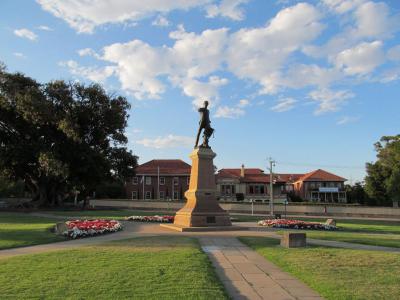
The Colonel Light Vision Statue in Adelaide commemorates Colonel William Light (1786–1839), a distinguished soldier, sailor, linguist, musician, and painter who played a pivotal role as the first surveyor-general of Adelaide. Colonel Light is widely celebrated for his innovative design of the city's grid-like layout, surrounded by parklands, a plan famously known as "Light's Vision." This visionary urban design was remarkably ahead of its time and remains a defining feature of Adelaide.
The bronze statue of Colonel Light, sculpted by Scottish artist William Birnie Rhind, depicts him in the uniform of the British Royal Engineers, though recreating the 1830s uniform caused delays. The statue stands on a pedestal made of grey and Murray Bridge red granite. The front inscription highlights Light's role in planning Adelaide, while the back features a wreath from the 1917 Australian town planning conference and an excerpt from Light's journal, ironically thanking his critics for the responsibility of choosing the city's location.
Initially installed in Victoria Square in 1906, the statue was later relocated in 1938 to Montefiore Hill, coinciding with the centenary of Light's death. For many years, the statue of Colonel Light stood with his right arm extended, pointing towards the city below, with a map in his left hand. According to local legend, this gesture mimics the moment in 1837 when Light stood on Montefiore Hill, declaring, "This is the place for a city."
The bronze statue of Colonel Light, sculpted by Scottish artist William Birnie Rhind, depicts him in the uniform of the British Royal Engineers, though recreating the 1830s uniform caused delays. The statue stands on a pedestal made of grey and Murray Bridge red granite. The front inscription highlights Light's role in planning Adelaide, while the back features a wreath from the 1917 Australian town planning conference and an excerpt from Light's journal, ironically thanking his critics for the responsibility of choosing the city's location.
Initially installed in Victoria Square in 1906, the statue was later relocated in 1938 to Montefiore Hill, coinciding with the centenary of Light's death. For many years, the statue of Colonel Light stood with his right arm extended, pointing towards the city below, with a map in his left hand. According to local legend, this gesture mimics the moment in 1837 when Light stood on Montefiore Hill, declaring, "This is the place for a city."
2) Adelaide Oval (must see)
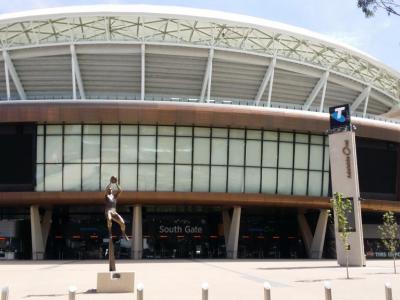
The Adelaide Oval is a renowned sports ground, nestled between the city's center and North Adelaide in a scenic parkland setting. Established in 1871, the Oval has a long-standing history as a versatile venue, predominantly hosting cricket and Australian rules football but also serving as a stage for rugby league, rugby union, soccer, tennis, and major concerts.
Significant redevelopment of the Adelaide Oval took place between 2012 and 2014, modernizing its facilities while preserving its historic charm. The stadium features three grandstands-the Riverbank Stand, Eastern Stand, and Western Stand-and boasts a heritage-listed scoreboard that complements a new digital scoreboard. In 2024, the Oval further expanded its offerings by opening Australia's first stadium hotel, aptly named the Oval Hotel.
Adelaide Oval has been the headquarters of the South Australian Cricket Association since its inception in 1871 and became the base for the South Australian National Football League (SANFL) in 2014. The venue is managed by the Adelaide Oval Stadium Management Authority.
The Oval has been a prominent location for significant events, including hosting the AFLW Grand Final three times since 2019. It holds a record cricket crowd of 55,317, achieved during the Second Ashes Test on December 2, 2017, and a record Australian rules football attendance of 62,543 during the 1965 SANFL Grand Final. A 2017 concert by Adele set a new audience record with 70,000 attendees.
Adelaide Oval is celebrated not only for its functionality but also for its aesthetic appeal. Austadiums.com praised it in 2012 as "one of the most picturesque Test cricket grounds in Australia, if not the world." After its redevelopment, sports journalist Gerard Whateley lauded the venue as "the most perfect piece of modern architecture" for blending contemporary design with its historical character.
For those interested in exploring the Oval's rich history and facilities, 90-minute guided walking tours are available, led by volunteers, offering visitors, including children, an in-depth look at this iconic Australian sports ground.
Significant redevelopment of the Adelaide Oval took place between 2012 and 2014, modernizing its facilities while preserving its historic charm. The stadium features three grandstands-the Riverbank Stand, Eastern Stand, and Western Stand-and boasts a heritage-listed scoreboard that complements a new digital scoreboard. In 2024, the Oval further expanded its offerings by opening Australia's first stadium hotel, aptly named the Oval Hotel.
Adelaide Oval has been the headquarters of the South Australian Cricket Association since its inception in 1871 and became the base for the South Australian National Football League (SANFL) in 2014. The venue is managed by the Adelaide Oval Stadium Management Authority.
The Oval has been a prominent location for significant events, including hosting the AFLW Grand Final three times since 2019. It holds a record cricket crowd of 55,317, achieved during the Second Ashes Test on December 2, 2017, and a record Australian rules football attendance of 62,543 during the 1965 SANFL Grand Final. A 2017 concert by Adele set a new audience record with 70,000 attendees.
Adelaide Oval is celebrated not only for its functionality but also for its aesthetic appeal. Austadiums.com praised it in 2012 as "one of the most picturesque Test cricket grounds in Australia, if not the world." After its redevelopment, sports journalist Gerard Whateley lauded the venue as "the most perfect piece of modern architecture" for blending contemporary design with its historical character.
For those interested in exploring the Oval's rich history and facilities, 90-minute guided walking tours are available, led by volunteers, offering visitors, including children, an in-depth look at this iconic Australian sports ground.
3) Elder Park Rotunda
Back in the early 1880s, the Adelaide City Council proposed to dam the River Torrens in order to create a lake and construct a public esplanade to the west of City Bridge. Subsequently, Sir Thomas Elder, a wealthy businessman, pastoralist, parliamentarian and philanthropist initiated plans for a rotunda to be added to the lake side, for public enjoyment. In 1881 he wrote to the council from Scotland, offering to donate one.
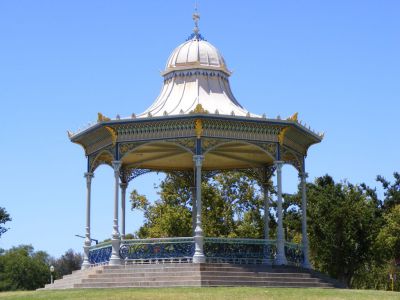
Ultimately, Torrens Lake was created in 1881, transformed from a series of muddy waterholes into a navigable body of water, when the weir was opened. The rotunda, octagonal in form, 24 feet in diameter, with spandrels and canopied roof with overhanging eaves, surmounted by a domed cupola and bold finial with cast-iron railings, was fabricated by MacFarlane's Saracen Foundry in Glasgow and shipped over from Great Britain in 1882. The task of erecting it was taken by Charles Farr, who, for that purpose, raised the floor some 18 feet above the original ground level with approach steps of granite.
The Elder Park Rotunda was officially opened on 28 November 1882, with 2,000 guests attending the ceremony. A specially composed piece of music, The Rotunda March, was played at the event by the Adelaide City Council Brass Band.
Ever since then, the rotunda has been a focal point for recreation and entertainment in Elder Park, and a dominant, decorative element of the Torrens Valley, intimately tied to its beautification. The structure offers splendid panoramic view of the Lake, with a fountain and special lighting display, and for many years has been the venue of Saturday concerts. If you stand in the exact centre of the rotunda and clap once, the listening experience will surely surprise you!
Ultimately, Torrens Lake was created in 1881, transformed from a series of muddy waterholes into a navigable body of water, when the weir was opened. The rotunda, octagonal in form, 24 feet in diameter, with spandrels and canopied roof with overhanging eaves, surmounted by a domed cupola and bold finial with cast-iron railings, was fabricated by MacFarlane's Saracen Foundry in Glasgow and shipped over from Great Britain in 1882. The task of erecting it was taken by Charles Farr, who, for that purpose, raised the floor some 18 feet above the original ground level with approach steps of granite.
The Elder Park Rotunda was officially opened on 28 November 1882, with 2,000 guests attending the ceremony. A specially composed piece of music, The Rotunda March, was played at the event by the Adelaide City Council Brass Band.
Ever since then, the rotunda has been a focal point for recreation and entertainment in Elder Park, and a dominant, decorative element of the Torrens Valley, intimately tied to its beautification. The structure offers splendid panoramic view of the Lake, with a fountain and special lighting display, and for many years has been the venue of Saturday concerts. If you stand in the exact centre of the rotunda and clap once, the listening experience will surely surprise you!
4) National War Memorial
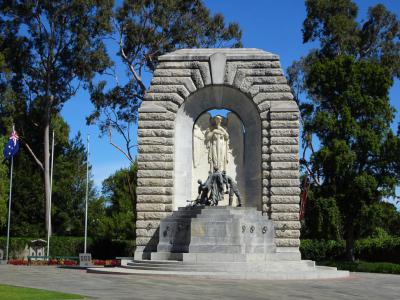
The National War Memorial in Adelaide stands as a solemn tribute to the Australians who fought and sacrificed during the First World War. Opened in 1931, it was the first Australian state war memorial to be confirmed after the war, funded by the State Parliament of South Australia. Despite its initial focus on honoring the nearly 35,000 South Australians who served and the more than 5,000 who fell in "The Great War," the memorial was designated as the "National War Memorial," a title that was already associated with the memorial to the South African War of 1899–1902.
Designed by the architectural firm Woods, Bagot, Jory & Laybourne-Smith, the memorial is a masterful blend of architecture and sculpture. It features marble reliefs and bronze statues by Rayner Hoff, depicting two key scenes: the prelude and epilogue of war. These scenes encapsulate the youthful willingness to serve and the profound sacrifices made, emphasizing not a material victory, but a victory of the human spirit.
The construction of the memorial began in 1928, using marble sourced from Macclesfield and Angaston. By the time of its unveiling in 1931, it became the fourth state World War I memorial to be opened in Australia. In 2001, on its 70th anniversary, the memorial underwent a significant restoration project to preserve its bronze and stonework details and reinforce its foundations, ensuring that it continues to serve as a powerful reminder of the cost of war.
Designed by the architectural firm Woods, Bagot, Jory & Laybourne-Smith, the memorial is a masterful blend of architecture and sculpture. It features marble reliefs and bronze statues by Rayner Hoff, depicting two key scenes: the prelude and epilogue of war. These scenes encapsulate the youthful willingness to serve and the profound sacrifices made, emphasizing not a material victory, but a victory of the human spirit.
The construction of the memorial began in 1928, using marble sourced from Macclesfield and Angaston. By the time of its unveiling in 1931, it became the fourth state World War I memorial to be opened in Australia. In 2001, on its 70th anniversary, the memorial underwent a significant restoration project to preserve its bronze and stonework details and reinforce its foundations, ensuring that it continues to serve as a powerful reminder of the cost of war.
5) The Spheres Sculpture
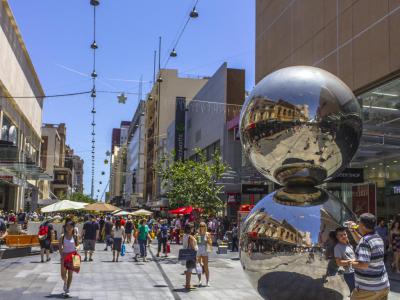
The Spheres Sculpture, affectionately known as the “Mall's Balls,” has been a beloved landmark in Adelaide, since its installation in 1977. Situated in Rundle Mall, this iconic piece of public art was donated to the city by the Hindmarsh Building Society to commemorate the opening of the thoroughfare and the society's centenary.
Created by renowned artist Bert Flugelman, the sculpture consists of two large stainless steel spheres, each 2.15 meters (7 feet 1 inch) in diameter, stacked atop one another to reach a height of 4 meters (13 feet). The reflective surfaces of the spheres distort and elongate the reflections of the surrounding streetscape, making it a popular spot for tourist photographs.
Originally titled "On Further Reflection," the sculpture quickly became a well-loved feature of Adelaide's cityscape, so much so that it has seamlessly blended into the public's perception of the space, often overshadowing its identity as an abstract artwork. Locals fondly refer to it as the “Mall's Balls” and frequently use it as a meeting point, with the phrase “I’ll meet you at the Balls” being a common refrain. The image of the spheres has also become a symbol of the city, appearing on various souvenirs, including T-shirts, key rings, and posters.
The construction of The Spheres involved collaboration with the local firm Brister & Company, who crafted the sculpture by welding together the two halves of each sphere and meticulously finishing them through panel beating. Despite some controversy in 2013, when there were discussions about relocating the sculpture during a Rundle Mall upgrade, The Spheres remained in place, continuing to serve as a central gathering spot for Adelaide residents and visitors alike. The Spheres stands as a lasting tribute to Flugelman's artistic legacy and his significant contributions to the cultural fabric of Adelaide.
Created by renowned artist Bert Flugelman, the sculpture consists of two large stainless steel spheres, each 2.15 meters (7 feet 1 inch) in diameter, stacked atop one another to reach a height of 4 meters (13 feet). The reflective surfaces of the spheres distort and elongate the reflections of the surrounding streetscape, making it a popular spot for tourist photographs.
Originally titled "On Further Reflection," the sculpture quickly became a well-loved feature of Adelaide's cityscape, so much so that it has seamlessly blended into the public's perception of the space, often overshadowing its identity as an abstract artwork. Locals fondly refer to it as the “Mall's Balls” and frequently use it as a meeting point, with the phrase “I’ll meet you at the Balls” being a common refrain. The image of the spheres has also become a symbol of the city, appearing on various souvenirs, including T-shirts, key rings, and posters.
The construction of The Spheres involved collaboration with the local firm Brister & Company, who crafted the sculpture by welding together the two halves of each sphere and meticulously finishing them through panel beating. Despite some controversy in 2013, when there were discussions about relocating the sculpture during a Rundle Mall upgrade, The Spheres remained in place, continuing to serve as a central gathering spot for Adelaide residents and visitors alike. The Spheres stands as a lasting tribute to Flugelman's artistic legacy and his significant contributions to the cultural fabric of Adelaide.
6) St. Francis Xavier's Cathedral
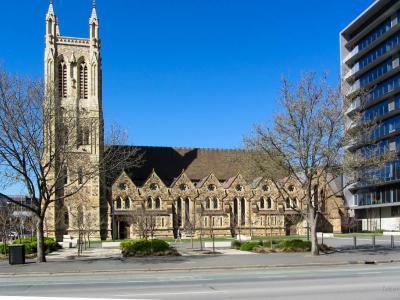
Saint Francis Xavier's Cathedral is a Roman Catholic cathedral. Construction of the building began in 1856. It was consecrated two years later, but it was not fully completed until 1996. The Early English, Gothic Revival style cathedral has had a series of architects over the years. These include original architect Richard Lambeth, followed by Charles Hansom, Peter Paul Pugin and finally Lynton Jury.
The last component of the cathedral was the bell tower. Though construction of the tower started in the 1800s, it took 109 years for it to reach its final height. The main bell is the Murphy Bell of 1867, which is surrounded by 13 bells. Seven of the 13 accompanying bells once hung in Sydney's Saint Mary's Cathedral.
Those visiting Saint Francis Xavier's Cathedral should note some of the church's special features. These include bronze statues of Joseph and Jesus, a statue of Saint Patrick and a statue of Saint John the Baptist, which was created in Tuscany in 1925. The cathedral also features stained glass lancet windows with images of Saint Patrick, Saint Lawrence, Mary and Jesus.
The cathedral has a daily mass at 5:45 PM. It is open throughout the day for those who would like to visit.
The last component of the cathedral was the bell tower. Though construction of the tower started in the 1800s, it took 109 years for it to reach its final height. The main bell is the Murphy Bell of 1867, which is surrounded by 13 bells. Seven of the 13 accompanying bells once hung in Sydney's Saint Mary's Cathedral.
Those visiting Saint Francis Xavier's Cathedral should note some of the church's special features. These include bronze statues of Joseph and Jesus, a statue of Saint Patrick and a statue of Saint John the Baptist, which was created in Tuscany in 1925. The cathedral also features stained glass lancet windows with images of Saint Patrick, Saint Lawrence, Mary and Jesus.
The cathedral has a daily mass at 5:45 PM. It is open throughout the day for those who would like to visit.
