Custom Walk in Dallas, Texas by jenthomae_72de89 created on 2026-03-03
Guide Location: USA » Dallas
Guide Type: Custom Walk
# of Sights: 14
Tour Duration: 5 Hour(s)
Travel Distance: 12.2 Km or 7.6 Miles
Share Key: QBYRH
Guide Type: Custom Walk
# of Sights: 14
Tour Duration: 5 Hour(s)
Travel Distance: 12.2 Km or 7.6 Miles
Share Key: QBYRH
How It Works
Please retrieve this walk in the GPSmyCity app. Once done, the app will guide you from one tour stop to the next as if you had a personal tour guide. If you created the walk on this website or come to the page via a link, please follow the instructions below to retrieve the walk in the app.
Retrieve This Walk in App
Step 1. Download the app "GPSmyCity: Walks in 1K+ Cities" on Apple App Store or Google Play Store.



Step 2. In the GPSmyCity app, download(or launch) the guide "Dallas Map and Walking Tours".
Step 3. Tap the menu button located at upper right corner of the "Walks" screen and select "Retrieve custom walk". Enter the share key: QBYRH
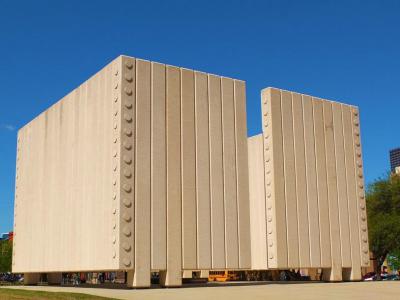
1) John F. Kennedy Memorial
The John F. Kennedy Memorial in Dallas stands as a poignant tribute to the 35th President of the United States, who was tragically assassinated nearby at Dealey Plaza on November 22, 1963. Located just two blocks east of the assassination site, within the Dallas County Historical Plaza, this memorial was dedicated seven years after the event, symbolizing both remembrance and reverence.
Designed by the renowned American architect and friend of the Kennedy family, Philip Johnson, the memorial is a striking example of architectural minimalism and thoughtful commemoration. Its design is notably marked by a cenotaph structure, an "empty tomb" that serves to honor the memory of President Kennedy while symbolizing the eternal freedom of his spirit. This concept is beautifully embodied through the memorial's key feature: a simple, yet profound, black granite slab inscribed with Kennedy's name in gold letters, all enclosed within an open-roofed concrete pavilion.
Johnson's architectural approach to the memorial was to create something "very humble and spartan," aiming to capture the essence of Kennedy's legacy rather than provide a grandiose monument. This intention is reflected in the monument's design, which is both understated and powerful, with several of its concrete columns ingeniously engineered to appear as though they are floating without visible support. This not only adds to the aesthetic appeal of the structure but also to its symbolic representation of Kennedy's spirit and ideals.
The John F. Kennedy Memorial complements the nearby Sixth Floor Museum, located in the very building from which Lee Harvey Oswald is believed to have fired the fatal shot. Together, these sites offer a comprehensive and deeply moving exploration of one of the most significant and sorrowful events in American history, providing visitors with a space for reflection on the life and legacy of John F. Kennedy.
Designed by the renowned American architect and friend of the Kennedy family, Philip Johnson, the memorial is a striking example of architectural minimalism and thoughtful commemoration. Its design is notably marked by a cenotaph structure, an "empty tomb" that serves to honor the memory of President Kennedy while symbolizing the eternal freedom of his spirit. This concept is beautifully embodied through the memorial's key feature: a simple, yet profound, black granite slab inscribed with Kennedy's name in gold letters, all enclosed within an open-roofed concrete pavilion.
Johnson's architectural approach to the memorial was to create something "very humble and spartan," aiming to capture the essence of Kennedy's legacy rather than provide a grandiose monument. This intention is reflected in the monument's design, which is both understated and powerful, with several of its concrete columns ingeniously engineered to appear as though they are floating without visible support. This not only adds to the aesthetic appeal of the structure but also to its symbolic representation of Kennedy's spirit and ideals.
The John F. Kennedy Memorial complements the nearby Sixth Floor Museum, located in the very building from which Lee Harvey Oswald is believed to have fired the fatal shot. Together, these sites offer a comprehensive and deeply moving exploration of one of the most significant and sorrowful events in American history, providing visitors with a space for reflection on the life and legacy of John F. Kennedy.
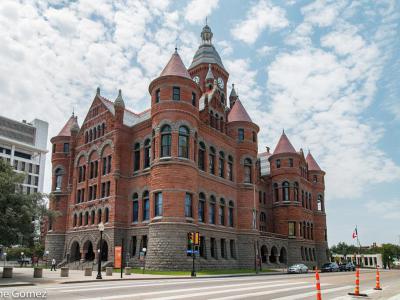
2) Old Red Courthouse
No, you haven't walked into the land of Hansel and Gretel, but you are looking at the massive red sandstone building that served as the fifth seat of government in Dallas County. Built in Romanesque Revival style with gigantic rounded arches, this courthouse was completed in 1892, replacing an earlier structure that burned in 1890.
The Old Red Courthouse, as it is known, was constructed of Arkansas gray granite and Pecos red sandstone. The lower portion is made of blue granite that is also used on window trims, providing a pleasing contrast with the red stone.
The actual design is dominated by eight circular turrets. Notice the acroterium (gargoyle-like figures) on the roof. A clock tower, complete with a 4,500-pound bell, originally topped the building but was removed in 1919. The clock tower bell was so large that it had to be cut into three pieces and lowered to the ground. A few Dallas youngsters particularly felt the loss, because they were accustomed to playing in the tower and causing the clock to ring 13 hours at 1:00.
After having undergone several renovations, the building houses a museum on the 2nd floor, which is set up in quadrants, each separated by era, and covers a wide range of issues, including segregation, Jim Crow laws, the successful locomotive story, the wide array of Texas consumer smash products, the cowboy/cowgirl rugged outdoor culture and much more. If you have some free time, you can probably spend an interesting hour or so learning about the culture, history, education, and politics from different periods in the city's history. The iron staircase is a real work of art from 120+ years ago, too!
Why You Should Visit:
Opens a window into the history of Dallas like no other museum does! The architecture is stunning, and the interior layout/design makes it very easy to walk through without missing a thing.
The Old Red Courthouse, as it is known, was constructed of Arkansas gray granite and Pecos red sandstone. The lower portion is made of blue granite that is also used on window trims, providing a pleasing contrast with the red stone.
The actual design is dominated by eight circular turrets. Notice the acroterium (gargoyle-like figures) on the roof. A clock tower, complete with a 4,500-pound bell, originally topped the building but was removed in 1919. The clock tower bell was so large that it had to be cut into three pieces and lowered to the ground. A few Dallas youngsters particularly felt the loss, because they were accustomed to playing in the tower and causing the clock to ring 13 hours at 1:00.
After having undergone several renovations, the building houses a museum on the 2nd floor, which is set up in quadrants, each separated by era, and covers a wide range of issues, including segregation, Jim Crow laws, the successful locomotive story, the wide array of Texas consumer smash products, the cowboy/cowgirl rugged outdoor culture and much more. If you have some free time, you can probably spend an interesting hour or so learning about the culture, history, education, and politics from different periods in the city's history. The iron staircase is a real work of art from 120+ years ago, too!
Why You Should Visit:
Opens a window into the history of Dallas like no other museum does! The architecture is stunning, and the interior layout/design makes it very easy to walk through without missing a thing.
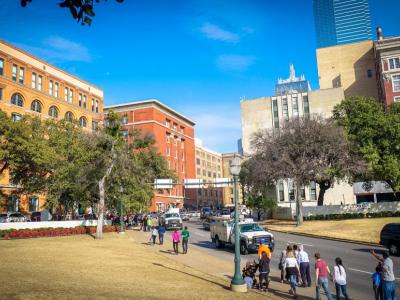
3) Dealey Plaza / Sixth Floor Museum (must see)
Dealey Plaza and the high bluff referred to as the "grassy knoll" figure prominently in the Kennedy assassination. It is this site on the north side of Elm Street where the famed Abraham Zapruder film of the assassination was taken and where eyewitnesses to the shooting dropped to the ground, believing they were in the line of fire. The area looks much as it did in 1963, and one will usually see a dozen or more visitors milling about, pointing to the actual (X-marked) site of the shooting, taking photos, or discussing theories about the tragic event, which continues to be a source of controversy today.
There is lots of good signage with extensive historical information throughout the plaza, as well as many commemorative plaques, but to really embrace the full experience, consider visiting the Sixth Floor Museum located on the actual sixth floor of the old Texas School Book Depository, where Lee Harvey Oswald fired his fatal shots. Most visitors are fascinated by the tour, which includes a photo maze of the Kennedy family and presidency, as well as continuous videos with never-before-seen footage of JFK's funeral, interviews from witnesses, and evidence used by the Warren Commission on display.
Why You Should Visit:
A visit to this plaza and its museum is truly like going back in time and promises to leave you wondering.
There is lots of good signage with extensive historical information throughout the plaza, as well as many commemorative plaques, but to really embrace the full experience, consider visiting the Sixth Floor Museum located on the actual sixth floor of the old Texas School Book Depository, where Lee Harvey Oswald fired his fatal shots. Most visitors are fascinated by the tour, which includes a photo maze of the Kennedy family and presidency, as well as continuous videos with never-before-seen footage of JFK's funeral, interviews from witnesses, and evidence used by the Warren Commission on display.
Why You Should Visit:
A visit to this plaza and its museum is truly like going back in time and promises to leave you wondering.
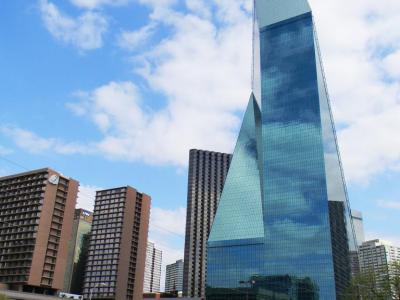
4) Fountain Place
One of the skyline's most familiar features, the 60-story Fountain Place is the fifth-tallest building in Dallas and ranks among the most uniquely shaped buildings anywhere in the world. Though it stands perfectly well on its own, initial plans actually called for twin towers, with the second tower rotated 90 degrees from the original; however, with the collapse of the Texas oil, banking and real estate industry, followed by the savings and loan scandal of the 1980s, the project was never completed. Only recently, four decades later, has a sibling tower been set for completion on an adjacent lot.
Designed by I.M. Pei and Partners, the original high-riser is truly a work of art, reflecting the sky and surrounding structures with its green glass façade. Like an alluring crystal or a multi-faceted prism, it presents a different look from different angles, but what draws people even more is the beautiful water garden at street level, created by the same company that would later built the Fountains of Bellagio in Las Vegas. It's a wonderful, tranquil oasis with plenty of space to sit, read, and/or eat even on the hottest summer days, as the big trees shade piercing summer heat.
Designed by I.M. Pei and Partners, the original high-riser is truly a work of art, reflecting the sky and surrounding structures with its green glass façade. Like an alluring crystal or a multi-faceted prism, it presents a different look from different angles, but what draws people even more is the beautiful water garden at street level, created by the same company that would later built the Fountains of Bellagio in Las Vegas. It's a wonderful, tranquil oasis with plenty of space to sit, read, and/or eat even on the hottest summer days, as the big trees shade piercing summer heat.
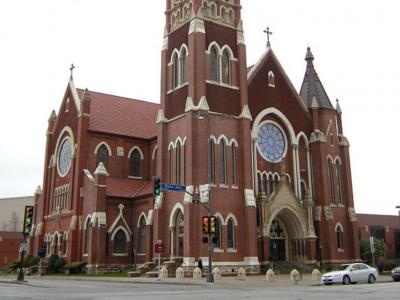
5) The Cathedral Shrine of the Virgin of Guadalupe
The Cathedral Shrine is one of the largest churches in Dallas, with over 17,000 families. It is also one of the most historic churches in town, as this was the first Catholic community formed in the area. It is also the Mother Church for the local diocese.
The local worshiping community was founded in 1869. It was called the Sacred Heart Church then. They built their first building in 1872. In 1890, the church was reformed into the Cathedral for the area, after the Dallas area became a diocese. The overall architectural look of the current building is gothic, and is done in a beautiful red brick. The sanctuary is done in white walls and is trimmed in oak.
This congregation is also a great promoter of the arts in the area. They hold events for the Arts District many times each year. They also sponsor the Greater Children’s Chorus of Dallas, which is a sacred choir. It is located in the same area is the Sculpture Garden, Dallas Symphony, and the Dallas Museum of Art.
The local worshiping community was founded in 1869. It was called the Sacred Heart Church then. They built their first building in 1872. In 1890, the church was reformed into the Cathedral for the area, after the Dallas area became a diocese. The overall architectural look of the current building is gothic, and is done in a beautiful red brick. The sanctuary is done in white walls and is trimmed in oak.
This congregation is also a great promoter of the arts in the area. They hold events for the Arts District many times each year. They also sponsor the Greater Children’s Chorus of Dallas, which is a sacred choir. It is located in the same area is the Sculpture Garden, Dallas Symphony, and the Dallas Museum of Art.
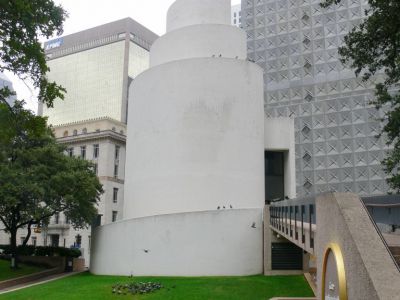
6) Thanksgiving Chapel
The Thanksgiving Chapel is located in the heart of the business district of Dallas. It is a must see, as you will have to look hard to find a chapel with more beauty and unusual architecture. It is definitely something you would not expect to be where it is.
The overall shape of the building is curvilinear, which means it is like a snail shell. It was designed to mimic the Al-Malwia minaret from the Great Mosque of Samarra Iraq, which was built in the 9th Century. There is a famous verse from the Qumran that has been inscribed on the wall. It says,
"Grateful praise is due to God alone, the Lord and Nourisher of the worlds” Astonishingly though, you will also find part of the 100th Psalm there as well.
The building was started in 1971, and was finished five years later. It is made of a white marble aggregate material. Philip Johnson was the designer. The stained glass ceiling is the real show stopper on the inside though; it is called the Glory Window. Gabriel Loire was the designer. The window follows the basic shape of the building. The location is so famous that a United Nations stamp memorialized it in 2000.
The overall shape of the building is curvilinear, which means it is like a snail shell. It was designed to mimic the Al-Malwia minaret from the Great Mosque of Samarra Iraq, which was built in the 9th Century. There is a famous verse from the Qumran that has been inscribed on the wall. It says,
"Grateful praise is due to God alone, the Lord and Nourisher of the worlds” Astonishingly though, you will also find part of the 100th Psalm there as well.
The building was started in 1971, and was finished five years later. It is made of a white marble aggregate material. Philip Johnson was the designer. The stained glass ceiling is the real show stopper on the inside though; it is called the Glory Window. Gabriel Loire was the designer. The window follows the basic shape of the building. The location is so famous that a United Nations stamp memorialized it in 2000.
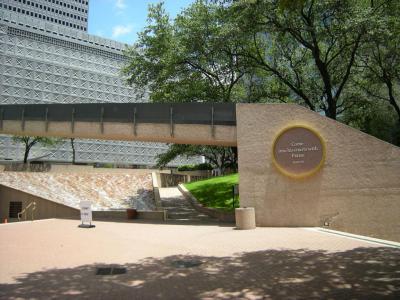
7) Thanks-Giving Square
Thanks-Giving Square was developed initially to help relieve downtown traffic. While it has helped to accomplish that task , the area is so much more than just a traffic relief spot. There are three levels to the Square, although most people only think about the ground level area. The inner most layer is the Bullington Truck Terminal. It lies 50 feet below the park above and handles a fair amount of truck traffic.
The Dallas Pedestrian Network lies above the truck terminal and below the ground level Square. It covers 36 city blocks and connects buildings, parks, hotels, office space and garages through a network of tunnels and sky bridges. Underground there are restaurants, spacious walkways, and areas where employees of the surrounding businesses can relax for a few minutes. This area is open to the public during normal business hours.
Thanks-Giving Square is spectacular. The park entrance starts with a praise wall followed by the bell tower. This tower has three large bells that are reminiscent of the Liberty Bell. These bells chime the hour and then carol at noon. Visitors are then encouraged to enter the courtyard through the Ring of Thanks. This is a large aluminum ring that is covered by 23 carat gold leaf and is just beautiful. The highlight of the square has to be the Chapel of Thanksgiving. The building spirals toward the sky and inside it is a breathtaking stained glass ceiling. Around the park are waterfalls, a meditation garden, mosaics, and just a general feeling of peace and thanksgiving.
The Dallas Pedestrian Network lies above the truck terminal and below the ground level Square. It covers 36 city blocks and connects buildings, parks, hotels, office space and garages through a network of tunnels and sky bridges. Underground there are restaurants, spacious walkways, and areas where employees of the surrounding businesses can relax for a few minutes. This area is open to the public during normal business hours.
Thanks-Giving Square is spectacular. The park entrance starts with a praise wall followed by the bell tower. This tower has three large bells that are reminiscent of the Liberty Bell. These bells chime the hour and then carol at noon. Visitors are then encouraged to enter the courtyard through the Ring of Thanks. This is a large aluminum ring that is covered by 23 carat gold leaf and is just beautiful. The highlight of the square has to be the Chapel of Thanksgiving. The building spirals toward the sky and inside it is a breathtaking stained glass ceiling. Around the park are waterfalls, a meditation garden, mosaics, and just a general feeling of peace and thanksgiving.
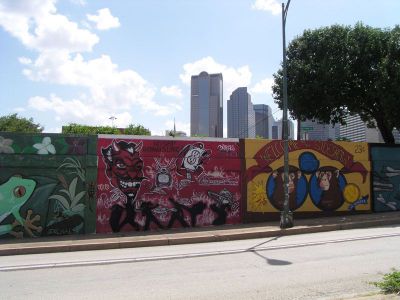
8) Deep Ellum
Deep Ellum, located near downtown East Dallas, is a lively neighborhood showcasing the city's diverse culture and history. Once a bustling commercial area for African Americans and European immigrants, it's now renowned for its arts and entertainment scene. Its historical significance is further underscored by its remarkable collection of early 20th-century commercial storefronts, a feature that distinguishes Deep Ellum in the urban landscape of Dallas. Moreover, the area is dotted with numerous individual structures, each bearing historical importance and contributing to the neighborhood's unique character.
However, what truly sets Deep Ellum apart is its profound connection to music. The district has long been celebrated as a pivotal hub for the music scene, drawing artists and fans alike to its lively venues. This musical heritage has not only defined Deep Ellum's identity but also contributed significantly to its reputation both locally and beyond.
Adding another layer to its cultural fabric is Deep Ellum's association with graffiti. The neighborhood has emerged as a hotbed for this art form, with many music venues leveraging the talents of graffiti artists to promote their shows. This synergy between music and visual art has further enriched Deep Ellum's cultural landscape, making it a dynamic and compelling district that continues to attract visitors and locals who are drawn to its creative energy and historical depth.
However, what truly sets Deep Ellum apart is its profound connection to music. The district has long been celebrated as a pivotal hub for the music scene, drawing artists and fans alike to its lively venues. This musical heritage has not only defined Deep Ellum's identity but also contributed significantly to its reputation both locally and beyond.
Adding another layer to its cultural fabric is Deep Ellum's association with graffiti. The neighborhood has emerged as a hotbed for this art form, with many music venues leveraging the talents of graffiti artists to promote their shows. This synergy between music and visual art has further enriched Deep Ellum's cultural landscape, making it a dynamic and compelling district that continues to attract visitors and locals who are drawn to its creative energy and historical depth.
9) Cane Rosso Pizzeria
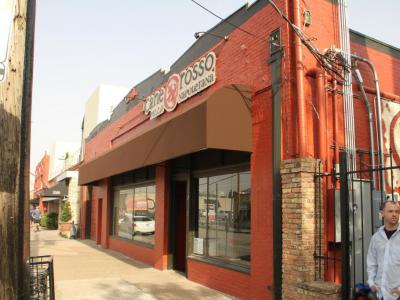
Cane Rosso's wood-fired, Italian-style pizzas are some of the best in Dallas. They are best known for their Honey Bastard made with house-made mozzarella, spicy soppressata (which are basically hot pepperonis), bacon marmalade, and habanero honey – the absolute perfect combination of spicy, savory, and sweet. There are plenty of other great pizzas to chose from (both red- and white-based) but of course you can build your own. The crust and ingredients are always top notch.
One pizza can easily fill you and if you splurge on their zucchini artichoke fritters as an appetizer, you will definitely have enough food to take home with you. The menu also offers a great selection of cocktails and delicious deserts like The Edgar (mascarpone, nutella, and toasted marshmallows), so be sure to save some room.
It's a very large open space inside with seating at tables and along the walls. There is also a good sized bar where you can sit and watch the pizzas being made and placed into the large oven. Awesome Star Wars paintings and other paintings adorn on the walls.
One pizza can easily fill you and if you splurge on their zucchini artichoke fritters as an appetizer, you will definitely have enough food to take home with you. The menu also offers a great selection of cocktails and delicious deserts like The Edgar (mascarpone, nutella, and toasted marshmallows), so be sure to save some room.
It's a very large open space inside with seating at tables and along the walls. There is also a good sized bar where you can sit and watch the pizzas being made and placed into the large oven. Awesome Star Wars paintings and other paintings adorn on the walls.
10) Leonhardt Lagoon
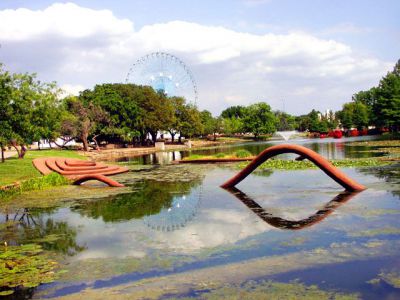
The Leonhardt Lagoon is a very famous part of the Fair Park Midway. It has always been a great place for families to come and visit. Feeding the birds here has been a tradition for kids for years also.
The lagoon was created in 1936 by the Work Progress Administration (also called the WPA). The body of water gets its name from Dorothea Leonhardt, who was a famous philanthropist in the area.
The lagoon underwent a considerable bit of renovation during the 1980s. The whole thing was cleaned out, and access plants were removed. The location was then refilled with native Texas plants. So now, it is a modern day ecological haven for animals. Two serpentine style sculptures were also added in 1986. Designed by the famous Pat Johanson, they create a bridge that can be walked across, which also gives the visitor a great view of the new look of the lagoon.
If you are bringing kids, you may want to do the swan rides across the lagoon. There is also a Nature Walk that has twenty five different stops along the way. It is located between the Museum of Science and Nature and the Cotton Bowl.
The lagoon was created in 1936 by the Work Progress Administration (also called the WPA). The body of water gets its name from Dorothea Leonhardt, who was a famous philanthropist in the area.
The lagoon underwent a considerable bit of renovation during the 1980s. The whole thing was cleaned out, and access plants were removed. The location was then refilled with native Texas plants. So now, it is a modern day ecological haven for animals. Two serpentine style sculptures were also added in 1986. Designed by the famous Pat Johanson, they create a bridge that can be walked across, which also gives the visitor a great view of the new look of the lagoon.
If you are bringing kids, you may want to do the swan rides across the lagoon. There is also a Nature Walk that has twenty five different stops along the way. It is located between the Museum of Science and Nature and the Cotton Bowl.

11) Mokah Coffee & Tea
Mokah Coffee & Tea, located in Dallas, is a haven for coffee enthusiasts and those in search of a cozy escape from the fast pace of everyday life. Renowned for its unique charm and friendly atmosphere, this café offers an exceptional experience beyond the ordinary. Drawing inspiration from the warm and welcoming ambiance of a 15th-century monastery basement, the interior boasts rich woods and leathers that envelop visitors in a sense of comfort and coziness. The design is carefully crafted to encourage intimacy and warmth, creating an ideal environment for relaxation and conversation.
The café offers a variety of seating options to suit every preference, from different table setups to comfortable couches, ensuring that all patrons feel at ease. Additionally, the covered patio provides a charming outdoor space for enjoying beverages in pleasant weather. More than just a physical space, Mokah Coffee & Tea embodies a lifestyle choice, with its quirky and diverse environment instantly putting guests at ease, promoting connections, and facilitating open communication among visitors.
Guests can indulge in a selection of excellent coffee and tea, while also enjoying the opportunity for people-watching and listening to pleasant background music, enhancing the overall experience. In the evenings, the café occasionally hosts live music, adding to its appeal as a versatile venue for both relaxation and entertainment. Mokah Coffee & Tea stands out as a welcoming hub of comfort, quality drinks, and community spirit in Dallas, making it a must-visit destination for locals and travelers alike.
The café offers a variety of seating options to suit every preference, from different table setups to comfortable couches, ensuring that all patrons feel at ease. Additionally, the covered patio provides a charming outdoor space for enjoying beverages in pleasant weather. More than just a physical space, Mokah Coffee & Tea embodies a lifestyle choice, with its quirky and diverse environment instantly putting guests at ease, promoting connections, and facilitating open communication among visitors.
Guests can indulge in a selection of excellent coffee and tea, while also enjoying the opportunity for people-watching and listening to pleasant background music, enhancing the overall experience. In the evenings, the café occasionally hosts live music, adding to its appeal as a versatile venue for both relaxation and entertainment. Mokah Coffee & Tea stands out as a welcoming hub of comfort, quality drinks, and community spirit in Dallas, making it a must-visit destination for locals and travelers alike.
12) Dallas Farmers Market
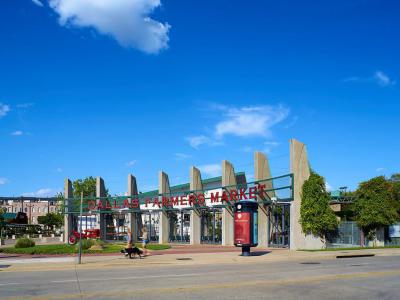
The Dallas Farmers Market, nestled in the heart of the Farmers Market District in downtown Dallas, is a vibrant hub of fresh, farm-to-table produce and goods. Since its inception in 1941, the market has evolved into one of the country's largest public markets, attracting vendors and farmers from within a 150-mile radius to offer a diverse array of products including fresh meat, produce, flowers, and specialty items directly to consumers.
The market is distinguished by its variety of sellers, which includes produce dealers, wholesale dealers, and local farmers, ensuring a wide range of fresh and quality goods. In addition to its primary offerings, the Dallas Farmers Market hosts a plethora of activities throughout the year such as monthly yard sales, cooking classes led by professional chefs for an approximate fee of $25, workshops, and seasonal festivals, enriching the community experience. Furthermore, it features floral and garden vendors in an area adjacent to the market, broadening the scope of products available to visitors.
For those looking to maximize their visit, morning hours are recommended for accessing the highest quality items, while the afternoon presents opportunities for bargain hunters to find deals as the selection varies. Beyond shopping, the market serves as a cultural and educational venue, with events like handcrafter markets and street performances frequently taking place, details of which can be found on the Farmers Market website.
The Dallas Farmers Market not only offers a rich selection of goods but also fosters a sense of community through its events and workshops, making it a cherished institution in Dallas for locals and tourists alike.
The market is distinguished by its variety of sellers, which includes produce dealers, wholesale dealers, and local farmers, ensuring a wide range of fresh and quality goods. In addition to its primary offerings, the Dallas Farmers Market hosts a plethora of activities throughout the year such as monthly yard sales, cooking classes led by professional chefs for an approximate fee of $25, workshops, and seasonal festivals, enriching the community experience. Furthermore, it features floral and garden vendors in an area adjacent to the market, broadening the scope of products available to visitors.
For those looking to maximize their visit, morning hours are recommended for accessing the highest quality items, while the afternoon presents opportunities for bargain hunters to find deals as the selection varies. Beyond shopping, the market serves as a cultural and educational venue, with events like handcrafter markets and street performances frequently taking place, details of which can be found on the Farmers Market website.
The Dallas Farmers Market not only offers a rich selection of goods but also fosters a sense of community through its events and workshops, making it a cherished institution in Dallas for locals and tourists alike.
13) City Hall
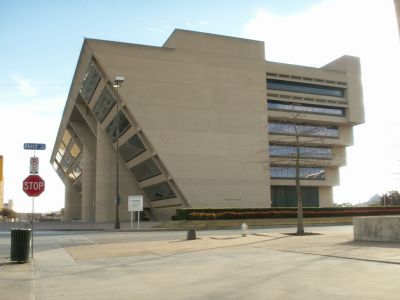
The City Hall of Dallas is a rather interestingly shaped building. It resembles a half buried upside down triangle. The cantilevered building does have some nice benefits besides the pleasing aesthetic affect. It provides a nice amount of shade in the brutal Dallas summer sun for people coming into the building to do business. It also provides shade for the occupants of the lower floors.
When looking at the building, it looks like there are three pillars that supply support for the structure. Actually, the pillars were added after the initial design was made. Local officials felt they were needed to prop up the building. However, the City Hall was designed to support its weight without the pillars, and they were added only to appease the local leaders. They do house stairwells, but provide no actual support for the structure. This is a rather elegant solution to the problem that made everyone happy.
This innovative facility was opened in 1978. It has been the backdrop to several films, because of its incredible design. There is a piece of sculpture in front of the building that stands 16 feet tall and 24 feet wide. It looks like a giant dinosaur vertebrae. It makes for an interesting dichotomy next to the building.
The City Hall is located at 1500 Marilla and is open during normal business hours.
When looking at the building, it looks like there are three pillars that supply support for the structure. Actually, the pillars were added after the initial design was made. Local officials felt they were needed to prop up the building. However, the City Hall was designed to support its weight without the pillars, and they were added only to appease the local leaders. They do house stairwells, but provide no actual support for the structure. This is a rather elegant solution to the problem that made everyone happy.
This innovative facility was opened in 1978. It has been the backdrop to several films, because of its incredible design. There is a piece of sculpture in front of the building that stands 16 feet tall and 24 feet wide. It looks like a giant dinosaur vertebrae. It makes for an interesting dichotomy next to the building.
The City Hall is located at 1500 Marilla and is open during normal business hours.
14) Pioneer Plaza / Cattle Drive (must see)
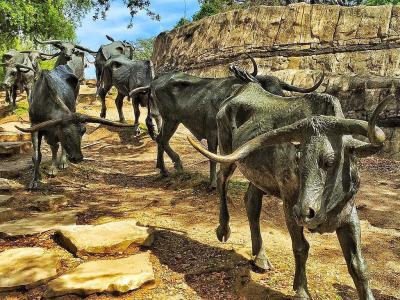
Pioneer Plaza is a 4.2-acre open space – the largest in the central Dallas business district – where a natural setting of native Texan plants, with a flowing stream and waterfall, all combine to memorialize the hundreds of cattle drives that took place at this old junction once known as the Shawnee Cattle Trail. The photo-ops are numerous, and you can wander in through the herd to see how much attention to detail was put into each individual longhorn, from facial expression down to hooves. Created by Robert Summers of Glen Rose, Texas, this is the largest bronze monument of its kind in the world.
The plaza and its accompanying cattle drive were the idea of real estate developer Trammell Crow, who wanted an iconic "Western" sculpture in the city of Dallas and assembled a group to donate the works. The first bronze longhorn was unveiled September 21, 1993, along with the trail boss and his horse; the entire project was completed in 1994. With the striking Dallas skyline as its background, this has become an iconic new landmark in downtown Dallas, and is free to visit.
Tip:
The adjacent Pioneer Cemetery is interesting to walk through, surrounded by tombstones that date back some 150 years.
The plaza and its accompanying cattle drive were the idea of real estate developer Trammell Crow, who wanted an iconic "Western" sculpture in the city of Dallas and assembled a group to donate the works. The first bronze longhorn was unveiled September 21, 1993, along with the trail boss and his horse; the entire project was completed in 1994. With the striking Dallas skyline as its background, this has become an iconic new landmark in downtown Dallas, and is free to visit.
Tip:
The adjacent Pioneer Cemetery is interesting to walk through, surrounded by tombstones that date back some 150 years.
