Custom Walk in Chicago, Illinois by maxcwilkerson_d4efcf created on 2026-03-12
Guide Location: USA » Chicago
Guide Type: Custom Walk
# of Sights: 11
Tour Duration: 8 Hour(s)
Travel Distance: 20.3 Km or 12.6 Miles
Share Key: GK6TA
Guide Type: Custom Walk
# of Sights: 11
Tour Duration: 8 Hour(s)
Travel Distance: 20.3 Km or 12.6 Miles
Share Key: GK6TA
How It Works
Please retrieve this walk in the GPSmyCity app. Once done, the app will guide you from one tour stop to the next as if you had a personal tour guide. If you created the walk on this website or come to the page via a link, please follow the instructions below to retrieve the walk in the app.
Retrieve This Walk in App
Step 1. Download the app "GPSmyCity: Walks in 1K+ Cities" on Apple App Store or Google Play Store.



Step 2. In the GPSmyCity app, download(or launch) the guide "Chicago Map and Walking Tours".
Step 3. Tap the menu button located at upper right corner of the "Walks" screen and select "Retrieve custom walk". Enter the share key: GK6TA
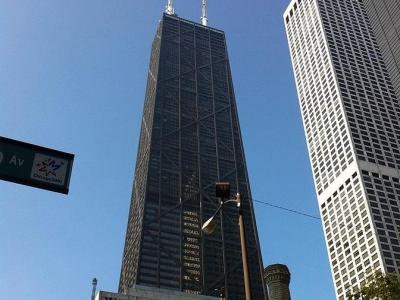
1) 875 North Michigan Avenue – 360 Chicago Observation Deck (must see)
Designed by the architectural talents of Skidmore, Owings & Merrill, this versatile skyscraper, formerly known as the John Hancock Center, is instantly recognizable for its narrowing silhouette and massive X-shaped braces, serving as sturdy reinforcements for its towering stature of 100 stories. Shortly after its completion in 1970, it earned the affectionate moniker "Big John", and it's no wonder why – soaring to a staggering height of 1,127 feet (or 1,506 feet, counting its antennae in the taller east tower).
Housing an array of amenities, including retail spaces, parking facilities, offices, a restaurant, and residential units, it's often likened to a self-contained city within a city. When viewed from a distance, however, the building exudes an austere yet captivating elegance, epitomizing the International style championed by the legendary Mies van der Rohe.
Much like its architectural sibling, the Willis Tower, also designed by the same architectural team, this skyscraper offers sweeping vistas that span four states (Illinois, Indiana, Michigan, and Wisconsin) on clear days. To witness this spectacle, ascend to the 94th-floor observatory, now rebranded as 360 CHICAGO (admission fee: $30). While you're there, why not savor a cocktail, beer, wine, hot beverage, or non-alcoholic refreshment at the CloudBar, an exclusive perk for General Admission ticket holders.
For the thrill-seekers in the crowd, an additional fee unlocks the tower's most exhilarating feature – The Tilt ($8). This heart-pounding experience features eight windows that tilt downward to a daring 30-degree angle, providing a unique perspective of the city below.
Bonus tip:
Just across from the skyscraper stands the Fourth Presbyterian Church, boasting English and French Gothic influences, and dating to 1914. Step inside to admire its elegant interior and tranquil courtyard – a surprisingly serene oasis just a stone's throw from Michigan Avenue.
Housing an array of amenities, including retail spaces, parking facilities, offices, a restaurant, and residential units, it's often likened to a self-contained city within a city. When viewed from a distance, however, the building exudes an austere yet captivating elegance, epitomizing the International style championed by the legendary Mies van der Rohe.
Much like its architectural sibling, the Willis Tower, also designed by the same architectural team, this skyscraper offers sweeping vistas that span four states (Illinois, Indiana, Michigan, and Wisconsin) on clear days. To witness this spectacle, ascend to the 94th-floor observatory, now rebranded as 360 CHICAGO (admission fee: $30). While you're there, why not savor a cocktail, beer, wine, hot beverage, or non-alcoholic refreshment at the CloudBar, an exclusive perk for General Admission ticket holders.
For the thrill-seekers in the crowd, an additional fee unlocks the tower's most exhilarating feature – The Tilt ($8). This heart-pounding experience features eight windows that tilt downward to a daring 30-degree angle, providing a unique perspective of the city below.
Bonus tip:
Just across from the skyscraper stands the Fourth Presbyterian Church, boasting English and French Gothic influences, and dating to 1914. Step inside to admire its elegant interior and tranquil courtyard – a surprisingly serene oasis just a stone's throw from Michigan Avenue.
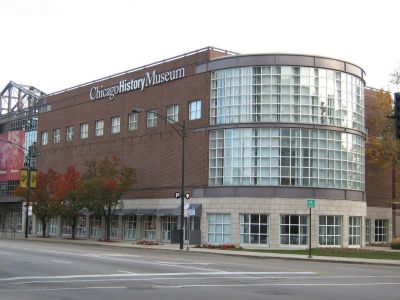
2) Chicago History Museum (must see)
Set on a picturesque piece of land near the Lincoln Park Zoo and the lakefront, this institution traces Chicago's rich and often complicated history, starting with its first explorers and settlers, through the city's development, to major events in modern-day Chicago. Inside, you'll find a harmonious blend of vintage and contemporary elements, with everything kept pristinely clean and tidy. It's an easy-in/easy-out museum, great to wander about for a couple of hours without the jostling crowds.
What many might not realize is that the CHM houses one of the nation's largest collections of costumes and textiles, a staggering 50,000 pieces spanning from the 18th century to the present day. It also boasts an astonishing trove of artifacts and original artworks that are not only significant to Chicago's history but also integral to the broader context of U.S. history. These include the very bed in which Abraham Lincoln took his final breath, haunting reminders of Civil War-era slave shackles, original paintings by the iconic Norman Rockwell, a restored turn-of-the-century train car and other fascinating curiosities. For sports fans, a special treat is the display honoring Chicago's legendary athletes, from Ernie Banks and Michael Jordan to Dick Butkus, Mike Ditka, Bobby Hull, and Stan Mikita.
Among permanent exhibitions, "Chicago: Crossroads of America" stands out as a celebration of the city's cultural contributions, from the birth of urban blues to the triumphs of skyscraper architecture, and sheds light on significant events like the Haymarket Affair, unraveling the complexities of an 1884 labor rally where a bomb altered the course of history and led to the conviction of eight anarchists for conspiracy. In "Sensing Chicago", young visitors can step back in time to experience the city's bygone era by catching a fly ball at Comiskey Park, donning costumes inspired by Chicago-style hot dogs, and taking a spin on a penny-farthing bicycle. "City on Fire: Chicago 1871" plunges visitors into the chaos and aftermath of the infamous inferno that displaced one-third of its population in a mere two days.
What many might not realize is that the CHM houses one of the nation's largest collections of costumes and textiles, a staggering 50,000 pieces spanning from the 18th century to the present day. It also boasts an astonishing trove of artifacts and original artworks that are not only significant to Chicago's history but also integral to the broader context of U.S. history. These include the very bed in which Abraham Lincoln took his final breath, haunting reminders of Civil War-era slave shackles, original paintings by the iconic Norman Rockwell, a restored turn-of-the-century train car and other fascinating curiosities. For sports fans, a special treat is the display honoring Chicago's legendary athletes, from Ernie Banks and Michael Jordan to Dick Butkus, Mike Ditka, Bobby Hull, and Stan Mikita.
Among permanent exhibitions, "Chicago: Crossroads of America" stands out as a celebration of the city's cultural contributions, from the birth of urban blues to the triumphs of skyscraper architecture, and sheds light on significant events like the Haymarket Affair, unraveling the complexities of an 1884 labor rally where a bomb altered the course of history and led to the conviction of eight anarchists for conspiracy. In "Sensing Chicago", young visitors can step back in time to experience the city's bygone era by catching a fly ball at Comiskey Park, donning costumes inspired by Chicago-style hot dogs, and taking a spin on a penny-farthing bicycle. "City on Fire: Chicago 1871" plunges visitors into the chaos and aftermath of the infamous inferno that displaced one-third of its population in a mere two days.
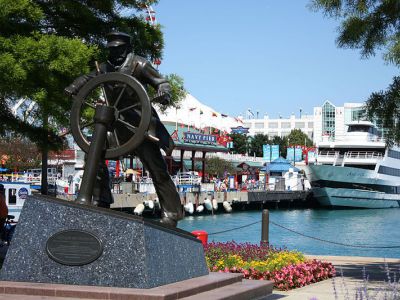
3) Navy Pier (must see)
Navy Pier in Chicago, originally known as the "Municipal Pier," was designed by well-known architect Charles Sumner Frost. Located along the shore of Lake Michigan, the Navy Pier is 3,300 feet long. It was first opened to the public in 1916 and renamed Navy Pier in 1927 in tribute to World War I Navy veterans.
There is plenty to see and do during a visit to the pier. At Pier Park, you'll find a variety of fun rides, games, and other amusements. Ride a hand-painted horse on the delightful musical carousel. You can't miss the iconic Centennial Wheel that debuted in 2016, honoring the 100th anniversary of the pier. This Ferris wheel is close to 200 feet tall and offers panoramic city views from the top.
Attractions at Navy Pier include the Chicago Children's Museum boasting three floors of exploration for kids. See live plays, musicals, and events at the Chicago Shakespeare Theater. Get lost in the 4,000-square-foot Funhouse Maze. During the summer, Navy Pier puts on a spectacular fireworks show that is a favorite with visitors and locals.
Hungry visitors will find a wide array of foods available, including hot dogs, burgers, pizza, popcorn, and ice cream. The waterfront Beer Garden, open seasonally, offers craft beer and live music performances. The pier also features shopping and special events.
There is plenty to see and do during a visit to the pier. At Pier Park, you'll find a variety of fun rides, games, and other amusements. Ride a hand-painted horse on the delightful musical carousel. You can't miss the iconic Centennial Wheel that debuted in 2016, honoring the 100th anniversary of the pier. This Ferris wheel is close to 200 feet tall and offers panoramic city views from the top.
Attractions at Navy Pier include the Chicago Children's Museum boasting three floors of exploration for kids. See live plays, musicals, and events at the Chicago Shakespeare Theater. Get lost in the 4,000-square-foot Funhouse Maze. During the summer, Navy Pier puts on a spectacular fireworks show that is a favorite with visitors and locals.
Hungry visitors will find a wide array of foods available, including hot dogs, burgers, pizza, popcorn, and ice cream. The waterfront Beer Garden, open seasonally, offers craft beer and live music performances. The pier also features shopping and special events.
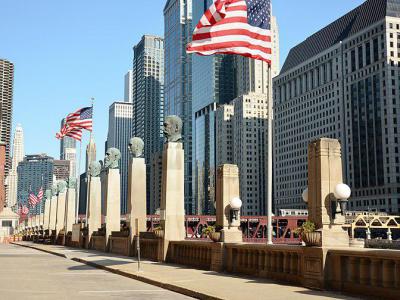
4) Magnificent Mile (must see)
Strolling down the expansive stretch of Michigan Avenue north of the Chicago River is a must-do for nearly every visitor to the city. Known as one of the world's most renowned shopping districts, the Magnificent Mile boasts a rich assortment of mainstream retailers, major department stores, and shopping centers. Even if you aren't inclined to shop, there's much to captivate your interest here. The southern end of this bustling strip is anchored by the iconic Wrigley Building skyscraper, featuring two elaborately designed towers constructed between 1920 and 1924, as well as the Tribune Tower, a 36-floor neo-Gothic skyscraper. At the northern terminus stands the impressive 100-storey John Hancock Center, with the famous Water Tower situated in between.
Apart from being one of Chicago's premier spots for people-watching, the Magnificent Mile is also a haven for food enthusiasts, offering a wide array of dining choices, including renowned and critically acclaimed restaurants. However, if you come to Chicago with a specific craving for the city's famous local pizza, be sure to explore Gino's East and Lou Malnati's, among other locations, as they provide some of the finest Chicago-Style deep dish pizza experiences available in the city.
Apart from being one of Chicago's premier spots for people-watching, the Magnificent Mile is also a haven for food enthusiasts, offering a wide array of dining choices, including renowned and critically acclaimed restaurants. However, if you come to Chicago with a specific craving for the city's famous local pizza, be sure to explore Gino's East and Lou Malnati's, among other locations, as they provide some of the finest Chicago-Style deep dish pizza experiences available in the city.
5) Chicago Theatre (must see)
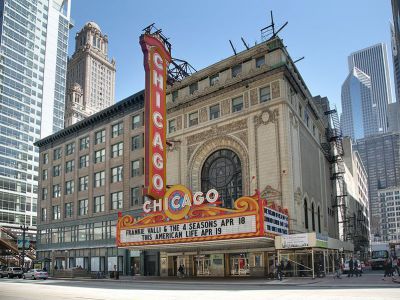
You can’t miss it-literally-that unmistakable marquee and the vertical towering “CHICAGO” sign blazing in red and gold above State Street! That’s the Chicago Theatre to you, showing off like it’s the city's prom queen-and honestly, with a face like that, who can blame it? Modeled after Paris’s Triumphal Arch, its façade has been photobombing tourists since 1921. Nicknamed the “Wonder Theatre of the World,” it rose from the ashes-well, sort of-right after the Great Fire, borrowing both the flair and the structural quirks of earlier architecture. Case in point: its rare cast-iron façade, one of the last survivors in the Loop, which, while stylish, has a not-so-charming tendency to melt like a grilled cheese when exposed to a blaze.
But the real scene-stealer is inside. Imagine Versailles by way of the Midwest. You’ve got grand staircases inspired by the Paris Opera House, crystal chandeliers that could outshine the sun, and a lobby that screams royal chapel chic. The 3,800-seat auditorium isn’t just massive-it’s expertly designed, so nobody gets stuck behind a pole, or worse, someone with a feathered hat...
Back in the day, the theatre dazzled audiences with silent films, live orchestras, and its mighty Wurlitzer organ-an absolute unit of an instrument. These days, it’s still flexing, hosting everything from musicals and concerts to stand-up legends. And if you're feeling nosy (or nostalgic), you can join a tour, where you will stand on the same stage graced by Sousa, Ellington, Ellen, and Queen Bey herself. Don’t skip the backstage walls either-autographs, inside jokes, and a century’s worth of showbiz spirit still echo in Sharpie ink.
So, yes, come for the photo op-but stay for the jaw-dropping grandeur, ghost stories of velvet curtains past, and maybe even a Beyoncé echo if the acoustics are just right...
But the real scene-stealer is inside. Imagine Versailles by way of the Midwest. You’ve got grand staircases inspired by the Paris Opera House, crystal chandeliers that could outshine the sun, and a lobby that screams royal chapel chic. The 3,800-seat auditorium isn’t just massive-it’s expertly designed, so nobody gets stuck behind a pole, or worse, someone with a feathered hat...
Back in the day, the theatre dazzled audiences with silent films, live orchestras, and its mighty Wurlitzer organ-an absolute unit of an instrument. These days, it’s still flexing, hosting everything from musicals and concerts to stand-up legends. And if you're feeling nosy (or nostalgic), you can join a tour, where you will stand on the same stage graced by Sousa, Ellington, Ellen, and Queen Bey herself. Don’t skip the backstage walls either-autographs, inside jokes, and a century’s worth of showbiz spirit still echo in Sharpie ink.
So, yes, come for the photo op-but stay for the jaw-dropping grandeur, ghost stories of velvet curtains past, and maybe even a Beyoncé echo if the acoustics are just right...
6) Millennium Park (must see)
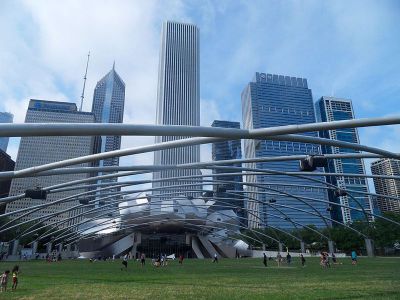
In 2004, when Anish Kapoor's colossal, gleaming Cloud Gate sculpture, the lively fountains, the captivating Crown Fountain, and a Disney-esque music pavilion all came together in this park, they quickly won the affection of both Chicagoans and tourists. This public space, which cost $250 million more than planned and opened four years later than scheduled, stands out as Chicago's most dazzling, showcasing contemporary architecture and design. Paul Goldberger, the architecture critic for The New York Times, hailed it as "one of the great new models for a kind of urban park." It has been embraced by locals and visitors alike and is widely considered the most impressive public project in Chicago since the 1893 World's Fair.
The park's origins trace back to a moment when Mayor Richard M. Daley conceived of it while sitting in his dentist's chair across the street, gazing at the sea of parking lots and railyards that occupied the site until the late 1990s. The initial design, created by the globally renowned Skidmore, Owings and Merrill firm based in Chicago, adhered to the traditional style of Grant Park, featuring formal fountains and gardens. However, private donors who had pledged to supplement public funding for the park's construction rejected this design as too conservative. Cindy Pritzker, a prominent Chicago philanthropist and the spouse of the late Jay Pritzker, the founder of the Hyatt hotel chain and the esteemed Pritzker Prize in architecture, eventually persuaded Frank Gehry (a previous Pritzker Prize laureate) to design the park's central pavilion, along with a bridge leading to the lake across Columbus Avenue. Gehry's involvement attracted other exceptional talents to the project, resulting in an impressively diverse yet cohesive masterpiece.
The star attraction undoubtedly lies in Gehry's remarkable Jay Pritzker Pavilion, featuring striking ribbons of stainless steel soaring 40 feet into the sky, resembling petals enveloping the music stage. Other notable elements include the Harris Theater for Music and Dance, offering an indoor option for performing arts enthusiasts, the McCormick Tribune Ice Rink, and the Lurie Garden, a year-round delight.
The park's origins trace back to a moment when Mayor Richard M. Daley conceived of it while sitting in his dentist's chair across the street, gazing at the sea of parking lots and railyards that occupied the site until the late 1990s. The initial design, created by the globally renowned Skidmore, Owings and Merrill firm based in Chicago, adhered to the traditional style of Grant Park, featuring formal fountains and gardens. However, private donors who had pledged to supplement public funding for the park's construction rejected this design as too conservative. Cindy Pritzker, a prominent Chicago philanthropist and the spouse of the late Jay Pritzker, the founder of the Hyatt hotel chain and the esteemed Pritzker Prize in architecture, eventually persuaded Frank Gehry (a previous Pritzker Prize laureate) to design the park's central pavilion, along with a bridge leading to the lake across Columbus Avenue. Gehry's involvement attracted other exceptional talents to the project, resulting in an impressively diverse yet cohesive masterpiece.
The star attraction undoubtedly lies in Gehry's remarkable Jay Pritzker Pavilion, featuring striking ribbons of stainless steel soaring 40 feet into the sky, resembling petals enveloping the music stage. Other notable elements include the Harris Theater for Music and Dance, offering an indoor option for performing arts enthusiasts, the McCormick Tribune Ice Rink, and the Lurie Garden, a year-round delight.
7) Cloud Gate (must see)
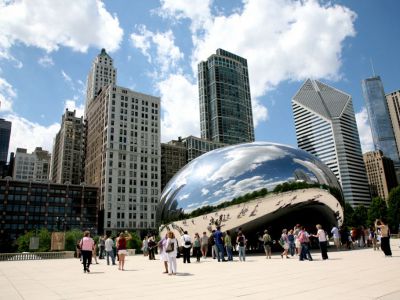
At the shiny center of AT&T Plaza in Millennium Park, stands the Cloud Gate - or as Chicagoans lovingly call it, The Bean. Sculpted between 2004 and 2006 by Anish Kapoor, an Indian-born British artist known for making giant shiny things that you can’t help staring at, this was his first outdoor public piece in the United States-which quickly became the selfie magnet of the Midwest.
Made from over 160 stainless steel plates seamlessly fused together (so well, in fact, you'd swear it was magic), this mirror-like blob stretches 66 feet long, stands 33 feet tall, and weighs in at a casual 100 tons. It's shaped like a drop of liquid mercury but looks more like an alien lentil from a sleek future where everything is polished to perfection.
Now, here’s the kicker: when Kapoor first proposed it, the art world blinked. Some said, “Gorgeous idea,” others said, “Logistically impossible.” Welding it, polishing it, cleaning it would be a nightmare! And yet - they pulled it off, nonetheless, although not without a few delays. When Millennium Park opened in 2004, The Bean wasn’t quite ready for its big debut. It took until May 15, 2006, for the formal unveiling, and since then it’s been soaking up praise, Instagram filters, and about ten million fingerprints a year.
Now, if you leave Chicago without a photo warped in The Bean’s belly, some may wonder if you've ever been to Chicago at all... Indeed, it's reflective, massive, and playful - and frankly, it’s probably already seen your face in someone else's selfie...
Made from over 160 stainless steel plates seamlessly fused together (so well, in fact, you'd swear it was magic), this mirror-like blob stretches 66 feet long, stands 33 feet tall, and weighs in at a casual 100 tons. It's shaped like a drop of liquid mercury but looks more like an alien lentil from a sleek future where everything is polished to perfection.
Now, here’s the kicker: when Kapoor first proposed it, the art world blinked. Some said, “Gorgeous idea,” others said, “Logistically impossible.” Welding it, polishing it, cleaning it would be a nightmare! And yet - they pulled it off, nonetheless, although not without a few delays. When Millennium Park opened in 2004, The Bean wasn’t quite ready for its big debut. It took until May 15, 2006, for the formal unveiling, and since then it’s been soaking up praise, Instagram filters, and about ten million fingerprints a year.
Now, if you leave Chicago without a photo warped in The Bean’s belly, some may wonder if you've ever been to Chicago at all... Indeed, it's reflective, massive, and playful - and frankly, it’s probably already seen your face in someone else's selfie...
8) Art Institute of Chicago (must see)
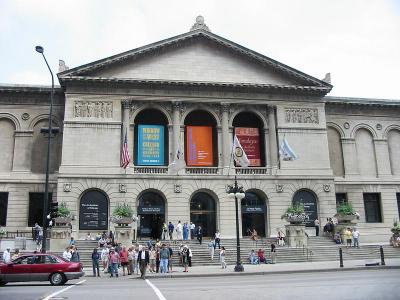
Climb the grand staircase, stride past the stone-faced lions who’ve seen it all, and step into the Midwest’s reigning heavyweight of art-The Art Institute of Chicago! Housed in a sprawling Beaux-Arts palace, this museum is practically an all-you-can-absorb buffet of global creativity. And just when you think you’ve got your bearings, bam-there’s the Modern Wing, sleek and gleaming like a spaceship, courtesy of the very same Renzo Piano.
Inside, the European Collection marches through history like a very well-dressed parade-from medieval saints to moody 1950s portraits, with Renaissance drama and Baroque flair in between. But the real crowd magnet is nearly 400 Impressionist and Post-Impressionist masterpieces. Monet, Van Gogh, Cézanne-they’re all here, casually hanging out like it’s no big deal. Over in the American wing, about 5,500 works stretch across centuries, from colonial portraits to early 20th-century boldness. And if you’re into decor with a past, the Terra Foundation’s loans serve up silver, ceramics, and furniture that could easily outclass anybody's grandma’s best set.
Also, don’t skip the local favorites: the pint-sized perfection of the Thorne Miniature Rooms (imagine dollhouses with Ivy League degrees), or Chagall’s “American Windows,” where stained glass sings in color.
Coming here, you're in for more than just a gallery stroll but a full-on, globe-spanning, time-traveling art adventure. From Greek gods to Japanese screens, African masks to Warhol prints, there’s something for every curious eye. And yes, the photography collection alone could fill a day. So, do come in, wander wide, and let the lions keep watch while you get your culture fix.
Inside, the European Collection marches through history like a very well-dressed parade-from medieval saints to moody 1950s portraits, with Renaissance drama and Baroque flair in between. But the real crowd magnet is nearly 400 Impressionist and Post-Impressionist masterpieces. Monet, Van Gogh, Cézanne-they’re all here, casually hanging out like it’s no big deal. Over in the American wing, about 5,500 works stretch across centuries, from colonial portraits to early 20th-century boldness. And if you’re into decor with a past, the Terra Foundation’s loans serve up silver, ceramics, and furniture that could easily outclass anybody's grandma’s best set.
Also, don’t skip the local favorites: the pint-sized perfection of the Thorne Miniature Rooms (imagine dollhouses with Ivy League degrees), or Chagall’s “American Windows,” where stained glass sings in color.
Coming here, you're in for more than just a gallery stroll but a full-on, globe-spanning, time-traveling art adventure. From Greek gods to Japanese screens, African masks to Warhol prints, there’s something for every curious eye. And yes, the photography collection alone could fill a day. So, do come in, wander wide, and let the lions keep watch while you get your culture fix.
9) Buckingham Fountain (must see)
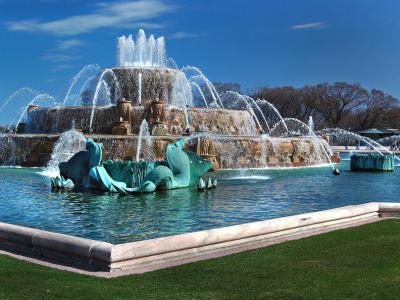
Right in the thick of Chicago’s downtown grid, amid suits and skyscrapers, you’ll find Grant Park showing off its true showstopper: one of the largest fountains in the world! And no, it's not just there to impress tourists. This aquatic giant was a lavish gift from Kate Sturges Buckingham, a 20th-century American art collector and philanthropist, who had some serious cash to splash thanks to her family's grain empire. She dedicated it to her brother, with whom she shared a deep love for art (and apparently, dramatic gestures).
What you get is less “sprinkler system” and more “sculptural fever dream.” Imagine a three-tiered marble wedding cake dressed in pink seashells, ringed with gleeful fish spraying water like it’s going out of style, and four bronze sea horses rearing back in dramatic flair - each repping one of the states touching Lake Michigan. It all came together in 1927, channeling Versailles vibes, only bigger. Because this is Chicago...
Now, if you want the full Buckingham Fountain experience, show up between May and October. That’s when the real magic happens - hourly water shows with lights that shimmer and shift like the fountain’s throwing its own rave. Stick around long enough, and you'll see the center jet shooting 150 feet into the air like it’s trying to signal the moon.
Tip break:
While here, don’t just stare at the spray. Head west across Columbus Drive and give a nod to the quietly dignified Lincoln statue - seated, reflective, and looking like he’s contemplating the next big speech. Sculpted by Augustus Saint-Gaudens in 1926, it’s the introvert to the fountain’s extrovert. Then swing by Congress Parkway near Michigan Avenue, where The Bowman and the Spearman strike a pose. These towering bronze Indian warriors aren’t just decorative-they're 17 feet of pure stoic intensity.
What you get is less “sprinkler system” and more “sculptural fever dream.” Imagine a three-tiered marble wedding cake dressed in pink seashells, ringed with gleeful fish spraying water like it’s going out of style, and four bronze sea horses rearing back in dramatic flair - each repping one of the states touching Lake Michigan. It all came together in 1927, channeling Versailles vibes, only bigger. Because this is Chicago...
Now, if you want the full Buckingham Fountain experience, show up between May and October. That’s when the real magic happens - hourly water shows with lights that shimmer and shift like the fountain’s throwing its own rave. Stick around long enough, and you'll see the center jet shooting 150 feet into the air like it’s trying to signal the moon.
Tip break:
While here, don’t just stare at the spray. Head west across Columbus Drive and give a nod to the quietly dignified Lincoln statue - seated, reflective, and looking like he’s contemplating the next big speech. Sculpted by Augustus Saint-Gaudens in 1926, it’s the introvert to the fountain’s extrovert. Then swing by Congress Parkway near Michigan Avenue, where The Bowman and the Spearman strike a pose. These towering bronze Indian warriors aren’t just decorative-they're 17 feet of pure stoic intensity.
10) Field Museum (must see)
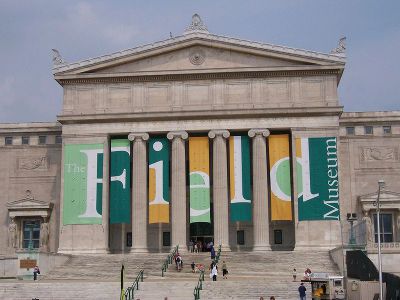
Spanning over 400,000 square feet of exhibition space, this immense museum delves into the diverse cultures and environments found across the globe. Its architectural design draws inspiration from Greek temples, with the caryatids bearing a striking resemblance to those found on the ancient Erechtheion in Athens. The central hall, an imposing neoclassical space encircled by Ionic columns, stands as one of Chicago's most magnificent neoclassical settings, simultaneously grand and tranquil.
Inside, interactive displays delve into a wide array of subjects, from unraveling the enigmas of Egyptian mummies to showcasing the artistry and innovations of ancient American civilizations and tracing the evolutionary tapestry of life on our planet. Notably, the Grainger Hall of Gems houses a mesmerizing collection of rare jewels from across the world, accompanied by a splendid Louis Comfort Tiffany stained glass window.
Originally bankrolled by Marshall Field, a prominent Chicago retailer, the museum's origins trace back to 1893 when it was established to house materials amassed for the World's Columbian Exposition. Its present residence, an architectural marvel in itself, opened its doors in 1921. While the museum boasts the world's premier dinosaur collections, the star attraction remains "Sue", a 67-million-year-old 'Tyrannosaurus rex' fossil that holds the distinction of being the largest, most complete, and best-preserved specimen of its kind ever unearthed. So, don't miss the chance to snap a selfie with Sue, savor a meal at the on-site café or bistro, or enjoy your own picnic outdoors while taking in panoramic vistas of the city skyline and the serene lake.
Why You Should Visit:
This museum caters to all ages, appealing to kids, adults, scientists, and history enthusiasts alike. There's a wealth of knowledge to explore across various domains. It's renowned for its dinosaur exhibits, boasting more than 80% of real skeleton reconstructions, along with the meticulously recreated Egyptian tomb.
Tip:
Be sure to keep an eye out for information regarding special events, guided tours, and activities scheduled throughout the museum.
Inside, interactive displays delve into a wide array of subjects, from unraveling the enigmas of Egyptian mummies to showcasing the artistry and innovations of ancient American civilizations and tracing the evolutionary tapestry of life on our planet. Notably, the Grainger Hall of Gems houses a mesmerizing collection of rare jewels from across the world, accompanied by a splendid Louis Comfort Tiffany stained glass window.
Originally bankrolled by Marshall Field, a prominent Chicago retailer, the museum's origins trace back to 1893 when it was established to house materials amassed for the World's Columbian Exposition. Its present residence, an architectural marvel in itself, opened its doors in 1921. While the museum boasts the world's premier dinosaur collections, the star attraction remains "Sue", a 67-million-year-old 'Tyrannosaurus rex' fossil that holds the distinction of being the largest, most complete, and best-preserved specimen of its kind ever unearthed. So, don't miss the chance to snap a selfie with Sue, savor a meal at the on-site café or bistro, or enjoy your own picnic outdoors while taking in panoramic vistas of the city skyline and the serene lake.
Why You Should Visit:
This museum caters to all ages, appealing to kids, adults, scientists, and history enthusiasts alike. There's a wealth of knowledge to explore across various domains. It's renowned for its dinosaur exhibits, boasting more than 80% of real skeleton reconstructions, along with the meticulously recreated Egyptian tomb.
Tip:
Be sure to keep an eye out for information regarding special events, guided tours, and activities scheduled throughout the museum.
11) Museum of Science and Industry (must see)
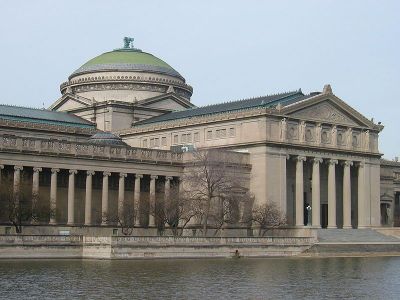
The Museum of Science and Industry stands as one of Chicago's most popular attractions, and rightfully so. This expansive facility spans 14 acres across three floors, featuring ever-evolving exhibits that could easily occupy an entire day of exploration. The topics covered here range from manufacturing and glaciers to robots and engineering marvels. Among the permanent displays, you'll find the US-505 Submarine, a rare capture from World War II, and there are regularly changing exhibits, including a colossal Lego room. Additionally, there are convenient dining options on-site, including a café and cafeteria.
The museum's cutting-edge interior contrasts with its Classical Revival façade, originally designed in 1892 to house the Palace of Fine Arts for the World's Columbian Exposition. Remarkably, this is the sole remaining structure from that grand 1893 fair, and also its only fireproof building. Adorned with Ionic colonnades, caryatid porches, and domed roofs, it epitomizes the classicism that defined the fair's White City of marble temples. Architect George W. Maher once praised the Palace's architecture as "unequaled since the Age of Pericles."
Tip:
If you're in need of some tranquility, venture into the beautifully landscaped Jackson Park, home to the serene Osaka Garden with its Japanese-style ambiance, located just behind the museum.
The museum's cutting-edge interior contrasts with its Classical Revival façade, originally designed in 1892 to house the Palace of Fine Arts for the World's Columbian Exposition. Remarkably, this is the sole remaining structure from that grand 1893 fair, and also its only fireproof building. Adorned with Ionic colonnades, caryatid porches, and domed roofs, it epitomizes the classicism that defined the fair's White City of marble temples. Architect George W. Maher once praised the Palace's architecture as "unequaled since the Age of Pericles."
Tip:
If you're in need of some tranquility, venture into the beautifully landscaped Jackson Park, home to the serene Osaka Garden with its Japanese-style ambiance, located just behind the museum.
