Custom Walk in Melbourne, Australia by celchristina03_b27b24 created on 2026-03-17
Guide Location: Australia » Melbourne
Guide Type: Custom Walk
# of Sights: 11
Tour Duration: 3 Hour(s)
Travel Distance: 6.6 Km or 4.1 Miles
Share Key: EYCJB
Guide Type: Custom Walk
# of Sights: 11
Tour Duration: 3 Hour(s)
Travel Distance: 6.6 Km or 4.1 Miles
Share Key: EYCJB
How It Works
Please retrieve this walk in the GPSmyCity app. Once done, the app will guide you from one tour stop to the next as if you had a personal tour guide. If you created the walk on this website or come to the page via a link, please follow the instructions below to retrieve the walk in the app.
Retrieve This Walk in App
Step 1. Download the app "GPSmyCity: Walks in 1K+ Cities" on Apple App Store or Google Play Store.



Step 2. In the GPSmyCity app, download(or launch) the guide "Melbourne Map and Walking Tours".
Step 3. Tap the menu button located at upper right corner of the "Walks" screen and select "Retrieve custom walk". Enter the share key: EYCJB
1) Old Melbourne Gaol (must see)
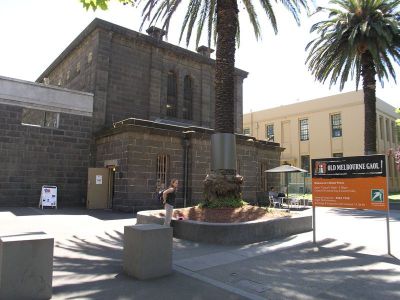
The Old Melbourne Gaol, situated on Russell Street in Melbourne, is a historical site that serves as both a museum and a former prison. It comprises a sturdy bluestone building, an adjoining courtyard, and is situated in close proximity to the old City Police Watch House and City Courts buildings. The construction of this facility commenced in 1839, and it operated as a prison from 1842 to 1929. During this period, it housed and carried out executions for some of Australia's most infamous criminals, such as Ned Kelly, a notorious bushranger, and Frederick Bailey Deeming, a serial killer.
A total of 133 individuals met their fate on the gallows here. Although it had a brief role during World War II, the gaol officially ceased to function as a prison in 1924. Some parts of the facility were incorporated into RMIT University, while the remainder was transformed into a museum.
This three-story museum is dedicated to preserving and showcasing the history of the gaol, including information and artifacts related to both the prisoners and the staff who worked there. Among the exhibits are death masks of the executed criminals. At one point, the museum also featured Ned Kelly's skull, which was unfortunately stolen in 1978, as well as the pencil used by Colin Campbell Ross, who was wrongfully convicted, to assert his innocence in writing before his execution.
Additionally, there are claims by paranormal enthusiasts that the museum is haunted, with reports of ghostly apparitions and unexplained voices in the vicinity of the former prison cells.
A total of 133 individuals met their fate on the gallows here. Although it had a brief role during World War II, the gaol officially ceased to function as a prison in 1924. Some parts of the facility were incorporated into RMIT University, while the remainder was transformed into a museum.
This three-story museum is dedicated to preserving and showcasing the history of the gaol, including information and artifacts related to both the prisoners and the staff who worked there. Among the exhibits are death masks of the executed criminals. At one point, the museum also featured Ned Kelly's skull, which was unfortunately stolen in 1978, as well as the pencil used by Colin Campbell Ross, who was wrongfully convicted, to assert his innocence in writing before his execution.
Additionally, there are claims by paranormal enthusiasts that the museum is haunted, with reports of ghostly apparitions and unexplained voices in the vicinity of the former prison cells.
2) Royal Exhibition Building
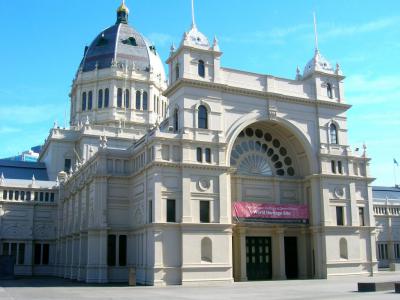
The Royal Exhibition Building in Melbourne is Australia’s first UNESCO World Heritage Site building. Built in 1880 for Melbourne to host its first international exhibition, it is today one of the oldest surviving exhibition buildings. With eyes from around the globe focused on the young colony, Victoria splashed a lot of its gold wealth around to produce this stunning building. Located in Carlton Gardens at the north-eastern fringe of the CBD, visiting the site is a must while in Melbourne. The building is next to the Melbourne Museum, and is in fact, the largest of the museum’s acquisitions.
Following its wild success hosting the Melbourne International Exhibition and the Melbourne Centennial Exhibition in 1888, the building was also selected as the site to open the first Parliament of Australia on May 9th, 1901 following federation. It was also at the Royal Exhibition Building on September 3rd, 1901 that the Governor-General’s wife, the Countess of Hopetoun announced the winner of the competition to design the Australian flag and it was unrolled for the first time and flown above the building’s dome. Today the building is still extensively used as an exhibition hall and there are regular tours that can be arranged through the Melbourne Museum.
Following its wild success hosting the Melbourne International Exhibition and the Melbourne Centennial Exhibition in 1888, the building was also selected as the site to open the first Parliament of Australia on May 9th, 1901 following federation. It was also at the Royal Exhibition Building on September 3rd, 1901 that the Governor-General’s wife, the Countess of Hopetoun announced the winner of the competition to design the Australian flag and it was unrolled for the first time and flown above the building’s dome. Today the building is still extensively used as an exhibition hall and there are regular tours that can be arranged through the Melbourne Museum.
3) St. Patrick's Cathedral (must see)
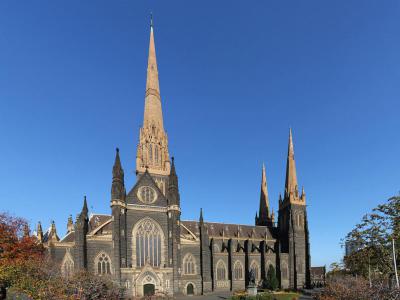
Saint Patrick’s Cathedral-rising from Eastern Hill-practically announces itself as one of Australia’s most commanding religious landmarks. Indeed, this Gothic Revival giant has been stopping people in their tracks since the 19th century.
Its story started when Melbourne’s Catholic population ballooned during the gold rush-because nothing attracts crowds like the promise of fortune... In 1848, Bishop James Goold arrived in Melbourne with big ambitions and a keen eye for real estate. Having quickly realised he needed more than just a modest chapel, Goold secured this hilltop site in 1851.
Architect William Wardell was brought in to sketch a Gothic Revival masterpiece worthy of a rising city. The plans were bold, soaring, and dramatic… His blueprint channelled medieval England with a Melbourne twist, all built in brooding bluestone and sandstone for maximum gravitas.
Although ready early on, the project didn't progress very swiftly. Amid the gold rush, with half the colony's workforce off chasing fortune, the actual construction didn’t get moving until 1858. Over the following decades, sections appeared piece by piece: nave, choir, transepts-like a very long, very serious architectural jigsaw...
Economic troubles in the 1890s slowed everything further, but perseverance won out, and the cathedral was finally consecrated in 1897. Still, the iconic trio of spires was fashionably late and arrived only in 1939. Once in place, they crowned the cathedral as the tallest church site in Australia (a title it still holds), soaring to 103 metres, as if trying to tap the heavens on the shoulder...
Inside, the grandeur continues with stained glass that glows like jewellery, intricate timber carvings, and an elaborate high-altar reredos-all nods to the Irish heritage of Melbourne’s early Catholic community, who saw the cathedral as both a spiritual home and a cultural anchor. And while the décor is historic, the building itself hasn’t been left to age quietly; careful conservation has kept it looking as commanding as ever.
Today, Saint Patrick’s welcomes visitors from 9 a.m. to 5 p.m., and you’ll often find friendly volunteers ready to share stories, point out hidden details, or explain why Wardell loved Gothic Revival as much as he did.
Tip:
Check for services before stepping inside. When the cathedral isn’t hosting worship, you’re free to wander, linger, admire the stained glass, and capture your perfect photo of those soaring spires.
Its story started when Melbourne’s Catholic population ballooned during the gold rush-because nothing attracts crowds like the promise of fortune... In 1848, Bishop James Goold arrived in Melbourne with big ambitions and a keen eye for real estate. Having quickly realised he needed more than just a modest chapel, Goold secured this hilltop site in 1851.
Architect William Wardell was brought in to sketch a Gothic Revival masterpiece worthy of a rising city. The plans were bold, soaring, and dramatic… His blueprint channelled medieval England with a Melbourne twist, all built in brooding bluestone and sandstone for maximum gravitas.
Although ready early on, the project didn't progress very swiftly. Amid the gold rush, with half the colony's workforce off chasing fortune, the actual construction didn’t get moving until 1858. Over the following decades, sections appeared piece by piece: nave, choir, transepts-like a very long, very serious architectural jigsaw...
Economic troubles in the 1890s slowed everything further, but perseverance won out, and the cathedral was finally consecrated in 1897. Still, the iconic trio of spires was fashionably late and arrived only in 1939. Once in place, they crowned the cathedral as the tallest church site in Australia (a title it still holds), soaring to 103 metres, as if trying to tap the heavens on the shoulder...
Inside, the grandeur continues with stained glass that glows like jewellery, intricate timber carvings, and an elaborate high-altar reredos-all nods to the Irish heritage of Melbourne’s early Catholic community, who saw the cathedral as both a spiritual home and a cultural anchor. And while the décor is historic, the building itself hasn’t been left to age quietly; careful conservation has kept it looking as commanding as ever.
Today, Saint Patrick’s welcomes visitors from 9 a.m. to 5 p.m., and you’ll often find friendly volunteers ready to share stories, point out hidden details, or explain why Wardell loved Gothic Revival as much as he did.
Tip:
Check for services before stepping inside. When the cathedral isn’t hosting worship, you’re free to wander, linger, admire the stained glass, and capture your perfect photo of those soaring spires.
4) Old Treasury Building
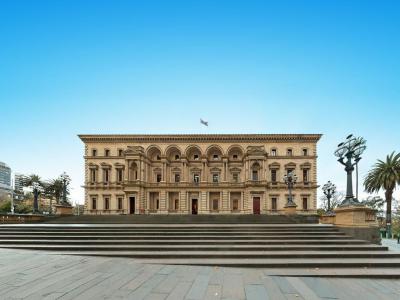
Located within one of Australia's most esteemed 19th-century Gothic Revival buildings, the City Museum of Old Treasury offers an excellent opportunity to delve into Melbourne's rich history. Constructed in 1862, this building served as a key government facility for 130 years and initially functioned as a secure repository for Melbourne's newfound wealth during the gold rush era. In 1992, following the conclusion of its governmental role, the building underwent restoration and was reborn as the City Museum of Old Treasury in 1994. Today, visitors can explore numerous permanent exhibitions along with temporary and visiting displays.
One notable permanent exhibition is "Victorian Archival Treasures," where you can gain insights into various aspects of Melbourne's history, such as Ned Kelly, gold miners from the 1850s, indigenous Victorians, renowned criminals, and the city's early settlement. "Built On Gold" delves into the gold rush period from 1852 to 1862, and this exhibition is situated within the building's former gold vaults. "Growing Up In Old Treasury" recounts the experiences of the Maynard family, who resided in the basement of the building during the 1920s when the father served as superintendent.
One notable permanent exhibition is "Victorian Archival Treasures," where you can gain insights into various aspects of Melbourne's history, such as Ned Kelly, gold miners from the 1850s, indigenous Victorians, renowned criminals, and the city's early settlement. "Built On Gold" delves into the gold rush period from 1852 to 1862, and this exhibition is situated within the building's former gold vaults. "Growing Up In Old Treasury" recounts the experiences of the Maynard family, who resided in the basement of the building during the 1920s when the father served as superintendent.
5) Fitzroy Gardens and Captain Cook's Cottage (must see)
On the southeastern edge of Melbourne’s Central Business District, the city suddenly exhales-with 64 acres of Fitzroy Gardens opening up like a green antidote to downtown hustle. Laid out back in 1848 and named after the then Governor of New South Wales, Sir Charles Augustus FitzRoy, these Victorian-era gardens come packed with an ornamental lake, a glass conservatory, a miniature Tudor village, and one very well-travelled cottage.
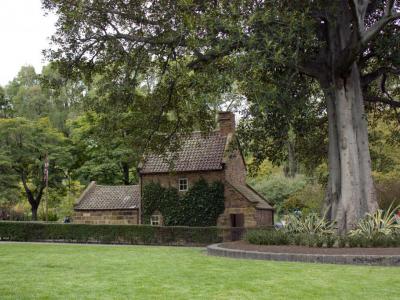
That cottage, Cooks’ Cottage, began life in 1755 in Great Ayton, North Yorkshire, England, where Captain James Cook’s parents built it long before anyone imagined it would one day cross the globe. In 1933, the cottage was taken apart brick by brick, packed into 253 cases and 40 barrels, and shipped to Melbourne aboard the cargo vessel Port Dunedin. Even the ivy tagging along today comes from cuttings of the original plant-proof that homesickness isn’t just for people... Though Cook may or may not have ever lived in this cottage himself, it now holds the title of Australia’s oldest standing building, which is quite a twist for something that started life on the other side of the world.
Restored in 1978, the house now sits inside a cottage garden, with antiques and costumed guides offering a glimpse into 18th-century domestic life-no electricity, no smartphones, and other technical delights of today...
Indeed, Melbourne likes to call itself Australia’s garden city, and Fitzroy Gardens is its strongest argument. Long, tree-lined paths, fountains, sculptures, and the Spanish mission-style conservatory (housing impressive floral displays) create a calm inner-city retreat where your biggest decision is whether to linger in the sun or keep exploring.
For a quick break, the KereKere Café by the visitor centre has you covered. Most visitors stay under an hour, but with sunshine, lawns, and picnic spots everywhere you look, stretching that into an afternoon feels entirely justified.
That cottage, Cooks’ Cottage, began life in 1755 in Great Ayton, North Yorkshire, England, where Captain James Cook’s parents built it long before anyone imagined it would one day cross the globe. In 1933, the cottage was taken apart brick by brick, packed into 253 cases and 40 barrels, and shipped to Melbourne aboard the cargo vessel Port Dunedin. Even the ivy tagging along today comes from cuttings of the original plant-proof that homesickness isn’t just for people... Though Cook may or may not have ever lived in this cottage himself, it now holds the title of Australia’s oldest standing building, which is quite a twist for something that started life on the other side of the world.
Restored in 1978, the house now sits inside a cottage garden, with antiques and costumed guides offering a glimpse into 18th-century domestic life-no electricity, no smartphones, and other technical delights of today...
Indeed, Melbourne likes to call itself Australia’s garden city, and Fitzroy Gardens is its strongest argument. Long, tree-lined paths, fountains, sculptures, and the Spanish mission-style conservatory (housing impressive floral displays) create a calm inner-city retreat where your biggest decision is whether to linger in the sun or keep exploring.
For a quick break, the KereKere Café by the visitor centre has you covered. Most visitors stay under an hour, but with sunshine, lawns, and picnic spots everywhere you look, stretching that into an afternoon feels entirely justified.
6) St. Paul's Cathedral
Sitting just across from the hustle of Flinders Street Station, Saint Paul’s Cathedral is a calm reminder to everyone that Melbourne’s skyline had a spiritual side long before espresso bars and laneway murals took over. This spot is more meaningful than it looks: it was here that the very first Christian service in the fledgling settlement was held in 1835, after which the site briefly served as a corn market. Indeed, only in Melbourne could a place go from a prayer to a produce before becoming a cathedral...
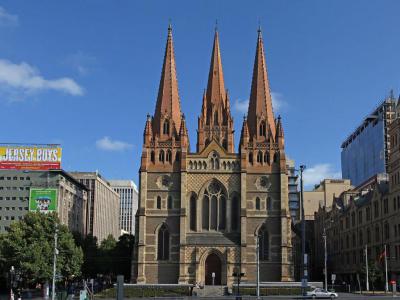
The building itself is the work of English architect William Butterfield, who designed it in the Gothic Revival style-characterized by soaring arches with a slightly rebellious streak. The foundation stone went in during 1880, the cathedral was consecrated in 1891, and the spires joined the complex in the 1920s, giving Saint Paul’s the silhouette that now anchors the Central Business District.
Inside, the soundscape is just as impressive. The T.C. Lewis organ, shipped from England, remains one of the finest surviving creations of the celebrated 19th-century organ maker. And if you happen to be nearby on a Wednesday or Friday evening-or on a Sunday morning-you’ll hear the bells, too. Cast in 1889 at London’s Whitechapel Bell Foundry, they offer something rare: true 13-bell change ringing, a tradition that usually stays on English soil.
Saint Paul’s keeps its doors open most of the week, so step inside whenever the mood strikes. Whether you’re drawn by the architecture, the music, or simply the peaceful break from the city’s pace, the cathedral delivers a moment of calm in the middle of Melbourne’s constant motion...
The building itself is the work of English architect William Butterfield, who designed it in the Gothic Revival style-characterized by soaring arches with a slightly rebellious streak. The foundation stone went in during 1880, the cathedral was consecrated in 1891, and the spires joined the complex in the 1920s, giving Saint Paul’s the silhouette that now anchors the Central Business District.
Inside, the soundscape is just as impressive. The T.C. Lewis organ, shipped from England, remains one of the finest surviving creations of the celebrated 19th-century organ maker. And if you happen to be nearby on a Wednesday or Friday evening-or on a Sunday morning-you’ll hear the bells, too. Cast in 1889 at London’s Whitechapel Bell Foundry, they offer something rare: true 13-bell change ringing, a tradition that usually stays on English soil.
Saint Paul’s keeps its doors open most of the week, so step inside whenever the mood strikes. Whether you’re drawn by the architecture, the music, or simply the peaceful break from the city’s pace, the cathedral delivers a moment of calm in the middle of Melbourne’s constant motion...
7) Queen Victoria Gardens
The Queen Victoria Gardens is a memorial to the state of Victoria’s namesake. Following her death in 1901, the state deemed that the long reigning monarch should be given an appropriate memorial and 4.8 hectares was set aside. The gardens are bounded by Saint Kilda Road, Alexandra Avenue and Linlithgow Avenue and make up part of the large group of city gardens known as the Domain Parklands. Taking a stroll through the gardens is the perfect way to revive your spirits and seek out some green space close to the bustling CBD.
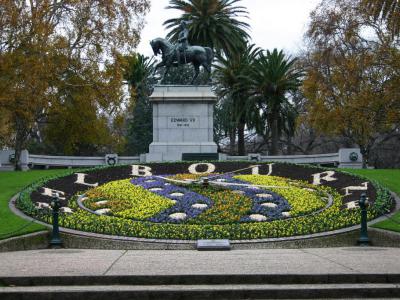
There are several features to visit while wandering through the Queen Victoria Gardens. One of the highlights is the large floral clock, which was donated in 1966 and features more than 7000 blooms. Behind the clock is a large bronze statue of Edward VII who succeeded Queen Victoria on the British throne. One of the main features of the park is the statue of Queen Victoria, which is at the highest point in the park, and she is shown wearing full regalia. Built from marble by James White, Queen Victoria looks down over the parklands’ lawns and garden beds. There are many other statues that are scattered around the parklands including The Genie, The Phoenix and The Pathfinder.
There are several features to visit while wandering through the Queen Victoria Gardens. One of the highlights is the large floral clock, which was donated in 1966 and features more than 7000 blooms. Behind the clock is a large bronze statue of Edward VII who succeeded Queen Victoria on the British throne. One of the main features of the park is the statue of Queen Victoria, which is at the highest point in the park, and she is shown wearing full regalia. Built from marble by James White, Queen Victoria looks down over the parklands’ lawns and garden beds. There are many other statues that are scattered around the parklands including The Genie, The Phoenix and The Pathfinder.
8) Government House
Government House is one of Melbourne’s most stunning buildings and the official residence of Victoria’s Governor. It was also home to Australia’s Governor-General, following federation, from 1901 to 1930. The house is located next to the Royal Botanic Gardens on land that was set aside by the first Governor of Victoria Charles La Trobe in 1841.
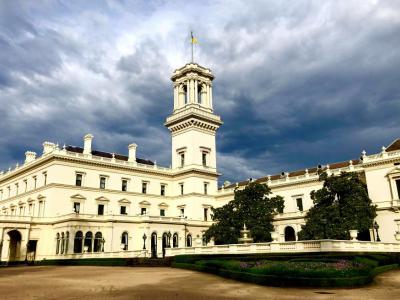
In 1870 the decision was made to finally construct a purpose built Victorian Government House there. It is the largest government house anywhere in the former British Empire. The flamboyant style of the building reflects the immense wealth of the state at that time as a direct result of the gold rush.
Government House is generally closed to the public as it is in use for state events and as the Governor’s private residence. However, tours may be available on Mondays and Wednesdays if you make an advance booking. The ballroom is said to be the largest in the southern hemisphere and within the British Empire. Every Australia Day it is opened up to visitors. Paying a visit to the Royal Botanic Gardens and wandering up to Government House to see its lovely Italianate exterior at close range is definitely worth the time on any trip to Melbourne.
In 1870 the decision was made to finally construct a purpose built Victorian Government House there. It is the largest government house anywhere in the former British Empire. The flamboyant style of the building reflects the immense wealth of the state at that time as a direct result of the gold rush.
Government House is generally closed to the public as it is in use for state events and as the Governor’s private residence. However, tours may be available on Mondays and Wednesdays if you make an advance booking. The ballroom is said to be the largest in the southern hemisphere and within the British Empire. Every Australia Day it is opened up to visitors. Paying a visit to the Royal Botanic Gardens and wandering up to Government House to see its lovely Italianate exterior at close range is definitely worth the time on any trip to Melbourne.
9) Shrine of Remembrance (must see)
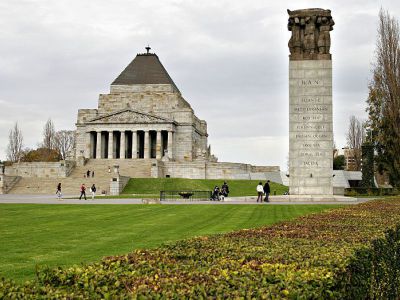
The Shrine of Remembrance at the King’s Domain in Melbourne was built following World War I as a constant reminder of all those Australians who fought and perished in the “Great War”. During WWI around 119,000 Victorians enlisted to defend king and country. Of the 89,000 who served abroad, around 19,000 were killed and buried in distant graves. The Shrine of Remembrance was built as a physical reminder and memorial to a grieving state and nation. Following several years of debate and contention over the design and form of the memorial, the foundation stone was laid on 11 November 1927. The shrine was officially dedicated on Remembrance Day, 1934 by the Duke of Gloucester before a crowd of around 300,000.
Following World War II a forecourt was added and this was dedicated by Queen Elizabeth II on her visit to Australia in 1954. The façade of the shrine is inspired by the Mausoleum of Maussollos at Halicarnassus and the Parthenon in Athens. Inside the shrine, the Stone of Remembrance is sunken so that visitors must bow their heads in order to read the inscription. In the Crypt there is a bronze statue of a father and son to represent the two generations that fought in the World War I and II.
Why You Should Visit:
Only a mile or two from central Melbourne, the atmosphere changes drastically when you get there.
Away from crowds and cars, this place is so quiet and peaceful, besides being very well maintained – both building and landscape.
Tip:
If you get a chance, catch one of the guided tours giving you further insight into the building and putting everything into perspective.
Following World War II a forecourt was added and this was dedicated by Queen Elizabeth II on her visit to Australia in 1954. The façade of the shrine is inspired by the Mausoleum of Maussollos at Halicarnassus and the Parthenon in Athens. Inside the shrine, the Stone of Remembrance is sunken so that visitors must bow their heads in order to read the inscription. In the Crypt there is a bronze statue of a father and son to represent the two generations that fought in the World War I and II.
Why You Should Visit:
Only a mile or two from central Melbourne, the atmosphere changes drastically when you get there.
Away from crowds and cars, this place is so quiet and peaceful, besides being very well maintained – both building and landscape.
Tip:
If you get a chance, catch one of the guided tours giving you further insight into the building and putting everything into perspective.
10) La Trobe's Cottage
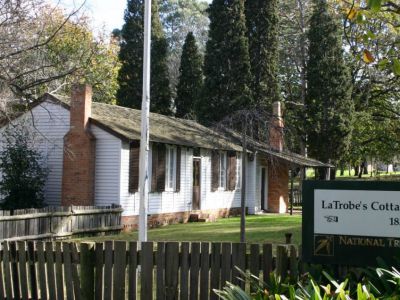
La Trobe Cottage was the home of Victoria’s first governor Charles Joseph La Trobe. You will find the little cottage in the King’s Domain parklands close to the south entrance of the Royal Botanic Gardens. The cottage was built from pre-fabricated materials transported from England in 1839.
Originally the home stood near the Melbourne Cricket Ground. La Trobe lived there during his governance until his return to England in 1854. The home is now looked after by the National Trust of Australia and is one of only a handful of examples of pre-fabricated English houses from this period of colonial life.
In 1840 La Trobe added a dining room extension to the cottage and this is believed to be the oldest surviving structure built in Melbourne. In 1960 the home was rescued from its derelict state and it was moved to the Domain and restored. Inside the home you can still see much of the furniture and personal effects of the La Trobe family that have been tracked down by the trust.
The cottage is open to visitors each Sunday between October and May from 2pm to 4pm and the last Sunday of the month for the rest of the year. Tours of the cottage can be arranged in advance.
Originally the home stood near the Melbourne Cricket Ground. La Trobe lived there during his governance until his return to England in 1854. The home is now looked after by the National Trust of Australia and is one of only a handful of examples of pre-fabricated English houses from this period of colonial life.
In 1840 La Trobe added a dining room extension to the cottage and this is believed to be the oldest surviving structure built in Melbourne. In 1960 the home was rescued from its derelict state and it was moved to the Domain and restored. Inside the home you can still see much of the furniture and personal effects of the La Trobe family that have been tracked down by the trust.
The cottage is open to visitors each Sunday between October and May from 2pm to 4pm and the last Sunday of the month for the rest of the year. Tours of the cottage can be arranged in advance.
11) Royal Botanic Gardens Melbourne (must see)
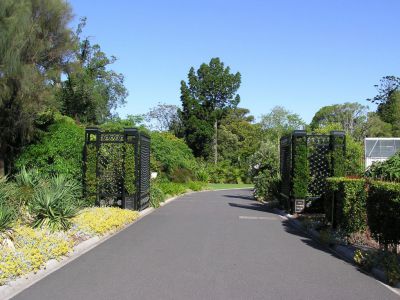
The Royal Botanic Gardens Victoria consists of two separate locations: Melbourne and Cranbourne. Melbourne Gardens, established in 1846, occupies a 38-hectare area along the southern bank of the Yarra River. It features a diverse landscape with trees, garden beds, lakes, and lawns, showcasing nearly 50,000 individual plants from 8,500 different species, organized into 30 living plant collections.
Cranbourne Gardens, on the other hand, was founded in 1970 on the southeastern outskirts of Melbourne. It was specifically created to focus on Australian plant species and is situated on a sprawling 363-hectare site. This site, known for its natural wilderness and importance in biodiversity conservation, opened to the public in 1989. Visitors can explore native bushland, heathlands, wetlands, and woodlands within its boundaries. Notable within Cranbourne Gardens is the Australian Garden, which highlights Australian landscapes and native flora through the display of approximately 170,000 plants representing 1,700 plant varieties. This project was completed in 2012.
The Royal Botanic Gardens Victoria is also home to the State Botanical Collection, housed in the National Herbarium of Victoria. This collection comprises a vast array of preserved plants, algae, and fungi, totaling 1.5 million specimens. It stands as the largest herbarium collection in both Australia and the wider Oceania region. Additionally, the institution boasts Australia's most comprehensive botanical library.
Cranbourne Gardens, on the other hand, was founded in 1970 on the southeastern outskirts of Melbourne. It was specifically created to focus on Australian plant species and is situated on a sprawling 363-hectare site. This site, known for its natural wilderness and importance in biodiversity conservation, opened to the public in 1989. Visitors can explore native bushland, heathlands, wetlands, and woodlands within its boundaries. Notable within Cranbourne Gardens is the Australian Garden, which highlights Australian landscapes and native flora through the display of approximately 170,000 plants representing 1,700 plant varieties. This project was completed in 2012.
The Royal Botanic Gardens Victoria is also home to the State Botanical Collection, housed in the National Herbarium of Victoria. This collection comprises a vast array of preserved plants, algae, and fungi, totaling 1.5 million specimens. It stands as the largest herbarium collection in both Australia and the wider Oceania region. Additionally, the institution boasts Australia's most comprehensive botanical library.
