Custom Walk in Bristol, England by karmen_crede_3e8852 created on 2026-03-20
Guide Location: England » Bristol
Guide Type: Custom Walk
# of Sights: 11
Tour Duration: 4 Hour(s)
Travel Distance: 8.9 Km or 5.5 Miles
Share Key: BTWTZ
Guide Type: Custom Walk
# of Sights: 11
Tour Duration: 4 Hour(s)
Travel Distance: 8.9 Km or 5.5 Miles
Share Key: BTWTZ
How It Works
Please retrieve this walk in the GPSmyCity app. Once done, the app will guide you from one tour stop to the next as if you had a personal tour guide. If you created the walk on this website or come to the page via a link, please follow the instructions below to retrieve the walk in the app.
Retrieve This Walk in App
Step 1. Download the app "GPSmyCity: Walks in 1K+ Cities" on Apple App Store or Google Play Store.



Step 2. In the GPSmyCity app, download(or launch) the guide "Bristol Map and Walking Tours".
Step 3. Tap the menu button located at upper right corner of the "Walks" screen and select "Retrieve custom walk". Enter the share key: BTWTZ
1) Temple Meads Train Station
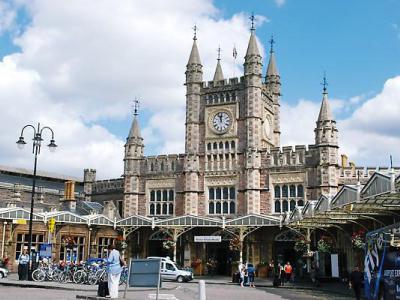
Temple Meads Train Station, located in Bristol, holds a significant place in railway history as the oldest and largest railway station in the city. It has served as a crucial transport hub, connecting various parts of Bristol and its surrounding districts. With its extensive bus services and even a ferry to the city center, Temple Meads plays a vital role in facilitating public transportation in the area. While Bristol Parkway is another major station in the city, Temple Meads boasts a rich heritage that sets it apart.
Temple Meads, opened in 1840, was the western terminus of the Great Western Railway, connecting Bristol and London. Designed by English civil engineer Isambard Kingdom Brunel, it later served other railway companies. Expansion occurred in the 1870s under Francis Fox and in the 1930s under Percy Emerson Culverhouse.
The station encompasses thirteen platforms, numbered from 1 to 15. However, passenger trains are primarily limited to eight tracks. The platform numbering system is distinct, with odd numbers at the east end and even numbers at the west end. Notably, Platform 2 serves as a bay platform at the west end but is not utilized for passenger trains. Additionally, there is no Platform 14 at Temple Meads.
As the oldest and largest railway station in Bristol, Temple Meads stands as a testament to the city's rich railway heritage. Its grand architecture, historical significance, and vital role in public transportation make it an iconic landmark in Bristol and an essential part of the city's identity.
Temple Meads, opened in 1840, was the western terminus of the Great Western Railway, connecting Bristol and London. Designed by English civil engineer Isambard Kingdom Brunel, it later served other railway companies. Expansion occurred in the 1870s under Francis Fox and in the 1930s under Percy Emerson Culverhouse.
The station encompasses thirteen platforms, numbered from 1 to 15. However, passenger trains are primarily limited to eight tracks. The platform numbering system is distinct, with odd numbers at the east end and even numbers at the west end. Notably, Platform 2 serves as a bay platform at the west end but is not utilized for passenger trains. Additionally, there is no Platform 14 at Temple Meads.
As the oldest and largest railway station in Bristol, Temple Meads stands as a testament to the city's rich railway heritage. Its grand architecture, historical significance, and vital role in public transportation make it an iconic landmark in Bristol and an essential part of the city's identity.

2) The Mild Mild West
Back in the late ’90s, Stokes Croft was already Bristol’s unofficial laboratory for bold ideas, loud nights, and walls that spoke their mind. Then one day in 1999, a new voice appeared-painted in broad daylight by Banksy-where a solicitor’s office wall became the stage for The Mild Mild West. A teddy bear, all fluff and mischief, is caught mid-throw with a Molotov cocktail aimed at three riot police. It’s playful at a glance, but rooted in a sharp protest against the police crackdowns on the city’s unlicensed raves, particularly a notorious clash on Winterstoke Road.
The title winks at Bristol’s easy-going reputation while hinting at the heat under the surface. Locals embraced it almost instantly, seeing a reflection of Stokes Croft’s personality: friendly and open, but ready to stand its ground when pushed. Its spot at a busy junction makes it impossible to miss, ensuring its message still rolls through the daily life of the city.
Around it, cafés hum, independent shops keep the “Do It Yourself” spirit alive, and other walls carry their own loud, colourful opinions.
Stand here for a moment and you’ll catch more than just a snapshot of street art-you’ll hear the long-running conversation between Bristol’s creative soul and the forces that try to tame it. And judging by that teddy’s aim, the debate isn’t over yet.
The title winks at Bristol’s easy-going reputation while hinting at the heat under the surface. Locals embraced it almost instantly, seeing a reflection of Stokes Croft’s personality: friendly and open, but ready to stand its ground when pushed. Its spot at a busy junction makes it impossible to miss, ensuring its message still rolls through the daily life of the city.
Around it, cafés hum, independent shops keep the “Do It Yourself” spirit alive, and other walls carry their own loud, colourful opinions.
Stand here for a moment and you’ll catch more than just a snapshot of street art-you’ll hear the long-running conversation between Bristol’s creative soul and the forces that try to tame it. And judging by that teddy’s aim, the debate isn’t over yet.
3) Rose on a Mousetrap
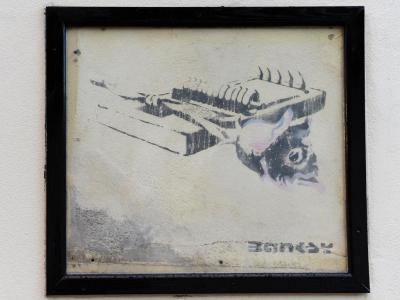
In Bristol’s Cotham district, down the quiet stretch of Thomas Street North, there’s a Banksy that doesn't try too hard. Rose on a Mousetrap, painted in the early 2000s, pairs a delicate bloom with a steel-jawed trap, an image that can be read as love caught in a snare, beauty under siege, or simply a dark little joke in floral form. It’s a rare example of Banksy going for subtle over spectacle, drawing you in with its quiet sting rather than a billboard-sized blast of politics.
When it first appeared, the locals didn’t just admire it-they mobilised. About twenty neighbours pooled funds to buy glass and a frame, turning this modest mural into Bristol’s only framed Banksy. The protective casing wasn’t just about preserving paint; it was a statement of ownership and affection. Here was a piece they weren’t going to let be scrawled over, chipped away, or whisked off to auction.
For visitors, finding Rose on a Mousetrap isn’t like stumbling across Banksy’s high-profile pieces in Stokes Croft or the city centre. It sits in a residential patch, far from the footfall of tourists chasing guidebook hotspots. That makes seeing it feel a bit like being let in on a secret, the kind of thing a local might point out on the way to the corner shop. Its survival-thanks to that communal act of preservation-says as much about Bristol’s relationship with its street art as the image itself. Here, even the quietest works get to grow old in peace, frame and all.
When it first appeared, the locals didn’t just admire it-they mobilised. About twenty neighbours pooled funds to buy glass and a frame, turning this modest mural into Bristol’s only framed Banksy. The protective casing wasn’t just about preserving paint; it was a statement of ownership and affection. Here was a piece they weren’t going to let be scrawled over, chipped away, or whisked off to auction.
For visitors, finding Rose on a Mousetrap isn’t like stumbling across Banksy’s high-profile pieces in Stokes Croft or the city centre. It sits in a residential patch, far from the footfall of tourists chasing guidebook hotspots. That makes seeing it feel a bit like being let in on a secret, the kind of thing a local might point out on the way to the corner shop. Its survival-thanks to that communal act of preservation-says as much about Bristol’s relationship with its street art as the image itself. Here, even the quietest works get to grow old in peace, frame and all.

4) Queen Ziggy
Picture it-Bristol, 2012. The bunting’s barely hung for the Diamond Jubilee when, overnight, a certain wall on Upper Maudlin Street acquires a new sovereign. Not the sort you’ll find on coins, but a monochrome Queen Elizabeth II, crown polished, pearls gleaming… and a bolt of red and blue lightning slicing across her face. It’s a clear nod to Bowie’s Ziggy Stardust-royalty meets glam rock, all in one sideways glance. Locals dubbed her “Queen Ziggy,” and while Banksy never stepped forward to claim parentage, the timing, wit, and Bristol postcode all pointed in his direction.
The spot itself has a past-it’s no stranger to Banksy’s handiwork-and it sits right by the Grand Appeal charity, fundraising lifeline for the Children’s Hospital next door. The mural’s arrival sparked a flurry of interpretations. Was it a love letter to the Queen, a pop-culture mash-up, or a cheeky riff on power and celebrity? Maybe all three. After all, Bowie and the monarchy have each ruled their own kingdoms-just not usually on the same wall.
For the wandering visitor, Queen Ziggy isn’t background scenery-it’s an unmissable flash of personality in the city’s visual conversation. That lightning bolt, cutting through the grey, has a way of pulling you up short, reminding you that Bristol’s walls don’t just host art-they throw opinions, jokes, and sly winks into the street. Here, tradition doesn’t gather dust; it gets remixed with a soundtrack, a splash of colour, and the sort of irreverence that refuses to fade.
The spot itself has a past-it’s no stranger to Banksy’s handiwork-and it sits right by the Grand Appeal charity, fundraising lifeline for the Children’s Hospital next door. The mural’s arrival sparked a flurry of interpretations. Was it a love letter to the Queen, a pop-culture mash-up, or a cheeky riff on power and celebrity? Maybe all three. After all, Bowie and the monarchy have each ruled their own kingdoms-just not usually on the same wall.
For the wandering visitor, Queen Ziggy isn’t background scenery-it’s an unmissable flash of personality in the city’s visual conversation. That lightning bolt, cutting through the grey, has a way of pulling you up short, reminding you that Bristol’s walls don’t just host art-they throw opinions, jokes, and sly winks into the street. Here, tradition doesn’t gather dust; it gets remixed with a soundtrack, a splash of colour, and the sort of irreverence that refuses to fade.
5) Cabot Tower (must see)
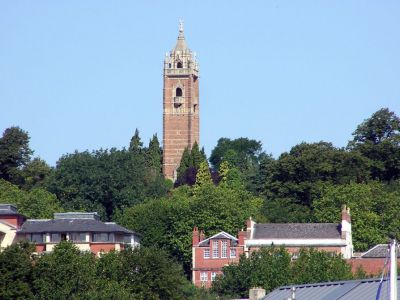
Cabot Tower rose between 1897 and 1898 as Bristol’s grand nod to John Cabot’s 1497 voyage, when he set sail from the city and ended up in what is now Newfoundland, Canada. Architect William Venn Gough gave it a mix of Neo-Gothic drama and Tudor Revival charm, using warm red sandstone dressed with pale Bath stone. It was meant to have a lift, but that idea stayed firmly on paper-so it’s legwork all the way up its 32 metres, equal to 105 feet.
Brandon Hill, its home turf, has its own backstory. A chapel once stood here, later replaced by a windmill, before the hill became part of Britain’s oldest public park. The grounds mix manicured gardens, wooded paths, and open lawns with enough wildlife to make city life feel far away.
The main draw is the climb: a winding, narrow staircase leading to two viewing platforms. The payoff is a sweep of rooftops, harbour waters, and-on clear days-the distant Mendip Hills. Nearby panels fill in the details of Cabot’s crossing and the tower’s creation, adding context to the scenery.
Entry won’t cost a penny, and between the history, the architecture, and the views, it’s a firm favourite for anyone after a picnic, a photo, or just the feeling of standing on one of Bristol’s best lookout points.
Brandon Hill, its home turf, has its own backstory. A chapel once stood here, later replaced by a windmill, before the hill became part of Britain’s oldest public park. The grounds mix manicured gardens, wooded paths, and open lawns with enough wildlife to make city life feel far away.
The main draw is the climb: a winding, narrow staircase leading to two viewing platforms. The payoff is a sweep of rooftops, harbour waters, and-on clear days-the distant Mendip Hills. Nearby panels fill in the details of Cabot’s crossing and the tower’s creation, adding context to the scenery.
Entry won’t cost a penny, and between the history, the architecture, and the views, it’s a firm favourite for anyone after a picnic, a photo, or just the feeling of standing on one of Bristol’s best lookout points.
6) Brandon Hill Park
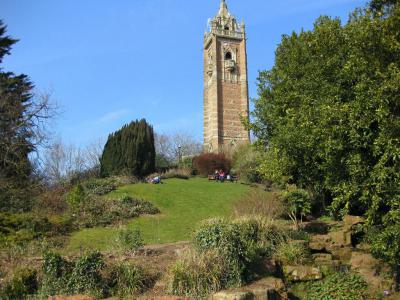
Brandon Hill Park is a popular outdoor space in Bristol, situated near the city center between the Clifton and Hotwells districts. At the summit of Brandon Hill lies Cabot Tower, a famous landmark that was built in 1897 to commemorate John Cabot's voyage from Bristol to Newfoundland in 1497. Visitors can climb the tower to enjoy stunning views of the city and its surroundings.
The park itself is a steep hill that covers the upper part of Brandon Hill. It has been divided into informal gardens, a small nature reserve, and open grassland. The wildflower meadow is particularly noteworthy, with its abundance of ox-eye daisies, yellow rattle, and knapweed. The pond in the reserve is also home to several species of amphibians, including frogs, toads, and smooth newts, making it an excellent place for nature enthusiasts to explore.
In addition to the nature reserve, the park also features a butterfly garden that supplies food for caterpillars and many kinds of butterflies. The area is a popular spot for bird watching as well, with species such as jays, bullfinches, and blackcaps frequently spotted in the reserve. The park's native trees and shrubs have been carefully planted, and the meadow is cut for hay every July.
The lower slopes of the hill are home to several historic sites, including Saint George's Church on Great George Street, Berkeley Square on the northern edge, and the school buildings of Queen Elizabeth's Hospital on the western side. Brandon Hill has a rich history, having been granted to the council in 1174 by the Earl of Gloucester. It was initially used for grazing, but it became a public open space in 1625, possibly making it the oldest municipal open space in the country.
The park itself is a steep hill that covers the upper part of Brandon Hill. It has been divided into informal gardens, a small nature reserve, and open grassland. The wildflower meadow is particularly noteworthy, with its abundance of ox-eye daisies, yellow rattle, and knapweed. The pond in the reserve is also home to several species of amphibians, including frogs, toads, and smooth newts, making it an excellent place for nature enthusiasts to explore.
In addition to the nature reserve, the park also features a butterfly garden that supplies food for caterpillars and many kinds of butterflies. The area is a popular spot for bird watching as well, with species such as jays, bullfinches, and blackcaps frequently spotted in the reserve. The park's native trees and shrubs have been carefully planted, and the meadow is cut for hay every July.
The lower slopes of the hill are home to several historic sites, including Saint George's Church on Great George Street, Berkeley Square on the northern edge, and the school buildings of Queen Elizabeth's Hospital on the western side. Brandon Hill has a rich history, having been granted to the council in 1174 by the Earl of Gloucester. It was initially used for grazing, but it became a public open space in 1625, possibly making it the oldest municipal open space in the country.

7) Banksy - Well Hung Lover
On the wall of a former sexual health clinic, five metres above Frogmore Street, a naked man hangs by one arm from a windowsill, his free hand strategically placed. Above him, a suited figure leans out, scanning the street for the lover he can’t see. Beside him, a woman in lingerie rests her hand on his shoulder, a picture of guilty calm. The scene is Banksy at full voltage – sly, economical, and loaded with visual innuendo.
The mural appeared in 2006, after three days behind tarpaulin-wrapped scaffolding. When the cover came off, Bristol found itself staring at a home-grown scandal in spray paint. The Council had been on a mission to scrub graffiti from the city, but this one hit a nerve. The building’s owner at the time – a member of Massive Attack music group – had commissioned it, and when the Council later bought the property, they put it to the people. Ninety-seven percent voted to let it stay.
That vote made Well Hung Lover the first street piece in the UK to receive official blessing after the fact. The clinic moved on, the mural stayed put, and its survival became part of Bristol’s civic identity – cheeky, defiant. Even paintball vandals couldn’t take that away; they just added another layer to the story.
The mural appeared in 2006, after three days behind tarpaulin-wrapped scaffolding. When the cover came off, Bristol found itself staring at a home-grown scandal in spray paint. The Council had been on a mission to scrub graffiti from the city, but this one hit a nerve. The building’s owner at the time – a member of Massive Attack music group – had commissioned it, and when the Council later bought the property, they put it to the people. Ninety-seven percent voted to let it stay.
That vote made Well Hung Lover the first street piece in the UK to receive official blessing after the fact. The clinic moved on, the mural stayed put, and its survival became part of Bristol’s civic identity – cheeky, defiant. Even paintball vandals couldn’t take that away; they just added another layer to the story.
8) Bristol Cathedral (must see)
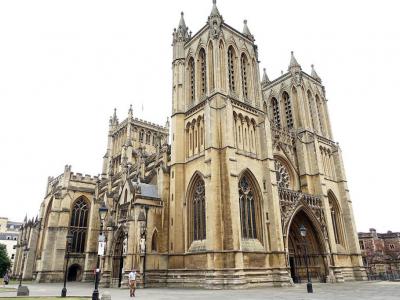
Bristol Cathedral – officially the Cathedral Church of the Holy and Undivided Trinity – has been part of the city’s skyline since the 12th century, though its story has had more twists than a medieval manuscript. It began in 1140, when Robert Fitzharding, a wealthy merchant decided the city could do with a grand abbey. By 1148, Saint Augustine’s Abbey was complete, but very little of that first church has survived the centuries. When King Henry VIII dissolved the monasteries in 1542, the abbey found itself promoted to cathedral status – a silver lining to an otherwise turbulent chapter.
The building you see today is the product of construction spurts from the 13th to the 19th century, giving it a layered look: Norman foundations, Gothic vaults, and a Gothic Revival facelift courtesy of the Victorian era, particularly its impressive west front. Its “hall church” layout means the nave and aisles are the same height, so the interior feels light, spacious, and less like a tunnel and more like an open-plan masterpiece – centuries before open-plan was trendy.
Inside, it’s a showcase of craftsmanship: soaring rib-vaulted ceilings, stonework fine enough to make a stonemason weep, and stained glass ranging from medieval survivors to panels replaced after wartime damage during the Blitz, in 1941. The Lady Chapel glows with intricate carvings and delicate window tracery, while the Chapter House still sports the original stone seating from the abbey days – sometimes not everything changes with the times.
The cathedral also doubles as a historical who’s-who gallery, with monuments to abbots, bishops, and local figures who shaped Bristol’s story. One highlight is the Renatus Harris organ, installed in 1685 and still perfectly capable of filling the space with a spine-tingling soundtrack. Maritime links also ripple through the memorial plaques, nodding to Bristol’s seafaring past.
Step outside and the cathedral keeps giving – a peaceful garden, a backdrop of College Green, and the occasional art installation or concert that proves history and modern culture can share the same roof. Bristol Cathedral isn’t just a relic of the past; it’s a living, breathing part of the city’s daily rhythm.
The building you see today is the product of construction spurts from the 13th to the 19th century, giving it a layered look: Norman foundations, Gothic vaults, and a Gothic Revival facelift courtesy of the Victorian era, particularly its impressive west front. Its “hall church” layout means the nave and aisles are the same height, so the interior feels light, spacious, and less like a tunnel and more like an open-plan masterpiece – centuries before open-plan was trendy.
Inside, it’s a showcase of craftsmanship: soaring rib-vaulted ceilings, stonework fine enough to make a stonemason weep, and stained glass ranging from medieval survivors to panels replaced after wartime damage during the Blitz, in 1941. The Lady Chapel glows with intricate carvings and delicate window tracery, while the Chapter House still sports the original stone seating from the abbey days – sometimes not everything changes with the times.
The cathedral also doubles as a historical who’s-who gallery, with monuments to abbots, bishops, and local figures who shaped Bristol’s story. One highlight is the Renatus Harris organ, installed in 1685 and still perfectly capable of filling the space with a spine-tingling soundtrack. Maritime links also ripple through the memorial plaques, nodding to Bristol’s seafaring past.
Step outside and the cathedral keeps giving – a peaceful garden, a backdrop of College Green, and the occasional art installation or concert that proves history and modern culture can share the same roof. Bristol Cathedral isn’t just a relic of the past; it’s a living, breathing part of the city’s daily rhythm.
9) Bristol Harbourside (must see)
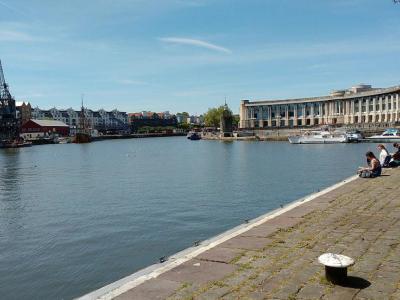
Bristol Harbourside didn’t always deal in flat whites, gallery openings, and paddleboard rentals. For centuries, this was the city’s commercial heart-a dockland buzzing with ships hauling West Country goods out and exotic cargo in. Then, in the late 20th century, the big ships moved downstream to Avonmouth, and the old docks were left high and dry-perfect for reinvention. Now, 19th-century cranes and warehouses share the space with glass-fronted apartments, theatres, and museums, living proof that Bristol can turn its hand from industry to artistry without missing a beat.
There’s no shortage of ways to fill your day here. Take to the water by rowing, paddleboarding, or hitching a ride on a harbour cruise. Stick to dry land and you can cycle the harbourside paths or wander between museums, galleries, and Banksy sightings-the Arnolfini Art Center caters to the contemporary crowd, while M Shed Museum tells Bristol’s story in dockside detail. For a deeper dive into maritime history, step aboard Brunel’s SS Great Britain and see how Victorian engineering took on the Atlantic.
The food scene is as international as the cargo once unloaded here-think Caribbean roti, Middle Eastern mezze, or a solid British pie, all within a few steps of each other. And when the light fades, the waterside opts for a softer glow, as the harbour lights flicker in the ripples.
Just a short walk from Bristol Cathedral, Queen Square, or the Old City, the Harbourside works as a full day out or a leisurely detour. Stick around long enough and you’ll hear buskers, seagulls, and laughter all competing for the same bit of airspace.
There’s no shortage of ways to fill your day here. Take to the water by rowing, paddleboarding, or hitching a ride on a harbour cruise. Stick to dry land and you can cycle the harbourside paths or wander between museums, galleries, and Banksy sightings-the Arnolfini Art Center caters to the contemporary crowd, while M Shed Museum tells Bristol’s story in dockside detail. For a deeper dive into maritime history, step aboard Brunel’s SS Great Britain and see how Victorian engineering took on the Atlantic.
The food scene is as international as the cargo once unloaded here-think Caribbean roti, Middle Eastern mezze, or a solid British pie, all within a few steps of each other. And when the light fades, the waterside opts for a softer glow, as the harbour lights flicker in the ripples.
Just a short walk from Bristol Cathedral, Queen Square, or the Old City, the Harbourside works as a full day out or a leisurely detour. Stick around long enough and you’ll hear buskers, seagulls, and laughter all competing for the same bit of airspace.
10) Brunel's SS Great Britain (must see)
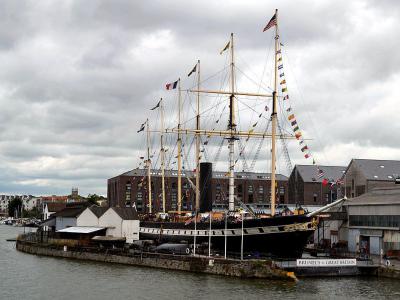
The SS Great Britain is a former passenger steamship that was designed by Isambard Kingdom Brunel for the Great Western Steamship Company's transatlantic service between Bristol and New York City. The ship was launched in 1843 and was one of the most advanced vessels of her time, as well as the largest passenger ship in the world from 1845 to 1854. Great Britain was a significant milestone in the development of shipping technology, being the first iron steamer to cross the Atlantic Ocean in 1845.
The ship had a long and expensive construction process that lasted six years, leaving her owners in a difficult financial position. Great Britain was powered by two inclined two-cylinder engines and equipped with secondary masts for sail power. Her four decks provided accommodation for a crew of 120 and 360 passengers.
Great Britain's owners were forced out of business in 1846 after the ship ran aground at Dundrum Bay, Northern Ireland. She was sold for salvage and repaired, carrying thousands of emigrants to Australia before being converted to all-sail in 1881. She was scuttled in 1937 in the Falkland Islands.
After 33 years of abandonment, the ship was raised and repaired enough to be towed back to the UK by businessman Sir Jack Arnold Hayward. The ship is now a museum and popular attraction in Bristol Harbour, where visitors can explore the ship's interior, view exhibits on her history and technological innovations, and experience what life was like on board for passengers and crew alike. Great Britain is listed as part of the National Historic Fleet and attracts between 150,000 and 200,000 visitors annually.
The ship had a long and expensive construction process that lasted six years, leaving her owners in a difficult financial position. Great Britain was powered by two inclined two-cylinder engines and equipped with secondary masts for sail power. Her four decks provided accommodation for a crew of 120 and 360 passengers.
Great Britain's owners were forced out of business in 1846 after the ship ran aground at Dundrum Bay, Northern Ireland. She was sold for salvage and repaired, carrying thousands of emigrants to Australia before being converted to all-sail in 1881. She was scuttled in 1937 in the Falkland Islands.
After 33 years of abandonment, the ship was raised and repaired enough to be towed back to the UK by businessman Sir Jack Arnold Hayward. The ship is now a museum and popular attraction in Bristol Harbour, where visitors can explore the ship's interior, view exhibits on her history and technological innovations, and experience what life was like on board for passengers and crew alike. Great Britain is listed as part of the National Historic Fleet and attracts between 150,000 and 200,000 visitors annually.
11) Saint Mary Redcliffe (must see)
Saint Mary Redcliffe, also known as the Church of Saint Mary the Virgin, is an iconic landmark and the primary Church of England parish church in the Redcliffe district of Bristol. Its historical significance, architectural grandeur, and stunning features make it one of the country's most remarkable and largest parish churches. Its size is occasionally mistaken by tourists for Bristol Cathedral itself.
The origins of Saint Mary Redcliffe can be traced back to 1158 when the first mention of a church on the site was recorded. The present building dates from 1185. It continued to be expanded until its completion in 1872. The church's longevity is a testament to the devotion and craftsmanship invested in its creation.
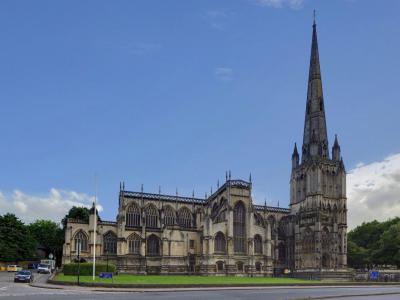
Admired as a masterpiece of English Gothic architecture, Saint Mary Redcliffe showcases a range of awe-inspiring features. Upon approaching the church, visitors are greeted by an unusual hexagonal porch, a rare architectural element that sets it apart from other churches.
The church's most striking feature is its magnificent spires, reaching an impressive height of 274 feet (84 meters) to the top of the weathervane. This height places it as the second-tallest structure in Bristol and the sixth-tallest parish church in the entire country. The spires, visible from various vantage points across the city, have become an iconic symbol of Bristol.
Stepping inside Saint Mary Redcliffe, visitors are treated to a visual feast of ornate stained glass windows and decorative stone vaults. The intricate craftsmanship and vibrant colors of the stained glass create a mesmerizing play of light within the church, adding to its ethereal atmosphere. The flying buttresses that support the structure add both aesthetic appeal and structural strength, further enhancing the church's architectural magnificence.
Saint Mary Redcliffe stands as a testament to the rich heritage and architectural prowess of Bristol. Its enduring beauty, cultural significance, and breathtaking features continue to captivate visitors and inspire awe, firmly establishing it as a treasured national gem. The Saint Mary Redcliffe has Grade I listed status, the highest possible category, by Historic England.
The origins of Saint Mary Redcliffe can be traced back to 1158 when the first mention of a church on the site was recorded. The present building dates from 1185. It continued to be expanded until its completion in 1872. The church's longevity is a testament to the devotion and craftsmanship invested in its creation.
Admired as a masterpiece of English Gothic architecture, Saint Mary Redcliffe showcases a range of awe-inspiring features. Upon approaching the church, visitors are greeted by an unusual hexagonal porch, a rare architectural element that sets it apart from other churches.
The church's most striking feature is its magnificent spires, reaching an impressive height of 274 feet (84 meters) to the top of the weathervane. This height places it as the second-tallest structure in Bristol and the sixth-tallest parish church in the entire country. The spires, visible from various vantage points across the city, have become an iconic symbol of Bristol.
Stepping inside Saint Mary Redcliffe, visitors are treated to a visual feast of ornate stained glass windows and decorative stone vaults. The intricate craftsmanship and vibrant colors of the stained glass create a mesmerizing play of light within the church, adding to its ethereal atmosphere. The flying buttresses that support the structure add both aesthetic appeal and structural strength, further enhancing the church's architectural magnificence.
Saint Mary Redcliffe stands as a testament to the rich heritage and architectural prowess of Bristol. Its enduring beauty, cultural significance, and breathtaking features continue to captivate visitors and inspire awe, firmly establishing it as a treasured national gem. The Saint Mary Redcliffe has Grade I listed status, the highest possible category, by Historic England.
