Custom Walk in Lagos, Portugal by tomanik4it_682aad created on 2026-03-27
Guide Location: Portugal » Lagos
Guide Type: Custom Walk
# of Sights: 13
Tour Duration: 2 Hour(s)
Travel Distance: 2.6 Km or 1.6 Miles
Share Key: 4D9WF
Guide Type: Custom Walk
# of Sights: 13
Tour Duration: 2 Hour(s)
Travel Distance: 2.6 Km or 1.6 Miles
Share Key: 4D9WF
How It Works
Please retrieve this walk in the GPSmyCity app. Once done, the app will guide you from one tour stop to the next as if you had a personal tour guide. If you created the walk on this website or come to the page via a link, please follow the instructions below to retrieve the walk in the app.
Retrieve This Walk in App
Step 1. Download the app "GPSmyCity: Walks in 1K+ Cities" on Apple App Store or Google Play Store.



Step 2. In the GPSmyCity app, download(or launch) the guide "Lagos Map and Walking Tours".
Step 3. Tap the menu button located at upper right corner of the "Walks" screen and select "Retrieve custom walk". Enter the share key: 4D9WF
1) Marina de Lagos ( Lagos Marina) (must see)
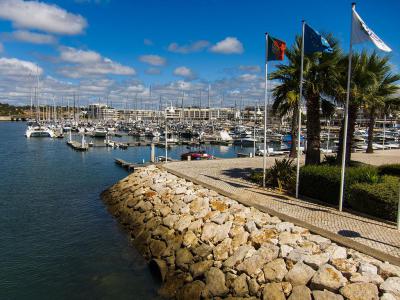
Lagos Marina is a relatively recent chapter in the city’s long maritime history, created to serve modern leisure boating. Opened in 1994, it was developed on land reclaimed along the Bensafrim River, close to the historic harbour from which ships once departed for trade, fishing, and the early voyages of exploration.
The contrast with the past is striking. What would a marina have looked like in the time of Prince Henry the Navigator? Henry financed Gil Eanes’ first attempts to explore the West African coast, using a simple vessel that was barely seaworthy by modern standards. One look at Lagos Marina today makes it clear how far support for sailing has come. The marina offers around 460 berths with full support facilities, set within a sheltered basin protected from Atlantic swells. Wide promenades, pedestrian bridges, and open sightlines frame views toward the old town.
Beyond mooring, the marina functions as a lively waterfront district. It includes the Marina Club, residences, green areas, and recreational spaces, including an Adventure Park for children. From the docks, visitors can join boat tours to nearby grottoes and beaches, dolphin-watching excursions, or sailing trips along the Algarve coast.
A visit to Lagos Marina often includes a stop for a simple, budget-friendly seafood meal. One of the most reliable options is Adega da Marina. To reach it, you cross the pedestrian bridge to the side opposite the marina, then cross the street and walk straight ahead in a south-westerly direction, with the buildings on your right. The restaurant is easy to spot, thanks to its name displayed in large letters. It offers a “meal of the day” (prato do dia in Portuguese) at a fixed price, usually listed outside on a handwritten chalkboard. As a general rule, chalkboards are worth watching for around the marina area, as daily menus are not always included indoors.
Lagos Marina is also home to the Lagos Navigators, an independent group of berth holders who work with the marina to welcome visitors. Through events and informal assistance throughout the year, they share local knowledge and experience, helping guests enjoy both the marina and the city beyond.
The contrast with the past is striking. What would a marina have looked like in the time of Prince Henry the Navigator? Henry financed Gil Eanes’ first attempts to explore the West African coast, using a simple vessel that was barely seaworthy by modern standards. One look at Lagos Marina today makes it clear how far support for sailing has come. The marina offers around 460 berths with full support facilities, set within a sheltered basin protected from Atlantic swells. Wide promenades, pedestrian bridges, and open sightlines frame views toward the old town.
Beyond mooring, the marina functions as a lively waterfront district. It includes the Marina Club, residences, green areas, and recreational spaces, including an Adventure Park for children. From the docks, visitors can join boat tours to nearby grottoes and beaches, dolphin-watching excursions, or sailing trips along the Algarve coast.
A visit to Lagos Marina often includes a stop for a simple, budget-friendly seafood meal. One of the most reliable options is Adega da Marina. To reach it, you cross the pedestrian bridge to the side opposite the marina, then cross the street and walk straight ahead in a south-westerly direction, with the buildings on your right. The restaurant is easy to spot, thanks to its name displayed in large letters. It offers a “meal of the day” (prato do dia in Portuguese) at a fixed price, usually listed outside on a handwritten chalkboard. As a general rule, chalkboards are worth watching for around the marina area, as daily menus are not always included indoors.
Lagos Marina is also home to the Lagos Navigators, an independent group of berth holders who work with the marina to welcome visitors. Through events and informal assistance throughout the year, they share local knowledge and experience, helping guests enjoy both the marina and the city beyond.
2) Mercado Municipal (Municipal Market)
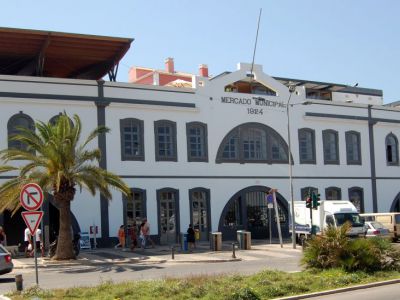
The Municipal Market is a long-standing focal point of everyday life in Lagos, closely tied to the city’s fishing traditions and role as a coastal trading town. Before the market existed, the site was occupied by the Door Factory, which burned down in 1915. The area was then used mainly for selling fruit and vegetables, but it was soon recognised that daily life required more variety: fish, meat, places to eat, and spaces to gather. The solution was straightforward. The Municipal Market was built in 1924 on the former factory site to answer these needs in a single, purpose-built structure.
Designed with practicality in mind, the building is organised across three floors. The ground floor is dedicated to fish and seafood stalls and butchers. The first floor houses fruit and vegetable vendors along with other goods, spread across six shops, and includes a café where visitors can pause and observe the market’s steady rhythm. The third floor provides the highlight: a restaurant with a terrace overlooking the Bay of Lagos. This upper level can be reached by stairs or a panoramic elevator.
Architecturally functional but thoughtfully detailed, the market also features a south interior wall covered in colourful tiles designed by the artist Xana. There is direct access to the Lagos Life Science Center behind the building. In recognition of its design and civic role, the market was nominated for the Alexandre Herculano National Prize for Architecture in 2006.
Designed with practicality in mind, the building is organised across three floors. The ground floor is dedicated to fish and seafood stalls and butchers. The first floor houses fruit and vegetable vendors along with other goods, spread across six shops, and includes a café where visitors can pause and observe the market’s steady rhythm. The third floor provides the highlight: a restaurant with a terrace overlooking the Bay of Lagos. This upper level can be reached by stairs or a panoramic elevator.
Architecturally functional but thoughtfully detailed, the market also features a south interior wall covered in colourful tiles designed by the artist Xana. There is direct access to the Lagos Life Science Center behind the building. In recognition of its design and civic role, the market was nominated for the Alexandre Herculano National Prize for Architecture in 2006.
3) Igreja de São Sebastião (Sao Sebastiao Church)
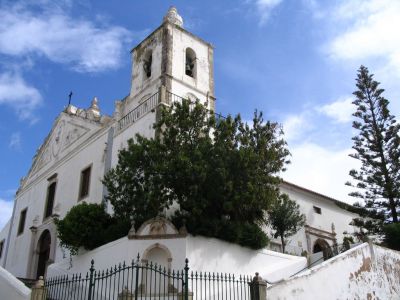
Saint Sebastian Church is a modest yet historically significant religious building located in the historic centre of Lagos, slightly removed from the main tourist routes. Its origins reach back to the 14th century, when it was first built as a hermitage dedicated to Our Lady of the Conception. Two centuries later, in response to outbreaks of plague, the building was rededicated to Saint Sebastian, a saint widely invoked for protection against disease. The church was enlarged in 1520 by order of King Manuel I and formally reconsecrated to Saint Sebastian, marking its transition from a small hermitage into a parish church.
Architecturally, the church reflects multiple phases of construction and rebuilding. It consists of three naves separated by arches supported by Doric columns. The main entrance features a late Gothic portico, complemented by a Renaissance side portal. Additional side altarpieces were added in the 16th century, while blue azulejo tiles were installed in the nave during the 17th century. The main altar is fashioned with gilded woodcarving. Adjacent to the church is a small Bones Chapel, where neatly stacked skulls line the walls.
The church suffered severe damage during the earthquake of 1755, which destroyed the tower and tribune and forced the parish headquarters to relocate. The tower was rebuilt by 1828, with a clock added, and the structure endured further damage during the 1969 earthquake. Inside, visitors can see a moving statue of Our Lady of Grace, who, together with Saint Francis, is believed to continue watching over the parish.
Architecturally, the church reflects multiple phases of construction and rebuilding. It consists of three naves separated by arches supported by Doric columns. The main entrance features a late Gothic portico, complemented by a Renaissance side portal. Additional side altarpieces were added in the 16th century, while blue azulejo tiles were installed in the nave during the 17th century. The main altar is fashioned with gilded woodcarving. Adjacent to the church is a small Bones Chapel, where neatly stacked skulls line the walls.
The church suffered severe damage during the earthquake of 1755, which destroyed the tower and tribune and forced the parish headquarters to relocate. The tower was rebuilt by 1828, with a clock added, and the structure endured further damage during the 1969 earthquake. Inside, visitors can see a moving statue of Our Lady of Grace, who, together with Saint Francis, is believed to continue watching over the parish.
4) Monument to Fallen Soldiers
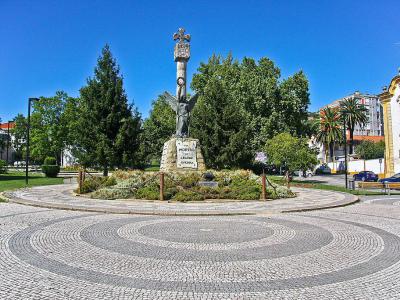
The Monument to Fallen Soldiers (Monumento aos Mortos da Grande Guerra) in Lagos stands in the picturesque Luis de Camoes Square (Praça Luís de Camões), surrounded by charming houses, unique shops, and lively cafés. This solemn memorial pays tribute to the Portuguese soldiers from Lagos who lost their lives during the First World War (1914-1918).
The monument, inaugurated on June 15, 1940, consists of a stone cross atop a pillar, encircled by iron chains and floral decorations. Crafted from granite and sandstone, the structure also features plaques inscribed with the names of the fallen soldiers, ensuring their memory endures in the heart of the city.
Portugal initially maintained a neutral stance in the war, despite its longstanding alliance with England. However, under British pressure, the Portuguese government seized German ships in the Tagus River, prompting Germany to declare war on Portugal in 1916. Portuguese forces subsequently engaged in both European and African theaters, with approximately 60,000 troops participating in the conflict. One of the most significant battles involving Portuguese forces was the Battle of La Lys in April 1918, where they suffered heavy casualties. Additionally, intense skirmishes took place in Angola and Mozambique, where Portuguese and German colonial territories bordered each other.
Overall, Portugal lost more than 8,000 soldiers during the Great War. The Monument to Fallen Soldiers in Lagos serves as a lasting tribute to their sacrifice, ensuring that their contribution to history is neither forgotten nor overlooked.
The monument, inaugurated on June 15, 1940, consists of a stone cross atop a pillar, encircled by iron chains and floral decorations. Crafted from granite and sandstone, the structure also features plaques inscribed with the names of the fallen soldiers, ensuring their memory endures in the heart of the city.
Portugal initially maintained a neutral stance in the war, despite its longstanding alliance with England. However, under British pressure, the Portuguese government seized German ships in the Tagus River, prompting Germany to declare war on Portugal in 1916. Portuguese forces subsequently engaged in both European and African theaters, with approximately 60,000 troops participating in the conflict. One of the most significant battles involving Portuguese forces was the Battle of La Lys in April 1918, where they suffered heavy casualties. Additionally, intense skirmishes took place in Angola and Mozambique, where Portuguese and German colonial territories bordered each other.
Overall, Portugal lost more than 8,000 soldiers during the Great War. The Monument to Fallen Soldiers in Lagos serves as a lasting tribute to their sacrifice, ensuring that their contribution to history is neither forgotten nor overlooked.
5) Praça Gil Eanes (Gil Eanes Square)
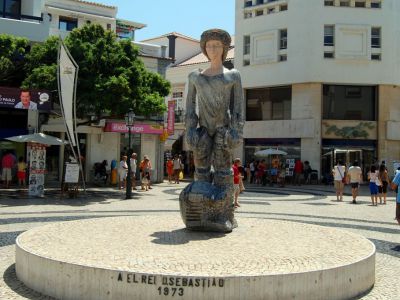
Gil Eanes Square is one of the central public spaces in Lagos’ historic centre. Although it bears the name of Gil Eanes, the 15th-century explorer who famously sailed past Cape Bojador in 1434 in service to Prince Henry the Navigator-who himself never went to sea-the statue of this maritime pioneer is not located here. Instead, the Gil Eanes statue stands in a quieter setting in the nearby Garden of the Constitution.
The square’s focal point is something quite different. At its centre rises the controversial statue of King Dom Sebastião. The monarch who elevated Lagos to city status in the 16th century, is rendered in a rather modernist form. The sculpture has long sparked debate for its abstract style, ambiguous features, and unconventional appearance. For starters, nobody really knows what he is wearing. Moreover, the statue's gender is also unclear.
Historically, this area of Lagos lay close to key civic and religious institutions, including the Church of Santa Maria, the town’s principal parish church. Over time, Gil Eanes Square developed as a civic space linking medieval streets with later urban growth. On the square's northeastern side stands the Old City Hall, dating from the early 19th century. The building has three floors, with halls that have long been used for exhibitions and public functions. Although a new City Hall was inaugurated in 2019, the historic building continues to serve as the seat of the Lagos Municipal Assembly.
The square’s focal point is something quite different. At its centre rises the controversial statue of King Dom Sebastião. The monarch who elevated Lagos to city status in the 16th century, is rendered in a rather modernist form. The sculpture has long sparked debate for its abstract style, ambiguous features, and unconventional appearance. For starters, nobody really knows what he is wearing. Moreover, the statue's gender is also unclear.
Historically, this area of Lagos lay close to key civic and religious institutions, including the Church of Santa Maria, the town’s principal parish church. Over time, Gil Eanes Square developed as a civic space linking medieval streets with later urban growth. On the square's northeastern side stands the Old City Hall, dating from the early 19th century. The building has three floors, with halls that have long been used for exhibitions and public functions. Although a new City Hall was inaugurated in 2019, the historic building continues to serve as the seat of the Lagos Municipal Assembly.
6) Antigo Mercado de Escravos (Old Slave Market) (must see)
The Old Slave Market of Lagos is one of the most historically significant and sobering sites in the Algarve region. Its origins are tied to the earliest phase of the Atlantic slave trade. In 1441, the first recorded cargo of enslaved people was delivered to Lagos by Captain Antão Gonçalves, who had learned of an existing slave trade along the African coast and returned with fourteen captives. Demand grew rapidly. Owning enslaved people soon became a marker of social status, and the trade expanded into a profitable enterprise. Prince Henry the Navigator was entitled to one fifth of the value of all enslaved people brought back to Portugal. In 1444, Captain Lançarote de Freitas arrived in Lagos with 235 captives, forty-seven of whom went directly to Henry, signalling how quickly slavery became big business.
Public slave auctions took place in this area from the 1440s onward, making Lagos the site of the first documented slave market in Europe. However, in 1512 King Manuel I decreed that enslaved people imported into Portugal could be landed only in Lisbon, ending Lagos’s role as an official entry point.
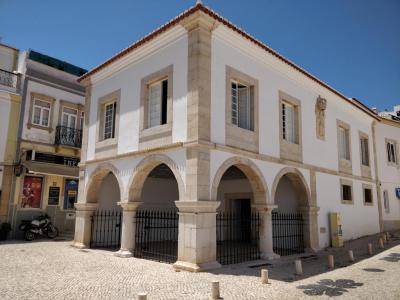
The present building dates from 1691 and was constructed on the site of an earlier 14th-century slave market. Built in a restrained Mannerist style, it has two floors, with the ground level enclosed by stone arches and an iron fence.
In 2014, the city council installed a permanent museum inside the building, transforming it into a space for historical interpretation and public reflection. The site became part of UNESCO’s Slave Route programme, acknowledging its global historical importance. In December 2018, Portugal’s International Observatory of Human Rights designated the building the “International Centre for Living Memory of Human Dignity.”
Public slave auctions took place in this area from the 1440s onward, making Lagos the site of the first documented slave market in Europe. However, in 1512 King Manuel I decreed that enslaved people imported into Portugal could be landed only in Lisbon, ending Lagos’s role as an official entry point.
The present building dates from 1691 and was constructed on the site of an earlier 14th-century slave market. Built in a restrained Mannerist style, it has two floors, with the ground level enclosed by stone arches and an iron fence.
In 2014, the city council installed a permanent museum inside the building, transforming it into a space for historical interpretation and public reflection. The site became part of UNESCO’s Slave Route programme, acknowledging its global historical importance. In December 2018, Portugal’s International Observatory of Human Rights designated the building the “International Centre for Living Memory of Human Dignity.”
7) Henry the Navigator Statue
The statue of Henry the Navigator stands near the historic centre of Lagos, close to the old city walls and the former harbour area, underscoring the town’s close ties to Portugal’s early maritime expansion. Prince Henry-known in Portugal as Infante Dom Henrique-was not a sailor in the modern sense, but a royal patron whose vision and resources shaped the first phase of the Age of Discoveries. In the 15th century, Lagos served as one of the main operational bases for expeditions launched under his influence toward the African coast.
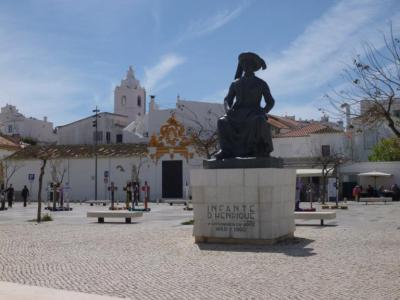
The statue was created in 1960 by Leopoldo de Almeida, one of Portugal’s most prominent 20th-century sculptors. Rather than presenting Henry as a triumphant navigator, the artist chose a more contemplative image. Henry is shown seated, staring almost vacantly into space. The pedestal is inscribed simply “Infante Dom Henrique,” notably omitting the later epithet “Navigator,” which was applied centuries after his death.
The statue functions as both a historical marker and a point of orientation. It stands within easy walking distance of key sites linked to the 15th century, including the Old Slave Market and the defensive walls that once guarded the harbor.
The statue was created in 1960 by Leopoldo de Almeida, one of Portugal’s most prominent 20th-century sculptors. Rather than presenting Henry as a triumphant navigator, the artist chose a more contemplative image. Henry is shown seated, staring almost vacantly into space. The pedestal is inscribed simply “Infante Dom Henrique,” notably omitting the later epithet “Navigator,” which was applied centuries after his death.
The statue functions as both a historical marker and a point of orientation. It stands within easy walking distance of key sites linked to the 15th century, including the Old Slave Market and the defensive walls that once guarded the harbor.
8) Igreja de Santo António (Santo Antonio Church) (must see)
Saint Anthony Church stands in the historic centre of Lagos, close to the old city walls, and is one of the town’s most artistically striking religious buildings. In 1707, the Brotherhood of Saint Anthony erected a church dedicated to the saint that was not attached to a Franciscan priory or convent-an unusual decision that reflected Saint Anthony’s special status in the city. Since 1668, Saint Anthony had been formally attached to Infantry Regiment No. 2 of Lagos. As part of the regiment, he was paid a salary by the regimental command, making him the only canonised saint known to have received wages for his services. He even received promotions, eventually attaining the rank of colonel.
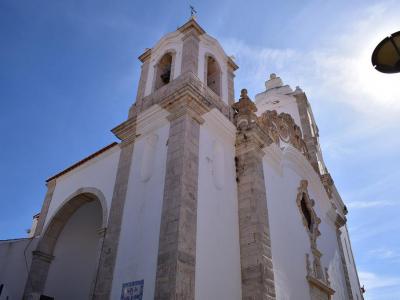
The church suffered severe damage in the earthquake of 1755 and was extensively rebuilt in the second half of the 18th century, giving it much of its present Baroque character. The exterior is largely composed of smooth masonry, with a Baroque façade marked by a niche above the main door and an oculus decorated with shells. A shield framed by branches crowns the façade. Along the side, an arched opening forms a vaulted porch, and two differently shaped bell towers add variety to the skyline.
To enter the church, you need to look for a small sliding gate on the same side of the street, toward the southeast. This gate leads into the Municipal Museum of Lagos, which houses an impressive collection of sacred art, including paintings and 17th-century carvings. As the museum is physically attached to the church, the only way to access the interior is by passing through the museum’s archaeological circuit. At the end of the route, a green door set into a discreet doorway leads into the church’s single aisle.
Once inside, the interior reveals its full splendour. Sumptuous Baroque decoration and gilded woodcarving cover the walls and altarpieces. Where the gold leaf ends, along the lower half of the walls, white and blue azulejo tiles begin, creating a striking visual contrast. Looking upward, the ceiling offers a masterclass in architectural illusion. Although it is constructed of flat wood, painted perspective creates the impression of a three-dimensional stone vault complete with balconies and columns. At the very centre appears the Portuguese Royal Coat of Arms.
The church suffered severe damage in the earthquake of 1755 and was extensively rebuilt in the second half of the 18th century, giving it much of its present Baroque character. The exterior is largely composed of smooth masonry, with a Baroque façade marked by a niche above the main door and an oculus decorated with shells. A shield framed by branches crowns the façade. Along the side, an arched opening forms a vaulted porch, and two differently shaped bell towers add variety to the skyline.
To enter the church, you need to look for a small sliding gate on the same side of the street, toward the southeast. This gate leads into the Municipal Museum of Lagos, which houses an impressive collection of sacred art, including paintings and 17th-century carvings. As the museum is physically attached to the church, the only way to access the interior is by passing through the museum’s archaeological circuit. At the end of the route, a green door set into a discreet doorway leads into the church’s single aisle.
Once inside, the interior reveals its full splendour. Sumptuous Baroque decoration and gilded woodcarving cover the walls and altarpieces. Where the gold leaf ends, along the lower half of the walls, white and blue azulejo tiles begin, creating a striking visual contrast. Looking upward, the ceiling offers a masterclass in architectural illusion. Although it is constructed of flat wood, painted perspective creates the impression of a three-dimensional stone vault complete with balconies and columns. At the very centre appears the Portuguese Royal Coat of Arms.
9) Municipal Museum Dr. Jose Formosinho
The Municipal Museum Dr. Jose Formosinho in Lagos, Portugal is a treasure trove of history and culture. The museum is housed in a beautiful building, the annexe to the Igreja de Santo Antonio, which adds to its allure. The museum was founded in 1934 and has since then become one of the most popular tourist attractions in the area.
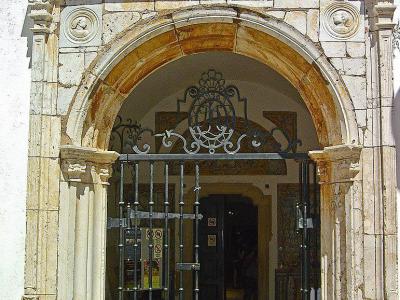
One of the most striking features of the museum is the Renaissance portico that adorns its entrance. This portico is originally from the Igreja do Compromisso Maritimo, and has been carefully adapted to the museum building. The iron gate, which is also a work of local artists, adds a touch of elegance to the entrance.
Inside the museum, visitors are treated to an impressive collection of artifacts and exhibits that are divided into various sections. The Archaeology section is home to a diverse collection of pieces from different periods in history, including the Neolithic, Luso-Iberian, Roman, and Arab periods. Visitors can explore the intricate details of these artifacts and learn more about the history of the region.
The Sacred Art section is situated in the sacristy of the church and is dedicated to showcasing paintings from the 18th century. These paintings are an excellent example of the traditional art styles of the region and are a testament to the rich cultural heritage of Lagos.
The History of Lagos section is another fascinating exhibit that showcases the city's past. It includes the Charter of Lagos, which was awarded by the King Dom Manuel I in 1504, and the Key to the City. These artifacts offer a glimpse into the political and social history of the area.
The Ethnography of the Algarve section is an intriguing display that highlights the traditional means of transport used for carrying olive-oil. A small stuffed donkey is the centerpiece of this exhibit, and visitors can learn about the importance of this animal in the region's history.
The Numismatics section is a must-see for history buffs and coin collectors. It features a vast collection of Portuguese coins and others from the former Portuguese overseas territories, providing a fascinating insight into the economic history of the region.
Finally, the Mineralogy and Overseas Ethnography section is a showcase of the geological diversity of the region, and it includes some remarkable examples of local minerals. This exhibit also features artifacts from former Portuguese colonies, highlighting the country's long history of exploration and colonization.
One of the most striking features of the museum is the Renaissance portico that adorns its entrance. This portico is originally from the Igreja do Compromisso Maritimo, and has been carefully adapted to the museum building. The iron gate, which is also a work of local artists, adds a touch of elegance to the entrance.
Inside the museum, visitors are treated to an impressive collection of artifacts and exhibits that are divided into various sections. The Archaeology section is home to a diverse collection of pieces from different periods in history, including the Neolithic, Luso-Iberian, Roman, and Arab periods. Visitors can explore the intricate details of these artifacts and learn more about the history of the region.
The Sacred Art section is situated in the sacristy of the church and is dedicated to showcasing paintings from the 18th century. These paintings are an excellent example of the traditional art styles of the region and are a testament to the rich cultural heritage of Lagos.
The History of Lagos section is another fascinating exhibit that showcases the city's past. It includes the Charter of Lagos, which was awarded by the King Dom Manuel I in 1504, and the Key to the City. These artifacts offer a glimpse into the political and social history of the area.
The Ethnography of the Algarve section is an intriguing display that highlights the traditional means of transport used for carrying olive-oil. A small stuffed donkey is the centerpiece of this exhibit, and visitors can learn about the importance of this animal in the region's history.
The Numismatics section is a must-see for history buffs and coin collectors. It features a vast collection of Portuguese coins and others from the former Portuguese overseas territories, providing a fascinating insight into the economic history of the region.
Finally, the Mineralogy and Overseas Ethnography section is a showcase of the geological diversity of the region, and it includes some remarkable examples of local minerals. This exhibit also features artifacts from former Portuguese colonies, highlighting the country's long history of exploration and colonization.
10) Igreja de Santa Maria (Church of Santa Maria) (must see)
The Church of Santa Maria is one of Lagos’ most important religious buildings and has been in continuous use as a place of worship since 1448. Closely linked to the town’s development after the Christian Reconquest, it stands on a site that already housed a medieval church. The present structure, however, took shape mainly in the late 15th and early 16th centuries, when Lagos was flourishing as a maritime and administrative centre. Dedicated to Saint Mary of Grace, it became the town’s principal parish church.
Over the centuries, the church has required repeated rebuilding. It was destroyed by the catastrophic earthquake of 1755 and later damaged again by severe fires in the 18th and 19th centuries. As a result, the building reflects successive phases of reconstruction rather than a single architectural moment.
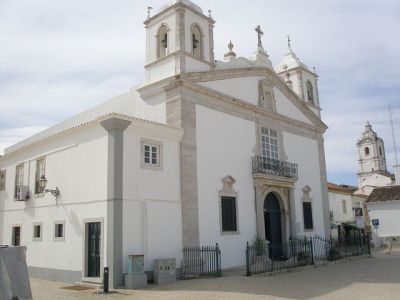
The exterior is whitewashed and relatively restrained, defined by two bell towers. Decorative stone and metalwork on the balconies and windows add subtle detail. The façade’s main architectural highlight is the only element to have survived the 1755 earthquake: a 16th-century Renaissance doorway framed by two Doric columns. Between the arch of the doorway and the columns stand weathered stone statues of Saint Peter and Saint Paul.
The interior is notably simple compared to some of Lagos’ more ornate churches. It consists of a single nave with an elevated choir and three side chapels. Despite this modest layout, several features stand out. Among them is a statue of Saint Gonçalo, the fisherman-turned-Augustinian preacher born in Lagos in 1360. Exceptionally well preserved and vibrant, it can be found in the first niche on the left side of the nave after entering the church. Other devotional images include Our Lady of the Assumption and Our Lady of Mercy, both central to local religious tradition.
Arguably the most surprising element of the church is The Mural of the Battling Angels, located directly behind the high altar in the chancel. In contrast to the traditional gold-leaf altarpieces found elsewhere in Portugal, this church features a large contemporary mural painted in vivid oranges, pinks, and purples, depicting a dramatic celestial battle of winged angels.
Over the centuries, the church has required repeated rebuilding. It was destroyed by the catastrophic earthquake of 1755 and later damaged again by severe fires in the 18th and 19th centuries. As a result, the building reflects successive phases of reconstruction rather than a single architectural moment.
The exterior is whitewashed and relatively restrained, defined by two bell towers. Decorative stone and metalwork on the balconies and windows add subtle detail. The façade’s main architectural highlight is the only element to have survived the 1755 earthquake: a 16th-century Renaissance doorway framed by two Doric columns. Between the arch of the doorway and the columns stand weathered stone statues of Saint Peter and Saint Paul.
The interior is notably simple compared to some of Lagos’ more ornate churches. It consists of a single nave with an elevated choir and three side chapels. Despite this modest layout, several features stand out. Among them is a statue of Saint Gonçalo, the fisherman-turned-Augustinian preacher born in Lagos in 1360. Exceptionally well preserved and vibrant, it can be found in the first niche on the left side of the nave after entering the church. Other devotional images include Our Lady of the Assumption and Our Lady of Mercy, both central to local religious tradition.
Arguably the most surprising element of the church is The Mural of the Battling Angels, located directly behind the high altar in the chancel. In contrast to the traditional gold-leaf altarpieces found elsewhere in Portugal, this church features a large contemporary mural painted in vivid oranges, pinks, and purples, depicting a dramatic celestial battle of winged angels.
11) Castelo dos Governadores (Governors' Castle)
The Governors’ Castle stands along the ancient city walls of Lagos, overlooking the harbour and forming one of the town’s most significant historic defences. The castle occupies a site first fortified by the Romans, who installed the earliest defensive circuit around the settlement. These walls were later improved and reinforced under successive Arab and Christian occupations, serving as the primary protection against Barbary pirates and maritime attacks, including threats from Spain.
The structure visible today largely dates from the late 15th and 16th centuries, when Lagos gained prominence during Portugal’s maritime expansion. During this period, the castle became part of a sophisticated defensive network and served as the residence of the governors of the Algarve. Its walls were directly connected to the wider fortification system, allowing close control over access to the harbour.
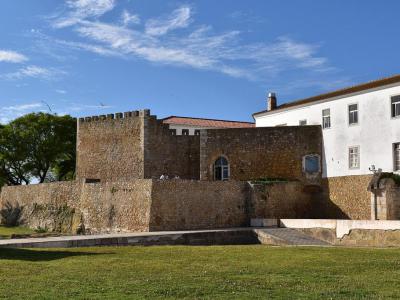
One of the most distinctive features appears at the entrance, where two free-standing barbican-style towers flank the gateway into the town. Though connected to the wall, they project slightly forward, strengthening the defences at this vulnerable point and enabling flanking fire along the walls in coordination with the nearby Flag’s Mast Fort.
The castle suffered heavy damage during the devastating earthquake of 1755, yet it remains an impressive example of military architecture. It is particularly noted for its austere defensive character and a rare Manueline-style window. According to tradition, it was at this window that King Sebastian paused to say his final prayers before departing for the ill-fated Battle of Alcácer Quibir.
The structure visible today largely dates from the late 15th and 16th centuries, when Lagos gained prominence during Portugal’s maritime expansion. During this period, the castle became part of a sophisticated defensive network and served as the residence of the governors of the Algarve. Its walls were directly connected to the wider fortification system, allowing close control over access to the harbour.
One of the most distinctive features appears at the entrance, where two free-standing barbican-style towers flank the gateway into the town. Though connected to the wall, they project slightly forward, strengthening the defences at this vulnerable point and enabling flanking fire along the walls in coordination with the nearby Flag’s Mast Fort.
The castle suffered heavy damage during the devastating earthquake of 1755, yet it remains an impressive example of military architecture. It is particularly noted for its austere defensive character and a rare Manueline-style window. According to tradition, it was at this window that King Sebastian paused to say his final prayers before departing for the ill-fated Battle of Alcácer Quibir.
12) Praia da Batata (Batata Beach)
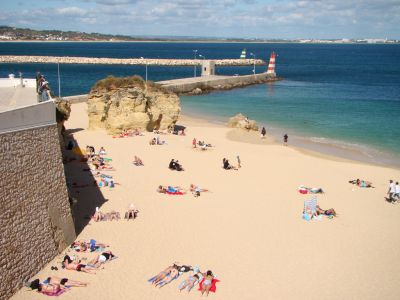
Batata Beach is one of the closest and most historically connected beaches to Lagos’ old town, located just beyond the city walls near the former harbour entrance. In earlier periods, its sheltered position made it a convenient landing place for small boats, fishermen, and coastal traffic, especially when access to the main harbour was limited or tightly controlled. During the medieval and early modern periods, the beach lay within direct sight of key fortifications, including the Governors’ Castle and Flag’s Mast Fort, which underlined its strategic importance.
After the earthquake and tsunami of 1755 reshaped the shoreline, the beach gradually lost its utilitarian role. By the 19th and 20th centuries, it was increasingly valued for its setting rather than its function.
The northern edge of the beach is divided by a long concrete pier, which originally formed the Solaria docks. While once part of the working waterfront, this area is now used for launching kayaks and small sailing boats heading along the coast toward nearby caves. Above the cliffs overlooking Batata Beach stands Mar restaurant, a popular option for a relaxed lunch, complemented by small, tasty offerings sold locally along the beach.
Today, Batata Beach is one of the most popular beaches in the city, particularly with families. Its proximity to the city centre, available amenities, and notably calm, still waters make it especially appealing. Lifeguards supervise the beach, and many locals are comfortable allowing their children to swim here unattended.
After the earthquake and tsunami of 1755 reshaped the shoreline, the beach gradually lost its utilitarian role. By the 19th and 20th centuries, it was increasingly valued for its setting rather than its function.
The northern edge of the beach is divided by a long concrete pier, which originally formed the Solaria docks. While once part of the working waterfront, this area is now used for launching kayaks and small sailing boats heading along the coast toward nearby caves. Above the cliffs overlooking Batata Beach stands Mar restaurant, a popular option for a relaxed lunch, complemented by small, tasty offerings sold locally along the beach.
Today, Batata Beach is one of the most popular beaches in the city, particularly with families. Its proximity to the city centre, available amenities, and notably calm, still waters make it especially appealing. Lifeguards supervise the beach, and many locals are comfortable allowing their children to swim here unattended.
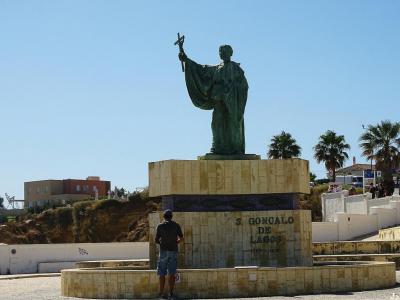
13) Statue of Sao Goncalo (Gundisalvus of Lagos)
Perched near the historic Ponta da Bandeira Fort, overlooking the shimmering waters of Praia da Batata, the Statue of Saint Gonçalo stands as a tribute to one of Lagos’ most revered figures. Born in the city around 1360, Gundisalvus of Lagos-or Saint Gonçalo-was a Catholic priest, theologian, and Augustinian friar known for his dedication to education, illuminated manuscripts, and religious music. As a preacher, he focused on teaching children, the illiterate, and the uneducated, while also serving as prior of several important Augustinian convents in Portugal.
The statue, sculpted by Tolentino Abegoaria and erected in 2001 through public subscription, captures Saint Gonçalo’s legendary connection to the sea. He is often depicted holding a book and blessing the waters with a crucifix, symbolizing the miraculous event in which he is said to have appeared posthumously to save his nephew from a shipwreck. This association with maritime protection has made him a beloved figure among sailors and fishermen.
Adding to his lasting influence, the Hospital Saint Gonçalo de Lagos bears his name, and within the Castelo de Lagos, one of its gates-Saint Gonçalo’s Gate-pays tribute to his legacy. The castle also houses a shrine in his honor, further cementing his role in the city's religious and cultural identity.
The Statue of Saint Gonçalo serves as more than just a landmark; it is a spiritual and historical reminder of faith, humility, and devotion, blending seamlessly with the rich maritime and religious traditions of Lagos.
The statue, sculpted by Tolentino Abegoaria and erected in 2001 through public subscription, captures Saint Gonçalo’s legendary connection to the sea. He is often depicted holding a book and blessing the waters with a crucifix, symbolizing the miraculous event in which he is said to have appeared posthumously to save his nephew from a shipwreck. This association with maritime protection has made him a beloved figure among sailors and fishermen.
Adding to his lasting influence, the Hospital Saint Gonçalo de Lagos bears his name, and within the Castelo de Lagos, one of its gates-Saint Gonçalo’s Gate-pays tribute to his legacy. The castle also houses a shrine in his honor, further cementing his role in the city's religious and cultural identity.
The Statue of Saint Gonçalo serves as more than just a landmark; it is a spiritual and historical reminder of faith, humility, and devotion, blending seamlessly with the rich maritime and religious traditions of Lagos.
