Custom Walk in Bergen, Norway by mrsdeniseclark_885885 created on 2026-04-11
Guide Location: Norway » Bergen
Guide Type: Custom Walk
# of Sights: 9
Tour Duration: 9 Hour(s)
Travel Distance: 23.2 Km or 14.4 Miles
Share Key: 249N6
Guide Type: Custom Walk
# of Sights: 9
Tour Duration: 9 Hour(s)
Travel Distance: 23.2 Km or 14.4 Miles
Share Key: 249N6
How It Works
Please retrieve this walk in the GPSmyCity app. Once done, the app will guide you from one tour stop to the next as if you had a personal tour guide. If you created the walk on this website or come to the page via a link, please follow the instructions below to retrieve the walk in the app.
Retrieve This Walk in App
Step 1. Download the app "GPSmyCity: Walks in 1K+ Cities" on Apple App Store or Google Play Store.



Step 2. In the GPSmyCity app, download(or launch) the guide "Bergen Map and Walking Tours".
Step 3. Tap the menu button located at upper right corner of the "Walks" screen and select "Retrieve custom walk". Enter the share key: 249N6
1) Sailor's Monument
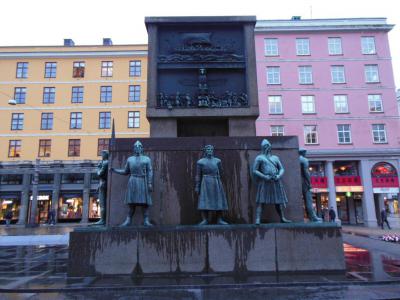
The Sailor's Monument in Bergen stands as a tribute to the country's maritime heritage, honoring the contributions of Norwegian sailors throughout the ages. Located at the northern end of Torgallmenningen, the city's main square, the monument reaches a height of 7 meters and presents a distinct cuboid shape. Designed by sculptor Dyre Vaa and unveiled on June 7, 1950, it serves as both an artistic and historical reflection on Norway’s long-standing relationship with the sea.
The monument features 12 bronze statues and four relief panels, with the statues grouped into four triads that face the cardinal directions-each direction representing a different era of Norwegian maritime history. The west-facing side depicts Viking Age adventurers, notable for their armed portrayal with swords and a conspicuously large spear. The north side celebrates early modern era (17th and 18th centuries) seafarers, the east side features 19th-century seamen, and the south side represents 20th-century sailors. Each group is symbolically divided into societal classes: the poor and servile, the middle classes, and the elite.
The relief panels add a layer of narrative depth, intertwining real maritime dangers with mythical and spiritual elements. They depict various historical and allegorical scenes, including Viking longships, encounters with native Americans symbolizing distant voyages, and more modern imagery such as whaling scenes and representations of sailors lost at sea.
The monument, while impressive, only depicts male figures and overlooks the later Middle Ages, a key era in Bergen's history. This biased portrayal reflects Norway's cultural focus on the Viking era as a masculine symbol of national identity, shaping public memory and monuments.
The monument features 12 bronze statues and four relief panels, with the statues grouped into four triads that face the cardinal directions-each direction representing a different era of Norwegian maritime history. The west-facing side depicts Viking Age adventurers, notable for their armed portrayal with swords and a conspicuously large spear. The north side celebrates early modern era (17th and 18th centuries) seafarers, the east side features 19th-century seamen, and the south side represents 20th-century sailors. Each group is symbolically divided into societal classes: the poor and servile, the middle classes, and the elite.
The relief panels add a layer of narrative depth, intertwining real maritime dangers with mythical and spiritual elements. They depict various historical and allegorical scenes, including Viking longships, encounters with native Americans symbolizing distant voyages, and more modern imagery such as whaling scenes and representations of sailors lost at sea.
The monument, while impressive, only depicts male figures and overlooks the later Middle Ages, a key era in Bergen's history. This biased portrayal reflects Norway's cultural focus on the Viking era as a masculine symbol of national identity, shaping public memory and monuments.
2) Nonneseter Abbey
Nonneseter Abbey, located in Bergen, boasts a rich history that traces back to its first recorded mention in 1262, although its foundation likely occurred around 1150. Initially dedicated to the Virgin Mary, the abbey's nuns were part of the Cistercian Order. The abbey also hosted a hospital from as early as 1411, believed to be a precursor to the Saint George's Lepers' Hospital.
However, the abbey's narrative took a dramatic turn in 1507 when the nuns were expelled due to allegations of immoral behavior. Subsequently, the buildings were handed over to the Hospital Brothers of Saint Anthony. The monastery was secularized in 1528, with the property transformed into a private fortified residence known as Lungegården by Vincens Lunge.
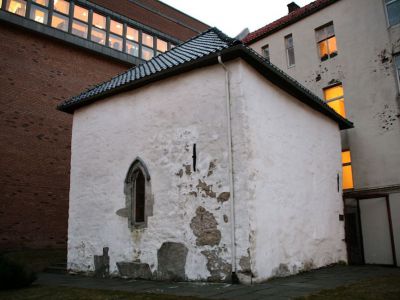
Tragically, most of the original structures were destroyed in a fire in 1891, leaving only minimal remnants of the abbey's former architectural splendor. What survived includes the base of the abbey church's west tower and the Nonneseter Chapel, which were secured by the Society for the Preservation of Ancient Norwegian Monuments post-fire.
The remaining west tower base, known as Tårnfoten, is located near Bergen's public library and features a portal with a round arch in the west wall and another in the east wall, suggesting its original connection to the church. This tower, now clad in dressed stone, serves as a memorial chapel to those who fell during World War II. Its Romanesque style indicates it may predate the Cistercians, suggesting a possible older structure at the site.
Adjacent to Tårnfoten was the abbey church, originally small and expanded in the late 13th century with new choir and choir chapels. Only the Nonneseter Chapel remains from this expansion. Situated at Kaigaten 3, this chapel is distinguished by its Gothic arched windows and vaulted ceiling, indicative of its 1250 construction date. Historically a church for the deaf from 1951 to 1989, it is currently utilized as a concert hall among other functions.
However, the abbey's narrative took a dramatic turn in 1507 when the nuns were expelled due to allegations of immoral behavior. Subsequently, the buildings were handed over to the Hospital Brothers of Saint Anthony. The monastery was secularized in 1528, with the property transformed into a private fortified residence known as Lungegården by Vincens Lunge.
Tragically, most of the original structures were destroyed in a fire in 1891, leaving only minimal remnants of the abbey's former architectural splendor. What survived includes the base of the abbey church's west tower and the Nonneseter Chapel, which were secured by the Society for the Preservation of Ancient Norwegian Monuments post-fire.
The remaining west tower base, known as Tårnfoten, is located near Bergen's public library and features a portal with a round arch in the west wall and another in the east wall, suggesting its original connection to the church. This tower, now clad in dressed stone, serves as a memorial chapel to those who fell during World War II. Its Romanesque style indicates it may predate the Cistercians, suggesting a possible older structure at the site.
Adjacent to Tårnfoten was the abbey church, originally small and expanded in the late 13th century with new choir and choir chapels. Only the Nonneseter Chapel remains from this expansion. Situated at Kaigaten 3, this chapel is distinguished by its Gothic arched windows and vaulted ceiling, indicative of its 1250 construction date. Historically a church for the deaf from 1951 to 1989, it is currently utilized as a concert hall among other functions.
3) Fantoft Stavkirke (Fantoft Stave Church) (must see)
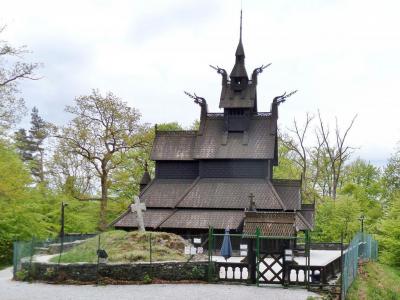
Fantoft Stave Church, located in the Fana borough of Bergen, stands as a reconstructed monument of Norway's medieval architectural heritage. Originally erected around 1150 in Fortun, a village near the eastern end of Sognefjord, the church was an emblematic stave church of the era. In 1879, it was replaced by the new Fortun Church, leading to its potential demolition along with many other stave churches across Norway during that period.
The church's salvation came from Consul Fredrik Georg Gade, who purchased and relocated it to Fana near Bergen in 1883, thereby preserving this significant piece of Norwegian cultural history. A notable feature on the church grounds is a stone cross from Tjora in Sola, further accentuating its historical and cultural importance.
However, the church's history took a dark turn on June 6, 1992, when it was destroyed by arson. This act of vandalism marked the beginning of a series of church burnings attributed to the early Norwegian black metal scene. Initially, it was speculated that the fire could have been due to lightning or electrical failure. However, by 1994, Varg Vikernes, a prominent figure in the black metal community, was found guilty of several other church burnings, though he was not convicted for the Fantoft Stave Church fire due to a controversial jury decision.
Promptly after the arson, efforts were made to reconstruct the church, culminating in a painstaking six-year restoration process. Since its reopening in 1997, the church has been encircled by a security fence to protect this historical site from further harm. Today, Fantoft Stave Church not only serves as a place of cultural and historical significance but also as a symbol of resilience in the face of cultural vandalism.
The church's salvation came from Consul Fredrik Georg Gade, who purchased and relocated it to Fana near Bergen in 1883, thereby preserving this significant piece of Norwegian cultural history. A notable feature on the church grounds is a stone cross from Tjora in Sola, further accentuating its historical and cultural importance.
However, the church's history took a dark turn on June 6, 1992, when it was destroyed by arson. This act of vandalism marked the beginning of a series of church burnings attributed to the early Norwegian black metal scene. Initially, it was speculated that the fire could have been due to lightning or electrical failure. However, by 1994, Varg Vikernes, a prominent figure in the black metal community, was found guilty of several other church burnings, though he was not convicted for the Fantoft Stave Church fire due to a controversial jury decision.
Promptly after the arson, efforts were made to reconstruct the church, culminating in a painstaking six-year restoration process. Since its reopening in 1997, the church has been encircled by a security fence to protect this historical site from further harm. Today, Fantoft Stave Church not only serves as a place of cultural and historical significance but also as a symbol of resilience in the face of cultural vandalism.
4) Bergen Railway Station
Bergen Railway Station, strategically positioned in the heart of Bergen, is a pivotal and historic transport hub that serves as the terminus for one of the world's most picturesque train journeys from Oslo. This station is not just a bustling gateway into the city but also an architectural marvel that entices both travelers and architecture enthusiasts alike.
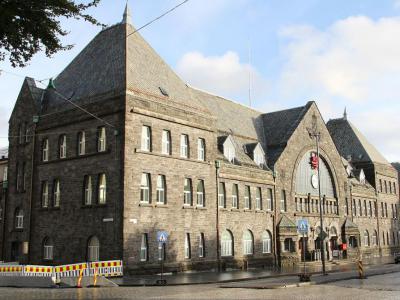
Opened in 1913, four years after the completion of the Oslo-Bergen rail link, Bergen Railway Station replaced an older station to the west and marked a significant enhancement in the city's transport infrastructure. The station was designed by Jens Zetlitz Monrad Kielland, a prominent Norwegian architect renowned for his contributions to the National Romantic movement. This architectural style is a blend of the medieval influences and the modernist Jugendstil (Art Nouveau) that was prevalent in Northern Europe during that era. The station's design reflects these influences, combining robust, medieval-style heavy stonework with the more elegant and organic forms of Art Nouveau.
The station's main hall is particularly striking, where the solid stone structures are beautifully contrasted with an elegant roof and expansive glass windows. These features not only create a visually impressive space but also highlight the station’s most cherished view-the surrounding mountain landscape.
In its early years, Bergen Railway Station also became a notable HoReCa (Hotel, Restaurant, Café) destination. By the 1920s and 1930s, the area around the station had developed significantly; the Hotel Terminus was established in 1922, and a restaurant opened within the station in 1937, enhancing its role as a social and cultural meeting point.
Recognizing its historical and architectural value, the station building has been protected since 2003, ensuring that no significant alterations compromise its original design and heritage. This protection helps preserve the station not only as a functional transport hub but also as a historical monument that embodies the architectural and cultural spirit of early 20th-century Norway.
Opened in 1913, four years after the completion of the Oslo-Bergen rail link, Bergen Railway Station replaced an older station to the west and marked a significant enhancement in the city's transport infrastructure. The station was designed by Jens Zetlitz Monrad Kielland, a prominent Norwegian architect renowned for his contributions to the National Romantic movement. This architectural style is a blend of the medieval influences and the modernist Jugendstil (Art Nouveau) that was prevalent in Northern Europe during that era. The station's design reflects these influences, combining robust, medieval-style heavy stonework with the more elegant and organic forms of Art Nouveau.
The station's main hall is particularly striking, where the solid stone structures are beautifully contrasted with an elegant roof and expansive glass windows. These features not only create a visually impressive space but also highlight the station’s most cherished view-the surrounding mountain landscape.
In its early years, Bergen Railway Station also became a notable HoReCa (Hotel, Restaurant, Café) destination. By the 1920s and 1930s, the area around the station had developed significantly; the Hotel Terminus was established in 1922, and a restaurant opened within the station in 1937, enhancing its role as a social and cultural meeting point.
Recognizing its historical and architectural value, the station building has been protected since 2003, ensuring that no significant alterations compromise its original design and heritage. This protection helps preserve the station not only as a functional transport hub but also as a historical monument that embodies the architectural and cultural spirit of early 20th-century Norway.
5) Bergen Cathedral
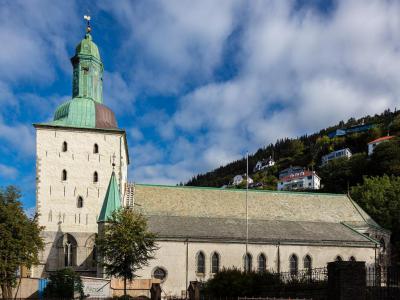
Since 12th century, Bergen Cathedral has been through the fire. Through the fire several times in fact, more than most, in a city famous for devastating fires. And to top it all off it has been hit by a cannon ball, which sticks in the wall to this day. Fires and wars, but there is peace and beauty inside.
Bergen Cathedral is episcopal seat of home parish of the Church of Norway. Word of the church appears for the first time in 1181. To this day it remains dedicated to Saint Olaf.
In 1181, Jon Kutiza, a peasant rebel and his men chased a number of King Sverre's men into the cathedral (then known as Olavskirken). Under the reign of King Haakon IV, Franciscans built a friary connecting to the church. The church had a long design in a Romanesque style. It burned down in 1248.
A new stone church was erected and that caught fire in 1270. The church wasn't fully reconstructed until 1537, when it was designated the new cathedral of the Protestant persuasion. In 1702 there was another fire and another reconstruction. By the 1880s the Cathedral's interior was restored to its original Rococo appearance.
In the second English-Dutch war, in the sea battle of Vagen in 1665, the cathedral sustained a hit from a cannon shot gone wild. The ball sits today, ensconced in the front wall.
The cathedral today is used mainly for musical events.
Bergen Cathedral is episcopal seat of home parish of the Church of Norway. Word of the church appears for the first time in 1181. To this day it remains dedicated to Saint Olaf.
In 1181, Jon Kutiza, a peasant rebel and his men chased a number of King Sverre's men into the cathedral (then known as Olavskirken). Under the reign of King Haakon IV, Franciscans built a friary connecting to the church. The church had a long design in a Romanesque style. It burned down in 1248.
A new stone church was erected and that caught fire in 1270. The church wasn't fully reconstructed until 1537, when it was designated the new cathedral of the Protestant persuasion. In 1702 there was another fire and another reconstruction. By the 1880s the Cathedral's interior was restored to its original Rococo appearance.
In the second English-Dutch war, in the sea battle of Vagen in 1665, the cathedral sustained a hit from a cannon shot gone wild. The ball sits today, ensconced in the front wall.
The cathedral today is used mainly for musical events.
6) Gamle Bergen (Old Bergen Museum) (must see)
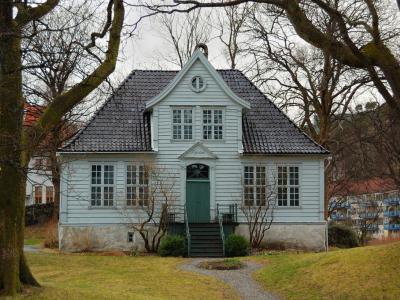
Old Bergen Museum (Gamle Bergen), located in Bergen, is a captivating open-air museum that offers a vivid glimpse into the city's past. As part of the City Museum of Bergen, it showcases a collection of over 50 wooden houses dating from the 18th to the 20th centuries. These structures were specifically brought to this site to preserve a snapshot of Bergen as Europe's largest wooden city during the 1800s-a bustling urban center characterized by closely spaced wooden buildings, busy streets, markets, and alleys.
Founded in 1949 by the Old Bergen Association, the museum was established around the historical summer house "Elsesro," built by shipbuilder Rasmus Rolfsen in the late 18th century. The association began acquiring sections around Elsesro in 1935, eventually expanding to include a range of buildings and recreating a typical Bergen environment from different eras. These buildings include private homes, a variety of shops, and workshops like those of a baker, merchant, watchmaker, and even a dentist, meticulously arranged to reflect the city's architectural and cultural heritage.
The immersive experience at Old Bergen is enhanced by role players dressed in period costumes who animate the history of Bergen, portraying daily life as it might have been a century or two ago. Visitors can explore this recreated historical landscape by peering into windows, entering houses to view exhibitions and historically furnished interiors, or engaging with the actors to learn more about the past.
For families and other visitors, the museum is not only an educational experience but also a place for leisure and interaction. The museum grounds include a park styled after an English garden, ideal for peaceful strolls. During the summer, the square becomes a lively hub with short plays and activities for children, including traditional games. The museum also hosts a kiosk selling snacks like cinnamon buns and ice cream.
Conveniently located near the city center, the Old Bergen Museum is more than just a museum; it is a portal to the past, offering a slice of life from historical Bergen within a scenic and tranquil setting. Whether interested in history, architecture, or simply looking for a unique day out, visitors of all ages can find something to appreciate at Old Bergen Museum.
Founded in 1949 by the Old Bergen Association, the museum was established around the historical summer house "Elsesro," built by shipbuilder Rasmus Rolfsen in the late 18th century. The association began acquiring sections around Elsesro in 1935, eventually expanding to include a range of buildings and recreating a typical Bergen environment from different eras. These buildings include private homes, a variety of shops, and workshops like those of a baker, merchant, watchmaker, and even a dentist, meticulously arranged to reflect the city's architectural and cultural heritage.
The immersive experience at Old Bergen is enhanced by role players dressed in period costumes who animate the history of Bergen, portraying daily life as it might have been a century or two ago. Visitors can explore this recreated historical landscape by peering into windows, entering houses to view exhibitions and historically furnished interiors, or engaging with the actors to learn more about the past.
For families and other visitors, the museum is not only an educational experience but also a place for leisure and interaction. The museum grounds include a park styled after an English garden, ideal for peaceful strolls. During the summer, the square becomes a lively hub with short plays and activities for children, including traditional games. The museum also hosts a kiosk selling snacks like cinnamon buns and ice cream.
Conveniently located near the city center, the Old Bergen Museum is more than just a museum; it is a portal to the past, offering a slice of life from historical Bergen within a scenic and tranquil setting. Whether interested in history, architecture, or simply looking for a unique day out, visitors of all ages can find something to appreciate at Old Bergen Museum.
7) Floibanen Funicular (must see)
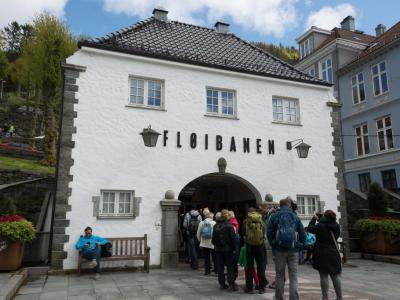
The 100-year old carriages of the Floibanen funicular will take one from Bergen center to the top of Mount Floyen. It's a six minute ride to a fabulous panoramic view over the city, mountains and fjord.
Norway is a land of hiking and climbing. A ride in the funicular allows a visit to a place of uncountable opportunities for walks and hikes. Arriving visitors on Mount Floyen discover miles of gravel roads and paths. The paths lead to stunning overlooks of the fjord, the mountains and the city spread out below.
A trail called Vidden will take a hiker from Mount Floyen to Mount Ulriken. This popular hike takes about five hours. Most people prefer to hike from Ulriken to Mount Floyen. This is a path for more serious hikers. Mount Floyen has both short and long hikes. The trails are accessible to wheelchairs, strollers, young, and old.
Hungry pioneers need not suffer on the trail. On arriving at Floyen a visitor finds the Floisten shop offering pastry, ice cream and hot and cold drinks to the fasting voyageur. A short walk to Floien Folkerestaurant can get one a fuller meal and a spectacular view of things below.
A ten minute walk from the station find Lake Skomakerdiket and the cafe Skomakerstuen. Sit by the water and have a drink with your Norwegian "Svele", a griddle cake with sour cream.
There is an obstacle course and a large playground for children. For the adventurous, take a stroll though the Mysterious Troll Forest. Rent a motorbike or a canoe, not everything must involve hiking.
Why You Should Visit:
For the excitement. And yes, the views.
Tips:
With the Bergen Card round trips are free. Ask about discounts.
Norway is a land of hiking and climbing. A ride in the funicular allows a visit to a place of uncountable opportunities for walks and hikes. Arriving visitors on Mount Floyen discover miles of gravel roads and paths. The paths lead to stunning overlooks of the fjord, the mountains and the city spread out below.
A trail called Vidden will take a hiker from Mount Floyen to Mount Ulriken. This popular hike takes about five hours. Most people prefer to hike from Ulriken to Mount Floyen. This is a path for more serious hikers. Mount Floyen has both short and long hikes. The trails are accessible to wheelchairs, strollers, young, and old.
Hungry pioneers need not suffer on the trail. On arriving at Floyen a visitor finds the Floisten shop offering pastry, ice cream and hot and cold drinks to the fasting voyageur. A short walk to Floien Folkerestaurant can get one a fuller meal and a spectacular view of things below.
A ten minute walk from the station find Lake Skomakerdiket and the cafe Skomakerstuen. Sit by the water and have a drink with your Norwegian "Svele", a griddle cake with sour cream.
There is an obstacle course and a large playground for children. For the adventurous, take a stroll though the Mysterious Troll Forest. Rent a motorbike or a canoe, not everything must involve hiking.
Why You Should Visit:
For the excitement. And yes, the views.
Tips:
With the Bergen Card round trips are free. Ask about discounts.
8) Kjottbasaren Market (Meat Bazaar)
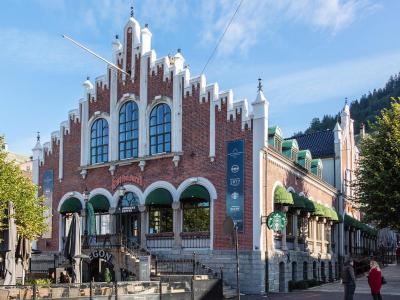
The Meat Bazaar (Kjottbasaren), Bergen's historic meat market, is an architectural and cultural gem founded in 1872. Located on Vetrlidsallmenningen, this ornate gabled brick building with a crenelated roof stands as a testament to the city's rich history and vibrant market culture. Originally designed by architect Conrad Fredrik von der Lippe in a neo-Romanesque style, the market has served as a hub for local food trade for over a century.
The Meat Bazaar in Bergen originated in the late 18th century when butchers in Skuteviken set up "meat huts" on Kjødtorvet to keep the city center clean. These simple stalls were established around 1776, offering a designated space for meat trade away from homes. Eventually, in 1877, the Meat Bazaar was constructed, featuring 44 sales stalls and 27 cellar stalls, becoming a unique establishment in Norway.
Today, the Meat Bazaar is a bustling food emporium offering a diverse array of products. Shoppers can find chocolates, cheeses, meats, cakes, breads, and souvenirs amidst the charming stalls. The market, restored in 1990, retains its historical ambiance while accommodating contemporary needs. Visitors can shop and dine, with several restaurants on the first floor and additional stalls and shops above. Weather permitting, tables and chairs are set up outside the café/restaurant, providing a pleasant dining experience-though diners should be mindful of the wind direction to avoid the fishy smells wafting from the nearby Fish Market.
The Meat Bazaar not only serves as a marketplace but also as a cultural landmark that encapsulates Bergen's historical progression and architectural heritage. Its establishment marked a significant improvement in market regulation, hygiene, and trade practices, influencing the urban development of the city. The building's architectural style and subsequent renovations highlight the evolving needs and tastes of Bergen's populace over the years.
The Meat Bazaar in Bergen originated in the late 18th century when butchers in Skuteviken set up "meat huts" on Kjødtorvet to keep the city center clean. These simple stalls were established around 1776, offering a designated space for meat trade away from homes. Eventually, in 1877, the Meat Bazaar was constructed, featuring 44 sales stalls and 27 cellar stalls, becoming a unique establishment in Norway.
Today, the Meat Bazaar is a bustling food emporium offering a diverse array of products. Shoppers can find chocolates, cheeses, meats, cakes, breads, and souvenirs amidst the charming stalls. The market, restored in 1990, retains its historical ambiance while accommodating contemporary needs. Visitors can shop and dine, with several restaurants on the first floor and additional stalls and shops above. Weather permitting, tables and chairs are set up outside the café/restaurant, providing a pleasant dining experience-though diners should be mindful of the wind direction to avoid the fishy smells wafting from the nearby Fish Market.
The Meat Bazaar not only serves as a marketplace but also as a cultural landmark that encapsulates Bergen's historical progression and architectural heritage. Its establishment marked a significant improvement in market regulation, hygiene, and trade practices, influencing the urban development of the city. The building's architectural style and subsequent renovations highlight the evolving needs and tastes of Bergen's populace over the years.
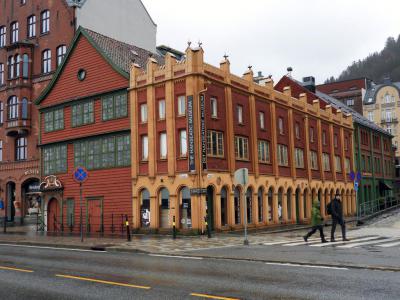
9) Hanseatic Museum (must see)
In the 14th century the Hanseatic League reached Norway, They sailed to Bergen to open up a trade in grain for stockfish. Bergen soon became one of Northern Europe's trading centers. The Hanseatic Museum today belongs on UNESCO's World Heritage List.
The museum gives us a picture of how the Hanseatic merchant lived and influenced life in the Wharf. Walk through Bryggen today in the narrow alleyways and travel through time. See the men speaking Plattdeutsch and pushing barrels of stockfish to the quay. A group of 62 buildings from the Hanseatic era has been preserved.
The Hanseatic Assembly Rooms were originally single houses behind each Building on the wharf. The houses have names. Jakobsfjorden and Bellgaarden cover the period before 1702. Svensgaarden is from 1708. A third room, Bredsgaarden is from 1709 but it was rebuilt in 1761.
Hanseatic Assembly Rooms were part of the tenements. They were assembly rooms for company personnel in the winter. Only the assembly rooms were heated. Fire was forbidden in all other houses. Bergen was Fires-R-Us for centuries. An assembly room was a classroom for apprentices, church services, and funerals. Even punishments were meted out here.
The Hanseatic Assembly Rooms are next to the Hanseatic merchants' church, Saint Mary's Church.
The museum gives us a picture of how the Hanseatic merchant lived and influenced life in the Wharf. Walk through Bryggen today in the narrow alleyways and travel through time. See the men speaking Plattdeutsch and pushing barrels of stockfish to the quay. A group of 62 buildings from the Hanseatic era has been preserved.
The Hanseatic Assembly Rooms were originally single houses behind each Building on the wharf. The houses have names. Jakobsfjorden and Bellgaarden cover the period before 1702. Svensgaarden is from 1708. A third room, Bredsgaarden is from 1709 but it was rebuilt in 1761.
Hanseatic Assembly Rooms were part of the tenements. They were assembly rooms for company personnel in the winter. Only the assembly rooms were heated. Fire was forbidden in all other houses. Bergen was Fires-R-Us for centuries. An assembly room was a classroom for apprentices, church services, and funerals. Even punishments were meted out here.
The Hanseatic Assembly Rooms are next to the Hanseatic merchants' church, Saint Mary's Church.
