Custom Walk in Budapest, Hungary by thisismil_99efc8 created on 2026-04-30
Guide Location: Hungary » Budapest
Guide Type: Custom Walk
# of Sights: 7
Tour Duration: 4 Hour(s)
Travel Distance: 8.8 Km or 5.5 Miles
Share Key: DFUQT
Guide Type: Custom Walk
# of Sights: 7
Tour Duration: 4 Hour(s)
Travel Distance: 8.8 Km or 5.5 Miles
Share Key: DFUQT
How It Works
Please retrieve this walk in the GPSmyCity app. Once done, the app will guide you from one tour stop to the next as if you had a personal tour guide. If you created the walk on this website or come to the page via a link, please follow the instructions below to retrieve the walk in the app.
Retrieve This Walk in App
Step 1. Download the app "GPSmyCity: Walks in 1K+ Cities" on Apple App Store or Google Play Store.



Step 2. In the GPSmyCity app, download(or launch) the guide "Budapest Map and Walking Tours".
Step 3. Tap the menu button located at upper right corner of the "Walks" screen and select "Retrieve custom walk". Enter the share key: DFUQT
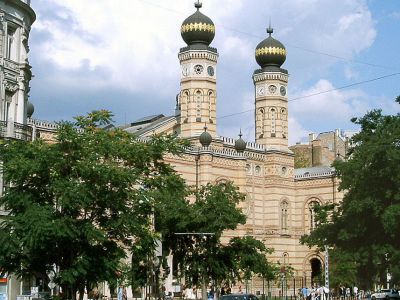
1) Great Synagogue (Dohany Street Synagogue) (must see)
Built in the 1850s for the Neolog Jewish community, this synagogue ranks as the second-largest in the world, second only to Temple Emanu-El in New York. Much like the one on nearby Rumbach Street, it was designed by Viennese architect Ludwig Forster, embracing a richly detailed Moorish Revival style. The building forms part of a larger Jewish Quarter complex that includes the Heroes’ Temple, a graveyard, a Holocaust memorial, and the Jewish Museum. During World War II, Dohány Street marked the boundary of the Budapest Ghetto, and even today, the area carries a profound sense of remembrance.
The synagogue suffered heavy damage during the war and endured years of neglect under communist rule. It wasn’t until the 1990s that an extensive restoration finally returned it to its former grandeur. The twin octagonal towers, flanking the main entrance and crowned with onion domes, now make this structure visible all over the city. Inside, the vast nave stretches nearly 40 feet high, revealing Gothic, Romantic, and Byzantine influences. A new mechanical organ fills the space, replacing the original one crafted in the 19th century.
As is traditional, the ground floor seating is reserved for men, while women are seated in the upper galleries. In all, the building can accommodate up to 3,000 worshippers.
Those curious about Jewish history will find much to explore here. Next door is the Jewish Heroes’ Mausoleum, and upstairs, the museum and archives offer informative and thought-provoking exhibits. In the adjacent graveyard, victims of the Holocaust are laid to rest alongside non-Jews who risked their lives to save others. The neighboring park holds a memorial honoring these courageous individuals.
Tip: The synagogue offers guided group tours in several languages. Visitors are asked to observe a modest dress code; if needed, special coverings are provided at the entrance.
The synagogue suffered heavy damage during the war and endured years of neglect under communist rule. It wasn’t until the 1990s that an extensive restoration finally returned it to its former grandeur. The twin octagonal towers, flanking the main entrance and crowned with onion domes, now make this structure visible all over the city. Inside, the vast nave stretches nearly 40 feet high, revealing Gothic, Romantic, and Byzantine influences. A new mechanical organ fills the space, replacing the original one crafted in the 19th century.
As is traditional, the ground floor seating is reserved for men, while women are seated in the upper galleries. In all, the building can accommodate up to 3,000 worshippers.
Those curious about Jewish history will find much to explore here. Next door is the Jewish Heroes’ Mausoleum, and upstairs, the museum and archives offer informative and thought-provoking exhibits. In the adjacent graveyard, victims of the Holocaust are laid to rest alongside non-Jews who risked their lives to save others. The neighboring park holds a memorial honoring these courageous individuals.
Tip: The synagogue offers guided group tours in several languages. Visitors are asked to observe a modest dress code; if needed, special coverings are provided at the entrance.
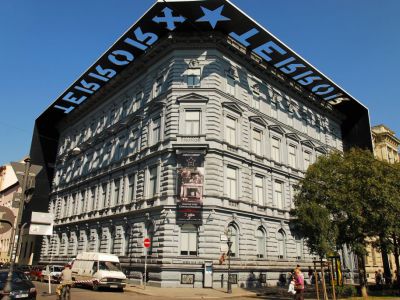
2) House of Terror (must see)
A building that chilled hearts during much of the 20th century, the so-called House of Terror stands out against the more traditional buildings on Andrassy Avenue with its black passé partout, granite sidewalks, and blade-colored walls.
It is actually a museum proper, detailing some of the gruesome activities of the German occupation and what followed under the Russian-backed communist government. In like fashion, it is also a memorial to the many who died under the city's "double occupation" or were victims of torture and detention, providing some insight and understanding of the plight of the ordinary Hungarian folk.
The whole experience is atmospheric with music, lighting and video contributing to the ambiance. Most of the information in the museum is in the form of testimonial videos from survivors of the different regimes, coupled with original photos and newsreels/propaganda videos rather than objects (though there are a few around), so it is rather "good value" in terms of how much content one gets for the money. Moreover, each room has a box full of A4 papers in English and Hungarian with a background in what the room relates to (though not necessarily what visitors are looking at exactly).
It is actually a museum proper, detailing some of the gruesome activities of the German occupation and what followed under the Russian-backed communist government. In like fashion, it is also a memorial to the many who died under the city's "double occupation" or were victims of torture and detention, providing some insight and understanding of the plight of the ordinary Hungarian folk.
The whole experience is atmospheric with music, lighting and video contributing to the ambiance. Most of the information in the museum is in the form of testimonial videos from survivors of the different regimes, coupled with original photos and newsreels/propaganda videos rather than objects (though there are a few around), so it is rather "good value" in terms of how much content one gets for the money. Moreover, each room has a box full of A4 papers in English and Hungarian with a background in what the room relates to (though not necessarily what visitors are looking at exactly).
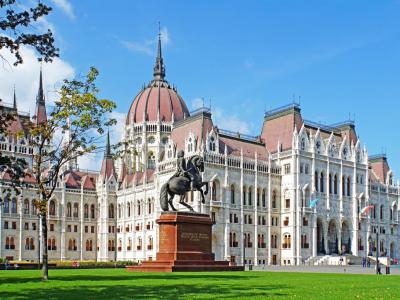
3) Hungarian Parliament Building (must see)
The seat of the Hungarian Parliament is a massive Neo-Gothic edifice along the eastern bank of the Danube. Towering over the city, it’s not only the most recognizable landmark in Budapest but also the largest building in Hungary-and one of the oldest parliamentary structures in Europe.
Built in 1896 to mark Hungary’s millennial anniversary, the Parliament was intended to symbolize the country’s newfound political unity. The scale of the project was staggering: around 100,000 workers contributed to its construction, using 40 million bricks, 40 kilos of gold, and half a million precious stones and decorative elements. Inside and out, the structure dazzles with 242 sculptures, 27 grand entrance gates, 700 roms and an incredible 19 kilometers of stairways and corridors.
At the heart of it all lies the magnificent central hall, home to the Hungarian Coronation Regalia. These priceless treasures-the Holy Crown of Hungary, the orb, the scepter, and a Renaissance-style sword-are displayed under the soaring dome, offering visitors a rare glimpse into the nation’s royal past.
Beyond its grand interiors, the Parliament is also known for its daily Changing of the Guard ceremony, a popular spectacle each afternoon that adds even more life to its regal atmosphere. And once evening falls and the building lights up, it transforms into a glowing centerpiece of the Budapest skyline-resembling, from a distance, an enormous, glittering Christmas tree.
Make sure to carve out some time to experience it up close-you’ll be walking through history under one of the most beautiful roofs in Europe!
Built in 1896 to mark Hungary’s millennial anniversary, the Parliament was intended to symbolize the country’s newfound political unity. The scale of the project was staggering: around 100,000 workers contributed to its construction, using 40 million bricks, 40 kilos of gold, and half a million precious stones and decorative elements. Inside and out, the structure dazzles with 242 sculptures, 27 grand entrance gates, 700 roms and an incredible 19 kilometers of stairways and corridors.
At the heart of it all lies the magnificent central hall, home to the Hungarian Coronation Regalia. These priceless treasures-the Holy Crown of Hungary, the orb, the scepter, and a Renaissance-style sword-are displayed under the soaring dome, offering visitors a rare glimpse into the nation’s royal past.
Beyond its grand interiors, the Parliament is also known for its daily Changing of the Guard ceremony, a popular spectacle each afternoon that adds even more life to its regal atmosphere. And once evening falls and the building lights up, it transforms into a glowing centerpiece of the Budapest skyline-resembling, from a distance, an enormous, glittering Christmas tree.
Make sure to carve out some time to experience it up close-you’ll be walking through history under one of the most beautiful roofs in Europe!
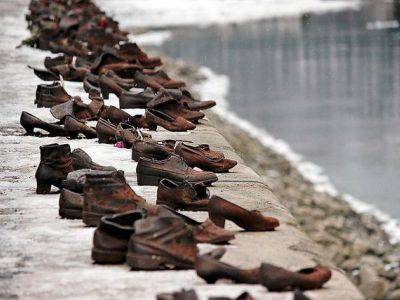
4) Shoes on the Danube Bank (must see)
The Shoes on the Danube Bank is a haunting memorial created in 2005 to honor the Jewish victims brutally murdered by the Arrow Cross militia during the Second World War in Budapest. In those grim days, victims were forced to remove their shoes before being shot at the river’s edge. Their bodies fell into the Danube, carried silently away by the current.
Set along the Pest side of the Danube Promenade and just south of the Hungarian Parliament, the memorial captures the heartbreak of those moments with stark simplicity. Sixty pairs of iron shoes, modeled in styles true to the 1940s, line the stone embankment. Each pair tells its own silent story-of lives interrupted, families destroyed, hopes abandoned.
Behind the shoes runs a 40-meter-long stone bench, standing 70 centimeters high. Three cast-iron plaques are placed at intervals, bearing an inscription in Hungarian, English, and Hebrew: “To the memory of the victims shot into the Danube by Arrow Cross militiamen in 1944–45.”
The flowing river beside the memorial deepens the emotional weight of the place, offering a quiet, constant reminder of how easily lives can be swept away. Some memorials speak loudly; this one whispers-and stays with you long after you've moved on.
Set along the Pest side of the Danube Promenade and just south of the Hungarian Parliament, the memorial captures the heartbreak of those moments with stark simplicity. Sixty pairs of iron shoes, modeled in styles true to the 1940s, line the stone embankment. Each pair tells its own silent story-of lives interrupted, families destroyed, hopes abandoned.
Behind the shoes runs a 40-meter-long stone bench, standing 70 centimeters high. Three cast-iron plaques are placed at intervals, bearing an inscription in Hungarian, English, and Hebrew: “To the memory of the victims shot into the Danube by Arrow Cross militiamen in 1944–45.”
The flowing river beside the memorial deepens the emotional weight of the place, offering a quiet, constant reminder of how easily lives can be swept away. Some memorials speak loudly; this one whispers-and stays with you long after you've moved on.
5) Buda Castle (must see)
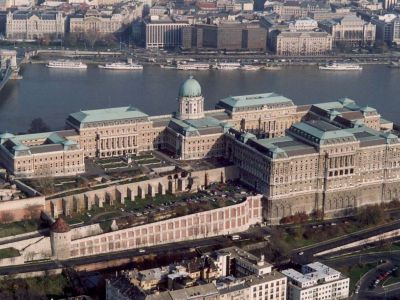
Once the residence of Hungarian monarchs, this sprawling complex, perched high on Buda Hill, stretches over 300 meters and commands the skyline with regal presence. Whether viewed by day or lit up at night, it’s an unforgettable sight and a rewarding place to explore on foot.
Architecturally, the castle is a layered story of styles-Gothic arches, Romantic flourishes, and Baroque elegance all coexisting. That eclectic mix is the result of centuries of destruction and rebuilding; in fact, the palace has been reconstructed at least six times over the past 700 years. Unlike other royal residences that preserve lavish interiors, Buda Castle now serves a different purpose. It’s home to several cultural institutions, including the Budapest History Museum, tracing the city's evolution from ancient times to the modern day; the Hungarian National Gallery, where the country's finest art is on display; and the National Library, which preserves rare volumes and antique prints from Hungary and abroad.
Open day and night, the castle grounds offer outstanding views over the Danube, looking out toward Pest and the lower slopes of Buda. Winding paths, open courtyards, and quiet corners make for a peaceful walk. Don’t miss the dramatic fountain in the main courtyard-a sculpture of King Matthias’s hunting party so lifelike you might almost hear the hounds barking while chasing prey. Military guards stationed on-site add a ceremonial touch, especially during their rhythmic drills and changeovers.
If you happen to visit during a festival, you might stumble upon medieval reenactments, concerts, or parades of historical costumes and weaponry. And for those in search of something quieter, head toward the Várkert Bazár. Its terraced gardens are perfect for a slow afternoon picnic-just bring a blanket and a chilled bottle of wine.
Architecturally, the castle is a layered story of styles-Gothic arches, Romantic flourishes, and Baroque elegance all coexisting. That eclectic mix is the result of centuries of destruction and rebuilding; in fact, the palace has been reconstructed at least six times over the past 700 years. Unlike other royal residences that preserve lavish interiors, Buda Castle now serves a different purpose. It’s home to several cultural institutions, including the Budapest History Museum, tracing the city's evolution from ancient times to the modern day; the Hungarian National Gallery, where the country's finest art is on display; and the National Library, which preserves rare volumes and antique prints from Hungary and abroad.
Open day and night, the castle grounds offer outstanding views over the Danube, looking out toward Pest and the lower slopes of Buda. Winding paths, open courtyards, and quiet corners make for a peaceful walk. Don’t miss the dramatic fountain in the main courtyard-a sculpture of King Matthias’s hunting party so lifelike you might almost hear the hounds barking while chasing prey. Military guards stationed on-site add a ceremonial touch, especially during their rhythmic drills and changeovers.
If you happen to visit during a festival, you might stumble upon medieval reenactments, concerts, or parades of historical costumes and weaponry. And for those in search of something quieter, head toward the Várkert Bazár. Its terraced gardens are perfect for a slow afternoon picnic-just bring a blanket and a chilled bottle of wine.
6) Matthias Church (must see)
Officially named the Church of Our Lady, this revered landmark in Budapest’s Castle District is more commonly known as Matthias Church-named in honor of King Matthias, the monarch who significantly enhanced its beauty. A champion of the arts and a key figure in restoring the Hungarian state after years of instability, King Matthias left an indelible mark on both the church and the country’s cultural heritage.
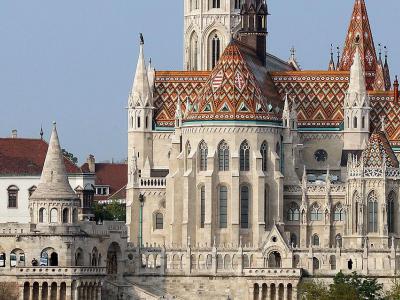
Built originally in the 11th century in Romanesque style, the structure underwent a major transformation in the 14th century, adopting the elegant Gothic design we see today. Its colorful, patterned tile roof is a distinctive feature-easily spotted while wandering through the Castle and near Fisherman’s Bastion.
This sacred space, ranked as the second largest church in Buda, has witnessed centuries of royal ceremonies, state funerals, and religious celebrations. During the Ottoman occupation, it was converted to a mosque, and many ornate frescoes were lost beneath layers of whitewash. When Christian worship resumed in the 17th century, a touch of Baroque was added, restoring grandeur after the siege that drove out the Turks left it damaged.
Now home to the Ecclesiastical Art Museum, the church offers a journey through history, including religious artifacts, ancient stone carvings, and a replica of the Hungarian Royal Crown. Fans of stained glass and sacred art will also find plenty to admire.
Thanks to its exceptional acoustics, Matthias Church doubles as a venue for classical music performances throughout the year.
Tip: If you're up for a challenge and don’t mind tight spaces, climb to the top of the tower for a bird’s-eye view view of Budapest. The staircase is steep and narrow, so you must pace yourself-but the panoramic reward is well worth the effort.
Built originally in the 11th century in Romanesque style, the structure underwent a major transformation in the 14th century, adopting the elegant Gothic design we see today. Its colorful, patterned tile roof is a distinctive feature-easily spotted while wandering through the Castle and near Fisherman’s Bastion.
This sacred space, ranked as the second largest church in Buda, has witnessed centuries of royal ceremonies, state funerals, and religious celebrations. During the Ottoman occupation, it was converted to a mosque, and many ornate frescoes were lost beneath layers of whitewash. When Christian worship resumed in the 17th century, a touch of Baroque was added, restoring grandeur after the siege that drove out the Turks left it damaged.
Now home to the Ecclesiastical Art Museum, the church offers a journey through history, including religious artifacts, ancient stone carvings, and a replica of the Hungarian Royal Crown. Fans of stained glass and sacred art will also find plenty to admire.
Thanks to its exceptional acoustics, Matthias Church doubles as a venue for classical music performances throughout the year.
Tip: If you're up for a challenge and don’t mind tight spaces, climb to the top of the tower for a bird’s-eye view view of Budapest. The staircase is steep and narrow, so you must pace yourself-but the panoramic reward is well worth the effort.
7) St. Stephen's Basilica (must see)
Overlooking its namesake square, Saint Stephen’s Basilica is one of Budapest’s crown jewels-both spiritually and architecturally. Dedicated to King István, Hungary’s first monarch who brought Christianity to the country, the church holds an unusual and revered relic: the king’s mummified right fist, encased in a glass box. Pilgrims from all across Hungary come to see it, although casual visitors might easily walk right past. Also laid to rest here is Ferenc Puskás, the legendary soccer player hailed as one of the greatest in history.
For many Hungarians, Saint Stephen’s is the most important religious site, much as it is a key local attraction for tourists. The building can hold up to 8,500 people at a time and rises 96 meters into the air, matching the height of the Parliament Building-a record legally reserved for Budapest’s most iconic structures.
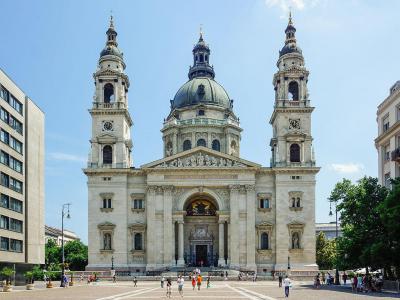
To create this Neoclassical marvel took the work of three architects, including the renowned Miklós Ybl. Adorned with a bust of Saint István right above the doorway, the facade features a huge arched portal with Ionian columns, flanked on both sides with huge bell towers. Topping the right tower is the heaviest and largest bell in the country, tipping the scales at nine tonnes!
Entry to Saint Stephen's Basilica requires a paid ticket, which grants access to all parts of the building, including the treasury and the dome. Visitors can reach the top by stairs or elevator, where they are rewarded with one of the city's best panoramic views. Inside, the basilica features richly decorated interiors with marble surfaces, gilded details, stained glass windows, and detailed mosaics and frescoes. At the main altar stands a statue of Saint Stephen, surrounded by works from some of Hungary’s most renowned artists.
Another unforgettable highlight here is the grand pipe organ. Music lovers should keep an ear out for concerts-hearing it in action is nothing short of an awe-inspiring experience.
Tip: After visiting, take some time to relax in the square-a great place to enjoy coffee at open-air cafes while soaking up the view.
For many Hungarians, Saint Stephen’s is the most important religious site, much as it is a key local attraction for tourists. The building can hold up to 8,500 people at a time and rises 96 meters into the air, matching the height of the Parliament Building-a record legally reserved for Budapest’s most iconic structures.
To create this Neoclassical marvel took the work of three architects, including the renowned Miklós Ybl. Adorned with a bust of Saint István right above the doorway, the facade features a huge arched portal with Ionian columns, flanked on both sides with huge bell towers. Topping the right tower is the heaviest and largest bell in the country, tipping the scales at nine tonnes!
Entry to Saint Stephen's Basilica requires a paid ticket, which grants access to all parts of the building, including the treasury and the dome. Visitors can reach the top by stairs or elevator, where they are rewarded with one of the city's best panoramic views. Inside, the basilica features richly decorated interiors with marble surfaces, gilded details, stained glass windows, and detailed mosaics and frescoes. At the main altar stands a statue of Saint Stephen, surrounded by works from some of Hungary’s most renowned artists.
Another unforgettable highlight here is the grand pipe organ. Music lovers should keep an ear out for concerts-hearing it in action is nothing short of an awe-inspiring experience.
Tip: After visiting, take some time to relax in the square-a great place to enjoy coffee at open-air cafes while soaking up the view.
