Custom Walk in Berlin, Germany by clodaghmchugh_522bb5 created on 2026-05-08
Guide Location: Germany » Berlin
Guide Type: Custom Walk
# of Sights: 11
Tour Duration: 4 Hour(s)
Travel Distance: 10.4 Km or 6.5 Miles
Share Key: DPYLQ
Guide Type: Custom Walk
# of Sights: 11
Tour Duration: 4 Hour(s)
Travel Distance: 10.4 Km or 6.5 Miles
Share Key: DPYLQ
How It Works
Please retrieve this walk in the GPSmyCity app. Once done, the app will guide you from one tour stop to the next as if you had a personal tour guide. If you created the walk on this website or come to the page via a link, please follow the instructions below to retrieve the walk in the app.
Retrieve This Walk in App
Step 1. Download the app "GPSmyCity: Walks in 1K+ Cities" on Apple App Store or Google Play Store.



Step 2. In the GPSmyCity app, download(or launch) the guide "Berlin Map and Walking Tours".
Step 3. Tap the menu button located at upper right corner of the "Walks" screen and select "Retrieve custom walk". Enter the share key: DPYLQ
1) Brandenburger Tor (Brandenburg Gate) (must see)
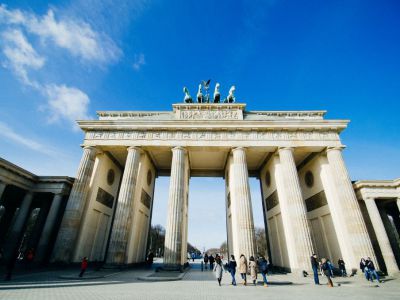
The Brandenburg Gate is the last standing part of the western side of the Customs Wall that surrounded Berlin in the 18th century. It marks a monumental entry to Unter den Linden, the famed boulevard lined with lime trees that once led to the palace of the Prussian monarchs.
This neoclassical landmark was built between 1788 and 1791 during the reign of King Frederick William II of Prussia. Inspired by Roman triumphal arches and the classical Greek gateway to the Acropolis of Athens, the gate has twelve fluted Doric columns flanked by two pavilions originally occupied by guards, as well as five passageways, and reliefs depicting the Labors of Hercules. Its crowning glory is the bronze Quadriga sculpture – the goddess of victory atop a four-horsed chariot, originally regarded as a symbol of peace.
Throughout its history, the gate has played a crucial role in Germany's political narrative. In 1806, during the French occupation, Napoleon ordered its dismantling and transportation to Paris. However, upon its return in 1814, after Napolean's defeat, the gate was declared a symbol of victory, and the goddess was adorned with the Prussian eagle and iron cross, symbolizing triumph. The structure has stood witness to many pivotal events in Berlin's history, from military parades to the rise of the Third Reich and Hitler's ascent to power, upon which it was used as a Nazi propaganda symbol.
The Brandenburg Gate also holds memories of the Fall of Berlin and the Russian flag's raising in May 1945. After World War II, it stood damaged but intact and became part of the Soviet occupation zone. During the Cold War era, the gate – blocked by the Berlin Wall from 1961 until the fall of the Berlin Wall in 1989 – remained in no-man's land between East and West Germany. Back then, it served as a defining symbol of Berlin's and Germany’s division and their eventual reunification.
Today, the Brandenburg Gate is a venue for commemorations and public events. Apart from being a photo-op, its historical importance is just as good a reason to visit.
Tip:
Consider visiting at night when the gate is beautifully illuminated and less crowded, allowing for contemplation of its storied past and symbolic value.
This neoclassical landmark was built between 1788 and 1791 during the reign of King Frederick William II of Prussia. Inspired by Roman triumphal arches and the classical Greek gateway to the Acropolis of Athens, the gate has twelve fluted Doric columns flanked by two pavilions originally occupied by guards, as well as five passageways, and reliefs depicting the Labors of Hercules. Its crowning glory is the bronze Quadriga sculpture – the goddess of victory atop a four-horsed chariot, originally regarded as a symbol of peace.
Throughout its history, the gate has played a crucial role in Germany's political narrative. In 1806, during the French occupation, Napoleon ordered its dismantling and transportation to Paris. However, upon its return in 1814, after Napolean's defeat, the gate was declared a symbol of victory, and the goddess was adorned with the Prussian eagle and iron cross, symbolizing triumph. The structure has stood witness to many pivotal events in Berlin's history, from military parades to the rise of the Third Reich and Hitler's ascent to power, upon which it was used as a Nazi propaganda symbol.
The Brandenburg Gate also holds memories of the Fall of Berlin and the Russian flag's raising in May 1945. After World War II, it stood damaged but intact and became part of the Soviet occupation zone. During the Cold War era, the gate – blocked by the Berlin Wall from 1961 until the fall of the Berlin Wall in 1989 – remained in no-man's land between East and West Germany. Back then, it served as a defining symbol of Berlin's and Germany’s division and their eventual reunification.
Today, the Brandenburg Gate is a venue for commemorations and public events. Apart from being a photo-op, its historical importance is just as good a reason to visit.
Tip:
Consider visiting at night when the gate is beautifully illuminated and less crowded, allowing for contemplation of its storied past and symbolic value.
2) Reichstag (Parliament Building) (must see)
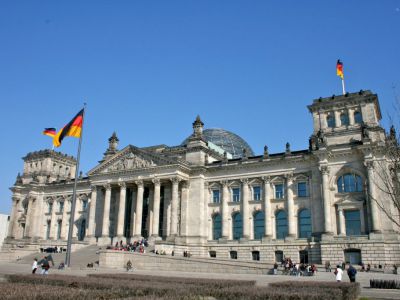
Reichstag is one of Berlin’s most enduring symbols. Its stone walls have borne witness to the tides of history, mirroring Germany’s tumultuous political evolution: from imperial unification, through dictatorship and division, to a modern democratic republic.
Once referring to the legislative body of the German Empire, today, the word “Reichstag” more commonly denotes the iconic building housing the country's parliament, Bundestag.
Following the unification of Germany in 1871, plans were laid to construct a grand hall for the newly formed state (“Second Reich”). Completed in 1894, the Neo-Baroque structure was intended to reflect the strength and unity of the empire. In 1916, amidst a world at war and against the wishes of Emperor Wilhelm II, the inscription-"To the German People"-was carved into the frieze above the entrance. Just two years later, with the empire dissolved, it was within these very walls that the German Republic was proclaimed.
In 1933, a fire engulfed the Reichstag-a blaze which the Nazi regime would exploit to issue the infamous decree, suspending civil liberties and consolidating authoritarian power. Thereafter, the building was no longer used for parliamentary functions during the Nazi era and instead served various other roles throughout the war.
The Second World War left the Reichstag in ruins. During the Cold War, the fractured remains of the building stood on the western side of a divided Berlin. Though no longer a seat of government, it occasionally hosted exhibitions, ceremonies, and even concerts during the 1980s.
Then, on the historic night of October 3rd, 1990, the Reichstag reclaimed its national significance. Within its restored chamber, the ceremony marking the official reunification of Germany was held-attended by Chancellor Helmut Kohl and numerous statesmen.
In the mid-1990s, the British architect Sir Norman Foster was commissioned to redesign the building. His intervention preserved historical scars-including Soviet graffiti etched in 1945-while introducing a strikingly modern glass dome. Completed in 1999, the dome serves as a powerful architectural metaphor for democratic transparency. Open to the public, it allows visitors to peer down into the debating chamber below, while its 360-degree panorama reveals the vast expanse of the capital. A sun-tracking shield ensures natural light floods the space without overwhelming glare.
Tip:
Plan your visit in advance, as security measures require booking and a valid ID for entry.
For those wishing to skip the queue, reserving a table at the Käfer DACHGARTEN restaurant provides expedited access.
Dress warmly-while the dome offers breathtaking views, its open windows invite Berlin’s brisk winds.
Once referring to the legislative body of the German Empire, today, the word “Reichstag” more commonly denotes the iconic building housing the country's parliament, Bundestag.
Following the unification of Germany in 1871, plans were laid to construct a grand hall for the newly formed state (“Second Reich”). Completed in 1894, the Neo-Baroque structure was intended to reflect the strength and unity of the empire. In 1916, amidst a world at war and against the wishes of Emperor Wilhelm II, the inscription-"To the German People"-was carved into the frieze above the entrance. Just two years later, with the empire dissolved, it was within these very walls that the German Republic was proclaimed.
In 1933, a fire engulfed the Reichstag-a blaze which the Nazi regime would exploit to issue the infamous decree, suspending civil liberties and consolidating authoritarian power. Thereafter, the building was no longer used for parliamentary functions during the Nazi era and instead served various other roles throughout the war.
The Second World War left the Reichstag in ruins. During the Cold War, the fractured remains of the building stood on the western side of a divided Berlin. Though no longer a seat of government, it occasionally hosted exhibitions, ceremonies, and even concerts during the 1980s.
Then, on the historic night of October 3rd, 1990, the Reichstag reclaimed its national significance. Within its restored chamber, the ceremony marking the official reunification of Germany was held-attended by Chancellor Helmut Kohl and numerous statesmen.
In the mid-1990s, the British architect Sir Norman Foster was commissioned to redesign the building. His intervention preserved historical scars-including Soviet graffiti etched in 1945-while introducing a strikingly modern glass dome. Completed in 1999, the dome serves as a powerful architectural metaphor for democratic transparency. Open to the public, it allows visitors to peer down into the debating chamber below, while its 360-degree panorama reveals the vast expanse of the capital. A sun-tracking shield ensures natural light floods the space without overwhelming glare.
Tip:
Plan your visit in advance, as security measures require booking and a valid ID for entry.
For those wishing to skip the queue, reserving a table at the Käfer DACHGARTEN restaurant provides expedited access.
Dress warmly-while the dome offers breathtaking views, its open windows invite Berlin’s brisk winds.
3) Holocaust Denkmal (Holocaust Memorial) (must see)
Officially named The Memorial to the Murdered Jews of Europe, this solemn expanse of concrete, situated near Berlin’s Brandenburg Gate, stands as a stark and enduring tribute to the millions of Jewish lives extinguished under the Nazi regime between the years 1933 and 1945.
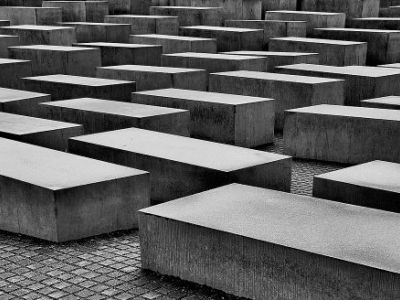
Unveiled in 2005, the memorial was conceived by American architect Peter Eisenman. It spans nearly 19,000 square meters and consists of more than 2,700 concrete stelae-each of varying height and dimension-arranged in a strict grid across a subtly sloping field. The result is a landscape that is simultaneously orderly and disorienting.
Though the design is intentionally abstract and, according to its creator, devoid of explicit symbolism, its resemblance to a graveyard is unmistakable. Some interpret the sea of grey pillars as evoking unmarked graves or the cold efficiency of a bureaucratic system that facilitated mass murder. Others see in its rigid structure a metaphor for a state that lost its humanity behind walls of administration and ideology.
As one moves deeper into the memorial, the concrete blocks grow taller, eclipsing the cityscape and swallowing sound. The sensation is deliberate. It conveys isolation, loss of identity, and the disorienting fear that accompanied the systematic persecution of Jews under the Third Reich. The path dips downward, suggesting the slow descent into darkness that defined those years.
The unfinished quality of some surfaces serves as a quiet reminder: remembrance is not complete, and history’s wounds do not fully heal. The fragmentation of space may reflect the fragmented memories of survivors-and of those lost, whose stories were never told.
This memorial does not offer resolution or unity. It does not attempt to console. Instead, it confronts. It calls forth reflection-on individual memory, on collective guilt, and on the enduring responsibility to remember, in a world where forgetting is all too easy...
Unveiled in 2005, the memorial was conceived by American architect Peter Eisenman. It spans nearly 19,000 square meters and consists of more than 2,700 concrete stelae-each of varying height and dimension-arranged in a strict grid across a subtly sloping field. The result is a landscape that is simultaneously orderly and disorienting.
Though the design is intentionally abstract and, according to its creator, devoid of explicit symbolism, its resemblance to a graveyard is unmistakable. Some interpret the sea of grey pillars as evoking unmarked graves or the cold efficiency of a bureaucratic system that facilitated mass murder. Others see in its rigid structure a metaphor for a state that lost its humanity behind walls of administration and ideology.
As one moves deeper into the memorial, the concrete blocks grow taller, eclipsing the cityscape and swallowing sound. The sensation is deliberate. It conveys isolation, loss of identity, and the disorienting fear that accompanied the systematic persecution of Jews under the Third Reich. The path dips downward, suggesting the slow descent into darkness that defined those years.
The unfinished quality of some surfaces serves as a quiet reminder: remembrance is not complete, and history’s wounds do not fully heal. The fragmentation of space may reflect the fragmented memories of survivors-and of those lost, whose stories were never told.
This memorial does not offer resolution or unity. It does not attempt to console. Instead, it confronts. It calls forth reflection-on individual memory, on collective guilt, and on the enduring responsibility to remember, in a world where forgetting is all too easy...
4) Fuhrerbunker (Hitler's Bunker)
Beneath the once-imposing gardens of the New Reich Chancellery in Berlin lay a grim vestige of the Third Reich: Hitler's Bunker. This heavily fortified underground labyrinth of concrete chambers became the final command center of Adolf Hitler and the collapsing Nazi regime during the waning months of the Second World War.
On the 16th of January, 1945, Hitler withdrew into this subterranean stronghold. Within its confines, he marked his 56th birthday on April 20 and, in a final gesture of defiance or despair, wed Eva Braun on the night of April 29. Less than twenty-four hours later, on April 30, the couple ended their lives-Hitler with a pistol, Braun by cyanide.
According to accounts from those present, their corpses were swiftly carried out into the garden of the Chancellery, doused with approximately 200 liters of petrol, and set alight. Loyal followers stood watch as their remains were consumed by flame, offering Nazi salutes as the regime’s symbol was reduced to ash.
Outside, the Red Army had breached the city. The Soviet banner soon flew over the Reichstag. Inside the bunker, panic reigned. Of the roughly 800 individuals sheltering within, many attempted escape through the shattered rail tunnels of northern Berlin. Only around one hundred of them would evade death or capture.
In the aftermath of war, Soviet forces razed both the old and new Chancellery buildings. Yet this bunker, buried deep and defiant, resisted complete destruction. It remained largely intact until the late 1980s, when Berlin’s urban redevelopment exposed-and ultimately dismantled-much of the remaining structure.
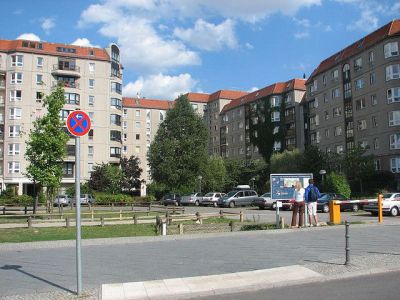
For decades, the site was unmarked, quietly covered over by modern life. Not until 2006 did a modest plaque appear, offering visitors a schematic and somber description of what had once been. Today, the bunker's emergency exit-once a passage to the Chancellery gardens-rests beneath an ordinary parking lot, its history hidden in plain sight.
On the 16th of January, 1945, Hitler withdrew into this subterranean stronghold. Within its confines, he marked his 56th birthday on April 20 and, in a final gesture of defiance or despair, wed Eva Braun on the night of April 29. Less than twenty-four hours later, on April 30, the couple ended their lives-Hitler with a pistol, Braun by cyanide.
According to accounts from those present, their corpses were swiftly carried out into the garden of the Chancellery, doused with approximately 200 liters of petrol, and set alight. Loyal followers stood watch as their remains were consumed by flame, offering Nazi salutes as the regime’s symbol was reduced to ash.
Outside, the Red Army had breached the city. The Soviet banner soon flew over the Reichstag. Inside the bunker, panic reigned. Of the roughly 800 individuals sheltering within, many attempted escape through the shattered rail tunnels of northern Berlin. Only around one hundred of them would evade death or capture.
In the aftermath of war, Soviet forces razed both the old and new Chancellery buildings. Yet this bunker, buried deep and defiant, resisted complete destruction. It remained largely intact until the late 1980s, when Berlin’s urban redevelopment exposed-and ultimately dismantled-much of the remaining structure.
For decades, the site was unmarked, quietly covered over by modern life. Not until 2006 did a modest plaque appear, offering visitors a schematic and somber description of what had once been. Today, the bunker's emergency exit-once a passage to the Chancellery gardens-rests beneath an ordinary parking lot, its history hidden in plain sight.
5) Potsdamer Platz (Potsdam Square)
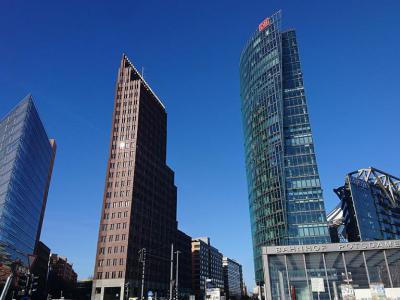
An important public square and traffic hub at the heart of Berlin, Potsdam lies about 1 km (1,100 yd) to the south of the Brandenburg Gate and the Reichstag (Parliament Building), and close to Tiergarten Park. Over a little more than a century, it evolved from a rural crossroads into Europe's busiest traffic intersection; however, it was completely destroyed during WWII and remained desolate during the Cold War when the Berlin Wall divided its former site. Since German reunification, Potsdam has undergone significant redevelopment, becoming a vibrant hub for commerce, art collections, theaters, dining, festivals, social gatherings, and a remarkable range of architectural styles.
The square is notably dominated by the ultramodern Sony Centre, known for its three floors of technology and a tent-like roof inspired by Japan's Mount Fuji. Other attractions include the Panoramapunkt, offering one of Berlin's best aerial views; a replica of Europe's first semi-automated traffic light tower from 1924; the 'Boulevard des stars', Berlin's version of Hollywood's Walk of Fame; a small section of the Berlin Wall; amazing public art installations around Marlene Dietrich Platz and beyond; FACIL, a 2 Michelin-starred restaurant serving innovative cuisine; and numerous exciting events and festivals throughout the year, such as the Chinese New Year, Summer Movie Sessions, Festival of Lights, and one of Berlin's most popular Christmas Markets.
Tip:
Before visiting Potsdam Square, it's worthwhile to view photos of its post-WWII condition when it was mostly rubble, with only the traffic tower remaining after Allied bombings.
The square is notably dominated by the ultramodern Sony Centre, known for its three floors of technology and a tent-like roof inspired by Japan's Mount Fuji. Other attractions include the Panoramapunkt, offering one of Berlin's best aerial views; a replica of Europe's first semi-automated traffic light tower from 1924; the 'Boulevard des stars', Berlin's version of Hollywood's Walk of Fame; a small section of the Berlin Wall; amazing public art installations around Marlene Dietrich Platz and beyond; FACIL, a 2 Michelin-starred restaurant serving innovative cuisine; and numerous exciting events and festivals throughout the year, such as the Chinese New Year, Summer Movie Sessions, Festival of Lights, and one of Berlin's most popular Christmas Markets.
Tip:
Before visiting Potsdam Square, it's worthwhile to view photos of its post-WWII condition when it was mostly rubble, with only the traffic tower remaining after Allied bombings.
6) Panoramapunkt (Panoramic Viewing Point)
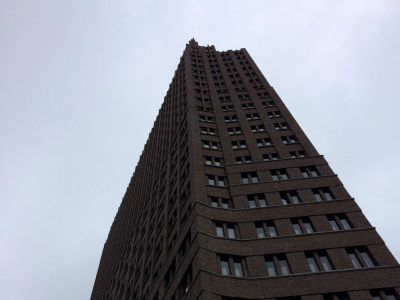
The Panoramapunkt observation deck sits 300 feet (100 metres) above Potsdam Square, perched atop one of its tallest towers, which is named Kolhoff after one of the architects responsible for designing the modern Potsdam district following Germany's reunification. Constructed between 1994 and 1999, the tower is made of red peat-fired bricks, creating a striking contrast with the predominantly glass and steel facades of the surrounding buildings.
Situated on the 24th and 25th floors of the tower, Panoramapunkt not only features the world's highest-standing original segment of the Berlin Wall but also hosts a captivating multimedia exhibition that delves into the dramatic history of Berlin's former city center. Additionally, there's a café and a sun terrace facing west, making this open-air viewing platform one of the city's most romantic spots.
To reach the observation deck, you'll hop aboard the fastest elevator in Europe, which zooms to the summit in just 20 seconds. If you want to skip the elevator queues, consider purchasing a VIP ticket.
Situated on the 24th and 25th floors of the tower, Panoramapunkt not only features the world's highest-standing original segment of the Berlin Wall but also hosts a captivating multimedia exhibition that delves into the dramatic history of Berlin's former city center. Additionally, there's a café and a sun terrace facing west, making this open-air viewing platform one of the city's most romantic spots.
To reach the observation deck, you'll hop aboard the fastest elevator in Europe, which zooms to the summit in just 20 seconds. If you want to skip the elevator queues, consider purchasing a VIP ticket.
7) Berliner Gruselkabinett (Berlin Story Bunker)
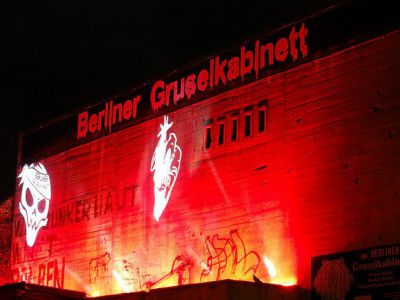
Every museum has a narrative to convey. The Berlin Story Bunker unfolds the most remarkable, enlightening, heart-wrenching, horrifying, poignant, ambitious, and historically significant tale of our era with meticulous research and coherent explanations. It delves into the ascent and downfall of the Nazi regime and its leader, Adolf Hitler, while also highlighting the resilience of humanity against all odds.
Housed within a wartime bunker originally constructed by the Nazis for their own protection, the museum vividly portrays the growth and global expansion of the Nazi movement, their ruthless treatment of adversaries, and their inhumanity towards the Jewish population. The storytelling is seamless, broken down into distinct episodes, complemented by rare historical photographs and documents, and masterfully connected through extensive research and insightful comparisons.
For those who want to immerse themselves in the bunker's historical context, there is an informative exhibition located in the basement of the concrete structure, featuring eyewitness accounts and various documents from the final months of the war when thousands of war-weary civilians sought refuge in this tightly enclosed space.
Housed within a wartime bunker originally constructed by the Nazis for their own protection, the museum vividly portrays the growth and global expansion of the Nazi movement, their ruthless treatment of adversaries, and their inhumanity towards the Jewish population. The storytelling is seamless, broken down into distinct episodes, complemented by rare historical photographs and documents, and masterfully connected through extensive research and insightful comparisons.
For those who want to immerse themselves in the bunker's historical context, there is an informative exhibition located in the basement of the concrete structure, featuring eyewitness accounts and various documents from the final months of the war when thousands of war-weary civilians sought refuge in this tightly enclosed space.
8) Checkpoint Charlie (must see)
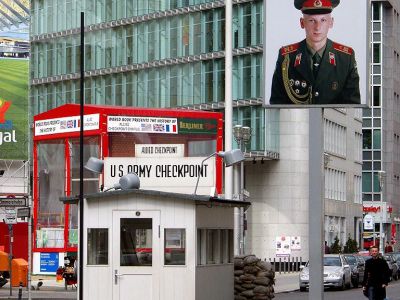
Immortalized by American movies and spy novels, Checkpoint Charlie is one of the most famous and historically significant spots in Berlin. A symbol of the Cold War, originally it was one of the three designated crossing points – A (Alpha), B (Bravo), and C (Charlie) – for foreigners and members of the Allied forces, established after the construction of the Berlin Wall. Here the documents of visitors and diplomats were checked by East Germans prior to issuing visas.
Checkpoint Charlie became a sole crossing point in 1962. A year earlier, it made history as the venue of a famous stand-off between US and Soviet tanks facing each other across the border, when an American diplomat was refused a visa. The stand-off nearly led to a war but fortunately ended peacefully.
Today, a replica of the original Checkpoint Charlie booth with a "You are now leaving the American Sector" sign serves largely as a photo opportunity in the middle of the street that once marked the border between East and West Berlin. Nearby is the Wall Museum-House dedicated to freedom, featuring, among other exhibits, a piece of the Berlin Wall and historical information relating to the many escape attempts made over the Wall throughout decades. There are also a number of panels and photos that give a useful summary and timeline. Not far away is the Topography of Terror exhibition which also deserves attention.
Lately, to keep the site from turning into a commercial circus, the German authorities have put the kibosh on actors donning military uniforms and cashing in on clueless tourists. Undoubtedly an interesting location, albeit the guard house and other elements are only replicas, Checkpoint Charlie is about an appreciation of how things once were in this great city.
Why You Should Visit:
Bit of a tourist trap, but a good part of the city's history. The surrounding area is also steeped in history and you can walk around the streets to see the Berlin Wall and try the great local cafes.
Tip:
Get here early to avoid crowds, as taking a photo can be quite tricky due to the hustle and bustle of traffic, etc.
Checkpoint Charlie became a sole crossing point in 1962. A year earlier, it made history as the venue of a famous stand-off between US and Soviet tanks facing each other across the border, when an American diplomat was refused a visa. The stand-off nearly led to a war but fortunately ended peacefully.
Today, a replica of the original Checkpoint Charlie booth with a "You are now leaving the American Sector" sign serves largely as a photo opportunity in the middle of the street that once marked the border between East and West Berlin. Nearby is the Wall Museum-House dedicated to freedom, featuring, among other exhibits, a piece of the Berlin Wall and historical information relating to the many escape attempts made over the Wall throughout decades. There are also a number of panels and photos that give a useful summary and timeline. Not far away is the Topography of Terror exhibition which also deserves attention.
Lately, to keep the site from turning into a commercial circus, the German authorities have put the kibosh on actors donning military uniforms and cashing in on clueless tourists. Undoubtedly an interesting location, albeit the guard house and other elements are only replicas, Checkpoint Charlie is about an appreciation of how things once were in this great city.
Why You Should Visit:
Bit of a tourist trap, but a good part of the city's history. The surrounding area is also steeped in history and you can walk around the streets to see the Berlin Wall and try the great local cafes.
Tip:
Get here early to avoid crowds, as taking a photo can be quite tricky due to the hustle and bustle of traffic, etc.
9) Gedenkstatte Berliner Mauer (Berlin Wall Memorial) (must see)
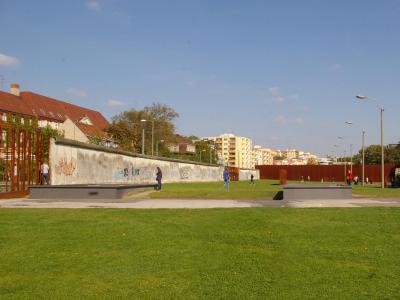
Located a bit away from the tourist hubbub, allowing you to avoid the crowds at Checkpoint Charlie, the Berlin Wall Memorial offers a more scholarly perspective on Germany's division. More precisely, it focuses on a section of the former border strip, with an outdoor exhibition tracing the history of Bernauer Strasse and the Wall. This outdoor exhibit extends for 1.4 kilometers, reaching up to the Mauerpark, and includes remnants of border obstacles that preserve the appearance of the Wall as it stood in the past.
Across from the memorial, the museum expanded in 2014 and now houses a permanent exhibition titled "1961–1989: the Berlin Wall", which delves into the lives of those who tried to escape the dictatorship (notably, some of the most successful escape tunnels were dug nearby) and the resistance efforts, often deadly, organized by those living in the vicinity. Additionally, there is a separate exhibition within the adjacent Nordbahnhof station, detailing the division of the U-Bahn and S-Bahn lines (open during station hours). On weekdays at noon, the chapel hosts prayer services in memory of the Berlin Wall's victims.
Across from the memorial, the museum expanded in 2014 and now houses a permanent exhibition titled "1961–1989: the Berlin Wall", which delves into the lives of those who tried to escape the dictatorship (notably, some of the most successful escape tunnels were dug nearby) and the resistance efforts, often deadly, organized by those living in the vicinity. Additionally, there is a separate exhibition within the adjacent Nordbahnhof station, detailing the division of the U-Bahn and S-Bahn lines (open during station hours). On weekdays at noon, the chapel hosts prayer services in memory of the Berlin Wall's victims.
10) Fernsehturm (TV Tower) (must see)
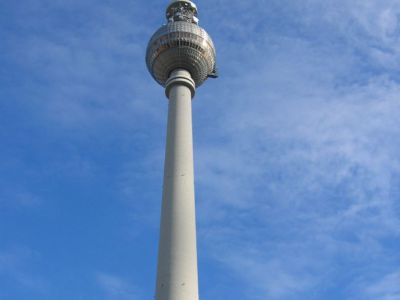
The Berlin Television Tower was built by East Germany in the late 1960s. Inaugurated on October 3, 1969, it is the tallest structure in Germany and the third-tallest in the European Union.
Designated as a monument in 1979, the tower attracts around 1.2 million visitors annually and is one of Germany’s top tourist attractions. It has an observation deck at 203 meters and the rotating restaurant “Sphere” at 207 meters, offering panoramic views of the city, extending up to 40 kilometers (or 25 miles) on a clear day.
The tower’s height increased from 365 to 368 meters in 1997 after a new antenna was added, making it the fourth tallest free-standing structure in Europe, surpassed only by Moscow's Ostankino Tower and TV towers in Kiev and Riga. If you have a mild fear of heights, fear not-the elevator whisks you to the top in a mere 40 seconds. You can also opt for a more adventurous ascent via 985 steps.
Inside, enjoy the authentic Sputnik-era ambiance complete with period-appropriate decor and finishes. If you have specific dietary preferences, particularly as a vegetarian, it's advisable to peruse the restaurant menu on their website before making a reservation. The dining experience itself is quite lovely otherwise, comprising a starter, main course, and dessert, plus a glass of sparkling wine and two glasses of red or white wine, along with unlimited water. Moreover, the restaurant rotates slowly, affording you a comprehensive view of Berlin, making it an ideal setting for photography. A full rotation takes about half an hour, offering ample opportunity to capture the city from a bird's-eye perspective while sipping a coffee.
Presently dubbed "the toothpick" by locals, the tower previously earned the nickname “Pope’s Revenge” because sunlight reflecting off its dome forms a Greek cross, which some saw as a rebuke to East Germany’s anti-religious stance, and was mentioned by the former US president Ronald Reagan in his 1987 “Tear down this wall” speech. For the same reasons, it was also jokingly called "Saint Walter" after Walter Ulbricht, leader of the Socialist Unity Party which governed East Germany.
Originally a symbol of Communist power, the TV tower is now a unified Berlin landmark and a cultural and tourist icon, hosting events like the Festival of Lights.
Designated as a monument in 1979, the tower attracts around 1.2 million visitors annually and is one of Germany’s top tourist attractions. It has an observation deck at 203 meters and the rotating restaurant “Sphere” at 207 meters, offering panoramic views of the city, extending up to 40 kilometers (or 25 miles) on a clear day.
The tower’s height increased from 365 to 368 meters in 1997 after a new antenna was added, making it the fourth tallest free-standing structure in Europe, surpassed only by Moscow's Ostankino Tower and TV towers in Kiev and Riga. If you have a mild fear of heights, fear not-the elevator whisks you to the top in a mere 40 seconds. You can also opt for a more adventurous ascent via 985 steps.
Inside, enjoy the authentic Sputnik-era ambiance complete with period-appropriate decor and finishes. If you have specific dietary preferences, particularly as a vegetarian, it's advisable to peruse the restaurant menu on their website before making a reservation. The dining experience itself is quite lovely otherwise, comprising a starter, main course, and dessert, plus a glass of sparkling wine and two glasses of red or white wine, along with unlimited water. Moreover, the restaurant rotates slowly, affording you a comprehensive view of Berlin, making it an ideal setting for photography. A full rotation takes about half an hour, offering ample opportunity to capture the city from a bird's-eye perspective while sipping a coffee.
Presently dubbed "the toothpick" by locals, the tower previously earned the nickname “Pope’s Revenge” because sunlight reflecting off its dome forms a Greek cross, which some saw as a rebuke to East Germany’s anti-religious stance, and was mentioned by the former US president Ronald Reagan in his 1987 “Tear down this wall” speech. For the same reasons, it was also jokingly called "Saint Walter" after Walter Ulbricht, leader of the Socialist Unity Party which governed East Germany.
Originally a symbol of Communist power, the TV tower is now a unified Berlin landmark and a cultural and tourist icon, hosting events like the Festival of Lights.
11) Alexanderplatz and World Clock
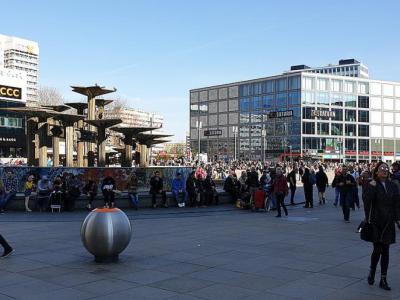
Often referred to as 'Alex' by Berliners, the epicenter of the old East is inevitable to run across while exploring the city. Originally a cattle market in the Middle Ages, the square was named in honor of a visit by the Russian Emperor Alexander I in 1805. It evolved into a significant commercial hub in the 19th century and, alongside Potsdam Square, became the heart of Berlin's nightlife in the roaring 1920s.
Today, Alexanderplatz has a distinct atmosphere reminiscent of the 1960s and the heyday of East Germany (GDR), offering a unique opportunity to glimpse what high-rise flats looked like before the fall of the Berlin Wall. Notably, the largest demonstration against the GDR regime took place here in the autumn of 1989, with half a million citizens demanding freedom of speech and press freedom.
The large area around the iconic TV Tower is often teeming with tourists but also serves as a venue for interesting events; for instance, during the Christmas season, a significant portion is transformed into a Christmas village. The bustling train station is surrounded by shops, bars, and restaurants, providing plenty of options for visitors.
Don't miss the Fountain of Friendship between Peoples and the Neptune Fountain located past the TV tower; both offer great opportunities for photos. Another intriguing sight is the Weltzeituhr, a massive 16-ton clock built in 1969 that displays the times in 148 cities worldwide. This attraction perfectly complements Alexanderplatz's role as a central meeting point: no need for discussing the correct time when a friend arrives late.
Tip:
Before your visit, it's worthwhile to view pictures of how the square appeared in the early 20th century and during the Cold War era.
Today, Alexanderplatz has a distinct atmosphere reminiscent of the 1960s and the heyday of East Germany (GDR), offering a unique opportunity to glimpse what high-rise flats looked like before the fall of the Berlin Wall. Notably, the largest demonstration against the GDR regime took place here in the autumn of 1989, with half a million citizens demanding freedom of speech and press freedom.
The large area around the iconic TV Tower is often teeming with tourists but also serves as a venue for interesting events; for instance, during the Christmas season, a significant portion is transformed into a Christmas village. The bustling train station is surrounded by shops, bars, and restaurants, providing plenty of options for visitors.
Don't miss the Fountain of Friendship between Peoples and the Neptune Fountain located past the TV tower; both offer great opportunities for photos. Another intriguing sight is the Weltzeituhr, a massive 16-ton clock built in 1969 that displays the times in 148 cities worldwide. This attraction perfectly complements Alexanderplatz's role as a central meeting point: no need for discussing the correct time when a friend arrives late.
Tip:
Before your visit, it's worthwhile to view pictures of how the square appeared in the early 20th century and during the Cold War era.
