Custom Walk in Amsterdam, Netherlands by cjturan93_4a8eab created on 2026-05-19
Guide Location: Netherlands » Amsterdam
Guide Type: Custom Walk
# of Sights: 14
Tour Duration: 2 Hours
Travel Distance: 3.5 Km or 2.2 Miles
Share Key: QTPQ7
Guide Type: Custom Walk
# of Sights: 14
Tour Duration: 2 Hours
Travel Distance: 3.5 Km or 2.2 Miles
Share Key: QTPQ7
How It Works
Please retrieve this walk in the GPSmyCity app. Once done, the app will guide you from one tour stop to the next as if you had a personal tour guide. If you created the walk on this website or come to the page via a link, please follow the instructions below to retrieve the walk in the app.
Retrieve This Walk in App
Step 1. Download the app "GPSmyCity: Walks in 1K+ Cities" on Apple App Store or Google Play Store.



Step 2. In the GPSmyCity app, download(or launch) the guide "Amsterdam Map and Walking Tours".
Step 3. Tap the menu button located at upper right corner of the "Walks" screen and select "Retrieve custom walk". Enter the share key: QTPQ7
1) Munttoren (Mint Tower)
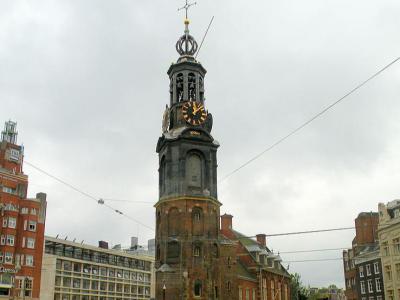
This tower served as both a boundary marker for the medieval walled city and one of its original gates. Back in the Middle Ages, the city walls were surrounded by a moat known as the Singel canal. Prior to around 1500, the area beyond this point was essentially just soggy fields and a handful of farms on reclaimed land. The steeple was actually added later, in 1620, as you can see below the clock face.
Erected during the latter part of the 15th century, the tower underwent significant renovations throughout the centuries. It managed to survive a big fire in 1618, which destroyed most of the city's walls, almost unscathed; however, it was rebuilt in the Renaissance style the following year. Hendrick de Keyser, a renowned Dutch architect and sculptor, was in charge of the reconstruction and added the elegant eight-sided top section. They also incorporated four clock faces and a set of bells, although the original bells are now on display in the Amsterdam Museum, having been replaced with newer ones. The tower chimes every quarter of an hour, and on Saturdays between 2 and 3pm, you can enjoy a live bell concerto.
The construction got its curious name in the 17th century during a time when the Dutch were in conflict with England and France. Since most of Dutch territory was occupied and there was a high risk of losing valuable resources, they needed a place to make money quickly, so they turned this tower into a makeshift mint. And that's how its uniqueness became etched into Amsterdam's rich tapestry of stories.
Erected during the latter part of the 15th century, the tower underwent significant renovations throughout the centuries. It managed to survive a big fire in 1618, which destroyed most of the city's walls, almost unscathed; however, it was rebuilt in the Renaissance style the following year. Hendrick de Keyser, a renowned Dutch architect and sculptor, was in charge of the reconstruction and added the elegant eight-sided top section. They also incorporated four clock faces and a set of bells, although the original bells are now on display in the Amsterdam Museum, having been replaced with newer ones. The tower chimes every quarter of an hour, and on Saturdays between 2 and 3pm, you can enjoy a live bell concerto.
The construction got its curious name in the 17th century during a time when the Dutch were in conflict with England and France. Since most of Dutch territory was occupied and there was a high risk of losing valuable resources, they needed a place to make money quickly, so they turned this tower into a makeshift mint. And that's how its uniqueness became etched into Amsterdam's rich tapestry of stories.
2) Bloemenmarkt (Floating Flower Market)
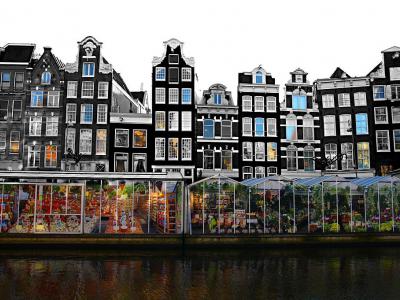
When you visit Amsterdam, especially during the springtime, you won't want to miss out on seeing some beautiful tulips. Even if they haven't fully bloomed or are past their prime, fear not - Bloemenmarkt has got you covered. This place has been around since the 1860s and is arguably the best, and still the most atmospheric, spot to discover (and buy) fresh flowers and bulbs.
As soon as you enter this little botanical wonderland situated along the canal, you'll be surrounded by all things floral (and sometimes more) - there's a dazzling array of souvenirs, and surprisingly, they're priced pretty much the same across various vendors. You can find a wide variety of bulbs for sale, including daffodils, amaryllis, crocus, narcissus, tulips, peony roots, and more. They even have some cacti and potted plants and herbs available for purchase.
Tip:
It you decide to buy tulip bulbs to take back home, be sure to get a "customs-cleared" stamp to avoid any issues with customs when upon arrival in your home country.
As soon as you enter this little botanical wonderland situated along the canal, you'll be surrounded by all things floral (and sometimes more) - there's a dazzling array of souvenirs, and surprisingly, they're priced pretty much the same across various vendors. You can find a wide variety of bulbs for sale, including daffodils, amaryllis, crocus, narcissus, tulips, peony roots, and more. They even have some cacti and potted plants and herbs available for purchase.
Tip:
It you decide to buy tulip bulbs to take back home, be sure to get a "customs-cleared" stamp to avoid any issues with customs when upon arrival in your home country.
3) Begijnhof - Beguine Courtyard
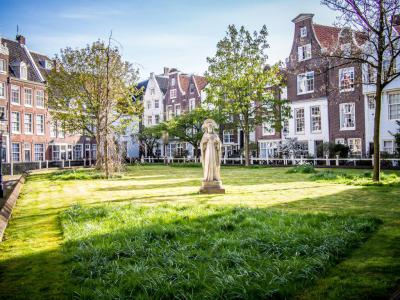
Slip through an unassuming doorway, and you suddenly find yourself in the Begijnhof, a courtyard that feels like it misplaced a few centuries and never bothered to catch up. This is one of Amsterdam’s oldest hidden enclaves, the only inner court in the city dating back to the Middle Ages and tucked within the Singel-the innermost ring of canals.
The neatly kept gardens and hushed atmosphere give it a calm, almost suspended quality. Even the ground beneath your feet plays along: the courtyard sits about a meter lower than the surrounding streets, preserving its original medieval level. As for the name, it comes from the Beguines, a community of laywomen who lived here in a semi-monastic rhythm of prayer, charity, and quietly getting on with things.
Take a moment to look around, and the setting begins to reveal its layers. The courtyard is framed by a cluster of tall, narrow townhouses-47 in total-most of them private residences. Their façades largely reflect the 17th and 18th centuries, but many of the structures themselves are older than they let on, with several still holding onto their original Gothic wooden frames. Unlike the tightly packed rows seen elsewhere in the city, the buildings here feel more individually placed, reinforcing the sense that this is a world slightly apart.
In earlier centuries, the Begijnhof was fully enclosed by canals, with just a single entrance reached by a bridge-security with a touch of exclusivity. Today, traces of that entrance survive in the form of the Begijnesloot, restored in the early 20th century. The stone gateway features Saint Ursula, the holy patron of the Beguines, watching over anyone who steps inside. A second entrance on Spuistraat came later and was reshaped in the 19th century, making access easier-but thankfully not enough to break the illusion that you’ve just wandered into a quieter, older version of Amsterdam.
The neatly kept gardens and hushed atmosphere give it a calm, almost suspended quality. Even the ground beneath your feet plays along: the courtyard sits about a meter lower than the surrounding streets, preserving its original medieval level. As for the name, it comes from the Beguines, a community of laywomen who lived here in a semi-monastic rhythm of prayer, charity, and quietly getting on with things.
Take a moment to look around, and the setting begins to reveal its layers. The courtyard is framed by a cluster of tall, narrow townhouses-47 in total-most of them private residences. Their façades largely reflect the 17th and 18th centuries, but many of the structures themselves are older than they let on, with several still holding onto their original Gothic wooden frames. Unlike the tightly packed rows seen elsewhere in the city, the buildings here feel more individually placed, reinforcing the sense that this is a world slightly apart.
In earlier centuries, the Begijnhof was fully enclosed by canals, with just a single entrance reached by a bridge-security with a touch of exclusivity. Today, traces of that entrance survive in the form of the Begijnesloot, restored in the early 20th century. The stone gateway features Saint Ursula, the holy patron of the Beguines, watching over anyone who steps inside. A second entrance on Spuistraat came later and was reshaped in the 19th century, making access easier-but thankfully not enough to break the illusion that you’ve just wandered into a quieter, older version of Amsterdam.
4) Koninklijk Paleis (Royal Palace of Amsterdam) (must see)
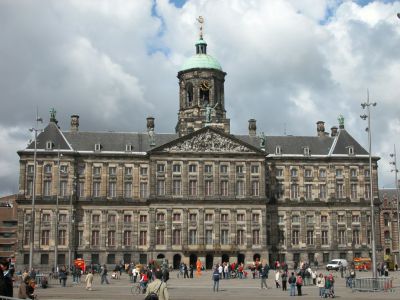
The Royal Palace of Amsterdam is a historic monument on Dam Square and is one of the four palaces in the Netherlands still left at the disposal of the Dutch Royal Family.
Its inception dates back to 1655. Back then, the city had recently thwarted William of Orange's attempts to subdue it and the city council sought a residence that would symbolize Amsterdam's municipal authority and pride. This led to a remarkably forward-thinking design-the Dutch interpretation of the classical principles revived during the Italian Renaissance. The architectural project led by Jacob van Campen implied over 13,500 wooden piles to support the building.
Initially designed as the town hall overlooking the bustling Damrak wharves, it was converted into a royal palace by King Louis I of Holland, brother of Napoleon Bonaparte, in 1806.
In 1936, the building was designated a property of the Kingdom of the Netherlands. Today, it serves a ceremonial role for the monarchy, hosting state visits, official functions, and award ceremonies. The palace also played a pivotal role during the investiture of Queen Beatrix in 1980.
The building's distinctive sandstone façade has darkened over time. Astride the rear of it is a 6-meter statue of Atlas carrying the globe.
The interior is equally opulent, notably in the Citizens' Hall, featuring an arcaded marble chamber where the enthroned figure of Amsterdam presides over the earthly and celestial realms. Three circular, inlaid marble maps, depicting the eastern and western hemispheres, as well as the northern sky, lie at her feet. Other allegorical figures include Wisdom and Strength, flanking "Amsterdam" on her left and right, while the reliefs on either side of the central group portray the principles of good governance. On the left, the god Amphion plays his lyre, persuading stones to form a wall; and on the right, Mercury seeks to lull Argos to sleep, thus emphasizing the importance of vigilance.
Tip:
Before your visit, be sure to check online for opening hours, as the palace may occasionally be closed due to royal events.
Free entry for those under 18 and discounts for seniors and students are available.
Its inception dates back to 1655. Back then, the city had recently thwarted William of Orange's attempts to subdue it and the city council sought a residence that would symbolize Amsterdam's municipal authority and pride. This led to a remarkably forward-thinking design-the Dutch interpretation of the classical principles revived during the Italian Renaissance. The architectural project led by Jacob van Campen implied over 13,500 wooden piles to support the building.
Initially designed as the town hall overlooking the bustling Damrak wharves, it was converted into a royal palace by King Louis I of Holland, brother of Napoleon Bonaparte, in 1806.
In 1936, the building was designated a property of the Kingdom of the Netherlands. Today, it serves a ceremonial role for the monarchy, hosting state visits, official functions, and award ceremonies. The palace also played a pivotal role during the investiture of Queen Beatrix in 1980.
The building's distinctive sandstone façade has darkened over time. Astride the rear of it is a 6-meter statue of Atlas carrying the globe.
The interior is equally opulent, notably in the Citizens' Hall, featuring an arcaded marble chamber where the enthroned figure of Amsterdam presides over the earthly and celestial realms. Three circular, inlaid marble maps, depicting the eastern and western hemispheres, as well as the northern sky, lie at her feet. Other allegorical figures include Wisdom and Strength, flanking "Amsterdam" on her left and right, while the reliefs on either side of the central group portray the principles of good governance. On the left, the god Amphion plays his lyre, persuading stones to form a wall; and on the right, Mercury seeks to lull Argos to sleep, thus emphasizing the importance of vigilance.
Tip:
Before your visit, be sure to check online for opening hours, as the palace may occasionally be closed due to royal events.
Free entry for those under 18 and discounts for seniors and students are available.
5) National Monument on Dam Square
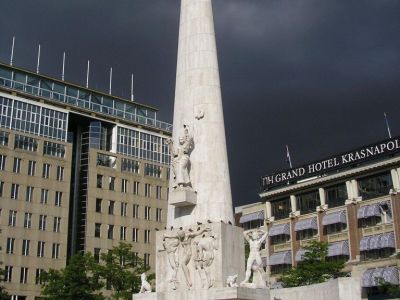
This tall, pale obelisk, standing right in the middle of Dam Square, tends to quietly outlast the noise around it. Designed by Dutch architect Jacobus Oud, the 22-meter monument serves as the Netherlands’ main memorial to World War II. Behind it, urns hold soil gathered from cemeteries and execution sites across the country-so what looks minimal at first glance carries a weight that’s anything but. Each year, on May 4th, the square falls into silence for the Remembrance of the Dead, when the entire nation pauses here.
Now, most people snap a photo and move on. But if you linger for a moment, the monument starts to read like a story carved in stone. The surface is arranged in layered circles, filled with figures that aren’t just decorative.
At the front, two men stand for the Dutch Resistance. On either side, you’ll spot representations of intellectuals and workers-because, as it turns out, history wasn’t shaped by just one group.
There are also dogs, frozen mid-howl, symbolizing loyalty and suffering. A woman with a child suggests peace and new beginnings, while doves lifting upward bring in the idea of freedom. To some, it may appear not too subtle-but then again, it’s not meant to be.
So, yes, it’s a monument. But it’s also a pause button. A place where the city briefly lowers its voice-if you let it...
Now, most people snap a photo and move on. But if you linger for a moment, the monument starts to read like a story carved in stone. The surface is arranged in layered circles, filled with figures that aren’t just decorative.
At the front, two men stand for the Dutch Resistance. On either side, you’ll spot representations of intellectuals and workers-because, as it turns out, history wasn’t shaped by just one group.
There are also dogs, frozen mid-howl, symbolizing loyalty and suffering. A woman with a child suggests peace and new beginnings, while doves lifting upward bring in the idea of freedom. To some, it may appear not too subtle-but then again, it’s not meant to be.
So, yes, it’s a monument. But it’s also a pause button. A place where the city briefly lowers its voice-if you let it...
6) Dam Square (must see)
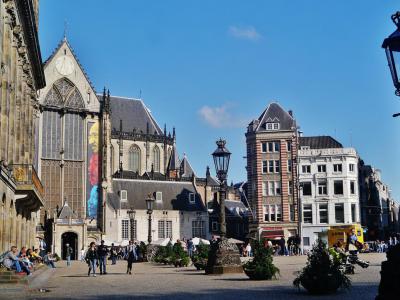
Dam Square, or the Dam, is a central town square in Amsterdam, known for its significant buildings and frequent events. Positioned in the historical heart of Amsterdam, it sits on the site of the original dam on the Amstel River. The square extends some 200 meters from west to east and 100 meters from north to south, connecting Damrak and Rokin streets that trace the Amstel's original course.
The square is also the termination point for other notable streets like New Dike, Calf Street, and Dam Street, with the main red-light district, De Wallen, just beyond its northeast corner. Prominent features on Dam Square include the neoclassical Royal Palace, the 15th-century Gothic New Church, the Madame Tussauds Wax Museum, and the National Monument which honors World War II victims, all of which collectively turn the Dam into a major tourist hub.
The name "Amsterdam" originates from a dam built on the Amstel River around 1270. This dam, integral to the city's development, included a discharge sluice and later locks to facilitate navigation and control water levels. By 1275, the settlement was significant enough to be recorded in connection with a road toll granted by the count of Holland, Floris V. Over time, the dam expanded to accommodate a town square, now known as Dam Square. Eventually, the area became a hub for commercial and governmental activities, featuring a large fish market and a town hall.
Significant changes occurred over the centuries, including the demolition of a weigh house in 1808 to clear the view for Louis Bonaparte’s Royal Palace and the infilling of Damrak Avenue in the 19th century. The square also hosted the Beurs van Zocher stock exchange until 1903. Today, the De Bijenkorf department store has been in its place since 1914. Dam Square has also been a site for national events - such as the National Memorial Day commemorations at the National Monument unveiled in 1956, and public demonstrations, - maintaining its status as a national and cultural gathering spot for the Dutch.
Tip:
For those in need of a restroom, free and well-maintained toilets are available at the De Bijenkorf shop on the 5th floor.
The square is also the termination point for other notable streets like New Dike, Calf Street, and Dam Street, with the main red-light district, De Wallen, just beyond its northeast corner. Prominent features on Dam Square include the neoclassical Royal Palace, the 15th-century Gothic New Church, the Madame Tussauds Wax Museum, and the National Monument which honors World War II victims, all of which collectively turn the Dam into a major tourist hub.
The name "Amsterdam" originates from a dam built on the Amstel River around 1270. This dam, integral to the city's development, included a discharge sluice and later locks to facilitate navigation and control water levels. By 1275, the settlement was significant enough to be recorded in connection with a road toll granted by the count of Holland, Floris V. Over time, the dam expanded to accommodate a town square, now known as Dam Square. Eventually, the area became a hub for commercial and governmental activities, featuring a large fish market and a town hall.
Significant changes occurred over the centuries, including the demolition of a weigh house in 1808 to clear the view for Louis Bonaparte’s Royal Palace and the infilling of Damrak Avenue in the 19th century. The square also hosted the Beurs van Zocher stock exchange until 1903. Today, the De Bijenkorf department store has been in its place since 1914. Dam Square has also been a site for national events - such as the National Memorial Day commemorations at the National Monument unveiled in 1956, and public demonstrations, - maintaining its status as a national and cultural gathering spot for the Dutch.
Tip:
For those in need of a restroom, free and well-maintained toilets are available at the De Bijenkorf shop on the 5th floor.
7) Nieuwe Kerk (New Church)
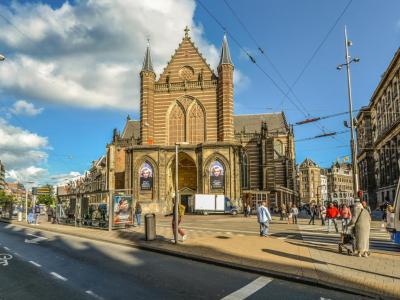
The New Church, a historical gem on Amsterdam's Dam Square, dates back to the 15th century. Originally serving as a Dutch Reformed Church parish, it is now part of the Protestant Church of the Netherlands.
The construction of this church in the late 14th century was prompted by a need for more religious space amid a growing population. It was completed in 1408 and consecrated a year later. Throughout the 15th century, the building suffered significant damage from fires and was nearly destroyed in 1645, which ultimately led to its Gothic-style reconstruction. Major renovations in the late 19th and mid-20th centuries introduced neo-Gothic and early-Renaissance elements.
The intricately adorned stained glass windows portray historical events associated with this church, such as Queen Wilhelmina's coronation in 1890. Notable features within the interior encompass an opulent, meticulously crafted mahogany pulpit (the result of fifteen years of painstaking effort), alongside a cunningly wrought copper chancel screen and a flamboyant Baroque organ case.
Historically significant, the New Church has hosted Dutch royal investiture ceremonies, including the most recent one of King Willem-Alexander, in 2013. It also has been the venue for royal weddings, such as Willem-Alexander's marriage to Máxima in 2002. Additionally, it serves as the final resting place for notable Dutch personalities like the naval hero Admiral Michiel de Ruyter and Joost van den Vondel, a Roman Catholic poet and playwright.
Although the church is still used for recitals, it no longer holds religious services but functions primarily as an exhibition space. The exhibitions held here cover diverse themes, including some rather unconventional ones. Attached to the church is a café accessible during opening hours and a museum store that offers a variety of related souvenirs like postcards, books, and gifts.
Tip:
Feel free to step inside the lobby to marvel at the beautiful giant stained glass panes.
Exhibitions can be a little overpriced but are good value with the I Amsterdam card.
The construction of this church in the late 14th century was prompted by a need for more religious space amid a growing population. It was completed in 1408 and consecrated a year later. Throughout the 15th century, the building suffered significant damage from fires and was nearly destroyed in 1645, which ultimately led to its Gothic-style reconstruction. Major renovations in the late 19th and mid-20th centuries introduced neo-Gothic and early-Renaissance elements.
The intricately adorned stained glass windows portray historical events associated with this church, such as Queen Wilhelmina's coronation in 1890. Notable features within the interior encompass an opulent, meticulously crafted mahogany pulpit (the result of fifteen years of painstaking effort), alongside a cunningly wrought copper chancel screen and a flamboyant Baroque organ case.
Historically significant, the New Church has hosted Dutch royal investiture ceremonies, including the most recent one of King Willem-Alexander, in 2013. It also has been the venue for royal weddings, such as Willem-Alexander's marriage to Máxima in 2002. Additionally, it serves as the final resting place for notable Dutch personalities like the naval hero Admiral Michiel de Ruyter and Joost van den Vondel, a Roman Catholic poet and playwright.
Although the church is still used for recitals, it no longer holds religious services but functions primarily as an exhibition space. The exhibitions held here cover diverse themes, including some rather unconventional ones. Attached to the church is a café accessible during opening hours and a museum store that offers a variety of related souvenirs like postcards, books, and gifts.
Tip:
Feel free to step inside the lobby to marvel at the beautiful giant stained glass panes.
Exhibitions can be a little overpriced but are good value with the I Amsterdam card.
8) Magna Plaza
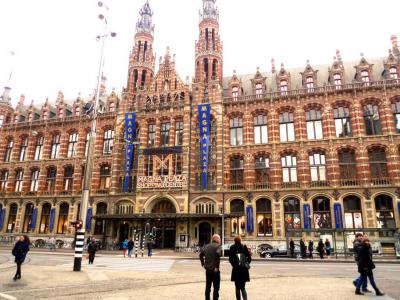
Magna Plaza is a grand 19th-century edifice located behind the Royal Palace on Dam Square. Constructed between 1895 and 1899, it showcases a blend of Neo-Gothic and Neo-Renaissance architectural styles. The building was designed by Cornelis Hendrik Peters and has been listed as a national heritage site of the Netherlands since 1974.
The structure is notable for its elaborate brick exterior adorned with polychromatic brickwork and dressed stone around windows and doors. The roof is distinguished by several dormers, each topped with crow-stepped gables, contributing to its nickname "Perenburg" (or “pear-castle”) due to the pear-shaped crowns atop its towers.
Originally serving as Amsterdam's central post office, the building symbolized the city’s economic resurgence in the late 19th century, a period marked by significant developments like the opening of the North Sea Canal and the hosting of a World's Fair in 1883.
In 1987, plans to transform this historic post office into a luxurious shopping mall were announced by Larmag, a Swedish real estate developer. The renovations, which began in 1991, involved meticulous exterior restorations and a complete rebuild of the interior while preserving the structural and decorative elements. Named after Larmag's CEO, Lars-Erik Magnusson, Magna Plaza opened on August 17, 1992, as a shopping center.
Today, Magna Plaza offers a shopping experience across four floors, complemented by several cafes and a variety of stores. Despite its commercial function, the building remains an architectural gem worth visiting for its aesthetic and historical significance alone.
The structure is notable for its elaborate brick exterior adorned with polychromatic brickwork and dressed stone around windows and doors. The roof is distinguished by several dormers, each topped with crow-stepped gables, contributing to its nickname "Perenburg" (or “pear-castle”) due to the pear-shaped crowns atop its towers.
Originally serving as Amsterdam's central post office, the building symbolized the city’s economic resurgence in the late 19th century, a period marked by significant developments like the opening of the North Sea Canal and the hosting of a World's Fair in 1883.
In 1987, plans to transform this historic post office into a luxurious shopping mall were announced by Larmag, a Swedish real estate developer. The renovations, which began in 1991, involved meticulous exterior restorations and a complete rebuild of the interior while preserving the structural and decorative elements. Named after Larmag's CEO, Lars-Erik Magnusson, Magna Plaza opened on August 17, 1992, as a shopping center.
Today, Magna Plaza offers a shopping experience across four floors, complemented by several cafes and a variety of stores. Despite its commercial function, the building remains an architectural gem worth visiting for its aesthetic and historical significance alone.
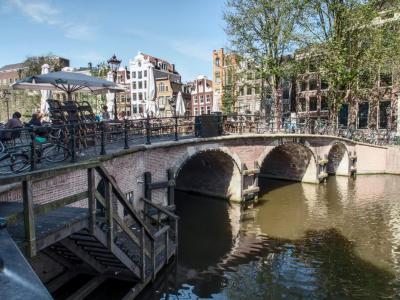
9) Torensluis (Torensluis Bridge)
If bridges had egos, the Torensluis would be the show-off of Amsterdam. Spanning a hefty 42 meters, it proudly holds the title of the widest bridge in the city-and one of its oldest. Built in the mid-17th century, it owes its name (which means “tower lock”) to the rather dramatic tower that once stood here, before it was unceremoniously demolished in the 19th century. But history leaves its fingerprints-traces of the old tower linger in the bridge’s pavement and, more intriguingly, in the dungeon lurking beneath. Yes, you heard that right. Beneath your feet, actual prison cells remain, complete with barred windows and an arched entrance. Today, they’re less about captives and more about culture, hosting exhibitions and events.
The surrounding area has barely aged a day since the Dutch Golden Age of the 1600s. Back when Amsterdam’s merchants were busy conquering the seas and establishing far-flung trading posts, they also had another pressing priority: outshining their neighbors with lavish homes. The result is a skyline that is as much a victory lap as it is a work of art. Take a slow spin; you’ll find yourself immersed in centuries of architectural bravado.
But the bridge itself isn’t just about old stones and bygone towers. It also has a statue of Multatuli, the outspoken writer and anti-colonialist who ruffled more than a few feathers in his time. And for those who prefer their history with a side of Dutch hospitality, you’re in luck! The sun-drenched terraces of Café van Zuylen is known for its impressive beer selection.
The surrounding area has barely aged a day since the Dutch Golden Age of the 1600s. Back when Amsterdam’s merchants were busy conquering the seas and establishing far-flung trading posts, they also had another pressing priority: outshining their neighbors with lavish homes. The result is a skyline that is as much a victory lap as it is a work of art. Take a slow spin; you’ll find yourself immersed in centuries of architectural bravado.
But the bridge itself isn’t just about old stones and bygone towers. It also has a statue of Multatuli, the outspoken writer and anti-colonialist who ruffled more than a few feathers in his time. And for those who prefer their history with a side of Dutch hospitality, you’re in luck! The sun-drenched terraces of Café van Zuylen is known for its impressive beer selection.
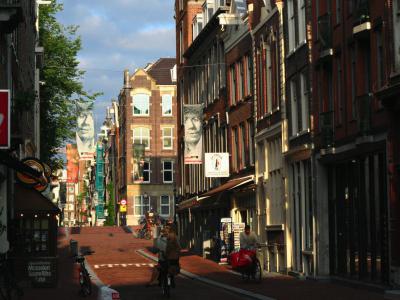
10) De Negen Straatjes (Nine Little Streets)
Amid the canal district of Amsterdam lies a charming enclave known as the "Nine Little Streets". This cluster of quaint byways, situated adjacent to the Prinsengracht, Keizersgracht, Herengracht, and Singel canals in the heart of Amsterdam, has borne this moniker since the 1990s. Collectively, these streets constitute a distinct micro-neighborhood nestled within the broader western Grachtengordel, or "Canal Belt", renowned for its eclectic array of small shops and eateries.
Woven with intricate brickwork lanes, the Nine Little Streets beckon with an assortment of offerings, including designer boutiques like Antonia by Yvette, Donna Fiera, and Sky Fashions, as well as inviting cafes, vintage emporiums, and specialty stores. Meandering through these charming streets can easily occupy your hours as you explore the diverse treasures they hold.
Tip:
Bij Ons Vintage, located at Reestraat #13, is a vintage boutique specializing in denim, leather, and sportswear dating from the 1950s to the 1970s. It's an excellent destination for discovering distinctive clothing and accessories that won't break the bank.
Meanwhile, at #20, the petite waxwork establishment known as Pontifex rivals Madame Tussauds with its vibrant assortment of candles in every conceivable variety. Adjacent to it, you'll find the intriguing clinic of the somewhat eerie doll doctor, Kramer.
Woven with intricate brickwork lanes, the Nine Little Streets beckon with an assortment of offerings, including designer boutiques like Antonia by Yvette, Donna Fiera, and Sky Fashions, as well as inviting cafes, vintage emporiums, and specialty stores. Meandering through these charming streets can easily occupy your hours as you explore the diverse treasures they hold.
Tip:
Bij Ons Vintage, located at Reestraat #13, is a vintage boutique specializing in denim, leather, and sportswear dating from the 1950s to the 1970s. It's an excellent destination for discovering distinctive clothing and accessories that won't break the bank.
Meanwhile, at #20, the petite waxwork establishment known as Pontifex rivals Madame Tussauds with its vibrant assortment of candles in every conceivable variety. Adjacent to it, you'll find the intriguing clinic of the somewhat eerie doll doctor, Kramer.
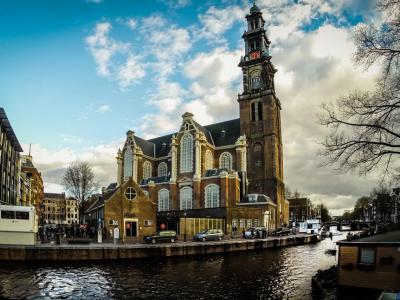
11) Westerkerk (Western Church)
Anne Frank once found comfort in the gentle chimes of the Western Church’s bells-a reassuring hint of life outside her secret refuge-until those very bells were melted down for the German war effort. The church’s 85-meter-tall tower still stands as Amsterdam’s most dazzling spire. Rising gracefully above the city, it offers balconies with stunning panoramic views of the center and a carillon that strikes every quarter-hour, plus occasional full musical interludes. At its tip, you’ll find Emperor Maximilian’s crown, a proud emblem of Amsterdam and a glittering highlight of this Protestant landmark. Built by Hendrick de Keyser and completed in 1631, a decade after his passing, the church was a vital piece of the city’s early expansion.
Outwardly, the Western Church projects an air of restrained elegance; inside, however, it embraces Calvinist simplicity. Apart from the ample plain-glass windows that flood the space with natural light, the main attractions are the grand Baroque organ and the ornate wooden pulpit, topped by an oversized sounding board that once lent authority to lengthy sermons. While the Protestant elite shunned opulent decorations, they did indulge in a little exclusivity: boxed-in benches at the base of the nave’s stone columns, rented out by the well-to-do to signal their status.
Feeling adventurous? From April to October, you can climb the tower for a firsthand look at the bells and unbeatable views from a platform near the top. The stairs are steep enough to be interesting, but not so tough as to keep you from reaching one of the best vantage points in Amsterdam.
Outwardly, the Western Church projects an air of restrained elegance; inside, however, it embraces Calvinist simplicity. Apart from the ample plain-glass windows that flood the space with natural light, the main attractions are the grand Baroque organ and the ornate wooden pulpit, topped by an oversized sounding board that once lent authority to lengthy sermons. While the Protestant elite shunned opulent decorations, they did indulge in a little exclusivity: boxed-in benches at the base of the nave’s stone columns, rented out by the well-to-do to signal their status.
Feeling adventurous? From April to October, you can climb the tower for a firsthand look at the bells and unbeatable views from a platform near the top. The stairs are steep enough to be interesting, but not so tough as to keep you from reaching one of the best vantage points in Amsterdam.
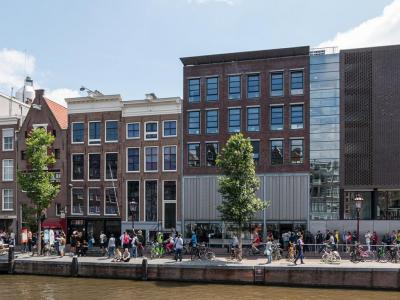
12) Anne Frank House (must see)
Anne Frank once found comfort in the gentle chimes of the Western Church’s bells-a reassuring hint of life outside her secret refuge-until those very bells were melted down for the German war effort. The church’s 85-meter-tall tower still stands as Amsterdam’s most dazzling spire. Rising gracefully above the city, it offers balconies with stunning panoramic views of the center and a carillon that strikes every quarter-hour, plus occasional full musical interludes. At its tip, you’ll find Emperor Maximilian’s crown, a proud emblem of Amsterdam and a glittering highlight of this Protestant landmark. Built by Hendrick de Keyser and completed in 1631, a decade after his passing, the church was a vital piece of the city’s early expansion.
Outwardly, the Western Church projects an air of restrained elegance; inside, however, it embraces Calvinist simplicity. Apart from the ample plain-glass windows that flood the space with natural light, the main attractions are the grand Baroque organ and the ornate wooden pulpit, topped by an oversized sounding board that once lent authority to lengthy sermons. While the Protestant elite shunned opulent decorations, they did indulge in a little exclusivity: boxed-in benches at the base of the nave’s stone columns, rented out by the well-to-do to signal their status.
Feeling adventurous? From April to October, you can climb the tower for a firsthand look at the bells and unbeatable views from a platform near the top. The stairs are steep enough to be interesting, but not so tough as to keep you from reaching one of the best vantage points in Amsterdam.
Outwardly, the Western Church projects an air of restrained elegance; inside, however, it embraces Calvinist simplicity. Apart from the ample plain-glass windows that flood the space with natural light, the main attractions are the grand Baroque organ and the ornate wooden pulpit, topped by an oversized sounding board that once lent authority to lengthy sermons. While the Protestant elite shunned opulent decorations, they did indulge in a little exclusivity: boxed-in benches at the base of the nave’s stone columns, rented out by the well-to-do to signal their status.
Feeling adventurous? From April to October, you can climb the tower for a firsthand look at the bells and unbeatable views from a platform near the top. The stairs are steep enough to be interesting, but not so tough as to keep you from reaching one of the best vantage points in Amsterdam.
13) Noorderkerk (Northern Church)
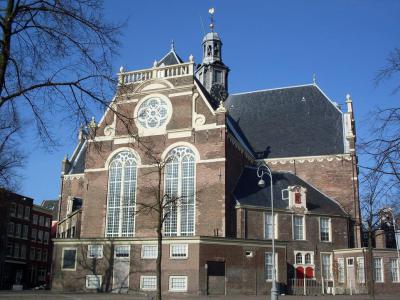
The Northern Church stands prominently at the intersection of Noordermarkt (Northern Market), serving as a notable landmark within the neighborhood. This unadorned church holds historical significance as one of the earliest constructions following the Protestant Reformation and represents the final architectural work attributed to Hendrick de Keyser. Surprisingly distinct in style from his other notable churches in the city, namely the Southern and Western churches, it was erected to cater to the impoverished residents of the Jordaan neighborhood. It takes the form of an austere brick structure, characterized by its short spire and bulky, somewhat imposing appearance-a stark departure from the prevailing church designs of the era.
Constructed with a stark, austere appearance, it featured a squat spire and a rather imposing, bulky structure, deviating radically from the conventional church architectural norms of its time. Notably, it adopted a symmetrical Greek cross floor plan, with four arms of equal dimensions extending from a central steeple. This unyieldingly somber design underscored the solemn commitment of the Calvinist congregation that gathered here. The positioning of the pulpit at the center, rather than the front of the church, symbolized a deliberate departure from Catholic traditions.
Visitors can enjoy weekly concerts at Noorderkerk every Saturday at 2pm, scheduled from June to September.
Constructed with a stark, austere appearance, it featured a squat spire and a rather imposing, bulky structure, deviating radically from the conventional church architectural norms of its time. Notably, it adopted a symmetrical Greek cross floor plan, with four arms of equal dimensions extending from a central steeple. This unyieldingly somber design underscored the solemn commitment of the Calvinist congregation that gathered here. The positioning of the pulpit at the center, rather than the front of the church, symbolized a deliberate departure from Catholic traditions.
Visitors can enjoy weekly concerts at Noorderkerk every Saturday at 2pm, scheduled from June to September.
14) Noordermarkt (Northern Market)
Amsterdam's Northern Market boasts a rich history spanning almost four centuries, tracing its origins back to the 17th century. Despite its long-standing heritage, the vendors here have embraced the needs of today's consumers, making it an internationally appealing market that exudes a warm and inviting atmosphere, captivating countless visitors and offering an unforgettable experience.
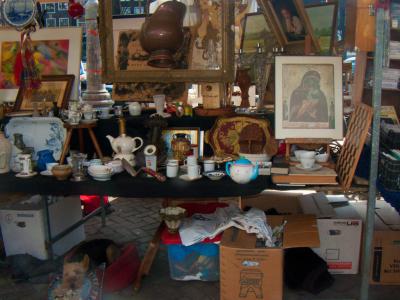
This market operates on Monday mornings and Saturdays, presenting an extraordinary array of merchandise that cannot be found anywhere else in Amsterdam. The diversity of products is truly remarkable, encompassing antiques, oddities, books, prints, unique textiles, glassware, pottery, custom-designed jewelry, vintage apparel, paintings, graphics, recycled canvas bags, and much more.
Saturdays at the market come alive with the addition of a Bird Market and a Farmers' Market, offering organically grown fruits and vegetables, freshly baked bread, and an extensive array of oils and spices. Concurrently, a dedicated section showcases antiques, vintage items, clothing, small furniture pieces, and a distinctive collection of semi-precious stones, prints, jewelry bags, and more. Saturdays are bustling market days, immersing visitors in a vibrant and diverse atmosphere.
On Monday mornings, the place transforms into a traditional textiles and second-hand market, providing a unique opportunity to peruse and purchase the finest textiles in Amsterdam. Visitors will discover ample inspiration among the various fabrics available.
This market operates on Monday mornings and Saturdays, presenting an extraordinary array of merchandise that cannot be found anywhere else in Amsterdam. The diversity of products is truly remarkable, encompassing antiques, oddities, books, prints, unique textiles, glassware, pottery, custom-designed jewelry, vintage apparel, paintings, graphics, recycled canvas bags, and much more.
Saturdays at the market come alive with the addition of a Bird Market and a Farmers' Market, offering organically grown fruits and vegetables, freshly baked bread, and an extensive array of oils and spices. Concurrently, a dedicated section showcases antiques, vintage items, clothing, small furniture pieces, and a distinctive collection of semi-precious stones, prints, jewelry bags, and more. Saturdays are bustling market days, immersing visitors in a vibrant and diverse atmosphere.
On Monday mornings, the place transforms into a traditional textiles and second-hand market, providing a unique opportunity to peruse and purchase the finest textiles in Amsterdam. Visitors will discover ample inspiration among the various fabrics available.
