Custom Walk in Lagos, Portugal by ramirovasquez913962 created on 2026-05-14
Guide Location: Portugal » Lagos
Guide Type: Custom Walk
# of Sights: 11
Tour Duration: 3 Hour(s)
Travel Distance: 5.6 Km or 3.5 Miles
Share Key: KJS2J
Guide Type: Custom Walk
# of Sights: 11
Tour Duration: 3 Hour(s)
Travel Distance: 5.6 Km or 3.5 Miles
Share Key: KJS2J
How It Works
Please retrieve this walk in the GPSmyCity app. Once done, the app will guide you from one tour stop to the next as if you had a personal tour guide. If you created the walk on this website or come to the page via a link, please follow the instructions below to retrieve the walk in the app.
Retrieve This Walk in App
Step 1. Download the app "GPSmyCity: Walks in 1K+ Cities" on Apple App Store or Google Play Store.



Step 2. In the GPSmyCity app, download(or launch) the guide "Lagos Map and Walking Tours".
Step 3. Tap the menu button located at upper right corner of the "Walks" screen and select "Retrieve custom walk". Enter the share key: KJS2J
1) Bon Vivant Bar
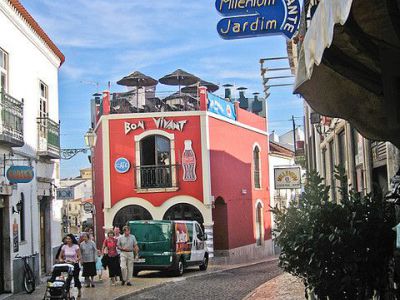
A cornerstone of Lagos' nightlife since 1987, Bon Vivant is one of the city's largest and most dynamic bars, spanning five levels, including two underground dance floors and a stunning rooftop terrace. Located in the heart of Lagos' historic center, this venue offers an unforgettable night out with an enticing mix of expertly crafted cocktails, diverse music, and a lively atmosphere.
Bon Vivant sets itself apart with its unique structure, ensuring that every visitor finds their ideal vibe. Each of the four indoor floors features its own bar and distinct music genre, catering to all tastes. Whether you prefer to sip a drink in a cozy corner or dance to pulsating beats in the underground rooms, the experience is tailored for maximum enjoyment. The roof terrace, considered the venue’s highlight, offers breathtaking views over Lagos, making it the perfect spot to unwind with a cocktail under the Algarve sky.
Bon Vivant’s cocktail menu is a work of art, blending high-quality ingredients with creative flair. The house special, Mr. Bonvivant, is a bold concoction of jenever, absinthe, strawberry-infused Aperol, and bitters, ensuring a memorable sip with every glass. For those looking to start the evening early, happy hour runs daily from 5 PM to 9 PM, offering the perfect excuse to indulge in expertly mixed drinks at great prices.
Music is at the heart of Bon Vivant. With resident DJs performing nightly, each floor delivers a distinct musical experience, allowing guests to switch between genres as they explore the venue. Whether you're into energetic dance beats, laid-back lounge tunes, or classic party anthems, Bon Vivant has something for every taste.
Bon Vivant ensures a welcoming experience for all guests, including non-smokers, as smoking is restricted to the ground floor and rooftop terrace. Additionally, the bar’s spacious layout and multiple bars throughout the venue eliminate long waits for drinks, allowing guests to fully immerse themselves in the experience.
Bon Vivant sets itself apart with its unique structure, ensuring that every visitor finds their ideal vibe. Each of the four indoor floors features its own bar and distinct music genre, catering to all tastes. Whether you prefer to sip a drink in a cozy corner or dance to pulsating beats in the underground rooms, the experience is tailored for maximum enjoyment. The roof terrace, considered the venue’s highlight, offers breathtaking views over Lagos, making it the perfect spot to unwind with a cocktail under the Algarve sky.
Bon Vivant’s cocktail menu is a work of art, blending high-quality ingredients with creative flair. The house special, Mr. Bonvivant, is a bold concoction of jenever, absinthe, strawberry-infused Aperol, and bitters, ensuring a memorable sip with every glass. For those looking to start the evening early, happy hour runs daily from 5 PM to 9 PM, offering the perfect excuse to indulge in expertly mixed drinks at great prices.
Music is at the heart of Bon Vivant. With resident DJs performing nightly, each floor delivers a distinct musical experience, allowing guests to switch between genres as they explore the venue. Whether you're into energetic dance beats, laid-back lounge tunes, or classic party anthems, Bon Vivant has something for every taste.
Bon Vivant ensures a welcoming experience for all guests, including non-smokers, as smoking is restricted to the ground floor and rooftop terrace. Additionally, the bar’s spacious layout and multiple bars throughout the venue eliminate long waits for drinks, allowing guests to fully immerse themselves in the experience.
2) Zanzibar
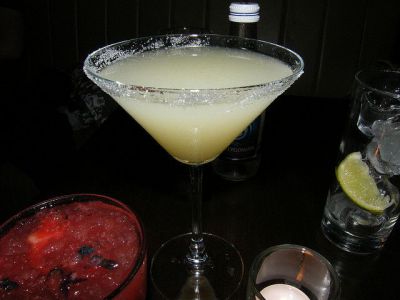
If you’re in Lagos and looking for a place that’s bursting with energy, funky beats, and some of the best cocktails in town, Zanzibar is your spot. Tucked near the historic Old Slave Market (Antigo Mercado de Escravos), this cozy yet buzzing bar is a local favorite, known for its killer mojitos, ice-cold beer, and refreshing piña coladas.
The magic of Zanzibar isn’t just in the drinks-it’s in the atmosphere. Thanks to an ever-lively crowd and the warm presence of the bar’s lovely owner, Lucinda, the place is always radiating good vibes. Open until 4 AM, it’s the kind of bar where the night stretches long, the music stays groovy, and the service is fast and friendly.
Finding Zanzibar is easy-it’s centrally located, and once you’re inside, you’ll see why it’s so well-loved. The staff is energetic, the prices are easy on the wallet, and the overall experience? Simply top-notch. Whether you’re here for a laid-back drink or a full-on night out, this bar delivers every time.
So, after exploring Lagos’ rich history, swing by Zanzibar. Great cocktails, funky tunes, and a vibe that keeps the night going-what more could you ask for?
The magic of Zanzibar isn’t just in the drinks-it’s in the atmosphere. Thanks to an ever-lively crowd and the warm presence of the bar’s lovely owner, Lucinda, the place is always radiating good vibes. Open until 4 AM, it’s the kind of bar where the night stretches long, the music stays groovy, and the service is fast and friendly.
Finding Zanzibar is easy-it’s centrally located, and once you’re inside, you’ll see why it’s so well-loved. The staff is energetic, the prices are easy on the wallet, and the overall experience? Simply top-notch. Whether you’re here for a laid-back drink or a full-on night out, this bar delivers every time.
So, after exploring Lagos’ rich history, swing by Zanzibar. Great cocktails, funky tunes, and a vibe that keeps the night going-what more could you ask for?

3) Stevie Ray's
Nestled in one of the oldest buildings in Lagos, Stevie Ray’s has been a haven for jazz and blues enthusiasts since 1999. More than just a bar, it’s a meeting point for music lovers, where the echoes of live performances blend seamlessly with the clink of fine glasses filled with cognac, port wine, and expertly crafted cocktails.
Open six nights a week, Stevie Ray’s offers an elegant yet relaxed atmosphere, perfect for a pre-dinner drink or late-night entertainment. Fridays and Saturdays are the highlight, featuring a rich lineup of international musicians playing everything from jazz and blues to funk, soul, and Latin rhythms. Whether you're drawn to the charm of old-school Dixieland, the energy of the Big Band era, or the raw emotion of Chicago blues, this venue has something for every musical palate.
Recognized as one of the Algarve’s top music spots, Stevie Ray’s regularly welcomes talent from all over the world, with artists hailing from Amsterdam to Mozambique and Toronto to Sao Paulo. The venue’s intimate yet lively setting has made it a favorite among both locals and tourists, creating a vibrant and diverse audience that shares a common love for live music.
If you find yourself in Lagos, step inside Stevie Ray’s and immerse yourself in a timeless blend of rhythm, melody, and refined hospitality-where every night is a celebration of sound.
Open six nights a week, Stevie Ray’s offers an elegant yet relaxed atmosphere, perfect for a pre-dinner drink or late-night entertainment. Fridays and Saturdays are the highlight, featuring a rich lineup of international musicians playing everything from jazz and blues to funk, soul, and Latin rhythms. Whether you're drawn to the charm of old-school Dixieland, the energy of the Big Band era, or the raw emotion of Chicago blues, this venue has something for every musical palate.
Recognized as one of the Algarve’s top music spots, Stevie Ray’s regularly welcomes talent from all over the world, with artists hailing from Amsterdam to Mozambique and Toronto to Sao Paulo. The venue’s intimate yet lively setting has made it a favorite among both locals and tourists, creating a vibrant and diverse audience that shares a common love for live music.
If you find yourself in Lagos, step inside Stevie Ray’s and immerse yourself in a timeless blend of rhythm, melody, and refined hospitality-where every night is a celebration of sound.
4) Marina de Lagos ( Lagos Marina) (must see)
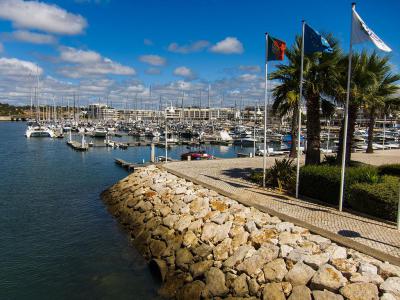
Lagos Marina is a relatively recent chapter in the city’s long maritime history, created to serve modern leisure boating. Opened in 1994, it was developed on land reclaimed along the Bensafrim River, close to the historic harbour from which ships once departed for trade, fishing, and the early voyages of exploration.
The contrast with the past is striking. What would a marina have looked like in the time of Prince Henry the Navigator? Henry financed Gil Eanes’ first attempts to explore the West African coast, using a simple vessel that was barely seaworthy by modern standards. One look at Lagos Marina today makes it clear how far support for sailing has come. The marina offers around 460 berths with full support facilities, set within a sheltered basin protected from Atlantic swells. Wide promenades, pedestrian bridges, and open sightlines frame views toward the old town.
Beyond mooring, the marina functions as a lively waterfront district. It includes the Marina Club, residences, green areas, and recreational spaces, including an Adventure Park for children. From the docks, visitors can join boat tours to nearby grottoes and beaches, dolphin-watching excursions, or sailing trips along the Algarve coast.
A visit to Lagos Marina often includes a stop for a simple, budget-friendly seafood meal. One of the most reliable options is Adega da Marina. To reach it, you cross the pedestrian bridge to the side opposite the marina, then cross the street and walk straight ahead in a south-westerly direction, with the buildings on your right. The restaurant is easy to spot, thanks to its name displayed in large letters. It offers a “meal of the day” (prato do dia in Portuguese) at a fixed price, usually listed outside on a handwritten chalkboard. As a general rule, chalkboards are worth watching for around the marina area, as daily menus are not always included indoors.
Lagos Marina is also home to the Lagos Navigators, an independent group of berth holders who work with the marina to welcome visitors. Through events and informal assistance throughout the year, they share local knowledge and experience, helping guests enjoy both the marina and the city beyond.
The contrast with the past is striking. What would a marina have looked like in the time of Prince Henry the Navigator? Henry financed Gil Eanes’ first attempts to explore the West African coast, using a simple vessel that was barely seaworthy by modern standards. One look at Lagos Marina today makes it clear how far support for sailing has come. The marina offers around 460 berths with full support facilities, set within a sheltered basin protected from Atlantic swells. Wide promenades, pedestrian bridges, and open sightlines frame views toward the old town.
Beyond mooring, the marina functions as a lively waterfront district. It includes the Marina Club, residences, green areas, and recreational spaces, including an Adventure Park for children. From the docks, visitors can join boat tours to nearby grottoes and beaches, dolphin-watching excursions, or sailing trips along the Algarve coast.
A visit to Lagos Marina often includes a stop for a simple, budget-friendly seafood meal. One of the most reliable options is Adega da Marina. To reach it, you cross the pedestrian bridge to the side opposite the marina, then cross the street and walk straight ahead in a south-westerly direction, with the buildings on your right. The restaurant is easy to spot, thanks to its name displayed in large letters. It offers a “meal of the day” (prato do dia in Portuguese) at a fixed price, usually listed outside on a handwritten chalkboard. As a general rule, chalkboards are worth watching for around the marina area, as daily menus are not always included indoors.
Lagos Marina is also home to the Lagos Navigators, an independent group of berth holders who work with the marina to welcome visitors. Through events and informal assistance throughout the year, they share local knowledge and experience, helping guests enjoy both the marina and the city beyond.
5) Whytes Bar
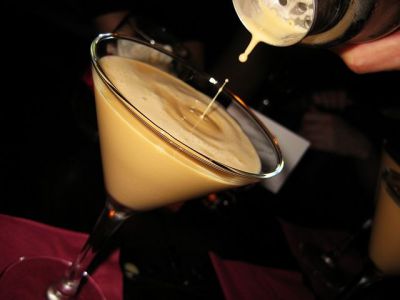
Whytes Bar is where the night in Lagos truly comes alive. Known for its legendary 9 Deadly Sins shot challenge, this bar is a magnet for partygoers looking to test their limits-or at least their liver’s endurance. Upstairs, the cocktail bar keeps things stylish, mixing up a variety of drinks for those who appreciate a well-crafted concoction. But the real action happens downstairs, where the basement bar turns into a wild dancefloor, complete with table dancing, shot challenges, and high-energy music.
Regulars rave about the great cocktails, friendly staff, and unbeatable party atmosphere. The bar’s signature drinking games-like Beat the Bartender and Roll the Dice for Free Drinks-keep the fun unpredictable. No pool table here, but there’s a dartboard for those who like a little friendly competition. And let’s not forget Mally and Django, the bar’s adorable mascots, who add a touch of charm to the night’s madness.
If you're up for a legendary Lagos night out, Whytes Bar is the place to be. Just be warned: the 9 Deadly Sins are not for the faint-hearted.
Regulars rave about the great cocktails, friendly staff, and unbeatable party atmosphere. The bar’s signature drinking games-like Beat the Bartender and Roll the Dice for Free Drinks-keep the fun unpredictable. No pool table here, but there’s a dartboard for those who like a little friendly competition. And let’s not forget Mally and Django, the bar’s adorable mascots, who add a touch of charm to the night’s madness.
If you're up for a legendary Lagos night out, Whytes Bar is the place to be. Just be warned: the 9 Deadly Sins are not for the faint-hearted.
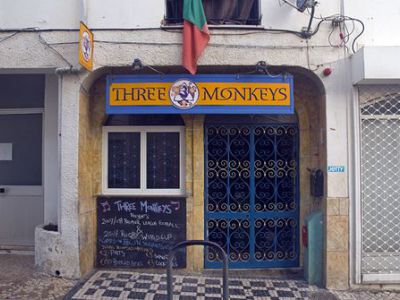
6) Three Monkeys
If you’re looking for a bar in Lagos where the party never slows down, Three Monkeys is your spot. This legendary watering hole has been keeping locals and travelers entertained for over a decade, serving up a perfect mix of beer bongs, wild dancing, and rock ‘n’ roll vibes. Whether you start your afternoon with a round of pool, darts, backgammon, or chess, or dive straight into the late-night madness of shots and beer pong, this bar knows how to deliver a good time.
Expect a killer soundtrack featuring Pearl Jam, The Ramones, AC/DC, and Led Zeppelin, ensuring the energy stays high. During soccer season, you can catch European matches on the big screens, all while sipping on one of the bar’s infamous cocktails.
As the night picks up, so does the mayhem-dancing on the bar is practically a tradition, and the friendly crew is always ready to fuel the fun with their signature hospitality. Located in the heart of Lagos’ buzzing nightlife district, Three Monkeys is a must-visit for those seeking a wild and unforgettable night out. Whether it’s summer or winter, there’s always a themed party, a drinking game, or a rowdy crowd ready to welcome you in.
Expect a killer soundtrack featuring Pearl Jam, The Ramones, AC/DC, and Led Zeppelin, ensuring the energy stays high. During soccer season, you can catch European matches on the big screens, all while sipping on one of the bar’s infamous cocktails.
As the night picks up, so does the mayhem-dancing on the bar is practically a tradition, and the friendly crew is always ready to fuel the fun with their signature hospitality. Located in the heart of Lagos’ buzzing nightlife district, Three Monkeys is a must-visit for those seeking a wild and unforgettable night out. Whether it’s summer or winter, there’s always a themed party, a drinking game, or a rowdy crowd ready to welcome you in.
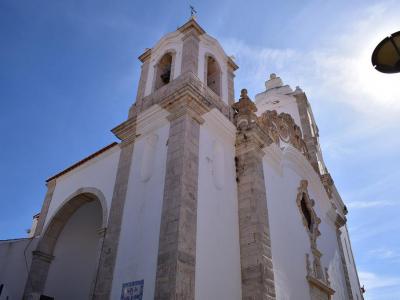
7) Igreja de Santo António (Santo Antonio Church) (must see)
Saint Anthony Church stands in the historic centre of Lagos, close to the old city walls, and is one of the town’s most artistically striking religious buildings. In 1707, the Brotherhood of Saint Anthony erected a church dedicated to the saint that was not attached to a Franciscan priory or convent-an unusual decision that reflected Saint Anthony’s special status in the city. Since 1668, Saint Anthony had been formally attached to Infantry Regiment No. 2 of Lagos. As part of the regiment, he was paid a salary by the regimental command, making him the only canonised saint known to have received wages for his services. He even received promotions, eventually attaining the rank of colonel.
The church suffered severe damage in the earthquake of 1755 and was extensively rebuilt in the second half of the 18th century, giving it much of its present Baroque character. The exterior is largely composed of smooth masonry, with a Baroque façade marked by a niche above the main door and an oculus decorated with shells. A shield framed by branches crowns the façade. Along the side, an arched opening forms a vaulted porch, and two differently shaped bell towers add variety to the skyline.
To enter the church, you need to look for a small sliding gate on the same side of the street, toward the southeast. This gate leads into the Municipal Museum of Lagos, which houses an impressive collection of sacred art, including paintings and 17th-century carvings. As the museum is physically attached to the church, the only way to access the interior is by passing through the museum’s archaeological circuit. At the end of the route, a green door set into a discreet doorway leads into the church’s single aisle.
Once inside, the interior reveals its full splendour. Sumptuous Baroque decoration and gilded woodcarving cover the walls and altarpieces. Where the gold leaf ends, along the lower half of the walls, white and blue azulejo tiles begin, creating a striking visual contrast. Looking upward, the ceiling offers a masterclass in architectural illusion. Although it is constructed of flat wood, painted perspective creates the impression of a three-dimensional stone vault complete with balconies and columns. At the very centre appears the Portuguese Royal Coat of Arms.
The church suffered severe damage in the earthquake of 1755 and was extensively rebuilt in the second half of the 18th century, giving it much of its present Baroque character. The exterior is largely composed of smooth masonry, with a Baroque façade marked by a niche above the main door and an oculus decorated with shells. A shield framed by branches crowns the façade. Along the side, an arched opening forms a vaulted porch, and two differently shaped bell towers add variety to the skyline.
To enter the church, you need to look for a small sliding gate on the same side of the street, toward the southeast. This gate leads into the Municipal Museum of Lagos, which houses an impressive collection of sacred art, including paintings and 17th-century carvings. As the museum is physically attached to the church, the only way to access the interior is by passing through the museum’s archaeological circuit. At the end of the route, a green door set into a discreet doorway leads into the church’s single aisle.
Once inside, the interior reveals its full splendour. Sumptuous Baroque decoration and gilded woodcarving cover the walls and altarpieces. Where the gold leaf ends, along the lower half of the walls, white and blue azulejo tiles begin, creating a striking visual contrast. Looking upward, the ceiling offers a masterclass in architectural illusion. Although it is constructed of flat wood, painted perspective creates the impression of a three-dimensional stone vault complete with balconies and columns. At the very centre appears the Portuguese Royal Coat of Arms.
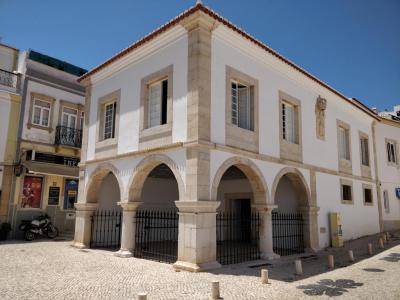
8) Antigo Mercado de Escravos (Old Slave Market) (must see)
The Old Slave Market of Lagos is one of the most historically significant and sobering sites in the Algarve region. Its origins are tied to the earliest phase of the Atlantic slave trade. In 1441, the first recorded cargo of enslaved people was delivered to Lagos by Captain Antão Gonçalves, who had learned of an existing slave trade along the African coast and returned with fourteen captives. Demand grew rapidly. Owning enslaved people soon became a marker of social status, and the trade expanded into a profitable enterprise. Prince Henry the Navigator was entitled to one fifth of the value of all enslaved people brought back to Portugal. In 1444, Captain Lançarote de Freitas arrived in Lagos with 235 captives, forty-seven of whom went directly to Henry, signalling how quickly slavery became big business.
Public slave auctions took place in this area from the 1440s onward, making Lagos the site of the first documented slave market in Europe. However, in 1512 King Manuel I decreed that enslaved people imported into Portugal could be landed only in Lisbon, ending Lagos’s role as an official entry point.
The present building dates from 1691 and was constructed on the site of an earlier 14th-century slave market. Built in a restrained Mannerist style, it has two floors, with the ground level enclosed by stone arches and an iron fence.
In 2014, the city council installed a permanent museum inside the building, transforming it into a space for historical interpretation and public reflection. The site became part of UNESCO’s Slave Route programme, acknowledging its global historical importance. In December 2018, Portugal’s International Observatory of Human Rights designated the building the “International Centre for Living Memory of Human Dignity.”
Public slave auctions took place in this area from the 1440s onward, making Lagos the site of the first documented slave market in Europe. However, in 1512 King Manuel I decreed that enslaved people imported into Portugal could be landed only in Lisbon, ending Lagos’s role as an official entry point.
The present building dates from 1691 and was constructed on the site of an earlier 14th-century slave market. Built in a restrained Mannerist style, it has two floors, with the ground level enclosed by stone arches and an iron fence.
In 2014, the city council installed a permanent museum inside the building, transforming it into a space for historical interpretation and public reflection. The site became part of UNESCO’s Slave Route programme, acknowledging its global historical importance. In December 2018, Portugal’s International Observatory of Human Rights designated the building the “International Centre for Living Memory of Human Dignity.”
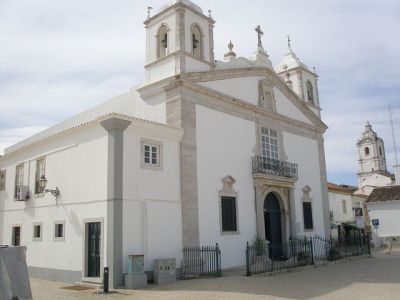
9) Igreja de Santa Maria (Church of Santa Maria) (must see)
The Church of Santa Maria is one of Lagos’ most important religious buildings and has been in continuous use as a place of worship since 1448. Closely linked to the town’s development after the Christian Reconquest, it stands on a site that already housed a medieval church. The present structure, however, took shape mainly in the late 15th and early 16th centuries, when Lagos was flourishing as a maritime and administrative centre. Dedicated to Saint Mary of Grace, it became the town’s principal parish church.
Over the centuries, the church has required repeated rebuilding. It was destroyed by the catastrophic earthquake of 1755 and later damaged again by severe fires in the 18th and 19th centuries. As a result, the building reflects successive phases of reconstruction rather than a single architectural moment.
The exterior is whitewashed and relatively restrained, defined by two bell towers. Decorative stone and metalwork on the balconies and windows add subtle detail. The façade’s main architectural highlight is the only element to have survived the 1755 earthquake: a 16th-century Renaissance doorway framed by two Doric columns. Between the arch of the doorway and the columns stand weathered stone statues of Saint Peter and Saint Paul.
The interior is notably simple compared to some of Lagos’ more ornate churches. It consists of a single nave with an elevated choir and three side chapels. Despite this modest layout, several features stand out. Among them is a statue of Saint Gonçalo, the fisherman-turned-Augustinian preacher born in Lagos in 1360. Exceptionally well preserved and vibrant, it can be found in the first niche on the left side of the nave after entering the church. Other devotional images include Our Lady of the Assumption and Our Lady of Mercy, both central to local religious tradition.
Arguably the most surprising element of the church is The Mural of the Battling Angels, located directly behind the high altar in the chancel. In contrast to the traditional gold-leaf altarpieces found elsewhere in Portugal, this church features a large contemporary mural painted in vivid oranges, pinks, and purples, depicting a dramatic celestial battle of winged angels.
Over the centuries, the church has required repeated rebuilding. It was destroyed by the catastrophic earthquake of 1755 and later damaged again by severe fires in the 18th and 19th centuries. As a result, the building reflects successive phases of reconstruction rather than a single architectural moment.
The exterior is whitewashed and relatively restrained, defined by two bell towers. Decorative stone and metalwork on the balconies and windows add subtle detail. The façade’s main architectural highlight is the only element to have survived the 1755 earthquake: a 16th-century Renaissance doorway framed by two Doric columns. Between the arch of the doorway and the columns stand weathered stone statues of Saint Peter and Saint Paul.
The interior is notably simple compared to some of Lagos’ more ornate churches. It consists of a single nave with an elevated choir and three side chapels. Despite this modest layout, several features stand out. Among them is a statue of Saint Gonçalo, the fisherman-turned-Augustinian preacher born in Lagos in 1360. Exceptionally well preserved and vibrant, it can be found in the first niche on the left side of the nave after entering the church. Other devotional images include Our Lady of the Assumption and Our Lady of Mercy, both central to local religious tradition.
Arguably the most surprising element of the church is The Mural of the Battling Angels, located directly behind the high altar in the chancel. In contrast to the traditional gold-leaf altarpieces found elsewhere in Portugal, this church features a large contemporary mural painted in vivid oranges, pinks, and purples, depicting a dramatic celestial battle of winged angels.
10) Forte da Ponta da Bandeira (Flag's Mast Fort) (must see)
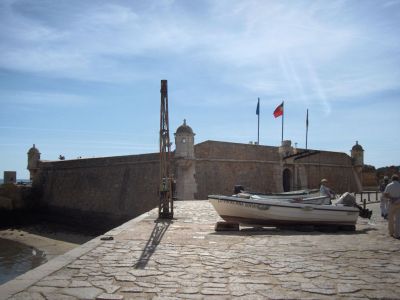
Flag’s Mast Fort stands at the mouth of the Bensafrim River, in full view of the Atlantic, guarding the narrow entrance to Lagos harbour. Built in the late 17th century and completed in 1690, the fort reflects the strategic importance of Lagos at a time when the Algarve coast was frequently targeted by pirates and corsairs. Lagos then served as the seat of the military government of the Algarve, making strong coastal defences a priority following the restoration of Portuguese independence from Spain.
Positioned to control both river and sea access, the fort was designed to protect the docks and quays along the riverbanks while establishing effective crossfire with the redoubts of Lagos Castle and the city gates. Upon completion, it was considered one of the most effective defensive structures in the region.
Built on a square plan, the fort features thick stone walls, corner turrets, and firing platforms carefully arranged to cover approaching ships and potential landings. A narrow drawbridge once connected it to the shore. Its name derives from the flag mast that flew signals to announce arrivals and warn of danger.
Today, access to the fort is gained via a permanent stone bridge followed by a wooden drawbridge. Although the drawbridge mechanism is no longer operational, it remains one of the few surviving examples of its kind in the region. Looking down, you can also observe the dry moat that surrounds the fort, designed to prevent land-based attacks.
As you enter the fort and face the ramp leading to the terrace, an arched doorway appears in the far-right corner. Behind it lies a small chapel dedicated to Saint Barbara, the patron saint of armourers, artillery soldiers, and miners. The chapel’s walls are lined with traditional blue azulejo tiles.
Finally, following the ramp upward brings you to the fort’s terrace. From here, views extend in all directions, encompassing Meia Praia Beach, the historic city walls, and the entrance to Lagos Marina. At each of the four corners of the fort stand small cylindrical lookout towers capped with conical roofs, once used by sentries to watch for approaching ships or pirate vessels.
Positioned to control both river and sea access, the fort was designed to protect the docks and quays along the riverbanks while establishing effective crossfire with the redoubts of Lagos Castle and the city gates. Upon completion, it was considered one of the most effective defensive structures in the region.
Built on a square plan, the fort features thick stone walls, corner turrets, and firing platforms carefully arranged to cover approaching ships and potential landings. A narrow drawbridge once connected it to the shore. Its name derives from the flag mast that flew signals to announce arrivals and warn of danger.
Today, access to the fort is gained via a permanent stone bridge followed by a wooden drawbridge. Although the drawbridge mechanism is no longer operational, it remains one of the few surviving examples of its kind in the region. Looking down, you can also observe the dry moat that surrounds the fort, designed to prevent land-based attacks.
As you enter the fort and face the ramp leading to the terrace, an arched doorway appears in the far-right corner. Behind it lies a small chapel dedicated to Saint Barbara, the patron saint of armourers, artillery soldiers, and miners. The chapel’s walls are lined with traditional blue azulejo tiles.
Finally, following the ramp upward brings you to the fort’s terrace. From here, views extend in all directions, encompassing Meia Praia Beach, the historic city walls, and the entrance to Lagos Marina. At each of the four corners of the fort stand small cylindrical lookout towers capped with conical roofs, once used by sentries to watch for approaching ships or pirate vessels.
11) Ponta da Piedade (Piety Point) (must see)
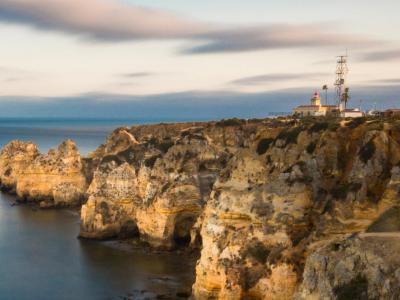
Piety Point marks the southern edge of Lagos’ coastline and is one of the Algarve’s most recognisable natural landmarks. Its origins lie in a geological accident that occurred millions of years ago during the Miocene period, when tectonic movement and changing sea levels exposed a limestone promontory to erosion. As the waters gradually receded, wind and waves carved the newly revealed rock into the dramatic cliffs, arches, stacks, and grottos visible today, rising in places to around 115 feet (or 35 metres) above the sea.
The headland is a true geological and palaeontological archive. Fossils of ancient corals and marine life, including shark teeth, have been found embedded in the rock. For early Mediterranean cultures, the sea was often regarded as divine, and Piety Point came to be viewed as a place of special significance. Bronze Age artefacts continue to be recovered on land, alongside underwater traces of Roman presence in the form of coins and submerged remains.
Its prominence did not escape military attention. The cape’s height and clear views made it a natural surveillance point over approaches from the sea. A military battery was installed here in 1663 and remained in use until 1821, after the Napoleonic period had come to an end.
Today, Piety Point is revered by locals and admired by visitors. The cliffs are riddled with caves that can be explored on foot via stairways carved into the rock near the lighthouse, or from the water by boat or kayak. One such access route is a steep limestone staircase of 182 steps, descending into a sheltered cove. At the bottom, you reach sea level, where small boats often wait to take visitors into the labyrinth of grottos and sea arches. The staircase is easily found by walking away from the lighthouse in a south-easterly direction. Alternatively, boat excursions depart regularly from Lagos Marina.
From the clifftop paths, visitors encounter uninterrupted Atlantic views and a landscape shaped entirely by time, water, and stone. These paths begin as wooden boardwalks and can be found by turning right from the main road before entering the lighthouse grounds.
In 2015, The Huffington Post named Piety Point its favourite beach destination worldwide, citing its extraordinary natural beauty.
The headland is a true geological and palaeontological archive. Fossils of ancient corals and marine life, including shark teeth, have been found embedded in the rock. For early Mediterranean cultures, the sea was often regarded as divine, and Piety Point came to be viewed as a place of special significance. Bronze Age artefacts continue to be recovered on land, alongside underwater traces of Roman presence in the form of coins and submerged remains.
Its prominence did not escape military attention. The cape’s height and clear views made it a natural surveillance point over approaches from the sea. A military battery was installed here in 1663 and remained in use until 1821, after the Napoleonic period had come to an end.
Today, Piety Point is revered by locals and admired by visitors. The cliffs are riddled with caves that can be explored on foot via stairways carved into the rock near the lighthouse, or from the water by boat or kayak. One such access route is a steep limestone staircase of 182 steps, descending into a sheltered cove. At the bottom, you reach sea level, where small boats often wait to take visitors into the labyrinth of grottos and sea arches. The staircase is easily found by walking away from the lighthouse in a south-easterly direction. Alternatively, boat excursions depart regularly from Lagos Marina.
From the clifftop paths, visitors encounter uninterrupted Atlantic views and a landscape shaped entirely by time, water, and stone. These paths begin as wooden boardwalks and can be found by turning right from the main road before entering the lighthouse grounds.
In 2015, The Huffington Post named Piety Point its favourite beach destination worldwide, citing its extraordinary natural beauty.
