Custom Walk in Bern, Switzerland by ronmary1036478 created on 2026-05-14
Guide Location: Switzerland » Bern
Guide Type: Custom Walk
# of Sights: 13
Tour Duration: 2 Hour(s)
Travel Distance: 3.2 Km or 2 Miles
Share Key: 9YV7Z
Guide Type: Custom Walk
# of Sights: 13
Tour Duration: 2 Hour(s)
Travel Distance: 3.2 Km or 2 Miles
Share Key: 9YV7Z
How It Works
Please retrieve this walk in the GPSmyCity app. Once done, the app will guide you from one tour stop to the next as if you had a personal tour guide. If you created the walk on this website or come to the page via a link, please follow the instructions below to retrieve the walk in the app.
Retrieve This Walk in App
Step 1. Download the app "GPSmyCity: Walks in 1K+ Cities" on Apple App Store or Google Play Store.



Step 2. In the GPSmyCity app, download(or launch) the guide "Bern Map and Walking Tours".
Step 3. Tap the menu button located at upper right corner of the "Walks" screen and select "Retrieve custom walk". Enter the share key: 9YV7Z
1) Anna-Seiler-Brunnen (Anna Seiler Fountain)
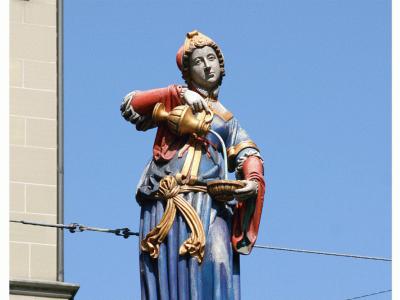
Anna Seiler Fountain (Anna-Seiler-Brunnen) is a historical fountain located on Marktgasse in the Old City of Bern. It stands at the upper end of the street and commemorates Anna Seiler, the founder of Bern's first hospital. The fountain, a Swiss Cultural Property of National Significance, forms part of the UNESCO World Heritage Site in Bern's Old City.
Constructed in 1545, the fountain features a statue of Anna Seiler dressed in a blue gown, pouring water into a small dish, symbolizing her nurturing spirit and commitment to healthcare. The pillar supporting the statue originated from the ancient Roman town of Aventicum, now Avenches.
Anna Seiler bequeathed her house to the city in her will on November 29, 1354, specifying that it be transformed into a hospital with 13 beds and two attendants. Known initially as the Seilerin Spital, it later moved to the Dominican Order's Saint Michael's Island monastery in 1531 and was renamed the Inselspital. The modern Inselspital remains a thriving healthcare institution with about 6,000 employees, treating approximately 220,000 patients annually. Anna Seiler Fountain serves as a testament to Seiler's legacy and her lasting impact on healthcare in Bern.
Constructed in 1545, the fountain features a statue of Anna Seiler dressed in a blue gown, pouring water into a small dish, symbolizing her nurturing spirit and commitment to healthcare. The pillar supporting the statue originated from the ancient Roman town of Aventicum, now Avenches.
Anna Seiler bequeathed her house to the city in her will on November 29, 1354, specifying that it be transformed into a hospital with 13 beds and two attendants. Known initially as the Seilerin Spital, it later moved to the Dominican Order's Saint Michael's Island monastery in 1531 and was renamed the Inselspital. The modern Inselspital remains a thriving healthcare institution with about 6,000 employees, treating approximately 220,000 patients annually. Anna Seiler Fountain serves as a testament to Seiler's legacy and her lasting impact on healthcare in Bern.
2) Schützenbrunnen (Marksman Fountain)
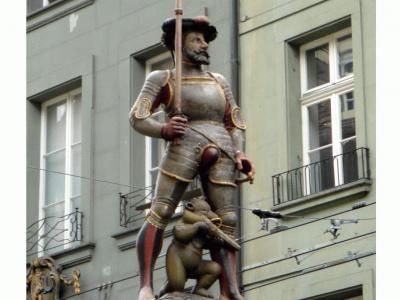
The Marksman Fountain (Schützenbrunnen) is a historical fountain located in Bern. This iconic structure, originally constructed between 1527 and 1543, is emblematic of the rich cultural and communal history of the region. Initially replacing a wooden fountain from 1527 with a stone one, the fountain's focal point is a statue dating back to 1543. The statue depicts an armed rifleman, a standard bearer for the Society of Musketry, with a banner in his right hand and a sword in his left. Notably, a bear cub, symbolically positioned between the rifleman's legs, aims a rifle, adding a playful yet significant element to the composition.
Throughout its history, the Marksman Fountain has undergone several restorations and relocations. In 1558, repairs were necessary for the sword, and by 1670, the column and base of the fountain were replaced. Further enhancements in 1783/84 saw the replacement of the fountain basin and pedestal. The 20th century brought more changes with relocations in 1890 and 1939, the latter of which also included a 180-degree rotation of the fountain.
Today, the Marksman Fountain stands proudly in front of the Zytglogge (Clock Tower), having found its permanent location after various movements. At its current spot, although the little bear's rifle aim is no longer accurate, it remains a point of historical curiosity and charm. This misalignment, however, carries less consequence as the Society to Shooting, which originally sponsored the fountain, was dismantled in 1799.
The Marksman Fountain serves not only as a piece of functional art but also as a narrative artifact that captures the essence of local traditions and communal life in historical Bern.
Throughout its history, the Marksman Fountain has undergone several restorations and relocations. In 1558, repairs were necessary for the sword, and by 1670, the column and base of the fountain were replaced. Further enhancements in 1783/84 saw the replacement of the fountain basin and pedestal. The 20th century brought more changes with relocations in 1890 and 1939, the latter of which also included a 180-degree rotation of the fountain.
Today, the Marksman Fountain stands proudly in front of the Zytglogge (Clock Tower), having found its permanent location after various movements. At its current spot, although the little bear's rifle aim is no longer accurate, it remains a point of historical curiosity and charm. This misalignment, however, carries less consequence as the Society to Shooting, which originally sponsored the fountain, was dismantled in 1799.
The Marksman Fountain serves not only as a piece of functional art but also as a narrative artifact that captures the essence of local traditions and communal life in historical Bern.
3) Kindlifresserbrunnen (Child Eater Fountain)
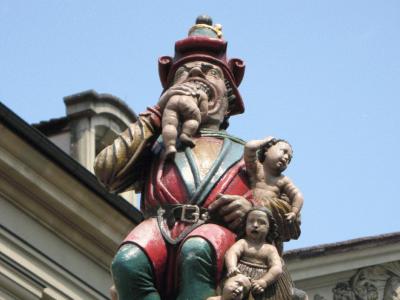
The Child Eater Fountain (Kindlifresserbrunnen) stands in the Granary Place in Bern and is one of the city's notable 16th-century fountains. Created between 1545 and 1546 by Hans Gieng, it replaced an earlier wooden fountain from the 15th century. Initially called Plaza Fountain, the current name, Child Eater Fountain, was first used in 1666. In Swiss German, "Kindli" is a diminutive form of "Kind," meaning child, and thus the name translates to "Fountain of the Eater of Little Children."
The fountain's sculpture depicts a seated ogre, devouring a naked child with a sack of other children by his side. The ogre is adorned with a pointed hat resembling a Jewish one, leading to speculation that the figure could represent a Jew as part of an antisemitic blood libel. Other theories suggest it portrays the beast-like Krampus from Alpine folklore, who punishes misbehaving children, or the Greek Titan Cronus, who devoured his offspring.
An additional theory is that the ogre symbolizes an enemy threatening the Old Swiss Confederacy's eight cantons, represented by the eight children. This interpretation aligns with the fountain's base, which displays a frieze of armed bears, possibly designed by Hans Rudolf Manuel Deutsch, marching to war.
Despite these various interpretations, the true origin remains uncertain. The fountain might simply represent a carnival figure intended to frighten unruly children during Fastnacht, Switzerland's "Night of Fasting" festival. Regardless of its original purpose, the Child Eater Fountain has intrigued and terrified generations for almost 500 years. The fountain also features prominently in Jacques Chessex's novel L'Ogre (The Ogre).
The fountain's sculpture depicts a seated ogre, devouring a naked child with a sack of other children by his side. The ogre is adorned with a pointed hat resembling a Jewish one, leading to speculation that the figure could represent a Jew as part of an antisemitic blood libel. Other theories suggest it portrays the beast-like Krampus from Alpine folklore, who punishes misbehaving children, or the Greek Titan Cronus, who devoured his offspring.
An additional theory is that the ogre symbolizes an enemy threatening the Old Swiss Confederacy's eight cantons, represented by the eight children. This interpretation aligns with the fountain's base, which displays a frieze of armed bears, possibly designed by Hans Rudolf Manuel Deutsch, marching to war.
Despite these various interpretations, the true origin remains uncertain. The fountain might simply represent a carnival figure intended to frighten unruly children during Fastnacht, Switzerland's "Night of Fasting" festival. Regardless of its original purpose, the Child Eater Fountain has intrigued and terrified generations for almost 500 years. The fountain also features prominently in Jacques Chessex's novel L'Ogre (The Ogre).
4) Zahringerbrunnen (Zahringen Fountain)
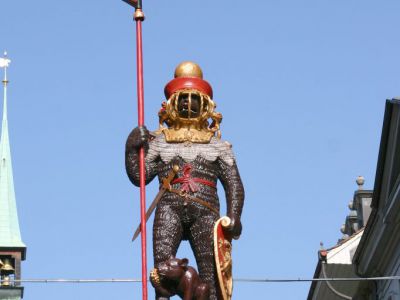
The Zähringen Fountain (Zähringerbrunnen) is an iconic cultural monument located on Kramgasse in the Old City of Bern, a UNESCO World Heritage Site. This fountain stands as a testament to Bern's medieval heritage and its founders, the Zähringen family. Erected in 1535, the Zähringen Fountain was constructed to commemorate Berchtold von Zähringer, the founder of Bern, who, according to local legend, chose the location for the city after hunting down a bear on the Aare peninsula.
Dominating the fountain is a statue of a bear, the heraldic symbol of Bern, clad in full armor. This bear holds a shield and a banner, both adorned with the golden lion on a red background, the emblem of the Zähringen family. At the bear's feet is a smaller bear cub, which adds a touch of charm to the ensemble by seemingly munching on grapes.
The original basin of the fountain, dated 1542, was octagonal and bore various inscriptions including "Protege Nos Domine" (Protect us, Lord) and "Soli Deo Gloria" (Glory to God alone). This basin was replaced in 1889 with a design replicating that of the Pfeiferbrunnen's basin, alongside refurbishments to the statue and column.
The Zähringen Fountain not only serves as a reminder of Bern's foundation and its symbolic bears but also as an artistic and cultural property of national significance, enriching the historical ambiance of the city's well-preserved medieval streetscape.
Dominating the fountain is a statue of a bear, the heraldic symbol of Bern, clad in full armor. This bear holds a shield and a banner, both adorned with the golden lion on a red background, the emblem of the Zähringen family. At the bear's feet is a smaller bear cub, which adds a touch of charm to the ensemble by seemingly munching on grapes.
The original basin of the fountain, dated 1542, was octagonal and bore various inscriptions including "Protege Nos Domine" (Protect us, Lord) and "Soli Deo Gloria" (Glory to God alone). This basin was replaced in 1889 with a design replicating that of the Pfeiferbrunnen's basin, alongside refurbishments to the statue and column.
The Zähringen Fountain not only serves as a reminder of Bern's foundation and its symbolic bears but also as an artistic and cultural property of national significance, enriching the historical ambiance of the city's well-preserved medieval streetscape.
5) Simsonbrunnen (Samson Fountain)
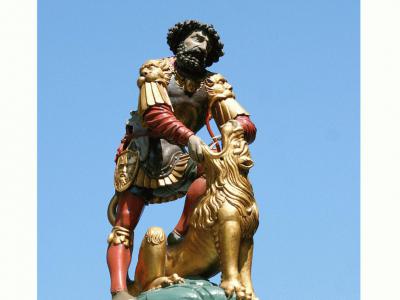
The Samson Fountain (Simsonbrunnen), located on Kramgasse in the Old City of Bern, is a historic and culturally significant monument. Constructed in 1544 by Hans Gieng, the fountain is declared a Swiss Cultural Property of National Significance. Additionally, it forms part of the UNESCO World Heritage Site of the Old City of Bern.
The fountain's central figure is the biblical hero Samson, depicted in Roman attire, embodying the Renaissance-era valorization of strength. Dramatically, the statue shows Samson tearing apart the mouth of a lion, a direct reference to the biblical story from Judges 14:5-20, where Samson is granted immense strength under the vow of abstaining from alcohol and never cutting his hair. This divine gift is illustrated as Samson overpowers the lion on his way to marry a Philistine woman, an act that later prompts a conflict with the Philistines.
A noteworthy detail on the fountain is the inclusion of a weapon and butcher’s tools on Samson’s belt, hinting at the fountain’s likely patronage by the Butcher’s Guild. This connection is underscored by the fountain's early nickname, the "Butcher’s Fountain," a title it held until it was renamed to Samson Fountain about 150 years later. This renaming reflects a broader recognition of the fountain's thematic and artistic representation of Samson's story and its significance within the heritage of Bern.
The fountain's central figure is the biblical hero Samson, depicted in Roman attire, embodying the Renaissance-era valorization of strength. Dramatically, the statue shows Samson tearing apart the mouth of a lion, a direct reference to the biblical story from Judges 14:5-20, where Samson is granted immense strength under the vow of abstaining from alcohol and never cutting his hair. This divine gift is illustrated as Samson overpowers the lion on his way to marry a Philistine woman, an act that later prompts a conflict with the Philistines.
A noteworthy detail on the fountain is the inclusion of a weapon and butcher’s tools on Samson’s belt, hinting at the fountain’s likely patronage by the Butcher’s Guild. This connection is underscored by the fountain's early nickname, the "Butcher’s Fountain," a title it held until it was renamed to Samson Fountain about 150 years later. This renaming reflects a broader recognition of the fountain's thematic and artistic representation of Samson's story and its significance within the heritage of Bern.
6) Mosesbrunnen (Moses Fountain)
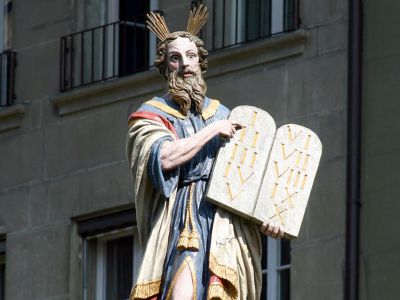
The Moses Fountain (Mosesbrunnen) is a historic fountain located on Münsterplatz in the Old City of Bern. Constructed in 1544 and rebuilt in 1790-1791 after storm damage, it is recognized as a Swiss Cultural Property of National Significance and forms part of the UNESCO World Heritage Site of the Old City of Bern. Its Louis XVI-style basin was designed by Niklaus Sprüngli.
The central statue depicts Moses presenting the Ten Commandments to the Tribes of Israel. Unique to Western art traditions of the Middle Ages, Moses is depicted with two horns on his head. This feature references Exodus 34:29-35, which describes Moses' face becoming radiant after meeting with God. The horns are interpreted as a metaphorical representation of radiance, symbolizing Moses' strength, authority, and glorification of God. This imagery stems from a translation of the Hebrew term "qāran" by Jerome, who saw horns as a metaphor for divine strength.
Moses is shown pointing towards the second commandment, which prohibits the creation of graven images. He faces the nearby Bern Münster Cathedral, which saw many images destroyed during the Reformation. The Moses Fountain remains a notable testament to religious history and artistic tradition.
The central statue depicts Moses presenting the Ten Commandments to the Tribes of Israel. Unique to Western art traditions of the Middle Ages, Moses is depicted with two horns on his head. This feature references Exodus 34:29-35, which describes Moses' face becoming radiant after meeting with God. The horns are interpreted as a metaphorical representation of radiance, symbolizing Moses' strength, authority, and glorification of God. This imagery stems from a translation of the Hebrew term "qāran" by Jerome, who saw horns as a metaphor for divine strength.
Moses is shown pointing towards the second commandment, which prohibits the creation of graven images. He faces the nearby Bern Münster Cathedral, which saw many images destroyed during the Reformation. The Moses Fountain remains a notable testament to religious history and artistic tradition.
7) Gerechtigkeitsbrunnen (Fountain of Justice) (must see)
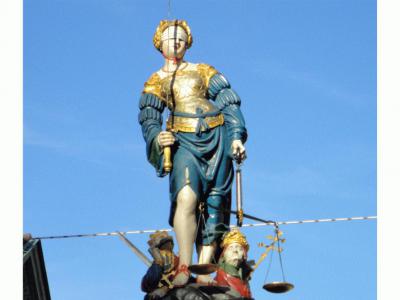
In a city with over a hundred fountains, the Fountain of Justice (Gerechtigkeitsbrunnen) in Bern's Old City is a standout attraction. It is the only fountain in Bern that has maintained all its original design features and is recognized as a national cultural heritage site.
Hans Gieng's renowned statue of Lady Justice elevates the Fountain of Justice above other Bernese fountains in artistic value. This iconic figure was replicated across Switzerland until the mid-17th century. At Justice's feet, four smaller busts encircle the base: a Pope, an Emperor, a Sultan, and a Schultheiss. The Schultheiss’s gold chain of office is believed to have originally displayed Bern's emblem. Each figure's eyes are shut, symbolizing submission. They represent the Four Earthly Powers as outlined by Renaissance humanism: theocracy (Pope), monarchy (Emperor), autocracy (Sultan), and republic (Schultheiss).
The statue illustrates how Justice reigns supreme over all earthly rulers-a variation of the medieval motif of virtue conquering vice. Divine Justice was a popular topic in Reformation-era Bern. Reformers believed that practicing justice according to God's word was the highest responsibility of any authority, outweighing feudal rights. They used this argument, among others, to rationalize Bern's takeover of Vaud in 1536 from the Savoy dukes.
While the sword and scales are typical symbols of Lady Justice, the Bern statue's blindfold is a unique addition. This feature later became a widely recognized representation of Justice and a universal sign of equality before the law. The blindfold implies that justice should be served impartially, with decisions made through thoughtful reflection rather than external appearances. Gieng's Lady Justice embodies the principle of republican justice and served as a compelling public reminder of the Bernese Republic's legal authority.
Hans Gieng's renowned statue of Lady Justice elevates the Fountain of Justice above other Bernese fountains in artistic value. This iconic figure was replicated across Switzerland until the mid-17th century. At Justice's feet, four smaller busts encircle the base: a Pope, an Emperor, a Sultan, and a Schultheiss. The Schultheiss’s gold chain of office is believed to have originally displayed Bern's emblem. Each figure's eyes are shut, symbolizing submission. They represent the Four Earthly Powers as outlined by Renaissance humanism: theocracy (Pope), monarchy (Emperor), autocracy (Sultan), and republic (Schultheiss).
The statue illustrates how Justice reigns supreme over all earthly rulers-a variation of the medieval motif of virtue conquering vice. Divine Justice was a popular topic in Reformation-era Bern. Reformers believed that practicing justice according to God's word was the highest responsibility of any authority, outweighing feudal rights. They used this argument, among others, to rationalize Bern's takeover of Vaud in 1536 from the Savoy dukes.
While the sword and scales are typical symbols of Lady Justice, the Bern statue's blindfold is a unique addition. This feature later became a widely recognized representation of Justice and a universal sign of equality before the law. The blindfold implies that justice should be served impartially, with decisions made through thoughtful reflection rather than external appearances. Gieng's Lady Justice embodies the principle of republican justice and served as a compelling public reminder of the Bernese Republic's legal authority.
8) Läuferbrunnen (Runner Fountain)
The Runner Fountain (Läuferbrunnen) is a cultural and historical landmark on Runner Square (Läuferplatz) within the Old City of Bern. This area is recognized as a UNESCO World Heritage Site and is situated near the Nydegg Church along Nydeggstalden. The fountain is designated as a Swiss Cultural Property of National Significance, underscoring its importance in Swiss heritage.
The history of the Runner Fountain extends back to the mid-16th century. The original figure of the fountain was crafted in 1545, although the trough it rests upon was constructed later in 1824. Over the centuries, the fountain underwent several transformations; the original octagonal trough was replaced by a rectangular one before 1757, and this in turn was replaced in 1824. Similarly, the initial round column was substituted with the current square limestone pillar during the 18th or 19th century.
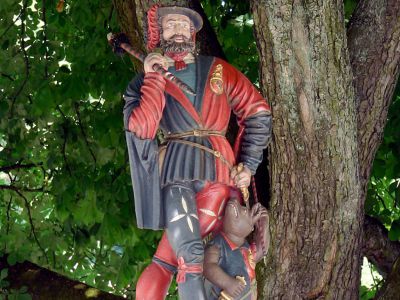
The statue atop the fountain portrays a messenger in mid-stride, clad in the red and gray colors of the city, bearing the Bernese coat of arms. This depiction aligns with his role as a medieval herald, evident from the messenger’s spear in his right hand and the messenger’s case on his back, potentially containing important documents. A unique feature of the fountain is the accompanying young bear, also dressed as a messenger, which adds a distinctly local touch reflecting Bern's historical association with bears.
A replica of the original statue, dating from the 1950s, now stands on the fountain at Messenger Square, while the original can be viewed at the Bern Historical Museum. The Runner Fountain is part of a series of fountains established around the Old City of Bern during the period between 1542 and 1545.
The history of the Runner Fountain extends back to the mid-16th century. The original figure of the fountain was crafted in 1545, although the trough it rests upon was constructed later in 1824. Over the centuries, the fountain underwent several transformations; the original octagonal trough was replaced by a rectangular one before 1757, and this in turn was replaced in 1824. Similarly, the initial round column was substituted with the current square limestone pillar during the 18th or 19th century.
The statue atop the fountain portrays a messenger in mid-stride, clad in the red and gray colors of the city, bearing the Bernese coat of arms. This depiction aligns with his role as a medieval herald, evident from the messenger’s spear in his right hand and the messenger’s case on his back, potentially containing important documents. A unique feature of the fountain is the accompanying young bear, also dressed as a messenger, which adds a distinctly local touch reflecting Bern's historical association with bears.
A replica of the original statue, dating from the 1950s, now stands on the fountain at Messenger Square, while the original can be viewed at the Bern Historical Museum. The Runner Fountain is part of a series of fountains established around the Old City of Bern during the period between 1542 and 1545.
9) Lenbrunnen (Len Fountain)
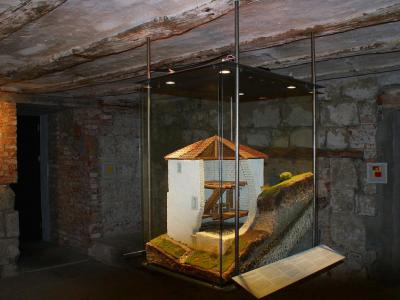
The Lenbrunnen (Len Fountain) in the basement of the State Chancellery building is the oldest spring system and the oldest preserved historic monument in Bern. It is located in Bern's old town at Postgasse 68, entrance via the State Chancellery or Lenbrunnengässli. The well system is no longer in operation, but it can be viewed freely during the office hours of the State Chancellery.
It is believed that the fountain was built around 1252 and was the only source of drinking water for the city at that time. The tower-like fountain with an estimated 7 × 7 meter floor plan is also considered the oldest surviving building in the city. The fountain has a capacity of holding 15,000 liters of water, which is enough for the roughly 3,000 inhabitants living in Bern at that time. It is estimated that a person consumed only 3-5 liters of water a day in the Middle Ages.
Today the fountain has been carefully restored to its original condition. There are information boards, a building model and a hydrological model on site on site to tell visitors about the history of Len Fountain.
It is believed that the fountain was built around 1252 and was the only source of drinking water for the city at that time. The tower-like fountain with an estimated 7 × 7 meter floor plan is also considered the oldest surviving building in the city. The fountain has a capacity of holding 15,000 liters of water, which is enough for the roughly 3,000 inhabitants living in Bern at that time. It is estimated that a person consumed only 3-5 liters of water a day in the Middle Ages.
Today the fountain has been carefully restored to its original condition. There are information boards, a building model and a hydrological model on site on site to tell visitors about the history of Len Fountain.
10) Vennerbrunnen (Banner Carrier Fountain)
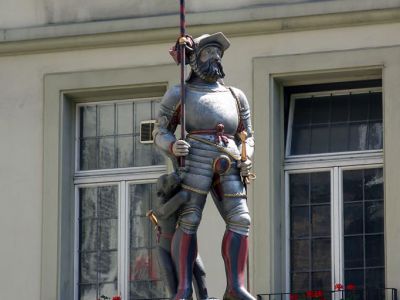
The Banner Carrier Fountain (Vennerbrunnen) is situated on the Town Hall Square (Rathausplatz) within the Old City of Bern. This fountain is not only a Swiss Cultural Property of National Significance but is also part of the UNESCO World Heritage Site of the Old City of Bern. Strategically positioned in front of the old city hall, or Rathaus, the fountain symbolizes the significant military-political role of the "Venner," a title held in medieval Switzerland.
The Venner played a crucial role in local governance and defense, responsible for maintaining peace and leading troops into battle for their designated city sections. In Bern, the Venner held substantial influence and was integral to the city's operations. Connected to various guilds, Venners were selected from their respective guilds, and the position was one of the only two from which the Schultheiß, or Lord Mayor, could be chosen.
The statue that graces the Banner Carrier Fountain was constructed in 1542 by the artist Hans Gieng. It depicts a Venner in full armor, proudly holding a banner. This figure has a rich history of resilience and restoration. During the invasion of the French "Grande Armée" in 1798, the statue suffered damage when a soldier tore down its metal plate, resulting in the breaking off of its left underarm. For an extended period, this damage was neglected, and historical records indicate that the armored figure was once propped up on a cane rather than his sword. However, after many years and several relocations, the statue has been meticulously restored and now stands elegantly atop its Corinthian pillar on Town Hall Square, continuing to serve as a testament to Bern's rich historical and cultural heritage.
The Venner played a crucial role in local governance and defense, responsible for maintaining peace and leading troops into battle for their designated city sections. In Bern, the Venner held substantial influence and was integral to the city's operations. Connected to various guilds, Venners were selected from their respective guilds, and the position was one of the only two from which the Schultheiß, or Lord Mayor, could be chosen.
The statue that graces the Banner Carrier Fountain was constructed in 1542 by the artist Hans Gieng. It depicts a Venner in full armor, proudly holding a banner. This figure has a rich history of resilience and restoration. During the invasion of the French "Grande Armée" in 1798, the statue suffered damage when a soldier tore down its metal plate, resulting in the breaking off of its left underarm. For an extended period, this damage was neglected, and historical records indicate that the armored figure was once propped up on a cane rather than his sword. However, after many years and several relocations, the statue has been meticulously restored and now stands elegantly atop its Corinthian pillar on Town Hall Square, continuing to serve as a testament to Bern's rich historical and cultural heritage.

11) Meret-Oppenheim-Brunnen (Meret Oppenheim Fountain)
The Meret Oppenheim Fountain, located on the Waisenhausplatz in Bern, stands as a striking symbol of creativity and controversy. Created by the renowned artist Meret Oppenheim and inaugurated in 1983, this fountain is not merely a functional structure but a profound artistic statement.
At a towering height of eight meters, the fountain commands attention with its unique design. A central concrete pillar serves as the focal point, from which water gracefully flows down in a spiral pattern, creating a mesmerizing visual effect. Illuminated by a light installation at the top, the fountain exudes an ethereal quality, especially during the evening hours.
What truly sets the Meret Oppenheim Fountain apart is its dynamic relationship with nature. Over the years, the concrete column has become a canvas for life to thrive. In summer, a lush carpet of moss and wild grasses envelops the structure, transforming it into a verdant spectacle reminiscent of a colossal green monster. As winter sets in, the fountain undergoes another metamorphosis, with ice clinging to its surface like a delicate cocoon, evoking the imagery of a butterfly in hibernation.
Oppenheim envisioned the fountain as a testament to nature’s transformation and vitality, an evolving symbol of life that changes with the seasons. Its installation sparked a heated debate among Bern residents, some of whom dismissed it as resembling an exhaust pipe. Despite these criticisms, the Meret Oppenheim Fountain remains a unique landmark and artistic embodiment of nature’s beauty, life, and growth.
At a towering height of eight meters, the fountain commands attention with its unique design. A central concrete pillar serves as the focal point, from which water gracefully flows down in a spiral pattern, creating a mesmerizing visual effect. Illuminated by a light installation at the top, the fountain exudes an ethereal quality, especially during the evening hours.
What truly sets the Meret Oppenheim Fountain apart is its dynamic relationship with nature. Over the years, the concrete column has become a canvas for life to thrive. In summer, a lush carpet of moss and wild grasses envelops the structure, transforming it into a verdant spectacle reminiscent of a colossal green monster. As winter sets in, the fountain undergoes another metamorphosis, with ice clinging to its surface like a delicate cocoon, evoking the imagery of a butterfly in hibernation.
Oppenheim envisioned the fountain as a testament to nature’s transformation and vitality, an evolving symbol of life that changes with the seasons. Its installation sparked a heated debate among Bern residents, some of whom dismissed it as resembling an exhaust pipe. Despite these criticisms, the Meret Oppenheim Fountain remains a unique landmark and artistic embodiment of nature’s beauty, life, and growth.
12) Ryfflibrunnen (Ryffli Fountain)
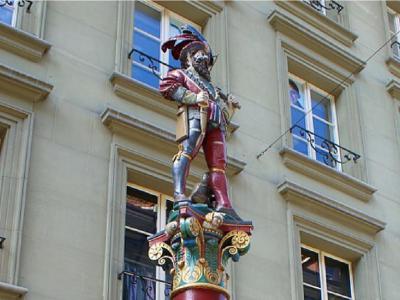
The Ryffli Fountain (Ryfflibrunnen) in Bern stands as a remarkable historical monument nestled in the heart of Bern’s old town. Constructed in 1545, this fountain replaced an earlier 14th-century structure and was initially known as Golatenmattgass Fountain (Golatenmattgassbrunnen) until the 19th century when it adopted its current name. The renaming of the fountain ties into a local legend suggesting the statue atop the fountain depicts the mythical marksman Ryffli. According to Konrad Justinger's chronicle, Ryffli famously killed the knight Jordan III of Burgistein with a precise shot after the battle of Laupen. The story recounts that Jordan III carelessly showed himself at a window during the Bernese siege of his castle, providing Ryffli the perfect opportunity to strike.
Other theories suggest that the statue represents Captain Anton Güder rather than Ryffli. Regardless of its true inspiration, the fountain’s figure is a creation of the journeymen of Hans Gieng, showcasing a crossbowman captain dressed in period military attire. The statue is fully equipped, featuring a crossbow slung over the shoulder, a quiver of bolts on the back, and a firing pin for weapon cocking. Complementing this martial figure is a small bear outfitted with a flintlock rifle, adding a whimsical yet historical touch to the fountain’s ensemble.
Today, the Ryffli Fountain not only serves as a functional piece of urban infrastructure but also as a cultural icon, reflecting the rich historical tapestry and the storied past of Bern. This fountain, like many others in Bern's old town, combines art, history, and legend, making it a focal point of local heritage and a must-see for visitors to the city.
Other theories suggest that the statue represents Captain Anton Güder rather than Ryffli. Regardless of its true inspiration, the fountain’s figure is a creation of the journeymen of Hans Gieng, showcasing a crossbowman captain dressed in period military attire. The statue is fully equipped, featuring a crossbow slung over the shoulder, a quiver of bolts on the back, and a firing pin for weapon cocking. Complementing this martial figure is a small bear outfitted with a flintlock rifle, adding a whimsical yet historical touch to the fountain’s ensemble.
Today, the Ryffli Fountain not only serves as a functional piece of urban infrastructure but also as a cultural icon, reflecting the rich historical tapestry and the storied past of Bern. This fountain, like many others in Bern's old town, combines art, history, and legend, making it a focal point of local heritage and a must-see for visitors to the city.
13) Pfeiferbrunnen (Bagpiper Fountain)
The Bagpiper Fountain (Pfeiferbrunnen) is a celebrated piece of Bern's historical and cultural heritage, situated in the charming Old City. This 16th-century fountain, which was crafted by Swiss Renaissance sculptor Hans Gieng in 1545-46, stands out as one of the city’s most original and vibrant fountains. The design of the Bagpiper statue was inspired by a 1514 woodcut by the renowned German artist Albrecht Dürer.
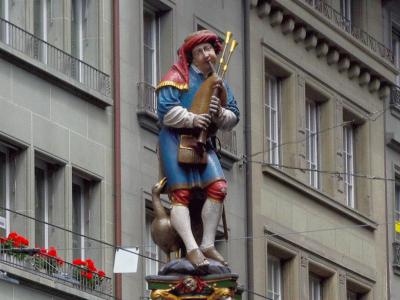
Characterized by its colorful figures, the fountain depicts a cheerful scene where a bagpiper, accompanied by a golden goose and a small monkey playing the flageolet, jovially performs. This assembly is symbolic, celebrating themes of cheerfulness, life, music, dance, and culinary delights. Such themes were typical of the era and resonated with the social activities around fountains, which were vital communal spots in medieval Bern.
Originally, the Pfeiferbrunnen was located in front of Gasthaus zum Kreuz, a guesthouse that catered to traveling minstrels who were the entertainers of the medieval period, often sharing songs and stories of far-off places and events. The choice of a bagpiper as the fountain's centerpiece is likely a nod to these minstrels and the stories they brought with them.
The current basin of the fountain dates back to 1889, and in 1919, the fountain was moved to its present location at Spitalgasse 21, a shift from its original placement. This relocation was part of broader urban adjustments, yet the fountain has continued to be a prominent cultural landmark.
The Bagpiper Fountain is not just an artistic expression; it's also listed as a Swiss heritage site of national significance. This status underscores the fountain's importance in Swiss cultural heritage, preserving its historical value and continuing to be a point of interest and enjoyment for both locals and visitors in Bern.
Characterized by its colorful figures, the fountain depicts a cheerful scene where a bagpiper, accompanied by a golden goose and a small monkey playing the flageolet, jovially performs. This assembly is symbolic, celebrating themes of cheerfulness, life, music, dance, and culinary delights. Such themes were typical of the era and resonated with the social activities around fountains, which were vital communal spots in medieval Bern.
Originally, the Pfeiferbrunnen was located in front of Gasthaus zum Kreuz, a guesthouse that catered to traveling minstrels who were the entertainers of the medieval period, often sharing songs and stories of far-off places and events. The choice of a bagpiper as the fountain's centerpiece is likely a nod to these minstrels and the stories they brought with them.
The current basin of the fountain dates back to 1889, and in 1919, the fountain was moved to its present location at Spitalgasse 21, a shift from its original placement. This relocation was part of broader urban adjustments, yet the fountain has continued to be a prominent cultural landmark.
The Bagpiper Fountain is not just an artistic expression; it's also listed as a Swiss heritage site of national significance. This status underscores the fountain's importance in Swiss cultural heritage, preserving its historical value and continuing to be a point of interest and enjoyment for both locals and visitors in Bern.
