Custom Walk in Porto, Portugal by annie_6fc677 created on 2026-05-29
Guide Location: Portugal » Porto
Guide Type: Custom Walk
# of Sights: 8
Tour Duration: 1 Hour(s)
Travel Distance: 1.8 Km or 1.1 Miles
Share Key: CGYBD
Guide Type: Custom Walk
# of Sights: 8
Tour Duration: 1 Hour(s)
Travel Distance: 1.8 Km or 1.1 Miles
Share Key: CGYBD
How It Works
Please retrieve this walk in the GPSmyCity app. Once done, the app will guide you from one tour stop to the next as if you had a personal tour guide. If you created the walk on this website or come to the page via a link, please follow the instructions below to retrieve the walk in the app.
Retrieve This Walk in App
Step 1. Download the app "GPSmyCity: Walks in 1K+ Cities" on Apple App Store or Google Play Store.



Step 2. In the GPSmyCity app, download(or launch) the guide "Porto Map and Walking Tours".
Step 3. Tap the menu button located at upper right corner of the "Walks" screen and select "Retrieve custom walk". Enter the share key: CGYBD
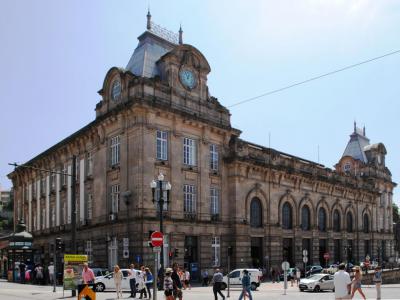
1) São Bento Railway Station
The São Bento Railway Station is a place where catching a train comes with a side of history, art, and just a hint of architectural drama.
Opened in the early 20th century, this grand station takes its name from Saint Benedict, because long before trains rolled in, this was the site of a Benedictine convent. The convent was cleared in 1892, making way for something a bit louder and considerably more punctual. The idea for a central station had been floating around since 1864, but like many good plans, it took a while to get moving.
Construction began in earnest in the 1890s, with the first train arriving in 1896—though not without setbacks, including a landslide that slowed things down. Eventually, architect José Marques da Silva stepped in, bringing with him a refined Beaux-Arts vision, and by the early 1900s, São Bento began to take the form you see today.
From the outside, the station keeps things composed: a symmetrical, U-shaped granite structure with three levels, clean lines, and just enough decorative detail to remind you it has standards. It’s elegant, balanced, and quietly confident—like it knows it doesn’t need to shout.
But step inside, and that restraint disappears entirely.
The entrance hall is wrapped in over 20,000 azulejo tiles, covering more than 500 square meters, all created by artist Jorge Colaço. These blue-and-white panels don’t just decorate the space—they narrate it. Scenes from Portugal’s history unfold across the walls, from royal ceremonies to rural life, while friezes trace the evolution of transportation. It’s part gallery, part waiting room, and entirely unforgettable.
Declared a national monument in 1988, São Bento has been carefully preserved, with parts of the building even adapted for modern use, including a small hostel tucked within its historic walls.
So, before you rush off to your next destination, pause for a moment here—because at São Bento, the journey doesn’t begin on the tracks, it begins on the walls...
Opened in the early 20th century, this grand station takes its name from Saint Benedict, because long before trains rolled in, this was the site of a Benedictine convent. The convent was cleared in 1892, making way for something a bit louder and considerably more punctual. The idea for a central station had been floating around since 1864, but like many good plans, it took a while to get moving.
Construction began in earnest in the 1890s, with the first train arriving in 1896—though not without setbacks, including a landslide that slowed things down. Eventually, architect José Marques da Silva stepped in, bringing with him a refined Beaux-Arts vision, and by the early 1900s, São Bento began to take the form you see today.
From the outside, the station keeps things composed: a symmetrical, U-shaped granite structure with three levels, clean lines, and just enough decorative detail to remind you it has standards. It’s elegant, balanced, and quietly confident—like it knows it doesn’t need to shout.
But step inside, and that restraint disappears entirely.
The entrance hall is wrapped in over 20,000 azulejo tiles, covering more than 500 square meters, all created by artist Jorge Colaço. These blue-and-white panels don’t just decorate the space—they narrate it. Scenes from Portugal’s history unfold across the walls, from royal ceremonies to rural life, while friezes trace the evolution of transportation. It’s part gallery, part waiting room, and entirely unforgettable.
Declared a national monument in 1988, São Bento has been carefully preserved, with parts of the building even adapted for modern use, including a small hostel tucked within its historic walls.
So, before you rush off to your next destination, pause for a moment here—because at São Bento, the journey doesn’t begin on the tracks, it begins on the walls...
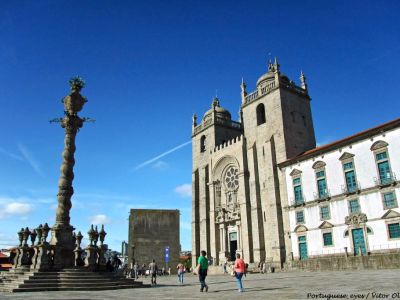
2) Sé Catedral do Porto (Porto Cathedral) (must see)
Back in the year 868, a nobleman from Asturias, Vímara Peres, arrived in the north of what is now Portugal and began reclaiming land from Moorish control. Among the places he took was a settlement called Portus Cale. The name eventually shifted to Portucale for the county he went on to rule, and gave rise to both Porto and Portugal. At the top of this early settlement was Penaventosa Hill—the highest point—where the city’s cathedral would later rise.
Before the cathedral, this hill had already held religious importance as a home to a Suebian church. Construction of the Porto Cathedral began in the 12th century and, like many long-lived projects, moved forward in stages. By 1737, it was finally considered complete. What stands today is a solid, fortress-like structure—less delicate ornament, more defensive confidence—looking out over the city below.
Take your time to observe the exterior. Two square towers frame the façade, sturdy and slightly severe, each topped with a cupola. Gothic details from the 15th century soften the front just enough, while the cloister—added in 1736 by the Italian architect Nicolau Nasoni—brings a more refined, decorative touch. Walk around to the northern side, and you’ll notice a mix of styles: a Baroque porch, a Romanesque rose window, and crenellated walls that make the whole place feel like it could withstand a siege, if needed.
Enter the building, and the mood shifts again. The nave is relatively narrow, covered by a barrel vault that draws your eyes forward. The Baroque apse is richly decorated with paintings by Nasoni, while the altarpiece, designed by Santos Pacheco, adds another layer of artistic detail. In the south transept, blue azulejo tiles introduce a familiar Portuguese element, telling stories through pattern and color.
Mass is still held here daily at 11 am, a quiet reminder that this is not only a historic monument but a living place of worship. Entry to the cathedral itself is free, while a small fee grants access to the Gothic cloisters and the Sacred Art Museum. If you have the energy, the tower climb is demanding but rewarding, offering views not only over Porto, but also of architectural details you simply can’t see from below.
Before the cathedral, this hill had already held religious importance as a home to a Suebian church. Construction of the Porto Cathedral began in the 12th century and, like many long-lived projects, moved forward in stages. By 1737, it was finally considered complete. What stands today is a solid, fortress-like structure—less delicate ornament, more defensive confidence—looking out over the city below.
Take your time to observe the exterior. Two square towers frame the façade, sturdy and slightly severe, each topped with a cupola. Gothic details from the 15th century soften the front just enough, while the cloister—added in 1736 by the Italian architect Nicolau Nasoni—brings a more refined, decorative touch. Walk around to the northern side, and you’ll notice a mix of styles: a Baroque porch, a Romanesque rose window, and crenellated walls that make the whole place feel like it could withstand a siege, if needed.
Enter the building, and the mood shifts again. The nave is relatively narrow, covered by a barrel vault that draws your eyes forward. The Baroque apse is richly decorated with paintings by Nasoni, while the altarpiece, designed by Santos Pacheco, adds another layer of artistic detail. In the south transept, blue azulejo tiles introduce a familiar Portuguese element, telling stories through pattern and color.
Mass is still held here daily at 11 am, a quiet reminder that this is not only a historic monument but a living place of worship. Entry to the cathedral itself is free, while a small fee grants access to the Gothic cloisters and the Sacred Art Museum. If you have the energy, the tower climb is demanding but rewarding, offering views not only over Porto, but also of architectural details you simply can’t see from below.
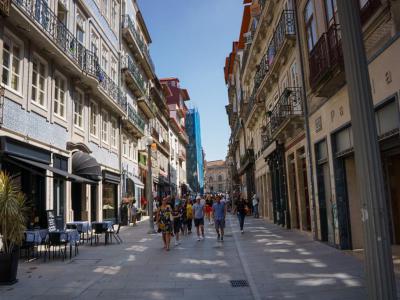
3) Rua das Flores (Flowers Street)
Flowers Street didn’t earn its name by accident. Back in the early 16th century, this stretch of land was quite literally a garden—belonging to Pedro Álvares da Costa, the Bishop of Porto, a man with both green fingers and a devotion to Saint Catherine of Mount Sinai. When the street was laid out in 1525, during the reign of Manuel I of Portugal, it was called “Saint Catherine Flowers Street”—a name that sounded as formal as the era itself.
But the real story here isn’t just botanical—it’s social. The creation of the street coincided with a quiet shake-up of Porto’s hierarchy. Restrictions that once kept the nobility at a distance were lifted, and suddenly, the city opened up. In moved a rising bourgeois class, bringing with them new money, new ambitions, and a need for proper urban order. Regulations followed. Facades were aligned, proportions controlled, and the street took on a uniform look—less medieval maze, more carefully composed stage set...
Still, this wasn’t a boulevard of powdered wigs and aristocratic airs. Most residents were working hands rather than titled names. Cobblers, blacksmiths, metalworkers, bricklayers—people who built, repaired, and kept the city running—filled these houses. If Porto was expanding, this was the street where it was done.
Today, the tools have changed, but the rhythm hasn’t entirely disappeared. Flowers Street is now pedestrian-friendly, lined with cafés, small shops, and restored buildings that hint at their past lives. It’s a place for slow wandering rather than urgent errands—though if you listen closely, you might still hear the echo of hammer on metal beneath the hum of conversation...
But the real story here isn’t just botanical—it’s social. The creation of the street coincided with a quiet shake-up of Porto’s hierarchy. Restrictions that once kept the nobility at a distance were lifted, and suddenly, the city opened up. In moved a rising bourgeois class, bringing with them new money, new ambitions, and a need for proper urban order. Regulations followed. Facades were aligned, proportions controlled, and the street took on a uniform look—less medieval maze, more carefully composed stage set...
Still, this wasn’t a boulevard of powdered wigs and aristocratic airs. Most residents were working hands rather than titled names. Cobblers, blacksmiths, metalworkers, bricklayers—people who built, repaired, and kept the city running—filled these houses. If Porto was expanding, this was the street where it was done.
Today, the tools have changed, but the rhythm hasn’t entirely disappeared. Flowers Street is now pedestrian-friendly, lined with cafés, small shops, and restored buildings that hint at their past lives. It’s a place for slow wandering rather than urgent errands—though if you listen closely, you might still hear the echo of hammer on metal beneath the hum of conversation...
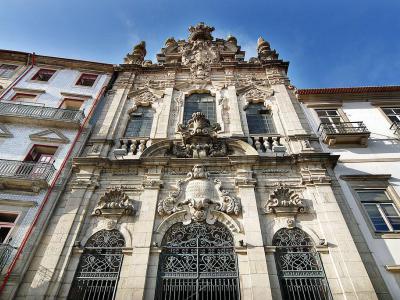
4) Igreja da Misericórdia (Church of Mercy)
The Church of Mercy on Flowers Street manages to stand out without making much fuss about it. Its story begins in the 1500s, and while time has added a few layers here and there, plenty of original character still holds its ground. The façade you see today is themed around Baroque, which is a later 18th-century addition, giving the building a slightly theatrical edge—subtle, but confident about it.
Once you get inside, everything slows down. The church doubles as a museum, quietly assembling a collection that stretches back to the 15th century. Among the highlights is the Flemish Fons Vitae, where Manuel I of Portugal and Queen Leonor appear in a scene of devotion before the Crucifixion—a reminder that this small space carries echoes of a time when Portugal was busy expanding its influence far beyond its borders.
Back outside, Flowers Street keeps the experience going. Laid out in 1521, it feels like a gallery in its own right, with wrought-iron balconies, carved stone details, and façades that reward even a casual glance. It’s the kind of place where “just a quick look” quietly turns into a slow stroll.
One small detail to keep in mind: the church itself keeps limited hours. But here’s the workaround—visit the adjoining museum, which is open from 10:00 am to 6:30 pm, and you’ll still get access to the space, along with a broader collection of sacred art. Consider it less of a restriction and more of a well-timed excuse to see a bit more than you planned initially.
Once you get inside, everything slows down. The church doubles as a museum, quietly assembling a collection that stretches back to the 15th century. Among the highlights is the Flemish Fons Vitae, where Manuel I of Portugal and Queen Leonor appear in a scene of devotion before the Crucifixion—a reminder that this small space carries echoes of a time when Portugal was busy expanding its influence far beyond its borders.
Back outside, Flowers Street keeps the experience going. Laid out in 1521, it feels like a gallery in its own right, with wrought-iron balconies, carved stone details, and façades that reward even a casual glance. It’s the kind of place where “just a quick look” quietly turns into a slow stroll.
One small detail to keep in mind: the church itself keeps limited hours. But here’s the workaround—visit the adjoining museum, which is open from 10:00 am to 6:30 pm, and you’ll still get access to the space, along with a broader collection of sacred art. Consider it less of a restriction and more of a well-timed excuse to see a bit more than you planned initially.
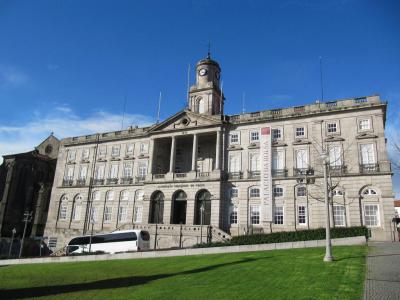
5) Palácio da Bolsa (Stock Exchange Palace) (must see)
Let’s rewind to 1832. The cloisters of the former Franciscan convent didn’t exactly survive the Liberal Wars—they burned, leaving behind little more than a dramatic set of ruins. A few years later, in 1841, Queen Maria II of Portugal came forward and handed the site over to Porto’s merchants, who used the site to build the new Commercial Association. What followed was a bold transformation: architect Joaquim da Costa Lima Júnior designed a neoclassical palace in the Palladian style—orderly, elegant, and perfectly in tune with the city’s growing confidence.
By around 1850, the main structure was in place. But Porto doesn’t rush a good thing. Over time, more theatrical touches were added: a grand staircase, a richly detailed tribunal, and a central courtyard crowned with an octagonal glass dome. Look up there, and you’ll see coats of arms representing Portugal and its 19th-century trading partners—a clear indication that this wasn’t just a piece of architecture but a statement of global ambition.
At the back of the courtyard, a sweeping staircase rises with appropriate drama, flanked by sculpted busts that seem to be quietly judging your ascent. But the real showstopper—the room that tends to stop conversations mid-sentence—is the Arab Room. Designed in the Moorish Revival style, it’s a full immersion into ornate geometry, gold detailing, and pure visual excess. This is where Porto receives visiting heads of state—because if you’re going to impress, you might as well go all in.
Now, a small reality check: you can’t just wander in. Visits are guided only. But that’s part of the experience. Tours run about 45 minutes, and a screen at the entrance will point you to the next available language. Think of it less as a restriction and more as a curated reveal—room by room, detail by detail, each space trying, quite successfully, to outdo the last...
By around 1850, the main structure was in place. But Porto doesn’t rush a good thing. Over time, more theatrical touches were added: a grand staircase, a richly detailed tribunal, and a central courtyard crowned with an octagonal glass dome. Look up there, and you’ll see coats of arms representing Portugal and its 19th-century trading partners—a clear indication that this wasn’t just a piece of architecture but a statement of global ambition.
At the back of the courtyard, a sweeping staircase rises with appropriate drama, flanked by sculpted busts that seem to be quietly judging your ascent. But the real showstopper—the room that tends to stop conversations mid-sentence—is the Arab Room. Designed in the Moorish Revival style, it’s a full immersion into ornate geometry, gold detailing, and pure visual excess. This is where Porto receives visiting heads of state—because if you’re going to impress, you might as well go all in.
Now, a small reality check: you can’t just wander in. Visits are guided only. But that’s part of the experience. Tours run about 45 minutes, and a screen at the entrance will point you to the next available language. Think of it less as a restriction and more as a curated reveal—room by room, detail by detail, each space trying, quite successfully, to outdo the last...
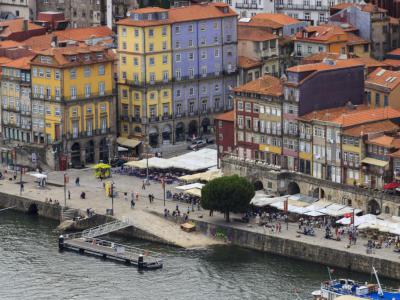
6) Cais da Ribeira (Ribeira Waterfront) (must see)
The exact beginnings of the Ribeira are a bit hazy—history here prefers suggestion over certainty. What we do know is that a riverside settlement took shape where the Vila River meets the Douro, the kind of spot traders tend to notice early. Roman mosaics dating back to the fourth century quietly confirm that people have been settling, building, and leaving traces here for a very long time. By the 13th century, as Porto expanded, Ribeira grew with it—spilling across the slopes below Penaventosa Hill and clustering along the river’s edge.
At one point, there were essentially two worlds: one above, gathered around the cathedral on the heights, and another below, pressed against the Douro. Connecting them was a bit of a puzzle—a tight web of narrow, winding streets that made moving around an exercise in patience. Eventually, they felt a drastic solution was needed.
So, King John I of Portugal decided to pierce the labyrinth with a street carved right through it. With admirable simplicity, it was named Rua Nova or “New Street.” And, indeed, new it was: straight, unusually wide for its time, and refreshingly easy to navigate. It quickly became the address of choice for Porto’s well-to-do—merchants, clergy, and anyone keen to swap medieval maze for a bit of urban order.
Down by the river, though, Ribeira kept its personality. And it still does. The district draws you in with its layered streets and uneven alleys that eventually spill into the lively Ribeira Square. Along the waterfront, fragments of the 14th-century walls remain, while just beyond, the steep, twisting lanes of the Barredo neighborhood remind you that Porto never fully gave up its labyrinthine instincts.
By day, the square hums with cafés and small shops, anchored by a large fountain at its northern edge. The Ribeira Wharf stretches out beside the river, beginning near the Dom Luís I Bridge and following the curve of the Douro. There’s also an upper walkway—once part of the old defensive walls—where medieval guards kept watch. Today, the only thing under surveillance is the view.
By evening, the riverside shifts gears. Lights flicker on, music drifts out from bars, and the whole area settles into a relaxed but lively rhythm. So, find yourself a seat, order something local, and watch the river slide past—because in Ribeira, time doesn’t rush. It drifts...
At one point, there were essentially two worlds: one above, gathered around the cathedral on the heights, and another below, pressed against the Douro. Connecting them was a bit of a puzzle—a tight web of narrow, winding streets that made moving around an exercise in patience. Eventually, they felt a drastic solution was needed.
So, King John I of Portugal decided to pierce the labyrinth with a street carved right through it. With admirable simplicity, it was named Rua Nova or “New Street.” And, indeed, new it was: straight, unusually wide for its time, and refreshingly easy to navigate. It quickly became the address of choice for Porto’s well-to-do—merchants, clergy, and anyone keen to swap medieval maze for a bit of urban order.
Down by the river, though, Ribeira kept its personality. And it still does. The district draws you in with its layered streets and uneven alleys that eventually spill into the lively Ribeira Square. Along the waterfront, fragments of the 14th-century walls remain, while just beyond, the steep, twisting lanes of the Barredo neighborhood remind you that Porto never fully gave up its labyrinthine instincts.
By day, the square hums with cafés and small shops, anchored by a large fountain at its northern edge. The Ribeira Wharf stretches out beside the river, beginning near the Dom Luís I Bridge and following the curve of the Douro. There’s also an upper walkway—once part of the old defensive walls—where medieval guards kept watch. Today, the only thing under surveillance is the view.
By evening, the riverside shifts gears. Lights flicker on, music drifts out from bars, and the whole area settles into a relaxed but lively rhythm. So, find yourself a seat, order something local, and watch the river slide past—because in Ribeira, time doesn’t rush. It drifts...
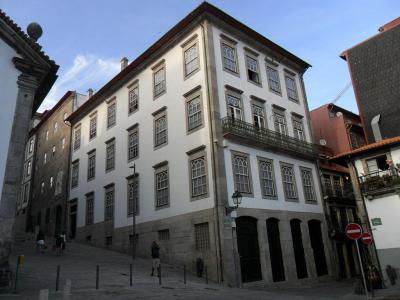
7) Casa do Infante (Prince Henry's House)
Prince Henry’s House—formally the old customs house, but with a name that sounds far more adventurous—was first built in the 14th century. Reshaped in the 1600s, it once handled the city’s trade, minted its coins, and kept a close eye on everything moving along the Douro. According to local tradition, it also happens to be the birthplace of Henry the Navigator in 1394—so yes, this modest-looking building has a surprisingly impressive track record.
Its story began in 1325, when a royal decree ordered a customs house to rise here, right over the remains of a Roman villa. By 1327, it was already up and running. A few decades later, tensions between King Afonso IV and the Bishop of Porto over river taxes led to the construction of a new, more imposing medieval complex. Positioned right by the water, the building pulled quadruple duty: customs office, mint, warehouse, and, for good measure, living quarters for staff.
Architecturally, it’s less about symmetry and more about layers. Four interconnected spaces unfold under different ceiling styles, while the façade stacks four levels of windows above a grand arched entrance marked with the royal coat of arms and a 1677 inscription. Inside, a central courtyard links the structure together, with arcades dividing the main hall into three naves and a staircase threading its way upward. At the back, tall windows flood the stone floors with light, tying the various sections into one continuous, slightly labyrinthine whole.
Over time, each new use left its mark, turning the building into a patchwork of styles rather than a single, clean statement. More recently, archaeology took action and went even deeper—literally—uncovering Roman foundations and mosaics now displayed on-site. Today, the space functions as a compact museum, where interactive exhibits trace Porto’s evolution from Roman outpost to maritime powerhouse.
It’s not a sprawling attraction, and that’s part of the appeal. You get history without the marathon, context without the overload—and a rare chance to stand in a place where trade, power, and exploration once quietly intersected.
Its story began in 1325, when a royal decree ordered a customs house to rise here, right over the remains of a Roman villa. By 1327, it was already up and running. A few decades later, tensions between King Afonso IV and the Bishop of Porto over river taxes led to the construction of a new, more imposing medieval complex. Positioned right by the water, the building pulled quadruple duty: customs office, mint, warehouse, and, for good measure, living quarters for staff.
Architecturally, it’s less about symmetry and more about layers. Four interconnected spaces unfold under different ceiling styles, while the façade stacks four levels of windows above a grand arched entrance marked with the royal coat of arms and a 1677 inscription. Inside, a central courtyard links the structure together, with arcades dividing the main hall into three naves and a staircase threading its way upward. At the back, tall windows flood the stone floors with light, tying the various sections into one continuous, slightly labyrinthine whole.
Over time, each new use left its mark, turning the building into a patchwork of styles rather than a single, clean statement. More recently, archaeology took action and went even deeper—literally—uncovering Roman foundations and mosaics now displayed on-site. Today, the space functions as a compact museum, where interactive exhibits trace Porto’s evolution from Roman outpost to maritime powerhouse.
It’s not a sprawling attraction, and that’s part of the appeal. You get history without the marathon, context without the overload—and a rare chance to stand in a place where trade, power, and exploration once quietly intersected.
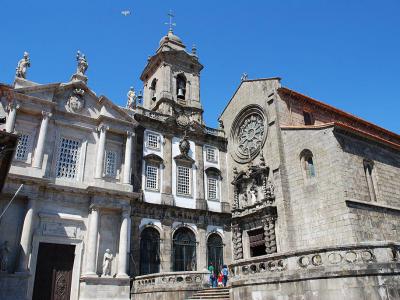
8) Igreja de São Francisco (St. Francis Church) (must see)
Back in 1244, the Franciscans in Porto found themselves in what might be called a less-than-warm welcome situation. The local bishop didn't quite like them, and other clergy didn't mind pushing them around either. So, the Franciscans did what any determined medieval order would do—they went straight to the top. Pope Innocent V promptly issued a papal bull, which firmly scolded the bishop and handed back the land that the bishop had taken from them. With that settled, the Franciscans wasted no time—they got to work, establishing their convent and laying the foundations of their church.
But staying modest wasn’t entirely their long-term plan. By 1383, with support from King Ferdinand I of Portugal, the Franciscans decided to go bigger. The new church, completed in 1425, followed the restrained Gothic style typical of mendicant orders—simple, functional, and focused. Even today, the Church of Saint Francis stands as one of the finest Gothic structures in Porto… at least on the outside.
On the inside, things take a dramatic turn.
From the 15th century onward, Porto’s elite families began adopting the church as their own. Chapels were added, like the Manueline-style Chapel of Saint John the Baptist, commissioned by the Carneiro family in the 1530s. Then came the 18th century, when subtlety officially left the building. The interior was covered—quite literally—in gilded woodcarving. Walls, columns, arches, ceilings… if it could be carved, it was carved, and then covered in gold. Lots of it.
Not everything survived intact, though. During the Siege of Porto in the 1830s, the cloisters were destroyed. In their place rose the Stock Exchange Palace, shifting the site’s role from spiritual to commercial.
Indeed, this place is where craftsmanship goes all in—an immersive display of intricate woodwork layered in gold, the kind that quietly suggests someone, somewhere, had both time and resources to spare.
And before you leave, take a few extra minutes. The small museum and the catacombs are included in your ticket—and they add just enough shadow and context to balance all that gold...
But staying modest wasn’t entirely their long-term plan. By 1383, with support from King Ferdinand I of Portugal, the Franciscans decided to go bigger. The new church, completed in 1425, followed the restrained Gothic style typical of mendicant orders—simple, functional, and focused. Even today, the Church of Saint Francis stands as one of the finest Gothic structures in Porto… at least on the outside.
On the inside, things take a dramatic turn.
From the 15th century onward, Porto’s elite families began adopting the church as their own. Chapels were added, like the Manueline-style Chapel of Saint John the Baptist, commissioned by the Carneiro family in the 1530s. Then came the 18th century, when subtlety officially left the building. The interior was covered—quite literally—in gilded woodcarving. Walls, columns, arches, ceilings… if it could be carved, it was carved, and then covered in gold. Lots of it.
Not everything survived intact, though. During the Siege of Porto in the 1830s, the cloisters were destroyed. In their place rose the Stock Exchange Palace, shifting the site’s role from spiritual to commercial.
Indeed, this place is where craftsmanship goes all in—an immersive display of intricate woodwork layered in gold, the kind that quietly suggests someone, somewhere, had both time and resources to spare.
And before you leave, take a few extra minutes. The small museum and the catacombs are included in your ticket—and they add just enough shadow and context to balance all that gold...
