Custom Walk in Munich, Germany by o_jaspersen_237d57 created on 2026-05-29
Guide Location: Germany » Munich
Guide Type: Custom Walk
# of Sights: 10
Tour Duration: 5 Hour(s)
Travel Distance: 12.6 Km or 7.8 Miles
Share Key: E57CQ
Guide Type: Custom Walk
# of Sights: 10
Tour Duration: 5 Hour(s)
Travel Distance: 12.6 Km or 7.8 Miles
Share Key: E57CQ
How It Works
Please retrieve this walk in the GPSmyCity app. Once done, the app will guide you from one tour stop to the next as if you had a personal tour guide. If you created the walk on this website or come to the page via a link, please follow the instructions below to retrieve the walk in the app.
Retrieve This Walk in App
Step 1. Download the app "GPSmyCity: Walks in 1K+ Cities" on Apple App Store or Google Play Store.



Step 2. In the GPSmyCity app, download(or launch) the guide "Munich Map and Walking Tours".
Step 3. Tap the menu button located at upper right corner of the "Walks" screen and select "Retrieve custom walk". Enter the share key: E57CQ

1) Nymphenburg Palace and Park (must see)
The Nymphenburg Palace, located in Munich's Neuhausen-Nymphenburg district in Bavaria, is a grand example of Baroque architecture. This historic palace was the primary summer home of the Bavarian monarchs from the Wittelsbach family. Now, it stands as one of Munich's most visited landmarks, showcasing an impressive Baroque exterior stretching nearly 700 meters. Inside, the palace presents a mix of original Baroque, Rococo, and Neoclassical interior designs.
Commissioned by Ferdinand Maria and Henriette Adelaide of Savoy, the palace's construction started in 1664, led by the Italian architect Agostino Barelli, to celebrate their heir, Maximilian II Emanuel's birth. The central part of the palace was finished by 1675 using Kelheim limestone. Over time, Nymphenburg has been expanded and remodeled, surpassing the neighboring Blutenburg Castle as the primary hunting retreat, rivalling even Schleissheim Palace.
The palace's park is a premier example of German garden art, blending structured Baroque formal gardens with the naturalistic English park style, creating a revered model of landscape architecture. The park complements the palace and its extensive grounds, providing a scenic backdrop for both locals and visitors. It connects to the palace complex on the east and is encased by its historic walls on other sides, bordering the Botanical Garden to the north and blending into the Kapuzinerhölzl forest.
Originally inspired by the iconic French gardens of Vaux-le-Vicomte and Versailles, the current park's design was the vision of Friedrich Ludwig Sckell, who reimagined it starting in 1799. The walled garden portion spans 180 hectares, with the total estate measuring 229 hectares.
Why You Should Visit:
Absolutely gorgeous summer retreat and park, with several museums and historical buildings on-site. The park itself sprawls across many acres, and the grounds are well-maintained and tidy.
The Carriage Museum and other side museums cost extra, while the huge gardens are free. The audio-guide is inexpensive but covers the history and details very well.
Unlike a lot of castles you may visit, this one has lots of windows and light, so you can really admire the paintings and decorations.
Tip:
Make sure it's sunny when you visit and bring water + good walking shoes.
Commissioned by Ferdinand Maria and Henriette Adelaide of Savoy, the palace's construction started in 1664, led by the Italian architect Agostino Barelli, to celebrate their heir, Maximilian II Emanuel's birth. The central part of the palace was finished by 1675 using Kelheim limestone. Over time, Nymphenburg has been expanded and remodeled, surpassing the neighboring Blutenburg Castle as the primary hunting retreat, rivalling even Schleissheim Palace.
The palace's park is a premier example of German garden art, blending structured Baroque formal gardens with the naturalistic English park style, creating a revered model of landscape architecture. The park complements the palace and its extensive grounds, providing a scenic backdrop for both locals and visitors. It connects to the palace complex on the east and is encased by its historic walls on other sides, bordering the Botanical Garden to the north and blending into the Kapuzinerhölzl forest.
Originally inspired by the iconic French gardens of Vaux-le-Vicomte and Versailles, the current park's design was the vision of Friedrich Ludwig Sckell, who reimagined it starting in 1799. The walled garden portion spans 180 hectares, with the total estate measuring 229 hectares.
Why You Should Visit:
Absolutely gorgeous summer retreat and park, with several museums and historical buildings on-site. The park itself sprawls across many acres, and the grounds are well-maintained and tidy.
The Carriage Museum and other side museums cost extra, while the huge gardens are free. The audio-guide is inexpensive but covers the history and details very well.
Unlike a lot of castles you may visit, this one has lots of windows and light, so you can really admire the paintings and decorations.
Tip:
Make sure it's sunny when you visit and bring water + good walking shoes.
2) Taxisgarten Beer Garden
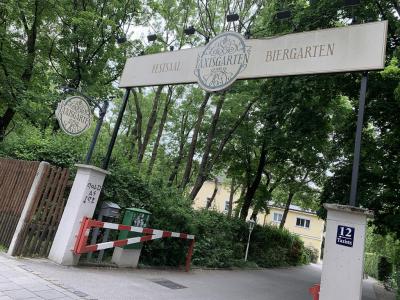
Taxisgarten is a serene beer garden tucked away in the Neuhausen neighborhood of Munich. It's favored by locals as a social hub and tends to escape the tourist radar. The nearby Taxisklinik, the largest maternity hospital in Bavaria, often sees new fathers commemorating their child's birth with a traditional beer in this garden.
Established in 1924, Taxisgarten was first a recuperation facility for World War I veterans. Over time, it evolved into a community space. The garden seats around 1,500 patrons amidst towering chestnut trees with options to sit on classic beer benches, some with backrests, or at regular dining tables. Unlike many establishments, Taxisgarten operates solely on a self-service basis without a dedicated restaurant service.
The menu boasts appetizing traditional fare, featuring roasted chicken, spareribs, a selection of Obatzda cheese spreads, and a unique dish of country-style potatoes drizzled with avocado sauce.
For events like private parties or weddings, there's a ballroom available for hire that accommodates up to 250 people. This venue is also known for public screenings of significant football matches, creating a lively atmosphere for fans.
Established in 1924, Taxisgarten was first a recuperation facility for World War I veterans. Over time, it evolved into a community space. The garden seats around 1,500 patrons amidst towering chestnut trees with options to sit on classic beer benches, some with backrests, or at regular dining tables. Unlike many establishments, Taxisgarten operates solely on a self-service basis without a dedicated restaurant service.
The menu boasts appetizing traditional fare, featuring roasted chicken, spareribs, a selection of Obatzda cheese spreads, and a unique dish of country-style potatoes drizzled with avocado sauce.
For events like private parties or weddings, there's a ballroom available for hire that accommodates up to 250 people. This venue is also known for public screenings of significant football matches, creating a lively atmosphere for fans.
3) Olympiapark (must see)
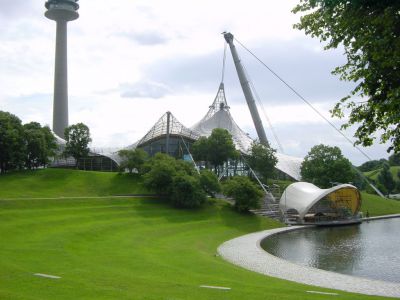
Olympiapark is a sports facility located in Munich, originally constructed for the 1972 Summer Olympics. In the present day, it serves as a venue for various cultural, athletic, and religious gatherings.
Munich was granted the privilege of hosting the 20th Olympic Games by the International Olympic Committee in 1966. To accommodate this prestigious event, the city devised plans to transform the Oberwiesenfeld area into a suitable location. The Oberwiesenfeld had previously functioned as an airfield where debris from the city's WWII bombardment had been deposited. The design and construction of the facility were undertaken by Günther Behmisch, Frei Otto & Partners. Their vision for the arena was conceived with the city's long-term requirements in mind, and it continues to be utilized for sporting events. The distinctive tent-like roof, which envelops much of the park, is crafted from PVC-coated polyester fabric.
Within Olympiapark, one can find amenities such as an ice rink, an indoor pool, and the main stadium. Prior to the opening of the Allianz Arena in 2005, this stadium served as the home ground for the FC Bayern München and TSV 1860 München soccer teams. Today, it is primarily utilized for cultural events. Visitors have the opportunity to take guided tours and even ascend the stadium's roof. Additionally, the park features an artificial hill named the Olympiaberg, standing at a height of 197 feet, as well as the Olympiaturm, a television tower reaching a height of 290 meters. From the summits of these structures, visitors can enjoy breathtaking panoramic views of Munich and Olympiapark.
Why You Should Visit:
A nice place to hang out, whether you want to visit the Tollwood or Theatron festival in summer, dine with great views of Munich at the restaurant on top of the Olympic Tower (make sure to book ahead if you plan to do so!), or just want to sit on top of the hills.
The fair with street foods and sweets, carousels and souvenirs shops makes the place near the Olympic Hall a bit chaotic but may entertain small kids.
Tip:
Don't forget your bathing suit – you can swim in the Olympic pool!
Munich was granted the privilege of hosting the 20th Olympic Games by the International Olympic Committee in 1966. To accommodate this prestigious event, the city devised plans to transform the Oberwiesenfeld area into a suitable location. The Oberwiesenfeld had previously functioned as an airfield where debris from the city's WWII bombardment had been deposited. The design and construction of the facility were undertaken by Günther Behmisch, Frei Otto & Partners. Their vision for the arena was conceived with the city's long-term requirements in mind, and it continues to be utilized for sporting events. The distinctive tent-like roof, which envelops much of the park, is crafted from PVC-coated polyester fabric.
Within Olympiapark, one can find amenities such as an ice rink, an indoor pool, and the main stadium. Prior to the opening of the Allianz Arena in 2005, this stadium served as the home ground for the FC Bayern München and TSV 1860 München soccer teams. Today, it is primarily utilized for cultural events. Visitors have the opportunity to take guided tours and even ascend the stadium's roof. Additionally, the park features an artificial hill named the Olympiaberg, standing at a height of 197 feet, as well as the Olympiaturm, a television tower reaching a height of 290 meters. From the summits of these structures, visitors can enjoy breathtaking panoramic views of Munich and Olympiapark.
Why You Should Visit:
A nice place to hang out, whether you want to visit the Tollwood or Theatron festival in summer, dine with great views of Munich at the restaurant on top of the Olympic Tower (make sure to book ahead if you plan to do so!), or just want to sit on top of the hills.
The fair with street foods and sweets, carousels and souvenirs shops makes the place near the Olympic Hall a bit chaotic but may entertain small kids.
Tip:
Don't forget your bathing suit – you can swim in the Olympic pool!
4) BMW Museum (must see)
The BMW Museum, situated in Munich near the Olympiapark, is dedicated to showcasing the rich history of BMW, the automobile manufacturer. It holds a prominent position among the museums in Munich. The museum houses an impressive collection spanning the past five decades of BMW's contributions to the automotive industry. Visitors can explore a diverse array of displays, including classic cars, concept vehicles, airplanes, interactive simulators, and motorcycles.
Established in 1973, the museum underwent significant renovations from 2004 to 2008, coinciding with the construction of the BMW Welt, located directly opposite it. The museum officially reopened its doors on June 21, 2008.
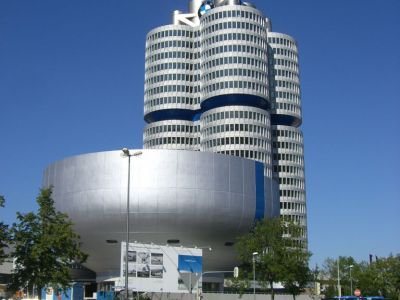
Designed by the architect Karl Schwanzer, who also designed the BMW Headquarters, the museum is recognized for its striking silver futuristic structure, often referred to as the "salad bowl" or "white cauldron." The building's circular base has a diameter of 20 meters, and its flat roof spans about 40 meters. The entrance is situated on the ground floor and includes a cloakroom in the basement and a reception area.
Upon entering, visitors embark on a spiraling ascent through the building to explore the exhibits. Inside the museum, there are four "islands" housing slideshows and smaller, in-depth exhibits. After completing the circuit of the main exhibition, visitors arrive on the upper floor, which features individual exhibits, a small cinema hall, and several interactive displays that provide further insights into the technology behind BMW's creations. To conclude their visit, an escalator takes visitors back to the ground floor.
Why You Should Visit:
While this is totally BMW propaganda, it really shows a commitment to the quality of the automobiles and bikes they make, and even more so, to their workers.
Tip:
BMW Welt (showroom) is free and good for buying any type of memorabilia; the museum has two types of tickets (don't leave without checking out the "Art Cars" section!) and you also can get on the factory tour which you have to book ahead (and you can't take photos in there).
Tuesday - Sunday: 10am-6pm
Established in 1973, the museum underwent significant renovations from 2004 to 2008, coinciding with the construction of the BMW Welt, located directly opposite it. The museum officially reopened its doors on June 21, 2008.
Designed by the architect Karl Schwanzer, who also designed the BMW Headquarters, the museum is recognized for its striking silver futuristic structure, often referred to as the "salad bowl" or "white cauldron." The building's circular base has a diameter of 20 meters, and its flat roof spans about 40 meters. The entrance is situated on the ground floor and includes a cloakroom in the basement and a reception area.
Upon entering, visitors embark on a spiraling ascent through the building to explore the exhibits. Inside the museum, there are four "islands" housing slideshows and smaller, in-depth exhibits. After completing the circuit of the main exhibition, visitors arrive on the upper floor, which features individual exhibits, a small cinema hall, and several interactive displays that provide further insights into the technology behind BMW's creations. To conclude their visit, an escalator takes visitors back to the ground floor.
Why You Should Visit:
While this is totally BMW propaganda, it really shows a commitment to the quality of the automobiles and bikes they make, and even more so, to their workers.
Tip:
BMW Welt (showroom) is free and good for buying any type of memorabilia; the museum has two types of tickets (don't leave without checking out the "Art Cars" section!) and you also can get on the factory tour which you have to book ahead (and you can't take photos in there).
Tuesday - Sunday: 10am-6pm
5) Englischer Garten (English Garden) (must see)
Munich’s English Garden is the largest publicly owned park in Europe-and even larger than New York’s Central Park, stretching across an impressive 900 acres, or about three and a half kilometers. The idea came from Archduke Carl Theodore, but it was brought to life by Benjamin Thompson, an American-born British physicist who later became known as Count Rumford.
Once a royal hunting ground for the Wittelsbach family, the land was transformed into a public park in 1792, stretching three miles along the scenic Isar River. Its name comes from the informal landscaping style that mirrors the naturalistic English gardens popular in the 18th and 19th centuries.
Today, the English Garden is a favorite escape for locals-perfect for relaxing, playing sports, or catching up with friends. For the more adventurous, nude sunbathing is also allowed. You’ll find countless paths, riverside spots to cool your feet or go for a swim, as well as live music in the warmer months, and plenty of food options.
Among standout attractions is the Eisbach wave, an artificial surfing spot that’s active year-round, drawing spectators and surfers alike. In summer, make your way to one of the four beer gardens, especially the one near the Chinese Tower. There, you can enjoy a cold draft beer to the sound of traditional Bavarian tunes.
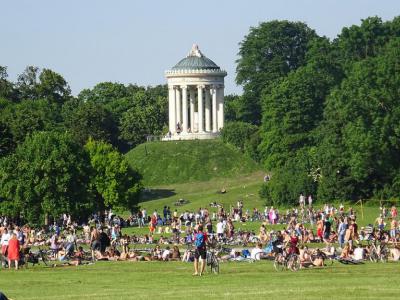
Within the park, you’ll also find a monument to Count Rumford, a serene Japanese Garden created for the Munich Olympics, the elegant Monopteros temple, and an amphitheater tucked away toward the northern edge.
Tip: Sunday’s the big walking day. With most shops closed, locals flood the park-so if you're in town, lace up your shoes and join the crowd. Just keep an eye out for cyclists-they tend to zip by when you least expect it. And if you're planning to swim or surf, don’t forget your gear.
Once a royal hunting ground for the Wittelsbach family, the land was transformed into a public park in 1792, stretching three miles along the scenic Isar River. Its name comes from the informal landscaping style that mirrors the naturalistic English gardens popular in the 18th and 19th centuries.
Today, the English Garden is a favorite escape for locals-perfect for relaxing, playing sports, or catching up with friends. For the more adventurous, nude sunbathing is also allowed. You’ll find countless paths, riverside spots to cool your feet or go for a swim, as well as live music in the warmer months, and plenty of food options.
Among standout attractions is the Eisbach wave, an artificial surfing spot that’s active year-round, drawing spectators and surfers alike. In summer, make your way to one of the four beer gardens, especially the one near the Chinese Tower. There, you can enjoy a cold draft beer to the sound of traditional Bavarian tunes.
Within the park, you’ll also find a monument to Count Rumford, a serene Japanese Garden created for the Munich Olympics, the elegant Monopteros temple, and an amphitheater tucked away toward the northern edge.
Tip: Sunday’s the big walking day. With most shops closed, locals flood the park-so if you're in town, lace up your shoes and join the crowd. Just keep an eye out for cyclists-they tend to zip by when you least expect it. And if you're planning to swim or surf, don’t forget your gear.
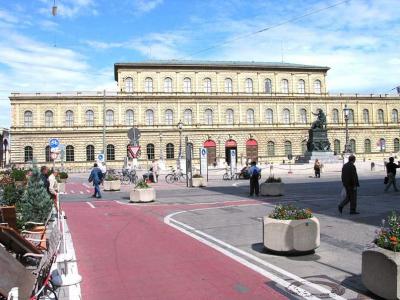
6) Residenz Royal Palace (must see)
The Residenz was the home of Bavaria’s Wittelsbach dynasty all the way up until 1918. With its gilded grandeur and Versailles-like scale, this royal palace complex ranks among Europe’s most impressive, and a throrough exploration could easily take a few days. It’s massive to begin with, and even larger now that more rooms and passageways have been restored and opened to the public.
A good place to start is outside, with the three imposing facades and a series of stunning courtyards, many of which are freely accessible. From there, you can step into the Residenz Museum itself, as well as the Cuvilliés-arguably the finest Rococo theater in Europe, and the Treasure Chamber, where you’ll find a glittering display of jewels, gold, silver, crystal, and enamelwork-collected over a thousand years.
There’s a huge amount to see in the 10 courtyards and nearly 130 rooms, halls and galleries. Among the standout highlights is the Gallery of the Ancestors, where you’ll meet 121 members of the Wittelsbach family; the Antiquarium-the largest Renaissance hall north of the Alps; the extensive porcelain collections, including an array of pieces from France, England, Germany, Japan, and China; and the lavish State Rooms, where German Rococo reaches its decorative peak, especially in the Green Gallery and the Cabinet of Mirrors. Oh, and don’t miss the Grottenhof courtyard, known for its elegant arcade and bronze fountain of Perseus.
For the full experience, consider a combined ticket that includes the Museum, the Theatre and the Treasury. And if you want to tailor your visit, the audio guide lets you jump straight to the rooms, artworks, or stories that interest you most.
A good place to start is outside, with the three imposing facades and a series of stunning courtyards, many of which are freely accessible. From there, you can step into the Residenz Museum itself, as well as the Cuvilliés-arguably the finest Rococo theater in Europe, and the Treasure Chamber, where you’ll find a glittering display of jewels, gold, silver, crystal, and enamelwork-collected over a thousand years.
There’s a huge amount to see in the 10 courtyards and nearly 130 rooms, halls and galleries. Among the standout highlights is the Gallery of the Ancestors, where you’ll meet 121 members of the Wittelsbach family; the Antiquarium-the largest Renaissance hall north of the Alps; the extensive porcelain collections, including an array of pieces from France, England, Germany, Japan, and China; and the lavish State Rooms, where German Rococo reaches its decorative peak, especially in the Green Gallery and the Cabinet of Mirrors. Oh, and don’t miss the Grottenhof courtyard, known for its elegant arcade and bronze fountain of Perseus.
For the full experience, consider a combined ticket that includes the Museum, the Theatre and the Treasury. And if you want to tailor your visit, the audio guide lets you jump straight to the rooms, artworks, or stories that interest you most.
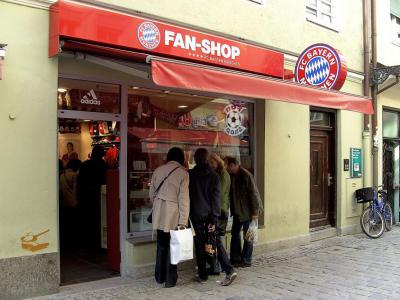
7) FC Bayern Munchen Fan Shop
Represented by the colors red and white, with a little bit of the typical Bavarian blue and white diamond pattern thrown into the logo for effect, FC Bayern München is a very beloved German sports club that is based out of Munich. And while the FC Bayern München does host other sports besides soccer (like basketball, handball, chess, gymnastics, bowling, and table tennis), they are most known for their “Fussball” as the Germans call it.
Pride for FC Bayern München runs thick in Bavaria, and with good reason; they have won 22 national titles and 15 cups. Three of the European Cups that the team won occurred consecutively in the 1970s, when the club was being run by Franz Beckenbauer. Because of this, some people believe that that was the club’s heyday, but in actuality, they are still going pretty strongly now. On game days, especially when playing at home (which now takes place in the Allianz Arena, rather than the Olympic Stadium, as it did for 33 years), fans come out in droves, decked out in red and white from top to bottom to support the team. Singing throughout the streets, underground trains, trams, and busses, the fans certainly make themselves seen and heard.
FC Bayern Munchen Fan Shop is the place to pick up a team jersey so you can feel being part of the city. Cost for a jersey of your own: around 50 to 70 Euros.
Pride for FC Bayern München runs thick in Bavaria, and with good reason; they have won 22 national titles and 15 cups. Three of the European Cups that the team won occurred consecutively in the 1970s, when the club was being run by Franz Beckenbauer. Because of this, some people believe that that was the club’s heyday, but in actuality, they are still going pretty strongly now. On game days, especially when playing at home (which now takes place in the Allianz Arena, rather than the Olympic Stadium, as it did for 33 years), fans come out in droves, decked out in red and white from top to bottom to support the team. Singing throughout the streets, underground trains, trams, and busses, the fans certainly make themselves seen and heard.
FC Bayern Munchen Fan Shop is the place to pick up a team jersey so you can feel being part of the city. Cost for a jersey of your own: around 50 to 70 Euros.
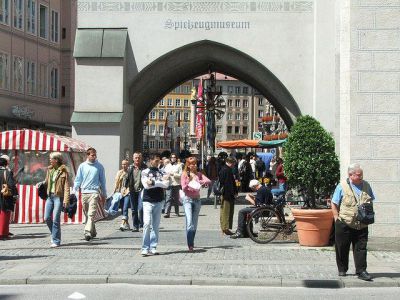
8) Spielzeugmuseum (Toy Museum)
Housed inside the tower of the Old Town Hall, Munich’s Toy Museum offers a one-of-a-kind glimpse into two centuries of toymaking from around the world. At its core is the private collection of Czech writer, cartoonist, and filmmaker Ivan Steiger and his wife Eva, who opened the place to the public in 1983.
What sets the museum apart is how it presents mechanical toys-not just as objects of nostalgia, but as feats of miniature engineering. Many are displayed in ways that reveal the inner workings, allowing to appreciate the craftsmanship behind each moving part. A narrow spiral stone staircase winds its way through four floors of exhibits, thoughtfully arranged by toy type.
Among the highlights are some of the earliest teddy bears ever made by the legendary Margaret Steiff, along with elegant porcelain dolls crafted by Käthe Kruse. Another standout is a rare French “walking doll” from 1855, complete with a mechanism that moves the arms and legs-and can even simulate speech. Many other dolls on display once belonged to real children, giving them a quiet sense of history and sentiment.
Collectors, nostalgic souls, and curious visitors alike will find something to delight in here: from antique dollhouses and merry-go-rounds to vintage tin cars, trains, copper soldiers, and even Barbie outfits from every era of the iconic doll’s history. Take your time as you explore each floor-these tiny treasures have big stories to tell, and they’re waiting to be discovered.
What sets the museum apart is how it presents mechanical toys-not just as objects of nostalgia, but as feats of miniature engineering. Many are displayed in ways that reveal the inner workings, allowing to appreciate the craftsmanship behind each moving part. A narrow spiral stone staircase winds its way through four floors of exhibits, thoughtfully arranged by toy type.
Among the highlights are some of the earliest teddy bears ever made by the legendary Margaret Steiff, along with elegant porcelain dolls crafted by Käthe Kruse. Another standout is a rare French “walking doll” from 1855, complete with a mechanism that moves the arms and legs-and can even simulate speech. Many other dolls on display once belonged to real children, giving them a quiet sense of history and sentiment.
Collectors, nostalgic souls, and curious visitors alike will find something to delight in here: from antique dollhouses and merry-go-rounds to vintage tin cars, trains, copper soldiers, and even Barbie outfits from every era of the iconic doll’s history. Take your time as you explore each floor-these tiny treasures have big stories to tell, and they’re waiting to be discovered.
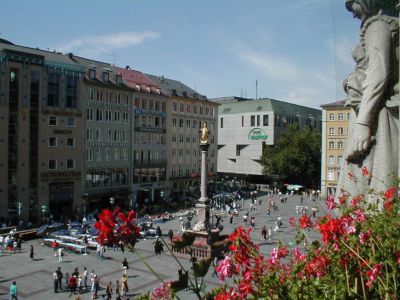
9) Marienplatz (Mary's Square) (must see)
Right in the center of Munich lies Mary’s Square, the city’s lively, historic core. Established back in 1158, it started out as a busy marketplace and a stage for medieval tournaments and public events. These days, it’s still the place where everything seems to converge-a perfect starting point for anyone exploring the city. Grand buildings rise on all sides, cafés spill onto the streets, and the square hums with energy from morning until night.
The star attraction is the New Town Hall, an elaborate neo-Gothic masterpiece brimming with stone figures, ornate carvings, and the famous Glockenspiel. At 11 a.m., noon, and again at 5 p.m. during the warmer months, the Glockenspiel puts on its quirky performance. Thirty-two mechanical figures spin into action, reenacting Bavarian legends to a soundtrack of bells and music. It’s theatrical, a little over-the-top, and completely delightful.
Across the square, you’ll also find the Old Town Hall, with its storybook tower and a toy museum tucked inside-great if you’re traveling with kids or just enjoy a touch of childhood nostalgia. Meanwhile in the center stands the Column of Saint Mary, raised in 1638 to mark the end of Swedish occupation during the Thirty Years' War. A gilded statue of the Virgin crowns the column-a quiet symbol in a bustling space, and the inspiration for the square’s name.
Street musicians, traditional restaurants, souvenir stalls-there’s always something happening around you. Want to shop? Stroll down Kaufinger Street, one of Munich’s busiest pedestrian avenues. If you’re more in the mood for architecture, the city’s Cathedral, with its distinctive twin domes, is just around the corner.
In short, Mary’s Square offers the perfect snapshot of Munich. Don’t rush through it-it’s a place to linger, look up, and let the city reveal itself one detail at a time.
The star attraction is the New Town Hall, an elaborate neo-Gothic masterpiece brimming with stone figures, ornate carvings, and the famous Glockenspiel. At 11 a.m., noon, and again at 5 p.m. during the warmer months, the Glockenspiel puts on its quirky performance. Thirty-two mechanical figures spin into action, reenacting Bavarian legends to a soundtrack of bells and music. It’s theatrical, a little over-the-top, and completely delightful.
Across the square, you’ll also find the Old Town Hall, with its storybook tower and a toy museum tucked inside-great if you’re traveling with kids or just enjoy a touch of childhood nostalgia. Meanwhile in the center stands the Column of Saint Mary, raised in 1638 to mark the end of Swedish occupation during the Thirty Years' War. A gilded statue of the Virgin crowns the column-a quiet symbol in a bustling space, and the inspiration for the square’s name.
Street musicians, traditional restaurants, souvenir stalls-there’s always something happening around you. Want to shop? Stroll down Kaufinger Street, one of Munich’s busiest pedestrian avenues. If you’re more in the mood for architecture, the city’s Cathedral, with its distinctive twin domes, is just around the corner.
In short, Mary’s Square offers the perfect snapshot of Munich. Don’t rush through it-it’s a place to linger, look up, and let the city reveal itself one detail at a time.
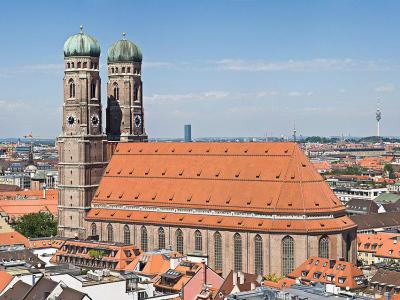
10) Frauenkirche (Cathedral of Our Lady) (must see)
The largest Gothic structure in southern Germany, this church was built at an astonishing pace. Construction began in 1468 and wrapped up just 20 years later, a remarkable feat for the time. With its twin towers capped by distinctive onion-shaped domes rising 99 meters high, it remains the city’s most iconic landmark.
Entry is free, though there’s a small charge if you’d rather take the elevator up the South Tower instead of making the climb yourself. The panoramic view from the top is well worth the effort-an unforgettable way to view the city from above.
Inside, the atmosphere is stark and reverent. What you may see today was rebuilt from the ruins left by World War II bombings. Having been safely stored away during the war, the Gothic windows offer a glimpse of the church’s former glory. In the choir, you’ll find sculptures of the Apostles and Prophets, created in 1502 and miraculously preserved. The north chapel holds a striking altarpiece of Christ’s baptism, alongside Jan Polack’s panels depicting scenes from the Passion. Also look out for his painting “The Protecting Cloak”, as well as an elaborate cenotaph of Holy Roman Emperor Louis IV.
And then, of course, there’s the legend-the infamous Devil’s Footprint. As the story goes, architect Jörg von Halsbach made a deal with the devil: the funds to finish the church, in exchange for a design with no visible windows. From one specific spot near the entrance, the illusion holds-no windows in sight. When the devil realized he’d been tricked, he stomped his foot in rage, leaving a footprint behind. Both the footprint and the trick of perspective can still be seen today.
Since this is Munich’s mother church, photography is discouraged out of respect for those who come here to pray. So take a quiet moment, soak in the stillness, and let the space speak for itself.
Entry is free, though there’s a small charge if you’d rather take the elevator up the South Tower instead of making the climb yourself. The panoramic view from the top is well worth the effort-an unforgettable way to view the city from above.
Inside, the atmosphere is stark and reverent. What you may see today was rebuilt from the ruins left by World War II bombings. Having been safely stored away during the war, the Gothic windows offer a glimpse of the church’s former glory. In the choir, you’ll find sculptures of the Apostles and Prophets, created in 1502 and miraculously preserved. The north chapel holds a striking altarpiece of Christ’s baptism, alongside Jan Polack’s panels depicting scenes from the Passion. Also look out for his painting “The Protecting Cloak”, as well as an elaborate cenotaph of Holy Roman Emperor Louis IV.
And then, of course, there’s the legend-the infamous Devil’s Footprint. As the story goes, architect Jörg von Halsbach made a deal with the devil: the funds to finish the church, in exchange for a design with no visible windows. From one specific spot near the entrance, the illusion holds-no windows in sight. When the devil realized he’d been tricked, he stomped his foot in rage, leaving a footprint behind. Both the footprint and the trick of perspective can still be seen today.
Since this is Munich’s mother church, photography is discouraged out of respect for those who come here to pray. So take a quiet moment, soak in the stillness, and let the space speak for itself.
