Custom Walk in Edinburgh, Scotland by tracycyoung_dda662 created on 2026-06-03
Guide Location: Scotland » Edinburgh
Guide Type: Custom Walk
# of Sights: 6
Tour Duration: 2 Hour(s)
Travel Distance: 3.2 Km or 2 Miles
Share Key: 27NGZ
Guide Type: Custom Walk
# of Sights: 6
Tour Duration: 2 Hour(s)
Travel Distance: 3.2 Km or 2 Miles
Share Key: 27NGZ
How It Works
Please retrieve this walk in the GPSmyCity app. Once done, the app will guide you from one tour stop to the next as if you had a personal tour guide. If you created the walk on this website or come to the page via a link, please follow the instructions below to retrieve the walk in the app.
Retrieve This Walk in App
Step 1. Download the app "GPSmyCity: Walks in 1K+ Cities" on Apple App Store or Google Play Store.



Step 2. In the GPSmyCity app, download(or launch) the guide "Edinburgh Map and Walking Tours".
Step 3. Tap the menu button located at upper right corner of the "Walks" screen and select "Retrieve custom walk". Enter the share key: 27NGZ
1) Melville Monument
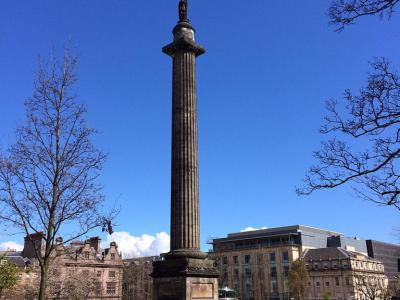
While you are in Edinburgh, you will probably visit Saint Andrew Square and in the middle of the lovely gardens you will find the Melville Monument.
The monument was erected in 1823 in honour of the 1st Viscount of Melville, Henry Dundas, a politician who wielded so much power that he was known as the “uncrowned king of Scotland”. He was also the 1st Lord of the Admiralty and the monument was paid for by officers and sailors of the Royal Marines Scotland.
It was designed by the great architect William Burn, who modelled it on Trajan’s Column in Rome, but without the intricate inscriptions. It is 42.6 metres high and during construction the residents were worried that the foundations wouldn’t be strong enough for it, so William Burn turned to Robert Stevenson for advice.
Stevenson was a noted lighthouse architect and he had developed the first line-balance crane in the world in 1813, while he was overseeing the construction of the Bell Rock Lighthouse. He put his crane into good use once again and the monument was raised with little problem onto the solid foundations he designed.
The statue of Dundas on the top of the monument was sculpted by Francis Chantrey and Robert Forrest and was added in 1828.
The monument was erected in 1823 in honour of the 1st Viscount of Melville, Henry Dundas, a politician who wielded so much power that he was known as the “uncrowned king of Scotland”. He was also the 1st Lord of the Admiralty and the monument was paid for by officers and sailors of the Royal Marines Scotland.
It was designed by the great architect William Burn, who modelled it on Trajan’s Column in Rome, but without the intricate inscriptions. It is 42.6 metres high and during construction the residents were worried that the foundations wouldn’t be strong enough for it, so William Burn turned to Robert Stevenson for advice.
Stevenson was a noted lighthouse architect and he had developed the first line-balance crane in the world in 1813, while he was overseeing the construction of the Bell Rock Lighthouse. He put his crane into good use once again and the monument was raised with little problem onto the solid foundations he designed.
The statue of Dundas on the top of the monument was sculpted by Francis Chantrey and Robert Forrest and was added in 1828.
2) Mary King's Close (must see)
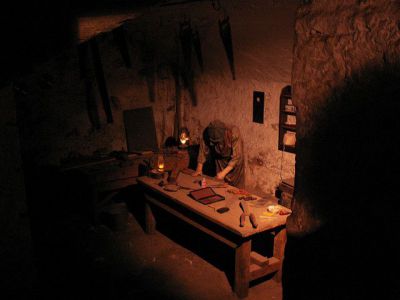
If ghost stories give you chills in a good way, then Real Mary King’s Close might just be your perfect haunt in Edinburgh. Tucked beneath the Royal Exchange, this underground maze of shadowy alleyways and crumbling tenement rooms has a reputation for being one of the most haunted corners of the city-and in Edinburgh, that’s saying something...
Originally a bustling neighborhood, the close was sealed off after the Great Plague of 1645 rolled into town, carried by flea-infested rats from merchant ships. With zero plumbing and not a bar of soap in sight, these cramped quarters became ground zero for infection. In a desperate attempt to contain the spread, entire blocks-predominantly the poorer areas, including Mary King’s Close-were bricked in as urgent quarantine measures. Legend has it, some unlucky souls were trapped inside at the mercy of plague or starvation... and they never left. At least, not in spirit.
One ghost in particular likes to make her presence known: Annie, a small girl, who is said to have lost her doll-and possibly much more-when the plague swept through. Visitors claim to feel her presence, and many bring her gifts: toys, trinkets, or coins, all of which are passed on to children’s hospitals and local charities. So, even the ghostly get a little goodwill...
The area was uncovered during renovations to the Royal Exchange and was opened to the public in 2003 as a tourist attraction. Since then, costumed guides have been leading brave guests through these 17th-century underground time capsules, sharing tales of the little Annie and Mary King-a respected businesswoman and seamstress after whom it is named-as well as the dark chapters etched into every cobbled corner.
So, if you’re in the mood for a little historical horror with a charitable twist, Mary King’s Close is calling. Just... don’t forget Annie’s doll.
Originally a bustling neighborhood, the close was sealed off after the Great Plague of 1645 rolled into town, carried by flea-infested rats from merchant ships. With zero plumbing and not a bar of soap in sight, these cramped quarters became ground zero for infection. In a desperate attempt to contain the spread, entire blocks-predominantly the poorer areas, including Mary King’s Close-were bricked in as urgent quarantine measures. Legend has it, some unlucky souls were trapped inside at the mercy of plague or starvation... and they never left. At least, not in spirit.
One ghost in particular likes to make her presence known: Annie, a small girl, who is said to have lost her doll-and possibly much more-when the plague swept through. Visitors claim to feel her presence, and many bring her gifts: toys, trinkets, or coins, all of which are passed on to children’s hospitals and local charities. So, even the ghostly get a little goodwill...
The area was uncovered during renovations to the Royal Exchange and was opened to the public in 2003 as a tourist attraction. Since then, costumed guides have been leading brave guests through these 17th-century underground time capsules, sharing tales of the little Annie and Mary King-a respected businesswoman and seamstress after whom it is named-as well as the dark chapters etched into every cobbled corner.
So, if you’re in the mood for a little historical horror with a charitable twist, Mary King’s Close is calling. Just... don’t forget Annie’s doll.
3) Greyfriars Bobby's Statue (must see)
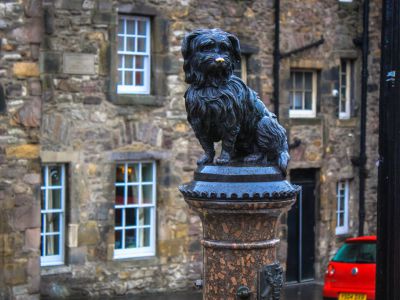
Ah yes-nothing tugs at the heartstrings quite like a tale of undying love and loyalty… especially if it involves a scruffy little dog. Meet Greyfriars Bobby, the Skye Terrier and Edinburgh’s most beloved four-legged legend, immortalized in bronze at the south end of George IV Bridge (just a tail’s wag from the entrance to Greyfriars Kirkyard).
Now, Bobby’s origin story is a bit fuzzy (pun fully intended here). Some say he belonged to a kindly policeman named John Grey; others claim that he was just a clever stray adopted by a “bobby” during his beat (hence the name). Either way, Bobby and John were inseparable for two years… until 1858, when John died of tuberculosis, and Bobby found himself alone in the world.
Whether Grey lived by himself or his widow kicked Bobby out when her husband died remains unclear, but this is where the tear ducts really kick in. Without a home, Bobby made one for himself-on his master’s grave. Indeed, rather than chase squirrels or sniff lampposts like a normal dog, he trotted over to Greyfriars Kirkyard and stayed there-for fourteen years!-until his own death. Through rain, sleet, snow, and the occasional curious visitor, Bobby stood guard with a loyalty that would put most humans to shame.
Usually, dogs weren’t exactly welcomed in church cemeteries, but Bobby had charm. The caretaker took pity on him and fed him, locals left snacks, and even William Chambers, the Lord Provost of Edinburgh, chipped in to pay Bobby’s yearly dog license, without which he would definitely have been destroyed as a stray.
When Bobby passed on in 1872, church rules said “no dogs in holy dirt,” so he was laid to rest just outside the gates. A local philanthropist lady had a statue erected in his honour, complete with two drinking fountains: one for people, and one for thirsty pups.
Over the years, Bobby’s story has had many versions and inspired numerous books, films, and tall tales-you name it. His breed would change depending on who told the tale, but Bobby’s spirit always remained the same-loyal to his master beyond the grave, and always legendary.
Tip:
Wander into Greyfriars Kirkyard right behind the statue for a dose of Edinburgh’s weirder history. Attention, Potterheads!-Rumour has it that Lord Voldemort’s gravestone is in there somewhere, too. Loyalty and dark magic, all in one stop...
Now, Bobby’s origin story is a bit fuzzy (pun fully intended here). Some say he belonged to a kindly policeman named John Grey; others claim that he was just a clever stray adopted by a “bobby” during his beat (hence the name). Either way, Bobby and John were inseparable for two years… until 1858, when John died of tuberculosis, and Bobby found himself alone in the world.
Whether Grey lived by himself or his widow kicked Bobby out when her husband died remains unclear, but this is where the tear ducts really kick in. Without a home, Bobby made one for himself-on his master’s grave. Indeed, rather than chase squirrels or sniff lampposts like a normal dog, he trotted over to Greyfriars Kirkyard and stayed there-for fourteen years!-until his own death. Through rain, sleet, snow, and the occasional curious visitor, Bobby stood guard with a loyalty that would put most humans to shame.
Usually, dogs weren’t exactly welcomed in church cemeteries, but Bobby had charm. The caretaker took pity on him and fed him, locals left snacks, and even William Chambers, the Lord Provost of Edinburgh, chipped in to pay Bobby’s yearly dog license, without which he would definitely have been destroyed as a stray.
When Bobby passed on in 1872, church rules said “no dogs in holy dirt,” so he was laid to rest just outside the gates. A local philanthropist lady had a statue erected in his honour, complete with two drinking fountains: one for people, and one for thirsty pups.
Over the years, Bobby’s story has had many versions and inspired numerous books, films, and tall tales-you name it. His breed would change depending on who told the tale, but Bobby’s spirit always remained the same-loyal to his master beyond the grave, and always legendary.
Tip:
Wander into Greyfriars Kirkyard right behind the statue for a dose of Edinburgh’s weirder history. Attention, Potterheads!-Rumour has it that Lord Voldemort’s gravestone is in there somewhere, too. Loyalty and dark magic, all in one stop...
4) Grassmarket
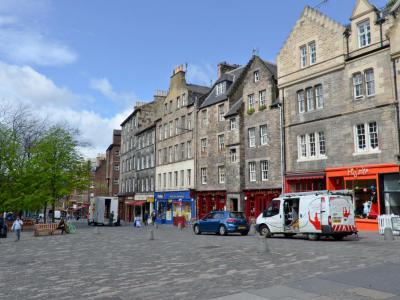
If you're looking to shop, snack, or relax over a pint while in Edinburgh, the Grassmarket is undoubtedly your one-stop cobbled playground. Once the city’s bustling horse-and-cattle bazaar which drew crowds between 1477 and 1911, it also doubled as a top place for executions-because, apparently, back in the day, nothing did for the public entertainment more than hooves and hangings...
Keep an eye out for “The Shadow of the Gibbet”-the dark paving stones laid out in the form of a gallows near the Covenanter’s Monument. It’s a charmingly grim touch, in case you needed a reminder that this scenic square once served as the city’s unofficial “dead-end.” And over to one side of it stands the Bow Well that has been around since 1681.
According to legend, once upon a time, there was a woman named Maggie Dickson, a fishwife who made headlines by dying and... remarkably coming back again. Hanged right here for the alleged murder of her child, she stunned everyone when she unexpectedly woke up en route to the cemetery. Apparently, in those days, the “until dead” provision didn’t quite yet settle in the sentence proceedings (legal loophole of the day...). So, once hanged, her debt was considered paid and Maggie was set free. Today, you can toast her improbable resurrection at Maggie Dickson’s pub, conveniently located on the very spot where she was hanged but miraculously survived the ordeal.
Fast forward a few centuries and the Grassmarket swapped gallows for gastropubs. A formerly scruffy patch of the city, it became a magnet for students in the 1980s-likely lured by cheap beer and late-night kebabs. Nowadays gentrified, it’s all terraces, boutique shops, vintage finds, and indie charm.
Quirky, safe and interesting, this area is a great destination for those who need a regular change of scenery, complete with a variety of retail and dining opportunities to suit every wallet and taste, and enough character to fill a tartan suitcase.
Hot tip:
Check out Carnivàle Vintage for a wonderful selection of fun vintage clothing, Tasty Buns for pastry and coffee, Hula Juice Bar for guilt-free fuel, and Mary’s Milk Bar for glorious indulgence. And when you're done, wind your way up Victoria Street and onto the Royal Mile (further up)-because one eccentric shopping spree always deserves another...
Keep an eye out for “The Shadow of the Gibbet”-the dark paving stones laid out in the form of a gallows near the Covenanter’s Monument. It’s a charmingly grim touch, in case you needed a reminder that this scenic square once served as the city’s unofficial “dead-end.” And over to one side of it stands the Bow Well that has been around since 1681.
According to legend, once upon a time, there was a woman named Maggie Dickson, a fishwife who made headlines by dying and... remarkably coming back again. Hanged right here for the alleged murder of her child, she stunned everyone when she unexpectedly woke up en route to the cemetery. Apparently, in those days, the “until dead” provision didn’t quite yet settle in the sentence proceedings (legal loophole of the day...). So, once hanged, her debt was considered paid and Maggie was set free. Today, you can toast her improbable resurrection at Maggie Dickson’s pub, conveniently located on the very spot where she was hanged but miraculously survived the ordeal.
Fast forward a few centuries and the Grassmarket swapped gallows for gastropubs. A formerly scruffy patch of the city, it became a magnet for students in the 1980s-likely lured by cheap beer and late-night kebabs. Nowadays gentrified, it’s all terraces, boutique shops, vintage finds, and indie charm.
Quirky, safe and interesting, this area is a great destination for those who need a regular change of scenery, complete with a variety of retail and dining opportunities to suit every wallet and taste, and enough character to fill a tartan suitcase.
Hot tip:
Check out Carnivàle Vintage for a wonderful selection of fun vintage clothing, Tasty Buns for pastry and coffee, Hula Juice Bar for guilt-free fuel, and Mary’s Milk Bar for glorious indulgence. And when you're done, wind your way up Victoria Street and onto the Royal Mile (further up)-because one eccentric shopping spree always deserves another...
5) Victoria Street
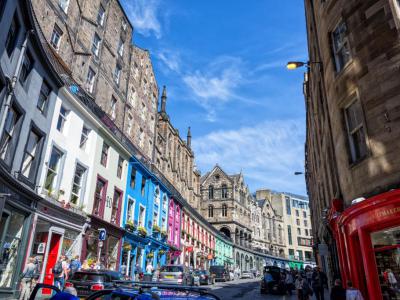
Perhaps the most photographed location in all of Edinburgh, Victoria Street-with its gentle curve, candy-coloured shopfronts, and fairytale charm-is the Old Town icon that throughout the decades has graced everything from tourist postcards to glossy TV ads. Indeed, if streets had agents, this one would have been booked solid.
Built between 1829 and 1834, Victoria Street wasn’t always the whimsical rainbow we know today, though. Credit-or creative blame for it, rather-goes to Thomas Hamilton, a mastermind behind Edinburgh’s numerous architectural wonders, better known for his love affair with all things neoclassical. On this occasion, however, he deviated from his habitual neoclassical stamp, being told to create something mimicking the Old Flemish style. For this purpose, many of the area's old buildings were torn down. The result of such a dramatic medieval makeover was the appearance of arches, lining the new terrace, which now house some of the city’s most charming little shops.
And then came the magic. In recent years, Victoria Street-along with its downhill cousin, the West Bow-has gained notoriety as possible real-world prototypes for none other than Diagon Alley, featured in the Harry Potter books (you know, wizards, magic wands, and all that...).
Given that Edinburgh was home turf for JK Rowling while she penned her famous boy-wizard saga, it’s not a stretch to imagine Victoria Street as an inspiration for the ever-so fabulous wizard market after all. Packed with the cobbled stones, higgledy-piggledy medley of vibrant buildings, quirky boutiques, and a general air of eccentricity, it practically shouts Diagon Alley. So, whether you're here for the architecture, the shopping, or the spellcasting vibes, just know-this street has layers, arches, and more than a dash of enchantment...
Built between 1829 and 1834, Victoria Street wasn’t always the whimsical rainbow we know today, though. Credit-or creative blame for it, rather-goes to Thomas Hamilton, a mastermind behind Edinburgh’s numerous architectural wonders, better known for his love affair with all things neoclassical. On this occasion, however, he deviated from his habitual neoclassical stamp, being told to create something mimicking the Old Flemish style. For this purpose, many of the area's old buildings were torn down. The result of such a dramatic medieval makeover was the appearance of arches, lining the new terrace, which now house some of the city’s most charming little shops.
And then came the magic. In recent years, Victoria Street-along with its downhill cousin, the West Bow-has gained notoriety as possible real-world prototypes for none other than Diagon Alley, featured in the Harry Potter books (you know, wizards, magic wands, and all that...).
Given that Edinburgh was home turf for JK Rowling while she penned her famous boy-wizard saga, it’s not a stretch to imagine Victoria Street as an inspiration for the ever-so fabulous wizard market after all. Packed with the cobbled stones, higgledy-piggledy medley of vibrant buildings, quirky boutiques, and a general air of eccentricity, it practically shouts Diagon Alley. So, whether you're here for the architecture, the shopping, or the spellcasting vibes, just know-this street has layers, arches, and more than a dash of enchantment...
6) Princes Street Gardens (must see)
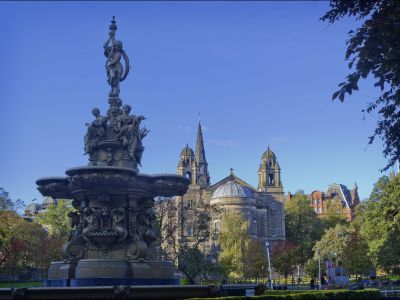
Between the volcanic drama of Edinburgh Castle and the shopping temptation of Princes Street, you'll stumble across a surprisingly serene stretch of green: Princes Street Gardens. Yes, in a city built on myth, mist, and medieval grit, here's your central patch of peace-complete with ducks, monuments, and the occasional bagpiper soundtrack.
Some 110,000 years ago, the area that is now the quiet garden was a glacial accident waiting to happen. As an ancient glacier oozed its way around the hulking basalt of Castle Rock, it carved out a natural dip-basically scooping out what would later become, and for thousands of years remained, a marshy, defensive moat at the foot of Castle Rock. Humans started settling here by the 9th century BC, presumably appreciating the defensive perks and the view.
Then, in 1460, King James III ordered the marsh to be flooded, turning it into Nor Loch-a grim, murky moat that made invading Edinburgh Castle even less appealing. Further ahead, in 1759, the loch was drained to make way for the New Town. Even today, this area still occasionally gets flooded.
When construction on the New Town kicked off, a handy solution for all that leftover dirt (some millions of tons of earth) was to dump it into the former loch. And thus the Mound, upon which many prestigious buildings stand today, was born. By 1820, the area was transformed into Princes Street Gardens: 8.5 acres to the east and 29 acres to the west, flanking The Mound like leafy bookends.
The gardens now come with a side of Scottish fame. The towering Scott Monument takes center stage, joined by statues of local legends like author John Wilson, Christian missionary David Livingstone, and poet Allan Ramsay. There’s a playground for kids, shade under grand trees, countless benches for people-watching, and even a café if you need caffeine with your contemplation.
In December, this peaceful patch gets seriously festive, with carnival rides, mulled wine, twinkling lights, Edinburgh’s main Christmas Market, and even an ice rink-because few things can contribute to a “holiday spirit” as greatly as skating under a Gothic spire!
Some 110,000 years ago, the area that is now the quiet garden was a glacial accident waiting to happen. As an ancient glacier oozed its way around the hulking basalt of Castle Rock, it carved out a natural dip-basically scooping out what would later become, and for thousands of years remained, a marshy, defensive moat at the foot of Castle Rock. Humans started settling here by the 9th century BC, presumably appreciating the defensive perks and the view.
Then, in 1460, King James III ordered the marsh to be flooded, turning it into Nor Loch-a grim, murky moat that made invading Edinburgh Castle even less appealing. Further ahead, in 1759, the loch was drained to make way for the New Town. Even today, this area still occasionally gets flooded.
When construction on the New Town kicked off, a handy solution for all that leftover dirt (some millions of tons of earth) was to dump it into the former loch. And thus the Mound, upon which many prestigious buildings stand today, was born. By 1820, the area was transformed into Princes Street Gardens: 8.5 acres to the east and 29 acres to the west, flanking The Mound like leafy bookends.
The gardens now come with a side of Scottish fame. The towering Scott Monument takes center stage, joined by statues of local legends like author John Wilson, Christian missionary David Livingstone, and poet Allan Ramsay. There’s a playground for kids, shade under grand trees, countless benches for people-watching, and even a café if you need caffeine with your contemplation.
In December, this peaceful patch gets seriously festive, with carnival rides, mulled wine, twinkling lights, Edinburgh’s main Christmas Market, and even an ice rink-because few things can contribute to a “holiday spirit” as greatly as skating under a Gothic spire!
