Custom Walk in Valencia, Spain by cunningham-j2_4cc584 created on 2026-06-13
Guide Location: Spain » Valencia
Guide Type: Custom Walk
# of Sights: 11
Tour Duration: 2 Hour(s)
Travel Distance: 2.6 Km or 1.6 Miles
Share Key: PSGSB
Guide Type: Custom Walk
# of Sights: 11
Tour Duration: 2 Hour(s)
Travel Distance: 2.6 Km or 1.6 Miles
Share Key: PSGSB
How It Works
Please retrieve this walk in the GPSmyCity app. Once done, the app will guide you from one tour stop to the next as if you had a personal tour guide. If you created the walk on this website or come to the page via a link, please follow the instructions below to retrieve the walk in the app.
Retrieve This Walk in App
Step 1. Download the app "GPSmyCity: Walks in 1K+ Cities" on Apple App Store or Google Play Store.



Step 2. In the GPSmyCity app, download(or launch) the guide "Valencia Map and Walking Tours".
Step 3. Tap the menu button located at upper right corner of the "Walks" screen and select "Retrieve custom walk". Enter the share key: PSGSB
1) Teatro Olympia
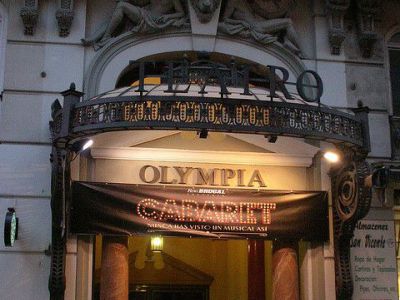
Private Olympia Theater, owned by the Fayos familya, is a venue that has consistently offered a diverse range of performances, embracing both traditional and contemporary spectacles such as musicals, operas, and classical theater productions. By upholding these principles and ensuring the theater's high quality, the family has successfully attracted an eclectic audience who appreciate the venue's intimate atmosphere and modern conveniences.
Situated in the heart of the city, the Teatro Olympia was inaugurated on November 10, 1915, with a captivating rendition of the opera "Barber of Seville." In addition, to live shows, the theater began featuring films during periods when there were no live performances scheduled.
The auditorium of the theater accommodates 878 seats in the orchestra section and 300 seats on the balcony. Furthermore, side boxes adorn the walls at both the orchestra and balcony levels. In 1923, the theater transitioned into a full-time cinema, and on February 5, 1930, it presented the sound version of Warner Bros.'s "Noah's Ark" after equipping the Teatro Olympia with an advanced Western Electric sound system.
The Teatro Olympia continued its cinematic endeavors until 1983, at which point it returned to its original purpose as a live theater. In 1991, the theater underwent restoration, preserving its historical charm for future generations to enjoy.
Situated in the heart of the city, the Teatro Olympia was inaugurated on November 10, 1915, with a captivating rendition of the opera "Barber of Seville." In addition, to live shows, the theater began featuring films during periods when there were no live performances scheduled.
The auditorium of the theater accommodates 878 seats in the orchestra section and 300 seats on the balcony. Furthermore, side boxes adorn the walls at both the orchestra and balcony levels. In 1923, the theater transitioned into a full-time cinema, and on February 5, 1930, it presented the sound version of Warner Bros.'s "Noah's Ark" after equipping the Teatro Olympia with an advanced Western Electric sound system.
The Teatro Olympia continued its cinematic endeavors until 1983, at which point it returned to its original purpose as a live theater. In 1991, the theater underwent restoration, preserving its historical charm for future generations to enjoy.
2) Mercado Central (Central Market) (must see)
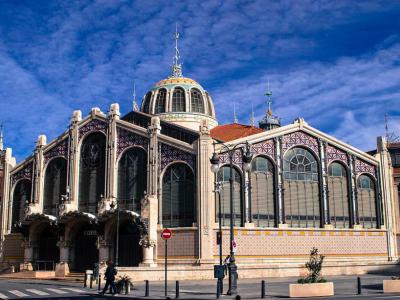
Valencia’s Central Market is Europe’s largest covered market, and it seems determined to make grocery shopping look theatrical. Set inside a spectacular Modernista building, it proves that buying tomatoes in the right setting can feel almost ceremonial...
Despite its popularity with visitors, this is not just a pretty backdrop for photos. Locals still come here for hams, cheeses, vegetables, oranges, and enough fresh Mediterranean seafood to make even modest dinner plans suddenly very ambitious. Indeed, this is one of the best places in Valencia to taste daily life—sometimes literally—and maybe pick up a souvenir that does not involve a fridge magnet.
The building itself was designed for practical trade, but clearly nobody told the architects to keep things simple. Ceramic details, brickwork, stained glass, and decorative flourishes all join the performance. Look up, and you may spot the red and yellow stripes of the Valencian flag worked into the design—because in some cases, even the ceiling has local pride...
When the market opened in 1928, it had more than 1,000 stalls. Today, that number has settled at around 700, which is still more than enough to confuse, tempt, and delight any grocery shopper. Mid-morning is the best time to feel the full rhythm of the place, with voices calling orders in Valencian, baskets filling up, and produce looking deliciously fresh.
You’ll find herbs, spices, dried fruit, nuts, meats, cheeses, and, of course, oranges. If you are not heading into the countryside to buy them straight from the trees, this is a very respectable Plan B. There is also a dedicated fish and seafood section, along with more adventurous options, such as snails, sweetbreads, tripe, ostrich meat, and giant eggs—because apparently regular eggs aren't always dramatic enough...
So, come hungry, come curious, and keep your eyes moving. At Valencia’s Central Market, even the humble grocery shopping feels more like a very well-fed cultural event.
Despite its popularity with visitors, this is not just a pretty backdrop for photos. Locals still come here for hams, cheeses, vegetables, oranges, and enough fresh Mediterranean seafood to make even modest dinner plans suddenly very ambitious. Indeed, this is one of the best places in Valencia to taste daily life—sometimes literally—and maybe pick up a souvenir that does not involve a fridge magnet.
The building itself was designed for practical trade, but clearly nobody told the architects to keep things simple. Ceramic details, brickwork, stained glass, and decorative flourishes all join the performance. Look up, and you may spot the red and yellow stripes of the Valencian flag worked into the design—because in some cases, even the ceiling has local pride...
When the market opened in 1928, it had more than 1,000 stalls. Today, that number has settled at around 700, which is still more than enough to confuse, tempt, and delight any grocery shopper. Mid-morning is the best time to feel the full rhythm of the place, with voices calling orders in Valencian, baskets filling up, and produce looking deliciously fresh.
You’ll find herbs, spices, dried fruit, nuts, meats, cheeses, and, of course, oranges. If you are not heading into the countryside to buy them straight from the trees, this is a very respectable Plan B. There is also a dedicated fish and seafood section, along with more adventurous options, such as snails, sweetbreads, tripe, ostrich meat, and giant eggs—because apparently regular eggs aren't always dramatic enough...
So, come hungry, come curious, and keep your eyes moving. At Valencia’s Central Market, even the humble grocery shopping feels more like a very well-fed cultural event.
3) Lonja de la Seda (The Silk Exchange) (must see)
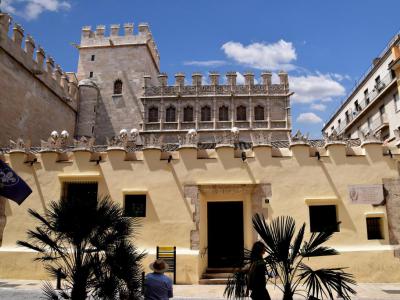
Standing just across from the Central Market is one of Valencia’s great landmarks: the Silk Exchange. Face the building from the square, and you’ll see why this was no ordinary place of business. Built for the silk trade and later used for broader commercial activity, it became one of the great centers of Valencia’s Golden Age, with that prosperity expressed through dramatic Gothic stonework.
Before going inside, study the façade. Look along the walls for carved decoration, delicate tracery, and richly detailed windows. Then lift your gaze to the upper edges, where 28 gargoyles keep watch in the shape of winged creatures, beasts, and bats. Medieval architects, it seems, knew that even a trade building deserved a little theater.
Now look for the central tower, which helps divide the building into its main sections. This tower once contained a small chapel and, less charmingly, a debtor’s prison for merchants who failed to meet their financial obligations. In medieval Valencia, “business ethics” apparently meant praying upstairs and locking up bad payers nearby.
Once inside, use the tower as your point of reference. To the left, there were areas linked to maritime trade and early banking, including institutions that helped regulate commerce and support the building’s construction. Indeed, Valencia’s port, merchants, and money all worked together during the city’s most prosperous period.
Next, make your way upstairs to the Golden Hall. You’ll recognize it by its magnificent painted and gilded wooden ceiling, filled with musicians, prophets, and mythological creatures. Take your time and look up; this is Valencia showing off beautifully.
Then return toward the main interior space and head to the right of the tower, where you’ll find the true star: the Transactions Hall. You’ll know it by its eight soaring spiral columns, rising like twisted stone palm trees toward the vaulted ceiling. This was the main trading hall, though it feels less like an office and more like commerce having a spiritual awakening.
Along the walls, look for the carved inscription praising honest trade, keeping promises, and business without deceit or usury. In essence, it says: make money, but try not to be awful about it.
Before leaving, step into the courtyard and pause under the orange trees. After all that Gothic grandeur, moral advice, and medieval accounting pressure, a quiet moment in the shade is exactly what the merchants needed.
Before going inside, study the façade. Look along the walls for carved decoration, delicate tracery, and richly detailed windows. Then lift your gaze to the upper edges, where 28 gargoyles keep watch in the shape of winged creatures, beasts, and bats. Medieval architects, it seems, knew that even a trade building deserved a little theater.
Now look for the central tower, which helps divide the building into its main sections. This tower once contained a small chapel and, less charmingly, a debtor’s prison for merchants who failed to meet their financial obligations. In medieval Valencia, “business ethics” apparently meant praying upstairs and locking up bad payers nearby.
Once inside, use the tower as your point of reference. To the left, there were areas linked to maritime trade and early banking, including institutions that helped regulate commerce and support the building’s construction. Indeed, Valencia’s port, merchants, and money all worked together during the city’s most prosperous period.
Next, make your way upstairs to the Golden Hall. You’ll recognize it by its magnificent painted and gilded wooden ceiling, filled with musicians, prophets, and mythological creatures. Take your time and look up; this is Valencia showing off beautifully.
Then return toward the main interior space and head to the right of the tower, where you’ll find the true star: the Transactions Hall. You’ll know it by its eight soaring spiral columns, rising like twisted stone palm trees toward the vaulted ceiling. This was the main trading hall, though it feels less like an office and more like commerce having a spiritual awakening.
Along the walls, look for the carved inscription praising honest trade, keeping promises, and business without deceit or usury. In essence, it says: make money, but try not to be awful about it.
Before leaving, step into the courtyard and pause under the orange trees. After all that Gothic grandeur, moral advice, and medieval accounting pressure, a quiet moment in the shade is exactly what the merchants needed.
4) Iglesia de San Nicolas de Bari (Church of St. Nicholas of Bari) (must see)
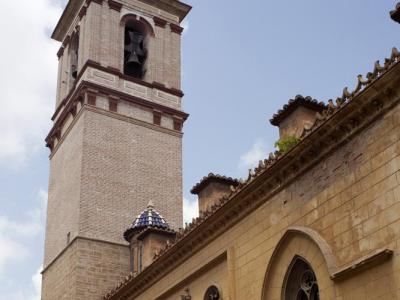
From the outside, the Church of Saint Nicholas and Saint Peter Martyr plays a clever trick on visitors. Its Gothic façade is handsome enough, but fairly restrained. Then you step through the doors and suddenly find yourself wondering whether you've accidentally wandered into a giant painted masterpiece.
Often nicknamed Valencia's own "Sistine Chapel," this church is a riot of color, movement, and imagination. The story began in the mid-13th century, shortly after the Christian reconquest of Valencia, when a mosque on this site gave way to a church dedicated to Saint Nicholas of Bari. Later, Saint Peter Martyr joined him as co-patron, giving the building a double helping of heavenly supervision.
The real visual fireworks arrived between 1690 and 1700, when the interior underwent a spectacular Baroque makeover. Nearly 2,000 square meters of frescoes spread across the vaults and upper walls, illustrating scenes from the lives of both saints alongside a cast of virtues, angels, and symbolic figures. Looking up here isn't optional—your eyes will be drafted into service almost immediately.
The church itself follows a simple Gothic layout: a single nave flanked by six side chapels, each home to notable artworks by Spanish masters. Yet it's the contrast between structure and decoration that makes the place so memorable. Gothic architecture provides the bones, while Baroque artistry supplies the dazzling costume.
For centuries, smoke, dust, and time gradually dimmed the paintings. Luckily, a major restoration in 2016 carefully peeled away the grime and revealed colors so vivid they seem freshly painted. Thanks to that, today, visitors can admire one of Valencia's most remarkable interiors—a place where medieval stone and Baroque imagination decided to become lifelong partners...
Often nicknamed Valencia's own "Sistine Chapel," this church is a riot of color, movement, and imagination. The story began in the mid-13th century, shortly after the Christian reconquest of Valencia, when a mosque on this site gave way to a church dedicated to Saint Nicholas of Bari. Later, Saint Peter Martyr joined him as co-patron, giving the building a double helping of heavenly supervision.
The real visual fireworks arrived between 1690 and 1700, when the interior underwent a spectacular Baroque makeover. Nearly 2,000 square meters of frescoes spread across the vaults and upper walls, illustrating scenes from the lives of both saints alongside a cast of virtues, angels, and symbolic figures. Looking up here isn't optional—your eyes will be drafted into service almost immediately.
The church itself follows a simple Gothic layout: a single nave flanked by six side chapels, each home to notable artworks by Spanish masters. Yet it's the contrast between structure and decoration that makes the place so memorable. Gothic architecture provides the bones, while Baroque artistry supplies the dazzling costume.
For centuries, smoke, dust, and time gradually dimmed the paintings. Luckily, a major restoration in 2016 carefully peeled away the grime and revealed colors so vivid they seem freshly painted. Thanks to that, today, visitors can admire one of Valencia's most remarkable interiors—a place where medieval stone and Baroque imagination decided to become lifelong partners...
5) Palace of the Alpuente Counts
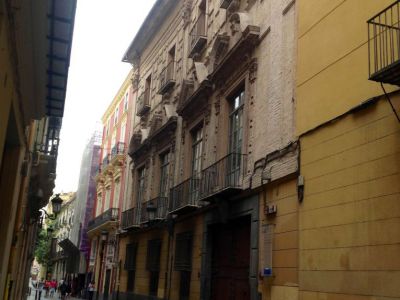
The Palace of the Alpuente Counts (Palacio de los Condes de Alpuente) is a remarkable architectural gem located in Valencia. This majestic building, with its rich history and distinctive features, stands as a testament to the prominence of the Alpuente Counts, one of the most distinguished families of the Valencian nobility.
The palace showcases a fascinating blend of architectural styles. It was constructed in the 18th century, built upon the foundations of an older Gothic palace. The façade of the Palace of the Alpuente Counts is adorned with exposed brick, providing a sense of grandeur and timeless elegance. The cladding elements, lintelled balconies with iron parapets, and baroque ornaments featuring split pediments at the top add to its unique aesthetic.
The façade is highlighted by three large pilasters, enhancing its presence. The building has a clear structure with multiple floors. The main floor has four balconies, while the second floor has smaller balconies. The first-floor balconies have split pediments, with curved outer ones and straight inner ones. The façade is decorated with burlesque masks, adding whimsy to the design.
Inside, there is a central open patio with grand carpanel arches, creating a sense of grandeur. A stone staircase provides access to the main floor, elegantly connecting the palace's different levels. The courtyard's layout reflects its Gothic origins, despite significant renovations over time.
Today, the Palace of the Alpuente Counts stands as a captivating architectural masterpiece that embodies the historical grandeur and artistic heritage of Valencia. It is a remarkable testament to the enduring legacy of the Alpuente Counts and serves as a reminder of the rich cultural tapestry woven throughout the city's history.
The palace showcases a fascinating blend of architectural styles. It was constructed in the 18th century, built upon the foundations of an older Gothic palace. The façade of the Palace of the Alpuente Counts is adorned with exposed brick, providing a sense of grandeur and timeless elegance. The cladding elements, lintelled balconies with iron parapets, and baroque ornaments featuring split pediments at the top add to its unique aesthetic.
The façade is highlighted by three large pilasters, enhancing its presence. The building has a clear structure with multiple floors. The main floor has four balconies, while the second floor has smaller balconies. The first-floor balconies have split pediments, with curved outer ones and straight inner ones. The façade is decorated with burlesque masks, adding whimsy to the design.
Inside, there is a central open patio with grand carpanel arches, creating a sense of grandeur. A stone staircase provides access to the main floor, elegantly connecting the palace's different levels. The courtyard's layout reflects its Gothic origins, despite significant renovations over time.
Today, the Palace of the Alpuente Counts stands as a captivating architectural masterpiece that embodies the historical grandeur and artistic heritage of Valencia. It is a remarkable testament to the enduring legacy of the Alpuente Counts and serves as a reminder of the rich cultural tapestry woven throughout the city's history.
6) Plaza de la Virgen (Virgin's Square) (must see)
Stand near the fountain in the center of Virgin's Square, and use it as your compass. This is one of Valencia’s most memorable gathering places, so take a slow turn before moving on—history is standing on almost every side of it, trying not to look too pleased with itself...
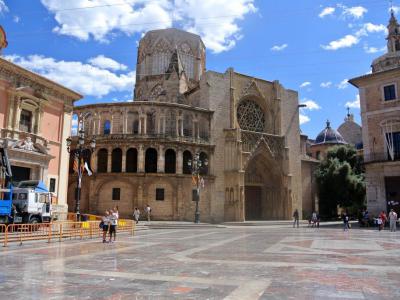
First thing you notice, of course, is the grand stone building with the tall bell tower. That is Valencia Cathedral with the Miguelete, which is easy to spot because it rises above the rooftops like the square’s watchful supervisor.
Then turn toward the pink-toned building with the rounded dome and softer, more intimate façade. This is the Basilica of Our Lady of the Forsaken, dedicated to Valencia’s beloved patron saint. Compared with the Cathedral, it feels more personal and devotional.
Beside the Cathedral, look for the Apostles’ Gate, a richly carved Gothic doorway. This is where the Water Court meets every Thursday at noon, continuing a centuries-old tradition of settling irrigation disputes. Yes, Valencia has a courtroom for water, and yes, it has outlasted many grander institutions...
Now look back at the fountain. Neptune reclines at its center, representing the Turia River, while eight female figures pour water from jars around him, symbolizing the ancient irrigation canals that helped make the region fertile. It is a fountain, a history lesson, and a very elegant plumbing tribute all at once.
During March, the square becomes especially spectacular for the Fallas festival, when locals in traditional dress bring flowers to the Virgin, turning the plaza into a colorful act of devotion. At any other time, find a nearby terrace to continue your research into Valencian culture. A glass of chilled horchata and a couple of sweet fartons should do the trick—strictly for educational purposes, of course...
First thing you notice, of course, is the grand stone building with the tall bell tower. That is Valencia Cathedral with the Miguelete, which is easy to spot because it rises above the rooftops like the square’s watchful supervisor.
Then turn toward the pink-toned building with the rounded dome and softer, more intimate façade. This is the Basilica of Our Lady of the Forsaken, dedicated to Valencia’s beloved patron saint. Compared with the Cathedral, it feels more personal and devotional.
Beside the Cathedral, look for the Apostles’ Gate, a richly carved Gothic doorway. This is where the Water Court meets every Thursday at noon, continuing a centuries-old tradition of settling irrigation disputes. Yes, Valencia has a courtroom for water, and yes, it has outlasted many grander institutions...
Now look back at the fountain. Neptune reclines at its center, representing the Turia River, while eight female figures pour water from jars around him, symbolizing the ancient irrigation canals that helped make the region fertile. It is a fountain, a history lesson, and a very elegant plumbing tribute all at once.
During March, the square becomes especially spectacular for the Fallas festival, when locals in traditional dress bring flowers to the Virgin, turning the plaza into a colorful act of devotion. At any other time, find a nearby terrace to continue your research into Valencian culture. A glass of chilled horchata and a couple of sweet fartons should do the trick—strictly for educational purposes, of course...
7) Pineda Palace
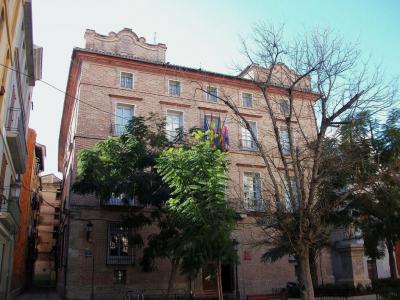
The Pineda Palace, also known as the Palace of Mayor Pineda, is an impressive neoclassical structure located in Valencia. It was originally built as the residence of Mayor Francisco Salvador de Pineda, lending it its current name.
The palace was constructed between 1728 and 1733. In 1902, the "Padres Maristas" occupied the palace, and in 1918, it was purchased by the "Congregation of Sisters of the Sacred Heart of Jesus and of the Holy Angels." It served as a convent, residence, and temporary home for up to 60 women. The palace survived the Spanish Civil War but was damaged in the 1957 flood. In 1980, the Generalitat Valenciana acquired and restored the palace from 1990 to 1992.
The palace has a neoclassical façade with two brick balconies. It's symmetrical, with small towers by the entrance. The Pineda coat of arms is displayed above the entrance, with a damaged but visible date of 1732, believed to be the building's foundation year. The shield also has an inscription in the Filacteria, indicating the charge and the holder's name.
The building is roughly rectangular, measuring about 23 by 34 meters. It has a central hallway, mezzanine level, two main floors, and an attic. A rear garden now serves as the cafeteria terrace. The palace has undergone renovations to adapt interior walls for education and add a turret to the rear facade. The exterior garden features a sculpture by Joan de Joanes.
The Pineda Palace currently houses classrooms and meeting rooms used by the Generalitat Valenciana, organizations, and educational/governmental institutions. It serves as the headquarters for the Menendez Pelayo International University and the Valencian Institute of Public Administration.
The palace was constructed between 1728 and 1733. In 1902, the "Padres Maristas" occupied the palace, and in 1918, it was purchased by the "Congregation of Sisters of the Sacred Heart of Jesus and of the Holy Angels." It served as a convent, residence, and temporary home for up to 60 women. The palace survived the Spanish Civil War but was damaged in the 1957 flood. In 1980, the Generalitat Valenciana acquired and restored the palace from 1990 to 1992.
The palace has a neoclassical façade with two brick balconies. It's symmetrical, with small towers by the entrance. The Pineda coat of arms is displayed above the entrance, with a damaged but visible date of 1732, believed to be the building's foundation year. The shield also has an inscription in the Filacteria, indicating the charge and the holder's name.
The building is roughly rectangular, measuring about 23 by 34 meters. It has a central hallway, mezzanine level, two main floors, and an attic. A rear garden now serves as the cafeteria terrace. The palace has undergone renovations to adapt interior walls for education and add a turret to the rear facade. The exterior garden features a sculpture by Joan de Joanes.
The Pineda Palace currently houses classrooms and meeting rooms used by the Generalitat Valenciana, organizations, and educational/governmental institutions. It serves as the headquarters for the Menendez Pelayo International University and the Valencian Institute of Public Administration.
8) Iglesia del Carmen
The Carmen Church and Old Convent offer a unique and authentic experience, slightly off the beaten path for tourists. Founded in 1281, this charming establishment holds a significant place in Valencia's history. Nestled in Carmen Square, it stands as an architectural marvel, preserving the city's rich historical and cultural heritage.
Presently, the church serves as the Santa Cruz parish, while the former convent has transformed into the Carmen Museum. The museum hosts captivating temporary exhibitions and maintains a connection with the Museum of Fine Arts.
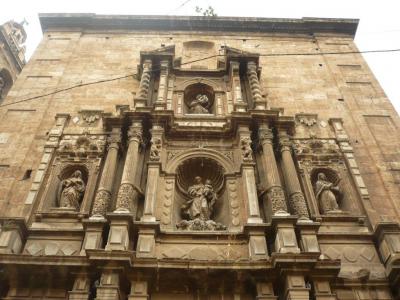
The construction of the church unfolded gradually, resulting in a diverse blend of architectural styles that emerged until the 17th century. It comprises various sections, including a medieval chapel, a Gothic cloister, a Renaissance cloister, and the new church, showcasing late Gothic and Renaissance elements. The façade boasts a touch of Baroque design, accompanied by a bell tower, while Neoclassical features contribute to its overall appeal. In essence, the Carmen Church and Old Convent offer something enchanting for every visitor.
Presently, the church serves as the Santa Cruz parish, while the former convent has transformed into the Carmen Museum. The museum hosts captivating temporary exhibitions and maintains a connection with the Museum of Fine Arts.
The construction of the church unfolded gradually, resulting in a diverse blend of architectural styles that emerged until the 17th century. It comprises various sections, including a medieval chapel, a Gothic cloister, a Renaissance cloister, and the new church, showcasing late Gothic and Renaissance elements. The façade boasts a touch of Baroque design, accompanied by a bell tower, while Neoclassical features contribute to its overall appeal. In essence, the Carmen Church and Old Convent offer something enchanting for every visitor.
9) Casa-Museo de las Rocas (Rocas House-Museum)
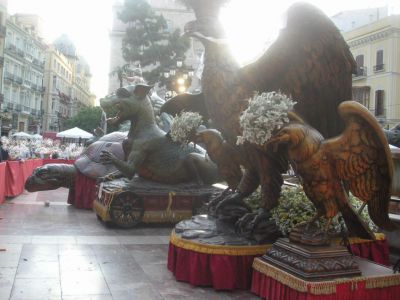
In Valencia’s historic El Carmen district, the Rocas House-Museum is where the city keeps some of its most theatrical religious traditions safely parked. The museum occupies a 15th-century building originally designed to store the famous “rocas”—large ceremonial floats used in the annual Corpus Christi procession. Dating back as far as the 16th century, these wooden giants were shaped like ancient ships, decorated with sculpture and paint, and sent through the streets like floating Bible stories on wheels.
And the rocas are only the beginning. Inside, you’ll also meet the “Gigantes,” towering figures who make ordinary parade costumes look frankly underambitious, along with the “Nanos,” their smaller, dwarf-like companions. Then comes the “Cuca Fera,” a turtle-dragon hybrid that looks as if medieval imagination had a very busy afternoon. It symbolizes fear brought under control through shared ritual. The “Tarasca,” another dragon-like creature with a woman riding on top, delivers the same message with extra drama: evil, yes—but evil on a leash...
The museum also displays costumes, instruments, posters, historic photographs, and objects used in the performances that still animate Valencia’s streets during Corpus Christi. Interactive displays and audiovisual material help explain how the celebration has changed over time while keeping its old sense of spectacle. In short, this museum of floats is Valencia’s centuries-old parade imagination, carefully stored indoors...
And the rocas are only the beginning. Inside, you’ll also meet the “Gigantes,” towering figures who make ordinary parade costumes look frankly underambitious, along with the “Nanos,” their smaller, dwarf-like companions. Then comes the “Cuca Fera,” a turtle-dragon hybrid that looks as if medieval imagination had a very busy afternoon. It symbolizes fear brought under control through shared ritual. The “Tarasca,” another dragon-like creature with a woman riding on top, delivers the same message with extra drama: evil, yes—but evil on a leash...
The museum also displays costumes, instruments, posters, historic photographs, and objects used in the performances that still animate Valencia’s streets during Corpus Christi. Interactive displays and audiovisual material help explain how the celebration has changed over time while keeping its old sense of spectacle. In short, this museum of floats is Valencia’s centuries-old parade imagination, carefully stored indoors...
10) Torres de Serranos (Serranos Towers) (must see)
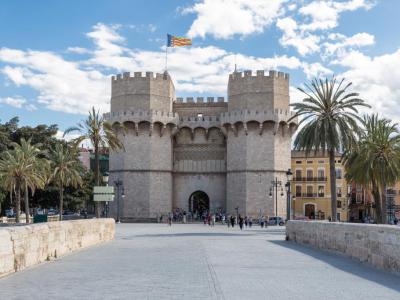
The Serranos Towers are among the last great survivors of Valencia’s medieval walls. Built in the 14th century, this grand gateway mixed serious defensive muscle with enough Gothic decoration to remind visitors that Valencia could protect itself and make an entrance at the same time...
The twin towers, topped with battlements, look ready for a siege. But the elegant stonework above the arch tells a different story. This was not just a military checkpoint; it was the city’s front door for kings, nobles, ambassadors, and anyone important enough to arrive with an audience.
One clever detail is hidden in plain sight. The back of the towers was left open, so, if the enemies ever captured them, they could not easily turn the structure against the city—medieval urban planning: beautiful, paranoid, and surprisingly practical... From the square behind, you can still see the chambers that later held noble prisoners between the 16th and 19th centuries. Even the four stone gargoyles seem to be keeping quiet about what they saw...
During the Spanish Civil War, the towers took on another role, becoming a secure vault for priceless artworks from Madrid’s Prado Museum. Indeed, not many city gates can claim such an eventful life that includes being a ceremonial entrance, a defensive stronghold, a prison, and even a temporary guardian of national treasures...
Today, you can climb the winding stairs to the terraces, where the views stretch over the old town, the Turia Garden, and the city beyond. There may be exhibitions inside, but the real pleasure is the climb itself: the stone, the shadows, the openings, and the feeling that the towers are still quietly doing their job.
The twin towers, topped with battlements, look ready for a siege. But the elegant stonework above the arch tells a different story. This was not just a military checkpoint; it was the city’s front door for kings, nobles, ambassadors, and anyone important enough to arrive with an audience.
One clever detail is hidden in plain sight. The back of the towers was left open, so, if the enemies ever captured them, they could not easily turn the structure against the city—medieval urban planning: beautiful, paranoid, and surprisingly practical... From the square behind, you can still see the chambers that later held noble prisoners between the 16th and 19th centuries. Even the four stone gargoyles seem to be keeping quiet about what they saw...
During the Spanish Civil War, the towers took on another role, becoming a secure vault for priceless artworks from Madrid’s Prado Museum. Indeed, not many city gates can claim such an eventful life that includes being a ceremonial entrance, a defensive stronghold, a prison, and even a temporary guardian of national treasures...
Today, you can climb the winding stairs to the terraces, where the views stretch over the old town, the Turia Garden, and the city beyond. There may be exhibitions inside, but the real pleasure is the climb itself: the stone, the shadows, the openings, and the feeling that the towers are still quietly doing their job.
11) Jardin del Turia (Turia Garden) (must see)
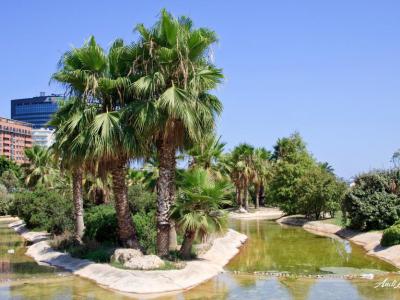
Valencians are particularly fond of the Turia Garden, and for good reason. This 9-kilometer green corridor occupies what was once the Turia River. After the devastating flood of 1957, the river was diverted south, and the old riverbed was turned into one of Europe’s finest urban parks. Opened in 1986, it now runs through Valencia with lawns, fountains, orange trees, palm-lined paths, sports areas, and cycle lanes.
A good place to start is near the Pont del Real, one of the historic bridges crossing the garden near its northern edge. You can identify the bridge by its pale stone arches, a traditional balustrade, and a noticeably older look than many nearby crossings. On top of it, look for the two small temple-like structures with statues—these are the bridge's clearest visual markers.
From here, look north, away from the old riverbed, and you’ll see the Royal Gardens, also known as Viveros. Identify them by their broad gates, mature trees, shaded paths, fountains, and formal flowerbeds. Once the site of a royal palace, the gardens are now ideal for a relaxed stroll. As you walk through, look for the “Four Seasons” sculptures by Genoese artist Ponzanelli.
Return to the garden and follow the former riverbed west. On the city side, watch for the Valencian Institute of Modern Art, or IVAM, easy to recognize by its large, modern façade and clean geometric lines. Inside, it presents bold contemporary works that may challenge, intrigue, and occasionally leave you nodding thoughtfully while pretending you understood everything...
Nearby, look for the historic Casa de la Beneficència complex, home to the Prehistory Museum. Its courtyards and traditional architecture set it apart from the more modern IVAM. The museum takes visitors far back before Roman Valencia, with tools, pottery, artifacts, and mysterious stone engravings from early communities in the region.
From here, continue southwest toward the Botanic Garden. Behind its enclosing walls, you’ll find more than 4,500 plant species arranged across themed collections, including palms, cacti, Mediterranean plants, and tropical specimens. It is quieter than the Turia itself and makes a pleasant stop for anyone who enjoys greenery without the joggers overtaking the scenery.
The Turia Garden is best enjoyed slowly, but a bicycle helps cover more ground. Follow the old river’s path, pause at bridges and museums, and enjoy the route where Valencia now walks, cycles, picnics, and occasionally pretends exercise was the plan all along...
A good place to start is near the Pont del Real, one of the historic bridges crossing the garden near its northern edge. You can identify the bridge by its pale stone arches, a traditional balustrade, and a noticeably older look than many nearby crossings. On top of it, look for the two small temple-like structures with statues—these are the bridge's clearest visual markers.
From here, look north, away from the old riverbed, and you’ll see the Royal Gardens, also known as Viveros. Identify them by their broad gates, mature trees, shaded paths, fountains, and formal flowerbeds. Once the site of a royal palace, the gardens are now ideal for a relaxed stroll. As you walk through, look for the “Four Seasons” sculptures by Genoese artist Ponzanelli.
Return to the garden and follow the former riverbed west. On the city side, watch for the Valencian Institute of Modern Art, or IVAM, easy to recognize by its large, modern façade and clean geometric lines. Inside, it presents bold contemporary works that may challenge, intrigue, and occasionally leave you nodding thoughtfully while pretending you understood everything...
Nearby, look for the historic Casa de la Beneficència complex, home to the Prehistory Museum. Its courtyards and traditional architecture set it apart from the more modern IVAM. The museum takes visitors far back before Roman Valencia, with tools, pottery, artifacts, and mysterious stone engravings from early communities in the region.
From here, continue southwest toward the Botanic Garden. Behind its enclosing walls, you’ll find more than 4,500 plant species arranged across themed collections, including palms, cacti, Mediterranean plants, and tropical specimens. It is quieter than the Turia itself and makes a pleasant stop for anyone who enjoys greenery without the joggers overtaking the scenery.
The Turia Garden is best enjoyed slowly, but a bicycle helps cover more ground. Follow the old river’s path, pause at bridges and museums, and enjoy the route where Valencia now walks, cycles, picnics, and occasionally pretends exercise was the plan all along...
