Custom Walk in Washington D.C., USA by lindz_chau_544394 created on 2026-06-16
Guide Location: USA » Washington D.C.
Guide Type: Custom Walk
# of Sights: 5
Tour Duration: 2 Hour(s)
Travel Distance: 5.8 Km or 3.6 Miles
Share Key: JE8N8
Guide Type: Custom Walk
# of Sights: 5
Tour Duration: 2 Hour(s)
Travel Distance: 5.8 Km or 3.6 Miles
Share Key: JE8N8
How It Works
Please retrieve this walk in the GPSmyCity app. Once done, the app will guide you from one tour stop to the next as if you had a personal tour guide. If you created the walk on this website or come to the page via a link, please follow the instructions below to retrieve the walk in the app.
Retrieve This Walk in App
Step 1. Download the app "GPSmyCity: Walks in 1K+ Cities" on Apple App Store or Google Play Store.



Step 2. In the GPSmyCity app, download(or launch) the guide "Washington D.C. Map and Walking Tours".
Step 3. Tap the menu button located at upper right corner of the "Walks" screen and select "Retrieve custom walk". Enter the share key: JE8N8
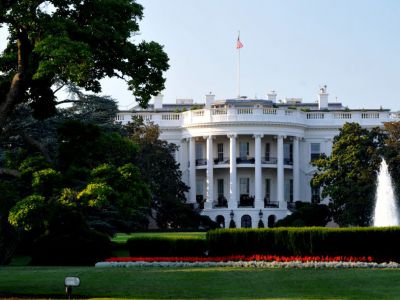
1) White House (must see)
The White House is the most famous address on Pennsylvania Avenue, and quite possibly the only home in America where moving in comes with a press corps, security briefings, and very little chance of a quiet morning coffee... It serves as both the home and office of the President of the United States, and over time, it has become one of the country’s most recognizable symbols. While it is not the first presidential residence, every U.S. president since John Adams has lived here, starting in 1800, when Washington, D.C., was still very much a work in progress.
The building was designed by Irish-born architect James Hoban, and construction began in 1792 with the laying of the cornerstone. Since then, almost every president has left some sort of mark on the place. Some changes were ambitious, some practical, and some probably started with the presidential version of home improvement fever...
Over the centuries, the White House has also had its dramatic moments. In 1814, during the War of 1812, British troops set fire to the building, thus giving the phrase “heated diplomacy” a whole new meaning. Rebuilding began soon after and was completed by 1817. The South Portico was added in 1824, the North Portico followed in 1830, and the West Wing arrived in 1901. The Oval Office came later, and after a 1929 fire damaged the West Wing, it was eventually moved to its present location in the 1930s.
By 1948, the building needed serious structural work. Decades of changes had taken their toll, so the interior was largely dismantled and rebuilt behind the outer walls. Much original craftsmanship was lost, but in the 1960s, Jacqueline Kennedy led a major redecoration effort, bringing historic furnishings back and restoring some of the White House’s older dignity.
Today, the White House has six levels, 132 rooms, and amenities that go well beyond the average family home, including a tennis court, swimming pool, bowling alley, and the First Garden. Public tours are limited and must be requested in advance through a Member of Congress.
If you do get inside, brush up on the history first so your self-guided visit means more than simply admiring chandeliers under surveillance. If you don't get a tour slot, take the classic photo outside, then head to the White House Visitor Center. After all, in Washington, even Plan B usually comes with exhibits, symbolism, and a gift shop...
The building was designed by Irish-born architect James Hoban, and construction began in 1792 with the laying of the cornerstone. Since then, almost every president has left some sort of mark on the place. Some changes were ambitious, some practical, and some probably started with the presidential version of home improvement fever...
Over the centuries, the White House has also had its dramatic moments. In 1814, during the War of 1812, British troops set fire to the building, thus giving the phrase “heated diplomacy” a whole new meaning. Rebuilding began soon after and was completed by 1817. The South Portico was added in 1824, the North Portico followed in 1830, and the West Wing arrived in 1901. The Oval Office came later, and after a 1929 fire damaged the West Wing, it was eventually moved to its present location in the 1930s.
By 1948, the building needed serious structural work. Decades of changes had taken their toll, so the interior was largely dismantled and rebuilt behind the outer walls. Much original craftsmanship was lost, but in the 1960s, Jacqueline Kennedy led a major redecoration effort, bringing historic furnishings back and restoring some of the White House’s older dignity.
Today, the White House has six levels, 132 rooms, and amenities that go well beyond the average family home, including a tennis court, swimming pool, bowling alley, and the First Garden. Public tours are limited and must be requested in advance through a Member of Congress.
If you do get inside, brush up on the history first so your self-guided visit means more than simply admiring chandeliers under surveillance. If you don't get a tour slot, take the classic photo outside, then head to the White House Visitor Center. After all, in Washington, even Plan B usually comes with exhibits, symbolism, and a gift shop...
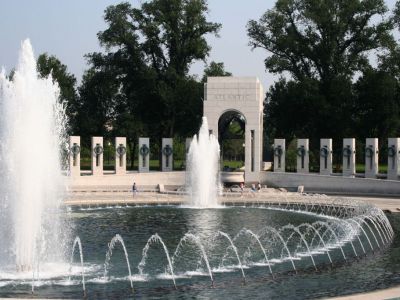
2) World War II Memorial (must see)
The World War II Memorial has a grand design that feels appropriate for a war that spanned the entire globe. Two arches at the ends of it symbolize the Pacific and Atlantic areas of fighting. Between them, 56 pillars form two great semicircles, representing the then 48 U.S. states, the District of Columbia, and the territories of Alaska, Hawaii, Puerto Rico, Guam, the U.S. Virgin Islands, American Samoa, and the Philippines.
Along the walls, bronze bas-relief panels show scenes from the Pacific and European theaters of war. These are not battle-movie explosions, but quieter snapshots of wartime life: soldiers landing, workers building, medics helping, families waiting, and a nation throwing itself into an enormous effort. And then, just when everything feels very solemn and official, up pops “Kilroy Was Here,” the famous wartime doodle that followed American GIs across continents like the world’s most determined graffiti artist.
On the west side is the Freedom Wall, one of the memorial’s most powerful features. It holds 4,048 gold stars, with each star representing 100 American service members who died or remain missing from World War II. In front of it, the Rainbow Pool reflects the stars in the water, creating a scene that is simple, formal, and deeply moving. It is the kind of place where even the most talkative visitor tends to lower their voice without being asked.
The memorial covers a little over seven acres, and nearly two-thirds of the site is made up of water or landscaping. That open space matters. It gives the arches, pillars, reliefs, and stars room to breathe, while giving visitors space to think about the scale of the war and the lives behind the numbers.
Indeed, this is one of Washington’s more formal memorials, and it carries that formality with purpose. Look closely at the relief panels for details of wartime service beyond the battlefield, then take time at the Freedom Wall.
Entry is free, and the site is open 24 hours a day, though rangers are usually on hand from around 10 am to 11 pm. A clear day is best for a visit, because shelter is limited, and comfortable shoes are a wise idea. This memorial was not designed for a quick glance; so give it time, walk the full space, and let its scale do its quiet work.
Along the walls, bronze bas-relief panels show scenes from the Pacific and European theaters of war. These are not battle-movie explosions, but quieter snapshots of wartime life: soldiers landing, workers building, medics helping, families waiting, and a nation throwing itself into an enormous effort. And then, just when everything feels very solemn and official, up pops “Kilroy Was Here,” the famous wartime doodle that followed American GIs across continents like the world’s most determined graffiti artist.
On the west side is the Freedom Wall, one of the memorial’s most powerful features. It holds 4,048 gold stars, with each star representing 100 American service members who died or remain missing from World War II. In front of it, the Rainbow Pool reflects the stars in the water, creating a scene that is simple, formal, and deeply moving. It is the kind of place where even the most talkative visitor tends to lower their voice without being asked.
The memorial covers a little over seven acres, and nearly two-thirds of the site is made up of water or landscaping. That open space matters. It gives the arches, pillars, reliefs, and stars room to breathe, while giving visitors space to think about the scale of the war and the lives behind the numbers.
Indeed, this is one of Washington’s more formal memorials, and it carries that formality with purpose. Look closely at the relief panels for details of wartime service beyond the battlefield, then take time at the Freedom Wall.
Entry is free, and the site is open 24 hours a day, though rangers are usually on hand from around 10 am to 11 pm. A clear day is best for a visit, because shelter is limited, and comfortable shoes are a wise idea. This memorial was not designed for a quick glance; so give it time, walk the full space, and let its scale do its quiet work.
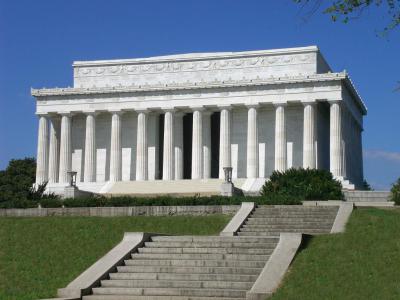
3) Lincoln Memorial (must see)
The Lincoln Memorial is one of those places in Washington, D.C. that needs very little introduction. Built in honor of Abraham Lincoln, the 16th president of the United States, it commemorates the man who led the country through the Civil War and became a lasting symbol of national unity. Architecturally, the memorial goes full ancient Greece, with a grand Doric temple design that speaks in the language of democracy, dignity, and very large columns...
Inside sits the famous statue of Lincoln, calm, massive, and looking as if he is silently judging the nation from his marble chair. Around him are two of his most important speeches: the Gettysburg Address and the Second Inaugural Address. Both are engraved on the walls, proving that powerful writing does not need five warm-up paragraphs and a dramatic title...
The idea for a Lincoln memorial began soon after his assassination, when the Lincoln Monument Association was formed in 1867. Actual planning, however, moved at a pace best described as historically patient. The memorial bill was finally signed by President William Howard Taft in 1911, and the monument was completed for about two million dollars, which in today's prices might just cover the scaffolding, paperwork, and several very serious meetings...
Over time, the Lincoln Memorial became more than a tribute to one president. It turned into a national stage for speeches, gatherings, and protests, most famously Martin Luther King Jr.’s “I Have a Dream” speech in 1963. To find the spot, stand on the steps and look down for the marked stone block. It is a small detail, but a powerful one: the place where one of America’s most famous calls for justice was delivered.
Managed by the National Park Service and listed on the National Register of Historic Places, the memorial is open 24 hours a day. For the best experience, come early in the morning before the crowds arrive, or later in the evening when the lights give the whole place a solemn, cinematic glow. Bring water in summer, and maybe a snack too, because the view is excellent, but the refreshment stands are somewhat overpriced and not exactly the capital’s finest culinary achievement...
Before you leave, turn around. The Reflecting Pool, the Washington Monument, and the long sweep of the National Mall unfold before you — one of those rare postcard views that actually deserves the postcard.
Inside sits the famous statue of Lincoln, calm, massive, and looking as if he is silently judging the nation from his marble chair. Around him are two of his most important speeches: the Gettysburg Address and the Second Inaugural Address. Both are engraved on the walls, proving that powerful writing does not need five warm-up paragraphs and a dramatic title...
The idea for a Lincoln memorial began soon after his assassination, when the Lincoln Monument Association was formed in 1867. Actual planning, however, moved at a pace best described as historically patient. The memorial bill was finally signed by President William Howard Taft in 1911, and the monument was completed for about two million dollars, which in today's prices might just cover the scaffolding, paperwork, and several very serious meetings...
Over time, the Lincoln Memorial became more than a tribute to one president. It turned into a national stage for speeches, gatherings, and protests, most famously Martin Luther King Jr.’s “I Have a Dream” speech in 1963. To find the spot, stand on the steps and look down for the marked stone block. It is a small detail, but a powerful one: the place where one of America’s most famous calls for justice was delivered.
Managed by the National Park Service and listed on the National Register of Historic Places, the memorial is open 24 hours a day. For the best experience, come early in the morning before the crowds arrive, or later in the evening when the lights give the whole place a solemn, cinematic glow. Bring water in summer, and maybe a snack too, because the view is excellent, but the refreshment stands are somewhat overpriced and not exactly the capital’s finest culinary achievement...
Before you leave, turn around. The Reflecting Pool, the Washington Monument, and the long sweep of the National Mall unfold before you — one of those rare postcard views that actually deserves the postcard.
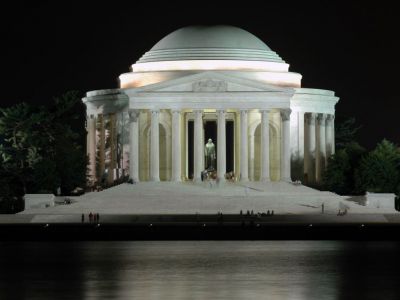
4) Thomas Jefferson Memorial (must see)
The Thomas Jefferson Memorial looks across the water of the Tidal Basin with the calm confidence of a man who helped write the Declaration of Independence and probably had very firm opinions about punctuation...
Compared with some of Washington’s busier memorials, this one often feels quieter. Its location outside the main stretch of the National Mall means fewer crowds and more breathing room, which seems rather fitting for a monument dedicated to a thinker, writer, architect, diplomat, president, and general overachiever.
The idea for a Jefferson memorial appeared in 1901, but didn't materialize until Jefferson’s 200th anniversary, on April 13, 1943, after decades of debate, design changes, and arguments over how grand the whole thing should be. Some wanted something as monumental as the Washington Monument or the Lincoln Memorial. In the end, Jefferson’s own love of classical architecture won the argument.
And classical it certainly is, with a broad circular form, a sweeping portico, tall columns, and a dome that gives it a Roman-temple-meets-American-history atmosphere. Beneath the dome stands a 19-foot bronze statue of the man himself, looking all thoughtful and composed.
Interestingly, the statue seen today was not the one present at the dedication. During World War II, bronze was in short supply, so the original figure was made of plaster and painted to look like bronze. The real bronze version arrived four years later, once wartime priorities had shifted.
Around the walls are inscriptions from Jefferson’s writings, including passages on liberty, government, and human rights. Notice the phrase “inalienable rights,” which follows Jefferson’s original wording in the Declaration of Independence, rather than the final version’s “unalienable rights.” Yes, even the birth of a nation came with edits...
The surrounding setting is part of the appeal. During cherry blossom season, the memorial becomes one of the city’s most photographed spots, thanks to the trees gifted by Japan. At any time of year, the steps offer excellent views across the Tidal Basin and toward the D.C. skyline. Walk around the back as well; it is often quieter and gives you a fine look at the architecture and the water.
The memorial is open 24 hours a day, with rangers usually on duty from 9 am to 11:30 pm, except on major holidays. Before leaving, head downstairs for the bookstore, educational displays, and restrooms—because even noble ideals are easier to contemplate after a practical pause...
Compared with some of Washington’s busier memorials, this one often feels quieter. Its location outside the main stretch of the National Mall means fewer crowds and more breathing room, which seems rather fitting for a monument dedicated to a thinker, writer, architect, diplomat, president, and general overachiever.
The idea for a Jefferson memorial appeared in 1901, but didn't materialize until Jefferson’s 200th anniversary, on April 13, 1943, after decades of debate, design changes, and arguments over how grand the whole thing should be. Some wanted something as monumental as the Washington Monument or the Lincoln Memorial. In the end, Jefferson’s own love of classical architecture won the argument.
And classical it certainly is, with a broad circular form, a sweeping portico, tall columns, and a dome that gives it a Roman-temple-meets-American-history atmosphere. Beneath the dome stands a 19-foot bronze statue of the man himself, looking all thoughtful and composed.
Interestingly, the statue seen today was not the one present at the dedication. During World War II, bronze was in short supply, so the original figure was made of plaster and painted to look like bronze. The real bronze version arrived four years later, once wartime priorities had shifted.
Around the walls are inscriptions from Jefferson’s writings, including passages on liberty, government, and human rights. Notice the phrase “inalienable rights,” which follows Jefferson’s original wording in the Declaration of Independence, rather than the final version’s “unalienable rights.” Yes, even the birth of a nation came with edits...
The surrounding setting is part of the appeal. During cherry blossom season, the memorial becomes one of the city’s most photographed spots, thanks to the trees gifted by Japan. At any time of year, the steps offer excellent views across the Tidal Basin and toward the D.C. skyline. Walk around the back as well; it is often quieter and gives you a fine look at the architecture and the water.
The memorial is open 24 hours a day, with rangers usually on duty from 9 am to 11:30 pm, except on major holidays. Before leaving, head downstairs for the bookstore, educational displays, and restrooms—because even noble ideals are easier to contemplate after a practical pause...
5) Washington Monument (must see)
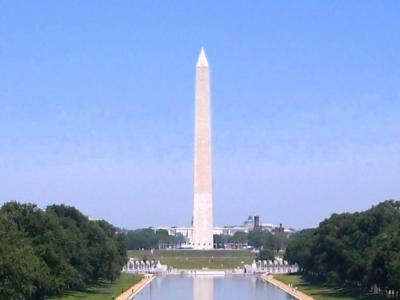
Rising near the center of the National Mall, this towering monument honors America’s first president with the kind of quiet confidence that does not need columns, statues, or dramatic poses — just a very large amount of stone and a skyline all to itself...
The idea for a monument to George Washington was discussed as early as 1783. Its design was finally approved in 1847, and it was much more ambitious than the clean obelisk we see today. The original plan called for the shaft to rise above a grand temple filled with artifacts honoring American presidents and national heroes. Eventually, that part was dropped, leaving the monument with its simpler, sharper silhouette.
The cornerstone was laid on July 4, 1848, during a Masonic ceremony. Even better, the same ceremonial trowel George Washington had used for the Capitol cornerstone was brought out for the occasion, because apparently historic tools also enjoy a good comeback...
Construction, however, was anything but smooth. Work slowed, funding became a headache, politics got involved, and the Civil War brought everything to a stop. Building resumed in 1880, and the capstone was finally placed on December 6, 1884. The result is a hollow stone shaft with an elevator to the top and a staircase of 897 steps, just in case anyone feels the need to earn their panorama the hard way...
Along that staircase are 188 carved commemorative stones, donated by states, cities, organizations, and foreign contributors. The original hope was that many of these stones would arrive with donations attached to help fund the construction. In several cases, the stones arrived, but the money did not. History, it seems, also has unpaid invoices...
Today, visitors come for the symbolism, the scale, and above all, the view. From the top, Washington, D.C., spreads out in grand geometric fashion, with the Mall, memorials, museums, and government buildings lining up like the city is posing for its official portrait.
Entry is free, but tickets are required for everyone going inside. One person can usually reserve up to six tickets for a party, and advance tickets are available for a small fee. So, plan ahead, choose your time, and go up if you can. In a city built on big ideas and bigger monuments, this is the one that lets you rise above it all—literally.
The idea for a monument to George Washington was discussed as early as 1783. Its design was finally approved in 1847, and it was much more ambitious than the clean obelisk we see today. The original plan called for the shaft to rise above a grand temple filled with artifacts honoring American presidents and national heroes. Eventually, that part was dropped, leaving the monument with its simpler, sharper silhouette.
The cornerstone was laid on July 4, 1848, during a Masonic ceremony. Even better, the same ceremonial trowel George Washington had used for the Capitol cornerstone was brought out for the occasion, because apparently historic tools also enjoy a good comeback...
Construction, however, was anything but smooth. Work slowed, funding became a headache, politics got involved, and the Civil War brought everything to a stop. Building resumed in 1880, and the capstone was finally placed on December 6, 1884. The result is a hollow stone shaft with an elevator to the top and a staircase of 897 steps, just in case anyone feels the need to earn their panorama the hard way...
Along that staircase are 188 carved commemorative stones, donated by states, cities, organizations, and foreign contributors. The original hope was that many of these stones would arrive with donations attached to help fund the construction. In several cases, the stones arrived, but the money did not. History, it seems, also has unpaid invoices...
Today, visitors come for the symbolism, the scale, and above all, the view. From the top, Washington, D.C., spreads out in grand geometric fashion, with the Mall, memorials, museums, and government buildings lining up like the city is posing for its official portrait.
Entry is free, but tickets are required for everyone going inside. One person can usually reserve up to six tickets for a party, and advance tickets are available for a small fee. So, plan ahead, choose your time, and go up if you can. In a city built on big ideas and bigger monuments, this is the one that lets you rise above it all—literally.
