Custom Walk in Naples, Italy by emullenrec2013_9d9edf created on 2026-06-24
Guide Location: Italy » Naples
Guide Type: Custom Walk
# of Sights: 9
Tour Duration: 3 Hour(s)
Travel Distance: 7.1 Km or 4.4 Miles
Share Key: NLPGY
Guide Type: Custom Walk
# of Sights: 9
Tour Duration: 3 Hour(s)
Travel Distance: 7.1 Km or 4.4 Miles
Share Key: NLPGY
How It Works
Please retrieve this walk in the GPSmyCity app. Once done, the app will guide you from one tour stop to the next as if you had a personal tour guide. If you created the walk on this website or come to the page via a link, please follow the instructions below to retrieve the walk in the app.
Retrieve This Walk in App
Step 1. Download the app "GPSmyCity: Walks in 1K+ Cities" on Apple App Store or Google Play Store.



Step 2. In the GPSmyCity app, download(or launch) the guide "Naples Map and Walking Tours".
Step 3. Tap the menu button located at upper right corner of the "Walks" screen and select "Retrieve custom walk". Enter the share key: NLPGY
1) Catacombe di San Gennaro (Catacombs of San Gennaro) (must see)
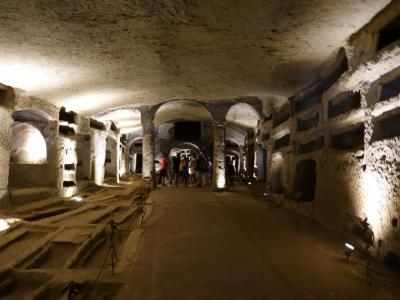
The Catacombs of San Gennaro, located in Naples, Italy, are subterranean sites used for Christian burials and religious activities during the paleo-Christian era. These catacombs were carved into tuff, a porous stone, and are situated in the northern part of Naples, on the slope leading up to Capodimonte. They consist of two levels known as San Gennaro Superiore and San Gennaro Inferiore. These catacombs are situated beneath the Rione Sanità neighborhood of Naples, which is sometimes referred to as the "Valley of the Dead." The site is now easily recognizable due to the presence of the large church of Madre del Buon Consiglio.
The tombs found in these catacombs come in various forms, including loculi, arcosoli, pits dug into the ground, and, less commonly, sarcophagi made of tuff or reused marble and stone from older graves. Loculi are simple, vertically aligned burial sites and represent the most basic style of burial discovered in the catacombs. However, they do not necessarily indicate the status of the deceased. On the other hand, arcosoli, designed for family burial areas, are incorporated into the walls of the galleries and cubicles and exhibit a more sophisticated design compared to loculi. Some of these arcosoli are adorned with mosaics or frescoes, and burials may be stacked horizontally. This type of burial is also found in Sicilian catacombs and is sometimes referred to as a "Siracusa" burial, commonly found in Greek catacombs. Occasionally, child burials are located in the lower part of the lunette, showcasing the efficient use of space in the catacombs.
The catacombs have yielded approximately 200 oil lamps dating from late antiquity to the Middle Ages. Among these lamps, 54 are of the African red slip variety. A comprehensive study of all the lamps will eventually provide insights into trade routes during the historical period, as well as the demographics of people who used the catacombs for burial and religious rituals. The oldest oil lamps discovered in these catacombs date back to the latter half of the third century and were produced in Naples itself.
The tombs found in these catacombs come in various forms, including loculi, arcosoli, pits dug into the ground, and, less commonly, sarcophagi made of tuff or reused marble and stone from older graves. Loculi are simple, vertically aligned burial sites and represent the most basic style of burial discovered in the catacombs. However, they do not necessarily indicate the status of the deceased. On the other hand, arcosoli, designed for family burial areas, are incorporated into the walls of the galleries and cubicles and exhibit a more sophisticated design compared to loculi. Some of these arcosoli are adorned with mosaics or frescoes, and burials may be stacked horizontally. This type of burial is also found in Sicilian catacombs and is sometimes referred to as a "Siracusa" burial, commonly found in Greek catacombs. Occasionally, child burials are located in the lower part of the lunette, showcasing the efficient use of space in the catacombs.
The catacombs have yielded approximately 200 oil lamps dating from late antiquity to the Middle Ages. Among these lamps, 54 are of the African red slip variety. A comprehensive study of all the lamps will eventually provide insights into trade routes during the historical period, as well as the demographics of people who used the catacombs for burial and religious rituals. The oldest oil lamps discovered in these catacombs date back to the latter half of the third century and were produced in Naples itself.
2) San Gaudioso Catacombs
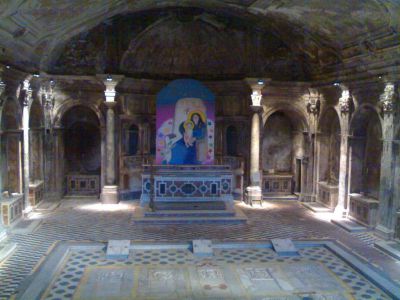
The San Gaudioso Catacombs are a maze of Paleo-Christian burial chambers located beneath the Church of Santa Maria della Sanità in Naples. The graves of bishops and common people are found here.
Tunnels were dug into the Capodimonte hillside by the ancient Romans to serve as water cisterns. They later became burial chambers for ancient Christians from the 5th century. Saint Gaudiosus, a North African bishop and hermit, was enshrined here in 452 and it became an important place of pilgrimage.
The San Gaudioso Catacombs have many 5th and 6th century frescoes and mosaics. They also present a range of burial techniques. A unique technique, used between 1620 and 1650, was to wall a corpse in a standing position in a niche with the head cemented to the wall. The body was punctured to drain its fluids. After all the fluids drained away, the headless body was buried and a frescoed portrait of the deceased was painted below the skull of illustrious men and women. Several bodies of poorer families were drained away in the same niche without a fresco to preserve their memory. A tour takes visitors past the crypt of the Church of Santa Maria della Sanità in Naples to view the rows of stone niches in the catacombs today.
Tunnels were dug into the Capodimonte hillside by the ancient Romans to serve as water cisterns. They later became burial chambers for ancient Christians from the 5th century. Saint Gaudiosus, a North African bishop and hermit, was enshrined here in 452 and it became an important place of pilgrimage.
The San Gaudioso Catacombs have many 5th and 6th century frescoes and mosaics. They also present a range of burial techniques. A unique technique, used between 1620 and 1650, was to wall a corpse in a standing position in a niche with the head cemented to the wall. The body was punctured to drain its fluids. After all the fluids drained away, the headless body was buried and a frescoed portrait of the deceased was painted below the skull of illustrious men and women. Several bodies of poorer families were drained away in the same niche without a fresco to preserve their memory. A tour takes visitors past the crypt of the Church of Santa Maria della Sanità in Naples to view the rows of stone niches in the catacombs today.
3) San Lorenzo Maggiore's Excavations
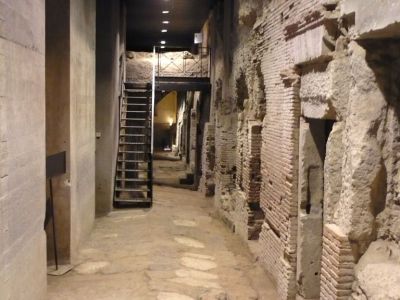
The Excavations of San Lorenzo Maggiore show a complete Roman forum and earlier Greek Agora. They are located under the church of San Lorenzo Maggiore. The site was opened to the public after 25 years of painstaking work by archeologists.
The excavations of San Lorenzo Maggiore have revealed a wealth of details about the city of Naples in classical times. The site of Piazza San Gaetano near the church was once a Greek Agora or marketplace. Later, it became a Forum or Roman marketplace. Excavations have also revealed the great hall and three naves of a sixth century paleo-Christian church. Under the Sala Capitolare of the San Lorenzo Maggiore church are the medieval city halls. The excavated area has been opened to the public since 1992.
The excavations of San Lorenzo Maggiore are the only complete excavations around Naples. They show life in the city through the ages. Only half of the original Roman forum has been excavated and visitors can view it by entering the marked gate near the entrance of the church. One can see a whole ancient street from the 4th century BC complete with workshops, laundries and the public treasury. Most of the objects from the archeological finds are at a nearby museum, housed in a converted four story Palazzo.
The excavations of San Lorenzo Maggiore have revealed a wealth of details about the city of Naples in classical times. The site of Piazza San Gaetano near the church was once a Greek Agora or marketplace. Later, it became a Forum or Roman marketplace. Excavations have also revealed the great hall and three naves of a sixth century paleo-Christian church. Under the Sala Capitolare of the San Lorenzo Maggiore church are the medieval city halls. The excavated area has been opened to the public since 1992.
The excavations of San Lorenzo Maggiore are the only complete excavations around Naples. They show life in the city through the ages. Only half of the original Roman forum has been excavated and visitors can view it by entering the marked gate near the entrance of the church. One can see a whole ancient street from the 4th century BC complete with workshops, laundries and the public treasury. Most of the objects from the archeological finds are at a nearby museum, housed in a converted four story Palazzo.
4) Naples Underground (must see)
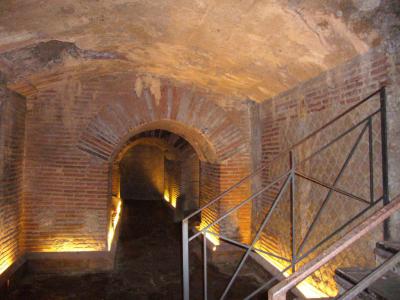
Naples Underground reveals a hidden city beneath the streets of Naples, where over two thousand years of history are preserved below ground level. This vast network of tunnels, chambers, and cavities began in ancient times, when Greek settlers excavated soft volcanic tuff to extract building stone for Neápolis. The same underground spaces were later expanded by the Romans, who transformed them into an extensive system of aqueducts and cisterns that supplied water to the growing city above.
For centuries, this subterranean infrastructure played a crucial role in daily life. Wells connected private homes and public fountains to the underground reservoirs, while maintenance corridors allowed access to the water system. When the aqueduct fell out of use in the 19th century, many of these spaces were gradually forgotten, sealed off, or repurposed for storage. Their strategic depth, however, gave them new relevance during the 20th century.
During World War II, large sections of the underground were converted into air-raid shelters. Thousands of Neapolitans took refuge here during bombing raids, leaving behind inscriptions, drawings, and everyday objects that document civilian life during the war.
Two unique sights worth seeing are the Greco-Roman Theatre and the Hypogeum Gardens. The former is notable for the presence of a private dressing room believed to have belonged to the Roman Emperor Nero. The latter’s name means “underground gardens”, and they represent an experimental project aimed at growing plants away from light and urban pollution.
Naples Underground offers a striking contrast to the city above. If you wish to encounter ancient Greek foundations, Roman water channels and improvised wartime rooms, you have to join a guided tour at the ticket office.
For centuries, this subterranean infrastructure played a crucial role in daily life. Wells connected private homes and public fountains to the underground reservoirs, while maintenance corridors allowed access to the water system. When the aqueduct fell out of use in the 19th century, many of these spaces were gradually forgotten, sealed off, or repurposed for storage. Their strategic depth, however, gave them new relevance during the 20th century.
During World War II, large sections of the underground were converted into air-raid shelters. Thousands of Neapolitans took refuge here during bombing raids, leaving behind inscriptions, drawings, and everyday objects that document civilian life during the war.
Two unique sights worth seeing are the Greco-Roman Theatre and the Hypogeum Gardens. The former is notable for the presence of a private dressing room believed to have belonged to the Roman Emperor Nero. The latter’s name means “underground gardens”, and they represent an experimental project aimed at growing plants away from light and urban pollution.
Naples Underground offers a striking contrast to the city above. If you wish to encounter ancient Greek foundations, Roman water channels and improvised wartime rooms, you have to join a guided tour at the ticket office.
5) Spaccanapoli Street (must see)
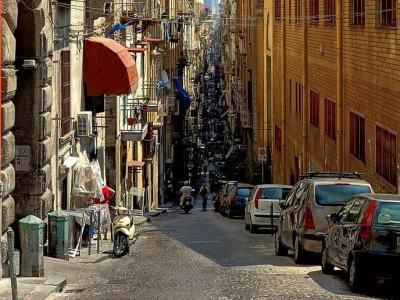
Spaccanapoli is one of the oldest and most defining streets in Naples, cutting a straight line through the historic centre and giving the impression of splitting the city in two. Its name comes from this very effect-spacca Napoli literally means “it splits Naples.” The street follows the route of one of the original decumani, the main east–west roads of the ancient Greek city of Neápolis, laid out in the 5th century BC and still forming the backbone of the historic centre today.
Because Spaccanapoli sits directly on this ancient grid, walking along it is a journey through multiple layers of history compressed into a single corridor. Roman foundations lie beneath medieval buildings, while Renaissance palaces, Baroque churches, and modest residential structures line the route. Over the centuries, the street has been known by different names along its length, but it has always functioned as a central artery for trade, religion, and daily life. Unlike larger avenues created by later urban planning, Spaccanapoli grew organically, shaped by continuous use rather than formal redesign.
Spaccanapoli offers one of the most immediate and unfiltered encounters with Naples. Churches such as Santa Chiara open directly onto the street, while small workshops, bookshops, bakeries, and family-run businesses operate at ground level. Laundry lines overhead and scooters threading through narrow gaps further reinforce the street’s lived-in character. One of the more unusual stops is the Doll Hospital, which specialises in restoring statues and antique dolls. Children are often drawn to the display of miniature hospital beds, while an adjoining museum showcases a collection of antique dolls and toys.
Because Spaccanapoli sits directly on this ancient grid, walking along it is a journey through multiple layers of history compressed into a single corridor. Roman foundations lie beneath medieval buildings, while Renaissance palaces, Baroque churches, and modest residential structures line the route. Over the centuries, the street has been known by different names along its length, but it has always functioned as a central artery for trade, religion, and daily life. Unlike larger avenues created by later urban planning, Spaccanapoli grew organically, shaped by continuous use rather than formal redesign.
Spaccanapoli offers one of the most immediate and unfiltered encounters with Naples. Churches such as Santa Chiara open directly onto the street, while small workshops, bookshops, bakeries, and family-run businesses operate at ground level. Laundry lines overhead and scooters threading through narrow gaps further reinforce the street’s lived-in character. One of the more unusual stops is the Doll Hospital, which specialises in restoring statues and antique dolls. Children are often drawn to the display of miniature hospital beds, while an adjoining museum showcases a collection of antique dolls and toys.
6) Museo Cappella Sansevero (Sansevero Chapel Museum) (must see)
The Sansevero Chapel Museum was originally built in the late 16th century by Giovan Francesco di Sangro as a private family burial place, but it owes its present form to Raimondo di Sangro, Prince of Sansevero, who transformed it in the mid-18th century.
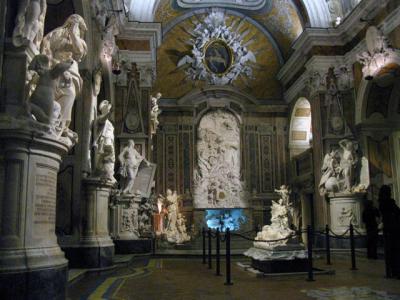
The chapel is home to nearly thirty important artworks. At the centre of the chapel lies its most famous work: the Veiled Christ, sculpted in 1753 by artist Giuseppe Sanmartino. Carved from a single block of marble, the figure is covered by a delicately rendered shroud that appears almost transparent, revealing the anatomy beneath with remarkable realism.
The chapel’s walls are lined with marble sculptures, each representing a moral virtue linked to members of the Sansevero family. Among these sculptures, two major highlights stand on either side of the Veiled Christ, toward the north-west. One of them is called Modesty, and it depicts a veiled female figure, celebrated for the delicate treatment of marble. The second is called Release from Deception, and it portrays a fisherman escaping from a fishing net with the help of an angel. The sculpture’s appeal lies in its extraordinary craftsmanship, as the intricate fishing net is carved entirely from marble.
Above, the painted ceiling, titled Glory of Paradise, gives the chapel a dynamic feel by illustrating a celestial vision of Paradise, filled with swirling clouds, angels, and radiant light, opening upward above the nave.
On the right side of the chapel, relative to the entrance, in the third archway, you will notice a narrow 19th-century spiral staircase that leads to the basement. There, you encounter the so-called Anatomical Machines: two preserved human skeletons displaying the circulatory system in extraordinary detail. While the bones are indeed human, the blood vessels are a highly intricate reconstruction made of metal wires, silk, and wax.
The chapel is home to nearly thirty important artworks. At the centre of the chapel lies its most famous work: the Veiled Christ, sculpted in 1753 by artist Giuseppe Sanmartino. Carved from a single block of marble, the figure is covered by a delicately rendered shroud that appears almost transparent, revealing the anatomy beneath with remarkable realism.
The chapel’s walls are lined with marble sculptures, each representing a moral virtue linked to members of the Sansevero family. Among these sculptures, two major highlights stand on either side of the Veiled Christ, toward the north-west. One of them is called Modesty, and it depicts a veiled female figure, celebrated for the delicate treatment of marble. The second is called Release from Deception, and it portrays a fisherman escaping from a fishing net with the help of an angel. The sculpture’s appeal lies in its extraordinary craftsmanship, as the intricate fishing net is carved entirely from marble.
Above, the painted ceiling, titled Glory of Paradise, gives the chapel a dynamic feel by illustrating a celestial vision of Paradise, filled with swirling clouds, angels, and radiant light, opening upward above the nave.
On the right side of the chapel, relative to the entrance, in the third archway, you will notice a narrow 19th-century spiral staircase that leads to the basement. There, you encounter the so-called Anatomical Machines: two preserved human skeletons displaying the circulatory system in extraordinary detail. While the bones are indeed human, the blood vessels are a highly intricate reconstruction made of metal wires, silk, and wax.
7) Zoological Museum
The Zoological Museum is a teaching and research facility attached the University of Naples. It has some unique natural history exhibits on display.
The Zoological Museum of Naples was founded by Gioacchino Napoleone Murat, Napoleon’s brother in law and King of Naples between 1808 and 1815. The museum opened its doors in 1811 with Luigi Petagna as its first curator. It housed the natural history collections of the Royal House of Bourbon and the private collection of eminent physician, Giuseppe Saverio Poli. The building housing the museum was severely damaged during World War II. It was restored under the capable guidance of curator, Mario Salfi, between 1948 and 1970.
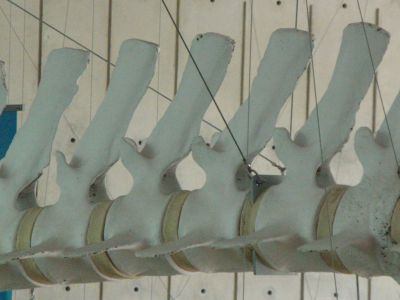
The donation of the collection of natural history exhibits by physicist and natural historian Giuseppe Saverio Poli greatly enriched the displays at the Zoological Museum. The collection includes rare species of southern European butterflies, fresh water and marine mollusks and marine organisms and sponges unique to the Mediterranean Sea. Other exhibits are from the royal collection with over 3,000 embalmed birds, a collection of vertebrates including the skeleton of a 20 meter long whale found on the beach of Naples, mummified crocodiles from Egypt and the skeleton of an elephant. Guides are available at the museum for the convenience of international visitors.
The Zoological Museum of Naples was founded by Gioacchino Napoleone Murat, Napoleon’s brother in law and King of Naples between 1808 and 1815. The museum opened its doors in 1811 with Luigi Petagna as its first curator. It housed the natural history collections of the Royal House of Bourbon and the private collection of eminent physician, Giuseppe Saverio Poli. The building housing the museum was severely damaged during World War II. It was restored under the capable guidance of curator, Mario Salfi, between 1948 and 1970.
The donation of the collection of natural history exhibits by physicist and natural historian Giuseppe Saverio Poli greatly enriched the displays at the Zoological Museum. The collection includes rare species of southern European butterflies, fresh water and marine mollusks and marine organisms and sponges unique to the Mediterranean Sea. Other exhibits are from the royal collection with over 3,000 embalmed birds, a collection of vertebrates including the skeleton of a 20 meter long whale found on the beach of Naples, mummified crocodiles from Egypt and the skeleton of an elephant. Guides are available at the museum for the convenience of international visitors.
8) Napoli Lungomare (Naples Promenade) (must see)
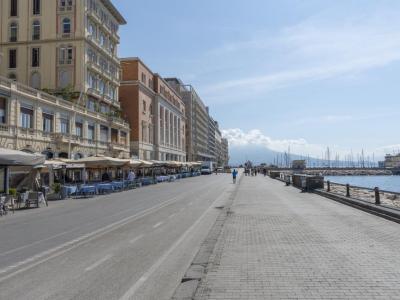
The Naples Promenade, formally known as the Caracciolo Promenade, runs along the Bay of Naples with open views across the water toward Mount Vesuvius and the islands beyond. It took shape between the late 19th and early 20th centuries as part of a major coastal redevelopment, during which large sections of shoreline were reclaimed between 1869 and 1880 to create a broad, modern road flanking the Villa Comunale Park and the Chiaia Riviera Street. This transformation shifted the city’s edge away from purely maritime functions and established a new public space designed for walking, leisure, and scenic appreciation, quickly earning it a reputation as one of Europe’s most attractive urban seafronts.
The name Caracciolo Promenade commemorates Francesco Caracciolo, an admiral and hero of the short-lived Neapolitan Republic, who was executed in 1799 on the orders of Admiral Nelson and cast into the Gulf of Naples, his body later washing ashore near Santa Lucia. This historical association adds a sober layer to what is otherwise experienced today as a calm, expansive stretch of green, blue, and open air. The promenade unfolds northward toward Mergellina, with long sightlines not only across the bay but also back toward the hills of Vomero and Posillipo that rise behind the city.
Along the route stands Castle of the Egg, the city’s oldest surviving fortification, positioned on a small peninsula and wrapped in legends linking it to Virgil and a mythical egg believed to safeguard Naples. Nearby, the promenade softens into an informal seaside landscape, with small free beaches, white rocks where people stretch out in the sun, and spots offering boat rentals for short trips along the coast. Kiosks selling cold drinks and snacks line the way, while cafes and restaurants open onto the seafront with outdoor tables serving seafood and traditional Neapolitan pizza.
The Promenade offers a pause from the dense, energetic streets inland, inviting slow walks, cycling, or simply sitting by the water as the light shifts across the bay.
The name Caracciolo Promenade commemorates Francesco Caracciolo, an admiral and hero of the short-lived Neapolitan Republic, who was executed in 1799 on the orders of Admiral Nelson and cast into the Gulf of Naples, his body later washing ashore near Santa Lucia. This historical association adds a sober layer to what is otherwise experienced today as a calm, expansive stretch of green, blue, and open air. The promenade unfolds northward toward Mergellina, with long sightlines not only across the bay but also back toward the hills of Vomero and Posillipo that rise behind the city.
Along the route stands Castle of the Egg, the city’s oldest surviving fortification, positioned on a small peninsula and wrapped in legends linking it to Virgil and a mythical egg believed to safeguard Naples. Nearby, the promenade softens into an informal seaside landscape, with small free beaches, white rocks where people stretch out in the sun, and spots offering boat rentals for short trips along the coast. Kiosks selling cold drinks and snacks line the way, while cafes and restaurants open onto the seafront with outdoor tables serving seafood and traditional Neapolitan pizza.
The Promenade offers a pause from the dense, energetic streets inland, inviting slow walks, cycling, or simply sitting by the water as the light shifts across the bay.
9) Villa Comunale
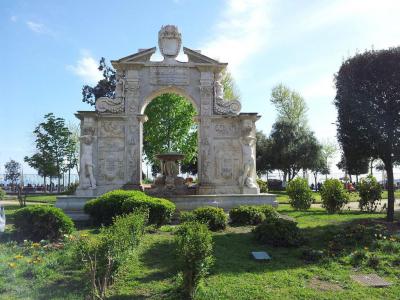
The Villa Comunale is a park running along the shoreline of Naples. It was once a royal promenade and commands spectacular views of the bay.
The Villa Comunale was initially a paved promenade commissioned in 1697 by the Spanish viceroy, the Duke of Medinaceli. He also commissioned the thirteen fountains and rows of willow trees along the path. The park was later laid on reclaimed land in the 1780s under the orders of the Bourbon king, Ferdinand IV. Until the unification of Italy in 1871, members of the public were allowed only on September 9th during the Festival of Piedigrotta. Today it is a popular green space within the city and still attracts crowds during the festival which includes a song writing competition.
The Villa Comunale or People’s Park has well manicured lawns and tree lined paths today. It is studded with fountains, neoclassical sculptures and busts commemorating heroes who were born in Naples in the late 19th and early 20th century. The Anton Dohrn Aquarium and Zoological station, a well known scientific research center and the Naples Tennis Club are located here. A popular antique market called the Fiera Antiquaria Napoletana, is held in the Villa Comunale on weekends all through the year.
The Villa Comunale was initially a paved promenade commissioned in 1697 by the Spanish viceroy, the Duke of Medinaceli. He also commissioned the thirteen fountains and rows of willow trees along the path. The park was later laid on reclaimed land in the 1780s under the orders of the Bourbon king, Ferdinand IV. Until the unification of Italy in 1871, members of the public were allowed only on September 9th during the Festival of Piedigrotta. Today it is a popular green space within the city and still attracts crowds during the festival which includes a song writing competition.
The Villa Comunale or People’s Park has well manicured lawns and tree lined paths today. It is studded with fountains, neoclassical sculptures and busts commemorating heroes who were born in Naples in the late 19th and early 20th century. The Anton Dohrn Aquarium and Zoological station, a well known scientific research center and the Naples Tennis Club are located here. A popular antique market called the Fiera Antiquaria Napoletana, is held in the Villa Comunale on weekends all through the year.
