Custom Walk in Ibiza, Spain by smart_lady_533722 created on 2026-06-24
Guide Location: Spain » Ibiza
Guide Type: Custom Walk
# of Sights: 13
Tour Duration: 2 Hour(s)
Travel Distance: 2.1 Km or 1.3 Miles
Share Key: NTSAS
Guide Type: Custom Walk
# of Sights: 13
Tour Duration: 2 Hour(s)
Travel Distance: 2.1 Km or 1.3 Miles
Share Key: NTSAS
How It Works
Please retrieve this walk in the GPSmyCity app. Once done, the app will guide you from one tour stop to the next as if you had a personal tour guide. If you created the walk on this website or come to the page via a link, please follow the instructions below to retrieve the walk in the app.
Retrieve This Walk in App
Step 1. Download the app "GPSmyCity: Walks in 1K+ Cities" on Apple App Store or Google Play Store.



Step 2. In the GPSmyCity app, download(or launch) the guide "Ibiza Map and Walking Tours".
Step 3. Tap the menu button located at upper right corner of the "Walks" screen and select "Retrieve custom walk". Enter the share key: NTSAS
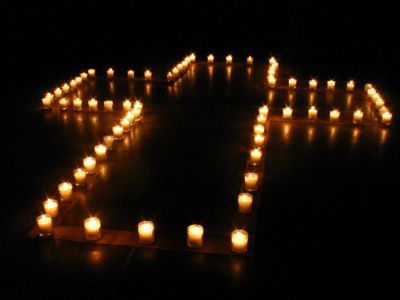
1) Iglesia de Santa Cruz (Holy Cross Church)
The Holy Cross Church (Iglesia de Santa Cruz) is a prominent neo-Romanic structure located in the bustling center of Ibiza Town. Construction of the church began on June 24, 1948, when the first stone was blessed at the site known as the Bishop’s Garden. Although the building was not fully completed for several years, parts of the church were gradually opened for worship.
Completed in 1957, the church was established to serve the growing community in the Eixample area of the town. It is now one of the largest and most spacious churches on the island. The church’s unique architectural style sets it apart from traditional Ibizan churches, which are characterized by whitewashed walls and simple exteriors. Instead, the Holy Cross Church features five half-barrel arches that create a grand interior atmosphere, while the exterior reflects a more modern design.
During a recent restoration, a large statue of Christ on the cross was added, enhancing the church’s spiritual ambiance. The parish festival is celebrated annually on September 14th, the feast of the Exaltation of the Holy Cross, drawing locals and visitors alike to this vibrant community hub.
Whether you are seeking a moment of quiet reflection or looking to experience a piece of Ibiza’s modern religious history, the Holy Cross Church welcomes visitors year-round. Masses are held daily, and the serene atmosphere of the church provides a peaceful retreat from the lively surroundings of Ibiza Town.
Completed in 1957, the church was established to serve the growing community in the Eixample area of the town. It is now one of the largest and most spacious churches on the island. The church’s unique architectural style sets it apart from traditional Ibizan churches, which are characterized by whitewashed walls and simple exteriors. Instead, the Holy Cross Church features five half-barrel arches that create a grand interior atmosphere, while the exterior reflects a more modern design.
During a recent restoration, a large statue of Christ on the cross was added, enhancing the church’s spiritual ambiance. The parish festival is celebrated annually on September 14th, the feast of the Exaltation of the Holy Cross, drawing locals and visitors alike to this vibrant community hub.
Whether you are seeking a moment of quiet reflection or looking to experience a piece of Ibiza’s modern religious history, the Holy Cross Church welcomes visitors year-round. Masses are held daily, and the serene atmosphere of the church provides a peaceful retreat from the lively surroundings of Ibiza Town.
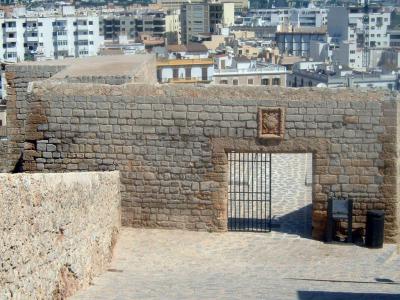
2) Baluard de Sant Pere (St. Pere Bastion)
One of the defensive bastions built throughout the Renaissance period, the Baluard de Sant Pere is a UNESCO World Heritage Site found in the heart of the walled enclosure of Dalt Vila, now open to the public. Otherwise known as Portal Nou (New Gateway), this is one of the two main entrances to the Old Town of Ibiza, located next to the park of Queen Sofia.
Crowned with the coat of arms of the Crown of Aragon, the bastion links the park with Plaza del Sol through a stair-filled tunnel: 50 meters long and 3 meters high. The name Portal Nou is probably due to the fact that it replaced the old gateway of dels Aiguaders, which disappeared following the construction of the Renaissance walls. It was designed by the architect Giovanni Battista Calvi.
The Baluard de Sant Pere contains a museum with audiovisual presentations detailing the ingenious construction methods used on the city’s ramparts. Among other things here you will find the original 16th-century wooden doors, intriguing displays of ancient weaponry and other artifacts. Also, climbing to the upper terrace, will afford you an excellent view of Ibiza. The site also frequently hosts open-air concerts.
Crowned with the coat of arms of the Crown of Aragon, the bastion links the park with Plaza del Sol through a stair-filled tunnel: 50 meters long and 3 meters high. The name Portal Nou is probably due to the fact that it replaced the old gateway of dels Aiguaders, which disappeared following the construction of the Renaissance walls. It was designed by the architect Giovanni Battista Calvi.
The Baluard de Sant Pere contains a museum with audiovisual presentations detailing the ingenious construction methods used on the city’s ramparts. Among other things here you will find the original 16th-century wooden doors, intriguing displays of ancient weaponry and other artifacts. Also, climbing to the upper terrace, will afford you an excellent view of Ibiza. The site also frequently hosts open-air concerts.
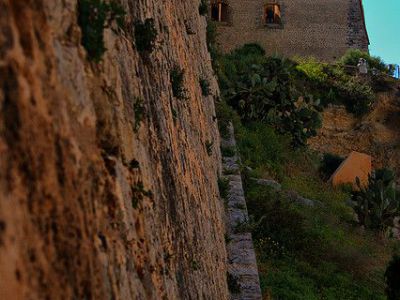
3) Baluard de Sant Jaume (Bastion of Sant Jaume)
The Bastion of Sant Jaume (Baluard de Sant Jaume) is located on the southwestern side of the fortified Dalt Vila district in Ibiza. As one of the seven colossal bastions that rise from the walls encircling the Old Town, it stands as a testament to the region’s historical defense strategies and Renaissance architecture.
Inside this imposing bastion, visitors will find a comprehensive display of Renaissance weaponry and military technology. The exhibits provide insight into the development of armaments and fortifications used to protect the town and its inhabitants throughout history. Among the showcased items are bombs, pistols, swords, lances, and halberds, accompanied by informative plaques detailing their use and historical context.
The bastion is also home to interactive exhibits, making it an engaging experience for visitors of all ages. Children can try on replica armor, handle some of the weapons, and even attempt to lift cannonballs, bringing a tactile dimension to the historical displays. This hands-on approach allows guests to connect more deeply with the past and the region’s martial heritage.
Beyond the exhibits, the bastion’s viewing platform offers a stunning panorama of Ibiza’s Old Town and the surrounding landscape. The terrace, lined with historic cannons, provides a perfect vantage point for those wanting to capture the beauty of the dark green mountains and the picturesque cityscape.
Opened to the public in 2008, the museum within the Bastion of Sant Jaume welcomes visitors from spring through fall, Tuesday to Sunday, with additional group viewings available during the winter by prior arrangement. Easily accessible on foot or by bus, the bastion is situated near other notable attractions, including the Capella de Sant Ciriac, the Museu Puget, and the Plaza Reina Sofia, making it an essential stop on any tour of Dalt Vila’s historic offerings.
Inside this imposing bastion, visitors will find a comprehensive display of Renaissance weaponry and military technology. The exhibits provide insight into the development of armaments and fortifications used to protect the town and its inhabitants throughout history. Among the showcased items are bombs, pistols, swords, lances, and halberds, accompanied by informative plaques detailing their use and historical context.
The bastion is also home to interactive exhibits, making it an engaging experience for visitors of all ages. Children can try on replica armor, handle some of the weapons, and even attempt to lift cannonballs, bringing a tactile dimension to the historical displays. This hands-on approach allows guests to connect more deeply with the past and the region’s martial heritage.
Beyond the exhibits, the bastion’s viewing platform offers a stunning panorama of Ibiza’s Old Town and the surrounding landscape. The terrace, lined with historic cannons, provides a perfect vantage point for those wanting to capture the beauty of the dark green mountains and the picturesque cityscape.
Opened to the public in 2008, the museum within the Bastion of Sant Jaume welcomes visitors from spring through fall, Tuesday to Sunday, with additional group viewings available during the winter by prior arrangement. Easily accessible on foot or by bus, the bastion is situated near other notable attractions, including the Capella de Sant Ciriac, the Museu Puget, and the Plaza Reina Sofia, making it an essential stop on any tour of Dalt Vila’s historic offerings.
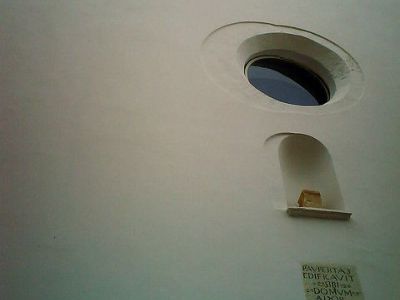
4) Església de Santa Maria de Gràcia (Church of Santa Maria de Gràcia)
The Church of Santa Maria de Gràcia, also known as the Church of l'Hospitalet (Església de l’Hospitalet), is an emblematic historical and architectural landmark located in the Dalt Vila historical quarter of Ibiza, a UNESCO World Heritage Site. The church was built on the site of a former medieval hospital known as the Hospital of Arrabal. This hospital, dating back to 1410, housed a chapel dedicated to Mary Full of Grace and was funded by Universitat, a local government body of medieval Ibiza.
Following the abolition of the Universitat Government at the end of the 17th century, the hospital was closed. The Bishop of Tarragona, Josep Mora, ordered the construction of a new grand church, which was completed in 1708. The church's architecture combines Baroque and Neoclassical elements, owing to significant restorations carried out in the 18th century. Its layout follows a Latin-cross floor plan with a single rectangular nave, a transept, and side chapels on the left side, while the right side contains niches. The nave is topped with a semi-spherical dome supported by pendentives, adorned with the ducal coat of arms.
The whitewashed exterior of the church is characterized by its simplicity and features a notable rose window. Two Baroque-style entrance doorways give access to the interior. The belfry, added in the 17th century, houses three bells: Santa María de Gràcia (affectionately known as “Tin”), Santa Beatriz (no longer in use), and Nuestra Señora de la Salud (“Tan”). In 1889, a clock was installed in the bell tower through the financial support of the local community.
Inside, the church features a barrel vault nave, frescoes, and a main chapel with a balcony and grille-formerly a reserved area for the Counts of Gelves, enabling them to attend mass in a privileged setting. The church now serves not only as a place of worship but also as a cultural venue for modern art exhibitions related to Ibiza’s artistic heritage.
The Church of Santa Maria de Gràcia stands as a testament to Ibiza's rich historical and architectural evolution, blending religious significance with cultural and artistic expression.
Following the abolition of the Universitat Government at the end of the 17th century, the hospital was closed. The Bishop of Tarragona, Josep Mora, ordered the construction of a new grand church, which was completed in 1708. The church's architecture combines Baroque and Neoclassical elements, owing to significant restorations carried out in the 18th century. Its layout follows a Latin-cross floor plan with a single rectangular nave, a transept, and side chapels on the left side, while the right side contains niches. The nave is topped with a semi-spherical dome supported by pendentives, adorned with the ducal coat of arms.
The whitewashed exterior of the church is characterized by its simplicity and features a notable rose window. Two Baroque-style entrance doorways give access to the interior. The belfry, added in the 17th century, houses three bells: Santa María de Gràcia (affectionately known as “Tin”), Santa Beatriz (no longer in use), and Nuestra Señora de la Salud (“Tan”). In 1889, a clock was installed in the bell tower through the financial support of the local community.
Inside, the church features a barrel vault nave, frescoes, and a main chapel with a balcony and grille-formerly a reserved area for the Counts of Gelves, enabling them to attend mass in a privileged setting. The church now serves not only as a place of worship but also as a cultural venue for modern art exhibitions related to Ibiza’s artistic heritage.
The Church of Santa Maria de Gràcia stands as a testament to Ibiza's rich historical and architectural evolution, blending religious significance with cultural and artistic expression.
5) Sant Ciriac Chapel
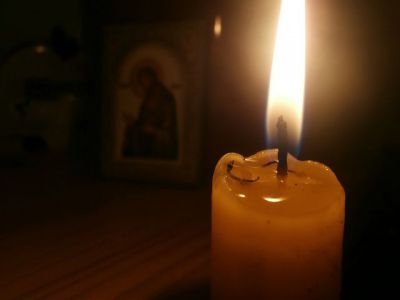
Nestled near the old town of Ibiza City, the Sant Ciriac Chapel is a modest yet historically significant monument. Built in 1754 by the Eivissa City Council, this chapel commemorates Sant Ciriac, the city's patron saint since 1650. Despite its small size, the chapel holds immense importance in illustrating the religious and historical fabric of the island.
Sant Ciriac Chapel stands at the beginning of the street that shares its name and is just a short walk from the Convent de Ses Monges Tancades The chapel is believed to have been constructed on the exact spot where Catalan forces entered the city in 1235, leading to the conquest of the Moorish rulers. Legend has it that the two Moorish kings who ruled the island at the time were embroiled in a bitter dispute, which ultimately made it easier for the Christian Catalans to seize control.
The chapel’s unique interior feature is a simulated tunnel entrance below the altar, symbolizing the path taken by the Catalan conquerors. This arch, located under a statue of Sant Ciriac, is said to have been the route through which the invaders passed during the conquest. A local tradition suggests that tossing a coin through this arch brings good luck to visitors.
Every year, on August 8th, the feast day of Sant Ciriac, Ibiza celebrates its patron saint and the anniversary of the Catalan conquest. Although small, the Sant Ciriac Chapel remains a significant site for both locals and tourists who are interested in the rich history of Ibiza.
Sant Ciriac Chapel stands at the beginning of the street that shares its name and is just a short walk from the Convent de Ses Monges Tancades The chapel is believed to have been constructed on the exact spot where Catalan forces entered the city in 1235, leading to the conquest of the Moorish rulers. Legend has it that the two Moorish kings who ruled the island at the time were embroiled in a bitter dispute, which ultimately made it easier for the Christian Catalans to seize control.
The chapel’s unique interior feature is a simulated tunnel entrance below the altar, symbolizing the path taken by the Catalan conquerors. This arch, located under a statue of Sant Ciriac, is said to have been the route through which the invaders passed during the conquest. A local tradition suggests that tossing a coin through this arch brings good luck to visitors.
Every year, on August 8th, the feast day of Sant Ciriac, Ibiza celebrates its patron saint and the anniversary of the Catalan conquest. Although small, the Sant Ciriac Chapel remains a significant site for both locals and tourists who are interested in the rich history of Ibiza.
6) Saint Mary of Ibiza Cathedral (must see)
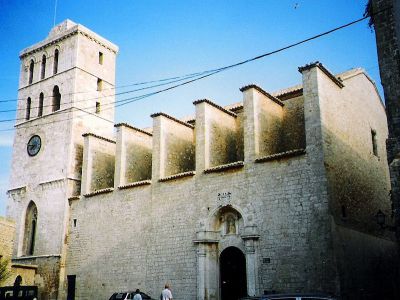
The Saint Mary of Ibiza Cathedral is a major landmark on the island. It has stood at the top the old town of Ibiza since the 13th century. Once you step inside the walls of the Ibiza's historical quarter, your eyes are instantly drawn to the imposing fortified walls of the church.
Following the Catalan Conquest in 1235 when the Christian conquesters ousted the Moorish from “Yebisah”, a grand cathedral was commissioned for the town. It is said that the church was built upon the site of a former Moorish mosque, which was a common practice in colonial Spain to impose the Christian faith to the local population.
The Gothic style tower and chapel are part of the original construction and the interior of the church was redone in the Baroque style in the 18th century. The ancient Monstrance made of silver and gold and dating from 1399 is the cathedral’s most treasured artifact.
The eye-catching Madonna, known as Our Lady of the Snows, is another key feature of the cathedral. Inside the cathedral there is a Diocesan Museum where you can learn more about the church’s historical influence in Ibiza. Admission is free.
Following the Catalan Conquest in 1235 when the Christian conquesters ousted the Moorish from “Yebisah”, a grand cathedral was commissioned for the town. It is said that the church was built upon the site of a former Moorish mosque, which was a common practice in colonial Spain to impose the Christian faith to the local population.
The Gothic style tower and chapel are part of the original construction and the interior of the church was redone in the Baroque style in the 18th century. The ancient Monstrance made of silver and gold and dating from 1399 is the cathedral’s most treasured artifact.
The eye-catching Madonna, known as Our Lady of the Snows, is another key feature of the cathedral. Inside the cathedral there is a Diocesan Museum where you can learn more about the church’s historical influence in Ibiza. Admission is free.
7) Baluard de Sant Bernat (Bastion of Sant Bernat)
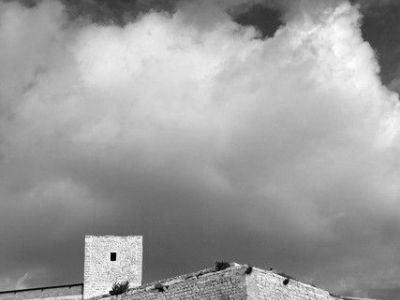
The Bastion of Sant Bernat, part of the historic Dalt Vila fortifications in Ibiza Town, is a remarkable reminder of the island's turbulent past. Constructed in the 16th century to protect the city from pirate raids and foreign invaders, this bastion is one of the oldest defensive structures in the Balearic Islands. Situated on the western end of the town’s coastal fortifications, it offers sweeping views of the Mediterranean Sea and the surrounding area, making it a popular stop for visitors exploring the ancient walls.
The bastion forms part of a larger network of seven interconnected bastions that encircle Ibiza's Old Town, all of which are accessible through a series of well-marked pathways. Each bastion showcases different aspects of the island's military history, from the advancement of military technology to the daily lives of the soldiers stationed there. The route from Sant Bernat leads to the nearby bastions of Sant Jordi and Sant Jaume, passing by the impressive Ibiza Castle (Castell de Eivissa), which was once an army barracks.
Originally constructed during Spain's Golden Age, the bastions, including Sant Bernat, played a critical role in defending Ibiza’s residents and securing the island’s prosperity. Today, the site is open to visitors and offers a range of exhibits, including military uniforms, armor, and artillery from the 16th to the 18th centuries. The interactive displays provide a hands-on experience, allowing guests to try lifting cannonballs or wielding replica swords while learning about the evolution of military strategy over three centuries.
Although plans were set in motion to transform the nearby Castle into a luxury hotel in 2007, archaeological discoveries have since put the project on hold. Nonetheless, the Bastion of Sant Bernat remains a key historical attraction, where visitors can step back in time and witness the might of Spain’s military past amid stunning sea views and centuries-old stonework.
The bastion forms part of a larger network of seven interconnected bastions that encircle Ibiza's Old Town, all of which are accessible through a series of well-marked pathways. Each bastion showcases different aspects of the island's military history, from the advancement of military technology to the daily lives of the soldiers stationed there. The route from Sant Bernat leads to the nearby bastions of Sant Jordi and Sant Jaume, passing by the impressive Ibiza Castle (Castell de Eivissa), which was once an army barracks.
Originally constructed during Spain's Golden Age, the bastions, including Sant Bernat, played a critical role in defending Ibiza’s residents and securing the island’s prosperity. Today, the site is open to visitors and offers a range of exhibits, including military uniforms, armor, and artillery from the 16th to the 18th centuries. The interactive displays provide a hands-on experience, allowing guests to try lifting cannonballs or wielding replica swords while learning about the evolution of military strategy over three centuries.
Although plans were set in motion to transform the nearby Castle into a luxury hotel in 2007, archaeological discoveries have since put the project on hold. Nonetheless, the Bastion of Sant Bernat remains a key historical attraction, where visitors can step back in time and witness the might of Spain’s military past amid stunning sea views and centuries-old stonework.
8) Castle of Ibiza (must see)
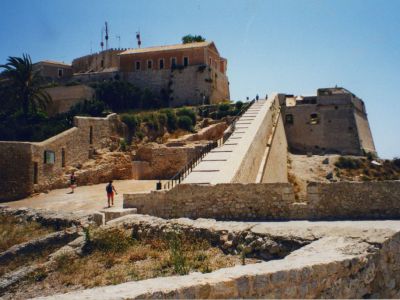
The Castle of Ibiza, or Castell d'Eivissa in Catalan, can be argued to be the heart of the island. The castle grounds are located at the top of the fortified Upper Town. The castle is comprised of numerous buildings that include the Tower of Homage, the 8th century Almudaina, the governor's home and the 18th century infantry barracks.
The original foundations of the castle were created in the 12th century, though additions and restorations were continued for hundreds of years. Unfortunately, the castle fell into extreme disrepair and is now in a partially derelict state. Recent restorations have allowed portions of the castle to be open to the public.
Reconstruction efforts have been primarily focused on the Sant Jaume Bastion and the Sant Pere Bastion. Each of these bastions offer exhibitions that are open to the public. While visitors cannot enter the main castle, it is worthwhile to tour both of these bastions and the castle grounds.
The Sant Jaume Bastion is now a military museum. It houses a weapons exhibition with a focus on military technology from the 16th and 18th centuries. Visitors are welcome to touch the items on display, which include cannons, mortar, muskets, helmets and swords.
The Sant Pere Bastion shows the history of the castle. Tourists can see how the city wall was built through an audio visual display. The exhibition includes a reproduction of Renaissance-era scaffolding. Both bastions were designed by Giovanni Battista Calvi in 1555.
The buildings are open from Tuesday through Sunday throughout the year. During the winter months, from October to March, the hours are 10 AM to 4:30 PM on weekdays and 10 AM to 2 PM on weekends. From April to September, hours are 10 AM to 2 PM Tuesday through Sunday. The buildings are closed on bank holidays and from December 10 to February 28.
The original foundations of the castle were created in the 12th century, though additions and restorations were continued for hundreds of years. Unfortunately, the castle fell into extreme disrepair and is now in a partially derelict state. Recent restorations have allowed portions of the castle to be open to the public.
Reconstruction efforts have been primarily focused on the Sant Jaume Bastion and the Sant Pere Bastion. Each of these bastions offer exhibitions that are open to the public. While visitors cannot enter the main castle, it is worthwhile to tour both of these bastions and the castle grounds.
The Sant Jaume Bastion is now a military museum. It houses a weapons exhibition with a focus on military technology from the 16th and 18th centuries. Visitors are welcome to touch the items on display, which include cannons, mortar, muskets, helmets and swords.
The Sant Pere Bastion shows the history of the castle. Tourists can see how the city wall was built through an audio visual display. The exhibition includes a reproduction of Renaissance-era scaffolding. Both bastions were designed by Giovanni Battista Calvi in 1555.
The buildings are open from Tuesday through Sunday throughout the year. During the winter months, from October to March, the hours are 10 AM to 4:30 PM on weekdays and 10 AM to 2 PM on weekends. From April to September, hours are 10 AM to 2 PM Tuesday through Sunday. The buildings are closed on bank holidays and from December 10 to February 28.
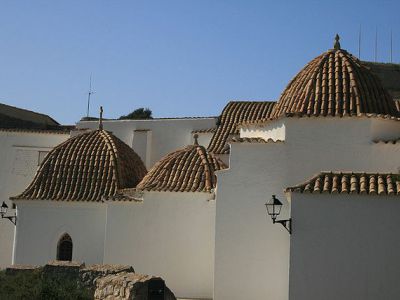
9) St. Vincent and St. James Church and Convent
The Saint Vincent and Saint James Church and Convent is nestled in the Old Town of Ibiza. Established in 1592 as a convent church, it was not granted public church status to the San Pedro Apostol Parish until 1929. Inside the church there are several chapels that can be visited and which provide a glimpse of the “old Ibiza”.
The architecture of the church is an excellent example of the blending of Moorish and Christian influences on the island. Inside the church there is rich iconic artwork and many statues and grottoes featuring sumptuous gold leaf.
Several chapels feature impressive frescoes adorned with religious artworks. They include chapels of Madre de Dios del Rosario, Immaculate Conception and San Antonio. Each of these chapels has a distinctive style featuring architecture from the 16th to the 18th centuries.
The church is dedicated to Holy Christ of the Cemetery, and the site of the previous convent cemetery is where the Town Hall now stands. The church can be visited every day, except on Mondays.
The architecture of the church is an excellent example of the blending of Moorish and Christian influences on the island. Inside the church there is rich iconic artwork and many statues and grottoes featuring sumptuous gold leaf.
Several chapels feature impressive frescoes adorned with religious artworks. They include chapels of Madre de Dios del Rosario, Immaculate Conception and San Antonio. Each of these chapels has a distinctive style featuring architecture from the 16th to the 18th centuries.
The church is dedicated to Holy Christ of the Cemetery, and the site of the previous convent cemetery is where the Town Hall now stands. The church can be visited every day, except on Mondays.
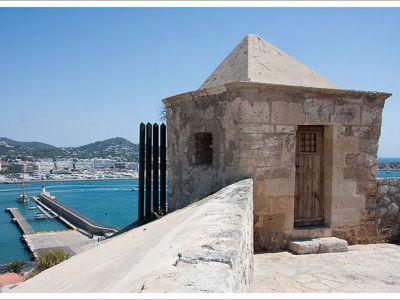
10) Baluard de Santa Llúcia (Santa Llúcia Bastion)
Whenever you visit the Dalt Vila, make sure to go up to the Baluard de Santa Lucía. This is the largest bastion in the fortified Old Town of Ibiza – designed in 1575 by the Swiss military engineer Giovan Giacomo Paleari Fratino (1520–1586), known as El Fratin or Il Fratino ("The Little Friar"), who served the Spanish Emperor Charles V and his son Philip II.
The structure has a rather unusual, asymmetrical plan, with original canons still seen at the top, that once guarded the upper town. Part of the bastion is the so-called Polvorin, a building that used to serve as a powder and weapons depot – currently an exhibition hall. The bastion is also frequently used as a venue for concerts or other events, including parties for the International Music Summit.
Other than that, Santa Lucía offers fantastic views over the harbor and the Gulf of Ibiza, as well as onto the roofs of the old houses of the Sa Penya district, formerly a fishing quarter and now one of the town’s most picturesque neighborhoods.
The structure has a rather unusual, asymmetrical plan, with original canons still seen at the top, that once guarded the upper town. Part of the bastion is the so-called Polvorin, a building that used to serve as a powder and weapons depot – currently an exhibition hall. The bastion is also frequently used as a venue for concerts or other events, including parties for the International Music Summit.
Other than that, Santa Lucía offers fantastic views over the harbor and the Gulf of Ibiza, as well as onto the roofs of the old houses of the Sa Penya district, formerly a fishing quarter and now one of the town’s most picturesque neighborhoods.
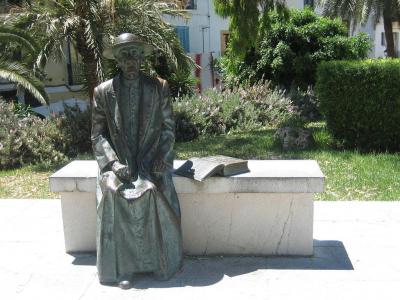
11) Isidor Macabich Statue
Among other peculiar landmarks found in the Dalt Vila (Old Town) of Ibiza is a statue of a priest sat on a bench under the eucalyptus trees of Sa Carrossa. The seated figure is that of Isidoro (Isidor) Macabich i Llobet, the chaplain and historian who used to live nearby, and who delved into the study of the historical roots of Ibiza like no one else before him.
The statue pays tribute to the priest for his cultural importance for the island, depicting him with an open book, probably the Bible. Don Isidor was born here in 1883 in the family of Croatian immigrants; he died in Barcelona 90 years later. The statue was inaugurated in 1980, seven years after his death.
Active and famous personality as he was in the city, Macabich founded the Centre for Social Action and Federation Catolicoagrària Ibiza. He began writing his History of Ibiza in 1935 and published it in four volumes in 1966-1967. In addition to being a historian, he was a multifaceted and controversial chaplain, as well as a writer, columnist, poet, archaeologist, and teacher.
From where he sits, Macabich welcomes visitors and invites them to take their time and enjoy the historical and cultural heritage of Ibiza. Upon inauguration, on August 5, 1980, the sculpted priest was wearing glasses, which sadly remained in place for only 24 hours. "The next day they fell off," explained the architect Elías Torres, confessing that without lenses, the bronze face of Isidor Macabich shows the expression of bewilderment under his Pope's prelate hat, quite different from that which those who knew him alive, still remember.
The statue pays tribute to the priest for his cultural importance for the island, depicting him with an open book, probably the Bible. Don Isidor was born here in 1883 in the family of Croatian immigrants; he died in Barcelona 90 years later. The statue was inaugurated in 1980, seven years after his death.
Active and famous personality as he was in the city, Macabich founded the Centre for Social Action and Federation Catolicoagrària Ibiza. He began writing his History of Ibiza in 1935 and published it in four volumes in 1966-1967. In addition to being a historian, he was a multifaceted and controversial chaplain, as well as a writer, columnist, poet, archaeologist, and teacher.
From where he sits, Macabich welcomes visitors and invites them to take their time and enjoy the historical and cultural heritage of Ibiza. Upon inauguration, on August 5, 1980, the sculpted priest was wearing glasses, which sadly remained in place for only 24 hours. "The next day they fell off," explained the architect Elías Torres, confessing that without lenses, the bronze face of Isidor Macabich shows the expression of bewilderment under his Pope's prelate hat, quite different from that which those who knew him alive, still remember.
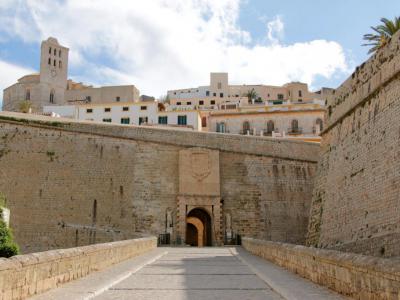
12) Portal de ses Taules (Ses Taules Gateway)
The Portal de ses Taules, built in 1585, is the main entrance to the fortified old town of Ibiza and is situated between the bastions of Sant Joan and Santa Llúcia. The entrance gate forms part of the declared UNESCO World Heritage Site of the Dalt Vila old city. The entrance is flanked on either side by headless Roman statues and above the gate is the coat of arms of Phillip II on whose orders the city walls were built.
The statues that adorn the entrance were unearthed during construction of the gates in the 16th century. These days the statues are replicas, but you can see the originals in the Ibiza Archaeological Museum in the Ibiza Old Town. A plaque beneath the Phillip II coat of arms describes his dominions and the components of his royal shield.
When you pass through the gate you will see that the walls are two meters thick. Ibiza was under constant attack by invaders and marauders and needed strong defensive support. Originally there was a moat and a drawbridge that protected the city within its walls from siege. The drawbridge was replaced with a permanent bridge at the beginning of the 20th century.
The statues that adorn the entrance were unearthed during construction of the gates in the 16th century. These days the statues are replicas, but you can see the originals in the Ibiza Archaeological Museum in the Ibiza Old Town. A plaque beneath the Phillip II coat of arms describes his dominions and the components of his royal shield.
When you pass through the gate you will see that the walls are two meters thick. Ibiza was under constant attack by invaders and marauders and needed strong defensive support. Originally there was a moat and a drawbridge that protected the city within its walls from siege. The drawbridge was replaced with a permanent bridge at the beginning of the 20th century.
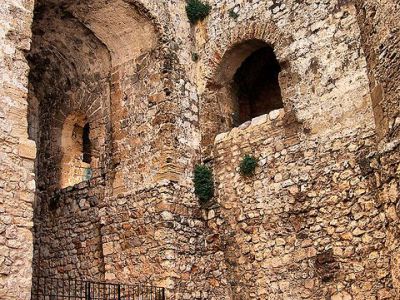
13) Baluard de Sant Joan (Bastion of Sant Joan)
The Bastion of Sant Joan (Baluard de Sant Joan) is a prominent feature of the fortified old town of Eivissa, located on the northern side of the historic area. As one of the seven bastions depicted on the flag of Ibiza, it stands as a testament to the island's rich defensive architecture and historical heritage.
Perched high on the fortifications, the bastion is crowned with beautifully maintained gardens, offering visitors a serene spot to take in the panoramic views over the La Marina district and the vibrant harbor. During sunset, the Tower of the Baluard de Sant Joan is especially picturesque, casting a medieval silhouette against the Mediterranean Sea.
The bastion is part of the larger fortified structure of Eivissa's Dalt Vila, a UNESCO World Heritage Site, and serves as an iconic reminder of the town's strategic significance throughout history. Its elevated position not only provided military advantages but now serves as a prime location for enjoying the beauty and charm of Ibiza's old town.
Perched high on the fortifications, the bastion is crowned with beautifully maintained gardens, offering visitors a serene spot to take in the panoramic views over the La Marina district and the vibrant harbor. During sunset, the Tower of the Baluard de Sant Joan is especially picturesque, casting a medieval silhouette against the Mediterranean Sea.
The bastion is part of the larger fortified structure of Eivissa's Dalt Vila, a UNESCO World Heritage Site, and serves as an iconic reminder of the town's strategic significance throughout history. Its elevated position not only provided military advantages but now serves as a prime location for enjoying the beauty and charm of Ibiza's old town.
