Custom Walk in Melbourne, Australia by headpurch1_dd2999 created on 2026-06-27
Guide Location: Australia » Melbourne
Guide Type: Custom Walk
# of Sights: 13
Tour Duration: 3 Hour(s)
Travel Distance: 5.5 Km or 3.4 Miles
Share Key: AWEXB
Guide Type: Custom Walk
# of Sights: 13
Tour Duration: 3 Hour(s)
Travel Distance: 5.5 Km or 3.4 Miles
Share Key: AWEXB
How It Works
Please retrieve this walk in the GPSmyCity app. Once done, the app will guide you from one tour stop to the next as if you had a personal tour guide. If you created the walk on this website or come to the page via a link, please follow the instructions below to retrieve the walk in the app.
Retrieve This Walk in App
Step 1. Download the app "GPSmyCity: Walks in 1K+ Cities" on Apple App Store or Google Play Store.



Step 2. In the GPSmyCity app, download(or launch) the guide "Melbourne Map and Walking Tours".
Step 3. Tap the menu button located at upper right corner of the "Walks" screen and select "Retrieve custom walk". Enter the share key: AWEXB
1) Melbourne Central
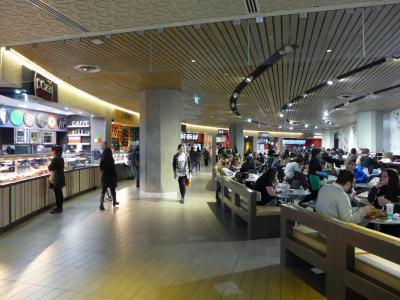
If you ever wanted to see Melbourne’s personality squeezed into a couple of city blocks, Melbourne Central does the job nicely. It’s a shopping complex, a food hall, a transport hub, and-thanks to the architect Kisho Kurokawa-a sci-fi set piece crowned with that unmistakable glass cone. Underneath it rises the 1889 Coops Shot Tower, a stubborn slice of Victorian industry that refused to move, so the designers simply built the future around it. The result looks like a time-travel experiment that accidentally worked. And just to keep things lively, the giant Marionette watch chimes “Waltzing Matilda” every hour, because why not...
Perched above the Melbourne Central train station, the complex is one of those places you drift into almost by accident. You might be aiming for a laneway café or a museum, and suddenly you’re surrounded by 300 shops and a crowd that looks like it’s on its way to every corner of the city all at once. Shopping is the official headline act, but the food scene is what keeps the place humming.
Down in the food court, it’s a greatest-hits playlist of Melbourne flavours: dumplings, ramen, poke, kebabs, and the kind of fish and chips that make you reconsider your lunch plans. Everything moves quickly, tastes fresh, and caters perfectly to travellers grabbing a bite between wanderings. Bubble tea counters, dessert stalls, and pastry cabinets appear around corners like friendly traps for anyone with a sweet tooth.
Coffee, naturally, is everywhere. Melbourne Central hosts both well-known roasters and indie cafés, each offering its own take on the flat white or a seasonal blend. They’re perfect for a breather without stepping away from the buzz.
Up on the higher levels, sit-down restaurants offer Japanese barbecue, Italian comfort food, burgers, and more, many staying open into the evening. With its landmark architecture and Swanston Street energy, Melbourne Central becomes an easy, flavour-packed shortcut to understanding the city’s broader culinary spirit.
Perched above the Melbourne Central train station, the complex is one of those places you drift into almost by accident. You might be aiming for a laneway café or a museum, and suddenly you’re surrounded by 300 shops and a crowd that looks like it’s on its way to every corner of the city all at once. Shopping is the official headline act, but the food scene is what keeps the place humming.
Down in the food court, it’s a greatest-hits playlist of Melbourne flavours: dumplings, ramen, poke, kebabs, and the kind of fish and chips that make you reconsider your lunch plans. Everything moves quickly, tastes fresh, and caters perfectly to travellers grabbing a bite between wanderings. Bubble tea counters, dessert stalls, and pastry cabinets appear around corners like friendly traps for anyone with a sweet tooth.
Coffee, naturally, is everywhere. Melbourne Central hosts both well-known roasters and indie cafés, each offering its own take on the flat white or a seasonal blend. They’re perfect for a breather without stepping away from the buzz.
Up on the higher levels, sit-down restaurants offer Japanese barbecue, Italian comfort food, burgers, and more, many staying open into the evening. With its landmark architecture and Swanston Street energy, Melbourne Central becomes an easy, flavour-packed shortcut to understanding the city’s broader culinary spirit.
2) State Library Victoria
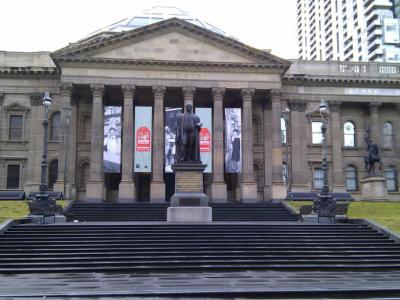
State Library Victoria (SLV) serves as the principal library in Victoria, Australia. Situated in Melbourne, it was founded in 1854 under the name Melbourne Public Library, making it the oldest public library in Australia and one of the earliest free libraries in the world. It also boasts the distinction of being Australia's most frequented public library and, as of 2018, ranks as the fourth-most-visited library on a global scale.
The library has retained its original location in Melbourne's central business district since its inception, facing Swanston Street. The Library complex, completed in 1992, was built in phases. Joseph Reed's 1860 plan included a domed section facing Russell Street for the Museum and Gallery, which was mostly followed for a century. The southern front wing with the Queen's Reading Room (now Queen's Hall) was finished in 1859, while the northern section (now Hansen Hall) was added in 1864 by Abraham Linacre. Temporary halls and a pagoda were erected in 1866 for an exhibition, later housing the Industrial & Technological Museum of Victoria starting in 1870.
The library's extensive collection comprises more than five million items, encompassing not only books but also manuscripts, paintings, maps, photographs, and newspapers. It maintains a particular emphasis on materials related to Victoria, including the diaries of Melbourne's founders, John Batman and John Pascoe Fawkner, the folios of Captain James Cook, and the armor of Ned Kelly.
The library has retained its original location in Melbourne's central business district since its inception, facing Swanston Street. The Library complex, completed in 1992, was built in phases. Joseph Reed's 1860 plan included a domed section facing Russell Street for the Museum and Gallery, which was mostly followed for a century. The southern front wing with the Queen's Reading Room (now Queen's Hall) was finished in 1859, while the northern section (now Hansen Hall) was added in 1864 by Abraham Linacre. Temporary halls and a pagoda were erected in 1866 for an exhibition, later housing the Industrial & Technological Museum of Victoria starting in 1870.
The library's extensive collection comprises more than five million items, encompassing not only books but also manuscripts, paintings, maps, photographs, and newspapers. It maintains a particular emphasis on materials related to Victoria, including the diaries of Melbourne's founders, John Batman and John Pascoe Fawkner, the folios of Captain James Cook, and the armor of Ned Kelly.
3) Tattersalls Lane
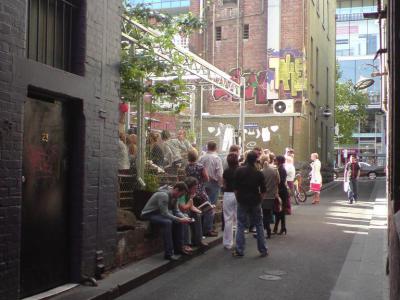
At a glance, Tattersalls Lane may look like a narrow cut-through, but give it a few steps and it turns into a full-blown mood-somewhere between Melbourne’s business core and the bright pull of Chinatown. The laneway takes its name from the old Tattersalls Hotel and Club, though its 19th-century life of brooms, barrels, and back-of-house chores is long gone. Today, it feels more like a compact festival ground that never officially ends. Its location beside Little Bourke Street keeps a steady flow of Chinatown energy drifting in, and that influence colours nearly everything: the food, the pace, and the unapologetically late hours.
The star, of course, is Section 8-a bar built from shipping containers that somehow became one of Melbourne’s most recognisable meeting spots. It sets the tone for the whole lane: open air, slightly chaotic, and effortlessly cool. From there, you’re surrounded by an easy jumble of dumpling joints, Thai and pan-Asian counters, quick-fire noodle kitchens, and snack stalls dishing out skewers, stir-fries, and bubble tea long after office lights go dark. Graffiti wraps the walls, neon hums overhead, and the seating looks like it was collected from five different garages-which is exactly why people love it.
A few venues stand out even in all that colour. The Shanghai Dumpling House remains a crowd magnet, Xiaolong Kan turns hot pots into theatre, and an all-you-can-eat Indian spot adds unexpected spice to the mix. Above the laneway, Ferdydurke serves cocktails with a wink and a view of the action below. Street art completes the backdrop, changing often enough that the lane feels like a rotating exhibition.
For visitors, Tattersalls Lane delivers a concentrated hit of Melbourne’s laneway spirit-informal, multicultural, lively, and best approached with curiosity. It’s a small stretch with a big personality, and it rewards anyone who lets the night unfold one bite, one beat, and one mural at a time...
The star, of course, is Section 8-a bar built from shipping containers that somehow became one of Melbourne’s most recognisable meeting spots. It sets the tone for the whole lane: open air, slightly chaotic, and effortlessly cool. From there, you’re surrounded by an easy jumble of dumpling joints, Thai and pan-Asian counters, quick-fire noodle kitchens, and snack stalls dishing out skewers, stir-fries, and bubble tea long after office lights go dark. Graffiti wraps the walls, neon hums overhead, and the seating looks like it was collected from five different garages-which is exactly why people love it.
A few venues stand out even in all that colour. The Shanghai Dumpling House remains a crowd magnet, Xiaolong Kan turns hot pots into theatre, and an all-you-can-eat Indian spot adds unexpected spice to the mix. Above the laneway, Ferdydurke serves cocktails with a wink and a view of the action below. Street art completes the backdrop, changing often enough that the lane feels like a rotating exhibition.
For visitors, Tattersalls Lane delivers a concentrated hit of Melbourne’s laneway spirit-informal, multicultural, lively, and best approached with curiosity. It’s a small stretch with a big personality, and it rewards anyone who lets the night unfold one bite, one beat, and one mural at a time...
4) MidCity Arcade
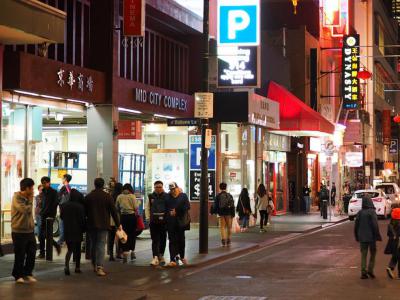
From the outside, MidCity Arcade may appear just like another slender corridor, threading between Bourke Street and Little Bourke Street-one you could easily breeze past without noticing. But doing so would mean missing one of the Central Business District’s most reliable shortcuts to a good meal. Sitting right on the edge of Chinatown and smack in the middle of Melbourne’s busiest shopping zone, it’s essentially the city’s culinary express lane: step in, and you’re already halfway to lunch.
Once inside, the arcade wastes no time announcing its loyalties. The place leans firmly toward Asian flavours, and proudly so. In the space of a short stroll, you’ll pass Japanese ramen bars, Korean barbecue grills, Chinese dumpling shops, bubble-tea counters, and Southeast Asian lunch spots all vying for your attention. It’s the kind of setup where your dinner plans change three times before you reach the escalator. Prices stay friendly, dishes arrive quickly, and portions are built with the hungry wanderer in mind-perfect for anyone darting between museums, retail therapy, or Melbourne’s addictive laneways.
Food may be the arcade’s heartbeat, but it doesn’t stop there. More than 30 retailers squeeze into the mix, including fashion boutiques, tech stores, beauty shops, travel services, and even a cinema for when you need a breather. Sit-down favourites like Kaneda and King’s No. 1 Café add a calmer option amid the bustle, though the overall feel remains brisk and canteen-like. There’s even a parking garage tucked beneath the complex, accessible from Chinatown, for those who prefer to roll straight in.
Most visitors pair MidCity Arcade with two obvious neighbours: Chinatown and the Bourke Street Mall. Together, they form Melbourne’s trifecta of eating, browsing, and people-watching. The arcade simply distills that spirit into one compact, easy-to-navigate slice of the city-no reservations required, no big budget needed, just an appetite and a willingness to follow your nose...
Once inside, the arcade wastes no time announcing its loyalties. The place leans firmly toward Asian flavours, and proudly so. In the space of a short stroll, you’ll pass Japanese ramen bars, Korean barbecue grills, Chinese dumpling shops, bubble-tea counters, and Southeast Asian lunch spots all vying for your attention. It’s the kind of setup where your dinner plans change three times before you reach the escalator. Prices stay friendly, dishes arrive quickly, and portions are built with the hungry wanderer in mind-perfect for anyone darting between museums, retail therapy, or Melbourne’s addictive laneways.
Food may be the arcade’s heartbeat, but it doesn’t stop there. More than 30 retailers squeeze into the mix, including fashion boutiques, tech stores, beauty shops, travel services, and even a cinema for when you need a breather. Sit-down favourites like Kaneda and King’s No. 1 Café add a calmer option amid the bustle, though the overall feel remains brisk and canteen-like. There’s even a parking garage tucked beneath the complex, accessible from Chinatown, for those who prefer to roll straight in.
Most visitors pair MidCity Arcade with two obvious neighbours: Chinatown and the Bourke Street Mall. Together, they form Melbourne’s trifecta of eating, browsing, and people-watching. The arcade simply distills that spirit into one compact, easy-to-navigate slice of the city-no reservations required, no big budget needed, just an appetite and a willingness to follow your nose...
5) Chinatown
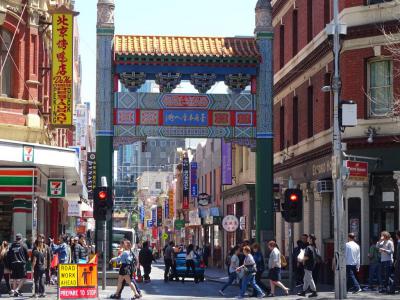
Chinatown is a distinct neighborhood located in the central business district (CBD) of Melbourne, Victoria. Situated primarily at the eastern end of Little Bourke Street, it stretches between the intersections of Swanston and Spring streets and encompasses a network of narrow streets, alleys, and covered walkways. This neighborhood was established in the 1850s during the Victorian gold rush and holds the distinction of being the longest-standing continuous Chinese community in the Western World, as well as the oldest Chinatown in the Southern Hemisphere.
Melbourne's Chinatown has played a significant role in shaping the Chinese immigrant culture in Australia. It continues to be home to a multitude of Chinese restaurants, cultural venues, businesses, and places of worship. In the present day, Melbourne's Chinatown is a prominent tourist destination, renowned for its historical architecture, annual festivals, diverse Asian cuisine, and entertainment options such as karaoke venues, bars, and fashion boutiques.
In addition to the area within Chinatown and the CBD, Melbourne's Chinese community is also well-represented in other parts of the city, with Box Hill being a notable example. In fact, there is currently a major development project called "New Chinatown" underway in Box Hill, with an investment of $450 million. Furthermore, Chinatown is also home to the Chinese Museum, serving as a cultural hub for preserving and showcasing Chinese heritage.
Melbourne's Chinatown has played a significant role in shaping the Chinese immigrant culture in Australia. It continues to be home to a multitude of Chinese restaurants, cultural venues, businesses, and places of worship. In the present day, Melbourne's Chinatown is a prominent tourist destination, renowned for its historical architecture, annual festivals, diverse Asian cuisine, and entertainment options such as karaoke venues, bars, and fashion boutiques.
In addition to the area within Chinatown and the CBD, Melbourne's Chinese community is also well-represented in other parts of the city, with Box Hill being a notable example. In fact, there is currently a major development project called "New Chinatown" underway in Box Hill, with an investment of $450 million. Furthermore, Chinatown is also home to the Chinese Museum, serving as a cultural hub for preserving and showcasing Chinese heritage.
6) Little Bourke Street
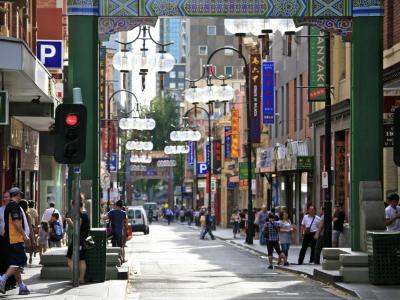
Little Bourke Street may sound modest, but don’t be fooled by its name-this is one of Melbourne’s original east-to-west thoroughfares and the heartbeat of the city’s Chinatown. Heading toward its eastern end, the street suddenly turns into a maze of neon signs, narrow laneways, and arcades that have been buzzing with life since the 1850s, when Chinese immigrants first made this neighbourhood their Australian home.
Today, Chinatown still delivers the classics-dumplings, herbal shops, and sizzling woks-but the menu has expanded far beyond China’s borders. Within a few steps, you can wander from Thai curries to Japanese noodles, Malaysian sweets, Vietnamese grills, Indian spices, and Korean barbecue. Add in annual celebrations like Lunar New Year, and you’ll understand why the area feels like a festival even on a slow afternoon. And if the aromas don’t catch your attention, the architecture will: Victorian-era buildings dressed up with colourful Chinese motifs create a quirky fusion that’s unmistakably Melbourne.
For anyone curious about how Chinese communities shaped the city, pop into the Museum of Chinese Australian History on Cohen Place. It’s compact, engaging, and full of stories that bring the neighbourhood to life. Nearby, the MidCity Arcade offers its own sheltered world of fusion eateries, quirky shops, and splashes of street art-perfect for a wander when the weather can’t make up its mind.
And before you leave, look for the Facing Heaven Archway on Cohen Street. With imperial lions guarding its base and a design inspired by a Ming-dynasty gateway, it’s the kind of landmark that practically insists on being photographed.
Melbourne’s Chinatown may sit on Little Bourke Street-but there’s nothing little about its personality.
Today, Chinatown still delivers the classics-dumplings, herbal shops, and sizzling woks-but the menu has expanded far beyond China’s borders. Within a few steps, you can wander from Thai curries to Japanese noodles, Malaysian sweets, Vietnamese grills, Indian spices, and Korean barbecue. Add in annual celebrations like Lunar New Year, and you’ll understand why the area feels like a festival even on a slow afternoon. And if the aromas don’t catch your attention, the architecture will: Victorian-era buildings dressed up with colourful Chinese motifs create a quirky fusion that’s unmistakably Melbourne.
For anyone curious about how Chinese communities shaped the city, pop into the Museum of Chinese Australian History on Cohen Place. It’s compact, engaging, and full of stories that bring the neighbourhood to life. Nearby, the MidCity Arcade offers its own sheltered world of fusion eateries, quirky shops, and splashes of street art-perfect for a wander when the weather can’t make up its mind.
And before you leave, look for the Facing Heaven Archway on Cohen Street. With imperial lions guarding its base and a design inspired by a Ming-dynasty gateway, it’s the kind of landmark that practically insists on being photographed.
Melbourne’s Chinatown may sit on Little Bourke Street-but there’s nothing little about its personality.
7) Parliament House of Victoria
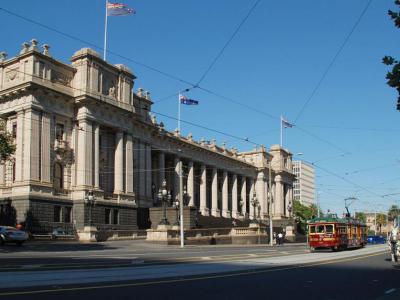
If you're wandering up Bourke Street and wonder why a massive Greek temple seems to be moonlighting as a government office, that would be Parliament House-Victoria’s political headquarters and one of Melbourne’s proudest 19th-century flexes. This is where the state’s two chambers meet: 88 seats downstairs in the Legislative Assembly and 40 upstairs in the Legislative Council. In essence, it is the place where democracy happens… in carefully structured debates and occasionally dramatic headlines.
It all started back in 1851, when Victoria broke away from New South Wales and suddenly needed a building that would declare, “Yes, we are absolutely capable of running our own affairs.” Architects Charles Pasley and Peter Kerr took that mission very seriously, borrowing heavily from ancient Greece and Rome (which is what you do when setting up a new democracy), then positioning their creation on one of the most commanding sites in the young city.
Construction kicked off in 1856, although “construction” may be too generous a word for a project that unfolded in slow, theatrical acts over 70 years. The two parliamentary chambers were finished first, so lawmakers could start legislating, while the rest of the building politely caught up. Additions like the library, Queen’s Hall, and the eastern wing appeared over time. Although the original plans also envisioned an elaborate dome above the building’s central vestibule, cost concerns meant this feature never materialized. Still, the colonnade and Grand Vestibule delivered enough grandeur to make the dome’s absence feel almost intentional.
Then came 1901, when Australia became a federation, and Melbourne was tapped to host the brand-new Federal Parliament. For 26 years, national politics unfolded inside this very building while Victoria’s Parliament temporarily moved out (proving that Parliament House could multitask long before it became a résumé requirement).
Today, after rounds of restoration and modern upgrades, the building continues its original job: housing Victoria’s Parliament, while looking impressive enough to remind everyone where the big decisions are made...
It all started back in 1851, when Victoria broke away from New South Wales and suddenly needed a building that would declare, “Yes, we are absolutely capable of running our own affairs.” Architects Charles Pasley and Peter Kerr took that mission very seriously, borrowing heavily from ancient Greece and Rome (which is what you do when setting up a new democracy), then positioning their creation on one of the most commanding sites in the young city.
Construction kicked off in 1856, although “construction” may be too generous a word for a project that unfolded in slow, theatrical acts over 70 years. The two parliamentary chambers were finished first, so lawmakers could start legislating, while the rest of the building politely caught up. Additions like the library, Queen’s Hall, and the eastern wing appeared over time. Although the original plans also envisioned an elaborate dome above the building’s central vestibule, cost concerns meant this feature never materialized. Still, the colonnade and Grand Vestibule delivered enough grandeur to make the dome’s absence feel almost intentional.
Then came 1901, when Australia became a federation, and Melbourne was tapped to host the brand-new Federal Parliament. For 26 years, national politics unfolded inside this very building while Victoria’s Parliament temporarily moved out (proving that Parliament House could multitask long before it became a résumé requirement).
Today, after rounds of restoration and modern upgrades, the building continues its original job: housing Victoria’s Parliament, while looking impressive enough to remind everyone where the big decisions are made...
8) Old Treasury Building
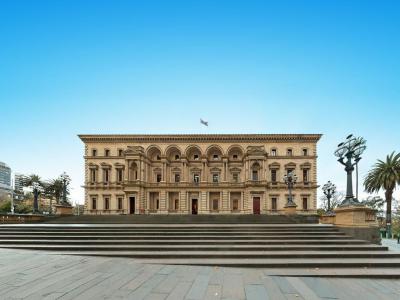
Located within one of Australia's most esteemed 19th-century Gothic Revival buildings, the City Museum of Old Treasury offers an excellent opportunity to delve into Melbourne's rich history. Constructed in 1862, this building served as a key government facility for 130 years and initially functioned as a secure repository for Melbourne's newfound wealth during the gold rush era. In 1992, following the conclusion of its governmental role, the building underwent restoration and was reborn as the City Museum of Old Treasury in 1994. Today, visitors can explore numerous permanent exhibitions along with temporary and visiting displays.
One notable permanent exhibition is "Victorian Archival Treasures," where you can gain insights into various aspects of Melbourne's history, such as Ned Kelly, gold miners from the 1850s, indigenous Victorians, renowned criminals, and the city's early settlement. "Built On Gold" delves into the gold rush period from 1852 to 1862, and this exhibition is situated within the building's former gold vaults. "Growing Up In Old Treasury" recounts the experiences of the Maynard family, who resided in the basement of the building during the 1920s when the father served as superintendent.
One notable permanent exhibition is "Victorian Archival Treasures," where you can gain insights into various aspects of Melbourne's history, such as Ned Kelly, gold miners from the 1850s, indigenous Victorians, renowned criminals, and the city's early settlement. "Built On Gold" delves into the gold rush period from 1852 to 1862, and this exhibition is situated within the building's former gold vaults. "Growing Up In Old Treasury" recounts the experiences of the Maynard family, who resided in the basement of the building during the 1920s when the father served as superintendent.
9) Fitzroy Gardens and Captain Cook's Cottage (must see)
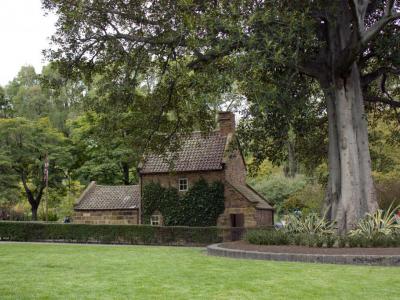
On the southeastern edge of Melbourne’s Central Business District, the city suddenly exhales-with 64 acres of Fitzroy Gardens opening up like a green antidote to downtown hustle. Laid out back in 1848 and named after the then Governor of New South Wales, Sir Charles Augustus FitzRoy, these Victorian-era gardens come packed with an ornamental lake, a glass conservatory, a miniature Tudor village, and one very well-travelled cottage.
That cottage, Cooks’ Cottage, began life in 1755 in Great Ayton, North Yorkshire, England, where Captain James Cook’s parents built it long before anyone imagined it would one day cross the globe. In 1933, the cottage was taken apart brick by brick, packed into 253 cases and 40 barrels, and shipped to Melbourne aboard the cargo vessel Port Dunedin. Even the ivy tagging along today comes from cuttings of the original plant-proof that homesickness isn’t just for people... Though Cook may or may not have ever lived in this cottage himself, it now holds the title of Australia’s oldest standing building, which is quite a twist for something that started life on the other side of the world.
Restored in 1978, the house now sits inside a cottage garden, with antiques and costumed guides offering a glimpse into 18th-century domestic life-no electricity, no smartphones, and other technical delights of today...
Indeed, Melbourne likes to call itself Australia’s garden city, and Fitzroy Gardens is its strongest argument. Long, tree-lined paths, fountains, sculptures, and the Spanish mission-style conservatory (housing impressive floral displays) create a calm inner-city retreat where your biggest decision is whether to linger in the sun or keep exploring.
For a quick break, the KereKere Café by the visitor centre has you covered. Most visitors stay under an hour, but with sunshine, lawns, and picnic spots everywhere you look, stretching that into an afternoon feels entirely justified.
That cottage, Cooks’ Cottage, began life in 1755 in Great Ayton, North Yorkshire, England, where Captain James Cook’s parents built it long before anyone imagined it would one day cross the globe. In 1933, the cottage was taken apart brick by brick, packed into 253 cases and 40 barrels, and shipped to Melbourne aboard the cargo vessel Port Dunedin. Even the ivy tagging along today comes from cuttings of the original plant-proof that homesickness isn’t just for people... Though Cook may or may not have ever lived in this cottage himself, it now holds the title of Australia’s oldest standing building, which is quite a twist for something that started life on the other side of the world.
Restored in 1978, the house now sits inside a cottage garden, with antiques and costumed guides offering a glimpse into 18th-century domestic life-no electricity, no smartphones, and other technical delights of today...
Indeed, Melbourne likes to call itself Australia’s garden city, and Fitzroy Gardens is its strongest argument. Long, tree-lined paths, fountains, sculptures, and the Spanish mission-style conservatory (housing impressive floral displays) create a calm inner-city retreat where your biggest decision is whether to linger in the sun or keep exploring.
For a quick break, the KereKere Café by the visitor centre has you covered. Most visitors stay under an hour, but with sunshine, lawns, and picnic spots everywhere you look, stretching that into an afternoon feels entirely justified.
10) St. Patrick's Cathedral (must see)
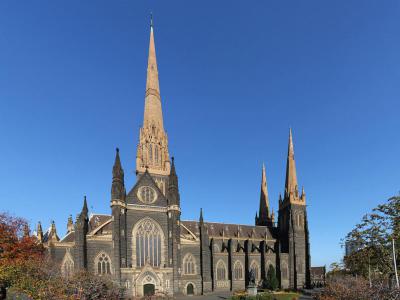
Saint Patrick’s Cathedral-rising from Eastern Hill-practically announces itself as one of Australia’s most commanding religious landmarks. Indeed, this Gothic Revival giant has been stopping people in their tracks since the 19th century.
Its story started when Melbourne’s Catholic population ballooned during the gold rush-because nothing attracts crowds like the promise of fortune... In 1848, Bishop James Goold arrived in Melbourne with big ambitions and a keen eye for real estate. Having quickly realised he needed more than just a modest chapel, Goold secured this hilltop site in 1851.
Architect William Wardell was brought in to sketch a Gothic Revival masterpiece worthy of a rising city. The plans were bold, soaring, and dramatic… His blueprint channelled medieval England with a Melbourne twist, all built in brooding bluestone and sandstone for maximum gravitas.
Although ready early on, the project didn't progress very swiftly. Amid the gold rush, with half the colony's workforce off chasing fortune, the actual construction didn’t get moving until 1858. Over the following decades, sections appeared piece by piece: nave, choir, transepts-like a very long, very serious architectural jigsaw...
Economic troubles in the 1890s slowed everything further, but perseverance won out, and the cathedral was finally consecrated in 1897. Still, the iconic trio of spires was fashionably late and arrived only in 1939. Once in place, they crowned the cathedral as the tallest church site in Australia (a title it still holds), soaring to 103 metres, as if trying to tap the heavens on the shoulder...
Inside, the grandeur continues with stained glass that glows like jewellery, intricate timber carvings, and an elaborate high-altar reredos-all nods to the Irish heritage of Melbourne’s early Catholic community, who saw the cathedral as both a spiritual home and a cultural anchor. And while the décor is historic, the building itself hasn’t been left to age quietly; careful conservation has kept it looking as commanding as ever.
Today, Saint Patrick’s welcomes visitors from 9 a.m. to 5 p.m., and you’ll often find friendly volunteers ready to share stories, point out hidden details, or explain why Wardell loved Gothic Revival as much as he did.
Tip:
Check for services before stepping inside. When the cathedral isn’t hosting worship, you’re free to wander, linger, admire the stained glass, and capture your perfect photo of those soaring spires.
Its story started when Melbourne’s Catholic population ballooned during the gold rush-because nothing attracts crowds like the promise of fortune... In 1848, Bishop James Goold arrived in Melbourne with big ambitions and a keen eye for real estate. Having quickly realised he needed more than just a modest chapel, Goold secured this hilltop site in 1851.
Architect William Wardell was brought in to sketch a Gothic Revival masterpiece worthy of a rising city. The plans were bold, soaring, and dramatic… His blueprint channelled medieval England with a Melbourne twist, all built in brooding bluestone and sandstone for maximum gravitas.
Although ready early on, the project didn't progress very swiftly. Amid the gold rush, with half the colony's workforce off chasing fortune, the actual construction didn’t get moving until 1858. Over the following decades, sections appeared piece by piece: nave, choir, transepts-like a very long, very serious architectural jigsaw...
Economic troubles in the 1890s slowed everything further, but perseverance won out, and the cathedral was finally consecrated in 1897. Still, the iconic trio of spires was fashionably late and arrived only in 1939. Once in place, they crowned the cathedral as the tallest church site in Australia (a title it still holds), soaring to 103 metres, as if trying to tap the heavens on the shoulder...
Inside, the grandeur continues with stained glass that glows like jewellery, intricate timber carvings, and an elaborate high-altar reredos-all nods to the Irish heritage of Melbourne’s early Catholic community, who saw the cathedral as both a spiritual home and a cultural anchor. And while the décor is historic, the building itself hasn’t been left to age quietly; careful conservation has kept it looking as commanding as ever.
Today, Saint Patrick’s welcomes visitors from 9 a.m. to 5 p.m., and you’ll often find friendly volunteers ready to share stories, point out hidden details, or explain why Wardell loved Gothic Revival as much as he did.
Tip:
Check for services before stepping inside. When the cathedral isn’t hosting worship, you’re free to wander, linger, admire the stained glass, and capture your perfect photo of those soaring spires.
11) Royal Exhibition Building
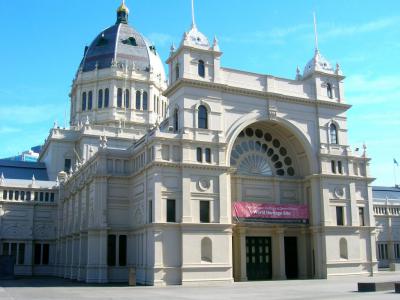
The Royal Exhibition Building in Melbourne is Australia’s first UNESCO World Heritage Site building. Built in 1880 for Melbourne to host its first international exhibition, it is today one of the oldest surviving exhibition buildings. With eyes from around the globe focused on the young colony, Victoria splashed a lot of its gold wealth around to produce this stunning building. Located in Carlton Gardens at the north-eastern fringe of the CBD, visiting the site is a must while in Melbourne. The building is next to the Melbourne Museum, and is in fact, the largest of the museum’s acquisitions.
Following its wild success hosting the Melbourne International Exhibition and the Melbourne Centennial Exhibition in 1888, the building was also selected as the site to open the first Parliament of Australia on May 9th, 1901 following federation. It was also at the Royal Exhibition Building on September 3rd, 1901 that the Governor-General’s wife, the Countess of Hopetoun announced the winner of the competition to design the Australian flag and it was unrolled for the first time and flown above the building’s dome. Today the building is still extensively used as an exhibition hall and there are regular tours that can be arranged through the Melbourne Museum.
Following its wild success hosting the Melbourne International Exhibition and the Melbourne Centennial Exhibition in 1888, the building was also selected as the site to open the first Parliament of Australia on May 9th, 1901 following federation. It was also at the Royal Exhibition Building on September 3rd, 1901 that the Governor-General’s wife, the Countess of Hopetoun announced the winner of the competition to design the Australian flag and it was unrolled for the first time and flown above the building’s dome. Today the building is still extensively used as an exhibition hall and there are regular tours that can be arranged through the Melbourne Museum.
12) Old Melbourne Gaol (must see)
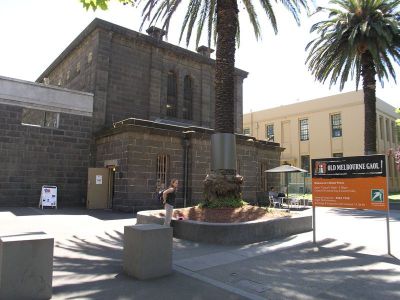
The Old Melbourne Gaol, situated on Russell Street in Melbourne, is a historical site that serves as both a museum and a former prison. It comprises a sturdy bluestone building, an adjoining courtyard, and is situated in close proximity to the old City Police Watch House and City Courts buildings. The construction of this facility commenced in 1839, and it operated as a prison from 1842 to 1929. During this period, it housed and carried out executions for some of Australia's most infamous criminals, such as Ned Kelly, a notorious bushranger, and Frederick Bailey Deeming, a serial killer.
A total of 133 individuals met their fate on the gallows here. Although it had a brief role during World War II, the gaol officially ceased to function as a prison in 1924. Some parts of the facility were incorporated into RMIT University, while the remainder was transformed into a museum.
This three-story museum is dedicated to preserving and showcasing the history of the gaol, including information and artifacts related to both the prisoners and the staff who worked there. Among the exhibits are death masks of the executed criminals. At one point, the museum also featured Ned Kelly's skull, which was unfortunately stolen in 1978, as well as the pencil used by Colin Campbell Ross, who was wrongfully convicted, to assert his innocence in writing before his execution.
Additionally, there are claims by paranormal enthusiasts that the museum is haunted, with reports of ghostly apparitions and unexplained voices in the vicinity of the former prison cells.
A total of 133 individuals met their fate on the gallows here. Although it had a brief role during World War II, the gaol officially ceased to function as a prison in 1924. Some parts of the facility were incorporated into RMIT University, while the remainder was transformed into a museum.
This three-story museum is dedicated to preserving and showcasing the history of the gaol, including information and artifacts related to both the prisoners and the staff who worked there. Among the exhibits are death masks of the executed criminals. At one point, the museum also featured Ned Kelly's skull, which was unfortunately stolen in 1978, as well as the pencil used by Colin Campbell Ross, who was wrongfully convicted, to assert his innocence in writing before his execution.
Additionally, there are claims by paranormal enthusiasts that the museum is haunted, with reports of ghostly apparitions and unexplained voices in the vicinity of the former prison cells.
13) Queen Victoria Market (must see)
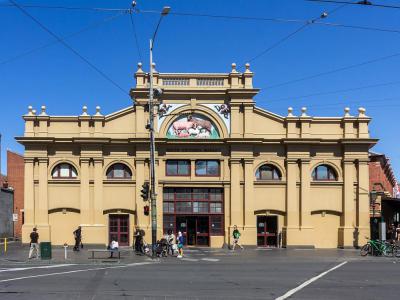
If Melbourne had a heartbeat, you’d probably hear it thumping somewhere between the cheese counters and doughnut queues of the Queen Victoria Market-or “the Queen Vic” to anyone who’s ever bought a snack here. It’s the last major market standing in the Central Business District and the largest open-air market in the entire Southern Hemisphere, which is a fancy way of saying it’s been out-shopping and outlasting everyone else since 1878.
Back in the early days, the city was littered with markets. The Western Market opened in 1841 and instantly packed out, so the Eastern Market appeared soon after and stole the spotlight. The Queen Vic rose from a patchwork of smaller trading spots built around the Old Melbourne Cemetery, where early settlers-including Melbourne founder, John Bateman-were laid to rest. By the 1870s, the city had outgrown its earlier markets, so the Queen Vic expanded with the now-classic A–F sheds, new shops along Elizabeth Street, and that unmistakable Meat and Fish façade.
Today, the Queen Vic is a world unto itself. It runs most days of the week, and when summer rolls in, Wednesday evenings burst into a full-blown Night Market-street food sizzling, music drifting across the sheds, and crowds circling festival bars like moths to a neon flame. With more than 600 small businesses, the market is a parade of produce, seafood, deli treats, handmade crafts, jewelers, artists, coffee brewers, and everything in between.
Many of the original 19th-century buildings still frame the site, including the 1869 Meat Hall and the heritage shopfronts along Elizabeth and Victoria Streets. Inside, regulars swear by the deli section’s meats and cheeses, the mountain of seasonal produce, the French pastries in the Dairy Produce Hall, and the famous doughnut truck that rarely stops steaming.
And here's one insider perk: vendors often drop prices late in the day-so timing your visit just right might score you a bargain along with your brioche.
Back in the early days, the city was littered with markets. The Western Market opened in 1841 and instantly packed out, so the Eastern Market appeared soon after and stole the spotlight. The Queen Vic rose from a patchwork of smaller trading spots built around the Old Melbourne Cemetery, where early settlers-including Melbourne founder, John Bateman-were laid to rest. By the 1870s, the city had outgrown its earlier markets, so the Queen Vic expanded with the now-classic A–F sheds, new shops along Elizabeth Street, and that unmistakable Meat and Fish façade.
Today, the Queen Vic is a world unto itself. It runs most days of the week, and when summer rolls in, Wednesday evenings burst into a full-blown Night Market-street food sizzling, music drifting across the sheds, and crowds circling festival bars like moths to a neon flame. With more than 600 small businesses, the market is a parade of produce, seafood, deli treats, handmade crafts, jewelers, artists, coffee brewers, and everything in between.
Many of the original 19th-century buildings still frame the site, including the 1869 Meat Hall and the heritage shopfronts along Elizabeth and Victoria Streets. Inside, regulars swear by the deli section’s meats and cheeses, the mountain of seasonal produce, the French pastries in the Dairy Produce Hall, and the famous doughnut truck that rarely stops steaming.
And here's one insider perk: vendors often drop prices late in the day-so timing your visit just right might score you a bargain along with your brioche.
