Custom Walk in Edinburgh, Scotland by anita77955665 created on 2026-06-27
Guide Location: Scotland » Edinburgh
Guide Type: Custom Walk
# of Sights: 9
Tour Duration: 2 Hour(s)
Travel Distance: 2.8 Km or 1.7 Miles
Share Key: Q7KYT
Guide Type: Custom Walk
# of Sights: 9
Tour Duration: 2 Hour(s)
Travel Distance: 2.8 Km or 1.7 Miles
Share Key: Q7KYT
How It Works
Please retrieve this walk in the GPSmyCity app. Once done, the app will guide you from one tour stop to the next as if you had a personal tour guide. If you created the walk on this website or come to the page via a link, please follow the instructions below to retrieve the walk in the app.
Retrieve This Walk in App
Step 1. Download the app "GPSmyCity: Walks in 1K+ Cities" on Apple App Store or Google Play Store.



Step 2. In the GPSmyCity app, download(or launch) the guide "Edinburgh Map and Walking Tours".
Step 3. Tap the menu button located at upper right corner of the "Walks" screen and select "Retrieve custom walk". Enter the share key: Q7KYT
1) Scott Monument (must see)
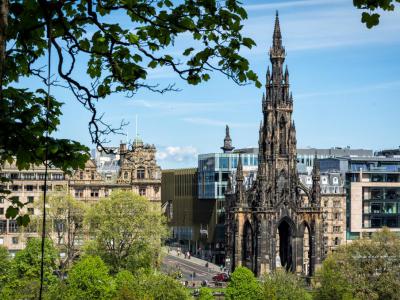
Sir Walter Scott-Scotland’s literary darling, national treasure, and master of the pen-was so loved by the country that they figured one statue for him wasn't enough. Instead, they built him a giant Gothic spire right in Princes Street Gardens-the Scott Monument. Because, indeed, what better way to honour a writer than with a stone rocket aimed at the heavens?
When Scott passed away in 1832, the city held a grand design competition for his monument. Out of the great many prestigious architects who entered, the winning design came from... a draughtsman with zero architectural credentials. George Meikle Kemp, feeling cheeky, submitted his entry under the pseudonym “John Morvo,” borrowing the name of a 15th-century stonemason to boost his street cred. And it worked.
Now, if you’re up for a challenge, you can tackle the 61-metre-tall monument that has several viewing platforms accessed by narrow winding stairways. The highest of them is only 287 steps away. Yes, 287. But rest assured-if your legs don’t give out en route to the top, you’ll be rewarded with sweeping city views and an actual certificate for surviving the climb. Bragging rights included.
The whole structure is made of Binny Sandstone, a material with a peculiar talent: it is so oily that it attracts dirt almost immediately. Just one year after its completion, the monument looked like it had been standing there for centuries. American writer Bill Bryson once lovingly described it as a “Gothic rocket-ship”-which, honestly, is spot-on.
Inside the base, you’ll find a marble statue of Sir Walter himself, complete with quill, paper, and his loyal dog Maida. Scattered across the monument are 64 statues of characters from his novels, plus a healthy dose of grotesques-those wonderfully creepy Gothic faces that the architect deliberately added to his design to make the monument look more “ancient” and moodier than it is.
For the ease of it, you can admire the monument casually from the safety of the grass. Otherwise, go full adventurer and climb for a 360-degree panoramic view-just don’t expect a lift-and note a fee attached to that.
Tip:
The staircase gets narrow and twisty, and yes, you’ll likely meet people coming down as you're going up. Not particularly recommended for the fainthearted... or the claustrophobic.
When Scott passed away in 1832, the city held a grand design competition for his monument. Out of the great many prestigious architects who entered, the winning design came from... a draughtsman with zero architectural credentials. George Meikle Kemp, feeling cheeky, submitted his entry under the pseudonym “John Morvo,” borrowing the name of a 15th-century stonemason to boost his street cred. And it worked.
Now, if you’re up for a challenge, you can tackle the 61-metre-tall monument that has several viewing platforms accessed by narrow winding stairways. The highest of them is only 287 steps away. Yes, 287. But rest assured-if your legs don’t give out en route to the top, you’ll be rewarded with sweeping city views and an actual certificate for surviving the climb. Bragging rights included.
The whole structure is made of Binny Sandstone, a material with a peculiar talent: it is so oily that it attracts dirt almost immediately. Just one year after its completion, the monument looked like it had been standing there for centuries. American writer Bill Bryson once lovingly described it as a “Gothic rocket-ship”-which, honestly, is spot-on.
Inside the base, you’ll find a marble statue of Sir Walter himself, complete with quill, paper, and his loyal dog Maida. Scattered across the monument are 64 statues of characters from his novels, plus a healthy dose of grotesques-those wonderfully creepy Gothic faces that the architect deliberately added to his design to make the monument look more “ancient” and moodier than it is.
For the ease of it, you can admire the monument casually from the safety of the grass. Otherwise, go full adventurer and climb for a 360-degree panoramic view-just don’t expect a lift-and note a fee attached to that.
Tip:
The staircase gets narrow and twisty, and yes, you’ll likely meet people coming down as you're going up. Not particularly recommended for the fainthearted... or the claustrophobic.
2) St. Giles' Cathedral (must see)
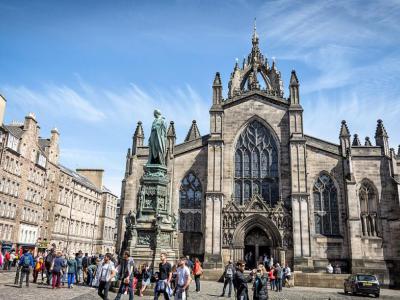
Smack in the middle of the Royal Mile, St Giles’ Cathedral-otherwise known as the High Kirk (or High Church) of Edinburgh-isn't one to be missed. The original building went up in the 12th century but didn’t survive a nasty fire-only the central pillars lived to tell the tale. The replacement was built in 1385. Over the years, it had numerous chapels added-known as aisles-resulting in a kind of charming architectural chaos. At one point, the church had over 50 side altars, like a medieval supermarket of holiness...
In 1466, St Giles’ became a collegiate church, which, in 1490, saw the now-iconic, crown-shaped lantern tower completed. During the Reformation, in 1560, things got a bit dramatic. Most of the church’s treasures vanished-stolen, sold, or just spirited away-including its star relic: Saint Giles’ withered arm and hand, complete with a diamond ring on one skeletal finger (macabre bling at its finest...). In addition to that, the church was partitioned by walls into multiple preaching zones-a kind of Protestant “feng shui,” if you will...
Despite being called a cathedral, it only technically wore that title twice, briefly, during the 17th-century Bishop Wars. The statute of “High Kirk” remains its real claim to fame. A 19th-century restoration gave the church a glow-up-partitions were removed and several chapels pulled down. Among the surviving chapels, perhaps the most beautiful is the Thistle Chapel from 1911: a jaw-dropping High Gothic gem dripping in wood and stone carvings, fluttering heraldic banners, and a breathtaking, delicately carved vaulted ceiling.
Once here, look out for a bronze plaque to Robert Louis Stevenson, author of Treasure Island, in the Moray Aisle, a marble tribute to the dashing but doomed 1st Marquis of Montrose, in the Chapman Aisle, and another to his bitter rival, Archibald Campbell, the 1st Marquis of Argyll, in the Saint Eloi Aisle. Fun fact: these two, once the main signatories of the National Covenant in 1638 (the document signed to oppose attempts to impose Anglican religious practices on the Church of Scotland), became sworn enemies towards the end of their lives. Edinburgh drama, anyone?
Aside from all that, the place is absolutely gorgeous, packed to the rim with stained glass beauty. You’ll walk out with neck cramp from all the ceiling admiration-and it’ll be worth it.
Pro tips:
Entry is free or by donation, but if you’re planning a photo shoot, prepare to fork over £2 for a "permit".
Best to get onto a tour, as there's much you could miss just wandering on your own. Also, if you're feeling adventurous, take the rooftop tour (worth £6).
And yes-don't miss a cozy café downstairs that serves tasty bites. Praise be!
In 1466, St Giles’ became a collegiate church, which, in 1490, saw the now-iconic, crown-shaped lantern tower completed. During the Reformation, in 1560, things got a bit dramatic. Most of the church’s treasures vanished-stolen, sold, or just spirited away-including its star relic: Saint Giles’ withered arm and hand, complete with a diamond ring on one skeletal finger (macabre bling at its finest...). In addition to that, the church was partitioned by walls into multiple preaching zones-a kind of Protestant “feng shui,” if you will...
Despite being called a cathedral, it only technically wore that title twice, briefly, during the 17th-century Bishop Wars. The statute of “High Kirk” remains its real claim to fame. A 19th-century restoration gave the church a glow-up-partitions were removed and several chapels pulled down. Among the surviving chapels, perhaps the most beautiful is the Thistle Chapel from 1911: a jaw-dropping High Gothic gem dripping in wood and stone carvings, fluttering heraldic banners, and a breathtaking, delicately carved vaulted ceiling.
Once here, look out for a bronze plaque to Robert Louis Stevenson, author of Treasure Island, in the Moray Aisle, a marble tribute to the dashing but doomed 1st Marquis of Montrose, in the Chapman Aisle, and another to his bitter rival, Archibald Campbell, the 1st Marquis of Argyll, in the Saint Eloi Aisle. Fun fact: these two, once the main signatories of the National Covenant in 1638 (the document signed to oppose attempts to impose Anglican religious practices on the Church of Scotland), became sworn enemies towards the end of their lives. Edinburgh drama, anyone?
Aside from all that, the place is absolutely gorgeous, packed to the rim with stained glass beauty. You’ll walk out with neck cramp from all the ceiling admiration-and it’ll be worth it.
Pro tips:
Entry is free or by donation, but if you’re planning a photo shoot, prepare to fork over £2 for a "permit".
Best to get onto a tour, as there's much you could miss just wandering on your own. Also, if you're feeling adventurous, take the rooftop tour (worth £6).
And yes-don't miss a cozy café downstairs that serves tasty bites. Praise be!
3) National Museum of Scotland (must see)
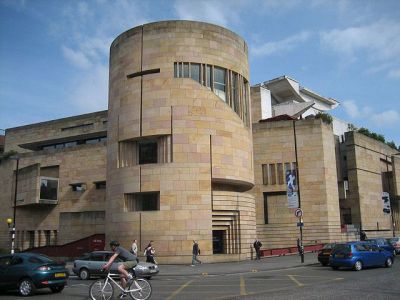
Right off Chambers Street and sidling up to George IV Bridge, the National Museum of Scotland seems like an entire universe cleverly disguised as one building. As the country’s crown jewel of curiosity, it houses everything from ancient artefacts, science and technology to Elton John’s finest feathered fashion. Indeed, sequins and sarcophagi under one roof...
The museum, in its current all-in-one glory, came to life in 2006 when the Royal Museum and the Museum of Scotland decided to merge (believing they’d work better as roommates). Having linked internally by utilizing some repurposed storage space, they created the stunning Grand Gallery-a light-drenched cathedral of wonder, stretching from basement to rooftop. The vaulted Entrance Hall alone is a whopping 1,400 square metres of pure “whoa.”
Wandering into the Grand Gallery, you’re bound to find some big stuff-literally! Oversized treasures too large for the regular exhibits-like the 20-metre-tall Window on the World, a vertical buffet of 800+ oddities-camp out here in joyful disarray. On its sides, Scotland shows off its brainpower in the form of “Discoveries” made by local inventors.
It’s a feast for all ages and attention spans. One moment you’re peering at ancient Egyptian mummies (CT scans included, like historical X-ray vision, revealing everything that is hidden under their wrappings), and the next you’re staring at something extravagant that once belonged to a glam rock legend. The Natural History floor, meanwhile, is a dino-lover’s paradise, complete with extinct beasts and bones the size of furniture.
In 2011, they added 16 shiny new galleries, just to keep things fresh-resulting in over 8,000 original objects awaiting your awe. Bonus points is that the entry is completely free. So, you can marvel at the mysteries of the universe and still afford a snack from the on-site café & bistro, if you are feeling peckish or just want to take a break from exploring.
By far not a typical museum-but rather an “everythingium”-it’s a real treat both inside and out, especially following its hefty £47-million refurbishment and extension. Definitely more than just a place to learn-but a place to linger...
Top Tips:
Get there early. Start on the top floor and descend like an archaeologist of modern wonder. There are some great 'hands-on' exhibits, so take your time if you are with kids. And if you're feeling fancy, book a private guided tour. Just check ahead for any exhibits that may cost extra-they’re rare, and usually a bargain.
The museum, in its current all-in-one glory, came to life in 2006 when the Royal Museum and the Museum of Scotland decided to merge (believing they’d work better as roommates). Having linked internally by utilizing some repurposed storage space, they created the stunning Grand Gallery-a light-drenched cathedral of wonder, stretching from basement to rooftop. The vaulted Entrance Hall alone is a whopping 1,400 square metres of pure “whoa.”
Wandering into the Grand Gallery, you’re bound to find some big stuff-literally! Oversized treasures too large for the regular exhibits-like the 20-metre-tall Window on the World, a vertical buffet of 800+ oddities-camp out here in joyful disarray. On its sides, Scotland shows off its brainpower in the form of “Discoveries” made by local inventors.
It’s a feast for all ages and attention spans. One moment you’re peering at ancient Egyptian mummies (CT scans included, like historical X-ray vision, revealing everything that is hidden under their wrappings), and the next you’re staring at something extravagant that once belonged to a glam rock legend. The Natural History floor, meanwhile, is a dino-lover’s paradise, complete with extinct beasts and bones the size of furniture.
In 2011, they added 16 shiny new galleries, just to keep things fresh-resulting in over 8,000 original objects awaiting your awe. Bonus points is that the entry is completely free. So, you can marvel at the mysteries of the universe and still afford a snack from the on-site café & bistro, if you are feeling peckish or just want to take a break from exploring.
By far not a typical museum-but rather an “everythingium”-it’s a real treat both inside and out, especially following its hefty £47-million refurbishment and extension. Definitely more than just a place to learn-but a place to linger...
Top Tips:
Get there early. Start on the top floor and descend like an archaeologist of modern wonder. There are some great 'hands-on' exhibits, so take your time if you are with kids. And if you're feeling fancy, book a private guided tour. Just check ahead for any exhibits that may cost extra-they’re rare, and usually a bargain.
4) Greyfriars Church
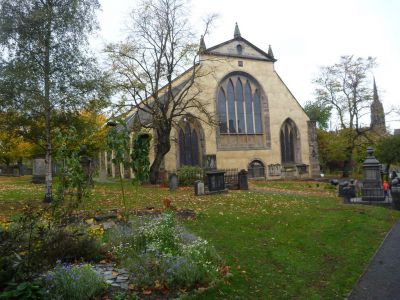
Edinburgh makes things easy for history buffs: just follow the soot-streaked stones of the Old Town and you’ll trip over ancient buildings in no time. One such relic is Greyfriars Church-an architectural overachiever that’s been around since the early 1600s and still manages to steal the show.
Work on the church began in 1602, and by 1630, it was officially consecrated, rising from the ruins of an abandoned Franciscan monastery and becoming one of the oldest buildings in the Old Town. Its name is a fashion nod to the original residents-monks in grey robes, otherwise known as the “Grey Friars.” Simple branding, eternal legacy...
In 1718, someone got the bright idea to divide the church with a wall-Old Greyfriars on one side, New Greyfriars on the other-because heaven forbid the Covenanters and Roman Catholics share pew space. Then, in 1845, the roof caught fire (presumably not from divine wrath), destroying much of the interior.
When the church was restored in the mid-19th century, they added stained-glass windows. Beautiful they were? Yes. Controversial? Also, yes-for it was the first time that such windows appeared in a Presbyterian church, and it caused a bit of a scandal. A little later, an organ was added, and once again the purists “clutched their pearls.” In 1929, they finally took down the dividing wall and made peace… at least architecturally.
Oh, and the adjoining graveyard-it's said to be haunted by the ghost of one “Bloody” George Mackenzie. A Lord Advocate responsible for the persecution of the Covenanters, his reputation is as bruised as his victims. They say that if he touches you, you’ll feel it-physically!-left with cuts and bruises... Sleep tight!
Still, nowadays, Greyfriars also doubles as an event venue and low-key fashion runway. It hosts exhibitions, lectures, and drama productions-all performed under those once-scandalous stained glass windows. The onsite museum showcases artifacts found in the area and recounts a comprehensive history of the Covenanters.
And for the wizarding crowd-just behind the Elephant House Café lies Greyfriars Kirkyard, where literary pilgrims flock to pay homage to tombstones that may-or may not-have inspired J.K. Rowling. Among those are Thomas Riddell (ring a bell, Voldemort fans?), Robert Potter, William McGonagall, and even names like Elizabeth Moodie and Margaret Louisa Scrymgeour Wedderburn, suspiciously close to Mad-Eye Moody and Rufus Scrimgeour (the Minister of Magic in the final Harry Potter book). As of August 2019, you can buy a handy Harry Potter-themed gravestone map; the proceeds from sales go toward graveyard upkeep-and probably a bit of Muggle curiosity management, too.
Also, visible from here is George Heriots School, reportedly the template for fictional Hogwarts...
Work on the church began in 1602, and by 1630, it was officially consecrated, rising from the ruins of an abandoned Franciscan monastery and becoming one of the oldest buildings in the Old Town. Its name is a fashion nod to the original residents-monks in grey robes, otherwise known as the “Grey Friars.” Simple branding, eternal legacy...
In 1718, someone got the bright idea to divide the church with a wall-Old Greyfriars on one side, New Greyfriars on the other-because heaven forbid the Covenanters and Roman Catholics share pew space. Then, in 1845, the roof caught fire (presumably not from divine wrath), destroying much of the interior.
When the church was restored in the mid-19th century, they added stained-glass windows. Beautiful they were? Yes. Controversial? Also, yes-for it was the first time that such windows appeared in a Presbyterian church, and it caused a bit of a scandal. A little later, an organ was added, and once again the purists “clutched their pearls.” In 1929, they finally took down the dividing wall and made peace… at least architecturally.
Oh, and the adjoining graveyard-it's said to be haunted by the ghost of one “Bloody” George Mackenzie. A Lord Advocate responsible for the persecution of the Covenanters, his reputation is as bruised as his victims. They say that if he touches you, you’ll feel it-physically!-left with cuts and bruises... Sleep tight!
Still, nowadays, Greyfriars also doubles as an event venue and low-key fashion runway. It hosts exhibitions, lectures, and drama productions-all performed under those once-scandalous stained glass windows. The onsite museum showcases artifacts found in the area and recounts a comprehensive history of the Covenanters.
And for the wizarding crowd-just behind the Elephant House Café lies Greyfriars Kirkyard, where literary pilgrims flock to pay homage to tombstones that may-or may not-have inspired J.K. Rowling. Among those are Thomas Riddell (ring a bell, Voldemort fans?), Robert Potter, William McGonagall, and even names like Elizabeth Moodie and Margaret Louisa Scrymgeour Wedderburn, suspiciously close to Mad-Eye Moody and Rufus Scrimgeour (the Minister of Magic in the final Harry Potter book). As of August 2019, you can buy a handy Harry Potter-themed gravestone map; the proceeds from sales go toward graveyard upkeep-and probably a bit of Muggle curiosity management, too.
Also, visible from here is George Heriots School, reportedly the template for fictional Hogwarts...
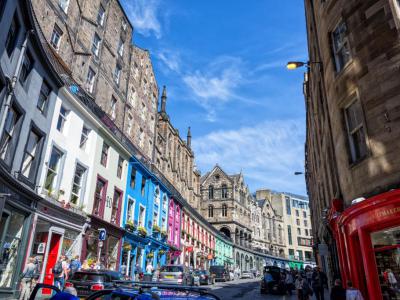
5) Victoria Street
Perhaps the most photographed location in all of Edinburgh, Victoria Street-with its gentle curve, candy-coloured shopfronts, and fairytale charm-is the Old Town icon that throughout the decades has graced everything from tourist postcards to glossy TV ads. Indeed, if streets had agents, this one would have been booked solid.
Built between 1829 and 1834, Victoria Street wasn’t always the whimsical rainbow we know today, though. Credit-or creative blame for it, rather-goes to Thomas Hamilton, a mastermind behind Edinburgh’s numerous architectural wonders, better known for his love affair with all things neoclassical. On this occasion, however, he deviated from his habitual neoclassical stamp, being told to create something mimicking the Old Flemish style. For this purpose, many of the area's old buildings were torn down. The result of such a dramatic medieval makeover was the appearance of arches, lining the new terrace, which now house some of the city’s most charming little shops.
And then came the magic. In recent years, Victoria Street-along with its downhill cousin, the West Bow-has gained notoriety as possible real-world prototypes for none other than Diagon Alley, featured in the Harry Potter books (you know, wizards, magic wands, and all that...).
Given that Edinburgh was home turf for JK Rowling while she penned her famous boy-wizard saga, it’s not a stretch to imagine Victoria Street as an inspiration for the ever-so fabulous wizard market after all. Packed with the cobbled stones, higgledy-piggledy medley of vibrant buildings, quirky boutiques, and a general air of eccentricity, it practically shouts Diagon Alley. So, whether you're here for the architecture, the shopping, or the spellcasting vibes, just know-this street has layers, arches, and more than a dash of enchantment...
Built between 1829 and 1834, Victoria Street wasn’t always the whimsical rainbow we know today, though. Credit-or creative blame for it, rather-goes to Thomas Hamilton, a mastermind behind Edinburgh’s numerous architectural wonders, better known for his love affair with all things neoclassical. On this occasion, however, he deviated from his habitual neoclassical stamp, being told to create something mimicking the Old Flemish style. For this purpose, many of the area's old buildings were torn down. The result of such a dramatic medieval makeover was the appearance of arches, lining the new terrace, which now house some of the city’s most charming little shops.
And then came the magic. In recent years, Victoria Street-along with its downhill cousin, the West Bow-has gained notoriety as possible real-world prototypes for none other than Diagon Alley, featured in the Harry Potter books (you know, wizards, magic wands, and all that...).
Given that Edinburgh was home turf for JK Rowling while she penned her famous boy-wizard saga, it’s not a stretch to imagine Victoria Street as an inspiration for the ever-so fabulous wizard market after all. Packed with the cobbled stones, higgledy-piggledy medley of vibrant buildings, quirky boutiques, and a general air of eccentricity, it practically shouts Diagon Alley. So, whether you're here for the architecture, the shopping, or the spellcasting vibes, just know-this street has layers, arches, and more than a dash of enchantment...
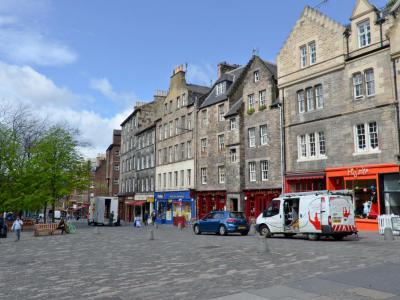
6) Grassmarket
If you're looking to shop, snack, or relax over a pint while in Edinburgh, the Grassmarket is undoubtedly your one-stop cobbled playground. Once the city’s bustling horse-and-cattle bazaar which drew crowds between 1477 and 1911, it also doubled as a top place for executions-because, apparently, back in the day, nothing did for the public entertainment more than hooves and hangings...
Keep an eye out for “The Shadow of the Gibbet”-the dark paving stones laid out in the form of a gallows near the Covenanter’s Monument. It’s a charmingly grim touch, in case you needed a reminder that this scenic square once served as the city’s unofficial “dead-end.” And over to one side of it stands the Bow Well that has been around since 1681.
According to legend, once upon a time, there was a woman named Maggie Dickson, a fishwife who made headlines by dying and... remarkably coming back again. Hanged right here for the alleged murder of her child, she stunned everyone when she unexpectedly woke up en route to the cemetery. Apparently, in those days, the “until dead” provision didn’t quite yet settle in the sentence proceedings (legal loophole of the day...). So, once hanged, her debt was considered paid and Maggie was set free. Today, you can toast her improbable resurrection at Maggie Dickson’s pub, conveniently located on the very spot where she was hanged but miraculously survived the ordeal.
Fast forward a few centuries and the Grassmarket swapped gallows for gastropubs. A formerly scruffy patch of the city, it became a magnet for students in the 1980s-likely lured by cheap beer and late-night kebabs. Nowadays gentrified, it’s all terraces, boutique shops, vintage finds, and indie charm.
Quirky, safe and interesting, this area is a great destination for those who need a regular change of scenery, complete with a variety of retail and dining opportunities to suit every wallet and taste, and enough character to fill a tartan suitcase.
Hot tip:
Check out Carnivàle Vintage for a wonderful selection of fun vintage clothing, Tasty Buns for pastry and coffee, Hula Juice Bar for guilt-free fuel, and Mary’s Milk Bar for glorious indulgence. And when you're done, wind your way up Victoria Street and onto the Royal Mile (further up)-because one eccentric shopping spree always deserves another...
Keep an eye out for “The Shadow of the Gibbet”-the dark paving stones laid out in the form of a gallows near the Covenanter’s Monument. It’s a charmingly grim touch, in case you needed a reminder that this scenic square once served as the city’s unofficial “dead-end.” And over to one side of it stands the Bow Well that has been around since 1681.
According to legend, once upon a time, there was a woman named Maggie Dickson, a fishwife who made headlines by dying and... remarkably coming back again. Hanged right here for the alleged murder of her child, she stunned everyone when she unexpectedly woke up en route to the cemetery. Apparently, in those days, the “until dead” provision didn’t quite yet settle in the sentence proceedings (legal loophole of the day...). So, once hanged, her debt was considered paid and Maggie was set free. Today, you can toast her improbable resurrection at Maggie Dickson’s pub, conveniently located on the very spot where she was hanged but miraculously survived the ordeal.
Fast forward a few centuries and the Grassmarket swapped gallows for gastropubs. A formerly scruffy patch of the city, it became a magnet for students in the 1980s-likely lured by cheap beer and late-night kebabs. Nowadays gentrified, it’s all terraces, boutique shops, vintage finds, and indie charm.
Quirky, safe and interesting, this area is a great destination for those who need a regular change of scenery, complete with a variety of retail and dining opportunities to suit every wallet and taste, and enough character to fill a tartan suitcase.
Hot tip:
Check out Carnivàle Vintage for a wonderful selection of fun vintage clothing, Tasty Buns for pastry and coffee, Hula Juice Bar for guilt-free fuel, and Mary’s Milk Bar for glorious indulgence. And when you're done, wind your way up Victoria Street and onto the Royal Mile (further up)-because one eccentric shopping spree always deserves another...
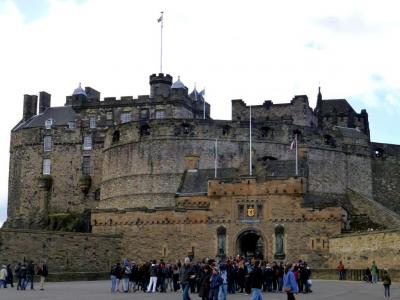
7) Edinburgh Castle (must see)
Edinburgh Castle, looming large over the Scottish capital, is the second most visited attraction in the UK (after the Tower of London, which is still number one). The history of Scotland is deeply etched into its ancient stones, making it a timeline in fortress form.
Perched atop Castle Rock (a hardened basaltic plug from an extinct volcano eroded by glaciers), this area has been drawing humans since the 9th millennium BC. The first castle on the site was built in the 12th century by King David I. It remained a royal residence until 1603, when the monarchy packed up and moved to London-presumably for better weather and indoor plumbing...
Indeed, as a fortress, it was virtually impregnable, except for one major-geological-drawback: the basalt rock on which it stands doesn’t hold water (literally). The 28-meter-deep well inside the fortress was about as useful as a chocolate teapot during a siege. So, when the well ran dry, surrender-or dehydration-was the only choice for those inside.
The original castle was mostly destroyed during the Lang Siege of 1573. The only remainder from its early days is St. Margaret’s Chapel. By the 17th century, it had shifted from royal digs to military barracks, housing troops up to the 1920s.
Presently, the castle hosts the Scottish National War Memorial, the National War Museum, and enough regimental museums to keep military buffs busy till closing time. Don't miss the One O’Clock Gun, which is fired daily (except Sundays) at 1 PM with Swiss-watch precision-yes, Edinburgh literally sets its clocks by it...
Also, in the Crown Room, you will see Scotland’s royal bling-crown, scepter, and sword-resting under heavy guard. Period-costumed actors occasionally swoop in to re-enact history with full flair. And if you’re visiting in August, the Military Tattoo takes over the esplanade with kilts, cannons, and bagpipes galore.
Oh, and in the north-east corner of the esplanade, don't miss that rather unassuming little iron fountain. Called Witches' Well, it marks the spot where, back in the day, many women accused of witchcraft were burned at the stake. Spooky, grim, and sadly true...
The panoramic views are postcard-worthy, the historical nooks are endlessly fascinating, and honestly, it just feels epic to stand where centuries of royals, rebels, and rock-solid drama unfolded.
Pro Tips:
The entry is cheaper, and more importantly, faster, if you book online.
Take a free guided tour – running every hour. Otherwise, consider grabbing the £3 audio guide if you like facts with flair.
Being at the mountain's top, it may get breezy, so definitely bring a windproof jacket if visiting in cold weather.
Perched atop Castle Rock (a hardened basaltic plug from an extinct volcano eroded by glaciers), this area has been drawing humans since the 9th millennium BC. The first castle on the site was built in the 12th century by King David I. It remained a royal residence until 1603, when the monarchy packed up and moved to London-presumably for better weather and indoor plumbing...
Indeed, as a fortress, it was virtually impregnable, except for one major-geological-drawback: the basalt rock on which it stands doesn’t hold water (literally). The 28-meter-deep well inside the fortress was about as useful as a chocolate teapot during a siege. So, when the well ran dry, surrender-or dehydration-was the only choice for those inside.
The original castle was mostly destroyed during the Lang Siege of 1573. The only remainder from its early days is St. Margaret’s Chapel. By the 17th century, it had shifted from royal digs to military barracks, housing troops up to the 1920s.
Presently, the castle hosts the Scottish National War Memorial, the National War Museum, and enough regimental museums to keep military buffs busy till closing time. Don't miss the One O’Clock Gun, which is fired daily (except Sundays) at 1 PM with Swiss-watch precision-yes, Edinburgh literally sets its clocks by it...
Also, in the Crown Room, you will see Scotland’s royal bling-crown, scepter, and sword-resting under heavy guard. Period-costumed actors occasionally swoop in to re-enact history with full flair. And if you’re visiting in August, the Military Tattoo takes over the esplanade with kilts, cannons, and bagpipes galore.
Oh, and in the north-east corner of the esplanade, don't miss that rather unassuming little iron fountain. Called Witches' Well, it marks the spot where, back in the day, many women accused of witchcraft were burned at the stake. Spooky, grim, and sadly true...
The panoramic views are postcard-worthy, the historical nooks are endlessly fascinating, and honestly, it just feels epic to stand where centuries of royals, rebels, and rock-solid drama unfolded.
Pro Tips:
The entry is cheaper, and more importantly, faster, if you book online.
Take a free guided tour – running every hour. Otherwise, consider grabbing the £3 audio guide if you like facts with flair.
Being at the mountain's top, it may get breezy, so definitely bring a windproof jacket if visiting in cold weather.
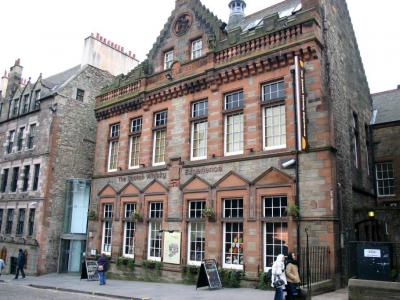
8) Scotch Whisky Experience (must see)
So, what is the difference between “whisky” and “whiskey”? If that little “e” is driving you to drink, head straight to The Scotch Whisky Experience, where answers-and drams-await. This is Scotland’s answer to Disneyland, but with fewer cartoon mice and significantly more peat smoke.
Indeed, this interactive museum doesn’t just cater to connoisseurs and curious adults. Even the wee (the Scottish word for “little” ones) get a slice of the fun, thanks to “Peat the Cat”-their feline guide through a world of whisky facts and playful games. Meanwhile, the grown-ups hop aboard a moving barrel (yes, you heard that right) for a slow cruise through a mechanical distillery, narrated by none other than the ethereal “Whisky Ghost.” He knows his mash from his malt, and he’s not afraid to share-within reason, of course...
Next stop: the MacIntyre Whisky Gallery, where you'll learn how different flavours are crafted. Well, some of the flavours (trade secrets are revealed only partially...). Then it’s on to the Sense of Scotland room, where your nose gets a full workout sniffing everything from smoky campfires to sweet toffee notes-basically a perfume department for whisky fans.
Your grand finale is the tasting room. Here, you’ll find your whisky-yes, even you who swore you didn’t like the stuff. But do yourself a favour: don’t ask for ice or soda. You’ll get looks colder than the Highlands in January.
Before you stumble out, swing by the gift shop. With over 300 malts and miniatures on offer, it’s practically a whisky library. Tour guests even get a discount-because education should come with perks...
So, in case you're still wondering why go?-Here's the answer: Because where else can you ogle 3,400 unopened bottles of whisky worth a fortune, sip your way through centuries of liquid history, and pair it all with cheese and chocolate that’d make a Highlander weep?
Top Tip:
Spring for the “Gold Tour” if you’re in it for the full whisky safari. And if you're not all that keen on whisky but prefer to look, sniff, and learn without the burn-The “Silver Tour” has your name on it. Slàinte!
Indeed, this interactive museum doesn’t just cater to connoisseurs and curious adults. Even the wee (the Scottish word for “little” ones) get a slice of the fun, thanks to “Peat the Cat”-their feline guide through a world of whisky facts and playful games. Meanwhile, the grown-ups hop aboard a moving barrel (yes, you heard that right) for a slow cruise through a mechanical distillery, narrated by none other than the ethereal “Whisky Ghost.” He knows his mash from his malt, and he’s not afraid to share-within reason, of course...
Next stop: the MacIntyre Whisky Gallery, where you'll learn how different flavours are crafted. Well, some of the flavours (trade secrets are revealed only partially...). Then it’s on to the Sense of Scotland room, where your nose gets a full workout sniffing everything from smoky campfires to sweet toffee notes-basically a perfume department for whisky fans.
Your grand finale is the tasting room. Here, you’ll find your whisky-yes, even you who swore you didn’t like the stuff. But do yourself a favour: don’t ask for ice or soda. You’ll get looks colder than the Highlands in January.
Before you stumble out, swing by the gift shop. With over 300 malts and miniatures on offer, it’s practically a whisky library. Tour guests even get a discount-because education should come with perks...
So, in case you're still wondering why go?-Here's the answer: Because where else can you ogle 3,400 unopened bottles of whisky worth a fortune, sip your way through centuries of liquid history, and pair it all with cheese and chocolate that’d make a Highlander weep?
Top Tip:
Spring for the “Gold Tour” if you’re in it for the full whisky safari. And if you're not all that keen on whisky but prefer to look, sniff, and learn without the burn-The “Silver Tour” has your name on it. Slàinte!
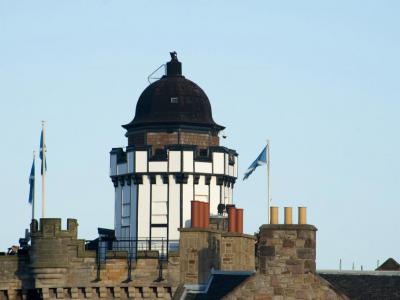
9) Camera Obscura and World of Illusions (must see)
Back in 1835, an entrepreneurial firecracker named Maria Theresa Short decided that Edinburgh needed more science and spectacle. So, she launched what would become the Camera Obscura & World of Illusions, a place where city views met mind-bending visuals long before Instagram filters were a thing.
Short's first venture, called “Short’s Popular Observatory,” was a quirky little spot built from wood, stone, and pure determination up on Calton Hill, near the National Monument. Sadly, the authorities weren’t fans-so, in 1851, they dismantled it. Undeterred, Short relocated to Castlehill, bought the townhouse of the Laird of Cockpen (indeed, this was his name), and stacked two extra floors on top. By 1853, she had rebranded the place as Short’s Observatory, Museum of Science and Art-a title almost as long as the staircase...
In 1892, the venue came under the management of Patrick Geddes, a forward-thinking Scottish urban planner, sociologist, and ecologist, who gave the building a brainy makeover. He renamed it the Outlook Tower and transformed it into a museum and urban study center. In essence, Geddes filled it with a clever vertical geography lesson: the world at the bottom, Europe and English-speaking countries in the middle, and Edinburgh at the top. Crowning it all, in the topmost room, was a Camera Obscura-because, even in the Victorian era, they already wanted something similar to Google Earth!
The museum ceased operations following Geddes' passing in 1932. In 1966, the University of Edinburgh acquired the site with the intention of establishing the Patrick Geddes Centre and archive. However, in 1982, the building changed ownership to private hands, with a one-room tribute to Geddes remaining on the fourth floor. But that's when the real magic was just getting started.
Today, this tower is Edinburgh’s oldest visitor attraction and still the most delightfully dizzying. It features more than 100 interactive exhibits spread across six floors of illusions, holograms, mirror mazes, vortex tunnels, and hands-on wonders. The rooftop terrace is a camera-ready dream with telescopes and skyline views. The original top-floor Camera Obscura is a 19th-century tech marvel that still gives a live, real-time tour of the city below. It's equally educational, entertaining, and just a little surreal-the kind of place where science meets showbiz and your eyeballs never quite know what hit them.
Short's first venture, called “Short’s Popular Observatory,” was a quirky little spot built from wood, stone, and pure determination up on Calton Hill, near the National Monument. Sadly, the authorities weren’t fans-so, in 1851, they dismantled it. Undeterred, Short relocated to Castlehill, bought the townhouse of the Laird of Cockpen (indeed, this was his name), and stacked two extra floors on top. By 1853, she had rebranded the place as Short’s Observatory, Museum of Science and Art-a title almost as long as the staircase...
In 1892, the venue came under the management of Patrick Geddes, a forward-thinking Scottish urban planner, sociologist, and ecologist, who gave the building a brainy makeover. He renamed it the Outlook Tower and transformed it into a museum and urban study center. In essence, Geddes filled it with a clever vertical geography lesson: the world at the bottom, Europe and English-speaking countries in the middle, and Edinburgh at the top. Crowning it all, in the topmost room, was a Camera Obscura-because, even in the Victorian era, they already wanted something similar to Google Earth!
The museum ceased operations following Geddes' passing in 1932. In 1966, the University of Edinburgh acquired the site with the intention of establishing the Patrick Geddes Centre and archive. However, in 1982, the building changed ownership to private hands, with a one-room tribute to Geddes remaining on the fourth floor. But that's when the real magic was just getting started.
Today, this tower is Edinburgh’s oldest visitor attraction and still the most delightfully dizzying. It features more than 100 interactive exhibits spread across six floors of illusions, holograms, mirror mazes, vortex tunnels, and hands-on wonders. The rooftop terrace is a camera-ready dream with telescopes and skyline views. The original top-floor Camera Obscura is a 19th-century tech marvel that still gives a live, real-time tour of the city below. It's equally educational, entertaining, and just a little surreal-the kind of place where science meets showbiz and your eyeballs never quite know what hit them.
