Custom Walk in Reykjavik, Iceland by ajaibhatnagar_65999 created on 2026-07-05
Guide Location: Iceland » Reykjavik
Guide Type: Custom Walk
# of Sights: 12
Tour Duration: 4 Hour(s)
Travel Distance: 7.6 Km or 4.7 Miles
Share Key: 8JKZ6
Guide Type: Custom Walk
# of Sights: 12
Tour Duration: 4 Hour(s)
Travel Distance: 7.6 Km or 4.7 Miles
Share Key: 8JKZ6
How It Works
Please retrieve this walk in the GPSmyCity app. Once done, the app will guide you from one tour stop to the next as if you had a personal tour guide. If you created the walk on this website or come to the page via a link, please follow the instructions below to retrieve the walk in the app.
Retrieve This Walk in App
Step 1. Download the app "GPSmyCity: Walks in 1K+ Cities" on Apple App Store or Google Play Store.



Step 2. In the GPSmyCity app, download(or launch) the guide "Reykjavik Map and Walking Tours".
Step 3. Tap the menu button located at upper right corner of the "Walks" screen and select "Retrieve custom walk". Enter the share key: 8JKZ6
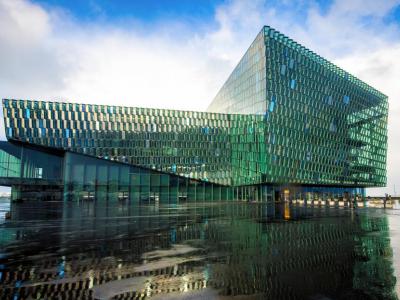
1) Harpa Concert Hall and Conference Centre (must see)
Located on the waterfront of Reykjavík, Harpa Concert Hall and Conference Centre stands as one of the city’s most distinctive modern landmarks and a symbol of Iceland’s cultural renewal in the early 21st century. The project was shaped by the 2008 financial crisis, which delayed construction, before being completed as a public initiative and officially opening in 2011.
As the first purpose-built concert hall in Reykjavík, Harpa became a central home for the Iceland Symphony Orchestra and houses the offices of the Icelandic Opera, while also hosting performances by groups such as the Reykjavík Big Band.
Beyond classical concerts and opera, Harpa hosts a wide range of events, from international conferences to themed shows such as How to Become Icelandic in 60 Minutes and Reykjavík Classics. The venue has also appeared in productions like Black Mirror and Sense8.
Architecturally, Harpa is defined by its impressive façade of geometric, honeycomb-like glass panels set over a steel framework. The central architectural highlight is the "Quasi-Brick" façade, located primarily on the south side of the building facing the sea. To find the best perspective, stand in the main atrium and look upward; you can see the twelve-sided glass modules. Inspired by Iceland’s basalt formations, the panels shift in colour and reflect changing light conditions, giving the building a dynamic appearance—especially after dark, when it becomes one of the city’s most visually impressive sights. This innovative design earned Harpa the European Union’s Mies van der Rohe Award in 2013, along with recognition as one of Northern Europe’s leading conference venues.
Inside, the building opens into a spacious atrium where light and structure interact throughout the day. The main concert hall, Eldborg, is located within the central core of the building. To find it, follow the main floor corridor from the lobby and ascend the grand staircases toward the "heart" of the structure. Eldborg is known for its warm red interior, designed to evoke a glowing volcanic crater, and its carefully engineered acoustics. Once you find yourself inside, look for the massive adjustable acoustic panels and the deep red walls that give the hall its distinctive "Fire Castle" atmosphere.
A final notable highlight is the Harbor View Walkways located on the upper levels of the sea-facing atrium. To reach this area, take the elevator or stairs to the fourth floor and walk toward the glass perimeter. From here, visitors are offered wide views over the city’s colorful rooftops and the North Atlantic.
Outside, in the water beside the building, stands The Musician, a 1970 sculpture depicting a cellist, relocated here from the orchestra’s former home. Visitors should note that as a functioning venue, certain halls may be closed for rehearsals, so checking the daily schedule at the information desk is advisable.
As the first purpose-built concert hall in Reykjavík, Harpa became a central home for the Iceland Symphony Orchestra and houses the offices of the Icelandic Opera, while also hosting performances by groups such as the Reykjavík Big Band.
Beyond classical concerts and opera, Harpa hosts a wide range of events, from international conferences to themed shows such as How to Become Icelandic in 60 Minutes and Reykjavík Classics. The venue has also appeared in productions like Black Mirror and Sense8.
Architecturally, Harpa is defined by its impressive façade of geometric, honeycomb-like glass panels set over a steel framework. The central architectural highlight is the "Quasi-Brick" façade, located primarily on the south side of the building facing the sea. To find the best perspective, stand in the main atrium and look upward; you can see the twelve-sided glass modules. Inspired by Iceland’s basalt formations, the panels shift in colour and reflect changing light conditions, giving the building a dynamic appearance—especially after dark, when it becomes one of the city’s most visually impressive sights. This innovative design earned Harpa the European Union’s Mies van der Rohe Award in 2013, along with recognition as one of Northern Europe’s leading conference venues.
Inside, the building opens into a spacious atrium where light and structure interact throughout the day. The main concert hall, Eldborg, is located within the central core of the building. To find it, follow the main floor corridor from the lobby and ascend the grand staircases toward the "heart" of the structure. Eldborg is known for its warm red interior, designed to evoke a glowing volcanic crater, and its carefully engineered acoustics. Once you find yourself inside, look for the massive adjustable acoustic panels and the deep red walls that give the hall its distinctive "Fire Castle" atmosphere.
A final notable highlight is the Harbor View Walkways located on the upper levels of the sea-facing atrium. To reach this area, take the elevator or stairs to the fourth floor and walk toward the glass perimeter. From here, visitors are offered wide views over the city’s colorful rooftops and the North Atlantic.
Outside, in the water beside the building, stands The Musician, a 1970 sculpture depicting a cellist, relocated here from the orchestra’s former home. Visitors should note that as a functioning venue, certain halls may be closed for rehearsals, so checking the daily schedule at the information desk is advisable.
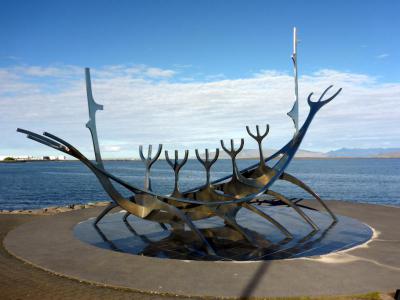
2) Sólfar (Sun Voyager) (must see)
Sun Voyager is a sculpture crafted by the artist Jón Gunnar Árnason (1931-1989) and is situated alongside the Sæbraut road in Reykjavík. This artistic creation is often characterized as a representation of either a dreamboat or an homage to the sun. Jón Gunnar Árnason's intention behind this sculpture was to convey a sense of promise associated with uncharted territories, a dream symbolizing hope, progress, and freedom.
In 1986, the west district association of Reykjavík decided to sponsor a competition to commission a new outdoor sculpture in commemoration of the 200th anniversary of the city. Jón Gunnar's Sun Voyager emerged as the winning design in the competition, leading to the creation of a scaled-up aluminum model, which was later presented to the city for enlargement. The full-sized Sun Voyager was officially unveiled on Sæbraut, coinciding with the birthday of Reykjavík on August 18, 1990.
The sculpture is crafted from high-quality stainless steel and is positioned upon a circle formed by granite slabs, encircled by a material known as "town-hall concrete." Its construction meticulously followed Jón Gunnar Árnason's detailed full-scale drawing of the Sun Voyager and was supervised by the artist Kristinn E. Hrafnsson, who served as Jón Gunnar's assistant.
Why You Should Visit:
Great subject for photographs as it provides a nice vantage point to look out into the waters and think of very deep things.
In 1986, the west district association of Reykjavík decided to sponsor a competition to commission a new outdoor sculpture in commemoration of the 200th anniversary of the city. Jón Gunnar's Sun Voyager emerged as the winning design in the competition, leading to the creation of a scaled-up aluminum model, which was later presented to the city for enlargement. The full-sized Sun Voyager was officially unveiled on Sæbraut, coinciding with the birthday of Reykjavík on August 18, 1990.
The sculpture is crafted from high-quality stainless steel and is positioned upon a circle formed by granite slabs, encircled by a material known as "town-hall concrete." Its construction meticulously followed Jón Gunnar Árnason's detailed full-scale drawing of the Sun Voyager and was supervised by the artist Kristinn E. Hrafnsson, who served as Jón Gunnar's assistant.
Why You Should Visit:
Great subject for photographs as it provides a nice vantage point to look out into the waters and think of very deep things.
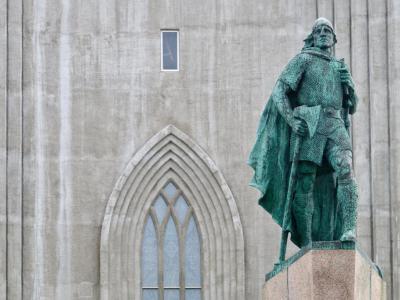
3) Statue of Leif Eiriksson
In 1930, a statue of Leif Erikson, a Norse explorer from Iceland, was placed in the city center of Reykjavík. This statue currently stands in front of Hallgrím's Church (Hallgrímskirkja) and was gifted by the United States to Iceland in honor of the 1,000-year anniversary of Alþingi, Iceland's parliament.
Leif Erikson, also known as Leiv Eiriksson or Leif Ericson (circa 970 – circa 1020), is believed to be the first European to have landed on continental North America (excluding Greenland). This happened roughly 500 years before Christopher Columbus's famous voyage. According to Icelandic sagas, Leif Erikson established a Norse settlement in Vinland, which is generally thought to refer to coastal North America. Some speculate that this settlement corresponds to the remains of a Norse settlement called L'Anse aux Meadows in Newfoundland, Canada, which was occupied around the year 1000.
Leif Erikson was the son of Erik the Red, who founded the first Norse settlement in Greenland, and Thjodhild, both of Norwegian descent. Although the exact place of Leif's birth is uncertain, it is assumed to have been in Iceland, which had recently been settled by Norsemen primarily from Norway. He grew up on the family estate of Brattahlíð in the Eastern Settlement of Greenland. Leif had two known sons: Thorgils, born to the noblewoman Thorgunna in the Hebrides, and Thorkell, who succeeded him as the leader of the Greenland settlement.
Leif Erikson, also known as Leiv Eiriksson or Leif Ericson (circa 970 – circa 1020), is believed to be the first European to have landed on continental North America (excluding Greenland). This happened roughly 500 years before Christopher Columbus's famous voyage. According to Icelandic sagas, Leif Erikson established a Norse settlement in Vinland, which is generally thought to refer to coastal North America. Some speculate that this settlement corresponds to the remains of a Norse settlement called L'Anse aux Meadows in Newfoundland, Canada, which was occupied around the year 1000.
Leif Erikson was the son of Erik the Red, who founded the first Norse settlement in Greenland, and Thjodhild, both of Norwegian descent. Although the exact place of Leif's birth is uncertain, it is assumed to have been in Iceland, which had recently been settled by Norsemen primarily from Norway. He grew up on the family estate of Brattahlíð in the Eastern Settlement of Greenland. Leif had two known sons: Thorgils, born to the noblewoman Thorgunna in the Hebrides, and Thorkell, who succeeded him as the leader of the Greenland settlement.
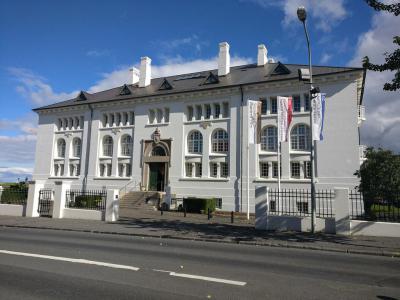
4) Culture House
The Culture House, constructed from 1906 to 1908, served as the initial location for Iceland's National Library and Archives, officially opening in 1909. Originally, it also housed the National Museum and the Icelandic Museum of Natural History, leading to its informal name, the Culture House, though this wasn't its official title. Since the 2000s, various institutions, including the Árni Magnússon Institution for Icelandic Studies, the National Gallery, and the Icelandic Museum of Natural History, have utilized the space for exhibitions. In 2013, the building, now a protected historical site, joined forces with the National Museum of Iceland.
Widely regarded as one of Iceland's architectural gems, the Culture House reflects meticulous attention to both interior and exterior design. Danish architect Johannes Magdahl Nielsen conceptualized it, while Icelandic artisans brought it to life, showcasing their skill. Its interior houses the original reading hall, a remarkable feature of the building. The oak furniture, designed by the building's caretaker Frederick Kiörboe, remains a highlight. A notable historical aspect is the building's cornerstone, placed on September 23rd, 1906, visible beneath the front steps.
Tip:
Free with your National Museum ticket or the Reykjavik City Card; there are free lockers.
Widely regarded as one of Iceland's architectural gems, the Culture House reflects meticulous attention to both interior and exterior design. Danish architect Johannes Magdahl Nielsen conceptualized it, while Icelandic artisans brought it to life, showcasing their skill. Its interior houses the original reading hall, a remarkable feature of the building. The oak furniture, designed by the building's caretaker Frederick Kiörboe, remains a highlight. A notable historical aspect is the building's cornerstone, placed on September 23rd, 1906, visible beneath the front steps.
Tip:
Free with your National Museum ticket or the Reykjavik City Card; there are free lockers.
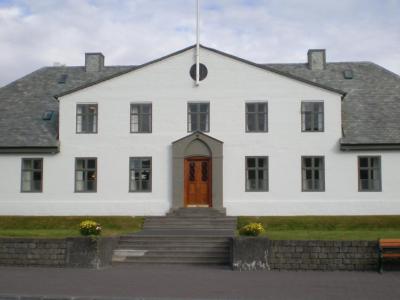
5) Stjórnarráðshúsið (Prime Minister 's Office)
The Government House, located in Reykjavík, is an impressive structure that currently serves as the headquarters of the Prime Minister's Office. Interestingly, this building has a historical origin dating back to the mid-18th century when it was initially constructed as Iceland's very first prison facility.
In 1733, Henrik Ocksen, a district commissioner, wrote to Joachim Henriksen Lafrenz, another commissioner, discussing the need for a penitentiary in Iceland. This was prompted by the case of Katrín Ingjaldsdóttir, who had her death sentence commuted to life imprisonment by the king. Iceland often had to send life-term prisoners to Denmark due to the lack of suitable facilities.
It wasn't until March 20, 1759, that the King of Denmark formally approved the construction of a penitentiary in Iceland. Construction work on the building commenced in 1761, and interestingly, the convicts themselves contributed to its construction as part of their sentence. A decade later, in the winter of 1770–71, the building was completed and ready for use. A tax on real estate, including imprisonment costs, funded the penitentiary, but it faced public resistance and closed in 1816.
In 1904, the Government House became the location for the first Icelandic ministry, and later, the cabinet. In 1918, the building was officially named after this purpose. Since then, the Prime Minister's Office and the Government of Iceland have conducted their operations within this historic edifice. It's worth noting that from 1973 to 1996, the office of the President of Iceland was also housed in the Government House, and it holds the distinction of being the place where the Icelandic national flag was first raised.
In 1733, Henrik Ocksen, a district commissioner, wrote to Joachim Henriksen Lafrenz, another commissioner, discussing the need for a penitentiary in Iceland. This was prompted by the case of Katrín Ingjaldsdóttir, who had her death sentence commuted to life imprisonment by the king. Iceland often had to send life-term prisoners to Denmark due to the lack of suitable facilities.
It wasn't until March 20, 1759, that the King of Denmark formally approved the construction of a penitentiary in Iceland. Construction work on the building commenced in 1761, and interestingly, the convicts themselves contributed to its construction as part of their sentence. A decade later, in the winter of 1770–71, the building was completed and ready for use. A tax on real estate, including imprisonment costs, funded the penitentiary, but it faced public resistance and closed in 1816.
In 1904, the Government House became the location for the first Icelandic ministry, and later, the cabinet. In 1918, the building was officially named after this purpose. Since then, the Prime Minister's Office and the Government of Iceland have conducted their operations within this historic edifice. It's worth noting that from 1973 to 1996, the office of the President of Iceland was also housed in the Government House, and it holds the distinction of being the place where the Icelandic national flag was first raised.
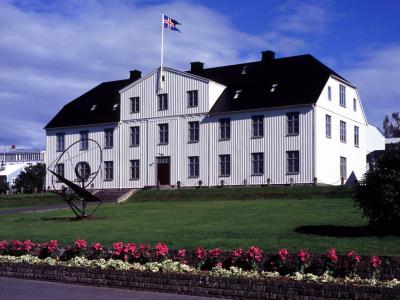
6) Reykjavik Junior College
Reykjavik Junior College (Menntaskólinn í Reykjavík) stands as the oldest high school in Reykjavík. Its roots can be traced back to the year 1056 when a school was first established in Skálholt. Remarkably, it remains one of the most venerable educational institutions in Iceland. In 1786, the school was relocated to Reykjavík, yet due to subpar housing conditions, it had to move once more in 1805, finding a new home near Reykjavík at Bessastaðir.
By 1846, the school found its permanent residence at its present location, where a new building was constructed in Reykjavík. This building held the distinction of being the largest in the country during its time and is even featured on the 500 Icelandic krona bill. Initially, it served as a meeting place for the National Parliament when it resumed its sessions in Reykjavík following a hiatus of a few years. It was within these walls that Jón Sigurðsson, a prominent leader in the quest for Icelandic independence, led the members of Parliament in their famous declaration, 'Vér mótmælum allir' (We all protest).
Given its rich and storied history, this building holds a significant place as a crucial historical landmark in the country.
By 1846, the school found its permanent residence at its present location, where a new building was constructed in Reykjavík. This building held the distinction of being the largest in the country during its time and is even featured on the 500 Icelandic krona bill. Initially, it served as a meeting place for the National Parliament when it resumed its sessions in Reykjavík following a hiatus of a few years. It was within these walls that Jón Sigurðsson, a prominent leader in the quest for Icelandic independence, led the members of Parliament in their famous declaration, 'Vér mótmælum allir' (We all protest).
Given its rich and storied history, this building holds a significant place as a crucial historical landmark in the country.
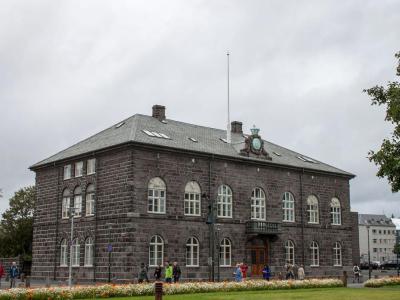
7) Althingishus (The Parliament House)
The Parliament House is one of the most historically and politically significant buildings in Reykjavík. Designed by Danish architect Ferdinand Meldahl and completed in 1881, the building was constructed to house the Althingi, an institution first established in 930 AD and among the oldest parliamentary bodies in the world. Over the centuries, as meetings have been held here since 1884, the structure itself has been repurposed at different times—also housing the University of Iceland and the offices of the President—before focusing solely on parliamentary functions.
The building itself is modest in scale, reflecting Iceland’s preference for restraint. Constructed from hewn dolerite, a subvolcanic rock, it is one of the oldest stone buildings in the country. Its symmetrical, classical façade is enriched with the first major highlight: the Land Spirits reliefs. To find these, look specifically at the tympanums above the windows, which reveal Iceland’s four legendary protectors—a dragon, an eagle, a bull, and a giant—drawn from Norse tradition. On the north side, you can also spot the crown and crest of King Christian IX, linking the structure to Iceland’s period under Danish rule.
Inside, the parliament continues to function as the center of Iceland’s political life. The central debating chamber is located on the upper floor of the building, serving as the heart of the nation's legislative work. To find this highlight, visitors usually access the public gallery during sessions; it reveals the semi-circular seating where the Althingi convenes. Once you find yourself inside, look for the historic woodwork and the large windows that face out toward the square.
Beneath the main levels and behind the building lies a small garden, which represents the oldest public garden in Iceland. To find this highlight, walk around the side of the main stone structure to the rear of the property. Once you find yourself in this quiet space, look for the original 19th-century layout and the small pond once used as a peaceful retreat for parliamentarians.
Facing the building's entrance in Austurvöllur Square stands a bronze statue of Jón Sigurðsson, the revered leader of Iceland’s 19th-century independence movement.
Visitors should note that while the exterior is always accessible, interior access for the public is generally limited to scheduled tours or gallery sessions, so checking the session calendar ahead of time is advisable.
The building itself is modest in scale, reflecting Iceland’s preference for restraint. Constructed from hewn dolerite, a subvolcanic rock, it is one of the oldest stone buildings in the country. Its symmetrical, classical façade is enriched with the first major highlight: the Land Spirits reliefs. To find these, look specifically at the tympanums above the windows, which reveal Iceland’s four legendary protectors—a dragon, an eagle, a bull, and a giant—drawn from Norse tradition. On the north side, you can also spot the crown and crest of King Christian IX, linking the structure to Iceland’s period under Danish rule.
Inside, the parliament continues to function as the center of Iceland’s political life. The central debating chamber is located on the upper floor of the building, serving as the heart of the nation's legislative work. To find this highlight, visitors usually access the public gallery during sessions; it reveals the semi-circular seating where the Althingi convenes. Once you find yourself inside, look for the historic woodwork and the large windows that face out toward the square.
Beneath the main levels and behind the building lies a small garden, which represents the oldest public garden in Iceland. To find this highlight, walk around the side of the main stone structure to the rear of the property. Once you find yourself in this quiet space, look for the original 19th-century layout and the small pond once used as a peaceful retreat for parliamentarians.
Facing the building's entrance in Austurvöllur Square stands a bronze statue of Jón Sigurðsson, the revered leader of Iceland’s 19th-century independence movement.
Visitors should note that while the exterior is always accessible, interior access for the public is generally limited to scheduled tours or gallery sessions, so checking the session calendar ahead of time is advisable.
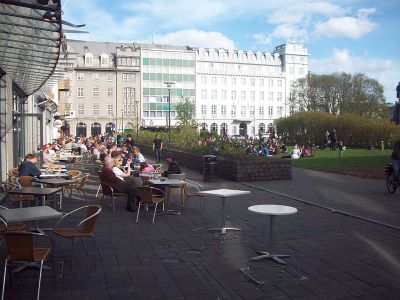
8) Austurvöllur Square
Austurvöllur Square serves as the main public square in Reykjavík and a focal point of both daily life and national identity. The square took shape in the 18th and 19th centuries as Reykjavík developed into an administrative centre. Originally an open field on the eastern side of the early settlement—reflected in its name, meaning “Eastern Field”—it gradually evolved into a structured space framed by key landmarks, including the Parliament House, Reykjavík Cathedral, and Hotel Borg, along with a concentration of cafés, restaurants, and bars.
At the centre of the square stands a statue of Jón Sigurðsson, unveiled in 1911 to mark the centenary of his birth. Nearby, Hotel Borg adds another historical layer: built in 1930 by Jóhannes Jósefsson, who competed in the 1908 Summer Olympics, the Art Deco building was conceived as a luxury hotel ahead of the 1,000th anniversary of Iceland’s parliament and has since hosted politicians, dignitaries, and celebrities.
Today, Austurvöllur functions as both a gathering place and a social hub. In summer, the square fills with locals and visitors enjoying outdoor cafés and open space, while in winter it takes on a quieter atmosphere, often marked by the presence of a large Christmas tree.
At the centre of the square stands a statue of Jón Sigurðsson, unveiled in 1911 to mark the centenary of his birth. Nearby, Hotel Borg adds another historical layer: built in 1930 by Jóhannes Jósefsson, who competed in the 1908 Summer Olympics, the Art Deco building was conceived as a luxury hotel ahead of the 1,000th anniversary of Iceland’s parliament and has since hosted politicians, dignitaries, and celebrities.
Today, Austurvöllur functions as both a gathering place and a social hub. In summer, the square fills with locals and visitors enjoying outdoor cafés and open space, while in winter it takes on a quieter atmosphere, often marked by the presence of a large Christmas tree.
9) Reykjavik City Hall
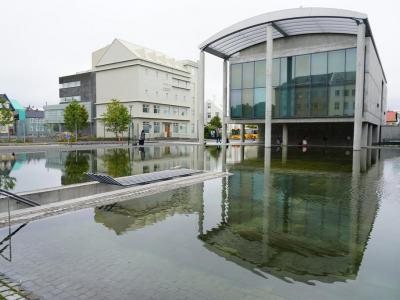
Reykjavík's City Hall, designed by architects Margrét Harðardóttir and Steve Christer, stands on Tjörnin lake's northern shore, at the heart of the city. This building uniquely blends nature and urban elements, reflecting its dual purpose. The City Council Building, located on the north side, is solid and structured, mirroring the Kvos district's architectural style. In contrast, the south-facing Office Building, where administrative work happens, has a more fluid and open design, with workspaces and meeting rooms overlooking the lake. A notable feature outside is a moss-covered wall, reminiscent of Iceland's natural mossy rock formations.
The concept of a city hall in Reykjavík dates back to the city's early days. After years of planning and an open competition in 1986, the winning design by Harðardóttir and Christer, both London Architectural Association School graduates, was chosen from 38 entries. The construction began in 1988 and the hall was inaugurated in 1992.
A key attraction inside is a large 3D map of Iceland, located in the main hall. This detailed map, crafted from 1 millimeter thick cardboard cut to represent Iceland's topography and mounted on a wooden and aluminum frame, spans 76.4 square meters. The map, built by the city's carpenters and painted by Sigurður Pálsson, is designed at a 1:50,000 scale but with an exaggerated elevation scale of 1:25,000 for better visual impact. This map, along with the building's design, symbolizes the fusion of Reykjavík's urban fabric and natural environment.
The concept of a city hall in Reykjavík dates back to the city's early days. After years of planning and an open competition in 1986, the winning design by Harðardóttir and Christer, both London Architectural Association School graduates, was chosen from 38 entries. The construction began in 1988 and the hall was inaugurated in 1992.
A key attraction inside is a large 3D map of Iceland, located in the main hall. This detailed map, crafted from 1 millimeter thick cardboard cut to represent Iceland's topography and mounted on a wooden and aluminum frame, spans 76.4 square meters. The map, built by the city's carpenters and painted by Sigurður Pálsson, is designed at a 1:50,000 scale but with an exaggerated elevation scale of 1:25,000 for better visual impact. This map, along with the building's design, symbolizes the fusion of Reykjavík's urban fabric and natural environment.
10) The Settlement Exhibition (must see)
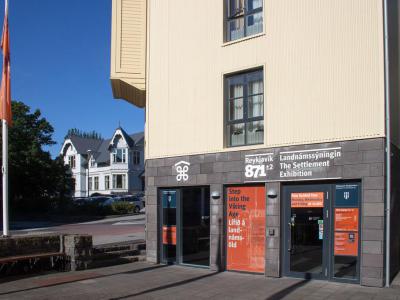
The Settlement Exhibition Reykjavík 871±2 is a showcase dedicated to the early history of Reykjavík, curated by the Reykjavik City Museum. This exhibition draws its content from the results of archaeological excavations conducted on the remains of one of the earliest houses in Iceland, along with discoveries from other dig sites within the city center.
The main focus of this exhibit revolves around the remnants of a hall from the Settlement Age, unearthed during excavations in 2001. This hall was inhabited from approximately 930 to 1000 AD. Adjacent to the hall, there are two pieces of turf that are remnants of a wall constructed prior to the year 871±2, hence the exhibition's name. This precise dating is made possible by analyzing the fallout of volcanic ash from a significant eruption in the Torfajökull area, which left its mark across the region. Researchers can accurately date this event by studying glacial ice in Greenland. Notably, this hall ranks among the oldest human-made structures discovered in Iceland. The exhibit also showcases artifacts from the Viking Age that were uncovered in central Reykjavík and on the island of Viðey.
The main focus of this exhibit revolves around the remnants of a hall from the Settlement Age, unearthed during excavations in 2001. This hall was inhabited from approximately 930 to 1000 AD. Adjacent to the hall, there are two pieces of turf that are remnants of a wall constructed prior to the year 871±2, hence the exhibition's name. This precise dating is made possible by analyzing the fallout of volcanic ash from a significant eruption in the Torfajökull area, which left its mark across the region. Researchers can accurately date this event by studying glacial ice in Greenland. Notably, this hall ranks among the oldest human-made structures discovered in Iceland. The exhibit also showcases artifacts from the Viking Age that were uncovered in central Reykjavík and on the island of Viðey.

11) Aurora Reykjavik (must see)
Aurora Reykjavík is a relatively recent addition to the cultural landscape of Reykjavík, created to focus entirely on one of the country’s most iconic natural phenomena: the aurora borealis. Founded and run by a team of local northern lights experts and award-winning photographers, the centre was conceived as both an educational space and a visual archive, bringing together years of field experience, photography, and research into a single, accessible exhibition. It also offers a reliable, year-round way to experience the northern lights, regardless of weather conditions.
The exhibition explains how the aurora forms—from solar activity to its interaction with Earth’s atmosphere—while also presenting the myths and beliefs different cultures have attached to the lights over centuries. Interactive displays and touchscreens allow visitors to explore how the colors change depending on altitude, while weather screens provide current aurora forecasts. Throughout the space, staff are available to help plan a northern lights outing and offer practical advice on when and where to go.
One of the main highlights is the visual component. A dedicated cinema presents a 30-minute film projected on a seven-meter-wide screen, with footage captured across Iceland over seven years by leading photographers and videographers. Visitors can watch from bean bags, wrapped in sheep fur, creating a relaxed, immersive setting. Complementing this is a 360-degree virtual reality experience that places visitors directly beneath the lights.
The centre also includes a photography section with a hands-on simulator, where visitors can test camera settings and learn how to capture the aurora effectively before heading outdoors. Located in the Grandi harbour district—an area known for its transformation from an industrial zone to a cultural hub—the museum fits naturally into Reykjavík’s evolving streetscape, with most visits lasting around an hour.
The exhibition explains how the aurora forms—from solar activity to its interaction with Earth’s atmosphere—while also presenting the myths and beliefs different cultures have attached to the lights over centuries. Interactive displays and touchscreens allow visitors to explore how the colors change depending on altitude, while weather screens provide current aurora forecasts. Throughout the space, staff are available to help plan a northern lights outing and offer practical advice on when and where to go.
One of the main highlights is the visual component. A dedicated cinema presents a 30-minute film projected on a seven-meter-wide screen, with footage captured across Iceland over seven years by leading photographers and videographers. Visitors can watch from bean bags, wrapped in sheep fur, creating a relaxed, immersive setting. Complementing this is a 360-degree virtual reality experience that places visitors directly beneath the lights.
The centre also includes a photography section with a hands-on simulator, where visitors can test camera settings and learn how to capture the aurora effectively before heading outdoors. Located in the Grandi harbour district—an area known for its transformation from an industrial zone to a cultural hub—the museum fits naturally into Reykjavík’s evolving streetscape, with most visits lasting around an hour.
12) Grotta Lighthouse
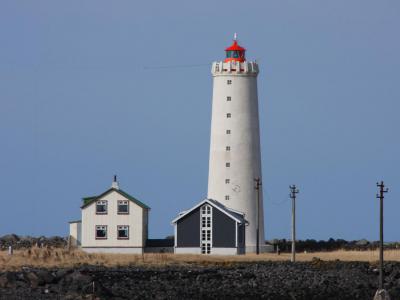
The Grótta Lighthouse, located on a small island at the end of the Seltjarnarnes peninsula near Reykjavik, holds significant geographical and historical importance. The nearby town of Seltjarnarnes, hard to pronounce for some, seamlessly joins with Reykjavik and is one of Iceland's oldest settlements. Interestingly, this area used to be bigger and more important than Reykjavik a few centuries ago.
Nowadays, when you're in Reykjavik, you can take a beautiful walk from the Grandi harbour along the Seltjarnarnes peninsula. This path, known as the Seltjarnarnes Jogging Path, leads peacefully to the lighthouse. You can get to Grótta Island when the tide is low, walking over the rocky causeway to see the island and its lighthouse. The Grótta Lighthouse, sometimes called the Seltjarnarnes Lighthouse, has a unique round design and works automatically. Its light, essential for ships, flashes in a special pattern – three short flashes, a long one, and then a pause – to help ships navigate safely near Reykjavik Harbour's rocky shores.
The area around Grótta Lighthouse is great for photography. Between the parking spot and the island is a bay where the water sometimes reflects the sky, creating a peaceful scene. The bay, separated from the channel by a line of breakwater rocks, changes with the tides. During high tide, and especially when it's windy, the waves crashing against these rocks create a stunning view. Whether the sea is calm or wild, it offers different chances to take amazing pictures of Iceland's scenery.
Nowadays, when you're in Reykjavik, you can take a beautiful walk from the Grandi harbour along the Seltjarnarnes peninsula. This path, known as the Seltjarnarnes Jogging Path, leads peacefully to the lighthouse. You can get to Grótta Island when the tide is low, walking over the rocky causeway to see the island and its lighthouse. The Grótta Lighthouse, sometimes called the Seltjarnarnes Lighthouse, has a unique round design and works automatically. Its light, essential for ships, flashes in a special pattern – three short flashes, a long one, and then a pause – to help ships navigate safely near Reykjavik Harbour's rocky shores.
The area around Grótta Lighthouse is great for photography. Between the parking spot and the island is a bay where the water sometimes reflects the sky, creating a peaceful scene. The bay, separated from the channel by a line of breakwater rocks, changes with the tides. During high tide, and especially when it's windy, the waves crashing against these rocks create a stunning view. Whether the sea is calm or wild, it offers different chances to take amazing pictures of Iceland's scenery.
