Custom Walk in Belfast, Ireland by srmontes_875882 created on 2026-07-12
Guide Location: Ireland » Belfast
Guide Type: Custom Walk
# of Sights: 11
Tour Duration: 2 Hour(s)
Travel Distance: 4.2 Km or 2.6 Miles
Share Key: 6WSZD
Guide Type: Custom Walk
# of Sights: 11
Tour Duration: 2 Hour(s)
Travel Distance: 4.2 Km or 2.6 Miles
Share Key: 6WSZD
How It Works
Please retrieve this walk in the GPSmyCity app. Once done, the app will guide you from one tour stop to the next as if you had a personal tour guide. If you created the walk on this website or come to the page via a link, please follow the instructions below to retrieve the walk in the app.
Retrieve This Walk in App
Step 1. Download the app "GPSmyCity: Walks in 1K+ Cities" on Apple App Store or Google Play Store.



Step 2. In the GPSmyCity app, download(or launch) the guide "Belfast Map and Walking Tours".
Step 3. Tap the menu button located at upper right corner of the "Walks" screen and select "Retrieve custom walk". Enter the share key: 6WSZD
1) Albert Memorial Clock
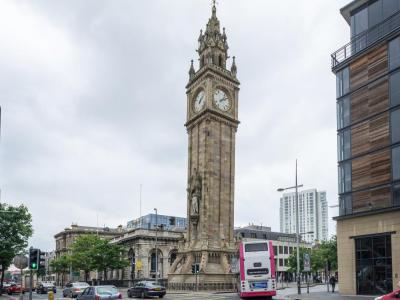
The Albert Memorial Clock, often simply called the Albert Clock, is one of Belfast’s most recognisable landmarks. Perched in Queen’s Square at the east end of High Street, this Gothic Revival clock tower was built between 1865 and 1869 as a memorial to Prince Albert, consort to Queen Victoria. Designed by the accomplished architect W. J. Barre, also famed for Belfast's Ulster Hall, it stands approximately 113 feet (34 meters) tall.
Constructed of pinkish Scrabo sandstone, the tower blends French and Italian Gothic styles, adorned with flying buttresses, heraldic lions, angels, gargoyles, floral motifs, and crowned by an ornate octagonal belfry. A striking life-size statue of Prince Albert in the robes of a Knight of the Garter, sculpted by S. F. Lynn, stands on the west face. Inside, a two-tonne bell cast by Francis Moore could once be heard up to 8 miles away.
One of the tower’s most intriguing quirks is its lean-an eastward tilt of about four feet-earning it the affectionate nickname “Belfast’s Leaning Tower of Pisa.” The tilt resulted from the tower being built on reclaimed, marshy ground near the River Farset, supported on timber piles. Ornamental pinnacles and the statue canopy were removed in 1924 to ease stress, and a substantial restoration between 2000 and 2002 reinforced the foundations and reinstated lost carvings.
Today, the Albert Clock stands as a poetic fusion of Victorian craftsmanship, civic pride, and idiosyncratic charm. It survived damage from an IRA bomb in 1992, and its tilted stance and intricate stonework make it a delightful must-see for architecture buffs, history lovers, and photographers alike. Whether admired by day or illuminated at night, it richly rewards a stroll through Belfast’s Cathedral Quarter.
Constructed of pinkish Scrabo sandstone, the tower blends French and Italian Gothic styles, adorned with flying buttresses, heraldic lions, angels, gargoyles, floral motifs, and crowned by an ornate octagonal belfry. A striking life-size statue of Prince Albert in the robes of a Knight of the Garter, sculpted by S. F. Lynn, stands on the west face. Inside, a two-tonne bell cast by Francis Moore could once be heard up to 8 miles away.
One of the tower’s most intriguing quirks is its lean-an eastward tilt of about four feet-earning it the affectionate nickname “Belfast’s Leaning Tower of Pisa.” The tilt resulted from the tower being built on reclaimed, marshy ground near the River Farset, supported on timber piles. Ornamental pinnacles and the statue canopy were removed in 1924 to ease stress, and a substantial restoration between 2000 and 2002 reinforced the foundations and reinstated lost carvings.
Today, the Albert Clock stands as a poetic fusion of Victorian craftsmanship, civic pride, and idiosyncratic charm. It survived damage from an IRA bomb in 1992, and its tilted stance and intricate stonework make it a delightful must-see for architecture buffs, history lovers, and photographers alike. Whether admired by day or illuminated at night, it richly rewards a stroll through Belfast’s Cathedral Quarter.

2) The Big Fish
The Big Fish-also known locally and lovingly as the Big Blue Fish-is one of Belfast’s most eye-catching and cherished public art pieces. Created by artist John Kindness in 1999, this 10-meter-long ceramic mosaic sculpture was installed at Donegall Quay, near the Lagan Lookout and Customs House, to mark the regeneration of the River Lagan. Officially a salmon (yes, the signs confirm it!), it stands right where the River Farset, from which Belfast gets its name (Béal Feirste meaning "mouth of the Farset"), meets the Lagan. The sculpture is hard to miss-not just because of its size, but because it sits at the very heart of the city’s history.
What makes The Big Fish truly special is its skin. Each shimmering blue ceramic tile is printed with texts, illustrations, and images that collectively tell the story of Belfast. From Tudor-era maps to 20th-century headlines, it’s like a visual time capsule. There are even drawings by schoolchildren and community members, adding a personal and playful layer to the piece-including an Ulster Fry and a cheerful soldier. Contributions came from local schools and day centres, while historic imagery was provided by the Ulster Museum. Inside the fish, there’s a literal time capsule too, containing images, poetry, and documents about the city.
More than just a quirky photo spot, the Big Fish is a symbol of Belfast’s cultural rebirth and deep connection to the water that shaped it. Locals might chuckle at its playful nicknames, but there’s no denying that this gleaming salmon has swum its way into the city’s heart-and become one of its most iconic landmarks.
What makes The Big Fish truly special is its skin. Each shimmering blue ceramic tile is printed with texts, illustrations, and images that collectively tell the story of Belfast. From Tudor-era maps to 20th-century headlines, it’s like a visual time capsule. There are even drawings by schoolchildren and community members, adding a personal and playful layer to the piece-including an Ulster Fry and a cheerful soldier. Contributions came from local schools and day centres, while historic imagery was provided by the Ulster Museum. Inside the fish, there’s a literal time capsule too, containing images, poetry, and documents about the city.
More than just a quirky photo spot, the Big Fish is a symbol of Belfast’s cultural rebirth and deep connection to the water that shaped it. Locals might chuckle at its playful nicknames, but there’s no denying that this gleaming salmon has swum its way into the city’s heart-and become one of its most iconic landmarks.

3) Beacon of Hope
The Beacon of Hope is a public art sculpture located in Thanksgiving Square, created by Scottish artist Andy Scott. Standing 19.5 meters tall, it was completed in 2007 after six years of planning and construction. The sculpture portrays a graceful female figure made of stainless steel and bronze, spiraling upwards with an outstretched arm holding a symbolic "ring of thanksgiving." At her feet rests a bronze globe that represents peace, harmony, and the global connections of Belfast-marking cities to which its people and industries have migrated or contributed. Over time, the sculpture has earned affectionate local nicknames such as "Nuala with the Hula," "The Bell on the Ball," and "The Thing with the Ring."
More than just a beautiful addition to Belfast’s skyline, the Beacon of Hope carries a deep message of reconciliation and gratitude. The idea for the sculpture was originally inspired by Myrtle Smyth, who was moved by her visit to Thanks-Giving Square in Dallas, Texas. Andy Scott brought that vision to life, with the piece becoming a symbol of the city's renewal and its ongoing journey towards peace. Fabrication was carried out by P.F. Copeland in Newtownabbey, and the bronze globe was cast by Beltane Studios in Peebles. The sculpture quickly gained popularity and has since been embraced by the Belfast City Council, local businesses, tourism boards, and even television companies as a symbol of civic pride.
Today, the Beacon of Hope stands not only as one of the tallest sculptures in Belfast but also as one of its most iconic. With its soaring figure, powerful symbolism, and universal message, it has become a beloved landmark-celebrated for both its artistic merit and its representation of Belfast’s resilient and outward-looking spirit.
More than just a beautiful addition to Belfast’s skyline, the Beacon of Hope carries a deep message of reconciliation and gratitude. The idea for the sculpture was originally inspired by Myrtle Smyth, who was moved by her visit to Thanks-Giving Square in Dallas, Texas. Andy Scott brought that vision to life, with the piece becoming a symbol of the city's renewal and its ongoing journey towards peace. Fabrication was carried out by P.F. Copeland in Newtownabbey, and the bronze globe was cast by Beltane Studios in Peebles. The sculpture quickly gained popularity and has since been embraced by the Belfast City Council, local businesses, tourism boards, and even television companies as a symbol of civic pride.
Today, the Beacon of Hope stands not only as one of the tallest sculptures in Belfast but also as one of its most iconic. With its soaring figure, powerful symbolism, and universal message, it has become a beloved landmark-celebrated for both its artistic merit and its representation of Belfast’s resilient and outward-looking spirit.
4) Victoria Square Shopping Centre
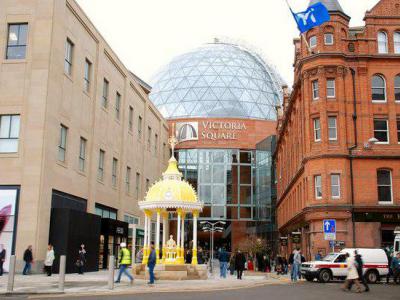
Victoria Square Shopping Centre is one of Belfast’s most striking modern landmarks and a must-visit destination for anyone exploring Northern Ireland’s capital. Opened in 2008 after a decade of planning and construction, this sprawling retail and leisure complex transformed a once-underused corner of the city into a vibrant hub of shopping, dining, and entertainment. Its contemporary architecture blends glass, steel, and stone, and at its heart stands the iconic glass dome-a sweeping structure that has become a symbol of Belfast’s modern renaissance.
Step inside, and you’ll find more than 70 international and local brands spread across multiple levels. From high-street fashion and luxury boutiques to electronics, homeware, and beauty stores, Victoria Square caters to a wide range of tastes and budgets. The centre also houses a flagship department store and a variety of cafés and restaurants, making it as much a social destination as a retail one. Whether you are browsing for designer pieces or seeking out familiar favourites, the atmosphere is both lively and welcoming.
Beyond shopping, Victoria Square is a destination in its own right thanks to the magnificent glass dome that rises above the complex. Visitors can take an elevator to its panoramic viewing platform, which offers sweeping vistas of Belfast’s skyline-from the copper spire of Saint Anne’s Cathedral to the iconic cranes of the Harland & Wolff shipyard, where the RMS Titanic was built. It’s one of the best vantage points in the city, especially at sunset when the rooftops glow in soft golden light.
For tourists, Victoria Square offers more than retail therapy-it’s a glimpse into Belfast’s ongoing transformation. The centre is a lively meeting point where modern urban life intersects with historic streets, creating an atmosphere that feels both contemporary and deeply connected to the city’s past.
Step inside, and you’ll find more than 70 international and local brands spread across multiple levels. From high-street fashion and luxury boutiques to electronics, homeware, and beauty stores, Victoria Square caters to a wide range of tastes and budgets. The centre also houses a flagship department store and a variety of cafés and restaurants, making it as much a social destination as a retail one. Whether you are browsing for designer pieces or seeking out familiar favourites, the atmosphere is both lively and welcoming.
Beyond shopping, Victoria Square is a destination in its own right thanks to the magnificent glass dome that rises above the complex. Visitors can take an elevator to its panoramic viewing platform, which offers sweeping vistas of Belfast’s skyline-from the copper spire of Saint Anne’s Cathedral to the iconic cranes of the Harland & Wolff shipyard, where the RMS Titanic was built. It’s one of the best vantage points in the city, especially at sunset when the rooftops glow in soft golden light.
For tourists, Victoria Square offers more than retail therapy-it’s a glimpse into Belfast’s ongoing transformation. The centre is a lively meeting point where modern urban life intersects with historic streets, creating an atmosphere that feels both contemporary and deeply connected to the city’s past.
5) Belfast Cathedral (must see)
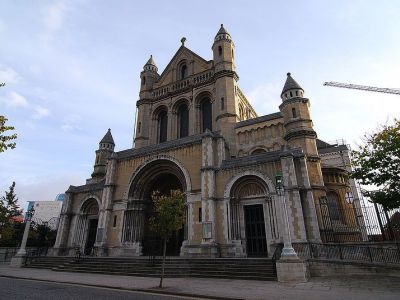
Belfast Cathedral, also known as Saint Anne’s Cathedral, stands as one of the city’s most striking landmarks, blending spiritual significance with architectural beauty. Located in the Cathedral Quarter-the historic heart of Belfast-this Anglican cathedral was founded in 1899 and has since become both a place of worship and a cultural hub. With its grand Romanesque Revival design, intricate mosaics, and commanding presence, the cathedral offers visitors a serene yet awe-inspiring atmosphere that reflects the city’s rich history and enduring spirit.
The building itself tells a story of resilience and ambition. Constructed over many decades, it combines late Victorian foundations with additions made throughout the 20th century, including the striking Spire of Hope, a modern stainless-steel spire added in 2007 that soars 40 meters into the sky. This striking feature, visible from across the city, symbolizes both faith and renewal. Inside, light streams through a kaleidoscope of stained glass, illuminating exquisite stonework and creating a setting that feels at once majestic and contemplative.
Visitors can explore remarkable artistic treasures, such as the elaborate mosaics designed by Sir Charles Nicholson and the stunning Chapel of the Holy Spirit, dedicated to those who lost their lives in the First World War. Another highlight is the “Spire of Hope” piercing through the cathedral roof, representing the city’s resilience and looking toward a brighter future. The cathedral also hosts concerts, exhibitions, and community events, extending its role beyond a sacred space to a vibrant gathering point for locals and visitors.
For travelers exploring Belfast, a stop at Saint Anne’s Cathedral provides not just a glimpse into the city’s religious heritage but also a chance to admire centuries of craftsmanship. Whether you’re drawn by its artistry, its peaceful atmosphere, or its role as a beacon of Belfast’s cultural life, the cathedral offers a moment of reflection and connection in the heart of Northern Ireland’s capital.
The building itself tells a story of resilience and ambition. Constructed over many decades, it combines late Victorian foundations with additions made throughout the 20th century, including the striking Spire of Hope, a modern stainless-steel spire added in 2007 that soars 40 meters into the sky. This striking feature, visible from across the city, symbolizes both faith and renewal. Inside, light streams through a kaleidoscope of stained glass, illuminating exquisite stonework and creating a setting that feels at once majestic and contemplative.
Visitors can explore remarkable artistic treasures, such as the elaborate mosaics designed by Sir Charles Nicholson and the stunning Chapel of the Holy Spirit, dedicated to those who lost their lives in the First World War. Another highlight is the “Spire of Hope” piercing through the cathedral roof, representing the city’s resilience and looking toward a brighter future. The cathedral also hosts concerts, exhibitions, and community events, extending its role beyond a sacred space to a vibrant gathering point for locals and visitors.
For travelers exploring Belfast, a stop at Saint Anne’s Cathedral provides not just a glimpse into the city’s religious heritage but also a chance to admire centuries of craftsmanship. Whether you’re drawn by its artistry, its peaceful atmosphere, or its role as a beacon of Belfast’s cultural life, the cathedral offers a moment of reflection and connection in the heart of Northern Ireland’s capital.
6) St. Mary's Church
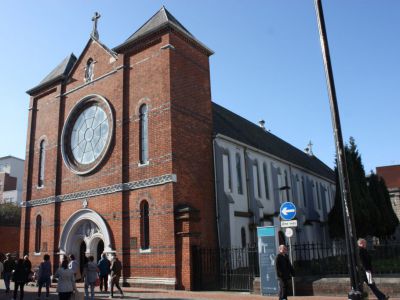
Saint Mary's Church is a Roman Catholic church located in Chapel Lane and Smithfield area of Belfast. It is mother church for the city and a mensal parish. It was opened on this site in 1784. At the time, it was the only Roman Catholic church in the then town of Belfast after the relaxation of some of the Penal Laws. The church grounds contain an undistinguished grotto dedicated to Our Lady of Lourdes.
In the census of 1782, there were only 365 Catholics recorded living in Belfast. Following a collection from the local Church of Ireland and Presbyterian congregations, funds were donated to the building of Saint Mary's Church.
In 1813, the church's pulpit was donated by the Anglican Vicar of Belfast, Canon Turner, continuing the positive relationship between the Roman Catholic church and the local Protestant congregations. Later, in 1815, Saint Patrick's Church was built to accommodate the growing Catholic population of the city.
As Belfast's Catholic population grew after the famine, the church was deemed too small and thus architect John O'Neill was contracted to design a church big enough for the burgeoning congregation. In 1868 the church was enlarged and renovated into a new Romanesque style building.
The church holds two masses a day from Sunday - Monday, and three a day on Friday and Saturday. The 6pm Mass on both Friday and Saturday are held in the Irish language.
In the census of 1782, there were only 365 Catholics recorded living in Belfast. Following a collection from the local Church of Ireland and Presbyterian congregations, funds were donated to the building of Saint Mary's Church.
In 1813, the church's pulpit was donated by the Anglican Vicar of Belfast, Canon Turner, continuing the positive relationship between the Roman Catholic church and the local Protestant congregations. Later, in 1815, Saint Patrick's Church was built to accommodate the growing Catholic population of the city.
As Belfast's Catholic population grew after the famine, the church was deemed too small and thus architect John O'Neill was contracted to design a church big enough for the burgeoning congregation. In 1868 the church was enlarged and renovated into a new Romanesque style building.
The church holds two masses a day from Sunday - Monday, and three a day on Friday and Saturday. The 6pm Mass on both Friday and Saturday are held in the Irish language.
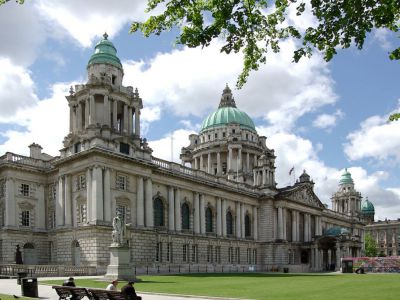
7) Belfast City Hall (must see)
Belfast City Hall is a grand Edwardian Baroque masterpiece that dominates Donegall Square in the heart of Belfast’s city centre. Designed by Sir Alfred Brumwell Thomas and completed in 1906, this iconic building features gleaming Portland stone, a striking copper-domed roof rising 173 ft, and ornate detailing that reflects Belfast’s civic pride. It was built on the former site of the White Linen Hall to mark the city’s growing importance-thanks to its booming linen, shipbuilding, and engineering industries-and to cement its new city status granted in 1888.
Step inside and you’ll be greeted by splendid interiors such as the grand marble staircase, mosaic floors, and exquisitely carved oak and marble-clad spaces like the Council Chamber and Banquet Hall-noting the latter was rebuilt after damage during the Belfast Blitz in 1941. The stained-glass windows are spectacular, showcasing the Belfast coat of arms, portraits of British monarchs, and emblems of the city’s historical provinces. Guided tours last about 45 minutes and offer access to areas normally closed to the public, alongside a 16-room Visitor Exhibition that brings Belfast’s past to life via multilingual audio guides.
Outside, the beautifully landscaped grounds are home to significant memorials and statues, including the impressive Titanic Memorial Garden, the Cenotaph and Garden of Remembrance for war victims, and notable figures such as Queen Victoria, Edward Harland, Mary Ann McCracken, Winifred Carney, and James Magennis VC. These serene lawns offer a peaceful counterpoint to the bustling city around them.
For visitors, City Hall is much more than a civic landmark-it’s a hub of culture and community. Drop into the Bobbin Coffee Shop inside, peruse the gift shop for local keepsakes, or join a free tour (first-come, first-served) at scheduled times. Evening illuminations beautifully accent the exterior, making it a particularly atmospheric spot after dark. Whether you're fascinated by architecture, history, or simply looking for a picturesque gathering place, Belfast City Hall is an essential stop on your journey through Belfast.
Step inside and you’ll be greeted by splendid interiors such as the grand marble staircase, mosaic floors, and exquisitely carved oak and marble-clad spaces like the Council Chamber and Banquet Hall-noting the latter was rebuilt after damage during the Belfast Blitz in 1941. The stained-glass windows are spectacular, showcasing the Belfast coat of arms, portraits of British monarchs, and emblems of the city’s historical provinces. Guided tours last about 45 minutes and offer access to areas normally closed to the public, alongside a 16-room Visitor Exhibition that brings Belfast’s past to life via multilingual audio guides.
Outside, the beautifully landscaped grounds are home to significant memorials and statues, including the impressive Titanic Memorial Garden, the Cenotaph and Garden of Remembrance for war victims, and notable figures such as Queen Victoria, Edward Harland, Mary Ann McCracken, Winifred Carney, and James Magennis VC. These serene lawns offer a peaceful counterpoint to the bustling city around them.
For visitors, City Hall is much more than a civic landmark-it’s a hub of culture and community. Drop into the Bobbin Coffee Shop inside, peruse the gift shop for local keepsakes, or join a free tour (first-come, first-served) at scheduled times. Evening illuminations beautifully accent the exterior, making it a particularly atmospheric spot after dark. Whether you're fascinated by architecture, history, or simply looking for a picturesque gathering place, Belfast City Hall is an essential stop on your journey through Belfast.
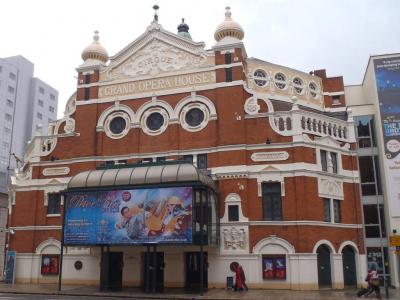
8) Grand Opera House (must see)
Nestled in the vibrant heart of Belfast, the Grand Opera House is an architectural gem and cultural linchpin. Designed by famed theatre architect Frank Matcham, it opened in December 1895 as the “New Grand Opera House and Cirque”. A striking example of Victorian “oriental style” theatre architecture, its main auditorium is widely regarded as the best preserved in the UK.
For over a century, the Grand Opera House has been a pulsating centre for the arts. It has survived tumultuous times, including wartime repurposing, bomb damage during the Troubles, and even a brush with demolition-but was rescued and listed as Northern Ireland’s first protected building in the 1970s. After extensive renovations in 1980, 2006, and a major £12.2 million restoration in 2020–21, both its ornate auditorium and modern foyers shine brighter than ever.
Today, the venue boasts a 1,058‑seat main auditorium, the intimate Baby Grand studio, and stylish bars on multiple floors. Its annual pantomime tradition continues unabated, delighting families since the very first season featured “Bluebeard” in 1895. Beyond entertainment, the Opera House offers behind‑the‑scenes tours and a compelling heritage exhibition, ideal for history lovers.
A visit here offers more than a show-it’s a journey through Belfast’s cultural soul. Whether you're drawn to grand musicals, drama, opera, dance, or comedy-or simply wish to admire its ornate mouldings and historic atmosphere-the Grand Opera House presents an unforgettable experience at the crossroads of past and present.
For over a century, the Grand Opera House has been a pulsating centre for the arts. It has survived tumultuous times, including wartime repurposing, bomb damage during the Troubles, and even a brush with demolition-but was rescued and listed as Northern Ireland’s first protected building in the 1970s. After extensive renovations in 1980, 2006, and a major £12.2 million restoration in 2020–21, both its ornate auditorium and modern foyers shine brighter than ever.
Today, the venue boasts a 1,058‑seat main auditorium, the intimate Baby Grand studio, and stylish bars on multiple floors. Its annual pantomime tradition continues unabated, delighting families since the very first season featured “Bluebeard” in 1895. Beyond entertainment, the Opera House offers behind‑the‑scenes tours and a compelling heritage exhibition, ideal for history lovers.
A visit here offers more than a show-it’s a journey through Belfast’s cultural soul. Whether you're drawn to grand musicals, drama, opera, dance, or comedy-or simply wish to admire its ornate mouldings and historic atmosphere-the Grand Opera House presents an unforgettable experience at the crossroads of past and present.
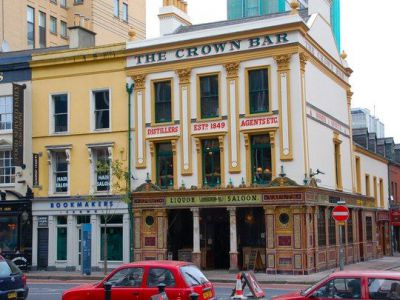
9) Crown Liquor Saloon
The Crown Liquor Saloon, often simply called the Crown Bar, is a dazzling testament to Victorian-era grandeur. Established in 1826 as the Railway Tavern and beautifully refurbished in 1885 by the Flanagan family, this pub has been gloriously preserved and is today managed by the National Trust while operated by Nicholson’s. It remains one of Northern Ireland’s most iconic pubs, celebrated as an outstanding example of a Victorian “gin palace”.
Stepping inside, visitors are greeted by a riot of craftsmanship: intricate mosaic floors, luxurious stained glass, a majestic red‑granite bar, and an ornate ceiling accented by gas‑style lanterns. Much of this opulence is the handiwork of Italian artisans, originally commissioned for Belfast’s churches, who lent their expertise-after hours-to help fashion this captivating space. More than just decoration, it’s an immersive snapshot of 19th-century artistry and design.
One of the Crown’s most charming features is its ten carved wooden “snugs”-intimate booths once favored by discreet customers during the Victorian age. Each snug is fitted with original match-strike plates and bell‑push systems that patrons could use to summon staff. The stained‑glass windows framing these alcoves are adorned with fanciful motifs-clowns, pineapples, fairies-that add a whimsical touch.
Beyond its beauty, the Crown Bar holds a poignant place in Belfast’s history. Suffering damage during the Troubles-owing to its proximity to the frequently bombed Europa Hotel-it has withstood much yet endured thanks to successive restorations, including major efforts by the National Trust in 1978 and again in 2007. Today, it stands proud as both a vibrant gathering spot and a living monument to Belfast’s resilience, blending history, architecture, and traditional pub culture in one unforgettable visit.
Stepping inside, visitors are greeted by a riot of craftsmanship: intricate mosaic floors, luxurious stained glass, a majestic red‑granite bar, and an ornate ceiling accented by gas‑style lanterns. Much of this opulence is the handiwork of Italian artisans, originally commissioned for Belfast’s churches, who lent their expertise-after hours-to help fashion this captivating space. More than just decoration, it’s an immersive snapshot of 19th-century artistry and design.
One of the Crown’s most charming features is its ten carved wooden “snugs”-intimate booths once favored by discreet customers during the Victorian age. Each snug is fitted with original match-strike plates and bell‑push systems that patrons could use to summon staff. The stained‑glass windows framing these alcoves are adorned with fanciful motifs-clowns, pineapples, fairies-that add a whimsical touch.
Beyond its beauty, the Crown Bar holds a poignant place in Belfast’s history. Suffering damage during the Troubles-owing to its proximity to the frequently bombed Europa Hotel-it has withstood much yet endured thanks to successive restorations, including major efforts by the National Trust in 1978 and again in 2007. Today, it stands proud as both a vibrant gathering spot and a living monument to Belfast’s resilience, blending history, architecture, and traditional pub culture in one unforgettable visit.
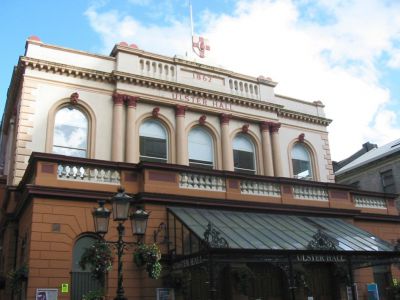
10) Ulster Hall
Ulster Hall is one of Northern Ireland’s most cherished cultural landmarks. Opened in May 1862 and designed by acclaimed Victorian architect William J. Barre, the hall was built to elevate Belfast’s artistic profile. Over a century and a half later, it remains a Grade A-listed jewel-fondly known as the "Grand Dame of Bedford Street"-with a beautifully restored red-brick façade, ornate columns, and an intricate iron-and-glass canopy that draws the eye of every visitor.
Walking through its doors, tourists encounter an interior rich in historic grandeur. The majestic Mulholland Grand Organ-a fine Victorian instrument donated in the 1860s-still commands attention from the stage. Along the walls, a series of atmospheric paintings by Joseph Carey depict the growing city's 19th-century landscape, adding a storytelling dimension to the space. A major refurbishment, completed in 2009, enhanced sightlines, reintroduced glazed windows, doubled capacity with a flexible ground-floor seating layout, and added modern amenities-all while preserving the hall’s classical charm.
Ulster Hall’s reputation is built on the legendary moments it has hosted. During World War II, it served as a dance hall beloved by American troops, later becoming Northern Ireland’s premier boxing venue, and from the 1960s onward, a spiritual home for rock music. Its stage has welcomed luminaries ranging from Charles Dickens and James Joyce to music icons like Led Zeppelin-who debuted “Stairway to Heaven” here in 1971-and contemporary stars like U2, Coldplay, Muse, and the Ulster Orchestra. Today, its calendar is a vibrant mix of live concerts, comedy nights, classical recitals, and even sporting events-a highlight of any visitor’s cultural itinerary.
With free entry to admire its artistry and guided tour options for deeper insight, this venue remains a captivating bridge between the city’s storied past and its exciting artistic present.
Walking through its doors, tourists encounter an interior rich in historic grandeur. The majestic Mulholland Grand Organ-a fine Victorian instrument donated in the 1860s-still commands attention from the stage. Along the walls, a series of atmospheric paintings by Joseph Carey depict the growing city's 19th-century landscape, adding a storytelling dimension to the space. A major refurbishment, completed in 2009, enhanced sightlines, reintroduced glazed windows, doubled capacity with a flexible ground-floor seating layout, and added modern amenities-all while preserving the hall’s classical charm.
Ulster Hall’s reputation is built on the legendary moments it has hosted. During World War II, it served as a dance hall beloved by American troops, later becoming Northern Ireland’s premier boxing venue, and from the 1960s onward, a spiritual home for rock music. Its stage has welcomed luminaries ranging from Charles Dickens and James Joyce to music icons like Led Zeppelin-who debuted “Stairway to Heaven” here in 1971-and contemporary stars like U2, Coldplay, Muse, and the Ulster Orchestra. Today, its calendar is a vibrant mix of live concerts, comedy nights, classical recitals, and even sporting events-a highlight of any visitor’s cultural itinerary.
With free entry to admire its artistry and guided tour options for deeper insight, this venue remains a captivating bridge between the city’s storied past and its exciting artistic present.
11) St. George's Market (must see)
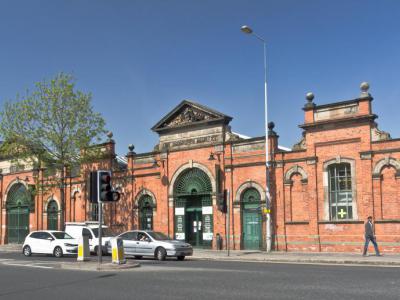
Saint George's Market is the last surviving Victorian covered market in Belfast. It was built in three phases between 1890 and 1896. Before 1890, Saint George's Market was an open market and most likely contained a slaughterhouse and a meat market.
The original (pre 1890) market was smaller than the new structure. It was built in red brick with sandstone dressing. Externally it features Roman styled arches with Latin and Irish inscriptions - the City’s Latin motto "what shall we give in return for so much?" and the Irish phrase "Red Hand of Ireland".
The main entrance arch displays the Belfast Coat of Arms. This newly covered market opened to the public on 20 June 1890. By the 1980s, Saint George’s Market had developed into a general market and it became the last of Belfast’s thriving Victorian markets.
Today Saint George’s Market is primarily used as a food market, however a number of other events are held at the site. These range from food festivals, art initiatives, exhibitions, charity launches, fashion shoots and live music events. The market also regularly holds music concerts. Acts including Duffy, Newton Faulkner, Deep Purple, Biffy Clyro and Mark Ronson have played the venue.
The original (pre 1890) market was smaller than the new structure. It was built in red brick with sandstone dressing. Externally it features Roman styled arches with Latin and Irish inscriptions - the City’s Latin motto "what shall we give in return for so much?" and the Irish phrase "Red Hand of Ireland".
The main entrance arch displays the Belfast Coat of Arms. This newly covered market opened to the public on 20 June 1890. By the 1980s, Saint George’s Market had developed into a general market and it became the last of Belfast’s thriving Victorian markets.
Today Saint George’s Market is primarily used as a food market, however a number of other events are held at the site. These range from food festivals, art initiatives, exhibitions, charity launches, fashion shoots and live music events. The market also regularly holds music concerts. Acts including Duffy, Newton Faulkner, Deep Purple, Biffy Clyro and Mark Ronson have played the venue.
