Custom Walk in Lyon, France by ilariamerati13_53b686 created on 2026-07-16
Guide Location: France » Lyon
Guide Type: Custom Walk
# of Sights: 10
Tour Duration: 5 Hour(s)
Travel Distance: 12.9 Km or 8 Miles
Share Key: LT3Q4
Guide Type: Custom Walk
# of Sights: 10
Tour Duration: 5 Hour(s)
Travel Distance: 12.9 Km or 8 Miles
Share Key: LT3Q4
How It Works
Please retrieve this walk in the GPSmyCity app. Once done, the app will guide you from one tour stop to the next as if you had a personal tour guide. If you created the walk on this website or come to the page via a link, please follow the instructions below to retrieve the walk in the app.
Retrieve This Walk in App
Step 1. Download the app "GPSmyCity: Walks in 1K+ Cities" on Apple App Store or Google Play Store.



Step 2. In the GPSmyCity app, download(or launch) the guide "Lyon Map and Walking Tours".
Step 3. Tap the menu button located at upper right corner of the "Walks" screen and select "Retrieve custom walk". Enter the share key: LT3Q4
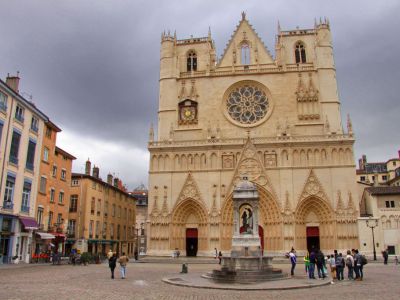
1) Lyon Cathedral (must see)
In 450 AD, on or about, Bishop Patiens of Lyon - later sainted, so clearly doing something right - decided the city needed a proper cathedral. He dedicated it to Saint Stephen. A baptistry followed in the 7th century, because what’s a cathedral without a place for dramatic spiritual beginnings? Nearby stood the Church of Saint Croix. All of this activity took place right here in Old Lyon, close to the Saône River - the very ground where Lyon Cathedral would rise 800 years later.
Now, here’s where the story gets ambitious. The new cathedral was built over the ruins of Saint Stephen’s and is traditionally linked to Saints Pothinus and Irenaeus, early Christian figures in Lyon. Construction began in 1180 and, in true medieval fashion, took nearly three centuries to wrap up in 1476.
And yet, somehow, the style holds together beautifully. Romanesque solidity meets Gothic height in a surprisingly calm architectural handshake - no dramatic identity crisis despite the long build...
The numbers are impressive. The cathedral stretches 263 feet in length, with the nave soaring 107 feet high. The façade leans Gothic, with pointed arches and vertical lines drawing your eyes upward. Move toward the apse and choir, and you feel the heavier, rounded strength of Romanesque design. Above you, the ribbed vault of the nave lifts in full Gothic confidence, as if the building is taking a deep, stone-carved breath.
Inside, you’ll see one of the cathedral's greatest stars: a 30-foot-high astronomical clock. Installed in 1383, it didn’t just tell time - it mapped the heavens. Its astrolabe charts the positions of the Sun, Moon, stars, and Earth. Quite advanced for the Middle Ages...
The clock was smashed in 1562, during the Wars of Religion, by François de Beaumont, Baron of Adrets - clearly not a fan of delicate mechanics - and later rebuilt in 1661 by master clockmaker Guillaume Norrisson. Second life, same cosmic ambition...
Each year, in December, candles glow in windows across Lyon to honor the Virgin Mary. It is then that the cathedral façade transforms into a canvas of light during the Festival of Lights, marking the city’s gratitude for the end of the plague in 1643. Stone, history, astronomy, and light are all layered into one remarkable building.
Now, here’s where the story gets ambitious. The new cathedral was built over the ruins of Saint Stephen’s and is traditionally linked to Saints Pothinus and Irenaeus, early Christian figures in Lyon. Construction began in 1180 and, in true medieval fashion, took nearly three centuries to wrap up in 1476.
And yet, somehow, the style holds together beautifully. Romanesque solidity meets Gothic height in a surprisingly calm architectural handshake - no dramatic identity crisis despite the long build...
The numbers are impressive. The cathedral stretches 263 feet in length, with the nave soaring 107 feet high. The façade leans Gothic, with pointed arches and vertical lines drawing your eyes upward. Move toward the apse and choir, and you feel the heavier, rounded strength of Romanesque design. Above you, the ribbed vault of the nave lifts in full Gothic confidence, as if the building is taking a deep, stone-carved breath.
Inside, you’ll see one of the cathedral's greatest stars: a 30-foot-high astronomical clock. Installed in 1383, it didn’t just tell time - it mapped the heavens. Its astrolabe charts the positions of the Sun, Moon, stars, and Earth. Quite advanced for the Middle Ages...
The clock was smashed in 1562, during the Wars of Religion, by François de Beaumont, Baron of Adrets - clearly not a fan of delicate mechanics - and later rebuilt in 1661 by master clockmaker Guillaume Norrisson. Second life, same cosmic ambition...
Each year, in December, candles glow in windows across Lyon to honor the Virgin Mary. It is then that the cathedral façade transforms into a canvas of light during the Festival of Lights, marking the city’s gratitude for the end of the plague in 1643. Stone, history, astronomy, and light are all layered into one remarkable building.
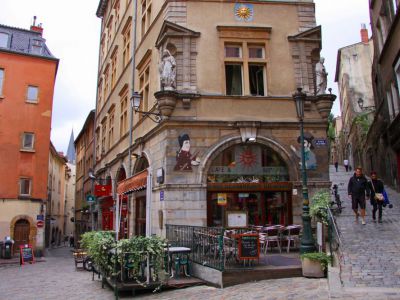
2) Old Lyon
The Old Lyon (Vieux Lyon) is the largest Renaissance district located in the 5th borough of the city of Lyon. It covers a vast area of 424 hectares, nestled at the base of the Fourvière hill, making it one of the most extensive Renaissance neighborhoods in Europe. This historic district can be divided into three distinct sections: Saint Jean, Saint Paul, and Saint Georges.
The Saint Jean quarter held significant political and religious importance during the Middle Ages. Notably, the Cathedral of Saint Jean, a title still held by the archbishop of Lyon, serves as a prime example of Gothic architecture.
Moving on to the Saint-Paul section, during the 15th and 16th centuries, it became the preferred residence for affluent Italian banker-merchants. They built lavish urban residences known as "hôtels particuliers" here. Two remarkable examples are the Hôtel Bullioud and the Hôtel de Gadagne. The latter now houses the Lyon Historical Museum and the International Puppet Museum. The Saint Paul church, with its Romanesque lantern tower and impressive spire, marks the northern boundary of this section.
Lastly, the Saint Georges section became a hub for silk weavers in the 16th century, although they eventually moved to the Croix Rousse hill in the 19th century. In 1844, architect Pierre Bossan reconstructed Saint George's Church along the banks of the Saône River, adopting a neo-Gothic architectural style.
During the Middle Ages, when only a few parallel streets connected the hill and the Saône River, the first "traboules" were constructed. The term "traboules" is derived from the Latin "trans-ambulare," meaning "to pass through." These traboules are essentially corridors that cut through buildings and their courtyards, providing a direct connection between one street and another. When exploring these hidden passages, visitors can marvel at the architectural wonders of galleries and spiral staircases, which are as unexpected as they are unique.
The Saint Jean quarter held significant political and religious importance during the Middle Ages. Notably, the Cathedral of Saint Jean, a title still held by the archbishop of Lyon, serves as a prime example of Gothic architecture.
Moving on to the Saint-Paul section, during the 15th and 16th centuries, it became the preferred residence for affluent Italian banker-merchants. They built lavish urban residences known as "hôtels particuliers" here. Two remarkable examples are the Hôtel Bullioud and the Hôtel de Gadagne. The latter now houses the Lyon Historical Museum and the International Puppet Museum. The Saint Paul church, with its Romanesque lantern tower and impressive spire, marks the northern boundary of this section.
Lastly, the Saint Georges section became a hub for silk weavers in the 16th century, although they eventually moved to the Croix Rousse hill in the 19th century. In 1844, architect Pierre Bossan reconstructed Saint George's Church along the banks of the Saône River, adopting a neo-Gothic architectural style.
During the Middle Ages, when only a few parallel streets connected the hill and the Saône River, the first "traboules" were constructed. The term "traboules" is derived from the Latin "trans-ambulare," meaning "to pass through." These traboules are essentially corridors that cut through buildings and their courtyards, providing a direct connection between one street and another. When exploring these hidden passages, visitors can marvel at the architectural wonders of galleries and spiral staircases, which are as unexpected as they are unique.
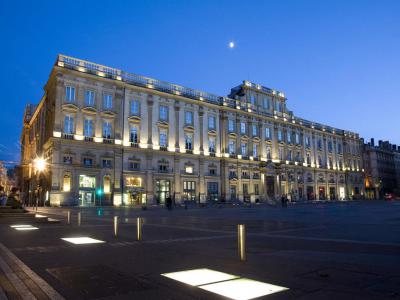
3) Fine Arts Museum (must see)
The Fine Arts Museum in Lion is situated within the former Abbey of Les Dames de Saint Pierre, known as the Saint Peter's Palace (Palais de Saint Pierre). This abbey has its origins dating back to the 7th century and underwent significant renovations in the 17th century. It faced upheaval during the French Revolution when the nuns were expelled. Subsequently, the palace saw further restoration and expansion efforts carried out between 1988 and 1998.
Established in 1801, the museum encompasses a wide span of art history, ranging from Ancient Egypt to the Modern Art era. Its collection is comprehensive, covering various artistic disciplines, and it stands as one of France's foremost fine arts museums.
The museum's exhibitions, both temporary and permanent, are spread across 70 rooms. Among these, 35 rooms are dedicated to paintings from the 14th to the mid-20th century, organized chronologically based on major art schools. You can admire works from French, German, Flemish, Dutch, and Spanish artists.
In the museum's garden, 19th-century statues can be found, while additional statues are divided into two sections: Medieval and Renaissance pieces on the ground floor and 19th- and 20th-century sculptures in the former refectory.
Nine rooms are specifically allocated to Ancient Egyptian artifacts, displaying 600 items in chronological order by theme. Other rooms showcase items from Assyria, Babylon, Cyprus, Samaria, and Syria. There are also three rooms dedicated to Greek artifacts and Roman sculptures.
The museum boasts a notable collection of coins and medals from the 19th century, as well as objets d’art spanning from the Middle Ages to the 20th century. Additionally, there is a selection of Graphic Art from the 19th and 20th centuries on display.
Established in 1801, the museum encompasses a wide span of art history, ranging from Ancient Egypt to the Modern Art era. Its collection is comprehensive, covering various artistic disciplines, and it stands as one of France's foremost fine arts museums.
The museum's exhibitions, both temporary and permanent, are spread across 70 rooms. Among these, 35 rooms are dedicated to paintings from the 14th to the mid-20th century, organized chronologically based on major art schools. You can admire works from French, German, Flemish, Dutch, and Spanish artists.
In the museum's garden, 19th-century statues can be found, while additional statues are divided into two sections: Medieval and Renaissance pieces on the ground floor and 19th- and 20th-century sculptures in the former refectory.
Nine rooms are specifically allocated to Ancient Egyptian artifacts, displaying 600 items in chronological order by theme. Other rooms showcase items from Assyria, Babylon, Cyprus, Samaria, and Syria. There are also three rooms dedicated to Greek artifacts and Roman sculptures.
The museum boasts a notable collection of coins and medals from the 19th century, as well as objets d’art spanning from the Middle Ages to the 20th century. Additionally, there is a selection of Graphic Art from the 19th and 20th centuries on display.
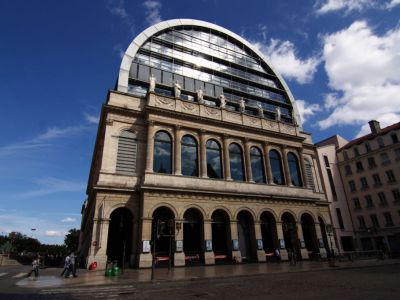
4) Lyon Opera House
A successful amalgamation of the old and new, the Lyon Opera House is in fact the third incarnation of an opera house on this site.
The original one was built in 1756, designed by Jacques-Germain Soufflot. By 1826 the building had proven too small and had to be pulled down. Another, larger theater, featuring Neo-Classical style, was built in its place in 1830 by architects Pollet and Chenavard.
That edifice, in turn, was also considered small and outdated in the mid 20th century, upon which a competition was launched to build a renovated and enlarged version. The competition was won by Jean Nouvel in 1986.
Nouvel kept only the façade and made more space by having basement areas dug out for rehearsal rooms. On top of the building, above the statues of the Muses, he added a steel-and-glass cylinder that is seen today. This allowed to hide the rather ugly fly tower and is now mostly used by the ballet. The magnificent lobby retained the original stucco work, gilts and frescoes, tall arched windows and several lovely chandeliers. The main auditorium is oval shaped and has six levels of galleries.
If you consider taking in a play, opera or ballet, whilst in Lyon, don’t hesitate to book your tickets here. There are wonderful views of the city to be enjoyed from the dome’s terrace too.
The original one was built in 1756, designed by Jacques-Germain Soufflot. By 1826 the building had proven too small and had to be pulled down. Another, larger theater, featuring Neo-Classical style, was built in its place in 1830 by architects Pollet and Chenavard.
That edifice, in turn, was also considered small and outdated in the mid 20th century, upon which a competition was launched to build a renovated and enlarged version. The competition was won by Jean Nouvel in 1986.
Nouvel kept only the façade and made more space by having basement areas dug out for rehearsal rooms. On top of the building, above the statues of the Muses, he added a steel-and-glass cylinder that is seen today. This allowed to hide the rather ugly fly tower and is now mostly used by the ballet. The magnificent lobby retained the original stucco work, gilts and frescoes, tall arched windows and several lovely chandeliers. The main auditorium is oval shaped and has six levels of galleries.
If you consider taking in a play, opera or ballet, whilst in Lyon, don’t hesitate to book your tickets here. There are wonderful views of the city to be enjoyed from the dome’s terrace too.
5) Parc de la Tête d'Or (Park of the Golden Head) (must see)
In 1530, the lands of the Park of the Golden Head (Parc de la Tete d'Or) belonged to the wealthy Lambert family. The name "gold head" is believed to come from the legend that a treasure featuring a gold head of Christ might be buried on the Lambert's land. The chances of this were bleak. The land was mostly a swampy flood zone. No place to bury a golden head.
Planning for an urban park began as early as 1812. Under the administration of Mayor Claude-Marius Vaisse the land was bought in 1856. Work began with landscape designers Eugene and Denis Bulher. The park was opened in 1857. A dam was built to hold back flood waters of the Rhone. That helped. No heads were discovered.
The park is a large grassy savannah-like area of gentle hills and hummocks. A dike that parts the land from the Rhone, once a site for fairs and exhibitions, now holds buildings devoted to entertainments and a 3,000 seat amphitheater. A lake of 40 acres has boats, a pier, and two wooded islands.
The Isle of Tamarisks can be reached only by boat. The Isle of Remembrance is accessible through an underwater tunnel. Once known as the Isle of Swans, it holds a memorial honoring fallen soldiers.
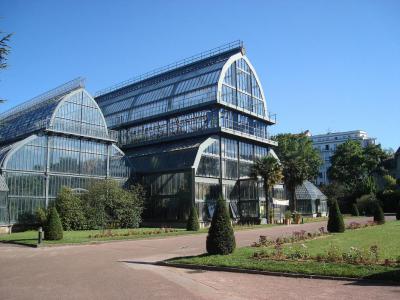
There are four rose gardens, enormous greenhouses, a botanical garden, a zoo and a velodrome for cycling events. The zoo features animal themes like the "African Plain," populated with cranes, flamingos, crocodiles, antelopes, porcupines, sand cats, bat-eared foxes, and turtles. To this day, still no heads.
Planning for an urban park began as early as 1812. Under the administration of Mayor Claude-Marius Vaisse the land was bought in 1856. Work began with landscape designers Eugene and Denis Bulher. The park was opened in 1857. A dam was built to hold back flood waters of the Rhone. That helped. No heads were discovered.
The park is a large grassy savannah-like area of gentle hills and hummocks. A dike that parts the land from the Rhone, once a site for fairs and exhibitions, now holds buildings devoted to entertainments and a 3,000 seat amphitheater. A lake of 40 acres has boats, a pier, and two wooded islands.
The Isle of Tamarisks can be reached only by boat. The Isle of Remembrance is accessible through an underwater tunnel. Once known as the Isle of Swans, it holds a memorial honoring fallen soldiers.
There are four rose gardens, enormous greenhouses, a botanical garden, a zoo and a velodrome for cycling events. The zoo features animal themes like the "African Plain," populated with cranes, flamingos, crocodiles, antelopes, porcupines, sand cats, bat-eared foxes, and turtles. To this day, still no heads.
6) Fresque des Lyonnais (The Lyon Fresco) (must see)
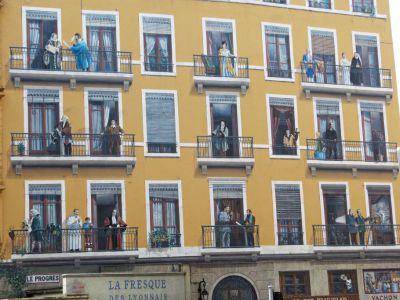
On the Saône side of Lyon’s first district, at the corner of Quai Saint Vincent and Martinière Street, a seven-storey building pulls off one of the city’s cleverest illusions. Two of its walls - one about 800 square metres, the other 200 - are covered with a gigantic “trick of the eye” mural.
And it really does trick you. Windows that don’t exist suddenly open. Balconies appear where there are none. You may even find yourself waving at someone who’s technically made of paint.
Stretching roughly 200 metres along the Saint Vincent side and 600 along Martinière, this mural has become a landmark in its own right. It presents 30 figures linked to Lyon - 24 from the past and six more modern personalities - arranged as if they all live together in one very distinguished apartment block. The contemporary characters stand at street level, casually “interacting” with passersby, as if they’ve just stepped out for coffee.
This painted façade tells 2,000 years of Lyon’s story. Emperor Claudius represents the Roman chapter. Abbé Pierre, founder of the Emmaus movement and member of the French Resistance, appears as a reminder of 20th-century social activism. Football legend Bernard Lacombe joins the line-up, while culinary icon Paul Bocuse seems to wait in the doorway of an imaginary café, ready to comment on the menu.
Look up, and you’ll spot explorer Giovanni da Verrazzano, who sailed for Francis I and reached what would later become New York. Antoine de Saint-Exupéry leans out with his Little Prince, quietly observing the world below. Long-serving mayor Édouard Herriot puffs thoughtfully on his pipe. Nearby, Auguste and Louis Lumière present their first motion-picture camera, the device that launched cinema and secured Lyon’s place in film history.
More faces peer from windows and balconies, creating the impression that the entire building is alive with conversation. The mural was created in 1995 by the artist cooperative CitéCréation, as part of a project to revitalize this busy waterfront district. The idea proved so successful that similar “balcony” murals later appeared elsewhere, including Barcelona.
If you want the full effect, come in the morning. Between 10 and 11 a.m., when the sun hits the wall just right, the illusion sharpens, and the figures seem almost ready to step out. Indeed, this neighbourhood is rich in wall art - but none quite match the scale and storytelling power of The Lyon Fresco.
And it really does trick you. Windows that don’t exist suddenly open. Balconies appear where there are none. You may even find yourself waving at someone who’s technically made of paint.
Stretching roughly 200 metres along the Saint Vincent side and 600 along Martinière, this mural has become a landmark in its own right. It presents 30 figures linked to Lyon - 24 from the past and six more modern personalities - arranged as if they all live together in one very distinguished apartment block. The contemporary characters stand at street level, casually “interacting” with passersby, as if they’ve just stepped out for coffee.
This painted façade tells 2,000 years of Lyon’s story. Emperor Claudius represents the Roman chapter. Abbé Pierre, founder of the Emmaus movement and member of the French Resistance, appears as a reminder of 20th-century social activism. Football legend Bernard Lacombe joins the line-up, while culinary icon Paul Bocuse seems to wait in the doorway of an imaginary café, ready to comment on the menu.
Look up, and you’ll spot explorer Giovanni da Verrazzano, who sailed for Francis I and reached what would later become New York. Antoine de Saint-Exupéry leans out with his Little Prince, quietly observing the world below. Long-serving mayor Édouard Herriot puffs thoughtfully on his pipe. Nearby, Auguste and Louis Lumière present their first motion-picture camera, the device that launched cinema and secured Lyon’s place in film history.
More faces peer from windows and balconies, creating the impression that the entire building is alive with conversation. The mural was created in 1995 by the artist cooperative CitéCréation, as part of a project to revitalize this busy waterfront district. The idea proved so successful that similar “balcony” murals later appeared elsewhere, including Barcelona.
If you want the full effect, come in the morning. Between 10 and 11 a.m., when the sun hits the wall just right, the illusion sharpens, and the figures seem almost ready to step out. Indeed, this neighbourhood is rich in wall art - but none quite match the scale and storytelling power of The Lyon Fresco.
7) Basilica of Notre-Dame de Fourvière (must see)
"Fourviere" is a corruption of the French version of the Latin name, "forum vetus," meaning "Old Forum." Old Forum in French becomes "Vieux-Forum." Reverse it and say it fast and voila! We have "Fourviere." The Basilica of Notre-Dame de Fourviere of Lyon is sitting on the remains the Roman forum built by Trajan. Nothing more need be said.
The basilica was built in the years 1872 to 1896 using private funds. The church is dedicated to the Virgin Mary. She is credited with saving the city from the Black Plague in 1643. Each December 8th, the Festival of Lights is held in her honor. Lighted candles are placed outside every window, and Light Shows play over building facades.
The Virgin has not been neglectful. It is said she also saved the city from the Cholera epidemic in 1832 and the Prussian invasion of 1871. Like the Sacred Heart of Montmartre (Sacré Coeur de Montmartre), the Basilica of Notre-Dame de Fourviere perches on a high hill, a votive offering and a victory memorial.
The basilica has a Museum of Sacred Art and sees over two million visitors and pilgrims every year. The church was designed by historicist architect Pierre Bossan. He foreswore Gothic influences, embracing Romanesque and Byzantine styles.
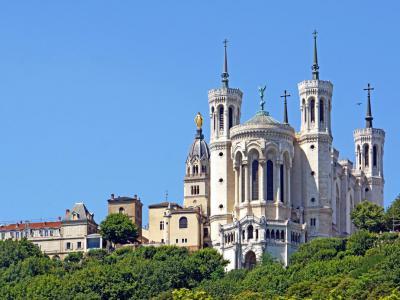
The basilica has four towers and a bell tower with a gilded statue of the Virgin. There is a wealth of mosaics, stained glass and a crypt to Saint Joseph. There are actually two sanctuaries. The upper one is lush and ornate. The lower sanctuary is simple. The building, with its four towers, is said to look like an elephant upside-down.
The basilica is not the first shrine at Fourviere. The earliest chapel on the site dedicated to Mary dates from 1170. The most recent reconstruction was in 1852 when the tower bearing the golden statue by sculptor Joseph Fabisch was installed. The city committed to build the basilica after the Franco-Prussian War of 1871.
The basilica was built in the years 1872 to 1896 using private funds. The church is dedicated to the Virgin Mary. She is credited with saving the city from the Black Plague in 1643. Each December 8th, the Festival of Lights is held in her honor. Lighted candles are placed outside every window, and Light Shows play over building facades.
The Virgin has not been neglectful. It is said she also saved the city from the Cholera epidemic in 1832 and the Prussian invasion of 1871. Like the Sacred Heart of Montmartre (Sacré Coeur de Montmartre), the Basilica of Notre-Dame de Fourviere perches on a high hill, a votive offering and a victory memorial.
The basilica has a Museum of Sacred Art and sees over two million visitors and pilgrims every year. The church was designed by historicist architect Pierre Bossan. He foreswore Gothic influences, embracing Romanesque and Byzantine styles.
The basilica has four towers and a bell tower with a gilded statue of the Virgin. There is a wealth of mosaics, stained glass and a crypt to Saint Joseph. There are actually two sanctuaries. The upper one is lush and ornate. The lower sanctuary is simple. The building, with its four towers, is said to look like an elephant upside-down.
The basilica is not the first shrine at Fourviere. The earliest chapel on the site dedicated to Mary dates from 1170. The most recent reconstruction was in 1852 when the tower bearing the golden statue by sculptor Joseph Fabisch was installed. The city committed to build the basilica after the Franco-Prussian War of 1871.
8) Atelier des Ombres (L')
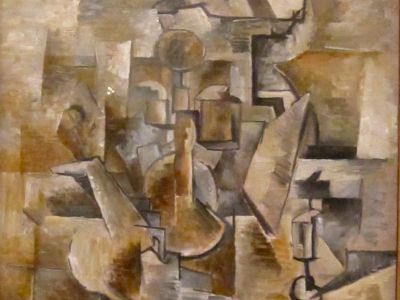
Shadow Workshop (L' Atelier des Ombres) is a distinctive blend of an art gallery and a creative workspace in the heart of Lyon. This establishment has emerged as a central hub for both emerging and established artists, providing an environment where people of all ages can learn the fundamentals of drawing and painting.
The origin of the Shadow Workshop can be traced back to the personal journey of Sylvie Samy. Motivated by a desire to reconnect with her creative spirit, she embarked on a path of art restoration. In 1994, Samy achieved a significant milestone by earning her diploma in this field. Her unwavering passion and commitment led to the founding of the Shadow Workshop in 1996, a space dedicated to both the creation and instruction of painting.
Since its inception in 1997, the Shadow Workshop has welcomed countless individuals, offering them the opportunity to explore and refine their skills in various painting techniques. While Sylvie Samy is particularly passionate about oil painting, she possesses extensive expertise in acrylic and watercolor painting as well, ensuring a comprehensive and enriching learning experience for her students.
The Shadow Workshop has played a pivotal role in the art community, notably as one of the first venues to showcase the works of now-renowned artists such as Hervé Maury, Eric Bleicher, and Clémence Torres. This aspect underscores the Atelier's influence and its significant contribution to the broader art scene.
The origin of the Shadow Workshop can be traced back to the personal journey of Sylvie Samy. Motivated by a desire to reconnect with her creative spirit, she embarked on a path of art restoration. In 1994, Samy achieved a significant milestone by earning her diploma in this field. Her unwavering passion and commitment led to the founding of the Shadow Workshop in 1996, a space dedicated to both the creation and instruction of painting.
Since its inception in 1997, the Shadow Workshop has welcomed countless individuals, offering them the opportunity to explore and refine their skills in various painting techniques. While Sylvie Samy is particularly passionate about oil painting, she possesses extensive expertise in acrylic and watercolor painting as well, ensuring a comprehensive and enriching learning experience for her students.
The Shadow Workshop has played a pivotal role in the art community, notably as one of the first venues to showcase the works of now-renowned artists such as Hervé Maury, Eric Bleicher, and Clémence Torres. This aspect underscores the Atelier's influence and its significant contribution to the broader art scene.
9) Orange Cube
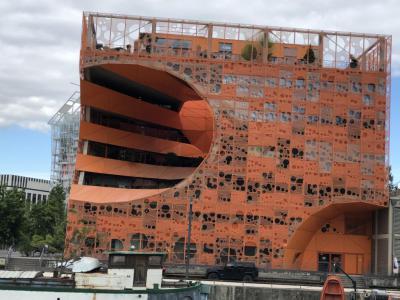
The Orange Cube is a building located in the La Confluence neighborhood of Lyon's 2nd borough. It serves as both a design showroom and an office space. This distinctive structure was designed by the Paris-based architectural firm Jakob + MacFarlane and is renowned for its bright orange color and cube-shaped design, which features a multitude of holes. Because of its appearance, it has earned the nickname "La Mimolette," in reference to the cheese with a similar hue. The construction of The Orange Cube was completed in the year 2011.
The creation of this building stems from Jakob + Macfarlane's winning design in a competition held in 2005. The competition aimed to generate interest in the industrial Confluence area. One of the stipulations was the incorporation of negative space, which led to the building's unique design. The two conical voids within the structure serve not only to bring in cool air but also to establish what Architectural Record's Jenna M. McKnight described as "an extraordinary dialogue with the river, almost bringing it inside."
The façades of The Orange Cube are covered by twenty-five locally made perforated, thermo-lacquered aluminum screens.
The creation of this building stems from Jakob + Macfarlane's winning design in a competition held in 2005. The competition aimed to generate interest in the industrial Confluence area. One of the stipulations was the incorporation of negative space, which led to the building's unique design. The two conical voids within the structure serve not only to bring in cool air but also to establish what Architectural Record's Jenna M. McKnight described as "an extraordinary dialogue with the river, almost bringing it inside."
The façades of The Orange Cube are covered by twenty-five locally made perforated, thermo-lacquered aluminum screens.

10) Museum of Confluences (must see)
The Museum of Confluences (Musée des Confluences), inaugurated in 2014, is a significant cultural landmark in Lyon. Situated in the 2nd arrondissement, it serves as both a science centre and an anthropology museum. Geographically, it's positioned at the confluence of the Rhône and Saône Rivers, at the southern tip of the Presqu'île.
Architecturally, the Museum of Confluences is a marvel, showcasing a deconstructivist design reminiscent of a floating crystal cloud made of stainless steel and glass. This innovative design is the brainchild of the Austrian firm Coop Himmelblau, adding a futuristic touch to the city's skyline.
The museum's collections are diverse and comprehensive, encompassing natural science, anthropology, and Earth Sciences, primarily from the holdings of the Musée d'histoire naturelle - Guimet. In addition to these permanent collections, the museum is renowned for its temporary exhibitions of arts and crafts, offering a dynamic and evolving visitor experience.
Four major exhibitions form the cornerstone of the museum's offerings: "Origins - Stories of the World," "Species - the Web of Life," "Societies - Human Theatre," and "Eternities - Visions of the Beyond." Each exhibition delves into fundamental aspects of human and natural history.
"Origins" explores the beginnings of the universe, the Big Bang theory, and the evolution of life, with a particular focus on human development. "Species" examines the intricate connections between humans and animals, as well as the evolution of various species. "Societies" offers insights into the formation and nature of human communities. Lastly, "Eternities" contemplates the profound themes of life's meaning, human mortality, and the diverse cultural approaches to these existential questions.
The Museum of Confluences, through its architectural grandeur and extensive exhibits, offers a unique and enriching experience, blending science, history, and art to explore the confluence of human knowledge and creativity.
Architecturally, the Museum of Confluences is a marvel, showcasing a deconstructivist design reminiscent of a floating crystal cloud made of stainless steel and glass. This innovative design is the brainchild of the Austrian firm Coop Himmelblau, adding a futuristic touch to the city's skyline.
The museum's collections are diverse and comprehensive, encompassing natural science, anthropology, and Earth Sciences, primarily from the holdings of the Musée d'histoire naturelle - Guimet. In addition to these permanent collections, the museum is renowned for its temporary exhibitions of arts and crafts, offering a dynamic and evolving visitor experience.
Four major exhibitions form the cornerstone of the museum's offerings: "Origins - Stories of the World," "Species - the Web of Life," "Societies - Human Theatre," and "Eternities - Visions of the Beyond." Each exhibition delves into fundamental aspects of human and natural history.
"Origins" explores the beginnings of the universe, the Big Bang theory, and the evolution of life, with a particular focus on human development. "Species" examines the intricate connections between humans and animals, as well as the evolution of various species. "Societies" offers insights into the formation and nature of human communities. Lastly, "Eternities" contemplates the profound themes of life's meaning, human mortality, and the diverse cultural approaches to these existential questions.
The Museum of Confluences, through its architectural grandeur and extensive exhibits, offers a unique and enriching experience, blending science, history, and art to explore the confluence of human knowledge and creativity.
