Custom Walk in Bristol, England by nick_blomme_3dbad8 created on 2026-07-18
Guide Location: England » Bristol
Guide Type: Custom Walk
# of Sights: 7
Tour Duration: 2 Hour(s)
Travel Distance: 3.7 Km or 2.3 Miles
Share Key: 6MFZE
Guide Type: Custom Walk
# of Sights: 7
Tour Duration: 2 Hour(s)
Travel Distance: 3.7 Km or 2.3 Miles
Share Key: 6MFZE
How It Works
Please retrieve this walk in the GPSmyCity app. Once done, the app will guide you from one tour stop to the next as if you had a personal tour guide. If you created the walk on this website or come to the page via a link, please follow the instructions below to retrieve the walk in the app.
Retrieve This Walk in App
Step 1. Download the app "GPSmyCity: Walks in 1K+ Cities" on Apple App Store or Google Play Store.



Step 2. In the GPSmyCity app, download(or launch) the guide "Bristol Map and Walking Tours".
Step 3. Tap the menu button located at upper right corner of the "Walks" screen and select "Retrieve custom walk". Enter the share key: 6MFZE
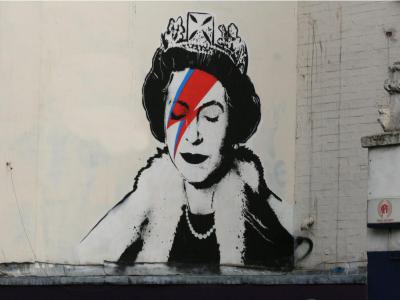
1) Queen Ziggy
Picture it-Bristol, 2012. The bunting’s barely hung for the Diamond Jubilee when, overnight, a certain wall on Upper Maudlin Street acquires a new sovereign. Not the sort you’ll find on coins, but a monochrome Queen Elizabeth II, crown polished, pearls gleaming… and a bolt of red and blue lightning slicing across her face. It’s a clear nod to Bowie’s Ziggy Stardust-royalty meets glam rock, all in one sideways glance. Locals dubbed her “Queen Ziggy,” and while Banksy never stepped forward to claim parentage, the timing, wit, and Bristol postcode all pointed in his direction.
The spot itself has a past-it’s no stranger to Banksy’s handiwork-and it sits right by the Grand Appeal charity, fundraising lifeline for the Children’s Hospital next door. The mural’s arrival sparked a flurry of interpretations. Was it a love letter to the Queen, a pop-culture mash-up, or a cheeky riff on power and celebrity? Maybe all three. After all, Bowie and the monarchy have each ruled their own kingdoms-just not usually on the same wall.
For the wandering visitor, Queen Ziggy isn’t background scenery-it’s an unmissable flash of personality in the city’s visual conversation. That lightning bolt, cutting through the grey, has a way of pulling you up short, reminding you that Bristol’s walls don’t just host art-they throw opinions, jokes, and sly winks into the street. Here, tradition doesn’t gather dust; it gets remixed with a soundtrack, a splash of colour, and the sort of irreverence that refuses to fade.
The spot itself has a past-it’s no stranger to Banksy’s handiwork-and it sits right by the Grand Appeal charity, fundraising lifeline for the Children’s Hospital next door. The mural’s arrival sparked a flurry of interpretations. Was it a love letter to the Queen, a pop-culture mash-up, or a cheeky riff on power and celebrity? Maybe all three. After all, Bowie and the monarchy have each ruled their own kingdoms-just not usually on the same wall.
For the wandering visitor, Queen Ziggy isn’t background scenery-it’s an unmissable flash of personality in the city’s visual conversation. That lightning bolt, cutting through the grey, has a way of pulling you up short, reminding you that Bristol’s walls don’t just host art-they throw opinions, jokes, and sly winks into the street. Here, tradition doesn’t gather dust; it gets remixed with a soundtrack, a splash of colour, and the sort of irreverence that refuses to fade.
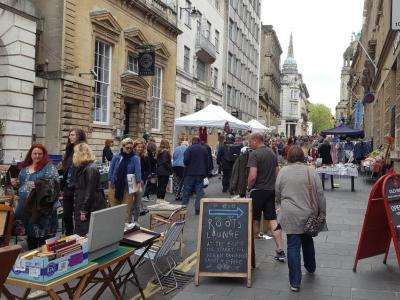
2) Farmer's Market
Located in Old City's Corn Street, Bristol Farmers' Market is a vibrant weekly event that takes place every Wednesday from 9:00 am to 2:30 pm. This market holds great significance for Bristolians, as it is situated around the historic Four Nails, which were traditionally used to seal business deals in the city. The market's rich history and central location make it a bustling hub for locals and visitors alike.
One of the distinguishing features of Bristol Farmers' Market is its focus on sourcing fresh produce from local farms. By supporting local farmers, the market ensures the quality and provenance of the food available. This emphasis on locally sourced products not only benefits the farmers but also promotes sustainability and reduces the carbon footprint associated with long-distance transportation.
Bristol Farmers' Market is just one of the many initiatives undertaken by the city to promote environmental sustainability. In its bid to be named European Green Capital in 2015, Bristol implemented numerous projects, including local food initiatives, successful recycling programs, energy-saving schemes, comprehensive cycling provisions, and support for a wide range of green charities. The market stands as a testament to the city's commitment to these green initiatives.
This direct connection between consumers and producers allows for a deeper understanding of the food's origins and encourages a sense of community. Shoppers can engage in in-depth conversations with the producers and sellers, learning about their farming methods, ingredients, and even recipes. It's a chance to gain insight into the passion and dedication that goes into creating the local food available at the market.
One of the distinguishing features of Bristol Farmers' Market is its focus on sourcing fresh produce from local farms. By supporting local farmers, the market ensures the quality and provenance of the food available. This emphasis on locally sourced products not only benefits the farmers but also promotes sustainability and reduces the carbon footprint associated with long-distance transportation.
Bristol Farmers' Market is just one of the many initiatives undertaken by the city to promote environmental sustainability. In its bid to be named European Green Capital in 2015, Bristol implemented numerous projects, including local food initiatives, successful recycling programs, energy-saving schemes, comprehensive cycling provisions, and support for a wide range of green charities. The market stands as a testament to the city's commitment to these green initiatives.
This direct connection between consumers and producers allows for a deeper understanding of the food's origins and encourages a sense of community. Shoppers can engage in in-depth conversations with the producers and sellers, learning about their farming methods, ingredients, and even recipes. It's a chance to gain insight into the passion and dedication that goes into creating the local food available at the market.
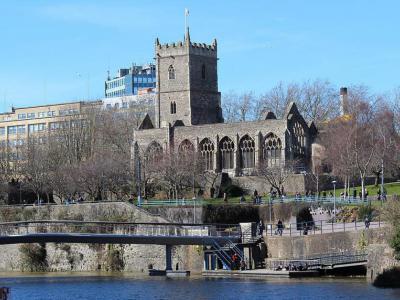
3) Castle Park
Castle Park, also called Castle Green, is a well-liked public open space located in Bristol. Managed by the Bristol City Council, the park is situated between Floating Harbour and Castle Street to the south, Lower Castle Street to the east, and Broad Weir, Newgate, and Wine Street to the north. The western boundary of the park is not well-defined and has been the subject of debate, with the area around High Street and Saint Mary le Port Church often being considered part of the park.
The park was established on September 30, 1978, on the site of Bristol's former primary shopping district, which was mostly destroyed during World War II by the Luftwaffe. The remaining structures were demolished by 1969, and the park now serves as a symbol of peace and hosts several anti-fascist memorials.
The park features various attractions, including a sensory herb garden, the ruins of Saint Mary-le-Port Church, a grassy arena, and a bandstand for live music events. Saint Peter's Square, to the north of Saint Peter's Church, is lined with trees and has been the site of numerous events, including German Christmas markets. The Bristol City Council has been working to redevelop the area between the park's western edge and High Street, which has been contentious. Some people prefer extending the park to High Street, while the council wants to replace the derelict buildings with a mixed-use development to improve the park and reconnect the Old City to Broadmead.
Despite the controversy surrounding its western boundary, Castle Park remains a popular destination for both tourists and locals.
The park was established on September 30, 1978, on the site of Bristol's former primary shopping district, which was mostly destroyed during World War II by the Luftwaffe. The remaining structures were demolished by 1969, and the park now serves as a symbol of peace and hosts several anti-fascist memorials.
The park features various attractions, including a sensory herb garden, the ruins of Saint Mary-le-Port Church, a grassy arena, and a bandstand for live music events. Saint Peter's Square, to the north of Saint Peter's Church, is lined with trees and has been the site of numerous events, including German Christmas markets. The Bristol City Council has been working to redevelop the area between the park's western edge and High Street, which has been contentious. Some people prefer extending the park to High Street, while the council wants to replace the derelict buildings with a mixed-use development to improve the park and reconnect the Old City to Broadmead.
Despite the controversy surrounding its western boundary, Castle Park remains a popular destination for both tourists and locals.
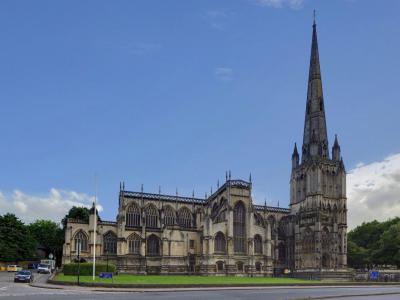
4) Saint Mary Redcliffe (must see)
Saint Mary Redcliffe, also known as the Church of Saint Mary the Virgin, is an iconic landmark and the primary Church of England parish church in the Redcliffe district of Bristol. Its historical significance, architectural grandeur, and stunning features make it one of the country's most remarkable and largest parish churches. Its size is occasionally mistaken by tourists for Bristol Cathedral itself.
The origins of Saint Mary Redcliffe can be traced back to 1158 when the first mention of a church on the site was recorded. The present building dates from 1185. It continued to be expanded until its completion in 1872. The church's longevity is a testament to the devotion and craftsmanship invested in its creation.
Admired as a masterpiece of English Gothic architecture, Saint Mary Redcliffe showcases a range of awe-inspiring features. Upon approaching the church, visitors are greeted by an unusual hexagonal porch, a rare architectural element that sets it apart from other churches.
The church's most striking feature is its magnificent spires, reaching an impressive height of 274 feet (84 meters) to the top of the weathervane. This height places it as the second-tallest structure in Bristol and the sixth-tallest parish church in the entire country. The spires, visible from various vantage points across the city, have become an iconic symbol of Bristol.
Stepping inside Saint Mary Redcliffe, visitors are treated to a visual feast of ornate stained glass windows and decorative stone vaults. The intricate craftsmanship and vibrant colors of the stained glass create a mesmerizing play of light within the church, adding to its ethereal atmosphere. The flying buttresses that support the structure add both aesthetic appeal and structural strength, further enhancing the church's architectural magnificence.
Saint Mary Redcliffe stands as a testament to the rich heritage and architectural prowess of Bristol. Its enduring beauty, cultural significance, and breathtaking features continue to captivate visitors and inspire awe, firmly establishing it as a treasured national gem. The Saint Mary Redcliffe has Grade I listed status, the highest possible category, by Historic England.
The origins of Saint Mary Redcliffe can be traced back to 1158 when the first mention of a church on the site was recorded. The present building dates from 1185. It continued to be expanded until its completion in 1872. The church's longevity is a testament to the devotion and craftsmanship invested in its creation.
Admired as a masterpiece of English Gothic architecture, Saint Mary Redcliffe showcases a range of awe-inspiring features. Upon approaching the church, visitors are greeted by an unusual hexagonal porch, a rare architectural element that sets it apart from other churches.
The church's most striking feature is its magnificent spires, reaching an impressive height of 274 feet (84 meters) to the top of the weathervane. This height places it as the second-tallest structure in Bristol and the sixth-tallest parish church in the entire country. The spires, visible from various vantage points across the city, have become an iconic symbol of Bristol.
Stepping inside Saint Mary Redcliffe, visitors are treated to a visual feast of ornate stained glass windows and decorative stone vaults. The intricate craftsmanship and vibrant colors of the stained glass create a mesmerizing play of light within the church, adding to its ethereal atmosphere. The flying buttresses that support the structure add both aesthetic appeal and structural strength, further enhancing the church's architectural magnificence.
Saint Mary Redcliffe stands as a testament to the rich heritage and architectural prowess of Bristol. Its enduring beauty, cultural significance, and breathtaking features continue to captivate visitors and inspire awe, firmly establishing it as a treasured national gem. The Saint Mary Redcliffe has Grade I listed status, the highest possible category, by Historic England.
5) Llandoger Trow
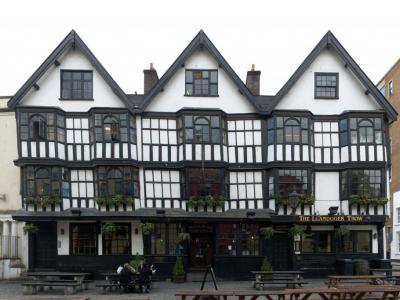
If you stroll down King Street and spot a black-and-white timber silhouette that looks like it’s been standing there waiting for its close-up since the 17th century… you’ve found the Llandoger Trow. Built in 1664 as part of a row of merchant houses, it was snapped up by Welsh sailor Captain Hawkins, who christened it after his home village of Llandogo and the flat-bottomed “trow” boats that once plied the River Severn.
Over the years, its low beams and uneven floors became the haunt of sailors, traders, and the occasional literary legend. Local tales insist Daniel Defoe met Alexander Selkirk here-the real castaway behind Robinson Crusoe-and that Robert Louis Stevenson found inspiration for the Admiral Benbow Inn in Treasure Island within these walls. Even Blackbeard is said to have popped by, perhaps for a pint, perhaps to swap sea stories that were better left unprinted.
Then there’s its ghostly guest list: reportedly around fifteen spirits, which would make for quite the crowded snug. Paranormal enthusiasts rank it among Britain’s most haunted buildings, though whether that’s a blessing or a booking deterrent depends on your tastes.
The Llandoger Trow still pours pints beneath its original oak timbers and gabled frontage, a sight worth pausing for before you even step inside. Within, low beams and creaking boards carry centuries of seafaring lore, literary inspiration, and the odd ghost story or two. Right in the Old City near the Harbourside, it’s an easy detour for anyone tracing Bristol’s maritime past-or chasing a tale over something stronger than tea.
Over the years, its low beams and uneven floors became the haunt of sailors, traders, and the occasional literary legend. Local tales insist Daniel Defoe met Alexander Selkirk here-the real castaway behind Robinson Crusoe-and that Robert Louis Stevenson found inspiration for the Admiral Benbow Inn in Treasure Island within these walls. Even Blackbeard is said to have popped by, perhaps for a pint, perhaps to swap sea stories that were better left unprinted.
Then there’s its ghostly guest list: reportedly around fifteen spirits, which would make for quite the crowded snug. Paranormal enthusiasts rank it among Britain’s most haunted buildings, though whether that’s a blessing or a booking deterrent depends on your tastes.
The Llandoger Trow still pours pints beneath its original oak timbers and gabled frontage, a sight worth pausing for before you even step inside. Within, low beams and creaking boards carry centuries of seafaring lore, literary inspiration, and the odd ghost story or two. Right in the Old City near the Harbourside, it’s an easy detour for anyone tracing Bristol’s maritime past-or chasing a tale over something stronger than tea.
6) Banksy - Well Hung Lover
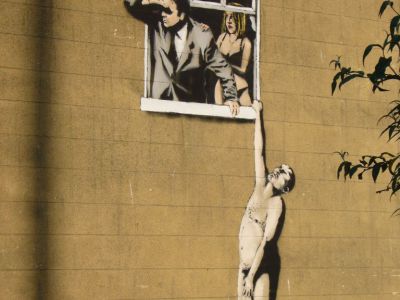
On the wall of a former sexual health clinic, five metres above Frogmore Street, a naked man hangs by one arm from a windowsill, his free hand strategically placed. Above him, a suited figure leans out, scanning the street for the lover he can’t see. Beside him, a woman in lingerie rests her hand on his shoulder, a picture of guilty calm. The scene is Banksy at full voltage – sly, economical, and loaded with visual innuendo.
The mural appeared in 2006, after three days behind tarpaulin-wrapped scaffolding. When the cover came off, Bristol found itself staring at a home-grown scandal in spray paint. The Council had been on a mission to scrub graffiti from the city, but this one hit a nerve. The building’s owner at the time – a member of Massive Attack music group – had commissioned it, and when the Council later bought the property, they put it to the people. Ninety-seven percent voted to let it stay.
That vote made Well Hung Lover the first street piece in the UK to receive official blessing after the fact. The clinic moved on, the mural stayed put, and its survival became part of Bristol’s civic identity – cheeky, defiant. Even paintball vandals couldn’t take that away; they just added another layer to the story.
The mural appeared in 2006, after three days behind tarpaulin-wrapped scaffolding. When the cover came off, Bristol found itself staring at a home-grown scandal in spray paint. The Council had been on a mission to scrub graffiti from the city, but this one hit a nerve. The building’s owner at the time – a member of Massive Attack music group – had commissioned it, and when the Council later bought the property, they put it to the people. Ninety-seven percent voted to let it stay.
That vote made Well Hung Lover the first street piece in the UK to receive official blessing after the fact. The clinic moved on, the mural stayed put, and its survival became part of Bristol’s civic identity – cheeky, defiant. Even paintball vandals couldn’t take that away; they just added another layer to the story.
7) Bristol Cathedral (must see)
Bristol Cathedral – officially the Cathedral Church of the Holy and Undivided Trinity – has been part of the city’s skyline since the 12th century, though its story has had more twists than a medieval manuscript. It began in 1140, when Robert Fitzharding, a wealthy merchant decided the city could do with a grand abbey. By 1148, Saint Augustine’s Abbey was complete, but very little of that first church has survived the centuries. When King Henry VIII dissolved the monasteries in 1542, the abbey found itself promoted to cathedral status – a silver lining to an otherwise turbulent chapter.
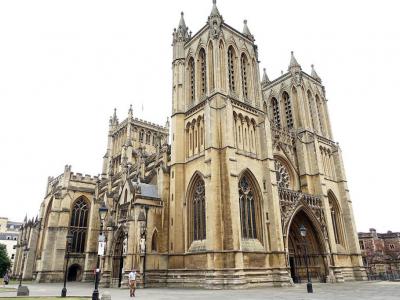
The building you see today is the product of construction spurts from the 13th to the 19th century, giving it a layered look: Norman foundations, Gothic vaults, and a Gothic Revival facelift courtesy of the Victorian era, particularly its impressive west front. Its “hall church” layout means the nave and aisles are the same height, so the interior feels light, spacious, and less like a tunnel and more like an open-plan masterpiece – centuries before open-plan was trendy.
Inside, it’s a showcase of craftsmanship: soaring rib-vaulted ceilings, stonework fine enough to make a stonemason weep, and stained glass ranging from medieval survivors to panels replaced after wartime damage during the Blitz, in 1941. The Lady Chapel glows with intricate carvings and delicate window tracery, while the Chapter House still sports the original stone seating from the abbey days – sometimes not everything changes with the times.
The cathedral also doubles as a historical who’s-who gallery, with monuments to abbots, bishops, and local figures who shaped Bristol’s story. One highlight is the Renatus Harris organ, installed in 1685 and still perfectly capable of filling the space with a spine-tingling soundtrack. Maritime links also ripple through the memorial plaques, nodding to Bristol’s seafaring past.
Step outside and the cathedral keeps giving – a peaceful garden, a backdrop of College Green, and the occasional art installation or concert that proves history and modern culture can share the same roof. Bristol Cathedral isn’t just a relic of the past; it’s a living, breathing part of the city’s daily rhythm.
The building you see today is the product of construction spurts from the 13th to the 19th century, giving it a layered look: Norman foundations, Gothic vaults, and a Gothic Revival facelift courtesy of the Victorian era, particularly its impressive west front. Its “hall church” layout means the nave and aisles are the same height, so the interior feels light, spacious, and less like a tunnel and more like an open-plan masterpiece – centuries before open-plan was trendy.
Inside, it’s a showcase of craftsmanship: soaring rib-vaulted ceilings, stonework fine enough to make a stonemason weep, and stained glass ranging from medieval survivors to panels replaced after wartime damage during the Blitz, in 1941. The Lady Chapel glows with intricate carvings and delicate window tracery, while the Chapter House still sports the original stone seating from the abbey days – sometimes not everything changes with the times.
The cathedral also doubles as a historical who’s-who gallery, with monuments to abbots, bishops, and local figures who shaped Bristol’s story. One highlight is the Renatus Harris organ, installed in 1685 and still perfectly capable of filling the space with a spine-tingling soundtrack. Maritime links also ripple through the memorial plaques, nodding to Bristol’s seafaring past.
Step outside and the cathedral keeps giving – a peaceful garden, a backdrop of College Green, and the occasional art installation or concert that proves history and modern culture can share the same roof. Bristol Cathedral isn’t just a relic of the past; it’s a living, breathing part of the city’s daily rhythm.
