Custom Walk in Chiang Mai, Thailand by chrisdamerell_dc5675 created on 2026-07-23
Guide Location: Thailand » Chiang Mai
Guide Type: Custom Walk
# of Sights: 10
Tour Duration: 6 Hour(s)
Travel Distance: 15.4 Km or 9.6 Miles
Share Key: NP5HP
Guide Type: Custom Walk
# of Sights: 10
Tour Duration: 6 Hour(s)
Travel Distance: 15.4 Km or 9.6 Miles
Share Key: NP5HP
How It Works
Please retrieve this walk in the GPSmyCity app. Once done, the app will guide you from one tour stop to the next as if you had a personal tour guide. If you created the walk on this website or come to the page via a link, please follow the instructions below to retrieve the walk in the app.
Retrieve This Walk in App
Step 1. Download the app "GPSmyCity: Walks in 1K+ Cities" on Apple App Store or Google Play Store.



Step 2. In the GPSmyCity app, download(or launch) the guide "Chiang Mai Map and Walking Tours".
Step 3. Tap the menu button located at upper right corner of the "Walks" screen and select "Retrieve custom walk". Enter the share key: NP5HP
1) Tha Pae Gate
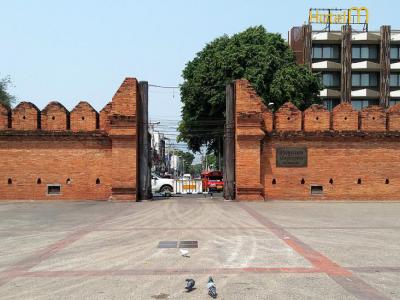
Tha Pae Gate is marking the eastern entry into the historic walled center. The gate is part of the remaining fortifications built during the Lanna Kingdom to protect the city from invasions. Although much of the original wall has disappeared over time, this reconstructed section offers a glimpse into Chiang Mai’s medieval past and the defensive system that once surrounded the capital.
The gate stands at the eastern end of Tha Pae Road, a route that historically connected the city to the Ping River and its important trade routes. Merchants, monks, and foreign visitors would have passed through this entrance on their way to the royal palace and central temples. Today, the brick walls and open plaza create a popular meeting point and a convenient orientation spot for exploring the Old City.
Tha Pae Gate is also a lively backdrop to daily life in Chiang Mai. Pigeons gather on the square, and tourists often stop to take photos or join in casual cultural events. On weekends and during major festivals-especially Loi Krathong and Songkran-the area transforms into a vibrant stage with food stalls, performances, and parades filling the streets.
Surrounding the gate, visitors will find a mix of cafés, shops, markets, and guesthouses that make it a comfortable base for sightseeing.
The gate stands at the eastern end of Tha Pae Road, a route that historically connected the city to the Ping River and its important trade routes. Merchants, monks, and foreign visitors would have passed through this entrance on their way to the royal palace and central temples. Today, the brick walls and open plaza create a popular meeting point and a convenient orientation spot for exploring the Old City.
Tha Pae Gate is also a lively backdrop to daily life in Chiang Mai. Pigeons gather on the square, and tourists often stop to take photos or join in casual cultural events. On weekends and during major festivals-especially Loi Krathong and Songkran-the area transforms into a vibrant stage with food stalls, performances, and parades filling the streets.
Surrounding the gate, visitors will find a mix of cafés, shops, markets, and guesthouses that make it a comfortable base for sightseeing.
2) Wat Chedi Luang (must see)
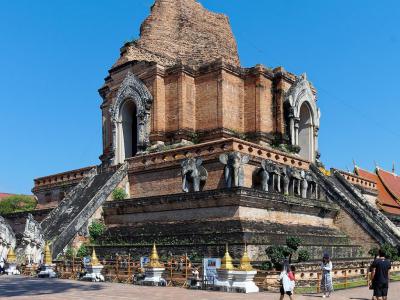
Wat Chedi Luang is one of Chiang Mai’s most historically significant temples, located at the center of the Old City. Its name refers to the massive stupa that once dominated the skyline, originally constructed in the 14th century by King Saen Muang Ma to enshrine the ashes of his father, King Ku Na. Over the following decades, later rulers enlarged the structure, and by the mid-15th century it stood at an estimated 82 meters high, making it one of the tallest structures in the Lanna Kingdom.
For a brief period, Wat Chedi Luang also housed the revered Emerald Buddha, today kept in Bangkok’s Grand Palace. After an earthquake in the 16th century caused major damage to the chedi’s upper portion, the statue was relocated to Luang Prabang, and the temple gradually fell into partial ruin.
In the 1990s, restoration efforts supported by UNESCO and the Japanese government stabilized the structure. However, the reconstruction of the upper tiers in a Central Thai style, rather than traditional Lanna design, sparked debate among local historians and architects. The chedi remains intentionally truncated, preserving a sense of its dramatic history.
Visitors can still admire the weathered brick base, accessed by steep stairways guarded by stone nagas and elephants. The large main assembly hall, contains Phra Chao Attarot, a respected statue of the Buddha in a graceful standing posture. An ancient Dipterocarp tree grows nearby and is traditionally believed to protect the city. Adjacent to it is the city pillar, housed in a small shrine dedicated to guardian spirits that watch over Chiang Mai.
Wat Chedi Luang remains an active spiritual center. Visitors may witness monks performing daily rituals or join a Monk Chat session hosted on the grounds, where monastics share insights into Buddhist teachings and life in the temple community.
Tip:
If possible, go at (or stay until) nightfall to walk around this one. You can feel the peacefulness and the ambiance going after dark because these parts of the city are full of magic!
For a brief period, Wat Chedi Luang also housed the revered Emerald Buddha, today kept in Bangkok’s Grand Palace. After an earthquake in the 16th century caused major damage to the chedi’s upper portion, the statue was relocated to Luang Prabang, and the temple gradually fell into partial ruin.
In the 1990s, restoration efforts supported by UNESCO and the Japanese government stabilized the structure. However, the reconstruction of the upper tiers in a Central Thai style, rather than traditional Lanna design, sparked debate among local historians and architects. The chedi remains intentionally truncated, preserving a sense of its dramatic history.
Visitors can still admire the weathered brick base, accessed by steep stairways guarded by stone nagas and elephants. The large main assembly hall, contains Phra Chao Attarot, a respected statue of the Buddha in a graceful standing posture. An ancient Dipterocarp tree grows nearby and is traditionally believed to protect the city. Adjacent to it is the city pillar, housed in a small shrine dedicated to guardian spirits that watch over Chiang Mai.
Wat Chedi Luang remains an active spiritual center. Visitors may witness monks performing daily rituals or join a Monk Chat session hosted on the grounds, where monastics share insights into Buddhist teachings and life in the temple community.
Tip:
If possible, go at (or stay until) nightfall to walk around this one. You can feel the peacefulness and the ambiance going after dark because these parts of the city are full of magic!
3) Three Kings Monument
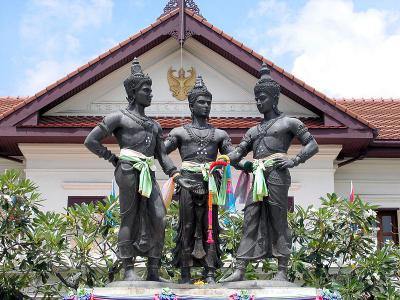
Located in the heart of Chiang Mai’s Old City, the Three Kings Monument honors the rulers who established Chiang Mai as the capital of the Lanna Kingdom in 1296. The bronze statues depict King Mengrai, founder of the city, alongside King Ramkhamhaeng of Sukhothai and King Ngam Muang of Phayao, whose alliance shaped the region’s political and cultural identity.
Many residents regard the monument as a place of respect, offering flowers and incense in gratitude to the rulers who envisioned and founded the city.
The monument stands in a central square in front of the former Provincial Hall, now the Chiang Mai City Arts & Cultural Centre. The plaza hosts cultural events and festivals, while serving as a convenient landmark for visitors exploring the Old City. It is also a popular spot for local families to stroll in the evening.
The area surrounding the Three Kings Monument is lively and welcoming, offering visitors a mix of cafés, small shops, and cultural attractions. Cozy coffee spots and tea houses provide a place to rest and enjoy local beverages, while boutique shops sell handicrafts, souvenirs, and traditional Lanna textiles.
Tip:
During the Loy Krathong Festival (usually in November), the entire area comes alive with colorful lanterns and handcrafted animal displays, creating one of the most memorable sights of the celebration.
Many residents regard the monument as a place of respect, offering flowers and incense in gratitude to the rulers who envisioned and founded the city.
The monument stands in a central square in front of the former Provincial Hall, now the Chiang Mai City Arts & Cultural Centre. The plaza hosts cultural events and festivals, while serving as a convenient landmark for visitors exploring the Old City. It is also a popular spot for local families to stroll in the evening.
The area surrounding the Three Kings Monument is lively and welcoming, offering visitors a mix of cafés, small shops, and cultural attractions. Cozy coffee spots and tea houses provide a place to rest and enjoy local beverages, while boutique shops sell handicrafts, souvenirs, and traditional Lanna textiles.
Tip:
During the Loy Krathong Festival (usually in November), the entire area comes alive with colorful lanterns and handcrafted animal displays, creating one of the most memorable sights of the celebration.
4) Wat Phra Singh (must see)
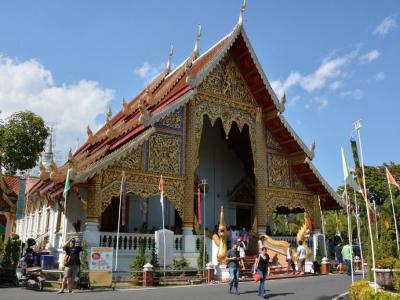
Wat Phra Singh is one of Chiang Mai’s most important temples and a major center of Buddhist devotion in Northern Thailand. Founded in the mid-14th century by King Pha Yu, it was originally built to house the ashes of his father, King Kham Fu, during the height of the Lanna Kingdom.
Its prominence grew when the Phra Buddha Sihing (commonly called Phra Singh) image arrived in 1367. The statue, considered a highly revered representation of the Buddha, gave the temple its name and continues to draw worshippers from across Thailand. During the Thai New Year, or Songkran festival, the image is paraded through the streets in a traditional procession, allowing people to pay respect by gently sprinkling water.
The temple complex showcases elegant examples of Lanna architecture. One of its most celebrated structures is the smaller Viharn Lai Kham, which houses the Phra Singh statue. The building features finely carved wooden details and interior murals illustrating Jataka tales and elements of Lanna culture. The larger Viharn Luang stands nearby with striking white pillars and a gilded Buddha image known as Phra Chao Thong Tip.
Additional structures add to the temple’s historical interest. The Ubosot, used for ordination ceremonies, displays decorative motifs inspired by Buddhist cosmology, while an ancient brick chedi dating back to 1345 offers insight into the earliest phases of the temple’s construction. A small elevated library within the grounds was designed to protect sacred manuscripts from humidity and pests.
Wat Phra Singh remains an active monastic community. Visitors may observe daily rituals or speak with monks in designated areas where they share information about Buddhist beliefs and meditation practices. Together, these features make the temple an important place for understanding both the religious and cultural traditions of Chiang Mai.
Tip:
The monks here are serious and prefer not to have pictures of the Buddha statues, believing this to be disrespectful. They also discourage the use of the Buddha as art, asking that representations be confined to shrines, whether public or private.
Its prominence grew when the Phra Buddha Sihing (commonly called Phra Singh) image arrived in 1367. The statue, considered a highly revered representation of the Buddha, gave the temple its name and continues to draw worshippers from across Thailand. During the Thai New Year, or Songkran festival, the image is paraded through the streets in a traditional procession, allowing people to pay respect by gently sprinkling water.
The temple complex showcases elegant examples of Lanna architecture. One of its most celebrated structures is the smaller Viharn Lai Kham, which houses the Phra Singh statue. The building features finely carved wooden details and interior murals illustrating Jataka tales and elements of Lanna culture. The larger Viharn Luang stands nearby with striking white pillars and a gilded Buddha image known as Phra Chao Thong Tip.
Additional structures add to the temple’s historical interest. The Ubosot, used for ordination ceremonies, displays decorative motifs inspired by Buddhist cosmology, while an ancient brick chedi dating back to 1345 offers insight into the earliest phases of the temple’s construction. A small elevated library within the grounds was designed to protect sacred manuscripts from humidity and pests.
Wat Phra Singh remains an active monastic community. Visitors may observe daily rituals or speak with monks in designated areas where they share information about Buddhist beliefs and meditation practices. Together, these features make the temple an important place for understanding both the religious and cultural traditions of Chiang Mai.
Tip:
The monks here are serious and prefer not to have pictures of the Buddha statues, believing this to be disrespectful. They also discourage the use of the Buddha as art, asking that representations be confined to shrines, whether public or private.
5) Wat Suan Dok (must see)
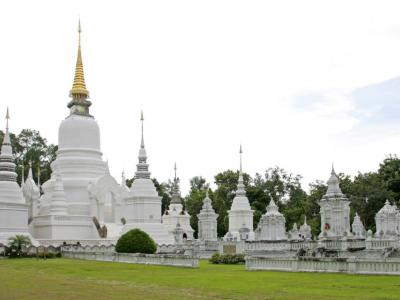
Wat Suan Dok, also known as Wat Buppharam, is a revered Buddhist temple and a popular spot for photography enthusiasts. This ancient religious site has undergone recent renovations and boasts a collection of significant structures. Among them are several royal tombs, a resplendent golden Chedi, and a remarkable 500-year-old bronze Buddha image, one of the largest in northern Thailand.
King Kue Na of Lanna founded Wat Suan Dok in the year 1370 CE as a place for the monk Sumana Thera. Its original name, Wat Buppharam, or Wat Suan Dok Mai, is derived from King Kue Na's flower garden that once stood here. Legend has it that Maha Sumana Thera, a monk from the Sukhothai Kingdom, had a visionary experience leading him to discover a sacred relic of the Buddha. The vision instructed that this precious relic should find a home in Chiang Mai.
Upon constructing the new temple to enshrine the relic, a remarkable event occurred – the relic duplicated itself. One of the relics was reverently placed inside the shrine of Wat Buppharam Dok Mai, while the other found its sacred resting place on the back of a majestic white elephant. The elephant, trumpeting three times, made its way up Doi Suthep, the mountain to the west of Chiang Mai, where it passed away. On that hallowed spot, Wat Phrathat Doi Suthep was erected to house the second relic.
The temple's northwestern quarter holds the Old Lanna Royal Family Burial Site, comprising whitewashed mausoleums that contain the cremation ashes of Chiang Mai's royal family members. In the early 20th century, Princess Dara Rasmi, a consort of King Chulalongkorn (Rama V) and the daughter of Lanna's King Inthawichayanon, gathered the ashes from various locations around Chiang Mai to be interred at their present resting place within the temple grounds.
King Kue Na of Lanna founded Wat Suan Dok in the year 1370 CE as a place for the monk Sumana Thera. Its original name, Wat Buppharam, or Wat Suan Dok Mai, is derived from King Kue Na's flower garden that once stood here. Legend has it that Maha Sumana Thera, a monk from the Sukhothai Kingdom, had a visionary experience leading him to discover a sacred relic of the Buddha. The vision instructed that this precious relic should find a home in Chiang Mai.
Upon constructing the new temple to enshrine the relic, a remarkable event occurred – the relic duplicated itself. One of the relics was reverently placed inside the shrine of Wat Buppharam Dok Mai, while the other found its sacred resting place on the back of a majestic white elephant. The elephant, trumpeting three times, made its way up Doi Suthep, the mountain to the west of Chiang Mai, where it passed away. On that hallowed spot, Wat Phrathat Doi Suthep was erected to house the second relic.
The temple's northwestern quarter holds the Old Lanna Royal Family Burial Site, comprising whitewashed mausoleums that contain the cremation ashes of Chiang Mai's royal family members. In the early 20th century, Princess Dara Rasmi, a consort of King Chulalongkorn (Rama V) and the daughter of Lanna's King Inthawichayanon, gathered the ashes from various locations around Chiang Mai to be interred at their present resting place within the temple grounds.
6) Suan Prung Gate
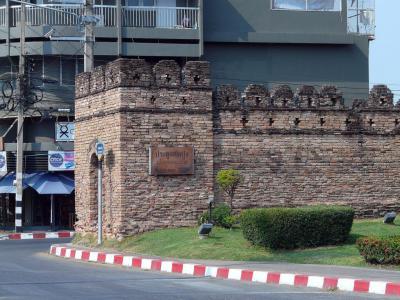
Suan Prung Gate, a historic landmark in Chiang Mai, holds a fascinating history that sets it apart from the other gates in the city. Built in the 15th century, it came into existence much later than its four counterparts. The gate owes its creation to the benevolent intent of a Chiang Mai king, who wanted to provide his mother with easy access to the city as she resided close to this section of the Old Town.
Originally named "Suan Ra," the gate underwent a transformation over time, evolving into its current title, "Suan Prung." This name carries significant meaning, with "Suan" symbolizing a garden or the act of thrusting a spear, and "Prung" referring to the belly. It is believed that the term "Suan" might be associated with the gate's grim history of executing rebels through the use of spears, contributing to its alternate connotation.
Throughout the ages, Suan Prung Gate has also played an important role in an enduring tradition in Chiang Mai-the solemn procession of carrying the deceased for cremation through this very gate. This ritual has withstood the test of time and continues to be observed even today, further cementing the gate's place in the city's rich cultural heritage.
As visitors and locals alike pass through the ancient archway, they are not only stepping into a historical site but also immersing themselves in the traditions and customs that have endured for centuries. The gate's architecture and engravings carry the weight of its past, serving as a tangible link to Chiang Mai's bygone era.
Originally named "Suan Ra," the gate underwent a transformation over time, evolving into its current title, "Suan Prung." This name carries significant meaning, with "Suan" symbolizing a garden or the act of thrusting a spear, and "Prung" referring to the belly. It is believed that the term "Suan" might be associated with the gate's grim history of executing rebels through the use of spears, contributing to its alternate connotation.
Throughout the ages, Suan Prung Gate has also played an important role in an enduring tradition in Chiang Mai-the solemn procession of carrying the deceased for cremation through this very gate. This ritual has withstood the test of time and continues to be observed even today, further cementing the gate's place in the city's rich cultural heritage.
As visitors and locals alike pass through the ancient archway, they are not only stepping into a historical site but also immersing themselves in the traditions and customs that have endured for centuries. The gate's architecture and engravings carry the weight of its past, serving as a tangible link to Chiang Mai's bygone era.
7) Kuan Yin Palace
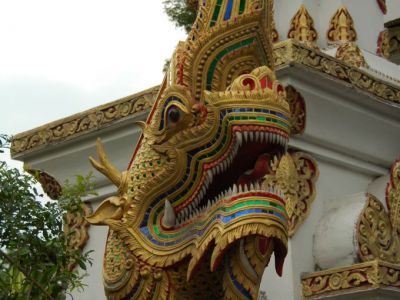
Kuan Yin Palace, also known as Kuan Yin Bodhisattavas, is a hidden gem located not far from Chiang Mai. This Chinese dragon temple impresses visitors with its playful and diverse design. As tourists approach the shrine, they are greeted by a massive and colorful 20-meter dragon standing guard at the entrance, its mouth wide open, inviting worshippers to enter.
The temple was constructed in 1991 by Abbess Bhiksuni Shi Kuang Seng, who received her ordination at Mount Pu Tuo in China. The founder's dedication to the Goddess of Mercy, Kuan Im, is evident throughout the temple. Inside, visitors walk through a dragon tunnel adorned with murals, following the customary practice of removing shoes before reaching the main worship area.
The corridor within the dragon's belly is a unique and fascinating feature of the temple. Colorful paintings and intricate decorations line the path, providing a mesmerizing journey for those who pass through it. This experience adds to the spiritual significance of the temple, attracting faithful devotees who come here to pray and pay homage to the deities.
Within the temple, two remarkable statues draw visitors' attention-the dragon and the tiger. The dragon, standing guard at the entrance, represents strength and protection. In contrast, the tiger symbolizes power and courage, with visitors passing through its body to emerge from its jaws. This symbolic journey from the dragon to the tiger signifies a spiritual transformation and renewal, leaving visitors with a profound sense of awe and wonder.
Upon reaching the main worship area, visitors encounter a small pavilion housing the statue of Kuan Im, the Goddess of Mercy. Devotees offer prayers and seek blessings from this compassionate deity, feeling a sense of peace and tranquility in her presence.
The temple was constructed in 1991 by Abbess Bhiksuni Shi Kuang Seng, who received her ordination at Mount Pu Tuo in China. The founder's dedication to the Goddess of Mercy, Kuan Im, is evident throughout the temple. Inside, visitors walk through a dragon tunnel adorned with murals, following the customary practice of removing shoes before reaching the main worship area.
The corridor within the dragon's belly is a unique and fascinating feature of the temple. Colorful paintings and intricate decorations line the path, providing a mesmerizing journey for those who pass through it. This experience adds to the spiritual significance of the temple, attracting faithful devotees who come here to pray and pay homage to the deities.
Within the temple, two remarkable statues draw visitors' attention-the dragon and the tiger. The dragon, standing guard at the entrance, represents strength and protection. In contrast, the tiger symbolizes power and courage, with visitors passing through its body to emerge from its jaws. This symbolic journey from the dragon to the tiger signifies a spiritual transformation and renewal, leaving visitors with a profound sense of awe and wonder.
Upon reaching the main worship area, visitors encounter a small pavilion housing the statue of Kuan Im, the Goddess of Mercy. Devotees offer prayers and seek blessings from this compassionate deity, feeling a sense of peace and tranquility in her presence.
8) Wat Sri Suphan (Silver Temple) (must see)
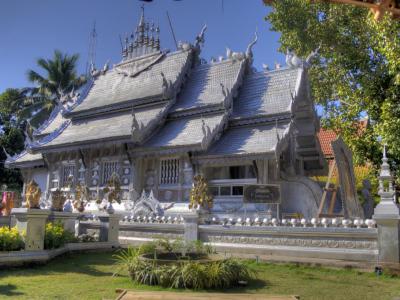
Wat Sri Suphan is known as the Silver Temple due to its ornate silver decoration. This temple was built around 1500 as a place of worship for the local silversmith village. As repairs were needed, the locals repaired the temple with silver. However, the temple wasn't completely covered in silver until 2008. The traditional Lanna architecture and design have now been completely covered in silver, nickel, and aluminum by the local silver artists.
You'll be astounded by the detailed relief plates covering the exterior. Relief plates depict rural life, cities of the world, the seven wonders of the ancient world, and zodiac animals.
While the relief plates are made with aluminum, the Buddha images are covered in silver.
The temple's interior is vibrant, with silver, mirrors, and bright colors adorning the walls and ceiling. Because this is an active ordination hall, women are not permitted inside the temple. According to Lanna tradition, the spells and amulets buried beneath the hall could cause "deterioration" to people with pure spirits, especially women.
There's an exhibition building with detailed information about the silversmith process. You can see artists working in the workshop, creating relief plates.
Monks give talks several times a day, which is an excellent way to gain further insight into the local traditions and religion. At night, the temple is illuminated with blue lights, creating another stunning scene.
You'll be astounded by the detailed relief plates covering the exterior. Relief plates depict rural life, cities of the world, the seven wonders of the ancient world, and zodiac animals.
While the relief plates are made with aluminum, the Buddha images are covered in silver.
The temple's interior is vibrant, with silver, mirrors, and bright colors adorning the walls and ceiling. Because this is an active ordination hall, women are not permitted inside the temple. According to Lanna tradition, the spells and amulets buried beneath the hall could cause "deterioration" to people with pure spirits, especially women.
There's an exhibition building with detailed information about the silversmith process. You can see artists working in the workshop, creating relief plates.
Monks give talks several times a day, which is an excellent way to gain further insight into the local traditions and religion. At night, the temple is illuminated with blue lights, creating another stunning scene.
9) Chiang Mai Gate
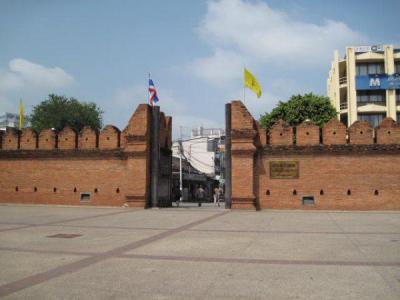
Chiang Mai Gate is one of the most significant landmarks in Chiang Mai. Located within the ancient walls of the city, it holds historical and cultural importance as it once served as a primary entrance to the old city. Chiang Mai, often referred to as the "Rose of the North," is the largest city in northern Thailand and a popular destination for travelers seeking a blend of traditional and modern experiences.
Chiang Mai Gate, situated on the southern side, was strategically positioned to facilitate trade and communication between Chiang Mai and the neighboring kingdoms. Over the centuries, the gate has undergone several renovations and restorations, preserving its historical charm while accommodating the city's urban development.
Chiang Mai Gate showcases traditional Lanna-style architecture, featuring a massive red brick structure adorned with intricate carvings and elaborate wooden decorations. On either side of the gate, there are two tall pillars, known as "Hing Hoy," which were traditionally used to support the city's wooden gates. While the wooden gates no longer exist, these pillars remain as a testament to the city's ancient defenses.
Every evening, Chiang Mai Gate transforms into a bustling night market. Vendors set up stalls along the road leading to the gate, offering a wide variety of goods, including local handicrafts, clothing, accessories, souvenirs, and delicious street food. The market's vibrant atmosphere, coupled with the delightful aromas of Thai cuisine, draws locals and tourists alike to explore and indulge in the sensory delights.
Chiang Mai Gate, situated on the southern side, was strategically positioned to facilitate trade and communication between Chiang Mai and the neighboring kingdoms. Over the centuries, the gate has undergone several renovations and restorations, preserving its historical charm while accommodating the city's urban development.
Chiang Mai Gate showcases traditional Lanna-style architecture, featuring a massive red brick structure adorned with intricate carvings and elaborate wooden decorations. On either side of the gate, there are two tall pillars, known as "Hing Hoy," which were traditionally used to support the city's wooden gates. While the wooden gates no longer exist, these pillars remain as a testament to the city's ancient defenses.
Every evening, Chiang Mai Gate transforms into a bustling night market. Vendors set up stalls along the road leading to the gate, offering a wide variety of goods, including local handicrafts, clothing, accessories, souvenirs, and delicious street food. The market's vibrant atmosphere, coupled with the delightful aromas of Thai cuisine, draws locals and tourists alike to explore and indulge in the sensory delights.
10) Tha Pae Road
The shopping street between Chiang Mai’s Narawat Bridge and Tha Pae Gate is full of unique finds. Visitors can browse rare antiques, colorful textiles, and traditional clothing, while orchids and flowers add vibrancy to the scene.
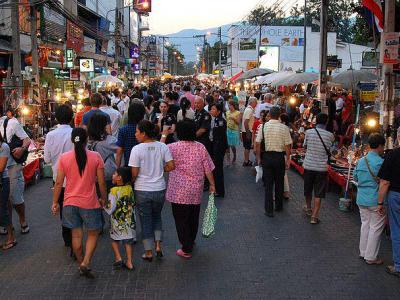
Every Sunday at 4:00 pm, Tha Pae Road closes to traffic and transforms into a bustling night market. Hundreds of stalls sell street food, handicrafts, souvenirs, textiles, clothes, and trinkets. Friendly bargaining is common, whether you’re hunting for a silk scarf, a spice collection, a wooden carving, or a small Buddha image.
Temples along the road often become food courts, offering everything from mango sticky rice to deep-fried crickets and fresh juice. Street artists provide portraits or caricatures, while musicians, dancers, and performers bring the market to life.
When your feet get tired, relax with a refreshing drink or a foot massage. Beyond the shopping, the market offers an immersive cultural experience where locals and tourists mingle, sample tasty treats, and enjoy lively performances together.
Every Sunday at 4:00 pm, Tha Pae Road closes to traffic and transforms into a bustling night market. Hundreds of stalls sell street food, handicrafts, souvenirs, textiles, clothes, and trinkets. Friendly bargaining is common, whether you’re hunting for a silk scarf, a spice collection, a wooden carving, or a small Buddha image.
Temples along the road often become food courts, offering everything from mango sticky rice to deep-fried crickets and fresh juice. Street artists provide portraits or caricatures, while musicians, dancers, and performers bring the market to life.
When your feet get tired, relax with a refreshing drink or a foot massage. Beyond the shopping, the market offers an immersive cultural experience where locals and tourists mingle, sample tasty treats, and enjoy lively performances together.
