

A Walk Through Riga's Charming Old Town (Self Guided), Riga
The area that is home to present-day Riga has been inhabited since at least the 12th century. With a sheltered natural harbor and its location on the Daugava River, the area became an important stop along the Vikings' Dvina-Dnieper trade route to Byzantium. Local Livonian and Curonian communities settled here, and fishing, trade, and crafts formed the basis of the early economy.
Riga's official foundation is traditionally dated to 1201, when Bishop Albert of Buxhoeveden moved his seat here and established a fortified center. German merchants, monks, and crusaders had already begun arriving in the late 12th century, and Riga soon became an important base for German trade and Christian expansion into the eastern Baltic. During the 13th century, the city's strategic position between Western and Eastern Europe helped its economy flourish.
Riga joined the Hanseatic League in 1282, connecting it to a powerful network of trading cities around the Baltic and North Sea. Over the centuries, however, its strategic importance made it a prize for competing powers. Riga came under Polish rule in 1581, was conquered by Sweden in 1621, and was captured by Russian forces in 1710 during the Great Northern War, becoming part of the Russian Empire.
The 19th century brought rapid industrial and economic growth, and Riga expanded beyond its medieval fortifications. Its population became increasingly diverse, with Latvian, German, Russian, Jewish, and other communities shaping the city's cultural character.
Latvia declared independence in 1918, with Riga as its capital. After World War II, Latvia was incorporated into the Soviet Union, but it restored its independence in 1991 following the collapse of the Soviet Union.
World War II brought devastating destruction to Riga, and several historic landmarks were destroyed or severely damaged. Buildings such as Town Hall and the House of Blackheads were subsequently reconstructed, restoring much of the Old Town's distinctive character.
The origin of the name "Riga" remains disputed. One theory connects it to the Zemgalian word ryggoz, meaning a place for storing grain.
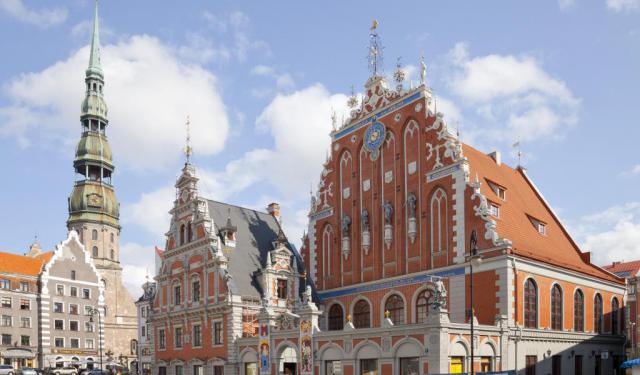
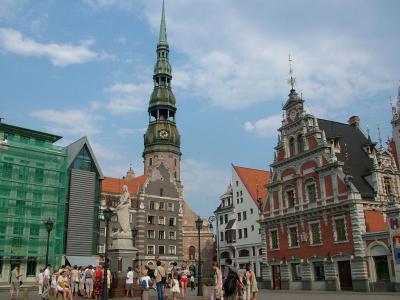
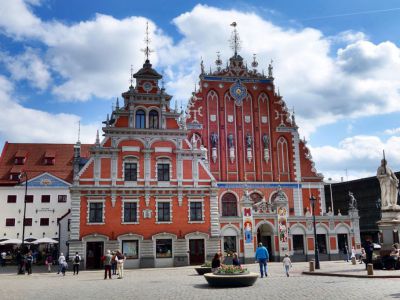
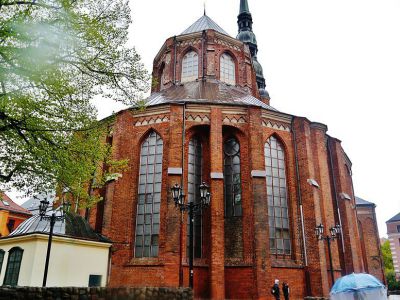
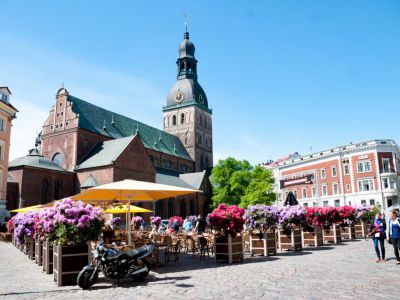
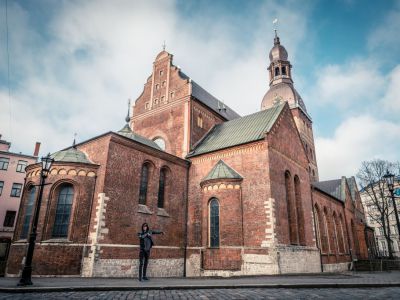
Today, a walk through Riga's historic center reveals a remarkable blend of medieval, Gothic, and Art Nouveau architecture. Begin at Town Hall Square and admire the ornate House of Blackheads, then continue to Saint Peter's Church. Nearby, Riga Cathedral anchors Cathedral Square. The route can continue past the Three Brothers, Swedish Gate, and Powder Tower, before reaching the Freedom Monument. Along the way, Lime Street adds lively cafés, shops, and a taste of modern Riga amid its historic surroundings.
As you walk these streets, remember that Riga has always been a city on the move. Follow the routes that brought people here centuries ago, and discover for yourself the city that grew from a trading settlement into the Riga we see today.
Riga's official foundation is traditionally dated to 1201, when Bishop Albert of Buxhoeveden moved his seat here and established a fortified center. German merchants, monks, and crusaders had already begun arriving in the late 12th century, and Riga soon became an important base for German trade and Christian expansion into the eastern Baltic. During the 13th century, the city's strategic position between Western and Eastern Europe helped its economy flourish.
Riga joined the Hanseatic League in 1282, connecting it to a powerful network of trading cities around the Baltic and North Sea. Over the centuries, however, its strategic importance made it a prize for competing powers. Riga came under Polish rule in 1581, was conquered by Sweden in 1621, and was captured by Russian forces in 1710 during the Great Northern War, becoming part of the Russian Empire.
The 19th century brought rapid industrial and economic growth, and Riga expanded beyond its medieval fortifications. Its population became increasingly diverse, with Latvian, German, Russian, Jewish, and other communities shaping the city's cultural character.
Latvia declared independence in 1918, with Riga as its capital. After World War II, Latvia was incorporated into the Soviet Union, but it restored its independence in 1991 following the collapse of the Soviet Union.
World War II brought devastating destruction to Riga, and several historic landmarks were destroyed or severely damaged. Buildings such as Town Hall and the House of Blackheads were subsequently reconstructed, restoring much of the Old Town's distinctive character.
The origin of the name "Riga" remains disputed. One theory connects it to the Zemgalian word ryggoz, meaning a place for storing grain.
Today, a walk through Riga's historic center reveals a remarkable blend of medieval, Gothic, and Art Nouveau architecture. Begin at Town Hall Square and admire the ornate House of Blackheads, then continue to Saint Peter's Church. Nearby, Riga Cathedral anchors Cathedral Square. The route can continue past the Three Brothers, Swedish Gate, and Powder Tower, before reaching the Freedom Monument. Along the way, Lime Street adds lively cafés, shops, and a taste of modern Riga amid its historic surroundings.
As you walk these streets, remember that Riga has always been a city on the move. Follow the routes that brought people here centuries ago, and discover for yourself the city that grew from a trading settlement into the Riga we see today.
How it works: Download the app "GPSmyCity: Walks in 1K+ Cities" from Apple App Store or Google Play Store to your mobile phone or tablet. The app turns your mobile device into a personal tour guide and its built-in GPS navigation functions guide you from one tour stop to next. The app works offline, so no data plan is needed when traveling abroad.
Download The GPSmyCity App



A Walk Through Riga's Charming Old Town Map
Guide Name: A Walk Through Riga's Charming Old Town
Guide Location: Latvia » Riga (See other walking tours in Riga)
Guide Type: Self-guided Walking Tour (Sightseeing)
Tour Duration: 2 Hours
Travel Distance: 2.4 Km or 1.5 Miles
Tour Best Suited For: First-time visit
Guide Location: Latvia » Riga (See other walking tours in Riga)
Guide Type: Self-guided Walking Tour (Sightseeing)
Tour Duration: 2 Hours
Travel Distance: 2.4 Km or 1.5 Miles
Tour Best Suited For: First-time visit
Sights Featured in This Walk
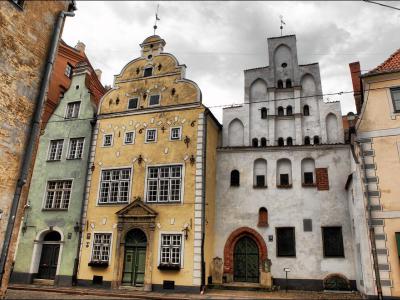
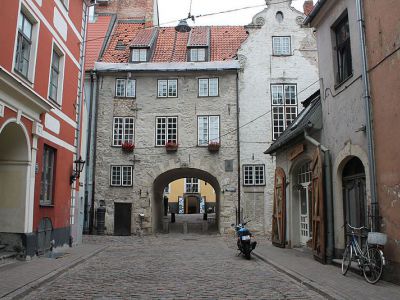


Walking Tours in Riga, Latvia

Create Your Own Walk in Riga
Creating your own self-guided walk in Riga is easy and fun. Choose the city attractions that you want to see and a walk route map will be created just for you. You can even set your hotel as the start point of the walk.
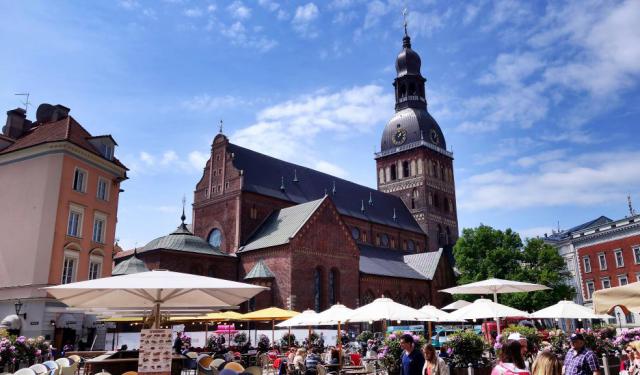
Explore Riga's Historical Churches on Foot
One great thing about Riga is that the majority of its religious sites are concentrated in the historic center. A variety of faiths found in the Latvian capital is fairly broad for such a small country and includes Roman Catholic, Orthodox, and Lutheran, to mention but a few.
The 13th-century Riga Cathedral is perhaps the most significant house of prayer in the city. The imposing mix of... view more
Tour Duration: 2 Hours
Travel Distance: 3 Km or 1.9 Miles
The 13th-century Riga Cathedral is perhaps the most significant house of prayer in the city. The imposing mix of... view more
Tour Duration: 2 Hours
Travel Distance: 3 Km or 1.9 Miles
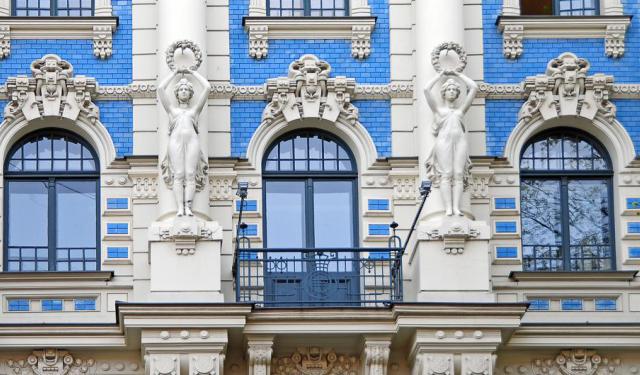
A Walking Guide to Riga's Fairytale Art Nouveau Architecture
An architecture lover in general and that of Art Nouveau in particular will find plenty to look at in the quiet center of Riga. Art Nouveau architecture makes up roughly one third of all buildings in the heart of Latvia's capital. In fact, the city boasts the highest concentration of Art Nouveau structures anywhere in the world.
Constructed during a period of rapid economic growth, most of... view more
Tour Duration: 1 Hour
Travel Distance: 1.3 Km or 0.8 Miles
Constructed during a period of rapid economic growth, most of... view more
Tour Duration: 1 Hour
Travel Distance: 1.3 Km or 0.8 Miles
Useful Travel Guides for Planning Your Trip

Traveler's Choice of 12 Uniquely Latvian Souvenirs from Riga
Reemerged after regaining independence in the early 1990s, Latvia is anxious to reveal its beauty to the outside world. The country's capital Riga is a good showroom for the country's cultural riches and traditions. Here's the list of the unique Latvian products to look for while in...
The Most Popular Cities
/ view all