

Alcazaba Fortress, Granada
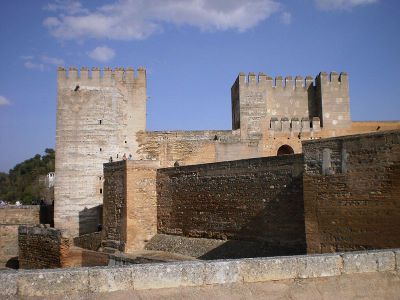
The Alcazaba Fortress is the oldest major surviving section of the Alhambra and its military heart. Its elevated position on Sabika Hill was chosen for defense, allowing soldiers to watch Granada, the surrounding plain, and approaching enemies from afar. Earlier fortifications existed here, and in the 9th century Sawwar ben Hamdun found it necessary to build a fort, reflecting tensions between Muslims and mulwalladins, converts to Islam.
The fortress was greatly strengthened by the Nasrid ruler Muhammad I, who built a rampart around Hamdun’s works, improved the defenses, and erected three principal towers: the Broken Tower, the Keep, and the Watch Tower. The latter is a favorite with visitors for its spectacular views. Find it by walking across the foundation outlines of the central military quarter toward the western tip. Later, the Catholic Monarchs installed its great bell, which rings on significant state occasions and each January 2 for the Day of Conquest.
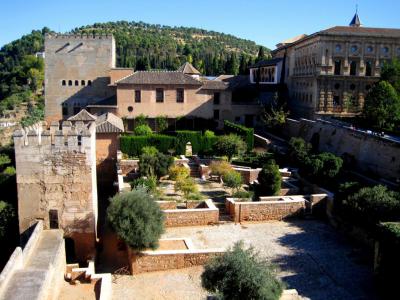
The Alcazaba was austere by design, with thick walls, barracks, cisterns, ramparts, and defensive walkways. From its towers, you can look toward the River Darro, ancient bridges, the Chancellery, New Square, and The Promenade of the Sad. Other defenses included the Arms Tower, Justice Tower, and Vermillion Towers. Considering you are still atop the Watch Tower, make use of its broad stone viewing platform to take in the 360-degree panorama of Granada and the Sierra Nevada peak line.
An inscription by the Mexican poet Francisco A. de Icaza on the wall in the garden of the Ramparts of Alcazaba captures Granada’s spell: “there is nothing in this life like the grief of being blind in Granada.”
The fortress was greatly strengthened by the Nasrid ruler Muhammad I, who built a rampart around Hamdun’s works, improved the defenses, and erected three principal towers: the Broken Tower, the Keep, and the Watch Tower. The latter is a favorite with visitors for its spectacular views. Find it by walking across the foundation outlines of the central military quarter toward the western tip. Later, the Catholic Monarchs installed its great bell, which rings on significant state occasions and each January 2 for the Day of Conquest.
The Alcazaba was austere by design, with thick walls, barracks, cisterns, ramparts, and defensive walkways. From its towers, you can look toward the River Darro, ancient bridges, the Chancellery, New Square, and The Promenade of the Sad. Other defenses included the Arms Tower, Justice Tower, and Vermillion Towers. Considering you are still atop the Watch Tower, make use of its broad stone viewing platform to take in the 360-degree panorama of Granada and the Sierra Nevada peak line.
An inscription by the Mexican poet Francisco A. de Icaza on the wall in the garden of the Ramparts of Alcazaba captures Granada’s spell: “there is nothing in this life like the grief of being blind in Granada.”
Want to visit this sight? Check out these Self-Guided Walking Tours in Granada. Alternatively, you can download the mobile app "GPSmyCity: Walks in 1K+ Cities" from Apple App Store or Google Play Store. The app turns your mobile device to a personal tour guide and it works offline, so no data plan is needed when traveling abroad.
Download The GPSmyCity App



Alcazaba Fortress on Map
Sight Name: Alcazaba Fortress
Sight Location: Granada, Spain (See walking tours in Granada)
Sight Type: Religious
Guide(s) Containing This Sight:
Sight Location: Granada, Spain (See walking tours in Granada)
Sight Type: Religious
Guide(s) Containing This Sight:
Nearby Sights

Walking Tours in Granada, Spain

Create Your Own Walk in Granada
Creating your own self-guided walk in Granada is easy and fun. Choose the city attractions that you want to see and a walk route map will be created just for you. You can even set your hotel as the start point of the walk.
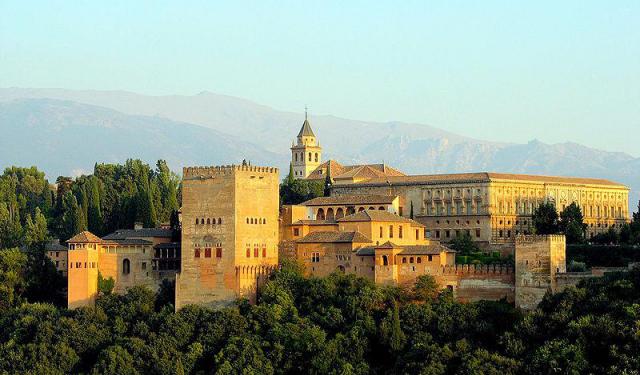
Alhambra Walking Tour
The Alhambra is Granada’s most famous monument and one of the finest surviving examples of medieval Islamic architecture in Europe. Its name comes from Arabic and is generally translated as “The Red One,” probably referring to the reddish walls of the fortress. The complex occupies Sabika Hill, overlooking Granada and the Albaicín.
The hill was fortified as early as the 9th century, but... view more
Tour Duration: 2 Hour(s)
Travel Distance: 2.0 Km or 1.2 Miles
The hill was fortified as early as the 9th century, but... view more
Tour Duration: 2 Hour(s)
Travel Distance: 2.0 Km or 1.2 Miles
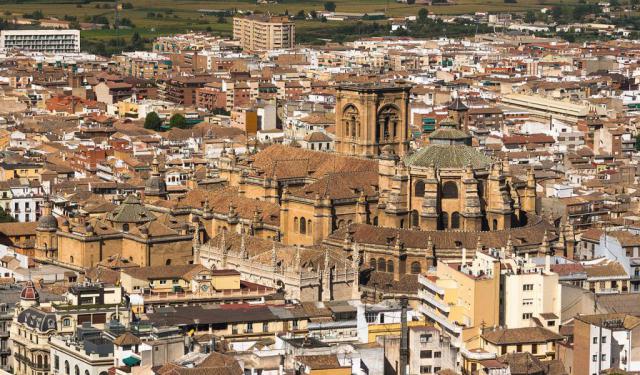
A Walk in Granada's Historical Old Town
American writer Washington Irving arrived at the Alhambra in 1829-and stayed for nearly three months. He became so concerned about visitors scratching their names into the monument that he and Prince Dolgorouki provided a leather-bound visitors’ book as an alternative.
Granada lies at the foot of the Sierra Nevada mountain range, where the Darro and Genil rivers meet. Its history reaches back... view more
Tour Duration: 3 Hour(s)
Travel Distance: 3.5 Km or 2.2 Miles
Granada lies at the foot of the Sierra Nevada mountain range, where the Darro and Genil rivers meet. Its history reaches back... view more
Tour Duration: 3 Hour(s)
Travel Distance: 3.5 Km or 2.2 Miles
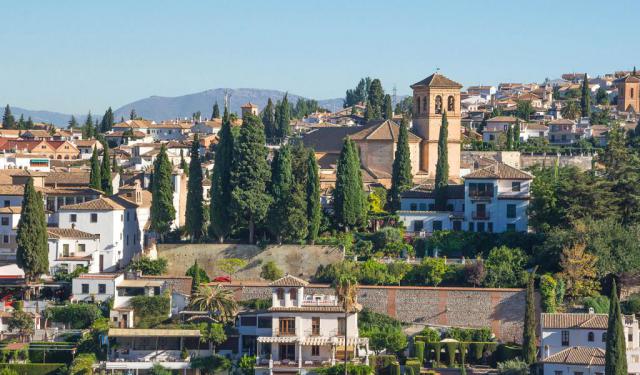
Albayzín Walking Tour
American writer Washington Irving’s book Tales of the Alhambra repeatedly features the Albayzín quarter. He was particularly struck by the district at night, when he heard “the tinkling of innumerable guitars, and the clicking of castanets” rising from its streets and gardens.
The Albayzín occupies the hill opposite the Alhambra, on the northern side of the Darro River. It is one of... view more
Tour Duration: 2 Hour(s)
Travel Distance: 2.3 Km or 1.4 Miles
The Albayzín occupies the hill opposite the Alhambra, on the northern side of the Darro River. It is one of... view more
Tour Duration: 2 Hour(s)
Travel Distance: 2.3 Km or 1.4 Miles
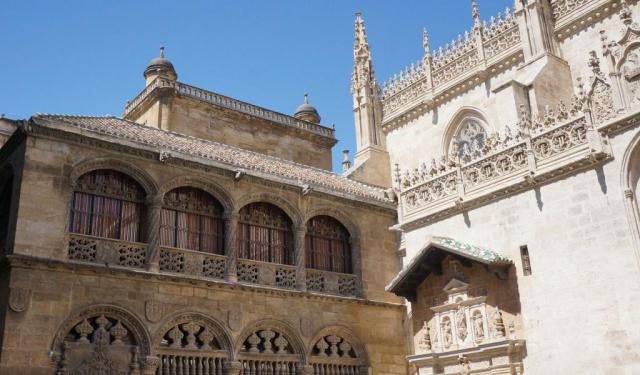
Granada's Architectural Jewels
Over the course of centuries, Granada's architecture has been influenced by four major styles – Moorish, Renaissance, Gothic and Baroque. The city’s most impressive buildings date from the period of Arabic rule and the subsequent Catholic epoch which started after the Moors were displaced in 1492.
From the dazzling majesty of the Alhambra to the awe-inspiring churches and the subtly... view more
Tour Duration: 2 Hour(s)
Travel Distance: 3.5 Km or 2.2 Miles
From the dazzling majesty of the Alhambra to the awe-inspiring churches and the subtly... view more
Tour Duration: 2 Hour(s)
Travel Distance: 3.5 Km or 2.2 Miles