

Audio Guide: A Walk in Granada's Historical Old Town (Self Guided), Granada
American writer Washington Irving arrived at the Alhambra in 1829-and stayed for nearly three months. He became so concerned about visitors scratching their names into the monument that he and Prince Dolgorouki provided a leather-bound visitors’ book as an alternative.
Granada lies at the foot of the Sierra Nevada mountain range, where the Darro and Genil rivers meet. Its history reaches back to an Iberian settlement that later became the Roman town of Iliberis. The story of medieval Granada, however, took shape after the Muslim conquest of the Iberian Peninsula began in 711 AD. Under Moorish rule, which lasted in parts of Spain for nearly eight centuries, a settlement known as Garnata al-Jahud, associated with a substantial Jewish community, developed alongside the emerging Islamic city.
Granada rose to prominence in the 11th century, when Zawi ibn Ziri established the Zirid Kingdom of Granada in 1013. The city’s name comes through the Arabic Gharnata, although its deeper origin remains uncertain.
Granada’s most celebrated period began in 1238, when Muhammad I founded the Nasrid dynasty. The city became the capital of the last Muslim kingdom in the Iberian Peninsula.
The centuries-long Christian Reconquest reached its conclusion here. On January 2, 1492, Muhammad XII, known as Boabdil, surrendered Granada to the Catholic Monarchs, Ferdinand II of Aragon and Isabella I of Castile.
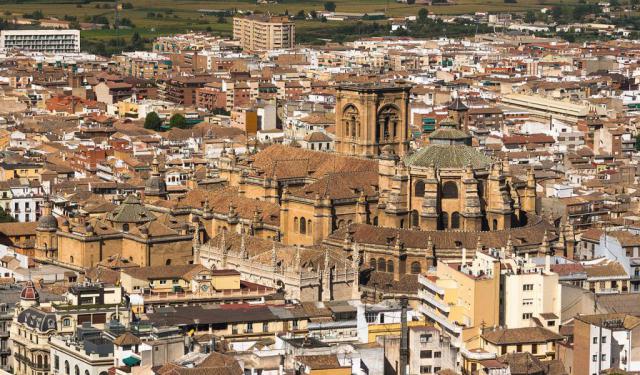
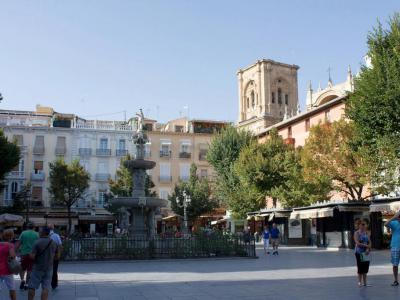
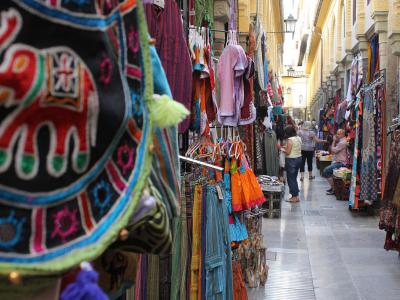
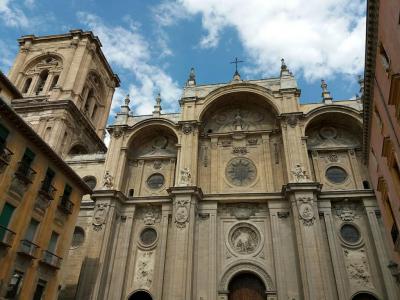
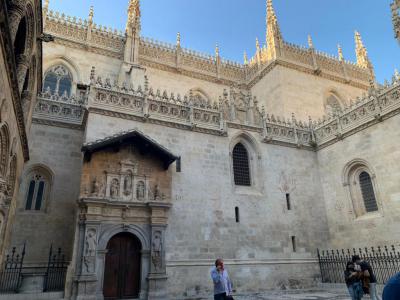
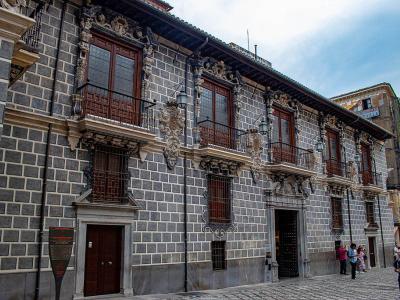
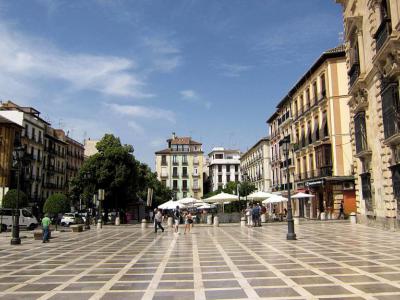
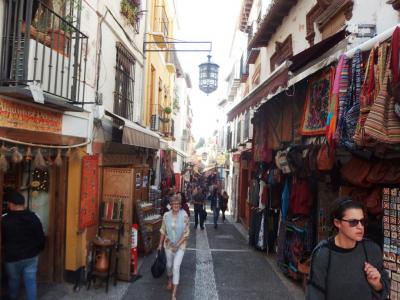
Walking through Granada’s historic center, visitors move from lively Bib-Rambla Square into the narrow lanes of the Arab Market, once the city’s silk market and still lined with small shops. Nearby, the monumental Granada Cathedral rises above streets shaped by centuries of Muslim and Christian history. Along the way, stone façades, shaded squares, tea shops, fountains, and glimpses of the surrounding hills reveal the layered character of this compact Andalusian city.
Today, Granada’s past remains visible in its palaces, former mosques, churches, cathedrals, historic neighborhoods, markets, and flamenco traditions, making the city a vivid meeting point of Islamic, Christian, Jewish, and modern Spanish culture. So, as you follow in Washington Irving’s footsteps, resist the urge to leave your mark on Granada’s walls-and let Granada leave its mark on you instead.
Granada lies at the foot of the Sierra Nevada mountain range, where the Darro and Genil rivers meet. Its history reaches back to an Iberian settlement that later became the Roman town of Iliberis. The story of medieval Granada, however, took shape after the Muslim conquest of the Iberian Peninsula began in 711 AD. Under Moorish rule, which lasted in parts of Spain for nearly eight centuries, a settlement known as Garnata al-Jahud, associated with a substantial Jewish community, developed alongside the emerging Islamic city.
Granada rose to prominence in the 11th century, when Zawi ibn Ziri established the Zirid Kingdom of Granada in 1013. The city’s name comes through the Arabic Gharnata, although its deeper origin remains uncertain.
Granada’s most celebrated period began in 1238, when Muhammad I founded the Nasrid dynasty. The city became the capital of the last Muslim kingdom in the Iberian Peninsula.
The centuries-long Christian Reconquest reached its conclusion here. On January 2, 1492, Muhammad XII, known as Boabdil, surrendered Granada to the Catholic Monarchs, Ferdinand II of Aragon and Isabella I of Castile.
Walking through Granada’s historic center, visitors move from lively Bib-Rambla Square into the narrow lanes of the Arab Market, once the city’s silk market and still lined with small shops. Nearby, the monumental Granada Cathedral rises above streets shaped by centuries of Muslim and Christian history. Along the way, stone façades, shaded squares, tea shops, fountains, and glimpses of the surrounding hills reveal the layered character of this compact Andalusian city.
Today, Granada’s past remains visible in its palaces, former mosques, churches, cathedrals, historic neighborhoods, markets, and flamenco traditions, making the city a vivid meeting point of Islamic, Christian, Jewish, and modern Spanish culture. So, as you follow in Washington Irving’s footsteps, resist the urge to leave your mark on Granada’s walls-and let Granada leave its mark on you instead.
How it works: Download the app "GPSmyCity: Walks in 1K+ Cities" from Apple App Store or Google Play Store to your mobile phone or tablet. The app turns your mobile device into a personal tour guide and its built-in GPS navigation functions guide you from one tour stop to next. The app works offline, so no data plan is needed when traveling abroad.
Download The GPSmyCity App



A Walk in Granada's Historical Old Town Map
Guide Name: A Walk in Granada's Historical Old Town
Guide Location: Spain » Granada (See other walking tours in Granada)
Guide Type: Self-guided Walking Tour (Sightseeing)
Tour Duration: 3 Hours
Travel Distance: 3.5 Km or 2.2 Miles
Tour Best Suited For: First-time visit
Guide Location: Spain » Granada (See other walking tours in Granada)
Guide Type: Self-guided Walking Tour (Sightseeing)
Tour Duration: 3 Hours
Travel Distance: 3.5 Km or 2.2 Miles
Tour Best Suited For: First-time visit
Sights Featured in This Walk

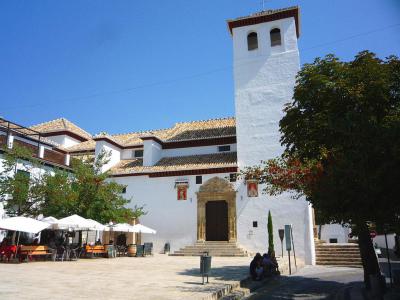
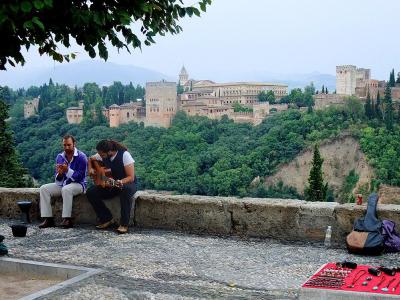

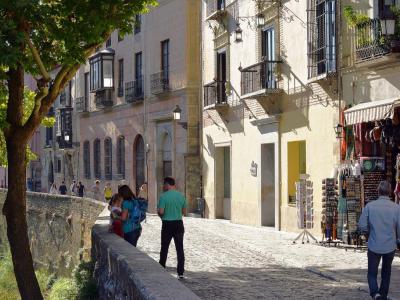
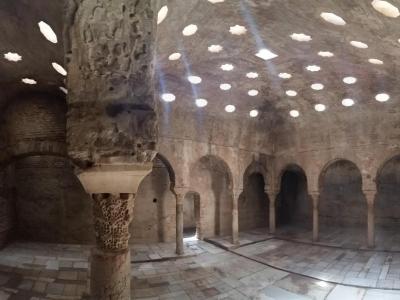
Walking Tours in Granada, Spain

Create Your Own Walk in Granada
Creating your own self-guided walk in Granada is easy and fun. Choose the city attractions that you want to see and a walk route map will be created just for you. You can even set your hotel as the start point of the walk.
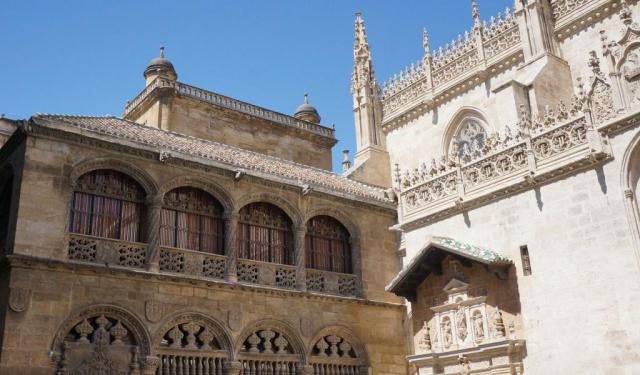
Granada's Architectural Jewels
Over the course of centuries, Granada's architecture has been influenced by four major styles - Moorish, Renaissance, Gothic and Baroque. The city’s most impressive buildings date from the period of Arabic rule and the subsequent Catholic epoch which started after the Moors were displaced in 1492.
From the dazzling majesty of the Alhambra to the awe-inspiring churches and the subtly... view more
Tour Duration: 2 Hours
Travel Distance: 3.5 Km or 2.2 Miles
From the dazzling majesty of the Alhambra to the awe-inspiring churches and the subtly... view more
Tour Duration: 2 Hours
Travel Distance: 3.5 Km or 2.2 Miles
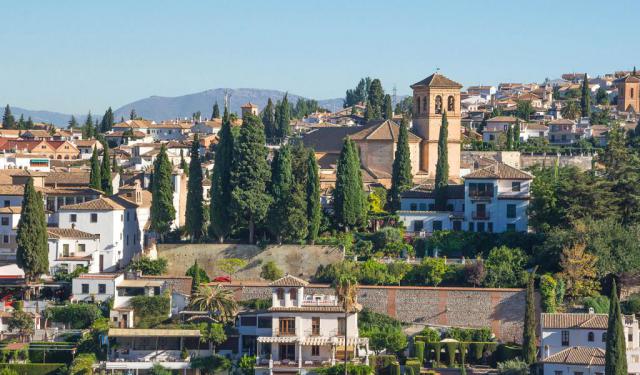
Albayzín Walking Tour
American writer Washington Irving’s book Tales of the Alhambra repeatedly features the Albayzín quarter. He was particularly struck by the district at night, when he heard “the tinkling of innumerable guitars, and the clicking of castanets” rising from its streets and gardens.
The Albayzín occupies the hill opposite the Alhambra, on the northern side of the Darro River. It is one of... view more
Tour Duration: 2 Hours
Travel Distance: 2.3 Km or 1.4 Miles
The Albayzín occupies the hill opposite the Alhambra, on the northern side of the Darro River. It is one of... view more
Tour Duration: 2 Hours
Travel Distance: 2.3 Km or 1.4 Miles
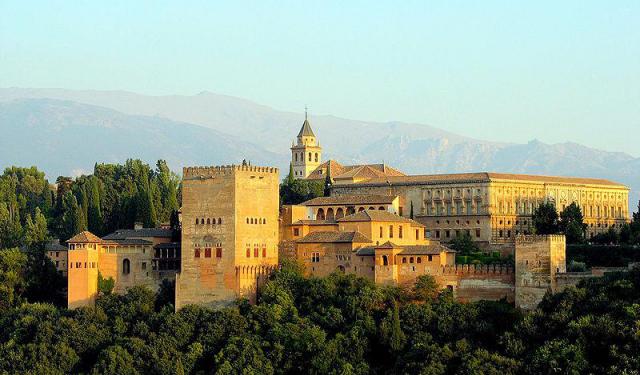
Alhambra Walking Tour
The Alhambra is Granada’s most famous monument and one of the finest surviving examples of medieval Islamic architecture in Europe. Its name comes from Arabic and is generally translated as “The Red One,” probably referring to the reddish walls of the fortress. The complex occupies Sabika Hill, overlooking Granada and the Albaicín.
The hill was fortified as early as the 9th century, but... view more
Tour Duration: 2 Hours
Travel Distance: 2 Km or 1.2 Miles
The hill was fortified as early as the 9th century, but... view more
Tour Duration: 2 Hours
Travel Distance: 2 Km or 1.2 Miles
The Most Popular Cities
/ view all