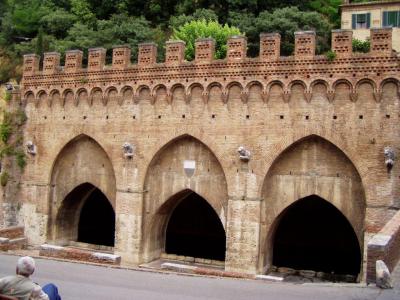


Fonte Branda (Branda Fountain), Siena
Branda Fountain is Siena’s oldest and most famous public fountain and was one of the city’s principal water sources during the Middle Ages. An earlier fountain existed on the site, but the present structure was built in 1246. Fed by Siena’s underground bottini aqueducts, it supplied residents, travelers, animals, workshops, and nearby mills for centuries.
The fountain resembles a small medieval fortress, with three broad pointed Gothic arches and a crenellated brick roofline. Its brick battlements feature flat Guelph crenellations, reflecting the political faction that dominated Siena during the conflicts surrounding the famous Battle of Montaperti. Look up to the top of the brick facade to follow the crenellations running in a sharp, box-like pattern across the roofline.
The water was carefully divided among three tiered stone basins: the first provided drinking water for humans, the second served for watering livestock, and the third functioned strictly as a public wash-house for laundering clothes. Make sure you step out of the sun and pass directly under the cool, vaulted brick ceiling of the left arch to peer into the basins, which run deep into the stone floor of the interior portico. Only the overflow wastewater exiting the final basin was funneled into channels to power the downhill workshops of the wool dyers, tanners, and mills. The surrounding neighborhood was once crowded with craftsmen’s homes and workshops, later housing a civic slaughterhouse before being beautifully restored.
Branda Fountain also holds a prominent place in Italian literature, famously mentioned in the 30th Canto of Dante’s Inferno and referenced in the writings of Boccaccio’s Decameron, illustrating its renown throughout the medieval world. Today, the site is deeply connected to Saint Catherine of Siena-historically called the "Saint of Branda Fountain."
The fountain resembles a small medieval fortress, with three broad pointed Gothic arches and a crenellated brick roofline. Its brick battlements feature flat Guelph crenellations, reflecting the political faction that dominated Siena during the conflicts surrounding the famous Battle of Montaperti. Look up to the top of the brick facade to follow the crenellations running in a sharp, box-like pattern across the roofline.
The water was carefully divided among three tiered stone basins: the first provided drinking water for humans, the second served for watering livestock, and the third functioned strictly as a public wash-house for laundering clothes. Make sure you step out of the sun and pass directly under the cool, vaulted brick ceiling of the left arch to peer into the basins, which run deep into the stone floor of the interior portico. Only the overflow wastewater exiting the final basin was funneled into channels to power the downhill workshops of the wool dyers, tanners, and mills. The surrounding neighborhood was once crowded with craftsmen’s homes and workshops, later housing a civic slaughterhouse before being beautifully restored.
Branda Fountain also holds a prominent place in Italian literature, famously mentioned in the 30th Canto of Dante’s Inferno and referenced in the writings of Boccaccio’s Decameron, illustrating its renown throughout the medieval world. Today, the site is deeply connected to Saint Catherine of Siena-historically called the "Saint of Branda Fountain."
Want to visit this sight? Check out these Self-Guided Walking Tours in Siena. Alternatively, you can download the mobile app "GPSmyCity: Walks in 1K+ Cities" from Apple App Store or Google Play Store. The app turns your mobile device to a personal tour guide and it works offline, so no data plan is needed when traveling abroad.
Download The GPSmyCity App



Fonte Branda (Branda Fountain) on Map
Sight Name: Fonte Branda (Branda Fountain)
Sight Location: Siena, Italy (See walking tours in Siena)
Sight Type: Attraction/Landmark
Guide(s) Containing This Sight:
Sight Location: Siena, Italy (See walking tours in Siena)
Sight Type: Attraction/Landmark
Guide(s) Containing This Sight:
Nearby Sights
Walking Tours in Siena, Italy

Create Your Own Walk in Siena
Creating your own self-guided walk in Siena is easy and fun. Choose the city attractions that you want to see and a walk route map will be created just for you. You can even set your hotel as the start point of the walk.
Medieval Siena Walking Tour
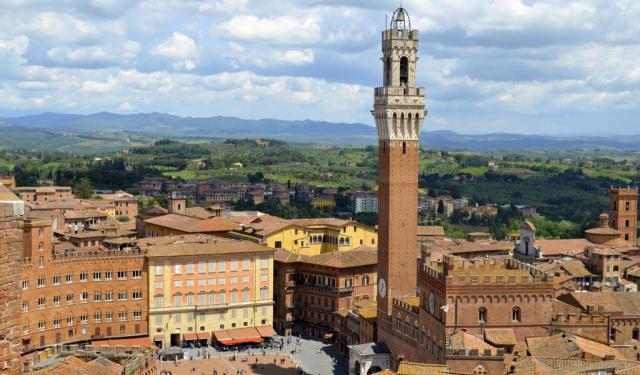
In medieval Siena, every street, tower, fountain, and church reflected the ambitions of a fiercely independent city.
During its years as an independent republic, Siena developed a complex civic identity based on loyalty to both the city and the neighborhood. The historic center was divided into contrade which are local districts whose members shared religious traditions, public spaces,... view more
Tour Duration: 2 Hour(s)
Travel Distance: 3.5 Km or 2.2 Miles
During its years as an independent republic, Siena developed a complex civic identity based on loyalty to both the city and the neighborhood. The historic center was divided into contrade which are local districts whose members shared religious traditions, public spaces,... view more
Tour Duration: 2 Hour(s)
Travel Distance: 3.5 Km or 2.2 Miles
Siena Old Town Walking Tour
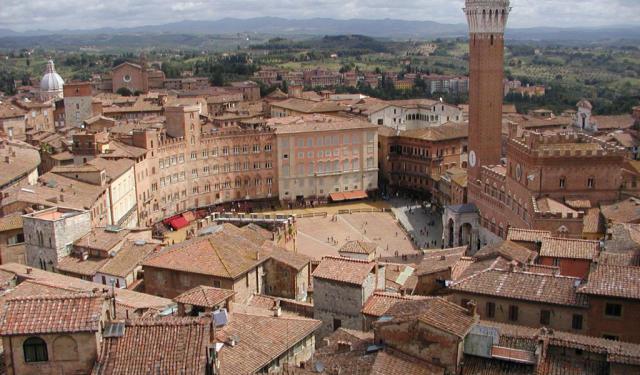
Italian poet Dante Alighieri mentions Siena several times in the Divine Comedy, often referring to the city's famous vanity and extravagant lifestyle during its medieval prosperity. Was he right? A walk through Siena's Old Town may offer a clue.
Siena is one of Italy's best-preserved medieval cities, perched on three hills in the heart of Tuscany. The origin of Siena's name... view more
Tour Duration: 1 Hour(s)
Travel Distance: 1.1 Km or 0.7 Miles
Siena is one of Italy's best-preserved medieval cities, perched on three hills in the heart of Tuscany. The origin of Siena's name... view more
Tour Duration: 1 Hour(s)
Travel Distance: 1.1 Km or 0.7 Miles
Siena's Palaces Walking Tour
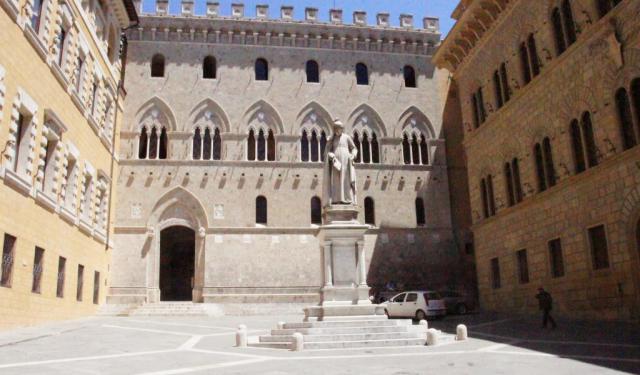
A leisurely stroll through downtown Siena – a designated UNESCO World Heritage Site, full of imperious castles, palaces and other historic buildings – promises an exciting day of discovery and a pleasant experience for architecture buffs.
While most Italian cities have a church on their main square, Siena's famous Piazza Del Campo gathers around the city hall, known as Palazzo Pubblico... view more
Tour Duration: 1 Hour(s)
Travel Distance: 0.7 Km or 0.4 Miles
While most Italian cities have a church on their main square, Siena's famous Piazza Del Campo gathers around the city hall, known as Palazzo Pubblico... view more
Tour Duration: 1 Hour(s)
Travel Distance: 0.7 Km or 0.4 Miles