


Hiển Lâm Các (Pavilion of the Glorious Coming), Hue
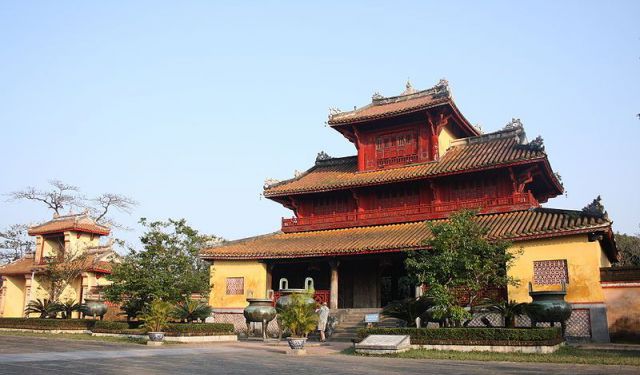
The Pavilion of the Glorious Coming, or Hien Lam Pavilion, is one of the most striking monuments within the Imperial City of Hue. Constructed between 1821 and 1822 during the reign of Emperor Minh Mang, this stately wooden pavilion rises approximately 17 meters above a rectangular brick foundation. As one of the tallest structures within the ancestral temple complex, it was intended to emphasize the importance of the Nguyen emperors and the distinguished figures who contributed to the dynasty.
Architecturally, the Pavilion of the Glorious Coming rises across three levels, gradually narrowing toward the top. Its traditional timber framework is supported by imposing columns and decorated with intricate carvings featuring dragons, floral patterns, and auspicious symbols. Stone stairways with dragon-shaped balustrades lead to the pavilion, while its carefully proportioned roofs and elaborate wooden details demonstrate the craftsmanship characteristic of Nguyen imperial architecture. The upper levels provide the structure with its distinctive vertical silhouette.
As a commemorative pavilion, the Pavilion of the Glorious Coming forms an important part of the ceremonial ensemble surrounding the nearby Temple of the Generations and Nine Dynastic Urns. Together, these monuments celebrate the Nguyen imperial lineage and commemorate those who contributed to the dynasty. Today, visitors can experience both its grandeur and serenity while exploring the shaded courtyard, admiring its detailed craftsmanship, and appreciating the symbolic importance of this architectural masterpiece.
Image by Supanut Arunoprayote. per CC BY, adapted.
Want to visit this sight? Check out these Self-Guided Walking Tours in Hue. Alternatively, you can download the mobile app "GPSmyCity: Walks in 1K+ Cities" from Apple App Store or Google Play Store. The app turns your mobile device to a personal tour guide and it works offline, so no data plan is needed when traveling abroad.
Download The GPSmyCity App



Hiển Lâm Các (Pavilion of the Glorious Coming) on Map
Sight Name: Hiển Lâm Các (Pavilion of the Glorious Coming)
Sight Location: Hue, Vietnam (See walking tours in Hue)
Sight Type: Attraction/Landmark
Guide(s) Containing This Sight:
Sight Location: Hue, Vietnam (See walking tours in Hue)
Sight Type: Attraction/Landmark
Guide(s) Containing This Sight:
Nearby Sights
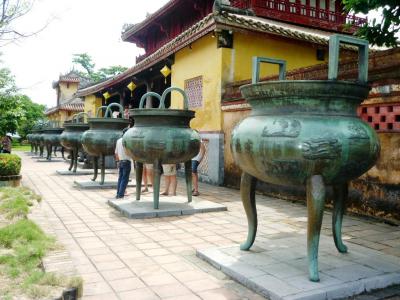
Cửu Đỉnh (The Nine Dynastic Urns)
Image by LÊ TẤN LỘC per CC BY-SA, adapted.

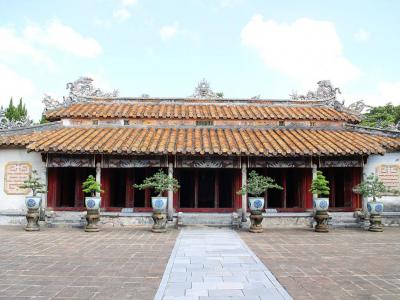
Thế Tổ Miếu (Temple of the Generations)
Image by LÊ TẤN LỘC per CC BY-SA, adapted.
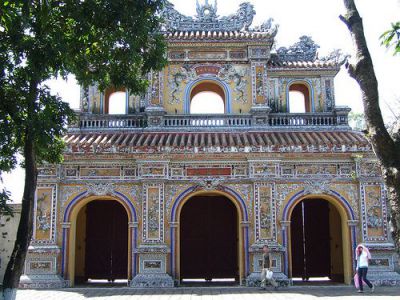
Forbidden Purple City
Image by Mig Gilbert per CC BY-SA, adapted.
Walking Tours in Hue, Vietnam

Create Your Own Walk in Hue
Creating your own self-guided walk in Hue is easy and fun. Choose the city attractions that you want to see and a walk route map will be created just for you. You can even set your hotel as the start point of the walk.
Hue Introduction Walking Tour
Once the seat of the imperial dynasty in the heart of Vietnam, Hue is chock-full of stories. During feudal times, for nearly 150 years - from 1802 to 1945, the city served as the national capital. The royal lifestyle and customs have had a strong impact on the lifestyle of locals, and this impact can still be felt today.
First cited about 200 BCE as the seat of the Chinese military authority in... view more
Tour Duration: 2 Hours
Travel Distance: 3.5 Km or 2.2 Miles
First cited about 200 BCE as the seat of the Chinese military authority in... view more
Tour Duration: 2 Hours
Travel Distance: 3.5 Km or 2.2 Miles
Imperial City Walking Tour
The Kings of the Nguyen Dynasty built their feudal capital along the fertile banks of the Perfume River, whose steady flow, centuries on, still sets up a languid pace that the rest of the city is happy to follow.
Situated within the walls of the Royal Citadel, The Imperial City in Hue is one of, if not the most prominent landmark in Vietnam, renowned for its wonderful collection of oriental... view more
Tour Duration: 2 Hours
Travel Distance: 2.9 Km or 1.8 Miles
Situated within the walls of the Royal Citadel, The Imperial City in Hue is one of, if not the most prominent landmark in Vietnam, renowned for its wonderful collection of oriental... view more
Tour Duration: 2 Hours
Travel Distance: 2.9 Km or 1.8 Miles
City Walks Overview
