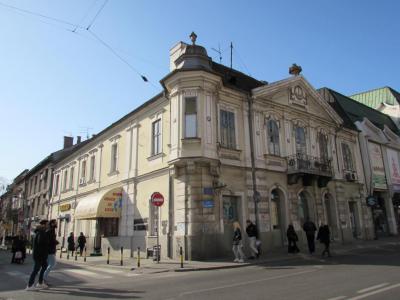


House with the Sundial, Belgrade
The House with the Sundial is a distinctive landmark in central Zemun. This 19th-century corner mansion, located at the intersection of Glavna and Dubrovačka streets, is best known for the functioning sundial on its façade facing Dubrovačka Street. Constructed in 1823, with the sundial added in 1828, the building is an elegant example of the Classical style with modest Biedermeier elements. Built of brick, the mansion features a high mansard roof and decorative plasterwork framing the windows of its main façade. To appreciate the contrast between the building’s two façades, stand on the opposite sidewalk and face its rounded corner. Notice how the main façade, facing Glavna Street, features considerably more elaborate ornamentation.
However, both sides of the building are worth admiring in their own way. Look closely at the sundial, which displays the daytime hours from 8 AM to 3 PM according to solar time. Its unusual arrangement of numerals makes it a particularly interesting feature. At the top of the mansion’s main façade, look for a crest depicting an anchor, symbolizing its founder’s involvement in maritime trade.
Originally designed as a combined residential and commercial property, the house consists of a basement, ground floor and upper floor. The ground floor likely accommodated taverns and shops, while the upper level was used as living quarters. Despite later extensions and damage sustained during World War II, the historic sundial survived.
The house also has important literary connections. Prominent Serbian writer Jovan Subotić spent his final years here and died in the house on January 28, 1886. Known for his poetry, plays and novels, Subotić was an important figure in 19th-century Serbian literature. Another notable resident was acclaimed Serbian writer David Albahari, further strengthening the building’s connection to the country’s literary heritage.
However, both sides of the building are worth admiring in their own way. Look closely at the sundial, which displays the daytime hours from 8 AM to 3 PM according to solar time. Its unusual arrangement of numerals makes it a particularly interesting feature. At the top of the mansion’s main façade, look for a crest depicting an anchor, symbolizing its founder’s involvement in maritime trade.
Originally designed as a combined residential and commercial property, the house consists of a basement, ground floor and upper floor. The ground floor likely accommodated taverns and shops, while the upper level was used as living quarters. Despite later extensions and damage sustained during World War II, the historic sundial survived.
The house also has important literary connections. Prominent Serbian writer Jovan Subotić spent his final years here and died in the house on January 28, 1886. Known for his poetry, plays and novels, Subotić was an important figure in 19th-century Serbian literature. Another notable resident was acclaimed Serbian writer David Albahari, further strengthening the building’s connection to the country’s literary heritage.
Want to visit this sight? Check out these Self-Guided Walking Tours in Belgrade. Alternatively, you can download the mobile app "GPSmyCity: Walks in 1K+ Cities" from Apple App Store or Google Play Store. The app turns your mobile device to a personal tour guide and it works offline, so no data plan is needed when traveling abroad.
Download The GPSmyCity App



House with the Sundial on Map
Sight Name: House with the Sundial
Sight Location: Belgrade, Serbia (See walking tours in Belgrade)
Sight Type: Attraction/Landmark
Guide(s) Containing This Sight:
Sight Location: Belgrade, Serbia (See walking tours in Belgrade)
Sight Type: Attraction/Landmark
Guide(s) Containing This Sight:
Nearby Sights
Walking Tours in Belgrade, Serbia

Create Your Own Walk in Belgrade
Creating your own self-guided walk in Belgrade is easy and fun. Choose the city attractions that you want to see and a walk route map will be created just for you. You can even set your hotel as the start point of the walk.
Belgrade's Top Attractions Walking Tour
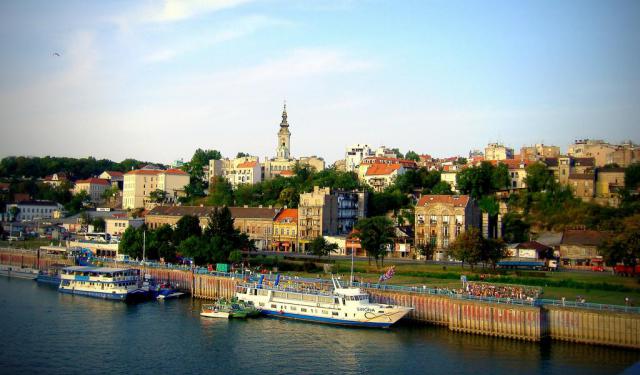
Belgrade has been a city of strategic importance for millennia with its location at the confluence of the Sava and Danube rivers. In fact, it is one of the oldest continually inhabited cities on the planet.
Nomadic tribes inhabited the area as far back as 20,000 to 50,000 years ago. Some of these may have been Neanderthals rather than modern humans. By the sixth century BC, the Vinca culture... view more
Tour Duration: 2 Hours
Travel Distance: 4 Km or 2.5 Miles
Nomadic tribes inhabited the area as far back as 20,000 to 50,000 years ago. Some of these may have been Neanderthals rather than modern humans. By the sixth century BC, the Vinca culture... view more
Tour Duration: 2 Hours
Travel Distance: 4 Km or 2.5 Miles
Kalemegdan Park and Belgrade Fortress Walking Tour
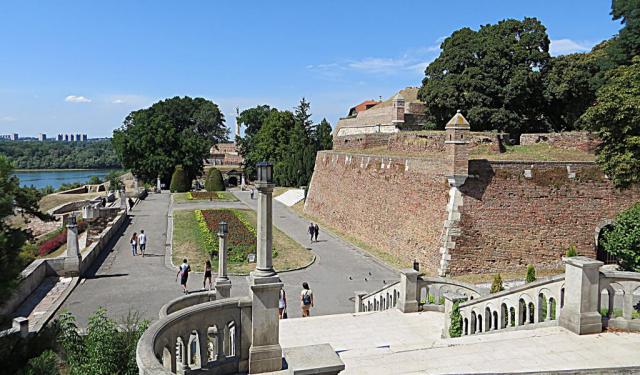
The most beautiful park in Belgrade, Kalemegdan Park, or simply Kalemegdan, is also the largest park and the most important cultural and historical complex in the city. The actual park occupies a smaller portion, in the southern corner, of another, grander monument - the Belgrade Fortress (which is some two millennia older).
The fortress itself, often erroneously referred to, even by the... view more
Tour Duration: 2 Hours
Travel Distance: 2.1 Km or 1.3 Miles
The fortress itself, often erroneously referred to, even by the... view more
Tour Duration: 2 Hours
Travel Distance: 2.1 Km or 1.3 Miles
Zemun Old Town Walking Tour
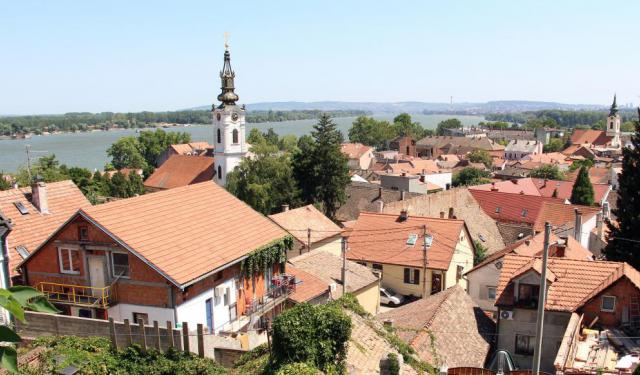
Belgrade's Old Town, also known as Zemun, spread around Gardos Hill, is one of the city's oldest parts. Throughout the centuries, as the Balkans were part first of the Roman, then the Byzantine, and then the Austro-Hungarian empires, this area transformed into a beautiful neighborhood with narrow streets, cute buildings, and breathtaking views opening from the hill onto the Old Town and... view more
Tour Duration: 2 Hours
Travel Distance: 2.4 Km or 1.5 Miles
Tour Duration: 2 Hours
Travel Distance: 2.4 Km or 1.5 Miles